Episode Info
- Season20
- Episode5
Hosted by Christina Ruffini and Sir Richard Dearlove
Guest
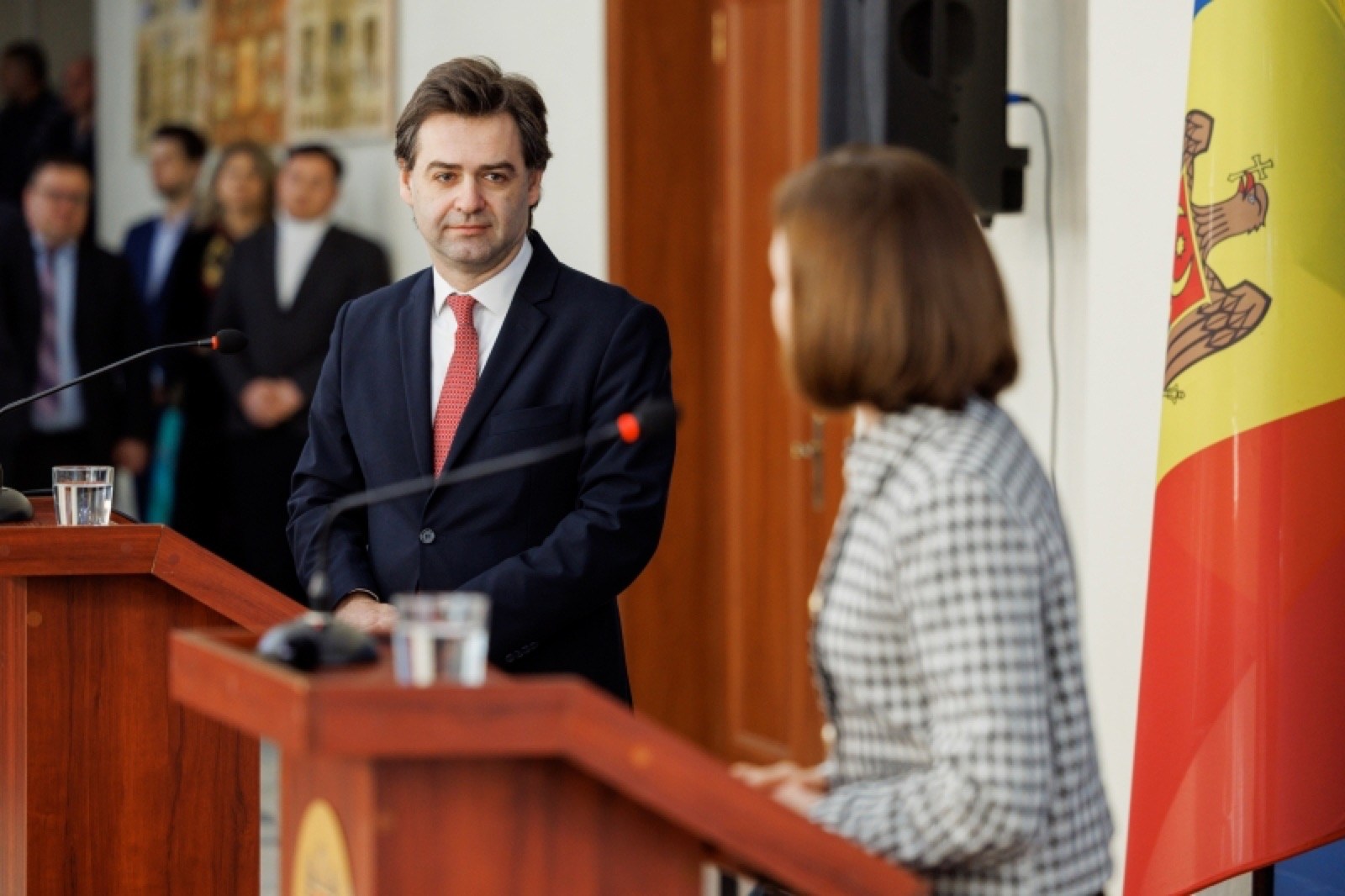
Nicu Popescu
Nicu Popescu is Foreign Minister of Moldova discussing efforts that Russia is allegedly committing to destabilizing the nation and preventing it from joining the European Union.
Episode Summary
Foreign Minister Nicu Popescu of Moldova sits down with One Decision in New York to talk about the various efforts that Russia is allegedly committing to destabilizing the tiny and young European nation, preventing it from joining the European Union. Russian soldiers and separatists already occupy a large part of the country, and it's an area that is very close to the strategic Ukrainian port city of Odesa, which Moscow has long coveted for its key position on the Black Sea. Fears that the occupied parts of Moldova could be used as a launchpad to attack Odesa may have waned but not disappeared entirely. Plus, One Decision's resident spymaster Sir Richard Dearlove gives his verdict on a leaked FSB document that purportedly revealed a plot to destabilize the country.
Listen & Subscribe
- Watch on YouTube
- Listen on Apple Podcasts
- Listen on Spotify
Transcript
INTRODUCTION
Mcfarlane: You're listening to One Decision, the podcast that looks at the choices made that shape our world. I'm your host, Julia McFarlane.
Dearlove: And I'm Richard Dearlove, former chief of British intelligence,
Mcfarlane: otherwise known as MI6. Together, Richard and I talk to the top decision makers and influencers, the people who shape world events, to try to understand what it is that drives the defining choices and decisions that have global impact and affect us all. The Eastern European nation of Moldova borders Ukraine's southwestern edge. It's a former Soviet Republic and one of the poorest nations in Europe. In the 1990s, a narrow strip of land in Moldova, right on its border with Ukraine, broke away from the capital and declared independence. It's called Transnistria, and it was supported by Moscow in doing so. The separatists held a referendum back in 2006, asserting their demand for independence and to pursue union with Russia. There's now over a thousand Russian soldiers currently on the ground in Transnistria. Last year, exactly one week after Putin launched his full scale invasion into Ukraine, Moldova formally submitted its application to join the European Union. Several months after that, it was granted candidate status by unanimous agreement from the leaders of all 27 EU member states. It was a bold move and one that Moldova's leadership surely knew would attract ire from Moscow. Sure enough, earlier this year, US and European officials raised concerns about an alleged Russian plot to topple the pro Western government in Moldova. Secretary of State Tony Blinken said that Washington was, quote, alarmed by some of the plotting we've seen coming from Russia. News outlets reported on an alleged leak of FSB documents that purported to detail plans of a ten year campaign to destabilize Moldova using pro Russian groups, the Orthodox Church, and threats to cut off vital supplies of natural gas. Moscow at the time denied the existence of any plot, calling the accusations fiction. With a slice of territory already under Russian control, Moldova's path to European citizenship is complicated. And just a few months ago, Moldova allegedly outed a Russian GRU officer who they deported and accused of posing as the head of a Russian propaganda outlet. And in latest developments, a move that underscores the importance of Moldova regarding security on the Black Sea, the new foreign secretary of the UK, former prime minister David, now Lord Cameron, visited Moldova and the president, Maia Sandu, right after his trip last week to Ukraine, his first overseas journey as Britain's top diplomat. To talk about the situation in Moldova and the fears that Russian occupied Transnistria could potentially be another front in the war in Ukraine, particularly the very nearby strategic city of Odessa, I sat down with the foreign minister and deputy prime minister of Moldova, Nicu Popescu, while he was traveling in New York.
INTERVIEW
Mcfarlane: We've wanted to talk to a representative from Moldova for a long time because your country must know very well, not exactly what Ukraine is going through, but a little bit of what Ukraine is going through right now when it comes to Russian influence, meddling, occupation, perhaps. Talk to us about how this last year and a half has been for Moldova, watching what has been happening with your very close neighbor.
Popescu: Indeed, Russia's aggression against Ukraine had a negative impact in the entire world on international law, on food security, on nuclear security, on credibility of international commitments. But, of course, the closer you get to Ukraine, the closer and the higher that impact is. And, of course, Moldova being where it is, being a country right next to Ukraine, has felt very dramatically the negative impact of Russia's brutal aggression against Ukraine in multiple domains, probably in every single policy domain. And of course, Moldova's security has been affected. Moldova's economy has been affected. Humanitarian situation, budgetary situation, inflation levels, energy situation, the security of gas supply, the security of electricity networks, everything, everything, everything has been felt in Moldova. At the same time, it is dramatic, but it's nowhere near dramatic to Ukraine. It's, I think, incomparable. Moldova is living in peace today. Moldova is not threatened militarily, and that's thanks to Ukraine, thanks to the capacity of the Ukrainian army, society, and political leadership to resist.
Mcfarlane: I'm sure a lot of our listeners will be aware of your separatist region of Transnistria, but for those who are not aware, in the early 1990s, separatists in this region of Moldova, which borders Ukraine, declared independence from Moldova. There are, I believe, 1,500 Russian troops on this area, and Russia has exercised a lot of influence in this part of Moldova, it has quite a firm grip on it. It must give you, as Moldovans, a huge sense of anxiety, surely, to have this chunk of your territory, is essentially occupied by the Russians, to then see Putin ordering his invasion in Ukraine, this incursion into Ukrainian sovereign territory. Are you worried that the situation in Transnistria may get worse, may escalate?
Popescu: Well, indeed, Russia has supported separatist movements in the last days of the Soviet Union, in several other parts of the former Soviet Union, in Georgia, they've tried doing that in Ukraine in the late eighties, early nineties, and in Moldova, and in other places as well. And when Moldova became independent, indeed, one part of Moldova was not under control of the government in Chisinau. It did not recognize the legitimate authorities of the Moldovan government. So this region is called the region of Transnistria. There was a short war in 1992, and since then, there's an illegal Russian military presence on Moldovan soil. Before, in 1999, Russia committed to full, unconditional, and ordered withdrawal of those troops, but it disrespected its own commitments and kept its troops on the ground. So there are several parallels with other parts of this former Soviet Union. At the same time, it's important to realize that our context is at the same time somewhat different. Since 1992, the situation has been entirely peaceful and stable. There are small, you know, diplomatic tensions once in a while, but generally, there has been no meaningful, no big security incidents for over thirty years. Moldova does not have a direct border with Russia, and over time, that dramatically limited the capacity of Russia to destabilize, to infiltrate, to concentrate troops on the border. And that helped us maintain a relative peace and calm and stability with the separatist region. And we've been committed to peaceful negotiations on the reintegration of the country. With the war, of course, that was and still is a dangerous moment for our capacity to manage the separatist conflict. But as long as the Russian army is away, as long as the Ukrainians resist and liberate their own territories, we are quite confident in our capacity to advance towards the settlement of the Transnistrian conflict through negotiations, through diplomacy. Russia wanted its army to get to our border, to make the junction with the Transnistrian region, to use the junction to attack Odessa. That was very clearly a Russian objective in the early days of the war. Odessa is very close to Transnistria. But they failed. And they did not manage to get this land corridor to the border with Moldova, to Odessa. And that, of course, means that we could and can keep Moldova in peace, and we can continue our efforts to settle this conflict peacefully and to obtain the withdrawal of Russian troops through negotiations and diplomacy.
Mcfarlane: Is that something you think the Russians might try to do again, try to get that land bridge? Do you think they may try and move in again on this very strategic area between Transnistria and Odessa?
Popescu: Well, we cannot speculate on what will happen in the future. What is clear is that a government, including the government of Moldova, but pretty much any government that has any interest in the region should be planning for the full spectrum of scenarios and should be working to prevent them. And the best way for this kind of hypothetical scenarios not to happen is to help Ukraine resist and help Ukraine liberate its own territory and regain full control of what is the sovereign territory of Ukraine.
Mcfarlane: Perhaps it's not in Putin's interests to fully incorporate Transnistria into Russia. Perhaps it is more useful for him to have separatists who he can control. And there was a very interesting story recently, which was this Russian journalist called Vitaly Denisov, who was recently deported from Moldova. He was working in the Moldovan branch of the Russian Sputnik news outlet. There have been reports that he was allegedly a Russian intelligence officer. Were you surprised by that? Is this part of a larger campaign that the Russians are doing?
Popescu: Well, it's clear that Moldova has been on the receiving end of Russian propaganda and disinformation operations and hybrid threats and hostile policies since before our independence, since the late eighties. Russian disinformation against Moldova has been there on Russian news for more than thirty years. What Russian propaganda has been saying about Moldova does not differ very much, you know, between '91 and 2022, 2023. There's not much difference. And in this case, it's absolutely clear, but people like that, they are not journalists. And Sputnik is not journalists. These are propaganda operations, disinformation operations, and a clear element of hybrid threats directed against a country like Moldova, aimed at destabilizing the political situation, the democratic context, and that is where the reality is. And, of course, they do work as an extension of the Russian state, and they are part of multiple other instruments used by Russia to destabilize Moldova, support for separatists, maintenance of illegal military presence. We faced over time multiple trade embargoes from Russia on wines, on fruits and vegetables. Faced regulation of gas prices.
Mcfarlane: But on their influence campaigns, particularly this, you know, this Sputnik Moldova operation going on, do they get much of a foothold in Moldova? I mean, you have your president who's elected in 2020, is very pro European, very anti Russian. Is the civilian population vulnerable to Russian disinformation and these kinds of hybrid operations?
Popescu: All democratic systems are somewhat and can be affected by propaganda campaigns, by disinformation campaigns. And these kind of attacks, they are attacks designed to undermine democratic systems. At the same time, I will tell you that, yes, these kind of campaigns have had an unhealthy and negative influence on the development of democracy. At the same time, looking back at the last thirty years of Moldovan democracy, we can also say that despite these negative effects coming from Russian propaganda and other Russian hostile policies, supporting separatism, trade embargoes, energy manipulation, Moldova and Moldovan society has managed to defeat these hostile policies, including propaganda, managed to consolidate its democracy, has managed to advance on Moldova's path towards the European Union. And I will give you just a couple of examples. For example, just this year, Reporters Without Borders ranked Moldova in the twenty eighth place in the world when it comes to press freedom. And we've jumped 61 positions in the last two years. And, basically, in the last thirty years, every single Moldovan government was changed as a result of elections. So I will tell you that, yes, Russian propaganda has negative effects, and not just propaganda, the full spectrum of Russian policies directed against Moldova. At the same time, over time, Moldova constantly managed to minimize the negative effects of these measures, diversify, consolidate our democracy, reorient trade, find alternative sources of gas, find alternative sources of electricity. So this is what we'll continue doing.
Mcfarlane: There were news reports this spring, an FSB document, which was allegedly written in 2021. It was leaked in the media earlier this year. And it revealed that the Kremlin has this plan to destabilize Moldova and Moldovan society by supporting the pro Russian separatists, by using the Orthodox Church, by making Moldova dependent on imports of Russian gas, stirring up social conflict, as well as trying to block your efforts to get a resolution with the breakaway region of Transnistria. Were you sort of shocked by this news? And I understand that it was Ukrainian intelligence that was quite key in uncovering a lot of these plots.
Popescu: I mean, you don't need leaked documents to know that this is what Russia has been doing for the last thirty plus years, and this is what it failed to achieve as goals. So these instruments, they are there, but the success of these instruments is very, very doubtful. And Moldova's continuous democratic path, Moldova's path towards the European Union, Moldova's diversification of energy links, of trade links, they are all testimony to our capacity to defeat this kind of hostile and disrespectful policies by Russia.
Mcfarlane: You have spoken recently, I think it was to Politico, about your country's path to EU membership. And you've argued that the fact that you have a sort of separatist region should not be a reason for Moldova not acceding to EU membership. Your Romanian neighbor, Siegfried Mureșan, who's the chair of the European Parliament's delegation to Romania, has said recently that Moldova cannot become a member of the EU as long as it has Russian troops on its territory against the will of Moldova itself. And he says that despite the support for your country joining the EU, that's something that has to be resolved before membership. Is he right?
Popescu: Well, we have several years before we join the European Union. We are really engaged in a lot of hard work on transposing the key European body of legislation, on pursuing justice sector reforms, that are crucial for our EU accession. But all of these things will take quite a number of years. Our goal is to be ready to join the European Union by 2030. And this is also when we plan to invest this time in solving the Transnistrian conflict peacefully through negotiations and coming to that situation where the Russian troops withdraw from Moldova as a result of negotiations and diplomatic efforts. So it's too early to speculate. We have several years ahead to advance towards the EU while advancing towards the settlement of the conflict and the peaceful withdrawal of Russian troops.
Mcfarlane: I know you have several years to work on this, but let's say it was a choice between joining the EU and losing that territory from Moldova proper. Which do you think the people of Moldova would prefer? Would they prefer letting go of Transnistria in order to get EU membership?
Popescu: That's a very theoretical choice at this stage, so there's no way I can say anything that would answer this question. What is clear, though, is that the absolute majority of the people living in the part of Moldova controlled by the government in Chisinau will not accept to be hostage to, you know, this kind of geopolitical context around the Transnistrian region, and the path to the EU for most of the Republic of Moldova is clear.
Mcfarlane: Do you think maybe it's more of a question of if you can persuade the Europeans to allow Moldova to accede to membership without having fully reconciled the situation?
Popescu: The official position of the EU is that Moldova cannot be held hostage to the settlement or non settlement of this conflict. And that has also been said very clearly by the vice president of the European Commission, the high representative for foreign policy, Josep Borrell, who in Chisinau in Moldova on May 31 said very clearly that we are proceeding with the integration of Moldova, and Moldova cannot be held hostage to this unsolved conflict.
Mcfarlane: Do you think it's at all possible? I mean, there are 1,500 Russian troops on Transnistrian soil. That's not a huge number. But do you think it might be possible for the Russians to use Transnistria in some way as a launching pad to launch attacks on Ukraine? Is that something that worries you?
Popescu: Of course, that was something that worried us a lot in the first days and weeks of the war. It's not hard to imagine that that was clearly a Russian hope and intention to do that. At the same time, pure geography and pure military balance on the ground shows that inside this region, there is not enough capacity to threaten militarily Ukraine without dramatic changes on where the frontline lies between Russia and Ukraine. So as long, again, I said this, but I'll repeat: as long as Ukraine resists, as long as Ukraine liberates territory, pushes the Russian troops back, we have the parameters and the possibility of keeping the situation around the Transnistrian region peaceful.
Mcfarlane: What are you asking the EU, the UN, your neighbors in Europe, the US? What is at the top of your shopping list of requests for countries to help Moldova?
Popescu: Our key objective for this year is to make the next step towards joining the European Union, and namely to be invited by the European Commission and the EU member states to start accession talks with the European Union. That's a key objective. We're really doing thousands and thousands of things to make this possible and to bring closer the date when Moldova will be ready to join the EU. And then we have really multiple conversations. So how do we make Moldova stronger, more resilient in the security domain? In the security domain, we have scaled up our security and defense cooperation with the United States, with the countries of the EU, with NATO as an organization, with the European Union as an organization. We've also worked a lot on keeping Moldova's socioeconomic situation stable, on looking for solutions to Moldovan energy vulnerabilities. And within these several sets of issues, we have multiple projects. We're building a direct electricity connection to Romania, which will strengthen our security of electricity supply. We connected Moldova to the European electricity grid. We already have a gas pipeline to Romania. We need to build another electricity connection. We're investing in renewables. We're working with Ukraine to boost land based infrastructure, roads, bridges, railways to make it easier and faster to get Ukrainian goods in and out, including grains and cereals. So we do have a really long list of joint projects that we're doing with the US, with the EU, with Ukraine, and basically in every sphere.
ANALYSIS WITH SIR RICHARD DEARLOVE
Mcfarlane: Richard, I'm so glad we could speak to Nicu Popescu, the Foreign Minister of Moldova. It's such an interesting country with such an illustrative relationship issue with Russia and how the Russians have treated it. But also in the last year, we have had the Moldovans repeatedly raising the alarm on Russian efforts to destabilize Moldova, to try and undermine their own sovereignty and their own democracy. And I just first of all want to ask you about that FSB document that was leaked. It was written in 2021 and it was leaked by a few Western media organizations in the spring. And it basically detailed this sort of labyrinthine plan that the Kremlin had laid out to destabilize Moldovan society by supporting pro Russian groups, using the Orthodox Church, I know we've talked about on this podcast before, and of course the threat to cut off gas supplies to Moldova, which would obviously make Moldova dependent on imports of Russian gas. There is obviously also the breakaway region of Transnistria where there are 1,500 Russian boots on the ground on what was and legally speaking still is Moldovan sovereign territory. So what did you make of that FSB document and how worried are you about the situation in Moldova?
Dearlove: Well, it's a pretty typical Russian playbook. And what I mean by that is that those enclaves, where there is surviving Russian involvement, Russian influence, whether it's Kaliningrad or whether it's Moldova or whether it's bits of Serbia, the Russians act in those areas to make the maximum amount of political trouble and to destabilize those regions and to make sure that their progress, which primarily, well, in Moldova's case is towards EU membership, is frustrated, that they don't lose these territories to the very powerful magnetic pull that the economies of the EU exercise on them. I mean, Moldova in a way is almost like a mini Ukraine because the issues are surprisingly similar. And, you know, because of its position geopolitically, it's in a very sensitive strategic place. And if the Russians, as it were, can manipulate the influence that they've still got, particularly through their occupation of Transnistria. Well, occupation, I mean, it's an enclave which is separated, which has a significant Russian component, and they've managed to hang on. But I thought in your interview, what was really interesting was when the foreign minister of Moldova actually said, you've only got to look what's happening there economically in comparison to what's happening in Moldova. And, you know, the Moldovan economy has really progressed because of its westward orientation. And Transnistria is being left desperately behind. And, you know, the local population begin to realize how disadvantaged they are by having their cart hitched still fundamentally to the Russian horse.
Mcfarlane: The other important aspect of this is the fact that the existence of Transnistria, and at least the Russian occupation in Transnistria, is that Moldova cannot progress in its bid to join the EU and to join NATO while there are hundreds of Russian soldiers illegally occupying their territory. And I thought it was interesting that Nicu Popescu, he seemed quite calm about the situation in Transnistria. He said that the situation is largely peaceful and there are of course small diplomatic tensions once in a while, but there haven't been any meaningful security incidents for years. And there was a fear earlier in the Ukrainian conflict from last year that the Russians might, you know, given that they are desperately trying to take the port city of Odessa, which is very close to the Moldovan border, that that bit of land in between Transnistria and the Ukrainian port city of Odessa might be squeezed, might be vulnerable if the Russians maybe wanted to try and approach Odessa from Transnistria. But he said that that hadn't happened. It was something that was obviously a worry for them, but not anything. It seemed like he wasn't really losing sleep over it. So I mean, Putin doesn't really seem to be actively pursuing, utilizing Transnistria and the occupation there with regards to the kinetic conflict in Ukraine at the moment. I mean, do you think that would change? Do you think that's something he may consider in the future?
Dearlove: Well, as long as they've got that option open to them, you know, it has strategic implications for the West. And, you know, it could be that Russia would up their involvement and it would become a sort of center of crisis closer to the West because, you know, it sits on the Romanian border. But I think what the Moldovans have cleverly shown is that they've got great patience. I mean, they're not forcing the argument over Transnistria. And that's probably their best option, because they're sitting there quite confident. And I think probably they're right that the economic pressures will solve this problem over time and that for Russia to hang on in there is going to get more and more and more difficult. And at some point, I think it's very fair to speculate that the population of, you know, this separatist enclave will flip and take a different view.
Mcfarlane: Well, what do you mean? Do you mean that they might rise up against the Russians on their soil?
Dearlove: Well, they won't rise up. They'll just vote against, you know, getting the Russians out and rejoining Moldova, because they're gonna get seriously left behind economically.
Mcfarlane: But do you think that might be possible? I mean, it's just like, you know, the referendums that were held in the Donbas.
Dearlove: Well, it's not an occupation, because of the Russian military presence on the ground, because that has been a pro Russian enclave. But it's not, they haven't been fighting a war there. In the Donbas and Luhansk, they've been fighting a war since 2014. And, you know, that was a totally different sort of set of circumstances. And I think the Moldovans are correct. I mean, it doesn't have the tension. It doesn't have the conflict. And if you actually look at the recent history of Moldova, it's very informative as to how they got rid of the Communist Party influence in Moldova. It took them a long time to kick these people out. And the previous president of Moldova, I mean Maia Sandu, who's now the president of Moldova, her predecessor, I mean he hung around for several years, and there was a sort of kernel of political support for him, but they got more and more isolated. And I'm pretty sure that if you apply that model to Transnistria, which the Moldovans seem to be doing, they're confident that this will just fold up in due course because it isn't economically and politically viable. And what's more, because of the Ukrainian conflict, they're at a huge disadvantage. I mean, they're sitting there in a tiny little enclave. They're very isolated.
Mcfarlane: Not for want of trying. I mean, the recent expulsion of the head of a Russian propaganda outlet, who the Moldovans alleged was actually a career military intelligence officer with the GRU.
Dearlove: He was a GRU officer. And the Russians tried to do this in Montenegro. They tried to mount a coup using the GRU in Montenegro, you remember, if you go back. And, you know, they tried very, very hard, and it wasn't a dissimilar situation. They failed laughably, and it's gone. That problem is sort of, I wouldn't say gone away completely, but it's very much in abeyance. And I think that if you cold headedly analyze what's happening in Moldova, the Russians are on to a loser.
Mcfarlane: The last thing I wanna ask you, I mean, you'd say it takes a long time to dislodge the communist elements in the country. It'll take Moldova a long time to dislodge the pro Russian forces in Transnistria. But do you think they are willing to wait that long time before they get to join the European club? And Nicu Popescu, our interviewee, he spoke out recently saying that the parts of Moldova that are controlled by their government, they can join the EU irrespective of what happens to the East, to Transnistria. He said no one wants divided countries inside the EU, but keeping countries at the mercy of geopolitical manipulation and separatist conflicts, that would be even worse for the continent, for the EU and for us. I mean, do you think he's right, or do you think the Europeans are gonna be like, no, we're not gonna let you in?
Dearlove: No. I think he's probably right, and I think that there will be a very sympathetic attitude. I mean, it isn't Ukraine. I mean, Ukraine is massive, and the implications of Ukraine, you know, joining the EU economically, you know, present a whole series of problems, which are so big that they influence the whole organization. Moldova has a population of about 2,500,000, I think. The population of Transnistria is tiny. Okay. It's a sort of laboratory in a way, but I'm pretty sure they've already got, you know, candidate status for joining the EU, and the EU will see the political advantage in this particular instance of making it easy for them. And the moment Moldova joins or is close to joining, that's almost an economic death warrant for Transnistria. Do you think the population are gonna sit there and watch their neighbors getting rich, getting all the economic benefits of EU membership, and, you know, they're stuck with a very beleaguered declining Russia? I mean, I'm simplifying the issue slightly, but I think the cards are very much in Moldova's favor and this is all about these countries moving westwards psychologically and looking, you know, different political system, different educational system, different social programs. I think they're on a good track and I think they're handling Transnistria in just the right way, which is to say, well if you, you know, you're the ones that are gonna suffer if you don't come with us.
Mcfarlane: That's it for this week's episode of One Decision. We drop new episodes every Thursday. Like and subscribe so you never miss an episode. Drop us a line. Tell us your thoughts. What decisions have impacted you and where you live. You can write to us. Our email is 1decision@1decisionpodcast.com. From me and the team, thank you for listening, and see you next time.