Episode Info
- Season14
- Episode1
Hosted by Christina Ruffini and Sir Richard Dearlove
Guest
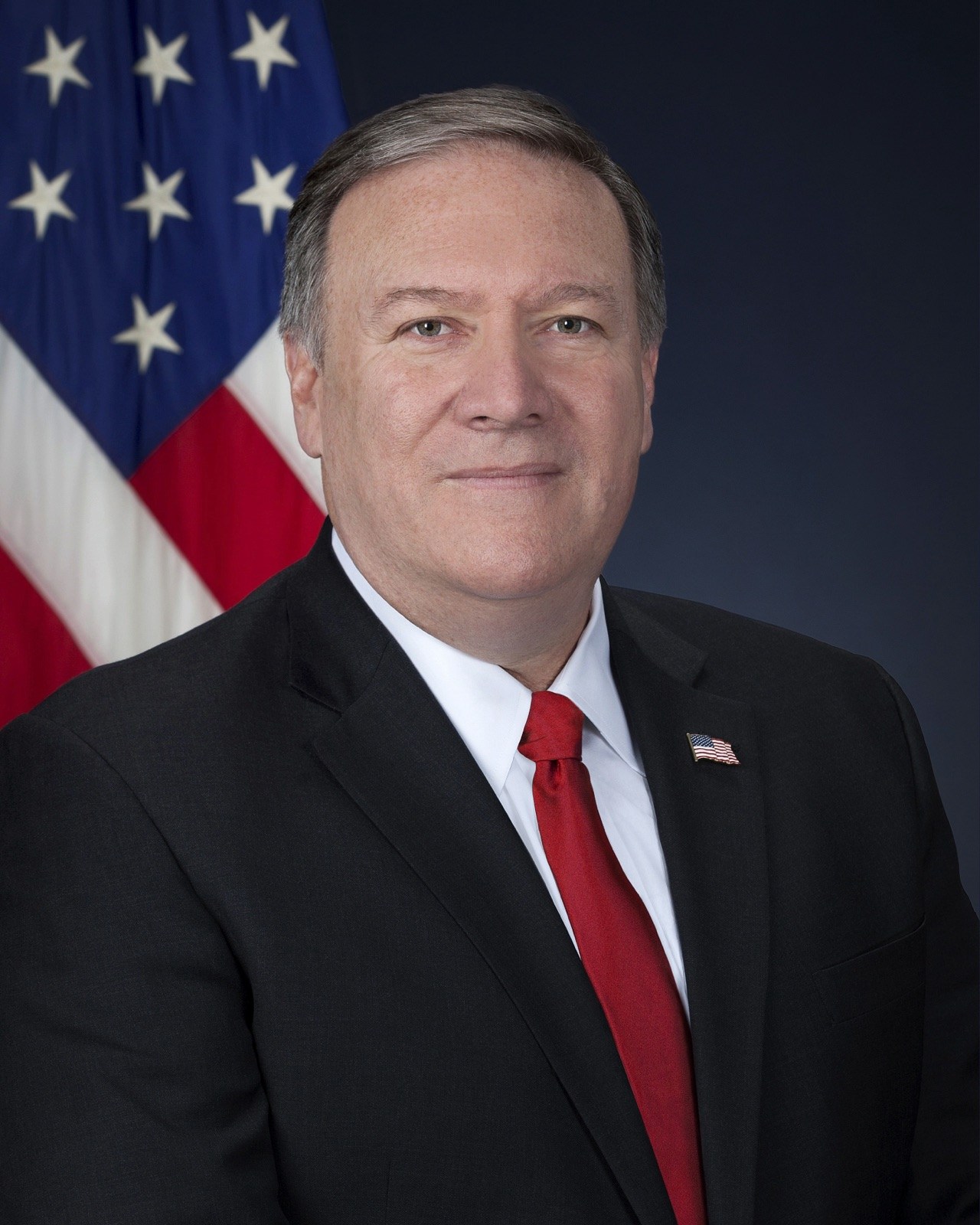
Mike Pompeo
Mike Pompeo is the only American to have served as both CIA Director and Secretary of State, arguing that 'peace through strength' is the only way to ensure America's foes like Putin and Xi will not actualize current threats to Western interests.
Episode Summary
Mike Pompeo is the only American to have served as both CIA Director and Secretary of State. A bullish defender of the legacy of the Trump era, in a new autobiography on his time during office, he argues that ‘peace through strength’ is the only way to ensure that America’s foes like Putin and Xi will not actualize the threat they currently pose to Western interests. As speculation mounts over whether he will become the latest Republican to announce a bid for the Presidency in 2024, Pompeo makes it clear that - even if he doesn’t decide to run - he has some pretty strong opinions on what the United State’s foreign policy objectives must be and will continue to play a prominent role in shaping his party's foreign policy. One Decision’s Julia Macfarlane and former MI6 Chief Sir Richard Dearlove join him for a robust chat about his time in office and his thoughts on the current global security outlook.
Listen & Subscribe
- Watch on YouTube
- Listen on Apple Podcasts
- Listen on Spotify
Transcript
INTRODUCTION
Mcfarlane: You're listening to One Decision. I'm your host, Julia McFarlane. This week, we're casting our minds back to the era of the Trump presidency, not the quietest years in international affairs. As a foreign correspondent for ABC News, I was frequently following the missions, the statements, the diplomatic, sometimes not so diplomatic, rovings of secretary of state Mike Pompeo, as well as his year long tenure as the director of the CIA in Trump's first year in office. Amid the Nikki Haleys, the John Boltons, the Scaramuccis, and others in Trump's team who eventually turned on him, Pompeo has been unwaveringly loyal to the former president, to this day, refusing point blank to criticize his old boss in the White House. It's highly speculated that that is because he is on the cusp of announcing his own candidacy for the Oval Office himself. Pompeo was central in key moments defining the Trump presidency's foreign policy. The Abraham Accords, which saw some Arab countries establishing ties with Israel and the breaking of US policy to establish its embassy in Jerusalem, something that had always previously been the carrot for Israel to finalize its relationship with the Palestinians in a two state solution. Pompeo was also the main proponent of the US operation in early 2020 to target and assassinate the notorious Iranian general Qasem Soleimani, head of the infamous Quds Force branch of the IRGC. That operation, its buildup, and its aftermath are recounted in vivid detail in his autobiography, Never Give an Inch. Many say it's his blueprint for a 2024 presidential campaign, one that he's yet to launch. My cohost, sir Richard Dearlove, who, as the former chief of Britain's MI6, has a bit in common with Pompeo, he, along with myself, sat down with the former secretary to talk to him about his time in office and what he learned about America's friends and foes on the front lines of US diplomacy and intelligence. Secretary Pompeo, Mike, I believe you are the first in American history to have served as both CIA director and secretary of state. I think it's pretty clear to anyone who's read your book which of those two jobs you enjoyed more than the other. The worst platoon, I think, is how you describe the State Department in your book. Firstly, since there's quite a lot of speculation that you may run for the highest public office, I wanted to ask you, who would be your chosen secretary of state? And would it be an appointment for a friend or a punishment for an enemy?
INTERVIEW
Pompeo: Oh, my goodness. That's a fantastic question. No. It'll be someone who, just like the book title, is never gonna give an inch. I think sir Richard would agree. Foreign ministries, not just the State Department in The United States, but around the world, have become risk averse. They're totally unaccountable. In The United States, they have three unions. No. This will have to be someone who I use the term pipe hitter in my book. This is gonna have to be someone who is prepared to deliver on behalf of the president of The United States, whoever that may be, and to fundamentally reshape that organization. Not in my vision, but in the vision of whoever it is is leading. The primary problem is accountability. You can't promote based on merit.
Mcfarlane: It's a calamity. Right. Well, as the former CIA director, I also have questions for you on how the West needs to handle intelligence when it comes to Russia and Ukraine. Richard has one question to ask you on that, but before he does, I just wanted to put to you, you've long supported Ukraine in this conflict. You made a point back in spring 2020, just before lockdown, to visit Kyiv. You spoke to president Zelenskyy. It seemed you went out of your way to support the Ukrainians at a time when American solidarity with Kyiv looked a bit shaky. I mean, that trip that you took, that was barely a month after the impeachment of president Trump. You also, back in 2018, you signed the Crimea Declaration, and you said that The United States would never recognize Russia's land grabs. That was just one month or so after president Trump publicly floated the idea of lifting sanctions on Moscow over Crimea and recognizing it as Russian. I mean, you've spoken recently in support of sending tanks, aircraft, a lot of hardware to the Ukrainians. Would you want to send US forces to go beyond simply an advisory role supporting Ukrainians, whether it's operational involvement, or would you go as far as boots on the ground?
Pompeo: Well, this wasn't about supporting Ukraine, qua Ukraine. This was about supporting American interest, and America has a deep interest in keeping Vladimir Putin out of Europe. And so, my visit, the statement that you referenced with respect to Crimea, those were controversial inside not only The United States, but inside my political party as well. They remain so today. We in the West have a fundamental responsibility to our own people. The civilian deaths in Ukraine are tragic. The Ukrainians are fighting and dying for their nation. But we have a fundamental responsibility to our own nation to keep our country safe. And if anyone thinks that Putin had an intention of stopping in Ukraine without getting through Moldova, Hungary, Poland, I just think they're fundamentally wrong. And this is really important. It's why I was there as CIA director in Southeast Ukraine as well. I've traveled back there. We made the decision to support the Ukrainian Orthodox Church against Kirill and his thugs inside the Russian Orthodox Church that had become so deeply politicized, essentially using the church as a tool of communist party aggression. I was pretty clear eyed about the risk that Putin presented not just to Ukraine, but to Europe and what that means for the people of The United States. And so Zelenskyy to date hasn't asked for our young men and women. I don't think we should provide them. We should provide him with the intelligence capabilities he needs to crush Putin, to change his perception of risk, and that's how we will stop this from becoming an even greater, even more broad conflict.
Dearlove: Mike, can I follow up on this risk issue? I was fascinated in your book. I'm gonna personalize this slightly. You criticized Brennan's CIA for loss of risk appetite, and I had heard similar comments, and I think I probably agree with you on that judgment. Do you think now that we're engaged in this extraordinary war in Europe that, let's say, the Western intelligence capability, but CIA in particular, has rediscovered its risk appetite? I mean, you clearly took big steps to rebuild that. But has it been retained? Are we approaching this conflict in the right way?
Pompeo: So, Richard, I hope so. I don't know for sure. I actually have great confidence in the current director, Bill Burns. Bill Burns is no John Brennan. John Brennan refused to use the word spying. He was the antithesis of what the foundations of that organization, its OSS roots, demanded to deliver good outcomes for America. So I hope so. We certainly left it, both myself and my successor, Gina Haspel. We left that organization with the capability to do precisely what it is you're describing. Now we just need to make sure that president Biden is clear enough to underbrush and permitting them to do the important work alongside our good friends in The United Kingdom, our partners in Europe, to deliver good intelligence so that we can, in fact, push back against Putin in the way you were describing.
Dearlove: Yeah. Well, I esteemed Gina in particular professionally. I thought she was a great CIA officer. And I think Bill Burns similarly is a man to be much admired. He's got a fantastically good track record.
Mcfarlane: I agree with you on both. Mike, I wanted to ask you, we've seen particularly with this conflict, a growing prominence of the Wagner Group on the ground, not just in Ukraine, but also in countries on the African continent. And I'm interested, how does The US respond to this growing threat at a time when it is very politically challenging to put American boots on the ground overseas? I mean, do you think that America will need to return to contracting mercenaries and PMCs in the future to respond to groups like Wagner?
Pompeo: No. I talk about the Wagner Group in the book, Never Give an Inch, at some length. Look. These are paid mercenaries. They're paramilitaries being directed by Vladimir Putin, in fact, in some ways challenging their own military. We saw them up close on the Euphrates River. When they crossed the river, we killed a couple hundred of them. I take no pride in killing someone, but they were threatening American forces. And we had made clear to the most senior Russian leadership that we weren't gonna tolerate this. And so when they began to bridge the river, we crushed them. And this is, Julia, this is the deterrence model. We often think about this in terms of we get really tactical really quick. Back up. You have to convince Vladimir Putin that the cost exceeds the benefit. This is math 101. This is an entry level class at West Point. You have to convince them that the costs exceed the benefits. And when a president of The United States says that a minor incursion is okay, they think there's no chance that guy would have fired on those Wagner forces. And so whether it's Wagner forces or conscripts from the prisons, it doesn't make a damn. We have to make sure that we are delivering American deterrence, that we're drawing bright lines only where necessary. But when that line is drawn, we are serious about protecting America and its interest and that of our friends and allies as well. So absolutely not considering the use of Mercs and PMCs. Responding, I think you talk a lot about peace through strength in your book via the US military. Yes. And I pray that it stays on its mission and doesn't spend its time studying diversity, equity, and inclusion, and focused on making sure all of our vehicles are carbon neutral by 2040. That's insane for the American military. If I were a partner somewhere in the world and I heard the president of The United States say that every American vehicle is gonna be carbon neutral, I would make sure I had plenty of ammo. This is deeply provocative to be that weak and that unfocused on mission. I served in the military as a very junior officer forty years ago patrolling the then East German border. I know what president Reagan delivered for America and for the world. We can't walk away from that.
Mcfarlane: Right. Well, you clearly feel that the greatest threat that The US and frankly, the West needs to confront is that of China. And the question I have on that, really interestingly, president Trump's trade adviser, Peter Navarro, he said a couple years ago that China was trying to control every UN organization, the Food and Agricultural Organization, the International Court of Justice, the Department of Economic and Social Affairs, many other bodies have former Chinese officials in positions of leadership. Now, ahead of the last US general election, you were on a trip here to London, and you were reported at the time to have told a closed dinner event with lawmakers that the head of the World Health Organization was too close to Beijing, and you claimed that on a firm intelligence foundation, a deal was made with China to allow doctor Tedros to win election back in 2017 during the Trump presidency. Now two questions. President Trump withdrew The US from the World Health Organization as well as other bodies like the Human Rights Council due to the accusations your government made about Chinese infiltration of those organizations. President Biden has now, of course, rejoined a lot of these agencies since he took office. So I wanted to ask you, what can you tell us about that deal that was made between Beijing and the WHO? And what can The US do to stop Chinese meddling in international bodies other than just quit and boycott these organizations one by one? Or do you think perhaps engagement and reentering as Biden has done may make it easier to influence against Chinese interests from the inside?
Pompeo: Yeah. The engagement model is decades old, tired, and dysfunctional. We've allowed them to walk all over us at these international organizations. No greater piece of evidence would be doctor Tedros's remarks in the wake of the Wuhan virus being transmitted to Europe. Right? Tens of thousands of people getting on airplanes to Europe with a relatively lethal, highly contagious virus. And the WHO says, Good on you. Well played. I mean, that's just indecent. And so that's what engagement brought us. This is going to require confrontation of a fundamentally different order. So that means winning elections. We worked hard to win one at the World Intellectual Property Organization. Think about that. We were gonna put the Chinese Communist Party in charge of maintaining global intellectual property. That is nutty. We need to make sure that we are everywhere putting people who will respect the rule of law, basic human dignity. And we've just allowed the Chinese to take the march on this. And so if the institution is broken, you can't hope and pray you're going to fix it. You can try, but when that fails, you gotta go create some other institution that's actually gonna achieve the outcome. It was always for us about American interest. If you have Iran, North Korea and China in the UN Human Rights Organization, it's hard to say without just being either embarrassed or laughing. And so this is the weakness of the progressive left thinking kumbaya moments happen if you'll just join hands and sit around the table. It is a mean, nasty world out there. We are going to have to confront Xi Jinping and his Communist Party in ways that we've not been prepared to do. And these international organizations, which are deeply infiltrated, and I would add the World Bank amongst them, as one of the most important, we need to make sure that we understand what China is doing with US taxpayer money that is going to the World Bank and make sure that it's being used for things that matter to America. And what about that deal that you referenced, Mike? Can you talk to us about that at all? Yeah. I don't wanna say much about that other than we can see the evidence of when the Chinese are able to control who gets elected. I give you doctor Tedros's actions in the wake of the Wuhan virus as evidence that this was not a straight up proposition that got doctor Tedros elected.
Dearlove: I agree. I think Mike's made a really crucial point because Tedros, right from day one, embraced the Chinese narrative on the pandemic. And the World Health Organization should have taken an independent stand, and Tedros absolutely failed to do that right from the first day. Richard, I think you had a question about Chinese spy balloons for Mike. Well, I just really wanted to say to Mike or ask Mike, not for an explanation, but, you know, why now? Why suddenly has this burst into the international press and become such a spectacular story? I got asked today by a newspaper about Chinese spy balloons, and I said, look, during my time in office, I never came across this as an activity. But it struck me now it's more of a Pacific Rim issue than a European issue because I can't see in terms of the geography that they're likely to be used in Europe. But I just wondered on your explanation, Mike, as to why you think this is suddenly such a big deal.
Pompeo: Oh my goodness, Richard. I don't know the answer to that. I don't know why this was the moment. We'll wait on folks to help us understand that a little bit better. And it's also the case that while this matters an awful lot, the failure, more directly, granting permission to violate American sovereignty for five days with a balloon that clearly was collecting something. Maybe we jammed it. I suppose it's possible. But just the shame of having this balloon travel across Continental United States over some of our most sensitive military sites, that is a green light for Xi Jinping who's testing our defensive systems. But most importantly, the president's resolve. That's the biggest geopolitical risk that flows from this. And I don't know what these other three items were. This is ahistorical in that we've not shut down bunches of things over North America before, and I don't have a ready explanation other than I think it is consistent with the directionally true statement that China and Xi Jinping's leadership there is becoming more and more brazen, not only in their overflights of Taiwan, but their espionage operations here in The United States. And Never Give an Inch, I tell an incredible story about a spy operation here inside The United States, I think the largest ever conducted that we shut down at the Chinese consulate in Houston, Texas. And if you're not gonna give an inch, you certainly can't let them be inside the gates. And too many of us, certainly here in America, but it's true in The United Kingdom, it's true in Europe as well. You've got Chinese Communist Party leaders running all over your country conducting espionage that is part and parcel of what you're seeing with this balloon. And we've just kind of said, You know what? That's okay, because we're making a lot of money. This is gonna change. You can see there's a real consensus in The United States that the time has come, and I'm proud that, and in Never Give an Inch in the book I talk about this, we flipped the script from doctor Kissinger's 1972 hypothetical. We now know it didn't work, and it's time to confront it.
Mcfarlane: I wanted to ask you because your book is full of a lot of criticism for America's enemies, but you seem very, very hesitant to talk about how allies are dealing with the Chinese threat. And I wanted to ask you particularly because you defended The US partnership with the Saudis in your book, in the chapter about MBS and Khashoggi. You said they're an important ally. The relationship should not be cast aside. And you said that the relationship is between the two nations, transcending the government or the head of state of the day. But the Saudis have arguably not been hugely productive to The United States in the last year. I mean, they sided with Russia on the OPEC decisions, over oil, and recently, they hosted president Xi. They signed dozens of agreements, including this comprehensive strategic partnership, aligning China's Belt and Road Initiative with Riyadh's Vision 2030. I mean, China is Saudi Arabia's number one trade partner, major supplier of their tech and other goods, and The UAE have struck deals with Huawei to help them build hundreds of 5G towers back in 2019. And so I wanted to ask you because you're close to the Emiratis and the Saudis. I believe the Emirati ambassador was at your party in Washington, I understand. I mean, what conversations do you have with them about China? And do you think allies such as Saudi and The UAE will need to pick a side between The US and China? And do they need to do that now? Well, first of all, the characterization is important. It's not between The US and China.
Pompeo: It's between modernity and authoritarianism. That's the choice every country is gonna have to make. Do you wanna live in a world that looks Marxist, Leninist, with a surveillance state, that wants to deny women the chance to have babies, or in some cases, forces them to have them, that puts a million Uighurs in prison? Those are the choices. It gets characterized as this is US versus China. It's not that at all. It's about what do you want the world to look like? There is a Xi Jinping vision, and then there is a vision that looks more like what has created the opportunity for billions of people to rise out of poverty over the last decades. As for other countries, yep, I beat the tar out of all our friends. I'm sure former prime minister Johnson remembers my conversations on Huawei. I'm confident that prime minister Netanyahu remembers the same conversations. We were on a mission to make sure the whole world understood the challenge from the Chinese Communist Party. And as for the Kingdom Of Saudi Arabia and the Emiratis, they are great security partners for The United States. I am confident we will remain their primary security partner. But when you have an administration like this one that plays footsie with the Iranians, think about this. The Kingdom Of Saudi Arabia has Iranian missiles landing in its country nearly every day from Yemen. You wouldn't let that happen in your country. No nation would tolerate this. And so when you have an administration that says, yeah, but we're gonna make a deal with the Ayatollah, we're gonna give him a whole pile of money, and we're going to suck up to him, that causes hedging behavior of every one of our allies in the region. That did not happen in the same way on our watch. We made a partnership with Israel, a security partnership. We challenged the Ayatollah everywhere and always, Yemen, Syria, Lebanon. We challenged him everywhere. We denied him resources. $96,000,000,000 in foreign exchange reserves when I became secretary of state. $4,000,000,000 the day I walked out of Foggy Bottom. We had confronted them. And when you flip that, as they did within hours, when you flip that script, they say, well, I'm not so sure that I don't need to be a little bit closer to China. And on the economic issues, China's a big trade partner of ours as well. Very difficult for us to throw, what do they say about glass houses and stones? We all have to figure out how to protect our national security platforms in the economic sphere as well.
Dearlove: Well, I think Mike's put his finger on something which is absolutely crucial is, you know, on the one hand, how we take a tough line on China. But on the other hand, you know, our economies now are intertwined. And as it were, finding that gap through the middle so that we can trade with China but at the same time we need to sup with a long spoon because we've all suffered desperately from their espionage, their aggression, which the evidence of which is becoming stronger by the day. I mean looking forward to the future I think this is the key question for international affairs, Mike, how you get the right economic relationship and yet the right tough line on China. Do you have a formula to present for how we might deal with this issue?
Pompeo: I do, Richard, and it's actually pretty simple. Reciprocity, simply demand that they behave as we ask other nations to behave. So no most favored status as a developing country. That may have been true decades ago. It no longer is. No separate set of rules for how you file your SEC paperwork on the New York Stock Exchange or on the London Exchange. No separate carve out for China that gives you some preferential treatment. If you wanna buy land in The United States near our military facilities, okay, we would like to be able to buy land near your military facilities inside of China. If you can't, no worries. You can't buy it here either. If we would lay down a set of rules that demanded that they behave not just as we demand ourselves, but as we ask every country in Europe to behave, if we set those parameters, we would begin to protect our most crucial assets, our national security assets. We would begin to see supply chains make good decisions. And we're already starting to see this. We're seeing supply chains move out of China because of the very real political risk from Xi Jinping's change. And to your point, this is not mashed potatoes, instant potatoes. This is going to take a period of time, but the realization of the political risk is already happening. We know what companies took in terms of write downs in Russia. That pales in comparison to the asset risk to private sector businesses, European businesses and American businesses that are sitting inside of China today.
Mcfarlane: Mike, I wanted to ask you a question about Israel. Obviously, the Abraham Accords were really, really important to you. You write at length in your book about particularly your close relationship with the head of Mossad, Yossi Cohen. Very Saul Berenson vibes in that section of your book. You spoke quite a lot about working with Netanyahu, who is, of course, back in power. Now, he said around ten years ago, without a strong and independent supreme court, there can be no protection of rights. It's what makes the difference between dictatorships and democracies. Mike, I wanted to ask you because as you know, for more than a month now in Israel, there have been protests against the judicial reform plans that would give Netanyahu greater control of appointments to the bench. It would weaken the Supreme Court's ability to strike down legislation or rule against the executive. People say Bibi is doing this because he's currently on trial on corruption charges, which he denies. Do the protesters have a point? Is Netanyahu straying from the path of democracy? And this is a really important question to ask you, because as someone who may run for the office of the presidency, it's important to know if you feel that American friendship and allyship is conditional upon adherence to democratic principles and shared values, even with our friends.
Pompeo: Oh, look, we always push for that everywhere, but we also are partners and friends with nations that aren't democracies. We were talking about the relationships we have in Southeast Asia and in The Middle East. These aren't democracies. They have a system that is fundamentally different than ours. The Israelis are one of the most democratic nations in the world, and they'll continue at it in this to and fro, these protests you're seeing. We've had protests at our Supreme Court too. People are entitled to their own views. During our time, we had four governments, five governments in Israel, different times. I don't wanna get in the center of Israeli politics. That relationship is absolutely vital to us. It's why I wrote about it because it was the linchpin of delivering good things for America. You said that I was happy about the Abraham Accords for me personally. That's not remotely true. I'm happy about the Abraham Accords because the chance that a young US Marine will have to fight and die in The Middle East someday is substantially lower, now that peace and prosperity are on the march in the region. And, you know, I wish we'd had more time and gotten further, but we fundamentally took down risk for The United States Of America as a result of the Abraham Accords. And I'm incredibly happy that the leaders in those four countries, the United States, all the people who made this happen, Mr. Kushner, Secretary Mnuchin, everybody on our team that worked on this, we now know that if you're a mom or dad here in The United States and your son or daughter goes to a recruiting station, that the risk they'll have to go to that place and fight for something is lower. And that's just unequivocally good for us, and I'm very confident good for the region too. I appreciate that. You told the senate critiquing a policy that Israel undertakes is part of our democratic process. I'll ask you again. Sure. Is Netanyahu wrong? Look, I try to stay out of domestic politics, but when any country gets a policy that is inconsistent with something that's good for my country, we're gonna say, hey, here's what we think. Here's what we would prefer you do. But if you look at the list of troubles we have in The Middle East, let me tell you, that doesn't make the hit parade. Let's start with the fact that the Iranians continue to hold people with US passports and British passports. Let's start with the fact that today the Iranians are trying to kill Americans here at home, including former US senior government officials. So, you know, when you prioritize and you only write 400 pages, you gotta rank them.
Mcfarlane: I appreciate that. Let me ask you a question about US policy then, because as secretary of state, you undid the Hansell memo that called Jewish settlements in the West Bank against international law. And the reason you gave in subsequent interviews was because you said Israel was not an occupying nation. Now I've not been able to find you stating on the record your support for a two state solution. Mike, can I ask you if you support Israel annexing the remaining areas of the West Bank, if you support a one state solution, and if Palestinians should be offered a path to citizenship in order for Israel to continue calling itself a democratic state?
Pompeo: Oh, well, it is a democratic state. It is not an occupying nation. This land, as an evangelical Christian, I am convinced from my reading of the bible that three thousand years on now, in spite of the denial of so many, is the rightful homeland of the Jewish people, and we should support Israel in its efforts. So they'll find their own way to an outcome there. It may take much longer. Our theory of the case was this, what's in America's best interest? Is it to sit and wait for Abu Mazen, a known terrorist who's killed lots and lots of people, including Americans and given those martyrs money for having done so, to try and wait around for Abu Mazen to draw a line on a map? That's just, look, that's what the State Department would do. The previous secretary of state ran back and forth from Tel Aviv to Ramallah and tried to draw lines on a map. We said that's just not America's business. Let's go create peace. And we did. And they'll have to sort their way through what are very difficult geographical problems, very difficult national security problems. I can see all of those things. But in the meantime, we should look out for Europe and America and make sure that we are helping these nations get to the right place. And we want good things for everyone, including those folks that live in Judea and Samaria. Two state solution then. Do you support a two state solution? I'm for an outcome that guarantees Israeli security and makes the lives better for everyone in the region. Can Israel have that within a two state solution, Mike? Only time in history and the Lord will know the answer to that. Good answer. I wish I had a better answer than that, but many have foundered on this problem. As we're working our way towards that answer, we should work to deliver better outcomes for all the people of the region, and we unequivocally deliver that.
Mcfarlane: One more question is, what lesson do you think America, in all your travels as secretary of state, what lesson can America learn from its allies? What did you see overseas, a country you visited, at any of your partners, something that they did better than The US? What lesson really did you learn from your partners and friends abroad that could make a difference in The United States?
Pompeo: Yeah. Look, I learned something every place I went. When we worked on unalienable rights, we could see that these other countries had different foundations, right? Their roots were someplace different. Ours were in our declaration of independence and our constitution. Britain is different. Israel is different. The Bangladeshis are different. I took on lots of different ideas from them, different wisdom about the region. I always learned that to try and impose an American model on these places creates enormous risk. The model should be that we all try to find a way that we reduce risk of the kinds of things we're seeing take place in Europe today, the challenges that the Chinese Communist Party is delivering. So there's no one magic thing that I saw from our allies around the world. There were so many things that I saw and said that works, that is functional for your country. I'm confident that you are doing your best to put your country first, and together we can deliver better outcomes and continue to feed the world, provide energy for the world, and deliver more security and prosperity for all of us as well. Mike, thank you so much for talking with us. Absolutely.
ANALYSIS WITH SIR RICHARD DEARLOVE
Mcfarlane: Richard, I thought that was very, very interesting. We got a lot in there in that half hour that we spoke to Mike Pompeo. There were clearly some things he really didn't wanna get into, but he also opened up on a number of other things. And I thought your question about reciprocity regarding how do you deal with China? And I think it's interesting because he repeats so many times in the book, he says it in so many media interviews that he does, that he thinks the greatest security challenge for The United States, and frankly, for the West, is China. And yet, China is a huge trading partner for The US. He did not say that we have to work towards cutting China out of our supply chains, of our economy. He didn't say that. And yet, you know, he obviously is in favor of that with the Iranians who are his other sort of bête noire. And so it's interesting that he advocates for this reciprocity, perhaps because The US's economy is so intertwined with the Chinese. That's a way in which they pose a bigger threat than anyone else.
Dearlove: Well, I think it's fascinating talking to him because I doubt that you could find an American politician who has a greater clarity of view in what his opinions are about world affairs. It's very very striking. He's obviously thought out his position and expresses it with surprising clarity. Then I think the issue of relations with China is not only central to his thinking. Of course, it's crucial to the future of international relations per se. I think to emphasize the reciprocity point at this point in time is both clever and realistic. Look, I've always said about China, you know, we have been naive in the way that we have allowed them almost unfair advantage in dealing with our own economies. And there are all sorts of examples of that. Probably one of the most current recently, because it's largely been dealt with, is Huawei. In a way, we opened the door and allowed the Chinese into a strategic part of our infrastructure in a way which was absurd. And, you know, I was at the forefront in The UK of arguing against that. And the business lobby that China had built up for itself was huge, you know, to favor their own position. So I think the reciprocity point, in my view, a very, very realistic step. Our relationship with China economically should be win win. In Chinese eyes, at the moment, it's we win, you lose eventually. And that actually sums up the reciprocity point if you think about it.
Mcfarlane: But I mean, that's China's worldview. They have a zero sum worldview. And so the we win, you win sort of scenario is sort of outside of the Chinese way of thinking. But I think what's so interesting is you get China hawks like Mike Pompeo, who are very free to sort of let rip about the Chinese and about the threat of China. And I mean, he did this while he was in office as well as now he's a private citizen. And yet you see in America, businesses being unable to say a thing against the Chinese. I mean, one of the first interviews that I did with you on this podcast was Enes Kanter Freedom, the pro democracy campaigner who's constantly railing against the Chinese, and he can't get, he has almost been blacklisted by the sponsorship industry because of his stance against the Chinese, because US businesses, and it's the same not just in The US, but US businesses feel they cannot say anything to lose the favor of China. It is that big of a market they cannot afford to irritate Beijing. And so if Mike Pompeo does announce a run for the presidency, and let's say he becomes the next US president, how does he balance that? How does he withstand business and industry who will no doubt say to him, look, you cannot cut us off from the Chinese. We cannot afford to lose them as a market. We have to work with them. We do need reciprocity. We need things like, you know, favored status, we need to allow their citizens to buy land, we need to have more than just reciprocity.
Dearlove: Well, I think in a way he expressed his philosophy that underlies that when he talked about the Wagner Group and that incident of them crossing the Euphrates and used the military lesson that he clearly learned at West Point when he talked about cost and outcome. And I think that his probable view in dealing with the Chinese in the future is to approach the economic relationship in cost and outcome. So if you take it to its logical end, then he would be supporting US business, but at the same time making it clear to the Chinese if they didn't reciprocate the cost to them was going to be extremely high in terms of their activity in The US economy. Okay, easier said than done. I must say I'm quite impressed by the consistency of his arguments in his position. And I think that if you view the future trading relationship with China, yeah, there's going to be a lot of problems for a lot of companies, particularly if you get a US administration that's much more aggressive. But I think the one thing we must remember is even with the current Democrat administration in The United States, they're taking a much, much tougher line on China. The whole relationship with China is in the process of being reset.
Mcfarlane: Well, what I think is something that we really need to talk about a little bit more is, you know, something that became really apparent as The US was trying to amass this global coalition against Putin's invasion of Ukraine. And particularly with the UN votes, with the joining of sanctions against Moscow, you saw actually the world was not with America in the response against Putin, really. It was Europe, European nations, and close allies like The United Kingdom siding with The US on a lot of their votes, a lot of those sanction actions, and then it was the rest of the world. It was the global South was not standing with America when it tried to make a stand for Ukraine against Putin. And as you saw, Russia start to be disconnected from the global financial system, there is a danger that the more we do things like that, is there not? That we start to open up a vacuum where there is a sort of not a shadow system, but an alternative system, you know, whether it's not just the financial system, but an alternative international community for rogue nations like Russia, like Iran, other countries that are under US sanctions. Eventually, they're gonna club together and say, look, we can't do business with the Americans. They make it really difficult for us to do business with anyone else who does with the Americans. We're gonna set up our own little group there. And then how does The US exert influence over that group? And what I think is so interesting about China is unlike Vladimir Putin, president Xi clearly wants to work within the international community. He doesn't wanna set everything on fire and cause instability and chaos quite to the same extent that Putin does. And, I mean, we recently had here in The UK that, you know, the governor of Xinjiang has tried to go on a self elected trip to The UK. He wasn't invited. He was going on his own accord. That trip now has just been canceled because of all this hoo-ha about Chinese balloons. But he was gonna go and have meetings in the foreign office, and the foreign office has sort of defended it, saying, you know, we need to talk to them because it's an opportunity to impress upon the Chinese that they need to change their behavior. We can appeal to Beijing on individual cases. It's important to work with the Chinese. And, you know, the Chinese, they have demonstrated quite a concerted effort recently to repair their image overseas. I mean, they've had such a knock. You know, the COVID pandemic, the disastrous lockdowns, bad press about the Uighurs and Hong Kong, and all of this kind of stuff, they clearly want the world to like them more. And so it is difficult because on the one hand, they pose the biggest threat to security and intellectual property and our economy, but they at least want to work with the West a bit more than the Iranians, than the Russians.
Dearlove: You're making a very good point. And the world is never going to operate as a consolidated alliance around US Western interest. Someone of my generation remembers extremely well during the Cold War, the non aligned movement. And the countries that, as it were, wanted to hold themselves away from the confrontation of East and West, you know, which was largely a strategic but an ideological confrontation. And within the nonaligned movement, there were many, many nuances of relationships between The Soviet Union on the one side and The United States on the other. And obviously, India, which were so prominent in the non aligned movement, had both relationships with The Soviet Union and with The United States. And in a way, what you're mentioning now, it isn't a carbon copy, but it's an echo of that sort of structure of international affairs. And all I would say is that, you know, The US has many levers and influences that it can use within those areas of uncertainty where the relationships are nuanced, they're different. And, you know, they might not appear quite to be what they are on the surface. And I think India is still one of the crucial examples of that. And the relationship with Modi is complex, or Modi's India is complex. But I would still argue that India is very cautious about its position for obvious reasons, its own problem with China. And I think we're very much in that sort of situation at the moment. And I think that one of the things I would say about the war in Ukraine and Putin is that even those countries that have refused, as it were, to take a clear stand, they've been very reluctant to become too entwined with Putin's Russia. And even the Chinese, you can see a reluctance to be too supportive, and too much engaged, giving the global commons the impression that they are Putin's close ally. I mean, they're not like that. And I mean, you made the point about trying to rehabilitate itself. Yes. There has been clear signs of that since the twentieth party congress. But on the other hand, do we think anything really fundamentally has changed in China? I don't think so. I mean, they've gone on what I would describe as a minor PR offensive to make themselves a little more acceptable. The other thing I would add is, and I've had experience of this professionally, it's good on occasion to talk, I wouldn't say necessarily to your enemies, but to talk to your opponents internationally and have a dialogue with them and to keep those channels open.
Mcfarlane: He's certainly going to be the resident hawk when it comes to Ukraine and Russia. And, you know, I knew he was never gonna criticize president Trump in that interview, but I did want to make him aware of how his differences with his former boss have been noted overseas. His differences with regards to how one deals with Ukraine, how one takes Ukraine's side at every opportunity when it comes to the conflict with Putin. And I did think it was interesting when I asked him if he is president, if he would ever put American boots on the ground in Ukraine, and the very first thing he said was, well, Zelenskyy hasn't asked for that. I mean, what did you make of that?
Dearlove: Yeah. I agree with you. And, of course, one has to judge, you know, the psychology of American politics and the way that has shifted since the rather difficult and disastrous military engagements that The United States has had in The Middle East. And obviously people like Mike Pompeo take account of that. But I think what's striking about him, and this is what distinguishes him, I mean, you know, this guy's sophistication in a way, a West Point graduate, I think he didn't he graduate top of West Point? First of his class, went on to Harvard. Yeah. Editor of the Harvard Law Review, I think he was, for a period of time, which, I mean, this is a guy who's got a phenomenally impressive CV. And I think when you talk to him, you realize whether you agree with him or not, he's got massive intellectual horsepower. Well, I wonder how he felt when Trump was going around saying, I've got a very good brain. I mean, that's what is such a joke in a way. And, you know, he is such a different animal because he has real intellectual heft.
Mcfarlane: Yeah. I mean, in 2018, when he signed the Crimea Declaration supporting Ukraine's territorial integrity, he cited the 1940 Welles declaration. And reading it, I was thinking, I wonder if president Trump had any conception of the 1940 Welles declaration? I suspect not. I'm sure not.
Dearlove: I mean, you know, it would be very, I'd love to have been a fly on the wall in a conversation between Trump and Pompeo.
Mcfarlane: Me too. Me too.
Dearlove: Intellectual chalk and cheese, although, I mean, Trump assessed himself as one of the cleverest men in the world. That clearly was entirely a self assessment.
Mcfarlane: Yes. No one fact checked him on that assessment or asked for any sources to back him up on that assertion. I think it was fascinating talking to him.
Dearlove: And I think his agreement to come back and talk to us again is an exciting prospect.
Mcfarlane: Yes. We need to hold him to that. That's it for this week's episode of One Decision. We drop new episodes every Thursday. Like and subscribe so you never miss an episode. Drop us a line. Tell us your thoughts. What decisions have impacted you and where you live? You can write to us. Our email is 1decision@1decisionpodcast.com. From me and the team, thank you for listening, and see you next time.