Episode Info
- Season24
- Episode1
Hosted by Christina Ruffini and Sir Richard Dearlove
Guest
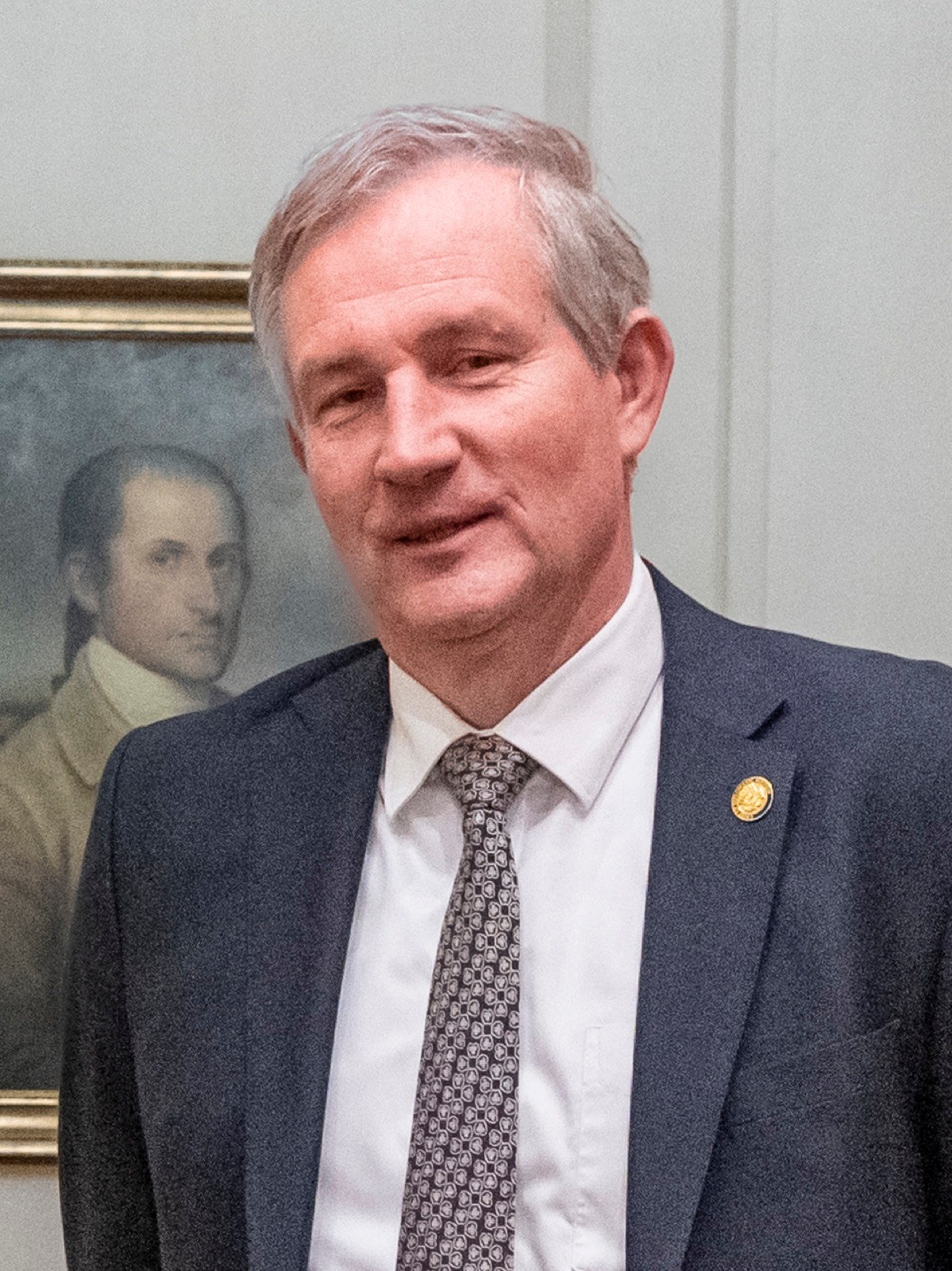
Ambassador Laurent Bili
Ambassador Laurent Bili is France's diplomatic representative in Washington since spring 2023 and previously served as ambassador to Beijing starting in September 2019, navigating diplomacy during the COVID-19 pandemic.
Episode Summary
Ambassador Laurent Bili has served as his nation's diplomatic eyes and ears on the ground in Washington, D.C. —and across the country—since he began his posting in the spring of 2023. Guest host and journalist Liz Landers and One Decision's resident spymaster Sir Richard Dearlove speak with him about the prospects for Congress to pass a support package for Ukraine and President Macron's comments that Western boots on the ground cannot be ruled out. They also discuss the NATO alliance and the European Union's military commitment to Ukraine, the war in Gaza, and the potential security concerns around the upcoming Paris Olympics. Plus, Sir Richard talks with Bili about his previous posting in Beijing, where he arrived as the ambassador in September 2019, and navigated several years of diplomacy during the COVID-19 global pandemic.
Listen & Subscribe
- Watch on YouTube
- Listen on Apple Podcasts
- Listen on Spotify
Transcript
INTRODUCTION
Landers: You're listening to One Decision, the podcast that looks at the choices that shape our lives. I'm today's guest host, journalist and correspondent Liz Landers. And I'm Richard Dearlove,
Dearlove: former chief of British intelligence, otherwise known as MI6.
Landers: Each week, we explore some of the biggest choices and issues that have global impact. We hear from the key players and influencers making, informing, and shaping the decisions that impact us all. Today, we are joined by the French ambassador to The United States, Laurent Bili. Thank you so much for joining us today. I know you are very active in Washington and around the country. So we're very excited to have you here to talk about the very important and special relationship between The United States and France. There's a lot happening in the world. I want to kind of jump right into it and get your take on several big global conflicts that we're following.
INTERVIEW
Billy: First of all, thanks for having me. It's a pleasure to be with you, and thanks for the nice pronunciation of Bili. It's not so easy to say.
Dearlove: Ambassador, can I sort of interject straight away with the question? I'm fascinated by recent statements by President Macron about Ukraine because it seems to me, you know, he has shifted his policy and really adopted in recent weeks quite a — well, a very hard line, particularly with this suggestion of the deployment. I can't quite make a distinction whether NATO or French forces maybe, but it's on the ground in Ukraine, which has caused quite an outcry politically. But I think the main issue is, has he shifted his ground on Ukraine and suddenly he's become much more hawkish than he was previously?
Billy: Well, if you look at the two last years, you will see a kind of constant pattern. Our goal from the very beginning has been to try to protect Ukraine, to try to avoid an escalation, and to try to avoid that Russia take any advantage of the war. So at the very early stage of the war, there was what happens to be an illusion, that possibility to stop the war, to bring Russia back to some kind of reason, and to stop the offensive. That faded quite rapidly, but still they were thinking that at that moment France was maybe a bit weaker than others. And so from that moment to today, we have just, and I think the President has just been adapting to the reality. And the reality of the moment is that we have seen in the last weeks beginning of a kind of defeatism, you know, that we are in a slow moving defeat kind of mood. And it was time to change a bit the narrative and to make the point clear to Russia that we will not let Ukraine down. And that's the reason of restoring a kind of strategic ambiguity of how far we are ready to go, because Russia took for granted that anyway we will always be out of being in Ukraine directly. It doesn't mean that the president advocated for fighting troops already to be sent in Ukraine. It was more speaking about supporting Ukraine, with boots on the ground, but in different ways. But still, it was that kind of message that it was time to change a bit the narrative at the moment, especially while we are in The US. You know that the discussions at the Congress are difficult and that we shouldn't let this internal discussion overshadow the reality of also of a huge support from Europe to Ukraine.
Landers: Mr. Ambassador, I definitely want to talk about Congress and sort of the standstill that we've been at here in The United States over that funding. But just another follow-up question on those comments from Macron. What was the reaction from the diplomatic community here in Washington? Did you get a lot of calls that day? Did State Department officials reach out to you? Did some of your European counterparts here based in Washington, DC reach out to you?
Billy: Well, it was, of course, a very interesting moment because, as you know, for diplomats, if everything is too simple, it's not really interesting. That's the moment where you need to explain also because it was a kind of short sentence that provoked a lot of comments. So the overall message about supporting Ukraine is massively supported. The leadership that France taken on that moment to try to change the narrative that I was mentioning has been, I would say, applauded. That particular point on the boot on the ground was a bit more sensitive. I think there were two kind of fear that we have to dissipate. One was the way to create some distance between Europe and The US, with The US having a very tough position on the issue. And then we were also fear that that declaration will be used in domestic politics to criticize the administration and President Biden. That was really not our point, and I think we made that clear. And I feel in a way, putting more emphasis on Ukraine in these days, I've been also contributing to put more focus on what was going on in the Congress. And in that sense, it was also welcome quite largely in some sectors, let's say, of the administration. And for our allies, we have some allies that are really supportive without restrictions. Some that we are more concerned that we may have that expression of division between European members, between Europe and The United States.
Dearlove: Would France be inclined to support Stoltenberg's initiative to have a NATO fund, which as it were would insulate funding Ukraine from, let's say, a Trump default. So you would have a 100,000,000,000, I think was the figure mentioned by Stoltenberg, which all the NATO members would contribute according to their GDP. And obviously France, UK and Germany would be very near the top of it.
Billy: I think it's a nice effort to also try to change the narrative. In that sense, it's something that I would say personally I will welcome as a way to think about the support to Ukraine. But at the end of the day, as you mentioned, there is no NATO money. There is a US contribution, Europe contribution. It's new money coming from nowhere. So if you consider that Europe has been sending already more than 100,000,000,000, that has already committed 50,000,000,000 plus for the next years, and on top of that, that there is also new funding that has been announced nationally by France, Germany, Denmark and many European countries, I don't see exactly where these 100,000,000,000 come from. Is that the one we have been given, the one we have been committed, or is it something completely new? So that's kind of things that are not really clear. But let's say that, again, the real issue is what are we doing nationally? What are our efforts? I wouldn't like that to be a distraction to the real debate that we have nationally of what we are doing.
Landers: The EU member states right now, as you mentioned, have given more money to Ukraine overall than The United States, but The US has given more money for military aid. Whereas the EU members have given more for financial rebuilding and also for humanitarian aid in Ukraine. Do you think that the EU should shift some of those priorities? And I guess I also ask because The United States here has been at a standstill with congressional approval of additional aid for Ukraine. President Zelenskyy of Ukraine is begging The United States for more military aid at this point. Could the EU fill that gap potentially?
Billy: Well, I think these two kind of fundings are somewhat equally important because it's also very important to have a functioning state in Ukraine. So EU has been paying the bill of the military, of the civil servants, and keep the country somehow on its feet. At the same time, to be honest, I would like to be able to say that Europe is able to match the support of the military from The US, but that's not the reality. The reality is that we have been harvesting the dividend of peace for the last thirty years. That in the last two years, we have been changing. We are reinvesting in our military, in our defense. We are spending for France, Germany, the famous 2% of GDP toward defense, as requested by NATO. But we are not yet in the capability to match The US support. We need to boost our defense industry to be able to do that. At the same time, I think it's important for people listening to us to see the difference of situation where we are. When Europeans are supporting Ukraine, they are allowing also Ukraine to purchase some defense equipment from The US. Europeans are investing in their defense. They are buying defense equipment from The US. And when we are diverting our energy consumption from Russia, we are basically buying LNG from The United States. So the cost of supporting the war for the Europeans is much more heavier than it is for The US, and I think it's something that has also to be taken into account.
Dearlove: Ambassador, can I just interject a question? You may be aware I've been a big critic of European defense policy because I do think ultimately, you know, it would be competitive with NATO, but the one area where it seems to me the EU and the European nations in particular could make a fantastic difference because it's what they're really good at. It's by coordinating European armaments production at the level of Brussels and, you know, building that support across Europe to supply Ukraine. And in fact, you know, with PESCO, you've got at least, you know, the sort of institutional strength that exists in Brussels to do that very quickly. Is France prepared to sort of push that initiative? Because, you know, France has a very strong manufacturing tradition in the armaments field. I mean, Macron could really lead that initiative in Europe.
Billy: Well, in the first twenty years of my career, I will say that we may have had ambiguity about the relation between NATO and EU because we were so concerned about the development of the EU, the political nature of the EU that we wanted to protect a bit that small identity to grow before to really play the role of coordination with NATO. Today it's quite interesting, especially for me, so after these thirty years, that I see that in NATO, that's France advocating for the reinforcement of EU-NATO relation, while some other partners, also their sequential changes, you will understand what I'm referring to, are more sometimes cautious about that relation. On your point on defense capabilities, these two last years have really changed the nature of the EU. Again, at the beginning of my career, it was something like we were even not sure that defense was part of the EU project. We had some complex sentences explaining that the defense policy of the EU was part of the process that could, at the end of the day, manage to arrive to the point of the European defense. It was so complex that nobody understood where we were. Since two years, we have accepted that we could use the so-called peace facilities to buy armaments for Ukraine. The EU Commission has been supporting defense industries. We have been creating clusters to support certain capabilities to provide aid to Ukraine. The only thing, and referring to your question between NATO, EU and some of The US, Europe, at certain moments, there is a need to accept the idea that when your partner are contributing a bit more, they need also to be able to produce a bit more and to accept that there is a small room for European industry in that overall picture of the North Atlantic defense industry.
CHINA AND THE COVID-19 OUTBREAK
Landers: Mr. Ambassador, I want to get into a little bit more of your time as the ambassador to China. That was your posting prior to being in The United States. You arrived in China and Beijing in September 2019, which is kind of extraordinary timing. What was that like being the ambassador there during the coronavirus? And talk about information sharing that you got. Do you think that the Chinese were being transparent with you, with your government and with the world throughout the coronavirus pandemic?
Billy: I think we have to distinguish several moments. I was having that discussion with a lot of specialists on health issues which have been involved in the management of the COVID-19, both in France and in The US. And it's interesting to recall and to try to think how much time did we lose from the lack of information from China. But with a question mark, how much did the Chinese central government himself really knew about things? And I think that's one of the question, mark. It's really difficult to give a definitive answer to that point. But in a country when you bring bad news, you are not necessarily going to be rewarded. And it's almost the same thing at the world scale. When a country suddenly declared that they have got a suspicious situation somewhere, the first reactions of its partners are to close the border, there is not too much incentive to be transparent. It happens that I was in Wuhan in mid December because I made a visit to the province, which is a place where French industry and cultural actions, cooperation is very important. And I could witness first then that life was completely normal, that the type of interaction that I had with the leadership and that I could see all the leadership of the province because of the special relation that we have with that particular province. There were no precaution at all. So I don't imagine that in mid December there were unawareness at the political level, even of the province, that something was happening. If it wasn't the case in Wuhan, I've got doubt that Beijing will have known that also something was going on. And in mid January, that was the Chinese New Year in Wuhan, and there were huge banquets to celebrate the Chinese New Year with, I think one was organized with 30,000 people in Wuhan. And again, at that moment, there were already information about the disease, but no real precaution, 30,000 people logging in and celebrating, and I suspect having a lot of campaign together. So that's where I will say on that moment, at the very beginning of the crisis, it's very likely that Chinese authority didn't really know the gravity of things. And things have been accelerating dramatically from the mid January, the week after. That's a particular moment. On that period, about the transparency and the gravity of what was happening in Wuhan, it's pretty sure that we don't have, I mean, we won't have a clear view of what really happens and the level of casualty. We know that it was much more —
Landers: You think ever?
Billy: I think that's the kind of thing that you will make an assessment through comparison of what should be the demography and what has been observed. And so you will observe on statistics that there is something wrong and you may measure as an evaluation of what went wrong. On that moment, that's where I think they were trying to reassure and their message was also very interesting because that was the moment where they say, well, we should apply WHO recommendation. You should continue to come to China. The plane should be flying. Well, mid March, when the pandemic went to France and to Europe and also to, well, rapidly to all over the world, their behavior changed completely. So that was also very interesting to see that in early February, I was meeting Xin Gong, the former ambassador to The US, and he was really advocating for a visit of President Macron in a timely manner to show some support and that we, as good friends, we should maintain every flight to China. And that one month plus later, all that was done. But just maybe an anecdote, you remember that there were the Olympic Games in Beijing. And so I was in Beijing, so people sometimes ask me, you were lucky, you had the chance to see the Olympics Beijing? I say, no, it was a bubble. And if I would have entered that bubble, I would have spent three weeks in hard quarantine. So there were games in Beijing, but it was the same thing that if it was somewhere in the Swiss Alps for me because it was impossible to be in touch with any kind of athlete, delegation, journalist.
Dearlove: One point historically, I mean I believe it was a French company that constructed the Wuhan Institute and the research institute and you know it was sort of built to French standards and that you actually had an agreement with the Chinese to run the institute jointly but pretty quickly the Chinese were need on that agreement and throughout my understanding is that the French you know were excluded from the institute whereas it had been the sort of intention of the construction that it should have been a joint project. I mean, the reason I raise that is because, you know, the Chinese have a record on reneging on rather important agreements. I'm thinking of Hong Kong on a much bigger principle. But is that actually what happened with the institute or not?
Billy: First of all, it's right that it was not really the institute, but the P4 laboratory was built with French support. It was a decision taken just after the SARS in the early 2000s. And the idea that China was very likely to be the next place where a major outbreak will happen and that supporting China to have this kind of facility will contribute to our own protection. Let's say that was the general philosophy. During the crisis in Wuhan, we had still one French expert working in laboratory, and he has been working in Wuhan during all the moment. He refused to be evacuated with the French citizen of Wuhan in early 2020. So he was there until his retirement, by the way, in 2023. One of the issues, however, is that we had difficulty to really have a working plan with China on what will be done in the laboratory. That's probably one of the reasons you think that we were pushed out. But it's also, to be honest, a kind of difficulty on our side to mobilize the means to be there. So it was more like there were some delays on finalizing the lab because it's very complex and to transfer the note. That's the reason why we still have an expert for these safety measures within the lab. And in the context of the COVID-19, it has been also quite difficult to really mobilize again energy on the functioning of the lab.
ISRAEL, GAZA AND THE PARIS OLYMPICS
Landers: I have to ask you two questions. One of them is the conflict between Israel and Hamas. We have seen a major strike on aid workers that I think has, according to readouts from the White House, very much angered President Biden. And I'm wondering if you see this moment as a potential turning point in this conflict and what you think The United States and other Western allies who've been supporting Israel should be doing right now at this moment.
Billy: Well, I had the chance to meet recently, Jose Andres, and I was very impressed by his commitment on the work of NGO and his work in Gaza, and that's really a tragedy. It's probably one moment of inflection, but I think from the very early day, France have been advocating both, of course, right to self defense of Israel, condemnation of terrorism, but also respect of international humanitarian law and laws of wars. And I think that call is even more important after that tragedy. But at the end, we also have to look forward, and that's what we are trying to do in the Security Council and find a pathway to a lasting solution, there is no alternative to the two state solution.
Landers: I want to ask you about the Olympics. I know the French are extremely excited to be hosting in Paris this summer. President Macron made a very interesting comment about the Russians potentially targeting the Olympics. What does that mean? Are you seeing intelligence right now that Russia may try to launch some kind of physical intervention there on the ground? Or would that be a cyber targeting? Do you have any more information you can share about that?
Billy: What we have been observing in the last, especially two months, it's an increased hostile behavior from Russia in the sphere of misinformation, disinformation. And I think that's part of the concern that there is somehow no doubt for us that Russia is going to try to use the Olympic to fuel again some hostile messaging towards the West, towards France.
Landers: Well, if you get any more information on that, please come back and share it with us.
Dearlove: Can I interject one last question? I'm not expecting a detailed answer because it's a highly political question, but are we experiencing a tectonic shift in the domestic politics of France? I am deeply concerned by the polling that Marine Le Pen is sort of showing at the moment.
Billy: Well, European elections in June are always a peculiar animal, if I can say, because it's a moment where French people usually express more kind of protest vote. But normally we have the normal next presidential elections and parliament elections in 2027. So I think you can count on a stable France for the years to come.
Landers: Very diplomatic. That's a great answer, ambassador. Ambassador Bili, thank you very much for joining us. We really appreciated this conversation. I know we were able to cover a lot of different issues, and you have a really interesting range of expertise around the world. So thank you for sharing.
Billy: Thanks for having me again. It was a pleasure to be with you.
ANALYSIS WITH SIR RICHARD DEARLOVE
Landers: All right. So Richard, that was a great conversation, I think, with the French ambassador here to Washington DC. Let's jump off talking about the Olympics since that's kind of how we ended the conversation with him there. You are a former head of an intelligence agency. What do you think the French and the world should be worried about when we're hearing some warnings about Russia potentially trying to target the Olympics?
Dearlove: Yeah. I think one shouldn't take those comments exactly at face value. Look, the background, of course, is that we are in a gray war with Russia. And on the Russian side, you know, it's a war with the West, even though, you know, we look at it as a conflict contained in Ukraine. So the context is going to produce some exaggerated statements, and let's face it, the record of the Olympics have been pretty, you know, tarnished over the past thirty years, you know, particularly for the Russians who have not been able to compete in certain Olympics as the Russian team, only as individual athletes. So I mean this relationship has a long history. I mean in the build up to the games I'm sure that there will be some, you know, exaggerated statements made politically. And of course, the other issue about the games that the French will be worried about is the security when it comes to terrorism, because it will be such a high profile event. And, you know, we all know there have been some dreadful incidents in Paris and the recent incident in Russia doesn't sort of fill one with confidence that this problem's gone away. There will be tension around the events of the games, that they're going to be massive security that the French are pretty good at, given that they have, you know, both the gendarmerie and the police, and they have, you know, especially trained units to deal with these issues, and they are efficient, very efficient in my view, but that doesn't mean, you know, they can completely mitigate the risk. And I don't think that the Russians are going to do more than make some outlandish statements because they won't want to be seen as ruining the Olympics, bearing in mind that a lot of their allies and friends will be participating in this prestige sporting event, which has a massive political dimension as well. But I mean, recently there was this extraordinary conversation reported in the press, I think it was between Russia's defense minister and Macron, in which he started making threats over the phone to Macron. So I mean, the Russians must be pretty fed up at the moment because they've always regarded France as a political maverick in Europe, given France's relationship with NATO and the history of France's relationship with NATO being technically outside of NATO for some time, having its own independent nuclear deterrent, which has this, tous azimuts rationale behind it. So suddenly to have the French going really hard on Ukraine must have been a bit of a shock in Moscow, because they would have seen France as not necessarily soft edge, but perhaps a little more of a country with whom they could dialogue than whom they would have an absolute confrontation. And suddenly, Macron switched the issue.
Landers: Let's talk some about the Ukraine and Russia war because we talked a lot with him about that, about defense spending on that. I think the thing that stuck out to me most about it was his continuation, I guess, an agreement with Macron's statement that this is an existential threat to both France and Europe. And basically how many times the ambassador said that this has changed Europe, that this conflict has changed, how the EU is coalescing around their defense industry. Well, you sort of indicated this, but talk a little bit more, I guess, about Macron and how you see his approach to this war and conflict changing in the last year.
Dearlove: It's a huge change of position by Macron, which the ambassador sort of didn't admit to. I mean, he said it's a change of policy. But, actually, going back to the beginning of the conflict, I mean, Macron was the dove who was prepared to phone up Putin and talk to Putin supposedly to try to persuade him, you know, to take a different line, which must have been a very unrealistic position to hold, given Putin's determination to push through with his special military operation. So I mean, I'm quite relieved to see that Macron is now taking a really tough line, and is saying clearly it's an existential issue for Europe, because it really is. And if France and Germany can agree on this and have a much more unified approach, both in terms of supporting Ukraine and politically, which puts them much closer to The UK on this issue. I mean, bear in mind that The UK probably has been the leading European nation, not in terms of quantities of supply, that's Germany, but in terms of training the Ukrainian military and being involved with the Ukrainians directly advising them. For me, it's a relief to see France now shifting its ground and being much more mainline, much closer to where The UK has been since day one. And, you know, we've been worried about the consistency of the French position. So I don't agree with the way that the ambassador described the process, but I'm very relieved to hear about what he said and reflecting the very tough line that Macron's taking.
Landers: Congress in Washington, you know, as we've been talking about this for months now, has not been able to get this additional military aid over to Ukraine. President Biden has managed to find ways and to find funds that had already been set aside so that he has been able to send money over to Zelenskyy. I mean, I guess we didn't get into this as much as I would have liked with the ambassador, but do you think that there's anxiety in Europe right now over whether The US will be able to pass that funding eventually. And this coming week here in The US may be that deciding moment as to whether the speaker of the house will actually bring this funding to the floor for a vote.
Dearlove: Well, there's massive anxiety, I think, and real concern. Can the Ukrainians sort of hang on until either the American funding goes through or the Europeans get their act together sufficiently to have a fund which they could create, which is as it were Congress and Trump proof, so that if the American money doesn't come through. And there's no question in this conflict that the industrial production that lies behind the military capability is crucially important. Ukraine has quality, has motivated much better armed forces, but the Russians have infinite quantity and their policy in similar conflicts. I mean, the reason that maybe it's not a great parallel, it's an important parallel. Stalin managed to get Soviet industry, despite its parlous state, to outproduce German industry in the last stages of World War Two, which is why, you know, the Soviet Union prevailed in the conflict in the East eventually, because, you know, they had more tanks and they had more men. They had almost inexhaustible reserves if you could mobilize them, and that's the big question, if you could mobilize them. So the issue is crucially important. And at the moment, we're seduced, I think, partly by Russia's clever media campaign, which is telling us the Ukrainians are not doing so well. Actually, if you look at the detail of what's happening on the battlefield, the Russian losses are terrifyingly high, and the gains they're making are tiny. But the psychological impact is huge, and it's designed on the Russian side to make us lose confidence and make us say it's not worth supporting Ukraine because in the end, all we're doing is making the conflict, you know, worse and more bloody and more costly. But, you know, that's a narrative that the Russians want us to believe. And at the moment, they're being relatively successful. This is what they're good at. I mean, they're fighting this war on all fronts at the moment. And, you know, we aren't psychologically in such a unified and focused position because we don't see it yet. Well, the ambassador, thank God, said it's an existential threat to Europe, which of course it is. But people need to be persuaded of that. And that Macron is now advocating that line is, in my view, a big plus because, you know, whether you like Macron or not, he is an influential voice.
Landers: That's it for this episode of One Decision. We drop new episodes every Thursday, so like and subscribe so you never miss an episode. Drop us a line and tell us your thoughts and what decisions have impacted you where you live. You can write to us. Our email is 11. From me and the team, thanks for listening. See you next time.