Hosted by Christina Ruffini and Sir Richard Dearlove
Guest
John Raine
John Raine is a Senior Adviser for Geopolitical Due Diligence for the International Institute for Strategic Studies (IISS) and analyzes the ripple effects of the war in Iran.
Episode Summary
With Ayatollah Khamenei’s demise occurring hours into the war, the West anticipated a collapse of the Iranian regime and a popular uprising that never came to be. Is a ‘memorandum of understanding’ the only thing preventing total escalation in the region? In this episode of One Decision, former MI6 Chief Sir Richard Dearlove and co-host journalist Kate McCann sit down with John Raine, Senior Adviser for Geopolitical Due Diligence for the International Institute for Strategic Studies (IISS), to analyze the ripple effects of the war in Iran and what it will take to stabilize the Middle East.
What is keeping a comprehensive peace deal off the table? How did Western intelligence miscalculate the IRGC’s resilience? And where does this leave the rest of the Middle East?
We also break down China’s pledge to support Cuba’s sovereignty, the 75th anniversary of the Cambridge Five espionage scandal, and the latest in the war in Ukraine, including China’s role in training Russian soldiers and the opening of a museum in North Korea that memorializes the North Korean losses in the war.
In this episode:
1:07 – Iran, Israel & Trump: The Middle East Crisis Explained
2:52 – Cuba, China, and US Spheres of Influence
6:23 – Cambridge Five: Cold War Spy Scandal Revisited
9:51 – Russia, North Korea, and Ukraine War Shifting
13:26 – Iran War: MOU vs. Formal Peace Deal Explained
16:55 – Why a Comprehensive Iran Deal Remains Out of Reach
22:41 – IRGC Resilience: How Iran's Regime Survived
29:08 – Who Has Influence Over Iran's IRGC?
33:51 – Israel's Military Objectives and Netanyahu's Agenda
39:36 – Gulf States' Vulnerability and Abraham Accords Future
45:26 – How Does the Iran Conflict End? Three Scenarios
49:47 – Sir Richard and Kate Discussion
Hosted by Sir Richard Dearlove (former MI6 Chief) and journalist Kate McCann (Political Editor at Times Radio).
Listen & Subscribe
- Watch on YouTube
- Listen on Apple Podcasts
- Listen on Spotify
Transcript
COLD OPEN
Raine: It's 2 in the morning for the president, his favorite tweeting hour. Is he suddenly gonna call this? Really, the Israelis haven't compromised at all on their military objectives. They're still very much thinking about going for broke. We've got a regime in Iran that's revolutionary, a prime minister in Israel, which is radical, and we've got a president in the US who is at least a randomizer.
INTRODUCTION
Mccann: Hello, and welcome to One Decision. I am your cohost, Kate McCann, and I'm joined as ever by my cohost and former head of MI6, Sir Richard Dearlove. Hi, Sir Richard.
Dearlove: Hi, Kate.
Mccann: Well, we last saw each other at the podcast show in London.
Dearlove: Not in the middle of this very hot heat wave, but it was still getting pretty warm. Did you enjoy the podcast show?
Mccann: I did. I really enjoyed it. I loved our audiences there. I thought they asked some really interesting questions, and it was good to meet people who listened to the show and those who hadn't discovered us before. So I had fun. Did you?
Dearlove: Yeah. I did, actually. I find it quite difficult sitting in an aircraft hangar with thousands and thousands of people around doing a show where people are listening to you on headphones. But you get used to the genres or the technical circumstances. And, yeah, actually, we did, I thought we had a pretty focused audience. They listened hard. And you're right. They did ask some interesting questions. So I went away feeling we maybe had a good, well, we had two days. We had two good presentations.
Mccann: Yeah. And hopefully, some new listeners who join us for this episode. And it is boiling hot. I have to say we are in the middle of a heat wave. Thankfully, we weren't the last time we met in the pod show, but we're gonna sweat our way through this episode because there is a lot to cover today. We've got national security expert John Raine with us to discuss the Iran war's ripple effects through the Middle East. And really, we're gonna get into with him the questions about where this goes next. You know, what's the difference between a memorandum of understanding and a peace deal? And crucially, what happens in Lebanon and what does Israel do to the chances of a formal agreement. So that's later on in this episode. And make sure you subscribe to One Decision on YouTube, Apple, or Spotify so you don't miss any of our big interviews. But before we get into that, let's chat over a few other things that are happening, Sir Richard, because there is a lot going on. I thought we should start with Cuba. Now we know it's a bit of an obsession of Marco Rubio, and we know that the Trump administration has decided on this sort of spheres of influence strategy and that Cuba is very much within America's sphere of influence. But there's an interesting thing going on regarding China and Cuba at the moment. What do you think we're seeing there with China pledging its support for Cuban sovereignty?
Dearlove: Yeah. I think this is just a sort of fraternal expression of Chinese backing, which doesn't really amount to very much in practice. I think China are so used to having that friendship with Cuba, friendship with Venezuela, feeling that they had a foot in the back door of the United States sort of strategic area of influence. But suddenly, they're being pushed aside. It's easy to make statements of support for Cuba. But in practice, what actually are the Chinese going to do? Are they going to suddenly supply the energy or the oil with which Cuba is lacking? Doubtfully. I mean, my own reading really is that China's happy to go on saying supportive things, but it's recognized it's lost a footing in the Caribbean. It's lost that pressure that it can exert through Cuba and Venezuela, and it probably doesn't really want to get further involved than making statements. I know that's a rather cynical analysis, but it's not gonna rush to Cuba's support.
Mccann: What can it do? Do you think it's more to do with China's relationship with President Trump and America? Given what America and what Trump actually especially have said about Cuba and, you know, given what we've seen with Venezuela, there was a suggestion that Cuba sort of next on the list. Is this China trying to warn America off that? Is this again the idea of those spheres of influence and China just saying, okay. We get it, but be careful.
Dearlove: Yeah. I think that probably sounds it out quite well. We get it, but be careful. Don't overplay your hand. And Cuba still has powerful friends, but powerful friends which actually don't necessarily have a lot of raw power resources in the vicinity. But it puts a slight brake on what Rubio, who seems to be leading policy, will say and do. But it's already clear that there's a lot of informal chat going on between the extended Castro family that still called a lot of the political shots and United States officials. So I think already we are seeing or witnessing the beginnings of a significant political shift. And where did this idea come from that the United States were, you know, gonna invade Cuba? There's no way they're going to, as it were, conduct another military operation. I don't think we're gonna see much more than that sort of, let's say, warfare. We're not gonna see warfare. And it's a big change politically, and I think it's a big change which will happen. It'll be sort of graded over time as American influence becomes more and more assertive as is happening in Venezuela without a big political change necessarily for the regime.
Mccann: So Sir Richard, there was something I wanted to talk to you about today, which was it's the seventy fifth anniversary of Burgess and Maclean's defection to the USSR. And I think there'll be a lot of people listening who will vaguely know what we're talking about but don't really know fully. Can you explain who these two British spies were and why this is important?
Dearlove: Well, they're referred to as the Cambridge Five. And if I'm right, Burgess, Maclean, Philby, Cairncross, oh god. Who was the fifth? The fifth was Anthony Blunt. And, of course, that's even more of a scandal as he was keeper of the Queen's pictures and was close to the royal family and so on and so forth. Basically, it was a period in the 1930s when this group who were all at Cambridge were ideologically recruited by the Soviet Union around the time of the Spanish Civil War when, you know, there was a belief that because of the Great Depression that the West was, you know, losing its sense of reality, losing purchase, didn't have the answers to what the future world would look like. And a number of young, gifted, intellectual Brits who joined MI6 were either then recruited or a bit later recruited by Soviet intelligence. And it was a major enduring penetration, which, of course, was hugely important at the time. And, you know, it's one of the great sort of espionage stories of the pre Cold War, although, of course, it extended after World War Two into the Cold War. And, you know, agents like Philby, who actually was the MI6 head of station in Washington for a period of time, a post which I occupied, was obviously in a crucial position. And there was a scandal around it, particularly relating to Burgess and Maclean, who both had very disreputable and louche private lives. And it was felt that, you know, if they had been disciplined, if they had been interrogated earlier in their careers, you know, this would never have happened. They would have been caught. So it's a complex and long running story. I mean, I'm pleased to say that I represent the group of officers who were recruited in the 1960s to clean up MI6 and, as it were, rebalance the war against the Soviet Union in terms of our intelligence successes vitriol. And I'm pleased to say that my professional experience, the boot was on the other foot. We were recruiting lots of important Russians. But it's an extraordinary story because a lot of people wouldn't have joined MI6 as I did in 1966 because it had such a, I would say, disreputable history because it has gone through these catastrophes.
Mccann: It's fascinating stuff. We've been talking about China. We've been talking about China's influence, really. And, obviously, the war in Ukraine continues. It rumbles on behind everything that we discussed. But there's also now this question of China and North Korea supporting Russia and potentially the links between China and North Korea and Russia and the training of those people fighting against Ukraine, that being more intertwined and more kind of deep, I suppose, than maybe we'd known about in the past.
Dearlove: There is now this public recognition in North Korea of the number of North Korean soldiers that was killed fighting against the Ukrainians. But I think what's really significant in the last few months is the fact that the war on the ground in Ukraine is going rather badly for the Russians. The losses are incredibly high, and the impact on the Russian economy is beginning to hurt Russia badly. And the consciousness and awareness of the war is being extended to the greater Russian population. So somehow, the sort of optics are changing. The balance of the way that the war is perceived both in Europe and inside Russia, I think, is subtly shifting and it's a rather important moment because I think the arguments in favor of a ceasefire are now becoming more attractive to Russia because of the huge economic, political, and social downside of the war. And the fact the Ukrainians have upped their game in deep penetration attacks on Russian energy and manufacturing facilities. So there is actually a lot going on. Maybe we should have a special podcast to discuss this shift and change because I think it's very significant. And I think it's a precursor to perhaps a political change in Russia. I don't mean the fall of Putin or anything like that, but the way the war is perceived and perhaps the gaining of momentum towards a ceasefire line and some sort of negotiation not being, as it were, enforced on Ukraine by some weird Trump interpretation of what's going on.
Mccann: Yeah. I think we should definitely do that. Let's arrange a special episode to talk a bit more about that, I think, in the future because it's really important, as you say. It's time there now to get into our interview for the day. What will happen next in Iran, and how will this conflict come to an end? And crucially, what is going on in the wider region? Who has influence over the IRGC, and who might be able to pull the strings in terms of a broader deal? Plus, what does it mean for Israel and Benjamin Netanyahu?
INTERVIEW
Mccann: John Raine joins us now to break down the regional ripple effects and how this war might come to an end. He's a senior adviser to the International Institute for Strategic Studies. He's a career diplomat with the UK Foreign and Commonwealth Office. He's also a national security expert, and he's worked in Kuwait, in Syria, in Saudi Arabia, Iraq and Pakistan. John, welcome to One Decision.
Raine: Thank you. Great to be here.
Mccann: Well, look, there's a lot of talk about deals, lot of talk about what might be in a potential deal. But I feel, John, like we ought to start today by working out the difference between a memorandum of understanding and a deal. What's the difference here?
Raine: A memorandum of understanding is necessarily a much lighter instrument than a deal. It's much less binding, and it's got much less content. So the advantages of a memorandum of understanding is you can reach it far more easily than you can reach a deal. And indeed, you could stick with just basically the heads of terms. So a lightly drafted document, which is actually quite hard to enforce, might, in this case, suit all parties. But what it doesn't do, it doesn't carry the weight, and it doesn't have the detailed implications. And therefore, I would argue, it doesn't have a strategic value of a deal. And it does at the moment look as though a memorandum of understanding in some form is what's in scope. I have to say it doesn't really look as though a deal which addresses all the strategic interests of concern to the three principal parties, Israel, Iran, the US, doesn't really look as though that is yet in scope.
Mccann: What's making it difficult to strike a formal agreement, a bigger, more substantive agreement at the moment?
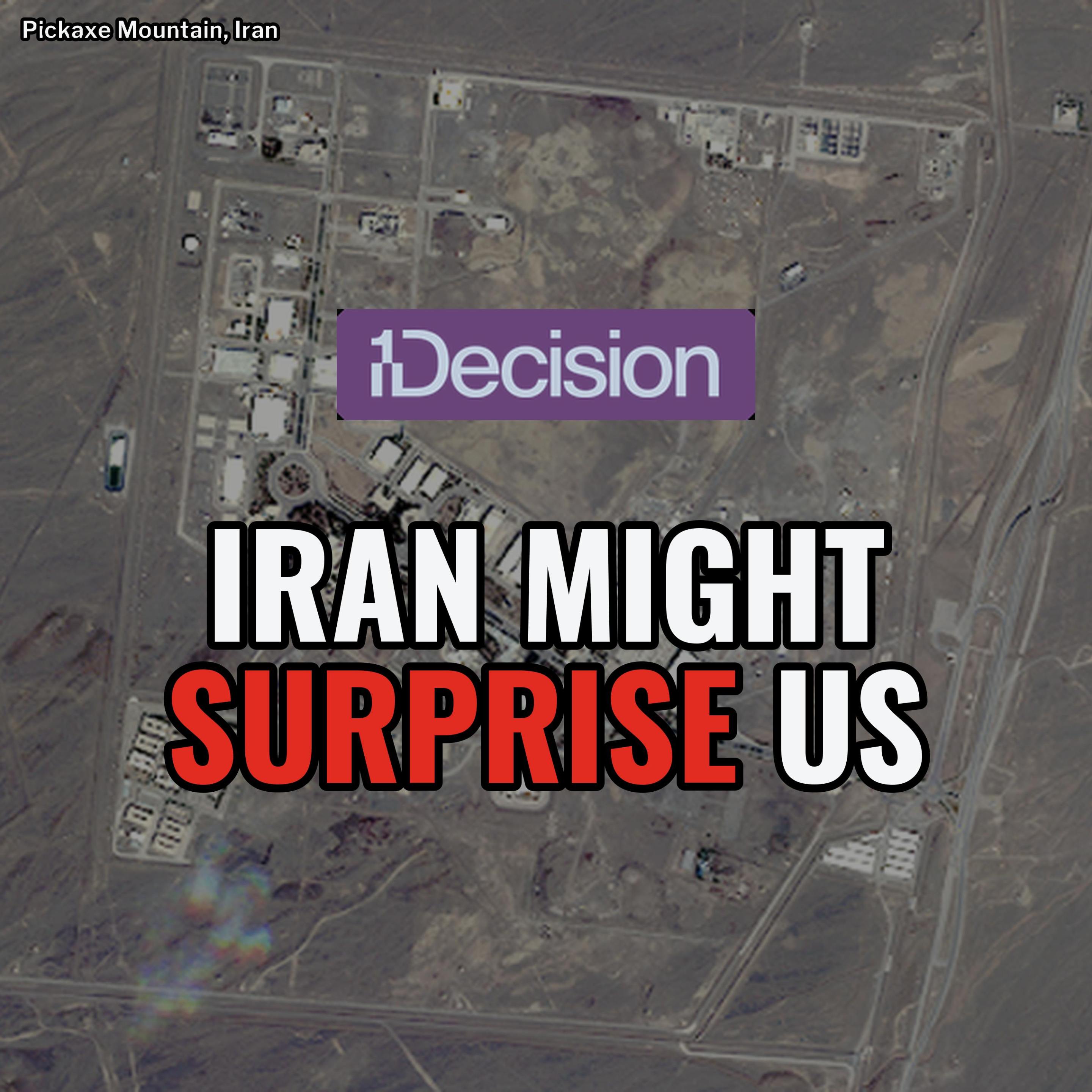
Raine: Well, there have been some interesting discussions about delaying discussions on the nuclear program, on Iran's missile program, and Iran's projection of force in the region through its proxies. So these are really big strategic issues which define the Iranian revolution, which preoccupy the government of Israel, particularly now they constitute most of Israel's national security agenda, and they have become really central issues for the Trump administration. Now those issues have all been shunted down the line for further discussion. So that's quite a lot to leave out of a deal. If, however, you put it the other way around, trying to get all of that into a deal which meets your most immediate operational requirement, which is opening the Straits, that kind of makes it really hard to reopen the Strait of Hormuz. So you may recall it was the Iranians who suggested separating out the nuclear program and probably the other strategic issues. And let's just talk about ending the blockade and meeting what was basically an operational requirement.
Dearlove: One of the things that really puzzles me, John, is the world's media seems to sort of credit Iran with holding a lot of cards. It seems to me that the cards that they do hold are actually rather weak and that the pressure that could be exerted still by the United States and Israel together is quite significant and quite considerable. What is making the regime or what's left of the regime, because it has been decimated, so intransigent?
Raine: You're right, Richard. It's easy to overestimate how much advantage, strategic or otherwise, the Iranians have derived from this. But I think they have derived some. One is that they came good on a threat they had always made to close the Strait of Hormuz. And as you and I will remember, over the decades, they threatened and they threatened. They never actually did. Now it's happened. And you can argue whether it was they who closed it or the markets. One way or another, they've shown that it can be closed and that they can credibly claim responsibility for that and therefore some measure of control over the Strait. So they have got that. The second thing they've got, which again was a threat they had often made but not come good on, was they have shown a readiness and ability consistently and accurately to strike hydrocarbon infrastructure in the Gulf. So in a way, the advantage that they've got is that they turn out to be able to follow through on these threats. Now there's more force to be applied to them. I absolutely agree with that. I imagine, I have good reason to believe that both the Israelis and the US will have a developed target set ready to go on the back of what they've already struck, on the back of the sustained algorithmically driven targeting intelligence. But the calculation they have to make is whether or not more force moves the Iranians to the table or indeed to the point of collapse or just reinforces some of the dynamics that are at play in Tehran at the moment. And those dynamics basically are a renewed commitment to resistance and a curious sort of lease of life that the resistance narrative has been given. And secondly, a much more practical consideration that evasion tactics, their strategies of dispersal and devolved command, have proved quite resilient. So for the Israelis and the US to, say, do a rerun, let's do another 14,000 targets, you may be on to very incremental gains. Where you'd get the huge breakthrough is if there were a fracture inside the IRGC itself or inside the heart of the regime. So that really is the security intelligence structure. So far, we haven't seen that.
Mccann: John, can we unpick that a little bit before we get on to talk about some of the other regional players and how they're interacting here? Because I think that's one of the things for me as a non expert in this region that I found most striking, is a lot of the commentary before this intervention was about how crumbly, how weak the regime was inside Iran and how it just wouldn't be able to sustain itself without a central figurehead. That just clearly isn't true. The IRGC seems to be able to sustain and almost is strengthened after what has happened here. How did people read that so badly wrong? And what does it mean coming out of this situation?
Raine: Well, I can't say how governments with very, very high quality intelligence services read this wrong, Kate. But history is not without precedence on that. I think fundamentally, there's a conceptual difference, a conceptual hurdle here you have to get over, which is that the Iranian regime is a revolutionary regime. And there was a time, Richard I can certainly remember, where diplomats and intelligence officials all over the world did a lot of dealing with or working against revolutionary regimes. And understanding the psyche and structure of the states of regimes was quite widespread. And that did inform calculations you made about their resilience, how you negotiate with them, so on and so forth. I think we slightly lost that. And so the Iranians have been treated as a failing state, a state that will be amenable to pressure without taking into account that it was still internally structured along classic revolutionary lines dedicated to the survival of the revolution. It had deep benches of loyalists, had total control over certainly over the security of the country and over large parts of the economy. So if there was a miscalculation, it was the effects of forcing that regime on the mentality of the regime itself. The big surprise in all of this, I think, to everyone, including the Iranians, was that the Ayatollah himself was killed. And the assumption was if you move that, then underneath the masonry will start working loose. But that didn't happen. I believe, although it's very hard to substantiate theories on this until we could read the published memoirs of those who were there in Tehran, I think the IRGC itself provided the unifying force and provided the resilience. As you rightly say, they have succeeded in occupying all the critical positions at the top. The other thing to remember about the IRGC, it's not just based in Tehran. It's a nationwide organization that is able to deliver the security of the state.
Dearlove: But how solid, John, is the IRGC itself? I remember you were one of the first people to explain to me way back, you know, when Qasem Soleimani was in control, this whole philosophy of IRGC Quds Force arms distance or arms length warfare. And they have, over time now, lost a pretty fair chunk of their leadership. Are you suggesting that it's still sort of reasonably solid, reasonably cohesive, and there are no signs of fracture in it yet at all? I mean, I would have thought that there must be individuals with ambition both in the IRGC and maybe the conventional military forces or what's left of them who see themselves as leaders of Iran, of a country which isn't, let's say, the revolutionary country that we've got used to. I mean, bearing its history and its instabilities seen in perspective over, let's say, fifty, sixty years rather than just since the revolution.
Raine: I think, Richard, that there have always been, there's always been a spread of views, let's put it that way, within the IRGC over issues such as how much of our effort should go overseas and how much in exporting the revolution and how much should be dedicated towards securing Iran itself and the regime within Iran. There've always been those kinds of debates. And over such issues as how close the relationship with Russia, we heard dissenting voices over Iran's closeness to Russia, most notably over the decision to provide them with UAVs, with the Shahed range of UAVs. So we have heard more than one voice. What we haven't seen is anything approaching insubordination or an alternative vision for Iran itself. Now I think one of the things that has happened is that the regime has most definitely pulled back from the offensive power projection that we saw through certainly the last decade, if not two. The instrumentalization of relationships with non state armed groups, with other regimes, two of which have now gone, one very important Syria, the other Venezuela. All of that has been scaled back, and the blood, as it were, has been diverted towards securing the homeland. Now amongst the many responsibilities that the IRGC will have are naval responsibilities. It's the IRGC Navy. And the Gulf have a very important role for Iran's play at the moment. Secondly, prioritization of controlling the regions. A lot of concern that you might have other centers of power emerging elsewhere in Iran. And, of course, everyone can remember the role that Qom played in the emergence of the Ayatollah Khomeini. So there is an agenda for the IRGC. It's a new one. It's a rebalanced one. But what it hasn't done yet is thrown up the leader who's prepared to re-envision Iran or to challenge the leadership at the moment, and neither has it yet caused the functioning of the IRGC to falter. Now a critical consideration here is that they and the other security agencies had already gone to pretty serious lengths to secure the country after the twelve day war when they were shocked, deeply shocked by the manpower penetration that Mossad had. So they launched a very vigorous, bloody counterintelligence campaign. And they have also made sure that anyone with potential to be an alternative power base has one way or another not been able to do that. So they were actually fairly firm in their control of the country before this happened, and now they have redoubled that.
Mccann: John, can I ask you who in the region, talking about kind of the interplay between powers and groups and actors in the region, who has an influence over the IRGC? If we're looking at this from the perspective of what kind of a deal might be agreed and who the Americans, the Israelis, are actually dealing with, who has a bearing on that?
Raine: Yeah. Well, Kate, the question we've been asking ourselves is about that. And again, it's one of the problems with revolutionary regimes is that those who have access from the outside don't necessarily have influence. Same goes for those who have sympathy, ideological or strategic. Largely, the flow has been the other way. So Richard rightly recalled the late Qasem Soleimani, who just embodied the way in which Iran exercised influence externally to an extraordinarily high level. Soleimani has a reasonable claim to have influenced Vladimir Putin himself over Syria. So they were much more focused on the influence that they could exercise rather than making themselves open to advice of any description. Now, of course, that's fine. But every now and then, you need something. And if you need something, you pay for it. So those countries who have patronized Iran, and Russia is an obvious example, do have a certain amount of influence over the regime. They do have. I think the Chinese have a certain amount of influence as well. The difficulty is that, firstly, in the case of the Chinese, they've been reluctant to use it at the political level or indeed at all. Although, you know, you'll notice their kind of scrupulously even handed statements. There's nothing to indicate that behind the scenes they're doing anything to make those idealized statements a reality. And on the Russian side, I think it's fair to say at the moment Putin is entirely preoccupied with the war in Ukraine. And the windfall gains that he's had from this war, he doesn't really need to do anything to perpetuate them. The war's doing that for him. I'm thinking of the injections of cash that he's had from oil revenues. So those who have something over Iran are either reluctant or decided for strategic reasons not to use it right now. And then that leaves all the others that Iran's had relationships with over the years. So none of the armed groups that they've worked with, I think including Hezbollah, are minded to try to influence Tehran. There's an agreement pretty much between the major players. I'd include the Houthis here. So the Houthis, Hezbollah, and Tehran is that we allow each other strategic maneuver room and don't interfere in the decisions that we're making. And that includes, frankly, the launching of the type of operations. So one of the multiple difficulties we've got at the moment is that there's no one who can really lean in to the regime in Tehran. There is an interesting question about the Gulf states, which you might get on to later, as to whether or not the multiplicity of back channels that they've got, the shared interest, the shared geography, whether that is actually tantamount now to influence and whether other Gulf states, with the exception, I think, of the UAE who very, very hard lie, are they actually interested now in influencing Iran towards a kind of workable solution? My view on that is that they would be. And, you know, the phones are still open. The phones are open between Riyadh and Tehran.
Dearlove: Before we get on to the Gulf states, of course, you know, this isn't a two party issue between, you know, the IRGC and Trump. The issue of Netanyahu looms pretty large. And it's interesting when you listen to a lot of the commentary, you know, the Israeli role is left out. I mean, my information is that, really, the Israelis haven't compromised at all on their military objectives and that they're still very much thinking about going for broke. I mean, broke for them, I guess, is regime change. But the preliminary stage to going for broke is getting rid of the HEU and really, as it were, neutering the regime militarily, particularly its ability to destabilize the region through the axis of resistance, as we've already discussed. And, of course, we've seen no compromise at all yet as regards Israeli attacks on Hezbollah and Hezbollah's leadership. How do you see this aspect evolving, John, now?
Raine: The Israelis are and wish to remain playmakers here for the simple reason that they have placed Iran at the center of their national security concerns for so long. And it's all the reasons you list, Richard. It's that Iran has come closest to manufacturing a workable nuclear device. It has, in Israeli views, been working steadily towards that. It has done more than any other actor to sponsor non-state armed groups with a specifically Israeli agenda. And the Quds Force itself, the clue's in the name, they were there to seek the liberation of Jerusalem. So they have been as perfect an enemy for the Israeli state as possible to imagine. So I think we have to remember a couple of things on the Israeli agenda here. The first of those is absolutely denial of the nuclear capability. There were many assessments following the strikes in the twelve day, but the consensus was that the damage that they'd done, the degradation, was such that the likelihood of Iran being able to weaponize without being seen, produce, weaponize a nuclear capability was so remote now as to be negligible, to not constitute a direct threat to Israel. Secondly, on Iran's defenses and ballistic missile capability, the view was certainly on the first of those that they had been degraded pretty much to a nullity and that, you know, the extent of the airstrikes since then showed that that was right. It's certainly the case now. So given that those two concerns have, in many ways, been addressed, what are they after? I think the comparison with South Lebanon is very helpful here. We've seen this radically forward defense agenda prosecuted under Netanyahu, and a very important part of it is that there are no constraints placed on Israeli preemptive action against emergent military threats. And when they first concluded a ceasefire agreement with the Lebanese, the Israelis had written into that pretty much that they had the right to return and strike when they perceived a threat, and they've exercised that consistently over the last nine months. Something similar may be emerging in Iran. Only this time, the Americans are feeling similarly. So you may have an agreement. They have that memorandum of understanding that we were talking about earlier, Kate. But if the Iranians start reconstituting their military capabilities or their program, it is clear that certainly under Prime Minister Netanyahu, the Israelis reserve the right to go in again. And that leaves this sort of curious free fire zone inside Iran. And it doesn't really matter what's in that MOU or what the volumes of cargoes are moving in the strait. That is a significant point of fragility in any arrangements in the Gulf.
Mccann: And that was my question. Where does that leave the Gulf states in this? Because, you know, not just that kind of carve out for Israel. And there's all the politics going on for Netanyahu in elections and his own political situation, his own political future inside Israel at the moment. But I'm also thinking about Lebanon and the clear objectives there, which the Israelis, I mean, there's reports of fraught phone calls between the American president and Benjamin Netanyahu. We've seen what Trump has said in public about, you know, Netanyahu will do whatever I want. Where does that attitude, where does that leave the Gulf states and that question about what happens next in Lebanon?
Raine: In short, Kate, it does leave them vulnerable because they have become now targets within the broader theatre. And they won't until arguably the strikes against Abqaiq and Khurais of 2019. Whilst the threats were made, as I said earlier, they hadn't actually become physically part of the wider Middle East conflict. Now they are. So the concern for them rightly will be that there is now in the mind of the Iranian leadership a clear straight line through attacks made against Iran for reasons of national defense to attacks made by Iran against the Gulf for reasons of retaliation. And that equation in the minds of the Gulf is very, very disconcerting. That's the thing that has to be broken before we have anything like an enduring, a load bearing agreement on the Straits. As I mentioned earlier, by moving all these really difficult subjects to the right, what you do is frankly delay addressing the sources of fragility of any agreement because it only takes a miscalculation on the part of the Iranians on any one of those files, the proxies, the ballistic missiles, the nuclear program, and the Israelis are on a hair trigger. And then the Iranians have said very clearly that they will respond against Gulf targets. So somehow, that strategic logic needs to be just interrupted.
Dearlove: John, where do you think we stand now then with the Abraham Accords? Do they have any life left in them at all? I mean, my view is they have more life in them than the leadership, particularly Saudi Arabia, likes to express publicly. But maybe they, as it were, have been worn to a shred by the tensions now generated by, you know, the perceived treatment of the Palestinians and the fact that, you know, Israel has effectively abandoned the two state solution or appears to be in the process of doing so politically. I mean, the last time I had a conversation about these authoritatively, okay, with the Bahrainis, I mean, the Bahrainis were still very enthusiastic about the Abraham Accords. Privately enthusiastic, I should say. Publicly, now, there was a lot.
Raine: Well, the great tree that was supposed to flourish economic growth for the region, broader sign up to peace deals with Israel, is now looking rather bonsai'd. So it's still there, but it's not flourishing in the way that was intended. As you rightly say, Richard, whilst Israel doesn't feature so much in the narratives around the war outside of Israel and the region, it really does feature in regional narratives. Because the US is the principal protagonist here, the war against Iran has covered over the regional anger over, and there is no other word for it, over Gaza and Lebanon too. So that remains as a real brake on Arab leaders' willingness to take any further the Abraham Accords. Whatever they may think in the long term, and there are very respectable arguments for a regional approach to economic development and not least for purposes of reconstruction. Whatever those arguments, now is not the time. In many ways, the remarkable thing about those accords is that they have, rather storm battered as they are, they have survived. The same has been said about peace agreements with Jordan and Egypt too. It shows, going right back to where we started this, Kate, there is something about a deal, an agreement, a treaty, which is very much more substantial and enduring. So there's the basis for revisiting this later, but there's a lot to be got through, particularly I think on Gaza and South Lebanon before any Gulf leaders are going to feel comfortable doing that.
Mccann: John, you've taken us back to where we started. So I think it feels like the right time to ask that big question that lots of people really want the answer to, which is how does this end in your view? I mean, is it, as we've talked through in our conversation already, is it sort of escalation? Is it stalemate? Where do we end up, do you think?
Raine: I'm not a great fan of scenario planning here, Kate, just because that suggests there's a moment at which, Oscars style, the envelopes are opened. And we see, oh, here's the new Middle East then. The dynamics that are in play at the moment, I think, have pretty much created a new reality, and we're simply gonna get versions of what we see now. So thinking in terms of how this ends and we have a reset, perhaps the sails go around, I don't see a pathway to that yet. So there's a bad scenario. There's a bad outlook where the situation that we've got now degrades further, and it starts to look more and more like a free fire zone. And it's fire both ways against the next round of targets inside Iran and against, sadly, the next set of hydrocarbon related targets in the Gulf. That's a bad outcome. And you can't take that off the table. If you look at the actors who are involved, we've got a regime in Iran that's revolutionary. We've got a prime minister, an administration in Israel, which is radical. And we've got a president in the US who is at least a randomizer. So we just don't know what his moves will be. Now those three together, they could perpetuate or even cause the current situation to deteriorate. That's that outcome. There are two other outcomes. One, and I think this is the most likely, we have an armed ceasefire, possibly renewable. But as time passes, both sides work out that the benefits lie in renewing it, perpetuating it. Now, an awful lot depends on what happens in the first iteration of the ceasefire. So if it's sufficient to stimulate confidence, parts of shippers, insurers, investors to give a breathing space for rebuilding Gulf hydrocarbon infrastructure and the Iranians don't start to rebuild their weaponization facilities. If you get through the first iteration of that, gradually, you build the confidence and momentum. But it still remains essentially ceasefire and those big issues that I talked about earlier. They will have to be addressed. If they're not addressed, I think that increases the likelihood of the thing collapsing. And then there's one very happy scenario, which I don't want to take off the table because it may just happen. And that's that you have a sort of defibrillation of the Gulf. You have sort of massive shock whereby the results of the negotiations are better than we expected. The willingness of all the commercial actors to reset the market is so pent up that you have an expedited resetting of cargoes, oil exports. And then suddenly, the thing starts to really pick up. The Gulf is interested in reconstruction. There's a reparation agreement, hesitate to call that, but there's funding, enough funds are freed up for the Iranians for them too, and again into a growth cycle. I really hope that happens. I mean, my intonation has pushed me towards a less optimistic outcome, but I wouldn't rule out that after such a traumatic period, particularly the reason I say this is that I'd never ever underestimate the resilience of Gulf economies. And the Gulf economies, if they recover very quickly, and remember, they did after COVID. Well, they hadn't quite written the death warrant for the Gulf economic model, but it wasn't looking good after COVID. And then the recovery was dramatic. It's just possible we have that. But I think the wisest thing is to prepare for a gradual evolution of the situation that we have now, a slow rebuild of confidence.
Mccann: And John, the final question we ask all our guests on this podcast is, what is the one decision that you're looking out for then in that context in the next week or so or the next couple of weeks? What is the one big moment for you that we should all keep an eye on?
Raine: Well, the moment for me is it's 2 in the morning for the president, so it's his favorite tweeting hour. Is he suddenly gonna call this? So he has tried to reestablish control over momentum. I think he felt slightly markets and speculation were getting ahead of him. He wants to control the pace of this and be the person who breaks the news, declares that it's over. My sense is that they have probably almost got the overlap they need for the reset. But it's only an operational level one. It's not solving all those big strategic issues. And it's his call whether or not he goes with what he's got. He's gonna get heckled from many sides on this, not least from within Congress itself, having settled for a bad deal, possibly from his own party. But I think, on balance, he will begin to sense that whatever it is I declare now, I get such a massive initial benefit, which is the straits are open. Markets will react to that. And I can craft a convincing victory speech. So it feels, Kate, as though that sort of de minimis, it's fragile, it's heads of terms, it's a bit like what we saw on Gaza. That one pager is more or less within reach. So it's his call. I think the Iranians, they're never easy to negotiate with. But I think there is just enough of an overlap because the things that really, really worry them, they're all now on the slower track, which is where they like it.
Mccann: John, it's been absolutely fascinating having you on the podcast today. Thank you so much for joining us on One Decision.
Raine: You're welcome. Pleasure to join you. Amazing discussion.
Dearlove: I've got more questions, but we'll have to save them for the next time.
Raine: You're welcome.
ANALYSIS WITH SIR RICHARD DEARLOVE
Mccann: Well, Sir Richard, I thought John Raine was a really interesting guest because he's clearly one of those people who has a huge historical context, but he also is still very actively having those discussions with people in the region. So you can just tell when he's speaking. He's coming from a place where he knows what all those power players really think about what's about to happen next.
Dearlove: I couldn't agree with you more. I think he has a profound understanding of the region, and I think his perspective is deep. He speaks a lot of sense. In my view, he's one of the most knowledgeable and reasonable commentators on the Middle East generally and actually on both Iraq and Iran, which he knows intimately. And, you know, he is a significantly gifted Arabist. I think he actually speaks Farsi as well. It was a tour de force.
Mccann: It was. And there were a couple of things for me that came out of that discussion, and I'm sure they may seem obvious when you say them. But it's the sense that Iran is a revolutionary regime and that maybe there's been an underestimation of what that actually means and then therefore the appetite. I mean, we've talked on this podcast before about the economic impact Iran is suffering of keeping the Strait closed. But I don't know if you've seen there's also now propaganda posters in Iran. The one I saw most recently was this poster of the Strait of Hormuz, which was kind of like a blue rag and with a hand grasping at it and shutting off all of the ships on one side and the Strait obviously on the other. And there's just this fist. And it just said the Strait will always be in the hand of Iran. And I just think, you know, that mentality, I think, we've underestimated. And, you know, taking from that then the importance of the Israeli relationship with Hezbollah and Lebanon, you know, the importance of those elements of this conflict in solving it.
Dearlove: Well, I think you're right. And I think he understands the way that these issues interlink and the complexity of the interlinkages. And, I mean, the two questions I still want to discuss with him, that's why we have to have him back, is in the medium to longer term, you know, what actually happens to the Iranian population. You know, this is a huge country of huge significance with very high levels of literacy for the whole of the Middle East. It is not like one of its Arab neighbors. And, you know, how he sort of envisages the evolution politically of Iran in relation to the rest of the region. Oh, there are so many questions that we could have included. But I think what we heard was probably the best contemporary analysis that I've heard in recent times, and the sort of, it's many faceted, the problem, and how you manage to sort of how that refracts the light of understanding through the facets.
Mccann: I mean, having someone like him join us, it's when you pull at one thread and you realize there are five others attached to it. And I just think having somebody who can articulate that. He was a really interesting listen, and we hope that you agree as ever. We always hope that you agree, and you can let us know your feedback. There are plenty of ways to do that. But that is it for today. Thank you very much for listening. You can join us every Thursday. We've got loads more conversations about world events that go beyond the usual headlines, and we get to the nub of it with the people that really know, a bit like John Raine today. Subscribe to One Decision on YouTube so you never miss out on a conversation putting that news in context. And for more like this with leading decision makers and thinkers, you can check out 1decision.com where you'll find additional commentaries, conversations, and explainers. I'm Kate McCann, and of course, Richard has been with me today. Thank you very much for listening.