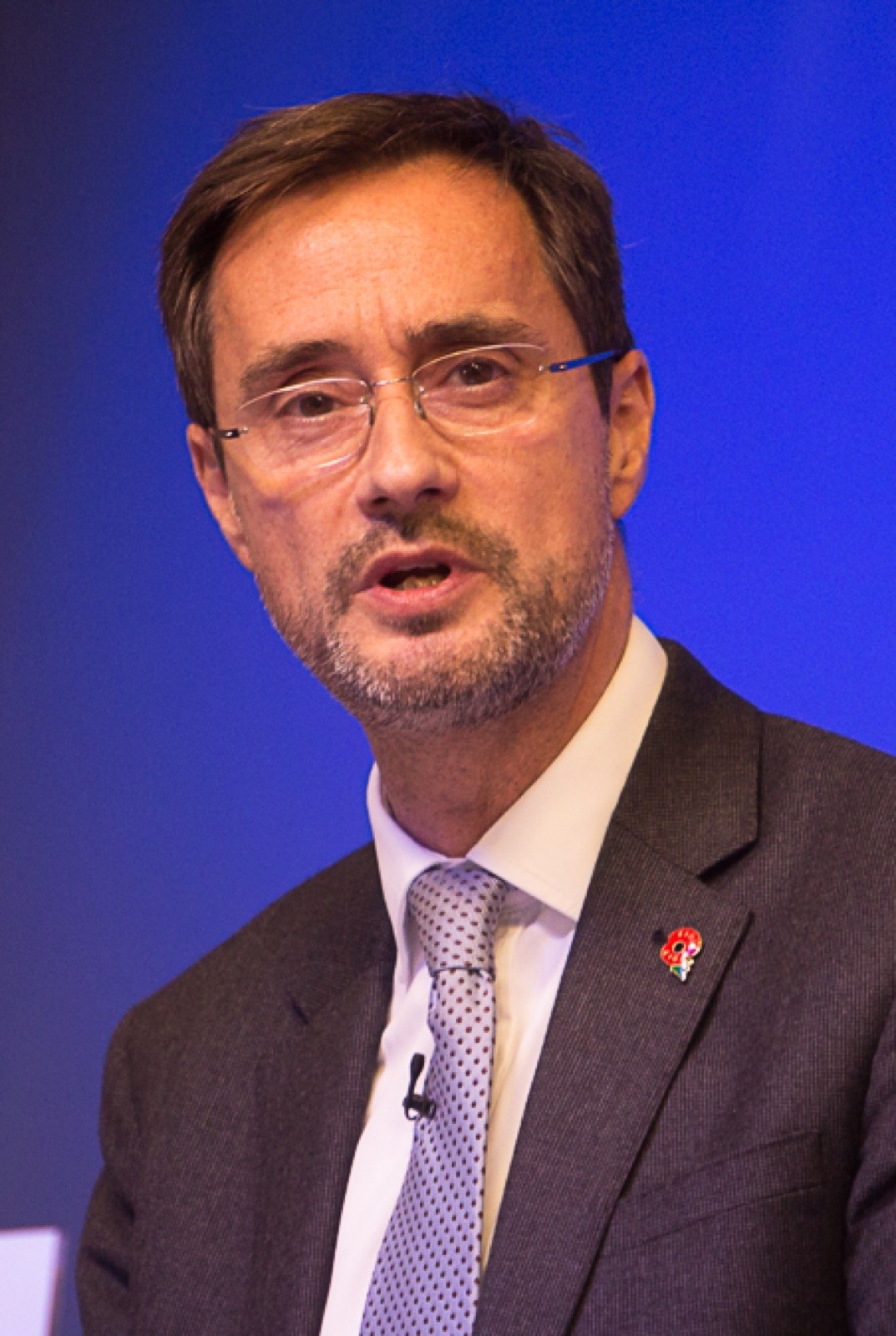
Hosted by Christina Ruffini and Sir Richard Dearlove
Guests
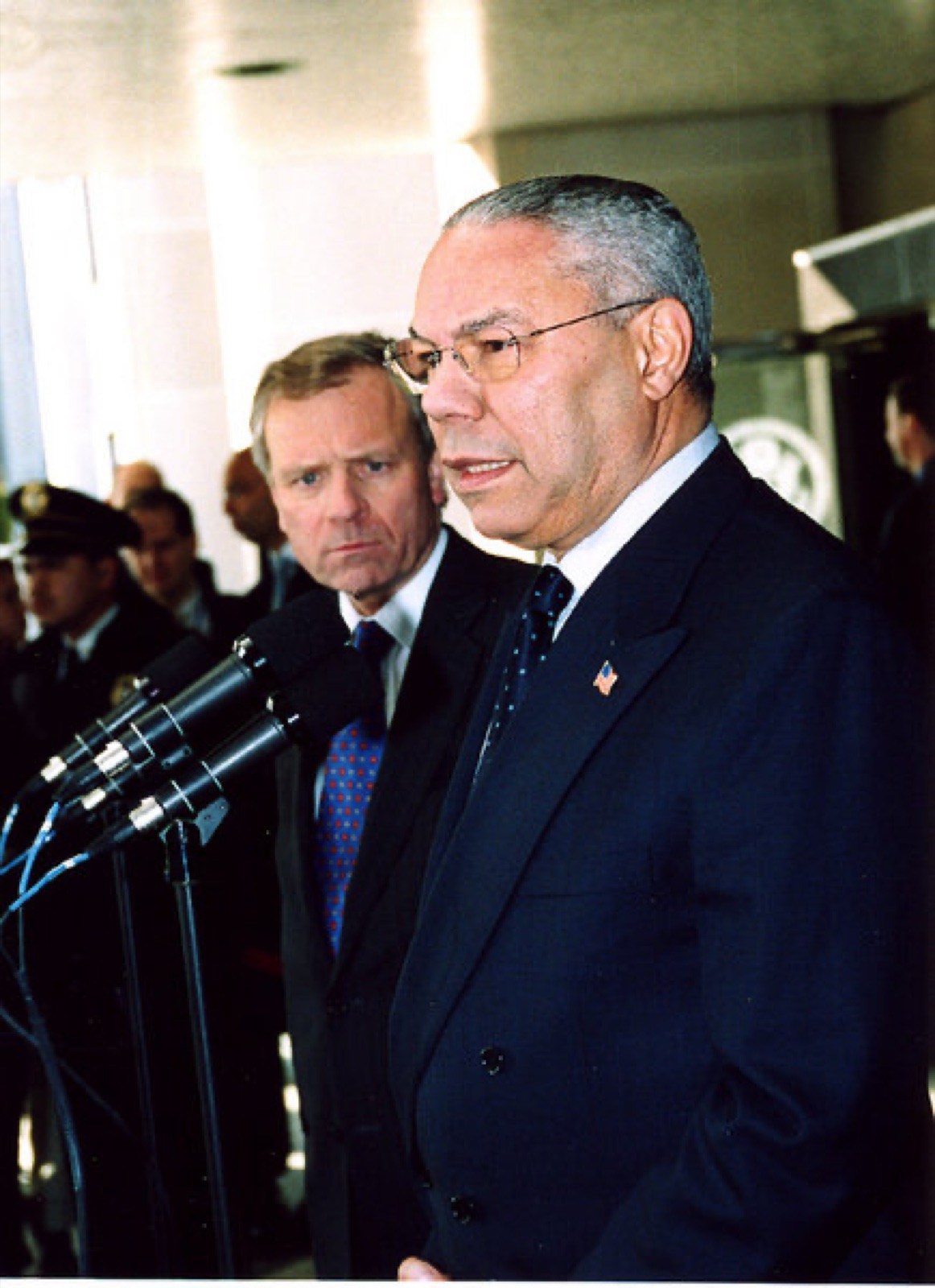
Jaap de Hoop Scheffer
Jaap de Hoop Scheffer is a former NATO Secretary General discussing NATO's strategic decisions at the historic summit.
Robin Niblett
Robin Niblett is the Director of Chatham House providing analysis on NATO's new strategic direction.
Larisa Brown
Larisa Brown is The Times Defense Editor reporting on NATO defense commitments and strategies.
Episode Summary
At the start of what’s being billed as the most important Nato gathering in a generation, One Decision hosts a panel with former Nato Secretary General Jaap de Hoop Scheffer, Director of Chatham House Robin Niblett, and The Times Defense Editor Larisa Brown.
Listen & Subscribe
- Watch on YouTube
- Listen on Apple Podcasts
- Listen on Spotify
Transcript
INTRODUCTION
Mcfarlane: You're listening to One Decision. I'm your host, Julia McFarlane. We recorded this discussion on Tuesday, June 28 in Madrid just a few hours before NATO announced that Turkey had dropped its objections to Finland and Sweden applying for membership. The foreign ministers of all three countries signing a memorandum of understanding with the secretary general on Tuesday evening. Welcome to our viewers, watching around the world. You're watching One Decision. We are broadcasting live from here in Madrid, The Hague, and sunny or not so sunny London. I wanna start off by just briefly introducing the guest that we have today. We have his excellency, Jaap de Hoop Scheffer, the eleventh secretary general of NATO from 2004 to 2009. Just that, he was also the foreign minister in The Netherlands from 2002 to 2003. Since retiring from politics, he's been a professor of international relations at his alma mater, Leiden University in The Netherlands. We have with us today Robin Niblett. He is director and chief executive of the Chatham House think tank, and he has been since 2007. Before that, he was vice president and COO of the Center for Strategic and International Studies. And relevant to today, he has served as chair of the experts group for the 2014 NATO summit. 2014, looking increasingly like a very, very relevant year, pertinent to our conversation today. And with me in Madrid, we have Larissa Brown. She is the award winning journalist and currently defense editor for the Times and diplomatic and security correspondent for The Sunday Times. She has previously been a Middle East correspondent for The Daily Mail based in Beirut and has reported from a number of conflict zones, including Syria and Libya. Thank you all of you for joining us today, thank you so much to everyone who's tuning in ready to listen to our discussion. I'm gonna go straight to it because we've got a lot to get through today. Now when NATO published its last strategic concept back in 2010, one of the declarations was the intent to form a strategic and cooperative partnership with Russia. The discussions happening this week to agree a new strategic concept couldn't illustrate more of the shift that has happened since then. Many people have argued that we are not dealing with the new Russia, that the current situation has been on the cards for quite some time. We are dealing with an increasingly unpredictable Vladimir Putin who, if certain reports are to be believed, he may have very personal reasons for being even more unpredictable and determined to see a victory than we might perhaps realize. We're already seeing fractures in the EU NATO alliance. Some states are presenting arguments for getting Russia to the table to try and negotiate a settlement with Ukraine. Other states, Ukraine included, argue that negotiations will inevitably allow Russia to consolidate the territorial gains that it has made already and will complicate Ukraine's efforts to retake its land that is now under Russian occupation. We spoke to one permanent representative here today at NATO who pointed out that there are very few wars that have ever been resolved without a peace treaty or a settlement. So my first question to our guest today, and this is for Robin. What are the options? Or are there only two options that remain? Ukrainian capitulation over the ground that it has lost, giving the Donbas areas to the Russian Federation, or an escalation in military support and involvement that will empower the Ukrainians to not only defend their people from attack, but to push Russia back to its international borders.
INTERVIEW
Niblett: Well, first of all, thank you very much, Julia. Pleasure to be part of this group and we're such distinguished company. Well, I don't think those are the two solutions. I mean, there are two extremes of solutions, obviously. There are two ends of the spectrum. But my sense would be, sadly, that as far forward as I can see, we're heading to a new form of frozen conflict in Europe. I mean, it has echoes and parallels, but not entirely, but some of the Korean Peninsula. I don't know Cyprus. An unresolved conflict. I find it hard to see at the pace that things are going right now that the Russian Federation of Vladimir Putin would be able to take much more than all of the Donbas, in other words, make more gains than he has done so far, potentially also in the Donetsk region to keep the two other provinces he's got above Crimea. That's quite a large bit of territory and a lot of frontline to defend, and I could see him potentially hunkering down wanting to declare a ceasefire, see if he can create divisions amongst, as you said at the beginning, the Western alliance of those who would say, right, well, maybe we can find some long term solution on this new frontline, but it would be unacceptable to The United States on whom all of Europe depends for their security as well as being, of course, unacceptable to president Zelenskyy in Kyiv. Now I'll just say one more thing now because I'm interested to see what the others agree with me or not, but I had the chance of interviewing president Zelenskyy about three or four weeks ago, and I noted he used the term unacceptable. And unacceptable, well, there are many things in the world that are unacceptable. Just because they're unacceptable doesn't mean that you have the means or the capacity in the near term to reverse them. So to your question there, I don't think we have a capitulation by Ukraine. I think the amount of quantities of weaponry, the political support, the material support, the popular support for resisting. I struggle to see that declining, but I also struggle to see their capacity to push the Russians back. And I do not see Vladimir Putin giving up the very, very hard won gains that he's got, which could give him the basis for a greater Russia kind of narrative if he wanted to settle for it. There's some debate as to whether he would want to settle. And we end up with a frozen conflict with us supporting Ukraine, the Russians always being a bit of a threat. And that's, I'm afraid, my near and even medium term scenario with the sanctions remaining on and Russia looking east and south and fighting the narrative with the rest of the world, to have them on their side and us having really a new form of iron curtain down Europe.
Mcfarlane: Yep. What's your view from The Hague? Do you think we're down to those two extreme options? What do you make of Robin's frozen conflict? DE HOOP SCHEFFER [6:48] Well, I do not see many arguments to disagree with what Robin said, but I would like to start with reacting to your initial words. I think Putin is rational. He's a rational guy, but his rationality is boxed in by his worldview, and his worldview is I want my empire back, and he's busy doing that. So rational, and that rationality can be dangerous. He is a long term guy, he has his ambitions for the long term, so it could indeed well be that we'll be confronted with a frozen conflict. The Russians can't win definitely, and Ukraine cannot lose thanks to our arms deliveries. I would bring in, by the way, if we discuss the long term, the resilience of our democracies, because it's very important. So we now see the Ukraine war not always at the front page, but page five or six. How resilient are we? How long are we keeping up the solidarity you will see in the NATO summit in Madrid without any doubt you see inside the European Union? Putin has the time on his side in that regard, and he might at a certain stage, if he considers that he has enough for the moment, I underline for the moment, in Donbas, because he will need time to refresh his forces, reorganize his forces, that at a later stage, in one, two or three years, barring a palace coup in Moscow, he will restart at Odessa and the other side of Crimea, making the link with the Transnistria and degrading Ukraine to a completely landlocked country. On Robin's understandable explanation of the word unacceptable, I think, quite honestly, it's not up to us and I'm referring to the discussion on the basis of Henry Kissinger's comments a few weeks ago it's not up to us now to speak and to discuss publicly what concessions Zelenskyy would have to make. I think that's really up to him, we shouldn't directly interfere in this regard. But again, I'll end where I started. Putin is rational. If it's a frozen conflict, like Robin was indicating, and I have no arguments, I repeat, to disagree with him, then we might well see it go into not only the midterm elections in The US, but also the presidentials in 2024, and a new president in 2025. So we might see much more of this, and we might not always see The United States Of America, which is taking the lead, as The US has done and Biden has done over the past weeks. Because let me conclude by saying that what we see in NATO up till now, and in the European Union for that matter, is an unprecedented form of solidarity. But again, then comes the resilience of democracies in the game. Let me finish here, Julia.
Mcfarlane: Right. I mean, that's also one very good reason why Putin may be perfectly happy for this conflict to drag on and on well into the midterms and then on to the next presidential election. Larissa, how do you, do you think a frozen conflict is likely? And also, what Yap was saying there about how it is not in anyone's place to tell Ukraine what concessions it should or should not give. We've heard a lot of people attending NATO say this this week. However, is it not inevitable that when people bring up the need for negotiations and peace talks, that's essentially the unspoken thing they're saying. They may not be directing Zelenskyy to think about concessions, but that is what peace talks will inevitably involve, is it not?
Brown: Yeah. And I think all the Ukrainian military contacts that I speak to quite often are really, really quite firm on the idea that they are not going to want to enter into any form of peace deal with Putin at the moment. They are, of course, tired. We've got some Ukrainian forces that have been on the front line throughout, and they need to get out of there. They need to be replaced by reserve forces. And they, you know, they are struggling. But the Western alliance and allies have said that they're going to obviously send more equipment to the country. And I think that has emboldened them. That's made them feel more confident that actually as long range weapons do arrive, they will be able to start striking back those Russian positions. And especially those positions that are quite far away. You know, they're going to have these long range weapons that can hit targets 50 miles away, which will be a bit of a game changer, I think, for the Ukrainians. I was speaking to British and American military chiefs quite recently, however, in Stuttgart, and they were saying that they are preparing actually for a long war, that there's no suggestion that this is going to end anytime soon. And they're looking at sending weapons in the years to come and coordinating all of that kit into Ukraine way past Christmas time, which obviously is the date that Zelenskyy said he wants it all to be over. So I think it's quite a sort of bleak situation at the moment. We've heard how, obviously, in the Donbas region, the Russian forces have managed to take Severodonetsk over the weekend. And analysts that I'm speaking to do believe that the Russian forces will ultimately be able to actually take much more territory in the Donbas, albeit it is very slow progress. However, the Russian forces have got much more reserve forces, and they've got more kit on the way.
Mcfarlane: Right. So that brings me then to something that I think is potentially extremely problematic. Larissa points out the gains that Russia has been making recently. Severodonetsk is the biggest victory since the fall of Mariupol. The amount of territory that Russia has managed to carve out in the East so far is really quite significant. And as we have discussed, Zelenskyy has certainly articulated that he is not minded to give any part of his country to Vladimir Putin for a ceasefire. And so what then, what is the current NATO policy of arming Ukraine in its defense at the moment? Is it explicitly limited to defensive postures and pushing Russia back from its advance, or is there NATO support for pushing Russia back to its border? And what do we do then? Because the Kremlin has said that any attack on its sovereign territory, it will demand an escalation. And, of course, the gains that the Russians have made, they now see as Russian federation territory. So what is the current NATO policy on helping Ukrainians to push Russia back to the border?
Brown: I think every country's obviously got its own opinion. Britain, for example, has been quite hawkish actually on this entire approach. They've said that they're supplying weapons too. Ukraine can then do what they want with the weapons, i.e. the idea that if they're sending them capabilities that are able to strike into Russian territory, then it's up to Ukraine if they want to do that. Of course, America's taken a bit more of a different approach, and they've said that they wouldn't want weapons that they're supplying to Ukraine to be used against Russia. And Russia, obviously, have said that if any of that kit is being used against Russia in Russian territory, then they would fight back. But Russia's also saying a lot about any kit at all going into Ukraine and has said that it's going to target those supplies. So either way, we are obviously seeing quite strong language from Russia. Robin, you look like you're about to come in with a thought.
Niblett: Well, I'm just gonna say that I think this is a very awkward balancing line. I mean, it hasn't been awkward yet, but it could become awkward between what is the kind of NATO position and what are the positions of new individual member states. And that was partly Larissa's indication there. Because there's a bit of sort of game playing in this position, The UK definitely has taken the most hawkish stance. It has not relied on NATO to take the position it did. Weapons were not supplied by Britain or by other countries as part of a sort of NATO weapon supply process as far as I understand it. And so NATO is, let's see here what Yap has to say about this, but NATO is kind of sitting behind the NATO member states, giving them the confidence to undertake the bilateral steps they're taking. And would you have a, you know, small country like Lithuania being as aggressive as it can be even under the EU concept of limiting the transport of certain types of products by rail through to Kaliningrad, you know, if it didn't have the backing of NATO? And would you have some of the smaller member states allowing weapons to be transited across their territory into Ukraine and then to take on Russian troops if they were not members of NATO? So I think NATO's principal role right now as an alliance is to provide the strength and the confidence and the framing position for the individual member states to then do what they've said they're going to do in its support. At some point, I think you have been saying this earlier, maybe Larissa's there as well. At some point, you know, you could start to see cracks appearing between the various individual positions, maybe within the EU as an institution, and then NATO may have to move to a different role. But so far, I think it's defending those other countries and strengthening the sense of strength from which individual countries can operate and support Ukraine. That's its main role. Over. DE HOOP SCHEFFER [16:42] I do agree with Robin. Let's say the start and the background of this question and this discussion, of course, is that to the best of my knowledge, and as long as I'm interested in NATO during my active period, but also afterwards, the Alliance, and it's now papered over by solidarity, the NATO Alliance nor the European Union ever had a consensual Russia policy. I am not entirely without concern that as time passes, that we will be able, I hope, to avoid what I qualify as an Iraq scenario 2003, where you had of course a coalition on the one hand, The United States Of America strongly supported by Britain and a number of European nations, and on the other side in Iraq, the Russians and the Chinese, but also France and Germany. And that was of course a huge rift in the European Union and in NATO, and I say again resilience of democracies as time passes and as time progresses, and if the calculation in The Netherlands is that we will miss about 100,000,000,000 BCM on gas in the coming winter, I am not without concern that politicians in Britain and in The Netherlands for that matter, or in Germany or France might come to different conclusions about what I qualify as the day after. Robin is exactly right in his analysis on the weapons. It's indeed a fine line. We discussed no fly zone, no way, no political backing in general. But when I look deeper into, try to look deeper into the heads of Scholz and Macron, I'm absolutely certain that they are trying one way or the other to see that they keep a little door open about the relationship with the Russian Federation on the day after. Macron went, of course, too far with his comments on not humiliating Vladimir Putin. But let's realize that the relationship Berlin Moscow for the Germans is almost as important as the relationship Berlin Paris. We underestimate this in the Western part of Europe, and France is France. And France certainly, Macron, coming back to Robin's comments, Macron will not accept to NATO wise weapons deliveries to Ukraine. NATO still is given its political backing, and Jens Stoltenberg can make his comments about this, but weapons deliveries are the individual nations, and no longer range artillery to avoid either the Ukrainians provoking the Russians or the Russians provoking the Ukrainians. I mean, they both can organize false flag operations when you would have this long range artillery. Biden, credit where credit is due, I think Joe Biden is sailing a sort of middle course in this regard. He is not Liz Truss or Boris Johnson in the hard line, in Baltic States and Poland, but he's also not in the position of Macron and Scholz. And I think he should stay in the middle because that's the only way to keep the consensus in NATO, and for that matter without the Americans of course, to keep the consensus in the European Union.
Mcfarlane: I definitely wanna get to France and Germany. But, Robin, you briefly mentioned Lithuania. Right now, as we speak, Lithuania is that one member state of NATO which is coming under attack from the Russians. Its government has said that it's faced a barrage of cyberattacks, of distributed denial of service attacks from Russian hacker groups who claim on Telegram that it is in retaliation to Lithuania's decision to block the transport of Russian goods from the exclave of Kaliningrad, which is on the Baltic Coast. The Latvian president told us earlier this morning that there are conversations taking place on the sidelines as to whether cyberattacks should constitute attacks that would in theory trigger article five and exploring at what level would a cyberattack make NATO retaliation necessary. Robin, let's start with you. What is your opinion? What in your opinion should be the position adopted by the alliance on this as we are only likely to see more, not fewer kinds of asymmetric warfare and cyber warfare attacks such as the Lithuanians are seeing now?
Niblett: The first thing I have to say is I think that just remind ourselves that Article five is very broadly written. So and again, Jaap will get the wording right for me here, but it's along the lines of, you know, that if one person attacked, all the others will render assistance as necessary kind of thing. But it's not, you know, we're coming here with the tanks. That room for maneuver is left to the individual governments. I say this because the question is what is an attack? You could argue that Russia's decision to cut Bulgaria, Poland, I think even the Dutch have had some cutbacks, it's explicitly Poland and Bulgaria, their gas supplies cut by Russia. Why is that not considered an Article five attack? That is deeply disruptive to their economies, potentially puts them in actually an existentially dangerous position. And denial of service can be disruptive, but you could argue probably less disruptive depending on how much your government relies on particular service provision through the Internet and so on. But once you get into this hybrid non military direct military physical attack into destruction of territory, killing of lives. And, of course, there are certain types of cyber attacks that could entail that kind of escalation. Cyber attack on air traffic control or something of that sort could lead to death. So, again, the reason I raise all of this is that I think the talk that we need to think about cyber being an area for Article five response and somehow that implying that the threshold to reach inter military escalation needs to be advanced and brought closer. I don't think this is what this summit should be about, and I don't think it's where we're going. A lot of what NATO is about right now, to combat what I said earlier, is about increasing resilience, increasing the strength of action for NATO as an alliance and NATO members to then slowly apply really long term pressure on Russia so long as it's led by Vladimir Putin. And I do think that, just to come to a point you made a second ago, Julia, I think one shouldn't underestimate, maybe this to Yap as well. We shouldn't underestimate the extent to which the psychological impact of seeing an invasion of Ukraine that resembles so much the initial parts of the Nazi invasion of parts of Europe in the thirties. The fact that it looks like that, the wanton destruction of cities, the death of civilians, that echo, I think, is having a deeply traumatizing effect upon many European voters, thinkers, ultimately politicians, and means that, you know, they are in for a longer term readjustment of their security position. And if you're gonna take that longer term adjustment, you need to put each thing into its box. And I would say that cyber is one in which one has to focus as much as possible on resilience and protection. The British government has a new cyber defense force, which talks a bit more explicitly about offensive actions, but there's very few NATO member states that could undertake any kind of meaningful cyber proactive action. And NATO as an alliance is not designed to take proactive cyber action. Again, letting Larissa and Jaap correct me if I'm wrong with this, but that's my understanding. So, yeah, that's a long way of saying, yeah, it doesn't surprise me Lithuania is on the hard end of this stick. But remember, people are literally having their gas supplies cut off, which could affect services to hospitals, you know, and people's lives. So it's, yeah.
Brown: Hybrid is big. I'd just chip in there because, obviously, you know, a large focus of this summit is obviously going to be about Ukraine, but Jens Stoltenberg did say yesterday that they would be discussing cyber as well. And I'm under the impression that some nations will be discussing the idea that they want to beef up vulnerable states' cyber capabilities to make sure that they can defend against attacks should Russia decide to go down that route. But, of course, the problem here is that often it's quite difficult to attribute many of those cyber attacks. And so it could be quite hard for the Alliance to actually mount a response because they don't know who's actually carrying it out and they can't be 100% certain that it is the Russian state or the Chinese state behind them. So it's quite an interesting debate because also how would they even respond to such an attack? Would they actually carry out then offensive cyber? Would they respond by, I don't know, cutting off a Russia power grid or cutting off their social networking sites? So it's a bit unclear on how Article five would then be put into practice.
Mcfarlane: I think that's a really good point and I think that strategy of plausible deniability is something that is very much deliberate in terms of how Moscow goes about these things and obviously makes it very very difficult to attribute to who you retaliate against. I just want to just very briefly go back to the Baltic States because they have been arguing for years for a bigger NATO presence on the Eastern Flank. They are repeating those calls today. They made them back in 2014 and have been consistently since. Yap, this question for you. Is there a decision that needs to be made here on whether or not to set up permanent bases on the Eastern flank and on some of the new member states? DE HOOP SCHEFFER [26:55] Absolutely, and if I have it right, that will be one of the more complicated discussions we will see at the summit. Just to go back to earlier sunnier times, when I took up my job at NATO, the common opinion was air policing over the Baltics not necessary, because the relationship with Russia were quite alright then. I mean, let's not forget that Putin started only in 2007 in Munich to lay out his plans: I want my empire back, in my own words. Now you see, of course, a completely different scenario. To answer your questions, NATO will certainly organize and have to organize a robust presence at the Eastern Flank, including the Baltic States. But we should not forget that if the Baltic States asking for brigade level plus enablers, combat support, combat service support and what have you. The question is where are you going to find the men and women, the forces? What will it cost? Always an important discussion in NATO, because as you know, the NATO budget as such is relatively small. Costly where they fall is the principle, so who's going to pay? And point number three, also to be discussed at the summit, I heard Scholz in Germany say we'll support the Baltics at a distance. We'll have a presence more robust than the battalions we have there now, but we'll make sure that we can quickly reinforce on the occasion of crisis. There my point is, and I can imagine that they're a bit concerned by that, can we quickly reinforce? Do we have the rail capacity, road capacity? What about the fact that in The Netherlands no single piece of ammunition can leave its storage without a special permit? In Germany, I remember those bridges when I went to Austria through Germany with my parents, with the exact weight on the side of the bridge, what could it carry? We can now see heavy armor. The bridge is not being able to carry that heavy armor. In other words, my prediction will be that it will be robust, but not as robust as the Baltic States and Poland and others are asking. Very robust, in my opinion, meets a Cold War situation where you have really large military bases with the military taking their families with them. So cities as we have them in the Cold War along the eastern flank. I do not expect that situation to return, and my concern is that if it is a bit robust, not very robust, I hope I have explained what I mean by that, how then the reinforcement in times of crisis is organized? Because Jens Stoltenberg said quite rightly, and I understand that the response force is going to be brought up to 300,000, but how do you transport 300,000 people, if necessary, with all their enablers, with their equipment? Well, we have neglected during our political holiday, geopolitical holiday, since the Berlin Wall fell, how on earth can we transport and get those people in those places at the right time? And now I make the link with what Robin said about Lithuania and the Suwałki Gap. If Russia or Belarus closes that Suwałki Gap, how on earth are we going to reinforce the Baltic States? In other words, very, very complicated, but I think it will be much more of course robust. We will go from forward presence to forward defense. We'll go from deterrence by punishment to deterrence by denial. But there's an awful lot necessary inside the NATO organization, in the military, presupposing that Allies will agree politically before we reach the situation we want to have.
Mcfarlane: Yep. I absolutely take your point. I would be willing to stick my neck out and say I have much more confidence in NATO being able to maneuver its troops across Europe than the Russians have shown themselves to have been able to move their troops forward into Ukraine in recent months. Yes. Let's hope so. Robin, same question to you. Permanent bases, are they now necessary? Do you really need to be considering them, or do you think that setting up permanent bases close to the Russian border would likely be so provocative to Moscow for it to be counterproductive?
Niblett: Well, I don't think it would be counterproductive. It would be provocative. I don't think the fact that it would be provocative would make it counterproductive. I do think, however, that it is politically unfeasible for the member states who would need to do it, at least right now. It is a very large expense. It is a kind of long term fixed commitment, and I think NATO is moving incredibly quickly and racing up in terms of levels of expenditure and so on. But, ultimately, the first move is to work out how you move, to Yap's point. How do you move equipment? More to the point, how do you move troops into being able to reinforce prepositioned equipment in these areas? Because even if you had a reasonably large garrison in particular countries, there's still a larger kind of tripwire. They would still be vulnerable if you didn't have the capacity to reinforce. So I would argue that, you know, this is not like being positioned in Germany in front of the Fulda Gap where you have the whole hinterland and the land hinterland, if you see what I'm saying, that Germany provided during the Cold War. Those Baltic states, even some preposition bases there would be very, very, very vulnerable, very close to border, very little strategic depth, and they've got the best example, I think, of a new position. Now Poland might make a different case. Poland could potentially make a case that it needs some bases there, and that might be a harder one to deny, if you see what I'm saying. But right now, I think this summit is gonna be focused on massive increases in readiness, in investment, in planning, in reinforcement, in logistics, just trying to create, yeah. I love that comment. Geopolitical holiday, you said, yeah, after that period, kind of trying to get people rebooted into thinking about defense as a core part of their domestic politics, to be frank.
Mcfarlane: Larissa, Yap mentioned a very interesting scenario, which is the Suwałki Gap. That is this tiny little, it's just, it's a few dozen miles long. It's this area in Lithuania between Kaliningrad and Belarus. It has been described by many people as NATO's most vulnerable area. Yap mentioned there is the hypothesis that Russia and Belarus could occupy that gap, and therefore, has profound security ramifications and considerations for the Baltic states. Just humor me. What happens if, what would, how would NATO respond to that? What would happen if all of a sudden the Russians were able to encircle the Baltics by taking over the Suwałki Gap?
Brown: Well, actually, I was speaking to one official, a NATO member state in that region before the crisis in Ukraine, and they were extremely concerned about this situation. They have been for a number of years. And they were actually telling me that they thought there might be sort of a hybrid warfare situation that could happen. So it won't be as obvious as sort of Russia moving troops in. It might be that they try and exploit the situation, send migrants into the area. So then they can then use that as a justification to actually then go into the gap. And that could then, of course, potentially provoke a response by NATO. But it would all be a bit murky so it wouldn't be quite clear what actually allies should then do in that situation. So, you know, these tensions are obviously just heightened at the moment. Speaking to Estonian officials as well, they, of course, don't think the current NATO force posture is fit for purpose. They think that they've got a 40,000 strong high readiness force that, of course, is being increased to 300,000. But, actually, that 40,000 strong force, it's not exactly clear how that would react, how long it would take to get there, where it would be, whether it exists. Yeah. What exactly is it? So the idea that then NATO allies are going to be able to muster up this 300,000 strong force, that will be able to respond to a Russian invasion. It just seems quite implausible at the moment, and I think we do need a bit more detail on how exactly it's going to work.
Mcfarlane: Yeah. We did have that announcement from Jens Stoltenberg on Monday ahead of the summit, ahead of the talks taking place. The high alert troops now going up to 300,000. Yap, what was your reaction to that announcement? I think some of us were quite surprised to see a big announcement being made before the summit was even taking place. What was your immediate reaction to that? DE HOOP SCHEFFER [36:07] Well, my immediate reaction was Jens Stoltenberg is trying to calm the waters in the Baltics, because this is the issue we're discussing now, of course, for the Baltic States, and Poland. Robin mentioned Poland, I speak to Polish friends who want the US division stationed in Poland. But let's focus on the Baltic States. I think Jens was trying to calm the waters in announcing this without too many details, in the sense that yes, guys, we're with you and we're trying to do our utmost to see that you're protected as well as possible. I do not see any other explanation. He's not making this up. He should, as the Secretary General, of course, support before he makes these public comments. But I repeat what I said before, behind this statement is also, and I think Robin mentioned it in passing, a huge financial discussion. Because the French, to give you an example, they have always very much been opposed to any increase in NATO's budget in what is called common funding, as the cost law where they fall is the principle. So nations who provide the forces will pay, which is not nice for some, and certainly not nice for others. So it is from Jens' point of view, the Secretary General's point of view, it's a bit setting the scene, and I also have the impression calming the waters a bit ahead of the summit.
ECONOMIC PRESSURES
Mcfarlane: I'd like to turn now to the economic issues at hand, given what you say about budgets. The EU finalized its latest budget which is supposed to last seven years. They did that back in late 2020 and that was already agreed in conjunction with an 800,000,000,000 Euro Covid recovery program but as we've touched upon, EU officials already worried about spiraling costs and there are competing demands on that budget. Inflation is hitting the Eurozone more than 8%. Many European nations were already hit with rising energy costs even before Russia invaded Ukraine. There's the arrival of millions of refugees from Ukraine. There's a global food crisis challenging countries outside of Europe as well. The EU Commission are already having conversations about whether member nations will have to chip in even more money before the end of the budgetary term in 2027. Jay Powell, the chair of the Federal Reserve has recently said that recession in The US is certainly a possibility. Robin, I think I can guess what your answer is going to be before I ask it but can the West currently afford in financial terms at least to defeat Russia and help Ukraine secure a victory against Vladimir Putin?
Niblett: Can it afford to? Well, as we've seen through COVID and even through the global financial crisis before it, money is often a question of willpower and political credibility. I mean, vast sums of money put down on the table to deal with the COVID recovery. Now we've got to realize some of that money is credible because of the steps taken to reinforce American, but especially European economies in the wake of the global financial crisis, where the banks themselves had to flush out a lot of bad debt. There's much better reserves. And very importantly, Germany specifically cut its debt down, you know, to historically low levels and was running budget surpluses for a good four or five years prior to this invasion and prior to COVID at least. So I suppose the first thing I'd say is that my reading would be European countries have slower growth and therefore less capacity to promise money long term, do still have some gas in the tank to see themselves at least into a difficult winter. Whether they could get out the other side of it if we were still in a really severe form of conflict with Russia and with even larger escalation by Russia of reducing gas supplies. Yeah. I think at that timeline, that could become really quite difficult. We're in this race between trying to get LNG reverse supplies of energy being reverse flow down pipelines, get renewables online, get Venezuela, even Iran into the market. I do feel well in a kind of race to be able to keep up with the defense commitments that we've been discussing here, which are expensive both in the near term and the medium term. A race between that and getting through a moment of extreme economic fragility and vulnerability. And it's almost impossible to see, you know, all the way through this. I would simply say that if America goes into recession, you know, one, two percent of GDP, that's a big political problem for Biden, but it's not a disaster for America. And if Europe went into a 4% deficit, that would be a big political problem for some of the leaders, but it wouldn't be a complete disaster for the European economy. On the other hand, the problem we have is that if Russia has a 15% fall in GDP, it's probably not gonna be a disaster for Vladimir Putin because he will paper it over, and he knows he still has revenue coming in from his oil and gas, in particular, as he sells more of it to the South and the East and grain, blah blah blah. So sorry. This is a long, long way of me sort of wending my way to an answer to your question. Can we afford it? I think a lot of this has to do with political will. And I go back to what I said before. The nature of Vladimir Putin's attack, the brazenness of it, the brutality of it, combined with the very effective public relations campaign undertaken by president Zelenskyy and Ukrainians, combined with their remarkable fortitude and valiance. And the way this has really captured the imagination of geopolitically staycationed Europeans who now see people really fighting on the front line. I think there is more strategic reserve of political will, both popular and political, than I expected at this point. I expected more cracks, to be frank, than I see right now. So I'm gonna stick my neck out and say that I think the Europeans can afford this, you know, all things being equal, whatever that phrase means, but it's my little protection, can afford this, you know, towards the end of this year. If we're going into the beginning of 2023, kind of where we are now, and there's been no progress at all, it might start to crack. DE HOOP SCHEFFER [43:19] It will be extremely tough because the European Union has a huge task ahead. Let's not discuss the fact that there are now 10 nations in the waiting room, including Ukraine, and my opinion is that a European Union with 10 more members cannot function. It will be impossible. So the European Union has an awful lot of soul searching to do. I support the decision to give Ukraine candidate status, because politically, psychologically there was no alternative. But it is a huge decision. Together with Moldova and then comes Georgia, you have the Western Balkan states. The European Union will not survive a next enlargement round without a fundamental reappraisal of what it is, what it wants to be. That's point number one. Point number two, linking my comments to what Robin said, as you'll remember, during the Covid crisis Europe has sidelined the holy principles of 60% state debt, 3% budget deficit, close to in the range of 2% inflation. The big discussion will be: are we going back to those criteria, or are we not? In my opinion, we will not, because given what's happening in the world geopolitically, we can't. But you see the spreads between the German Bund and the Italian, you see the spreads growing. So there's an urgency, financial urgency, in the European Union. And the European Union, much more than NATO of course, has the toolbox to use or not to use vis a vis this horrible war in Ukraine. And here I'm a bit, how shall I phrase it, perhaps a bit more concerned than Robin about our societies. That's the reason I started with the resilience of our democracy. When we'll have a cold winter, and when we'll be short of gas, and indeed Robin, Putin has also half closed the tap to The Netherlands, and we have now a huge discussion if we should reopen the Groningen gas field, which has still a gas supply for, I think, three years of the total Russian imports. But the result of winning that gas is earthquakes, heavy and serious earthquakes. When the European Union has to answer the question, will the Green Deal survive this crisis? Are we speeding up our ambition for alternative energy? Or will we end up with burning more coal, as the Germans now have to do and the Dutch have to do? How will it influence the discussion on nuclear power? And then perhaps finally, and that's why I say I'm perhaps a bit pessimistic, although I very much hope that Robin's right in his comments: I have my doubts about the younger generation. If they have not grown used too much to their wealth and their affluence and their notion that freedom comes for free and that it costs nothing and no defense is necessary. If they will not at a certain stage, looking at my own children as well, early 40s, who are very concerned about the environment. And the environment comes first, and climate comes first, and then comes social security, and then education, and oh yes, there is a war going on on the European continent. In that regard, I hope that our democracies are resilient. We have elections every four years, the Americans have elections. So for the European Union it will be very, very tough. But I do very much agree with Robin Niblett's conclusions. We have to. I mean, we have to be able to afford it. Otherwise, we are almost giving up our democracies and we're giving up our liberal values. And that is too high a price for me to pay as well.
Mcfarlane: Yep, you briefly raised whether the EU is getting too big and has too many member states. And I want to get to that. But just before we move on from the financial aspects of that, Larissa, I just want to ask you, in your conversations with defense officials from around the continent on this issue of the defense commitments that they are preparing to undertake that are looking to become very expensive in the short to medium term. What do they tell you if anything at all about their own domestic appetites for this cost and how is that going down in their own populations?
Brown: Well today there is a huge debate in Britain actually over defense spending because we've heard from Ben Wallace, the defense secretary, and Liz Truss, the foreign secretary, who have said in the last few hours that they want to see an increase to the defense budget. But it seems like they're not going to get the increase that they want. Number 10 sources are briefing basically that they're not going to be able to even meet commitments that they made in 2019 in the Tory manifesto, where they pledged to increase the defense budget so it would be 0.5% above inflation every year. They're now saying that when we made that commitment actually we didn't know about COVID and since then they've spent £400,000,000,000 on tackling the pandemic. And now it's just not realistic that they can keep on increasing that defense budget. And, of course, as Robin was making clear, it's, you know, it's about the political will to some extent, but, of course, it's also about public opinion. And countries in Europe are obviously facing a huge cost of living crisis at the moment. So how do you persuade members of the public that money should be spent on sending more kit to Ukraine or boosting army numbers if they're really struggling at home. We have also heard actually from the chief of the general staff today, the new head of the army. And he's been making the case that British troops need to get ready for war in Europe. And I think comments like that are probably going to really resonate with people at home because for the first time they're going to think, oh, actually, this war in Ukraine could actually affect us back here in Britain. So potentially you could see a bit of change of appetite over the coming months if countries like The UK do make that clear.
ALLIANCE DECISION MAKING
Mcfarlane: Fascinating. So I want to just quickly go to what Yap said about the EU is now admitting so many members it cannot function. NATO, just to go back to NATO, NATO has 30 members now and we're seeing many member states raising their own priorities and red lines when it comes to the coordinated response to Russia. We've got Hungary, Slovakia, The Czech Republic, three landlocked countries that depend almost exclusively on Russian energy imports. They've already demanded and received exemptions to the EU Russian crude oil ban. Turkey says it will not allow Finland and Sweden to join the alliance as long as they harbor Kurdish activists who they consider to be terrorists. Does NATO need to reassess its handling of veto power that often stymies action being taken even at a time of crisis like now, lest it turn into an organization like the UN which suffers from all sorts of paralysis because of vetoes? Yap, that question to you first. DE HOOP SCHEFFER [50:31] No, on your consensus question, I always hesitate to use the word veto in the NATO domain, the NATO context, because a veto formally doesn't exist and the word does hardly exist inside NATO. But I do really think that NATO has lived through the Cold War, through the expeditionary period, as I called it after the Cold War, and NATO will live through this period and this war in Ukraine on the basis of its decision making model, which is consensus. And I do not see any other option for the Alliance. In the European Union, of course, we have consensus in crucial areas like foreign policy and defense. There, one of my arguments would be that if the European Union would take in more members, I mean we're talking about decades here, not years but decades, then definitely there should be a change in the decision making structure, and you know that majority voting is already in other areas, but not in the most important ones for our discussion. So I think the fundamental reappraisal needs to take place inside the European Union. In NATO, I think despite all the trouble we face from time to time, this time with Turkey, but the next time it can be another nation, be it Hungary or whatever, but NATO can very well go on to live efficiently and effectively on the basis of the consensus model. And you know the position any nation can take is we do not agree, but we will not block the consensus. I mean, there's much more flexibility in the system, in my experience, than it is a rigid system with a veto or no veto. So I'm not very concerned, and I don't think that NATO should change its formal decision making process in this regard.
Mcfarlane: Robin, do you think it should keep unanimous consensus or should it move to consensus by majority?
Niblett: No, I think I agree entirely with Yap. I think it has to keep consensus. This is after all about people's defense. It's about putting troops on the line. It's the ultimate decision of sovereignty, and I can't think even of a small government that would give it up entirely in its capacity. In the end, what NATO has as a disciplining force, at least so far compared to the EU, has been that US kind of uniting century people force that draws people together around The United States and all the more so now that it faces a real threat again. Now, obviously, if there were a change in government, if we were to get, to be honest, Donald Trump again, you know, maybe all bets are off. But even a Republican president that was not Donald Trump would have a very united congress that takes a very tough line vis a vis Russia, as I think we all know. And so, you know, I don't think that would be something that would change it. So I think it's important to keep it. In the end, there are ways of sort of working the issue. I think the big danger would be if The US would want to go in its own direction. Will Turkey, and if you're gonna come to this later, you know, end up sort of vetoing the enlargement? They've said that they might do it for a year. I mean, the fact that they've even said that, which is so explicitly connected to Erdoğan's election. But to be honest, at this point, with bilateral defense guarantees that have offered, even if gently by The United Kingdom and The US and a general acceptance, this is about maneuvering more than anything else. Like, I agree. I just don't think the alliance will fragment around this, and it can be effective enough even with it.
FRANCE, GERMANY AND LEADERSHIP
Mcfarlane: Now we are running out of time unlike Vladimir Putin who seemingly has all the time in the world, but I do really want to hear of your opinions on the result of the French elections and how that might impact things. The recent French parliamentary elections, of course, saw Emmanuel Macron lose his majority. And while no one expects France to withdraw from NATO or restrict its participation in it, there are many people who are interpreting the success of the populist parties as coming down to changing perceptions from the French about NATO and the EU partly because Mélenchon and Marine Le Pen both fiercely oppose NATO and want France out of the alliance. Macron warned that France would be heading for a dangerous Soviet revolution if a left green alliance led by the ex Trotskyite Mélenchon took control of parliament. That didn't happen. However, how do you think the recent elections and new makeup of the French parliament and political landscape, what do you think that means for NATO and its response to Russia? We of course, you, both Robin and Yap, you've mentioned that we may have a change in administration from The US, leaving a little bit of a leadership vacuum. Traditionally have looked to France, Germany, The UK for strong leadership when it comes to NATO. So how do you think that the elections are going to affect that landscape? Robin, first to you.
Niblett: Well, if I come in first, the French have a, as we all know, a long tradition, postwar tradition of being incredibly skeptical about being overly constrained by NATO. And that existed prior to February 24. You might remember when Joe Biden was elected. Macron used that this was a time to double down on European strategic autonomy and that Europeans should not be suckered in by a nice speaking America's back president, and he got a little criticism for it. But I think actually it's a cross France reference point to be skeptical of NATO. And although I don't follow French politics intensely closely, from what I know of France, the support for Mélenchon and for Le Pen is more of a protest vote for the fact that they all had to vote for Macron in the first round, sorry, well, in the presidential round, and this was a chance for them to to kinda get even a bit and to not give him a Jupiterian second term. So I think it is to do with tax cuts for the rich. It's to do with the left behinds, the sense of being ruled by elites. I sense less of, obviously, they all had it in their campaigns and more on the left in particular potentially than even on the right. But this is a cross country position, but I just don't feel it's the defining element that led to the support that they got in the parliamentary elections. So, yeah, it's gonna make life more complicated, but I think Macron is capable of channeling the majoritarian French position, is skeptical about The United States leading European security, is a bit less skeptical about Ukraine, if I can put it that way. Do you see what I mean? And I think that's an important distinction for the next year or two. DE HOOP SCHEFFER [57:39] I think, if I may add, I think Macron will have to build a coalition on important points with Les Républicains. He can do that although the French are not used to coalitions at all, that's quite unfrench in that regard. And we should realize that in the French system, le Président de la République has a lot of powers on the international scene, in the international domain. We haven't discussed an important topic at the NATO Summit yet, which is China. Let's not forget that the relationship between The United States Of America and China is the main theater in the world as far as I'm concerned, and even not Ukraine, although we have discussed it a lot. And you'll see Macron taking a special position on China. I understand there's still discussion about the language in the communique, and they have now found out a word like 'systemic challenge' or whatever. If you don't know what to do as a diplomat, you call something systemic, not an opponent, certainly not an enemy. Anyway, Macron will find his way in the, as Robin said, in the well known essential elements of French policy that is going on about strategic autonomy in Europe. I don't know what that means, by the way. The Americans do not like the word autonomy, they say strategic sovereignty, okay, strategic autonomy, no, no. What is European Union defense and strategic autonomy without The United Kingdom? In the European Union, that's only France, that's France plus. So you need The UK when you want to have that discussion. But on the whole, I do not see fundamental changes in the well known essentials of French foreign policy after Macron did much worse in the legislative than we perhaps thought.
Mcfarlane: Final question to all of you. What in your opinion, in your own personal opinions, is the most important decision that NATO will have to make as it comes out of the summit this week? Larissa, you first.
Brown: Wow. I think working out how, where this 300,000 is going to come from. I think they need to basically have something a bit more concrete than just some sort of figure that's been plucked out of the air. And do you expect to see a decision on that? Do you expect to see many NATO member states putting their hands up and saying yes you can take 50,000 of our troops, so is there going to be much appetite to contribute to that? I think I'd hope to have a better idea by the end of the week but I'm not sure if we are going to have it all sort of laid out in front of us. DE HOOP SCHEFFER [1:00:12] The main message as far as I'm concerned of this summit should be a continuation of the, I repeat, unprecedented political solidarity the Alliance has shown and is showing vis a vis a horrible war on the European continent. That is in my opinion, and with all that entails, as we have discussed during the past hour. But political solidarity, a very clear political message from the North Atlantic Alliance. That's for me the essential thing.
Niblett: Yeah, and I would just build on that. I think again to me Ukraine is the most important statement to come out of this because in a way it'll be the platform from which to manage the inevitable schisms and splits and fragmentation that's likely to start happening, you know, from the summer onwards. So you need this moment to almost bind everyone together around the common position from which then it's hard for the more doubtful members to escape later on. So to be honest, all the other stuff, as Larissa was saying, it can be a lot of, you know, really hard graft work to work out how much money is there, where does it come from, what troops, what do we mean by rapid reaction readiness. That's gonna be the business of years, and it is important because it's starting now. But the moment, what recounts the rest of the year is a strong position on Ukraine that is sustained gives the best possible chance of sustaining it against what is a, you know, one man rule in Russia, which gives him so much more near term flexibility.
Mcfarlane: We are out of time. We've gone slightly over time. We could have gone for so much longer, but unfortunately, we are not able to do so. I want to thank my guests Jaap de Hoop Scheffer, Robin Niblett, Larissa Brown, thank you so much for joining us, thank you to everyone who is tuning in watching this live stream. We are in town all week as they say, we are going to be putting out a lot of our interviews and a lot of our debrief. So we have a conversation with sir Richard Dearlove at the end of the summit giving us his take on how the week has gone and what the important decisions that need to be made will be. So thank you to everyone for listening and join us again soon. Don't forget to follow us, One Decision, and keep up with all of our latest podcasts. Thank you so much to everyone who's been tuning in.