Episode Info
- Season7
- Episode3
Hosted by Christina Ruffini and Sir Richard Dearlove
Guest
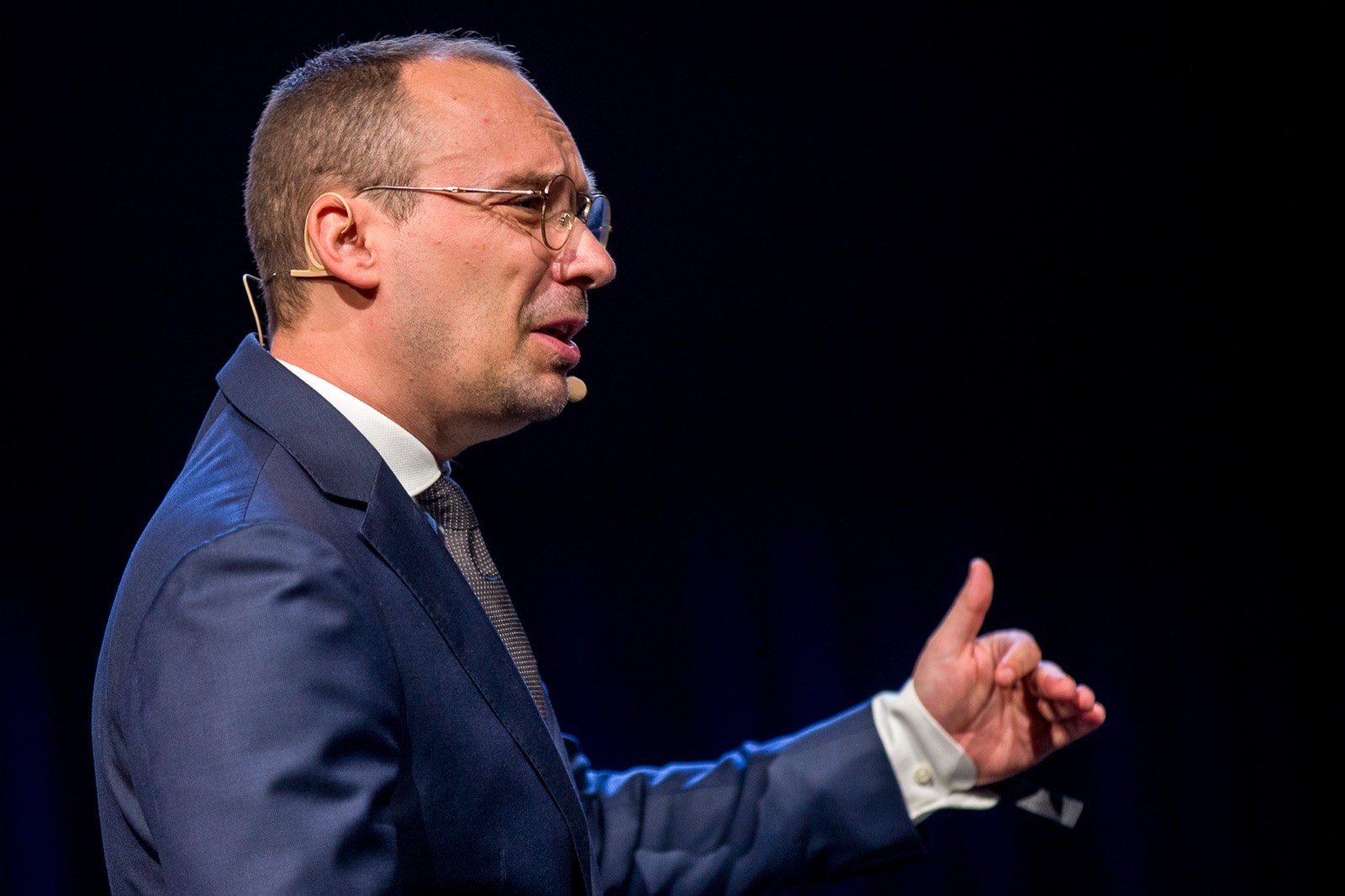
Matas Maldeikis
Matas Maldeikis is a Lithuanian MP who triggered fury in Beijing with Lithuania's decision to open a de facto embassy to Taiwan.
Episode Summary
Lithuanian MP Matas Maldeikis speaks to One Decision about how the small Baltic country has triggered fury in Beijing with the decision to open a de facto embassy to Taiwan. Plus he gives us the view from Vilnius as the war next door between Ukraine and Russia rages on.
Listen & Subscribe
- Watch on YouTube
- Listen on Apple Podcasts
- Listen on Spotify
Transcript
INTRODUCTION
Lockwood: Hello. Welcome to One Decision, the podcast that talks to the decision makers and influencers of today to assess what their consequences may be for tomorrow. We're going back to the Baltics today because of the actions of parliament in a small European nation that sent shockwaves around the world, causing anger in the heart of Beijing. Matas Maldeikis is a lawmaker in Lithuania, where the controversial opening of a de facto embassy to Taiwan last year sparked outrage in China, which sees Taiwan as being part of its territory. Normally, diplomatic outposts to Taiwan are officially named missions to its capital, the city of Taipei. But the Taiwanese Representative Office in Lithuania, as it is officially named, has angered China, causing it to downgrade their relations with Lithuania and to try and persuade multinational companies to leave the country or else risk losing access to its massive market. Before it opened the embassy, Lithuania had also quit China's 17 plus one diplomatic bloc in the EU and encouraged other nations to follow suit. Well, Matas sat down with us earlier and began by explaining why the Lithuanian parliament decided to go ahead with the move and why the tiny island of Taiwan is so important to the Lithuanians that they would risk angering the biggest economy in the world to support it.
INTERVIEW
Maldeikis: I have to start from the beginning. When we formed the new government, all the three parties — that was conservatives and two liberal parties — they all in the election told that we wanna have to make the relationship with Taiwan stronger, that there is a field of cooperation, that field must be pushed forward. And when we formed the government, we did what we supposed to do and what we told in the election process. We got into the contact with them. We talked to them that we wanna have office opened in Lithuania, and we wanna open the office in Taiwan of ourselves because we wanna strong economical ties, better cooperation in economical field, in culture field, in science field, etcetera. And there was a discussion. They asked if there would be possibility to call it Taiwanese office, because in Taiwan, Taiwanese live, so we called it Taiwanese office and that's it. There was no break of One China policy or something what China is telling. That was our decision, and we went with that. We didn't break any laws in that regard.
Lockwood: That's interesting that you say that there was no break of the One China policy. So you see this — do you see this as Beijing overreacting to the renaming of the mission?
Maldeikis: Yeah, story is as it is. After we made our decision in the beginning of December, China blocked all our commercial ties between Lithuania and China, because we are setting an example showing that we are not afraid and China wanted somebody to punish, to show that, you know, if you will have your own opinion on China, on relationship to how you are dealing a format of European Union, because 17 plus one, if you know the format, was about breaking European Union in regards to China. We said we need to speak in the voice of 27 plus one. That means all European Union. So that was one thing that triggered them. Second was they saw the opinion of Europeans going very negative on China. So they wanted to show what will happen if those countries' politician will have their own opinion on China. The third one is about uniqueness of Lithuania. Lithuania was one of the factors that triggered the fall of Soviet Union. I don't know if your listeners know much about this fall of Soviet Union. So Lithuania, we was the first that declared our independence from that. We never said that we belonged to Soviet Union. We was always a part. We was telling that we was annexed, not went there with our free will. And when we saw Perestroika, we saw the first chance to get out of Soviet Union, we did. And in China, studied the fall of Soviet Union very closely. In universities, etcetera, for them, it's very interesting topic to understand why Soviet Union fall. And when they see the Lithuanian factor in that, they, of course, understand that, no, that triggered them a little bit.
Lockwood: That's so interesting that you bring in the Chinese studying the fall of the Soviet Union and your feelings that Lithuania is particularly in the crosshairs. Do you feel as a small Baltic state, the first to declare independence from the Soviet Union, a huge imperial power at the time, is that perhaps the sort of the route for your camaraderie or your friendship with Taiwan? I mean, do you see each other as sort of kindred spirits as it were?
Maldeikis: Exactly. For Lithuanian, if you would come to Lithuania, to Vilnius, in all Lithuania cities, you will find in all bigger Lithuania cities, you will find a square of Tibet. We feel — we understand we are always in support of little nations that fight for their freedom because we did ourselves. And this feeling of justice, being right, being small, but being right in the eyes of big dictatorship, especially if it is communist because we are very vaccinated against that from the Soviet times. We are always standing against that in any form. And we was real supporters of Tibet. And now in the sense we see Taiwan, we have a lot of forums, we have a lot of people who support Taiwan in a sense, never been there, not very much about that, but that romantic view on Taiwan, we have the same as on Tibet, you know, the earlier Tibet everybody knows, everybody's looking to that and is very supportive in that, because they see that as a struggle against big communist regime.
Lockwood: There seem to be some pretty bizarre consequences of this. I mean, you mentioned the blocking of the trade. I was very tickled to read that Taiwan reportedly bought 20,000 bottles of rum from Lithuania after it was blocked by the Chinese. And they were having to share tips with the public on how to cook and drink with it. But on a serious note, the Taiwanese, they're clearly extremely bent — the Taiwanese are on solidifying relationships with Vilnius and they've announced that they were setting up this $1,000,000,000 fund for joint Lithuanian Taiwanese investment to try and support the country as it fends off punishment by China. Matas, I wanted to ask, is that enough? I mean, Taiwan is a really tiny country and while it does punch above its weight in trade very much so, it's really nothing compared to Beijing. Is it worth it?
Maldeikis: What the war in Ukraine shows that, you know, sometimes it's not about the cost, but about the principles. And in the long run, it's about how much you pay for your freedom. First, regarding our relationship with China in a trade. It was very small numbers. We was much bigger investor in China than China was in Lithuania. Like, it's always happened. Our trade with China was — we exported to China for €200,000,000 a year, and Chinese exported to Lithuania more over 1,000,000,000. So it was minus to our side. What happened in China about five or six years ago, they really wanted our port, Klaipėda. Klaipėda is jewel of the Baltic Sea, and they really wanted that. And we, because of national security questions, didn't solve that. So from that time, China was closed for us. More or less, it was closed deal for us. So we didn't have so much trade and so not so much investment, and that's good, of course. So it was not so painful — in a sense we was vaccinated. Regarding the Taiwan, we understand that we see new reality in relationship with China, in relationship with Russia. What COVID did and what is war in Ukraine is doing, it is just accelerating the history, the turn of history. And what we will see that authoritarian regime like Chinese, they will be closing down. That means that a lot of business will be going out of China. And one of those businesses is Taiwan business. They will be going out and we want to be one of the opportunities for them to invest in Europe. And we see ourselves as opportunity for Taiwanese business as for European market. We are really cooperating and trying to find, and I think we will have good decisions here and very interesting news about our cooperation in semiconductors business, because semiconductor is very important, especially for European Union. So there is a lot of perspective, and we are working very closely with Taiwan on that. And I think it won't be long that we will have like a win win situation between us and Taiwan. What happened, we learned then from Russia story. And now what happened is we cut our ties with Russia long ago.
Lockwood: Absolutely want to get to talk to you about Russia, but I just — yes, want — so it was an example, and now that happening to China also, yeah. Right, we'll definitely get that. So you said something interesting though. You said China wanted Klaipėda, your port into the Baltic Sea. What do you mean by that they wanted it? They wanted to do what with it?
Maldeikis: Yeah, they wanted to buy our Klaipėda port. It's the port that doesn't become frozen on winters. So it's very good for transportation. So what China was doing, they was manufacturing, started to manufacture and building a lot of factories in Belarus, near our border, near Lithuanian border. And they wanted Klaipėda to be the port that those items from Belarus near Lithuanian border, from that economical zone, they will be getting to Klaipėda and from that to European Union.
Lockwood: It's also interesting to hear of this Chinese Belarusian Russian solidification happening on your border. And I definitely wanna ask you that. But before I turn to Russia, which I will, just a couple more. I just wanted to ask you, shortly after opening the embassy to Taiwan, you led a delegation to the island last year. How did you find it? What did you learn on that trip?
Maldeikis: What was the most fascinating for me is the people's view. It's the people's view and the people's feeling of wanting to be recognized and understood. You know, you see it is very, very interesting — a country, with a big culture, with a big technologies and everything. Twenty first century, absolutely country. But in a sense, what I felt the most, what touched me the most is the feeling of them wanting to be understood, to be heard, and to be, you know, they live near the big neighbor, let's call it. And we live near the big neighbor. So it was a lot of similarities. And when talking with them, I understood how they felt. It was like us at the fall of Soviet Union when we declared our independence, and we wasn't very much heard. Everybody was playing, you know, Western countries. They was playing geopolitics because they wanted Gorbachev to stay because they was fighting hard liners. And Lithuania declares its independence and it's like, everybody's like, Shhhhh, you Lithuanians are hot tempered. You know, we have big deals here. And we really wanted to be heard. And the small country of Iceland was the first to declare and recognize our independence. It was very, very, very big deal for us. We was counting and we still love Iceland because they was the first, we always remember the first.
RUSSIA AND UKRAINE
Lockwood: Fair, fair. I'd like to turn, if I may now, to the current situation with Ukraine, because Lithuania has skin in this game. As we've talked about, it was one of the three small Baltic states and NATO members that spent half of the twentieth century under Soviet rule. Just something that is interesting, we spoke to Taavi Rõivas recently, and he sharply rebuked me for referring to Estonia as an FSU country. He said, No, no, no, we were never Soviet Union, we were occupied. And I think you've used a similar phrase, had you. Yeah, it's interesting. So and there was that extremely ominous warning from the Ukrainian president Zelenskyy recently. He said, if we are no more, then god forbid, Latvia, Lithuania, and Estonia will be next. So Matas, how worried is Lithuania about the current war in Ukraine and the current volatility?
Maldeikis: The first day, everybody was, I have to admit, afraid because they understand that if those guys eat Ukraine in, you know, like, say a week, a month, so that means it's a question of time because there is a fascist rule that you have to understand. I won't lie to you. There is a fascist rule and you never can stop. You never can stop. You have to expand and expand because you feel the blood and you have to expand to more. And we understood that. From what we see now is that they want Ukraine. He will get stuck. He might even take some cities. He might even declare military. We will see how it all goes, but it's his dead end.
Lockwood: But are you feeling reassured by the fact that the invasion into Ukraine is playing out quite badly for the Russians?
Maldeikis: Yeah. Because we see how they are operating. We see that they are — you know, what you showed, you know, when you talk about Russia, we started looking from our point of view. And what we are seeing now in Ukraine that it's like it's always been Russia, always been and always will be in a form that it is, a Potemkin village. This is the paradox of Russia. You know?
Lockwood: You said that Russia is like a Potemkin village. In what sense are you — do you mean that the military has this facade of being a huge power and actually it's just a chaotic mess of disparate parts? Do you mean that Putin is not the head of a unified country as he makes out to be? What exactly did you mean by that?
Maldeikis: In all the senses, why Soviet Union collapsed? One of the main reason why Soviet Union collapsed was because people didn't believe the propaganda — they didn't believe what we was doing. Everybody knew that they was going to work. They was pretending to be communist, but so it was a Potemkin village, but everybody was talking, Oh, everything is going great. Everything is going like five years to the communism. We will beat the West, they are dying, we are becoming strong. And after that, everybody was going to shops trying to buy jeans and staying in a, you know, to buy sugar and try to buy sugar. You have to stay in a five hour line, you know? So everybody understood that they are lying.
Lockwood: I'd like to get your viewpoint because, you know, you are very connected to Russian society as in you, you know, you share a border. I'm sure you have a lot of families who have family members on both sides of the border. From your perspective and from your viewpoint, one thing that I think has been really interesting recently is, at the start of the Ukraine invasion, a lot of people were questioning whether Putin would have the Russian people's support in invading Ukraine, given that there is so much shared history and common ties between the two countries. But recently, we've been hearing interviews with people, Ukrainian people who have Russian family members and interviews from people inside Russia that actually the message being spread from state propaganda in Russia is bleeding through. A lot of Russians support Putin. They see the war as legitimate. They don't believe what the Ukrainians and what the West is saying about civilian casualties. They believe that the Russians have a legitimate goal. They believe that there are Nazis in power in Ukraine. How have you found those headlines? Do you think that's accurate?
Maldeikis: Yes, of course. It's popular war. Russians love it. We should stop lying to ourselves. Russians love it, and it's not about propaganda. Russia propaganda is not so strong. If you look at Russia propaganda for their own people when there was COVID crisis, nobody went to vaccinate with Russian vaccine. Nobody believed their own propaganda. So that shows that their own propaganda doesn't work. It's not about propaganda as it is. We wanna lie to ourselves and be feeling, oh, those people are just lied to, but they are good people. No, it's about 1938 in Germany. You have to understand the mood there. Nazis, when they come, they need six years to reprogram the Germans who was very cultural, was very first society in Europe then. After six years, they was reprogrammed to go to war with everybody. They become very Nazi society. Russians have this feeling for three hundred years. It is called New Rome — Third Rome theory they have. Third Rome theory. They think that they are the third Rome. First was Rome, then it was Constantinople, and now it's Moscow. It's like legitimizing their own view on being on the right side of history and doing everything from the just because justice is on their side because we have a third Rome. And what is happening? They are very messianistic in the world. They are fighting not Ukraine. They are fighting fascists. They are fighting Western style of life in a sense. Because what is fascism for them? Fascism for them is a Western style of life. Being free, like human rights, gays rights, what it is. They hate that. Because for them, it's about being free. They are not free from their own — they live in not free society, and they are not being free. And they don't like seeing the West being free. This is where it comes from. And it's envy that comes from. And you wanna beat that free person who lives in your neighborhood because somehow he became free, and you don't want him to be free. You want him to be like you, you know? This is where it's come from.
Lockwood: That sounds like a very extremist view. Do you really believe that that is a majority held view in Russia? Or is it a certain demographic? Is it perhaps the older people who are less taken up with, you know, freedoms of the internet and less plugged into how life and liberal life abroad is compared to how life now is in Russia?
Maldeikis: If you take Moscow, Moscow is a different story. What do I mean? If you take Russians, about only 15% of them have a passport to go out abroad. 85% of Russian never been abroad and is not planning to. All they're seeing, like they see Russia, that's it. They see the perception of the West, and it was told from their kindergarten. Like, you know, the West is bad. They are corrupt. They are like free in a sense of, you know, energy. And in a sense, they don't see the perception of the West. People in Moscow, yes, a lot of them been to Europe. A lot of them been to Turkey for the holidays and everything. They see different Europe. They are rich enough to travel and they see different Europe. They understand the world differently. So a lot of them now is migrating. The trace to Finland is full of engineers, IT guys, and everybody. Everybody who understands like, you know, what is going on in reality, are fleeing, they are running away. There is, of course, a lot of people like this. But when I'm talking about the community, when I'm talking about Russia, and I'm talking about, you know, deep society, if you can do like that Russian mentality and their understanding of the world as the bigger part and all, it's very different — if you talk with them, you wouldn't believe how they see the world. There is a threat that is threatening our good, sacred Russia, and that threat is West, NATO, and everybody in The United States, all this bad West.
Lockwood: That's really interesting. And my question that leads onto that is then what then happens to that viewpoint? How does that viewpoint get challenged we see growing cost of living crisis in Russia and these extremely painful, bitter economic punitive measures start to bite? Will they continue to see the bad guy as, you know, it's the West ganging up on us, or are they going to start questioning the decisions of their administration?
Maldeikis: Refrigerator against television is very good. I call it this way. Refrigerator must win against television, of course. It's the sanctions you have to work, but only one thing that vaccinates Russia, it's the lost in war. If they will lose the war on Ukraine, that means the end of the empire as we know it, that was built for seven hundred years. That means they are not the strongest in the, you know, right here. And that means that the Kremlin loses its legitimacy in the eyes of Russians. This is why we have to understand the stakes. Putin can't lose his war. This is the biggest problem because Putin can't lose this war because it's not about only Putin. It's not about only Kremlin. It's about Russian empire as it is. If they fall to Ukraine, that means the end of Russian empire in a sense. And that means that new structure of — there will be a lot of, you know, fights inside. There will be a civil war in Russia. I'm not, like, exaggerating. It means civil war there. Question is maybe not military, but in a sense that with civil war between a lot of groups, and it means new Russia. New Russia in all the sense. And now Kremlin can't do that. He doesn't imagine losing that. We understand the stakes.
ANALYSIS WITH SIR RICHARD DEARLOVE
Lockwood: Matas Maldeikis speaking to us earlier there. My co host Sir Richard Dearlove joins us now for his analysis. First, I asked him what he made of Maldeikis's claim that the Chinese make a point of extensively studying the fall of the Soviet Union.
Dearlove: I think the way I would describe it is that Lithuania is something of a bellwether. I think that's such a wonderful phrase, bellwether, and you know it's a small vulnerable country that sits on the edge, you know, of a relatively mighty and oppressive power which has — given historically it's a very complex history. And you know Lithuania is very very sensitive as a small nation to being you know bullied, oppressed, occupied, you know, obviously mainly by Russia, but I thought this whole business of the way it was treated by China was absolutely fascinating, and I'm sure that you know they have looked very closely and carefully at you know why the Soviet Union was a failed empire, and why it's in as it were, a period of post imperial decline.
Lockwood: It would be — I mean does Beijing see itself as the seat of an imperial power? Is Xi building an empire?
Dearlove: Yes, I think in the — well, I think his vision is he's not building an empire, you know, with colonies, but he's building an empire with economically dependent states, if you see what I mean. So the Chinese would rationalize it differently because they will look at their economic weight, and you know the expression of this I think at the moment is through what's called Belt and Road, and you know their attempt to indebt and dominate vulnerable economies and to make them you know dependent on the Chinese market, not necessarily dependent politically, but of course to, as it were, exercise huge pressure through the weight of their economic and financial influence.
Lockwood: Something that I find really interesting about the way Beijing tries to assert itself with other countries and all of the lengths that it goes to in order to build upon its influence to be able to force nations it trades with to comply, to be culturally sensitive to its narrative, to never speak out about the Uighurs and about Xinjiang, about its various policies. It wants to be able to have the economic clout to means it is so detrimental for other countries to criticize it and to speak out about it in order that it maintains its control on its own population. Right? I mean, it is a country of more than a billion people. Is all of this aggressive expansion and its desire to influence and intimidate other countries more so about keeping its own population under its own in check. And it sees that the possible influence of other nations is an existential crisis to the CCP maintaining its grip on its own domestic population?
Dearlove: Yeah, that's a fascinating question, and I think actually a really important question, because there's no question that what the Chinese worry about is loss of control in their own enormous and complex polity, and what I'm talking about is within China. And what we do know about the Chinese leadership is that on an almost daily basis, maybe not quite that frequently, the first thing that happens you know within the government compound of an early morning is to review what's happened in China within the last twenty four hours with the principal emphasis on the maintenance of security and whether there have been any incidents which as it were threaten the authority of the party, the authority of the central government. And I think you are correct in a way, and this is extrapolated into their international relationships, and the fact that they absolutely, you know, are super sensitive about being criticized for the way that they treat their own population, or for example the treatment of the Uighurs being the most topical example of an attempt to sort of re-educate and to reshape a significant ethnic minority which you know is within China, and you know to show the dominance of Han Chinese culture. But I think in a way the issue you've asked me about is almost best expressed by the security situation in Hong Kong, because I think what the Chinese have been terrified about in relation to Hong Kong is the fact that it's possible that you know Hong Kong would inject the sort of democratic virus backwards into China, because what I think surprised the Chinese leadership over Hong Kong is that the student demonstrations seem to indicate that young Chinese in Hong Kong did not have an enthusiasm for Chinese leadership. They had an enthusiasm for the traditions of democracy that the British had left behind, and I mean that was you know a very sort of potent street movement, and I think the Chinese were terrified that the Hong Kong democratic virus would infect the part of China immediately around Hong Kong. And I mean this I think is at the basis of the Chinese Communist Party leadership's neurosis about losing control of this very complex and socially volatile country, and we've just had a recent example which was briefly on the internet and then massively suppressed, which was the population — well people in Shanghai objecting to aspects of the lockdown, and I think this is typical. I think a lot happens in China on a daily basis, particularly on social and labor issues that we don't see, we don't know about, and is successfully suppressed, but there's a volatility about you know daily life in China, which we're not exposed to, you know because it's sort of covered up.
Lockwood: Yeah. I totally agree. Going back to Matas Maldeikis, something that I found so interesting was this friendship between Lithuania and Taiwan that I wasn't really aware of before this interview. Maldeikis said that in all Lithuanian cities, you'll find a street or a road or a square or something that is named after Tibet. And it reminded me of the connection actually between Israel and Singapore, where I grew up. The Israelis, they've got so many ties to this tiny island nation of Singapore, really close military ties, and after independence, the IDF, the Israeli Defense Force, has actually helped to create the Singaporean National Defense Force, and there's a really strong bilateral tech and arms trade. And it's believed that one of the main reasons for that is that the Israelis see this tiny island of Singapore surrounded by its huge Muslim neighbors, Malaysia and Indonesia, and it feels a strong sense of kinsmanship because of it. And he also told me something that I wasn't aware of, which was Iceland's role in recognizing and supporting their break from the FSU. I think he said it was a really big deal for us, and we still love Iceland, because they were the first, we always remember, they were the first to back us. And I wanted to ask you, because we talk so much these days about the big rivalries between superpowers, The US versus China, and we talk about other heavy players like Russia and the EU. Are we missing a trick by not paying attention to the smaller countries and the very many important and strong alliances they can and do form?
Dearlove: Yeah. Well, that's a very interesting question, and I think particularly interesting in relation to Singapore, which of course you know is a sort of modern day Venice. It's a city state of great reach, of great influence, of economic power, and of course strategically vulnerable and therefore very very keen you know to build around itself a security curtain which you know for a small city state is both sophisticated and efficient, and I'm certainly aware as you've mentioned that you know the alliance between Israel and Singapore has been very close, and I think that the Israelis have brought a lot of benefit to Singapore in that respect. I mean in a way you know I wouldn't necessarily put Lithuania yet into that category, but I mean what's interesting about the Baltic Republics is they have developed very sort of sophisticated forms of IT government because they're small and almost operate like a laboratory, and therefore have developed very very quickly in a number of high-tech areas. It's extraordinary what they've achieved, and all the three Baltic Republics have you know managed, I mean despite having this significant sort of Russian speaking implant in their population, you know they've developed very fast, very far, very quickly, and of course they've been fierce about maintaining their independence. I mean interestingly I wasn't aware of what you had mentioned about Iceland. I mean I take a particular interest in Iceland because my wife is born in Reykjavik and her mother was Icelandic, and therefore our family you know we feel very strong sort of emotional link through my wife's family with Iceland.
Lockwood: Very strong knitting tradition in Iceland as well of course.
Dearlove: Very strong knitting tradition, that's absolutely true, and of course my daughter's a knitter. A professional knitter I should say, no she is a professional expert knitter, but I mean what's incredible about Iceland, you know which really is a tiny nation, I mean it is so small, but on the other hand it does define itself strategically because of its geopolitical position, you know, is rather crucial, but more than that you know it defines itself socially as very advanced and very liberal, but politically heavily engaged in the geopolitics of Scandinavia. So that link between Iceland and the Baltic Republics I think is seminal and psychologically very very important, and of course you know Iceland is an important member of NATO, not because of its contribution, because it doesn't make a contribution effectively, it's so tiny, I mean it makes a tiny tiny contribution, but it's geopolitics, its place where it is, and the importance of you know it being within the sort of NATO brotherhood. It's a founding member of NATO, isn't it? Yeah it is, and of course originally you know there was this massive US base there at Keflavik out just on the edge of Reykjavik about 10 or 15 miles down the coast, but that base now has closed, but of course it's still geopolitically because it's positioned very very important, and I mean if there was a you know return to strong Cold War tensions, I'm sure that that base would be reestablished or would reopen.
Lockwood: I wanted to ask, he said something very interesting. He made this claim that Russia was basically a Potemkin village, that the Russian propaganda wasn't very effective. He gave this example of how there was the low take up of the Sputnik vaccine. He's arguing that Putin is projecting a vision of strength and power and national unity that isn't really there. What did you make of that claim?
Dearlove: Well to an extent I agree with what he's saying, but I mean on the other hand that's in a way what the Lithuanians would say about Russia in its current state. So I mean — but I think that in essence he's probably correct, because you know what we clearly have in Russia is, well, a severe case of post imperial anxiety, a very very severe case, and you know Russia is in serious decline. I think that's the way I would express it. And you know the loss of Ukraine as part of the Russian sphere of influence is, you know, is and would be you know a very very serious blow for Russia, both economically, politically, and culturally. So for them, you know, this is a sort of final cast of the dice. I mean I think I've said to you before, you know, Russia's population in the last eighteen months declined by a million, you know, its GDP is somewhere between, you know, around Italy's. Loss of influence in terms of the countries traditionally on its periphery which were part of sort of the Russian polity. I mean you can, you know, the Soviet Union has gone and it's not going to be recreated however hard that Russia tries and however violently it continues to try.
Lockwood: That brain drain that you mentioned, you know, the drop, that decreasing of the population by a million people. And Matas Maldeikis mentioned that as well. He said a lot of globally minded Russians who are IT specialists, engineers, scientists, lawyers, people with skills and expertise, and an openness to cooperation, they are leaving Russia in droves. What is the effect of this going to be on Russia and its politics? Is this maybe a good thing for Putin that the kinds of voices who would make up an opposition to him are now actually leaving Russia and those that are left are pro Kremlin?
Dearlove: Well obviously that's to Putin's advantage in the short term. I think the way that I would see it is that you know you've got these groups that are leaving across the Finnish border. I saw something the other day, a significant number of you know able Russians, particularly you know millennials going to Turkey to live in Istanbul and Ankara, Istanbul primarily, you know I think that they're going to sit it out and wait for a change of regime, and there will be a change of regime in Russia, whatever. I mean it may not happen quickly, but it will definitely happen, and you know when it does happen maybe we will have a more normal Russia and these people will get back. You know this it's an intriguing question. You know the exodus of the Russian aristocracy after the Russian revolution for obvious reasons didn't go back, but I think that the politics of Russia are volatile. Look at Putin's problems with Navalny. Obviously you don't lock up someone like Navalny unless you're terrified of his potential to win significant political support if he had a, as it were, free hand to campaign. So I mean, I do think that there is a fragility about the ruling clique in the Kremlin.
Lockwood: So Maldeikis had this really interesting theory that he brought up, which was the Third Rome theory. This idea that Moscow is the successor of the Roman Empire. Is that really what is going on in Putin's mind? That he is the heir to Russia's lost Christian tsardom?
Dearlove: Yeah. I mean, I think given his crazy decision over Ukraine, it just may be one explanation because you know you don't do something so extreme unless you have a really sort of weird historical vision. The answer is I really don't know, and I don't know enough about the internal workings, and I'm — this sort of nationalist orthodox you know ideology which you know seems to drive the Putin administration, you know is puzzling, but I mean it clearly has got significant cultural roots, and you know is seen by some Russians as a powerful motivator. I mean I think one of the things which is fascinating is you know the expected support for the regime that should come from the Russian Orthodox Church, and I must say that you know way way back when I was visiting Russia and still in my previous career, that the presence of the Orthodox Church in relation to the administration was very evident. I mean the first time I went to Russia we had a banquet, and where was it held? It was held in the Danilov Monastery which is you know the home of the Orthodox, you know it's a bit like the sort of Bishopric of Canterbury. So the Danilov Monastery is seminal to the identity of the Russian Orthodox Church, and it was extraordinary to you know be — what was relatively recently you know the leading communist country, and then to find myself invited to dinner in the Danilov Monastery with a priestly presence at the dinner table.
Lockwood: Right, I mean it just sounded extremely conspiratorial, this idea that Moscow is ushering in this new age of becoming the third Rome. But I mean, is that fringe or is it inspiritual, or do we think that Putin actually subscribes to this kind of thing?
Dearlove: I think he definitely subscribes to it. You know, look, that dinner in the Danilov Monastery maybe was a significant pointer. We were sitting with a bunch of you know senior KGB officers who'd all been you know in office under the communists, they all had orthodox crosses in their buttonholes. I mean you know that is not a coincidence, because I think you know this is preempting Russia's historical identity, and there is a sort of millennial story, you know, in Russian history, and I think that this is a possible — you know I don't think this is fanciful at all actually, I think this is a very very possible explanation for why we're in such an extraordinary you know series of events as we are at the moment. Russia is in danger of sinking, you know, from having been a primary power, both Asian and European, for a long period of time. It's in danger of losing that role, and I think that the whole presentation to the Russian population, particularly using the Orthodox Church, this is you know we're defending Christian values, you know the way we're corrupt and dissolute — I mean all of this does hang together and gives you a sort of, you know, ideology to replace the ideology of communism.
Lockwood: That's it for this week's episode of One Decision. Don't forget to subscribe if you enjoyed the conversation and get in touch with the team. We're on Twitter at one decision pod and on Facebook at one decision podcast. From me and the team, see you next time.