Hosted by Christina Ruffini and Sir Richard Dearlove
Guest
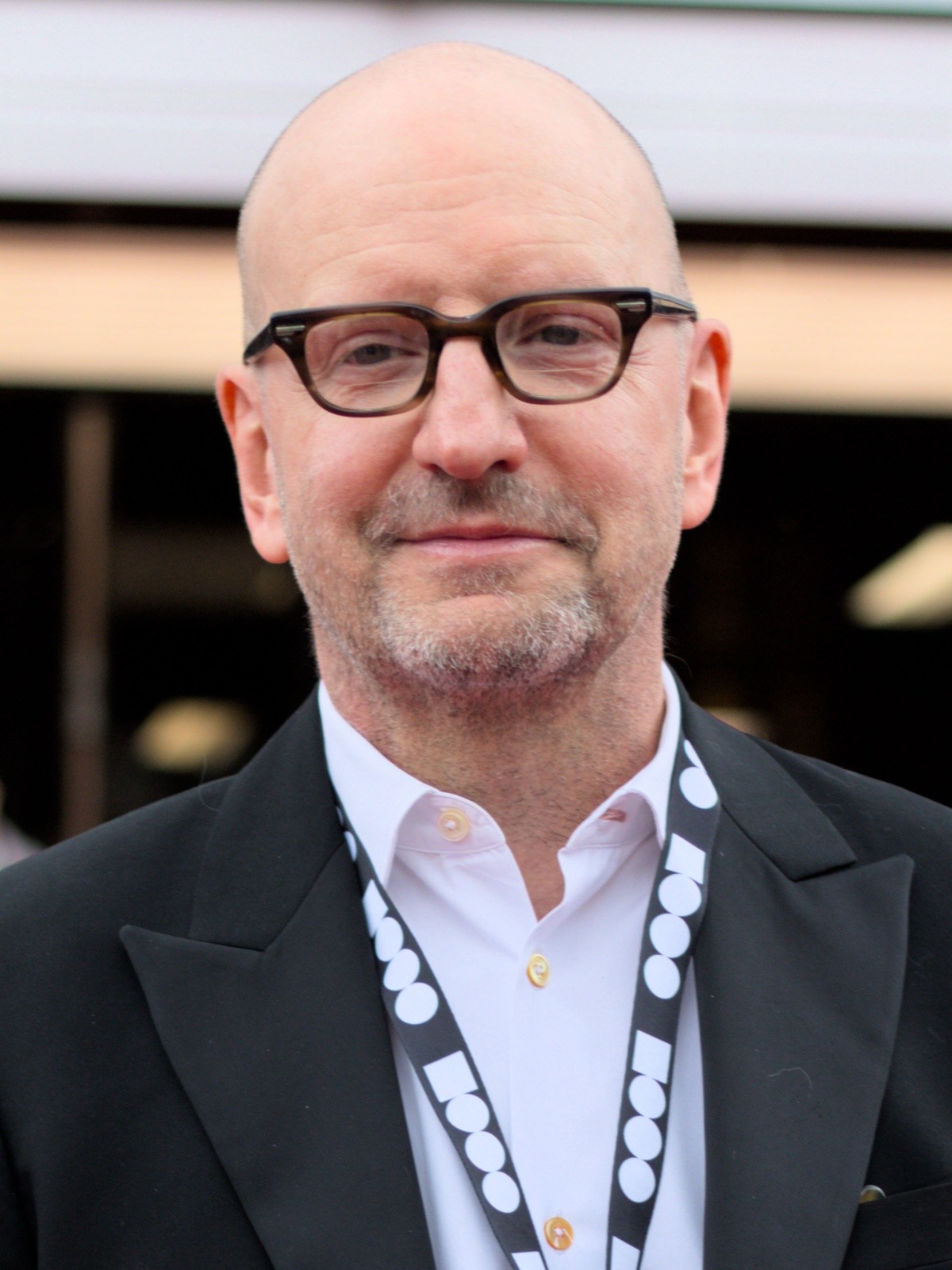
Steven Soderbergh
Steven Soderbergh is an Academy Award-winning filmmaker discussing the spy thriller Black Bag and the reality of espionage, emphasizing why integrity and trust are key elements.
Episode Summary
"Watching people lie is very compelling," says Academy-Award winning filmmaker Steven Soderbergh when discussing his new spy thriller, Black Bag. Soderbergh joins One Decision hosts Kate McCann and resident spymaster Sir Richard Dearlove, the former head of Britain’s MI6, to talk about the film. They also discuss the reality of being a spy, why integrity and trust are key elements of espionage, and the possibility of Soderbergh directing a James Bond film. Plus, they also explore the role of intelligence in a potential future global pandemic and whether Soderbergh’s prescient film, Contagion, could soon have a sequel.
Listen & Subscribe
- Watch on YouTube
- Listen on Apple Podcasts
- Listen on Spotify
Transcript
COLD OPEN
Soderbergh: Some reason, watching people lie is very compelling.
INTRODUCTION
Mccann: Hello, and welcome to One Decision. I'm Kate McCann, a political editor based here in the UK. Today marks my debut on One Decision, and I'm thrilled to announce that I'll be joining the podcast team of Christina Raffini, Sir Richard Dearlove and Secretary Leon Panetta. Well, there's no shortage of stories, conflicts and shifting sands in the world of geopolitics right now. And I can't wait to sit down with the great guests we've got planned to have front row seats to some of those really big moments.
Mccann: Spy movies have always been a big hit for audiences of all ages. They're intriguing, surprising, action packed, often romantic and elusive. They offer a peek into a life of secrecy and deception. Well, today on the podcast, we're excited to welcome Academy Award winning filmmaker Steven Soderbergh, whose new spy film Black Bag looks at the world of espionage from the perspective of a married couple. They're played by Cate Blanchett and Michael Fassbender, and both are spies whose successful marriage seems to be their biggest professional weakness. My co-host Sir Richard Dearlove, of course the former head of Britain's MI6, joins me to speak with Soderbergh as we break down the elements of a true spy film, why trust is one of the most important pillars of espionage, the role of intelligence in a future global pandemic, and much more. Well, we're joined now by Steven Soderbergh, an acclaimed American filmmaker, producer, and screenwriter. Welcome to the podcast.
Soderbergh: Thanks for having me.
INTERVIEW
Mccann: Lovely to have you with us. We'd like to talk to you about lots of different things, but should we start by talking about Black Bag, which is an absolutely exceptional film, but none of us can describe it. So that's your job.
Soderbergh: Well, it's a spy movie. I think spy stories are really ready made for that format, also for television. But I don't know, they're just really fun to watch. I think it's because for some reason watching people lie is very compelling.
Mccann: It's sort of about mutually assured destruction, but not just on a nation state level, on a relationship level. Within a marriage.
Soderbergh: Yeah. That was the other aspect that I thought was interesting, was you have a movie with a successful marriage at the heart of it as opposed to a bad marriage. The problem is this couple both work in the intelligence field and they have certain agreed upon parameters about what they will discuss and what they will not discuss. And the plot revolves around an attempt to attack their marriage, and I thought that was interesting too as a motivation for characters to wanna sort of take down a successful relationship just out of envy or who knows what.
Mccann: Jealousy. And that's where you get to the term black bag because—
Soderbergh: Did that ever exist or did we make that up? You made it up. But—
Dearlove: I think it's a clever makeup because in reality what you're talking about professionally is need to know. We talked about this before you made the movie actually, Steven. And I said, yes, it's entirely possible that you would have a married couple who would have to practice need to know in the relationship and not be able to discuss certain professional things that they were doing. I think Black Bag is clever because it has that idea of putting stuff inside something that you can't see, you can't hear, and just cutting off discussion. But I mean, I actually lived through this. And in fact, we've had to confront that situation. If there was a need to know, she knew. If there wasn't, she knew nothing.
Mccann: And in the film, what I found really interesting is actually you say they have a successful marriage, but you don't always know whether the marriage is successful because there are moments in the film when I was watching it when you almost doubt, you're not quite sure. Is she telling him everything? Is she lying to him? And he has to have this almost unshakable faith in her.
Soderbergh: Yeah, it freaks him out when he begins to wonder if there's something going on. He takes action to find out what's going on. And so I think the other interesting aspect that comes out of the way the intelligence community works is in our research, you are encouraged, or at least really not discouraged, regarding inter-agency relationships. It's understood that it's not a bad thing to date inside the organization. That's the opposite of what most organizations support.
Dearlove: I mean you mentioned lying. I have to say as a professional I sometimes broach at that term because I would use the word deception. Intelligence agencies practice deception but they practice deception with integrity. So you get this juxtaposition which I think is expressed in the film because George says, I think on a couple of occasions, I'm absolutely committed to transparency and telling the truth. Whereas the younger sort of the members in the film, Clarissa, I'm thinking of, says she can't stand the lie. But there she hasn't really been able to accommodate it professionally, whereas George has totally.
Soderbergh: Well, there's a certain interiority that comes with that role that I think Michael is very adept at portraying because it's a performance sort of in miniature. It's like a Japanese line drawing. And yet, when you have somebody like Michael and you look in their eyes, there's all this stuff happening. You can feel what's below the surface. So you've got to be very careful when you cast roles like that that you get a performer who's secure enough to occupy that space. And then to Sir Richard's point about the youngest member of this troupe Clarissa who's played by Marisa Abela. She has no epidermis yet, you know. She's still very raw and is finding the inter-agency dynamics really frustrating and doesn't know how to reconcile her professional life and relationships with any kind of personal life. So I like these two contrasts as we were talking about, newness and sort of people with experience. Because I see it all the time in my job. People who are new to the world and people who've been around a long time. The best of them that have been around have the same attitude as people who are just starting and that's incredibly inspiring.
Dearlove: That's a very clever point in the film because you pick up on the morality of the issue. And in my professional world, you really had to examine individuals to try to establish in your own mind or professionally whether they had come to terms with the morality of the job.
Soderbergh: Well you must have seen people who weren't able to reconcile these two worlds.
Dearlove: Oh absolutely. But the lifers like myself, I think come to terms with that pretty early on. And in a way, you have to be convinced that you're on the side of the gods.
Mccann: Can I ask you about that? Because one of the things about this film is that the lead characters can come across as quite cold. We use the word contained but they could be very cold. Do you ever worry about that for yourself? Do you ever worry that it took a certain type of you or a certain version of you to be able to be successful in that job?
Dearlove: I have reflected on it a lot and I can be pretty cold and detached.
Mccann: Do you think that's what it takes to do that job?
Dearlove: I think to do the job for the period of time and in the many different circumstances I did it, yes. I think you've got to be not suffer from stress, not be emotional.
Soderbergh: Exactly. I mean, I think that's a function of the job is to be able to think clearly at all times. That does require a certain amount of detachment. You can't respond with your amygdala to every situation that arises. You've got to go to your prefrontal cortex and count to 10 and game it out. So I think people who aren't inclined in their personality to think that way would have real trouble and aren't great candidates for this kind of work, and people that do function that way might be drawn to it and be really good at it.
Dearlove: The other thing, is there a reference there to George Smiley as well? Is that why you called him George? Because in a way you could argue that the Smiley character in the le Carré books has a similar quality. And I was struck at various points in the film where I felt that you were referring back to other spy movies. I mean, like when George is cooking right at the beginning, that reminded me of The Ipcress File. Absolutely. With Michael Caine. And I loved that because you kept picking up on things that resonated with anybody who's watched any spy movies.
Soderbergh: Yeah. I mean, it felt appropriate within the style of the movie to acknowledge in some way whose shoulders you're standing on and who you like. I think the George name had two sources. One would be George Smiley, and the other would be George of George and Martha from Who's Afraid of Virginia Woolf, which was a piece that David Koepp and I talked about, specifically the dinner scene that takes place early in the film, which kind of, pun intended, sets the table for the whole story, is a very obvious child of all of Who's Afraid of Virginia Woolf. You know, a night of people who are not sober really starting to go after each other.
Mccann: And David Koepp is the screenwriter. That particular scene that you're talking about, the dinner scene, there are two of them in this film. They are exceptional. They are also really the two central moments. How difficult was it to make those as good as they are?
Soderbergh: I wasn't attached to this when David was writing it. So he would tell me what he was doing, and one day, while we were working on another project together, he said, oh, I wrote a 12 page dinner scene yesterday. And I said, well, God help whoever asked to direct that. I come to read it, and there's two of them. And they really are the action sequences of the film. My challenge was to come up with sort of visual strategies of how to keep those sequences interesting to watch. But directorially, it gets worse in the sense that there's six people and they don't even move. I don't even have the luxury of somebody getting up from the table.
Dearlove: But the other thing which is gripping in the first meal is the confession game that is played around the table. Who thought up this trick? Because it is a wonderful trick to stimulate, let's say, aggressive conversation and they lose their inhibitions as they go around the table.
Soderbergh: Yeah, that was David Koepp's idea. I never asked him if that was something that he was a witness to or somebody proposed this as a game. So the challenge is to make a New Year's resolution for the person sitting to your right. So this is an opportunity to say something about them that by definition is probably not positive that they should discontinue. And so it's a pretty diabolical challenge.
Dearlove: I'm a fisherman, so I was quite intrigued by the fishing scenes in the film.
Soderbergh: Yeah. So tell me about fishing. Is it as contemplative as we make it seem in the movie?
Dearlove: It's totally contemplative. I am passionate about fishing and now only fly fishing, which is extremely esoteric, very difficult. You seldom catch fish. And it is all about what's going on whilst you're trying to do it. Right. So it is totally contemplative and it's really wonderful. It's the most relaxing and obsessive activity that you can do at one and the same time.
Soderbergh: Perfect for a spy.
Dearlove: Well, I think traditionally, it's a bit of a cliche. A lot of spy masters. I was not a spy. I was a spy master.
Soderbergh: Oh, absolutely.
Mccann: Pierce Brosnan is in this film. Yes. And it made me laugh to see him in this role because it almost feels like it's what James Bond went on to do when he grew up. I mean, he's a great get.
Soderbergh: He's fantastic in this role. He was. And I was hoping he would relish the opportunity of being the guy who sends people out to do things. You also had to have somebody who could rattle Michael Fassbender. And the only direction I gave to Pierce was you never sit down. You make other people sit down. You're always moving. You're the nodal point at all times. And I think he really enjoyed pacing around the room, especially when he got behind them to sort of talk into the backs of their heads. So he seemed to enjoy it. He looked fantastic.
Dearlove: But he was very disconcerting in the role. I mean, he was sinister to an extent. And you felt that overarching presence and you weren't quite sure where he stood, what he was thinking, what he was doing, but he was very authoritative.
Mccann: I'm interested in that word sinister because that is what we tend to associate with this environment, sinister, shady. I mean how true is that in reality?
Dearlove: I think in reality it isn't a reflection of character. It's a reflection maybe of circumstance and that there are occasions which are unavoidable in this profession where the circumstances become sinister and therefore maybe the individuals are forced to act in a way which is disconcerting. But I think to say that the profession is sinister is, I mean, I'm always trying to defend its integrity. For example, the big argument I had with le Carré and I did actually physically have the argument with him was that he had made betrayal the currency of espionage, which of course it is sometimes. But the stronger currency of espionage is actually trust and integrity. Because if you're making a betrayal, particularly let's say of an evil empire, the people who are helping you to do that have got to behave with absolute integrity and trust in order to facilitate it. So I mean this is going back to the juxtaposition which is so cleverly placed in the core of Steven's movie.
Mccann: Do you think the only way to get at that juxtaposition was to tell this story through a marriage?
Soderbergh: No, I just thought it was a really good delivery system, a really efficient delivery system, and one that's relatable. It could be a marriage, but it could be any relationship that seems to work or has worked and is then put under intense pressure. One of the things that Sir Richard and I talked about when we met before shooting was how technology has changed the spycraft and intelligence work. The era of having multiple passports in your safe and having all these identities, you just can't do that. What I thought was interesting was the result being a return to sort of analog human scale intelligence that has to be cultivated over a long period of time and takes a lot of skill. And I thought that was kind of interesting.
Dearlove: But I think that also professionally is a key point that espionage despite all the technology at its core remains a human activity.
Mccann: Would you ever consider directing or working on anything like Bond? You talked about them as if they're these kind of big juggernauts. Is that something that you find attractive in any way?
Soderbergh: Well, I don't have any principle that would keep me from making a movie like that or making anything that's in the realm of giant franchise. Like, I'm not a snob. I've been a part of two franchises, Oceans and Magic Mike. It just depends what it is. What's the story? What's the script?
Dearlove: The trouble with the Bond films is that they've become dehumanized. They're just so far removed from human experience. I think most people watching a spy movie, okay, the glamour of the Bond films is one thing, but if you want to relate it to human experience, it has to be much more, in my view, grounded. I can't watch Bond films now. I just find them too outlandish. It's either become a franchise which has gone into orbit.
CONTAGION AND THE ORIGINS OF COVID-19
Mccann: We should talk about some of your other work because I know you two basically have a mutual interest, I suppose. Contagion is one of your films. I actually watched it in the pandemic, which is probably quite a strange... a lot of people did. It's a strange thing to do though, isn't it? What is it that, what do you think makes people watch films about things that they are really scared of? And Contagion is a scary film.
Soderbergh: Clearly we get some sort of vicarious emotional hit from watching it happen not in real life. So you're kind of getting the excitement of it without any of the consequences. In the case of Contagion specifically though, it was my firmly held belief that if this happened, all of our experts said, when this happens, it will be solved. We will figure it out. I absolutely believe that, and that's what we saw. One of the few things that we took liberties with in Contagion, which otherwise is pretty factually accurate in terms of its science, is they found a vaccine in the movie faster than you would have been able to then. In the interim, a couple of years before COVID, new technology allowed us to get to a vaccine in a shockingly short period of time. I mean, the scientific community was aware of what was happening in Wuhan in November, and by January, they had a working vaccine. That's insane how fast that happened. And how many lives were saved? Typically, when we make Contagion, would have been three to four years. Three to four years of it being out there. So I would wish that at least people would come away going, well, we will solve it. It can always be solved. They can always figure it out.
Dearlove: But the speed of making the vaccine had a cost, which I think now is becoming evident. Not that it didn't save many, many lives. It did. But it had a downside, which in a three or four year development, it wouldn't have had, if you see what I mean.
Soderbergh: Possibly. Possibly.
Dearlove: Yeah. Well, there's a lot of debate about this now.
Mccann: Well, I say you have a mutual interest and I say that because, Sir Richard, you have been talking about the origins of COVID-19 and you know there's a lot of conversation at the moment about why people were not listened to at the time.
Dearlove: Well I was the first person in March 2020 to go public in a Sky TV interview when I said, according to a small group of scientists with whom I was associated, with whom I was working at the time, it was a lab escapee. We weren't saying it was a deliberate release. We were saying it was the result of gain of function experiments in Wuhan, one of the two Wuhan labs. And at that time, those of us who were convinced that we were right on this issue were rubbished by the whole scientific community, Fauci in the United States, by the government scientists here in the UK. Now, I mean, the story has sort of completely broken and it was given a lot of publicity two or three weeks ago. And I wrote an article then which got widely syndicated. And I think generally accepted that we were right. But the interesting thing is that the story is that our views were actively suppressed. So we couldn't get any of our scientific articles published. We couldn't persuade government scientists that we were right. They didn't want to debate it with us. And they set about creating an official narrative in the United States and here in the UK, supported the Chinese narrative for its origins.
Soderbergh: Well, my understanding is there are two issues here. There's the leak, the lab leak issue, which based on most people I've spoken to, seems to be the most likely scenario that it got out. What if there's less debate about is its actual origin. There would be a signature in this virus if it were wholly created that doesn't exist. The people I'm talking to say there is a zoonotic origin for this. We think it was scooped up, and we think, to use the phrase from Contagion, it walked out of there on somebody's shoe.
Dearlove: This brilliant Norwegian virologist called Birger Sørensen went and analyzed all the publications that had come out of the Wuhan Institute in which there was a lot of American involvement scientifically, nothing sinister. And you can actually trace the ideology of the virus, goes back to 2012. And you can follow it through a series of papers, and it did start off as a zoonotic virus being worked on and enhanced. And the publications, it's there in broad daylight.
Soderbergh: Let's say we're able to prove and say at the time that it's true, what is then the effect of that? How does that affect your policy in terms of health and then politically?
Dearlove: That is the fundamental question. It does affect the science of the vaccines, which could have been also prepared at high speed and been safer than they were. And it also affects the social response in terms of things like lockdown. Because I think the government that got it right was the Swedish government, and they didn't suffer all the social debilitation which was consequential in the United States and in the UK because of the strictness of the lockdown and in China too. I mean basically what the Swedes had was a voluntary lockdown. So if you were vulnerable or you were in a class of people that were vulnerable to the virus in terms of your personal level of health, you then isolated and were very strict. But they didn't close the schools. They didn't have strict lockdown, and they came out of it in a much better place. So the science is relevant to the policy, absolutely clearly.
Mccann: Do you think now the defense and scientific and intelligence community in this country, and potentially America, this country I suppose is the question for us. Do you think that they are taking that threat seriously of a future pandemic, an engineered future pandemic, of it being a weapon?
Dearlove: Oh, well, yes. I think it is now. I mean, given the experience of COVID, I think this is taken very seriously indeed.
Soderbergh: There's a real design flaw in the Bond villain plan to engineer a virus, which is the virus doesn't respect any boundary and will go everywhere including back into your house. And so if you think about it for more than a few minutes, it should be, if you're the villain, I think you go, let's not do that. Let's do something else. I would go cyber.
Mccann: Steven, I have to pick you up on something you said, which is the people I'm speaking to. By that, do I take that there could be a sequel to Contagion?
Soderbergh: We talk about it and have come up with some terrifying ideas. There would have to be, I think, a plot that doesn't feel predictable, and that's the trick when you're working on any story, is the ending needs to be both surprising and inevitable. The fun of it is figuring out how to do those two things. So it's surprising in the sense that you go, wow, I didn't see that coming. It's inevitable in the sense that you go, but I should have because it was there. Like they threaded it through. You can't introduce an element in the climax that just appeared, it's called Deus Ex Machina. You can't just have a spaceship land and, like, solve it, and you've never talked about spaceships for the whole two hours, and suddenly there's a spaceship. So finding that sort of balance between keeping it, you know, fresh and not having people be ahead of it is really hard. I don't wanna torture people. There are scenarios that you could come up with that I would categorize as irresponsible.
Mccann: But are you talking about the online world, conspiracies? Are you talking about, because that has grown out of COVID. I mean, that has become something in and of itself. Or are you talking about something that destroys humanity?
Soderbergh: I think about that whenever I'm about to unleash something to the public, whether that's a post or a movie or a TV show or an article, I think it's important to run through the potential consequences of what you're saying. And first of all, I would hope that whatever you're saying is true and that it's defensible and that you can lay out the logic of what you're saying. But secondly, I don't want to contribute to what I consider to be noise. I want to be signal. I don't wanna be noise. And noise to me is just things that are insincere, if not downright cynical.
Mccann: Fascinating. Steven Soderbergh, thank you so much for joining us on the podcast.
Soderbergh: Thanks for having me.
Mccann: Well that wraps up our episode this week for One Decision. A special thank you to Steven Soderbergh whose new film Black Bag starring Michael Fassbender and Cate Blanchett is out now in movie theaters. And for more exclusive interviews with world leaders and policymakers be sure to check out our website onedecision.com and of course there are more videos on YouTube. I'm Kate McCann and this is One Decision. Until next time.