Episode Info
- Season11
- Episode2
Hosted by Christina Ruffini and Sir Richard Dearlove
Guest
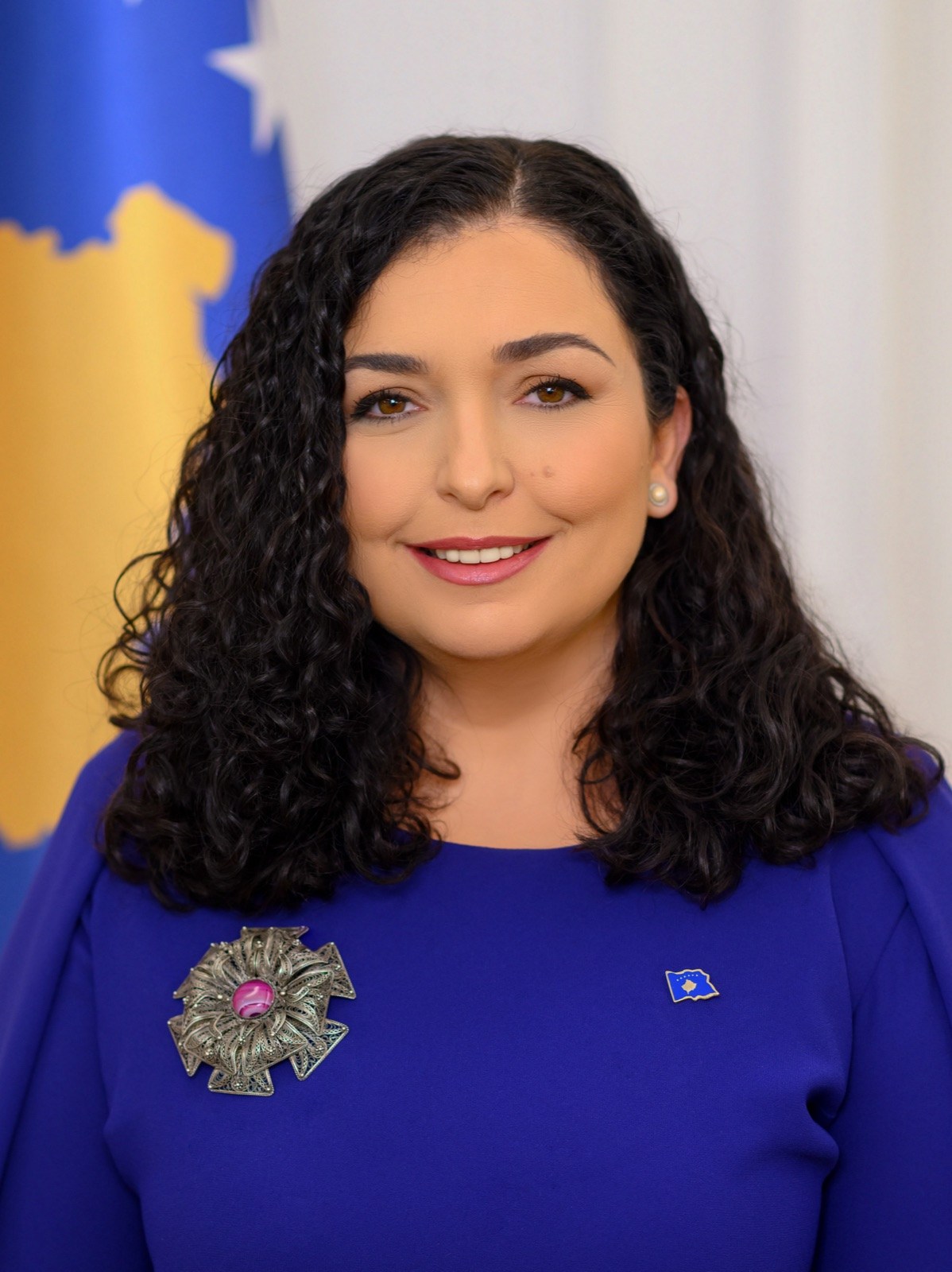
Vjosa Osmani
Vjosa Osmani is Kosovo's President, elected as a reformer for a young and vulnerable country in a tough neighborhood, and raises alarms about the ominous threat of weapons flowing from China to Serbia.
Episode Summary
We sit down with Kosovo's President Vjosa Osmani, elected as a reformer for a young and vulnerable country in a tough neighborhood. She talks on the margins of the United Nations General Assembly meeting about her concerns not just for Kosovo, but for Europe more broadly. As more weapons flow into Serbia from China, she sounds the alarm on the ominous threat it represents to regional security. Former MI6 Chief Sir Richard Dearlove and host Julia Macfarlane also delve into Serbia's increasingly important role as Russia's outpost in Southern Europe, along with Kosovo's struggles at reconciling after years of war with its neighbor.
Listen & Subscribe
- Watch on YouTube
- Listen on Apple Podcasts
- Listen on Spotify
Transcript
INTRODUCTION
Mcfarlane: I'm Julia McFarlane, cohost of the One Decision Podcast. We're coming up on a significant milestone. It's our one year anniversary of bringing you in-depth analysis of the critical decisions shaping our world. To celebrate the occasion, cohost and former head of MI6, Sir Richard Dearlove, and myself, will answer questions submitted by you, the listeners. Spies are usually pretty tight lipped, so don't miss the chance to write in. Your question might even make it onto the podcast. For more information, head over to 1decisionpodcast.com. You're listening to One Decision, the podcast that looks at the decisions made that have shaped our world. In 1888, the first chancellor of Germany, Otto von Bismarck, famously predicted that the great European war was coming and it would begin in the Balkans. When Archduke Franz Ferdinand was assassinated, allegedly by Bosnian revolutionaries aided by the Serbian group, the Black Hand, it ignited the First World War and more than twenty million deaths across Europe. The Balkans erupted again in 1991 with the breakup of the former Yugoslavia, whose capital was Belgrade, now present day Serbia. The first European head of state to be prosecuted for war crimes and genocide, the infamous Yugoslav president Slobodan Milosevic stripped Kosovo of its autonomy and imposed Serbian administration on it, sparking its majority Albanian population to protest. Serbia resisted, enacting a brutal crackdown on the province that many Serbs saw as the birthplace of their own nation. After a brutal war which saw more than 10,000 Kosovars killed and half the country displaced, Kosovo declared independence in 2008, with half the international community recognizing the nation. But while the fighting paused, peace has been elusive. Serbia, a close ally of Russia and a place where Vladimir Putin enjoys broad support for his war in Ukraine, says it will never recognize an independent Kosovo. And whenever instability flares on the border, fears that this restive region could ignite once more. Vjosa Osmani is the new president of Kosovo. A teenager during the Kosovo war, when her home was raided by Serbian police, she took office at the age of 39, replacing her predecessor, the former political head of the Kosovo Liberation Army turned politician who resigned to face a war crimes trial. She rose to power on a platform of anti corruption, winning a landslide resulting in a record number of women in parliament and in the cabinet. While the economy and unemployment are generally the biggest concerns of Kosovo's today, she also inherits leading its long struggle for recognition. We sat down exclusively with President Osmani in New York on the sidelines of the recent UN General Assembly.
INTERVIEW
Mcfarlane: President Osmani, thank you so much for joining us on One Decision, it's great to see you here in New York. Your country, Kosovo, you have your own government, you have your own armed forces, constitution, judiciary, you have your own Supreme Court. In every aspect, you are a state apart from recognition by the international community. A lot of EU nations say that self determination can't be the only thing for recognition of an independent state, that you need a peace deal with Serbia. Last year, the Serbs refused a six point peace agreement, particularly over an article that said it needed to deal with the past. That is the atrocities and ethnic cleansing that took place in your country. The current president, Vucic, he was a key minister in the genocidal regime of Slobodan Milosevic. I see he popped up at the UN General Assembly quoting Martin Luther King. He has vowed never to recognize Kosovo as an independent country. Why are EU officials still pushing you to carry out negotiations with Serbia given what Vucic has said? Do you think the whole thing is a farce?
Osmani: Well, thank you for having me. At the beginning, I'd like to point out that in fact the vast majority of the countries of the United Nations have recognized Kosovo's independence. And back in 2010, the International Court of Justice has decided that Kosovo's independence is fully in line with international law. So the countries who say that the right to self determination, which was rightly exercised by the people of Kosovo, is not enough, I think we can add up the decision of the International Court of Justice to make it enough. But obviously, there's absolutely no standard in international law or elsewhere a genocidal regime should be asked whether a country, a people should be exercising its right to self determination or not. And this has been, as I said, once and for all clarified since 2008 when we declared independence, but later on also through the International Court of Justice, which, as I said, pointed out that no provision of international law has been violated. You also rightly pointed out that the current president of Serbia used to serve as the minister of propaganda during the Milosevic regime exactly during the wars in Bosnia, Herzegovina, and Kosovo. Let me also add that during the wars in Yugoslavia caused by that regime, which led to genocide against the people of Bosnia Herzegovina, against the people of Kosovo, and horrendous war crimes, crimes against humanity, and rightly so, the proposal that you just mentioned that was refused some time ago because of the points on dealing with the past shows that the current leadership in Serbia is not ready to repent, to accept the crimes that were committed at that time, to not glorify Milosevic any longer, but quite the opposite. They continued to glorify him and the generals that committed these crimes at that time. So why the European Union is pushing for this dialogue? Look, I believe that dialogue is the only way forward for resolving disputes between nations, and we've extended our hand of cooperation despite of the fact that Serbia has never delivered justice and has never put the perpetrators of these horrendous crimes in front of justice.
Mcfarlane: I think it's a really, really interesting time to be talking to you, given the situation with Ukraine and most recently Putin's announcement that he is ramping up his war efforts in Ukraine with this partial mobilization. An MP from Vucic's party said that Serbia would soon be compelled to begin the denazification of the Balkans. He later apologized for that comment. You have previously said that Putin could use Kosovo to widen the conflict in Ukraine. What in your opinion should people know about the relationship between Russia and Serbia? And how worried are you for the security of your own country right now?
Osmani: Unfortunately, Putin has been for many years trying to create proxies in other regions of Europe. And just like he did with Belarus, for example, in the Western Balkans, he managed to completely take control over the politics in Serbia and keep this country as hostage. There have been historical ties between these two countries that are now resulting into the highest level of political, military and economic cooperation between Russia and Serbia. For example, whilst the rest of Europe has adopted sanctions against Russia, Serbia remains the only one not to do so. They recently just signed a new deal with Gazprom. They have turned into a safe haven for all Russian businesses, and they don't accept to join the European Union or align with the European Union on any of the actions taken against Russia. Quite the opposite, they are serving Putin's interests in the worst way possible and leaving the entire region then quite fragile to the malign influence of Russia. So, I mean, if you look at just the number of military exercises that Russia and Serbia used to have ten years ago, and now you can see that it has been multiplied. They also have opened a so called Russian humanitarian center in Serbia, close to the border with Kosovo, which according to the US Department of Defense is a Russian spy center. They're planning to open a Russian defense office. The amount of weapons they buy from Russia and China and the way how they also behave towards Iran shows that in fact there's nothing pro European in Serbia but their true friends are Russia, China, Iran and countries like Venezuela. Then they don't shy away to say that they actually do that proudly. So these connections actually, they create dangers for the entire region because Putin's intention ultimately is to also expand the conflict elsewhere in the world. So through their proxy Serbia, they want to create tensions in Kosovo, Bosnia, Herzegovina, Montenegro to begin with and then move on with the rest, because a destabilized Western Balkans means a destabilized Europe, so after all, this is not just Putin's war against tiny Kosovo. It's him fighting everything European and American that has been achieved in our region, all of the values that are shared and extended and on which are the foundations of our country stand. This is their war against the values based systems that the EU and NATO are.
Mcfarlane: I take your point, Serbia and Russia obviously have very long historical ties, but I think some Serbians might want to point out that they did vote to agree the resolution condemning the war in Ukraine earlier this year.
Osmani: They actually voted the resolution to kick Serbia out of the Human Rights Council, but since sorry, Russia, to kick Russia out of the Human Rights Council. But since when Russia cares about human rights? I mean, everyone knows that words mean nothing to Russia. Sanctions mean something to Russia. For that reason, when it comes to words, Serbia has joined the words, but it has not joined a single action against Russia. But when it comes to taking action against the Russian state, against Putin, against his oligarchs, Serbia has not only not been joining sanctions but has been turning a safe haven for all of those Russians that are very much involved in the war against Ukraine. So, I think rather than listen to what they have to say, we should look at the concrete actions that they have towards Russia and again, it's very interesting to see not just what happened since the February 24 but in this past year or so and how much weapons Serbia has been receiving from Russia and even buying a weapons system from China that no one in our region has. No one in Europe in fact has ever purchased such a weapons system from China. And the day when Vucic received those weapons, he said, I quote, with these weapons, we can attack deep within enemy territory within a perimeter of nine kilometers. Now, you check who's in that perimeter, you can find eight countries, six out of which are NATO members. Now, of course, we're facing crisis just like every other country in Europe, but I think it's very important for the EU to deliver when we deliver based on the criteria that they themselves have set. On the other side, I don't think Serbia should continue with accession negotiations because after all, what kind of a message is the EU sending if it keeps rewarding Putin's best friends?
Mcfarlane: Well, you mentioned the current crisis. Kosovo has been back in the news recently because there was some unrest this summer after a disagreement between Kosovars and Serbs in the north of your country over license plates with Serbian residents and Kosovo refusing to switch their license plates with Kosovo ones. I believe the implementation of those rules have been postponed for now. Since the end of the Kosovo War, how tense is the situation with Serbia and how close are you with tensions spilling over again? I mean, what would happen, for example, if the NATO peacekeeping troops in Kosovo were to leave?
Osmani: There is a clear necessity for NATO peacekeeping troops to stay in Kosovo because Serbia's and Russia's intentions to destabilize our region. And the NATO presence has been an important pillar of peace and security, not just in Kosovo, but also wider. But at the same time, I can never explain what happened in these past couple of months as tensions between Kosovo and Serbia. Again, there was a clear attacker, because what happened was Serbia was shooting at our border police. We never shot back. Serbia was burning down registration offices at the Kosovo border. We never answered back. So, when there's a clear aggressor and a clear victim, I can't just call it tensions between two parties because for tensions between two parties, you need to have both parties contributing to these tensions. Whereas in fact we've only contributed to de escalation. So, let me explain this issue of license plates a little bit. During Milosevic times, there were certain registration plates that were, of course, used in Kosovo, imposed. And then it's been twenty three years since that time that a very small number of Kosovo Serbs have been keeping these very old Milosevic time registration plates. We recognize Serbia's registration plates if their citizens drive through Kosovo or come to Kosovo and they recognize ours, the legal ones not the Milosevic ones, they recognize ours when our citizens go through Serbia or to South Serbia where many Albanians live. Now, there is this minority, I would say one eighth of the Serb population in Kosovo that has these Milosevic registration plates. I mean, you imagine twenty five years after the war, let's say in Poland somewhere, people driving with Hitler Times registration plates, obviously. No one would allow something like that, not just because they're illegal, but to have something that represents the genocidal regime is insane to just tolerate it. Do you say it's triggering to Kosovo and citizens? It's absolutely triggering because these are the registration plates of the cars who would come to your apartment building or to your house, kill your loved ones and at the same time burn down your house. So, you can imagine what kind of emotions it triggers among the people of Kosovo, but even leaving all of that aside, it's illegal. These are illegal registration plates. For twenty three years we've had other Kosovo registration plates. So, for citizens to ride around the country, they need to have legal registration plates. I mean, you can't just drive with anything here in New York, right? So, practically, it's also an issue of rule of law. So, among those Serbs that have these registration plates, there have been some that wanted to change them, so it's not like they're rejecting it, but then there are illegal structures in the North, practically gangs, criminal gangs who are paid by and supported by Vucic, who have been threatening Serb citizens not to do that. And whenever they find someone who is changing the registration plates, they go burn down their cars or they go burn down their house. That's what happens. So practically they are intimidating them. After all, this is an issue of rule of law and we're not going to give up on our efforts for rule of law and equality before the law of all of our citizens.
Mcfarlane: I think it's important going through that it's not just an issue of license plates that people may be not totally familiar with the situation may take it as. Your country is hemmed in by quite restrictive EU visas. We've talked about the expectations the EU has on Kosovo with regards to the peace talks. Do you feel like the EU are constructive allies?
Osmani: Well, I'd say that they are our indispensable allies, but they're quite slow sometimes to keep their promises, especially on the case of visas. More than four years ago, the European Commission has recommended a visa regime. All we need is a political decision at the level of EU Council. All our hopes are now in the Czech presidency and we're really working with each and every member state to make sure that they are all in favor. There's a lot of disappointment among the people of Kosovo and this has made so many lives more difficult. Not that it makes the citizens of Kosovo spend a lot to get a visa to travel for all kinds of reasons, but at the same time, it's about the sense of freedom, you know. The European Union was founded on the very basis of freedoms and liberties, I believe it's against the very foundations of the European Union to deny us that right. We're a small country with just less than 2,000,000 people, and you can imagine even the citizens of countries far away like Venezuela and so on have a visa liberalization with the European Union, and a small country like Kosovo at the heart of the European Union doesn't have that yet. So, we're working hard to make it happen and I'm quite hopeful, but again, very cautiously optimistic about this.
Mcfarlane: Got it, got it. We have spoken a lot on this podcast with the Baltic nations who are very, very concerned about the situation with Ukraine. And they are a group of countries who are very used to having a much bigger, more aggressive destabilizing neighbor. Do you speak to the Baltic nations? Do you speak to Poland? Have you been speaking to them more given the situation in Ukraine?
Osmani: Absolutely. I would say our biggest supporters right now are precisely these nations. We have similar histories and similar struggles, but at the same time, we've been looking up to these countries for so many of their successes, and I've established excellent contacts and communication with the presidents of all the Baltic nations, and also we're working closely with Poland. We are very much supporting, as you know, they take joint decisions also in Ukraine and Kosovo has been following most of these actions that the Baltic states are undertaking when it comes to action against Russia. But at the same time, we believe, I believe that we need to alleviate our partnership to a strategic level, especially in three main areas. That is defense, cyber security, as well as digitalization. We have a specific interest to increase the level of cooperation, strategically speaking, with these countries.
Mcfarlane: And what sort of form would that take? Like a defense pact, like mutual military exercises with the —
Osmani: We're still at the very beginning of discussing these. I just think that given that they have similar circumstances that they're facing an extremely aggressive neighbor that also always thinks of attacking you, of the same mindset, it's not just the intention to attack, but historically it's the same mindset. If you look at Serbia and Russia, there's a lot that we can cooperate when it comes to this and as you know cyber security has turned into one of the biggest threats I would say of this century but especially lately our region is under constant cyber security threats and we need to work with these countries who have been building quite stronger systems knowing that they had to deal with Russia. So we still need to sort out details, but I've raised this and I think it's very important that we look into ways of increasing cooperation.
Mcfarlane: I want to ask you about President Trump. He proposed land swaps between you and Serbia as a way of working towards normalization between your two countries. Now, a lot of people have pointed out that land swaps would potentially be a terrible idea, given that if one were to redraw the borders of any part of the former Yugoslavia, you would have Croatia, you'd have Bosnia, you'd have North Macedonia, all wanting to do the same because there are similar grievances and different ethnic lines in those countries as well. And if that were to happen between you and Serbia, causing a ricochet effect on the Balkans, that would be unlikely to remain peaceful. If you were to turn to the EU, there are obviously a lot of countries that are hesitant, and in many ways would be unlikely to agree to Kosovo joining the EU, there's Catalonia in Spain, Transylvania in Romania, Northern Cyprus, all of these countries are breakaway regions. If Trump were to come back into office in the next election, what impact do you think that would have on your status? And is the EU a likely alternative if the US would likely complicate the talks with Serbia if we are to revisit the idea of land swaps?
Osmani: I'd say that there were certain parts of the Trump administration that were pushing for that solution, and then there were certain parts of the administration that were not pushing for that solution. So, it was a sort of a difficult situation at that time. But no agreement can be signed without Kosovo accepting it and we will never accept a land swap agreement. Never. No matter who comes to power here in the United States in the future, Kosovo is not going to accept a solution that would partition it, because we have already paid an extremely high price for the freedom and independence and the borders that we have today. Secondly, as you pointed out, this would absolutely open Pandora's box, because it would not stop just with Kosovo, it would move on with the rest of the Balkan Region countries and wider Europe. It wouldn't even just stop with the Western Balkans for sure. And finally, look, there's no comparison between Kosovo and Catalonia and Transylvania and so on and the International Court of Justice has made that clarification. Kosovo was not a breakaway region. Kosovo's independence is a result of Yugoslavia's dissolution. We were a constituent unit of Yugoslavia with exactly the same rights as the other units in Yugoslavia. One of those rights was the right to determine your own status and self determination should there be a process of dissolution. Therefore just like the other units we exercised that right and for that reason it cannot become — and many others of course among which the fact that Serbia committed genocide against us. Spain did not commit genocide against Catalonia and the same with Romania and the other countries that you just mentioned. So for that reason, there's no comparison to be made and the other reasons are all outlined in the International Court of Justice opinion when it comes to Kosovo's independence. So, there is compatibility with international law. All of the legal political arguments are in our favor. So, the point is there's no issue called Kosovo's status anymore. Kosovo's status has been resolved once and forever on the 02/17/2008. Kosovo's independence is there to stay. It's irreversible and it will not change forever. What we can discuss is how to have better relations with Serbia. But as you know, it takes two to tango, so they will need to start coming to their senses and stop destabilizing.
Mcfarlane: What do you say to people who accuse NATO of being imperialist and expansionist? And what would have happened to your country if NATO hadn't intervened?
Osmani: Practically, if NATO hadn't intervened, Kosovo and its people would have perished from the face of the earth. The way how the war in Kosovo was progressing was that in just a couple of months, around 13,000 civilians were killed. So, there would be no Kosovo Albanians left. NATO intervened to stop an ongoing genocide. There's nothing imperialistic about that. There's nothing expansionist about that. But it's precisely the right thing to do. In the face of genocide, there is what we call as lawyers, an erga omnes obligation, which means an obligation of all to protect the oppressed and to protect the victims of genocide. You can't just turn your back in a blind eye when something like that happens. And there's absolutely nothing expansionist about going and saving an oppressed people.
Mcfarlane: Thank you so much for your time. It was great. And now we come to the part of the podcast where we bring in my cohost, Sir Richard Dearlove, for his analysis.
ANALYSIS WITH SIR RICHARD DEARLOVE
Dearlove: Well, I think it's a very fascinating interview, and there's a lot in it which is potent in terms of its significance, not just for Kosovo, but for wider geopolitical issues, because of Serbia's position in Europe as a strong or a potentially strong Russian ally. So you have an odd perspective when you look at this issue. I mean, let's face it, although we don't have any direct conflict in the Balkans at the moment, in a way it's a sort of frozen conflict, and the issues which caused the resurgence of war in the Balkans have been part rather than fully resolved. And obviously, one of the key remaining issues is the international recognition of Kosovo as an independent state, to which the Serbians, you know, remain fundamentally opposed. But the Serbians actually are paying quite a high price for this, because they can't proceed with their application for EU membership, whilst they refused to recognize Kosovo and still regard it, you know, as an autonomous province of their own country.
Mcfarlane: Do you think that the fact that for the Kosovans there is a lot of unfinished business, there is still a lot of pain and there's also a lack of closure for a lot of them because as far as they see it, there has been no accountability and justice has not been done. And I think the fact that in the Serbian president you have a man who was the head of propaganda for the Milosevic regime. It's a big ask of the Kosovans to ask them to sort of bury the hatchet and move on from the past. I mean, do you think that is sort of fair to ask? And is it realistic? Do you think that a nation can move on from those sorts of horrors?
Dearlove: Well, if you take these very deep and profound historical conflicts, and that's what you have between Kosovo and Serbia. It takes — I mean, the passage of time maybe is a gentle healer, but I think the passages of time are very long indeed. The problem with the Kosovo Serbian conflict is it dates back to the Middle Ages. I mean, this is something which is seminal to Serbian identity. And I think it's worth trying to understand why the Serbians will not concede, and why the Serbians, as it were, will not shift their basic ground. And as you correctly pointed out, Vucic, the current president of Serbia, you know, has a pretty shady Serbian past, but of course in Serbia it identifies him as a Serbian nationalist. And I think the psychology of Serbia, you know, which I recall from the time when I was much more involved in these events, is that they see themselves as being owed historically, a sort of living by Europe. They were holding, as it were, the soft underbelly of Continental Europe against Turkish Ottoman invaders, and they were almost the sort of armory of Europe during a long period, I mean, bearing in mind that Kosovo was part of the Ottoman Empire, and the Serbians see themselves as holding the line. Okay, there were occasions when the Turks got to the gates of Vienna, but, I mean, the Serbians really do feel that Europe owes them historical debt which has never been repaid. In fact, rather the reverse, you know, they've been pushed to one side. So they're sort of deeply emotional about that, and that rather extraordinary historical past. I think if you dive deep into Serbian identity, these are the sort of things that you discover. But on the other hand, of course, you know, what happened in the Balkans when former Yugoslavia split up is deeply tragic. And of course, there were terrible things that happened, particularly in the northern parts of Kosovo, you know, where there is a Serbian majority. And, you know, it's very difficult for both parties to put aside this and come to some sort of agreement. I mean, I think we're fortunate to an extent because of the American involvement in, as it were, negotiating a peace deal in the Balkans, the outcome is you have essentially a frozen conflict. But as we've discovered with this ridiculous issue over car license plates, it's not about car license plates, it's about Serbian identity and it's about Kosovan identity. And it just happened to have crystallized around a rather absurd issue, you know, which is how you license your cars. And it shows how volatile and how difficult it is to get away from the basic feelings of injustice and the fact that, you know, people should pay for the dreadful things that happened. So I mean, I thought listening to your interview with the Kosovo president, I thought, you know, she was rather extraordinary, but I mean, what she was trying to do was to say, well, there's a judicial issue which has to be separated from the political issue. And the judicial issue is that, you know, people were guilty of murder, and therefore, you know, they should face justice and pay the price of facing justice. And in a way, I think that's understandable. I mean, the Serbians are very intransigent, and the nature of Serbia as a country I don't think has changed. And of course, it is a potentially dangerous entity, because it's a Russian outpost as it were in Southern Europe, or a Russian influenced outpost in Southern Europe.
Mcfarlane: I think that's so right. And I think it's absolutely fascinating geopolitical quagmire. And interesting that you brought up that they've been fighting since the medieval periods. I think there was a war between the Kosovars and what is now Serbia in the thirteen hundreds or something way back.
Dearlove: Yeah. I mean, it does. And of course, Kosovo pretty much defines the line of where the Ottoman Empire stopped in Southern Europe. Of course, if you go to Kosovo, and I had the good fortune to go there and to go to Pristina after it was sort of, in inverted commas, liberated, you know, there are mosques rather than churches. And I mean, it's quite unexpected, you know, because Serbia is the sort of home of Orthodoxy, I mean, Christian Orthodoxy, and it has played a seminal role in Christian Orthodoxy. And then you go a little bit south, and suddenly you're into an area where the villages have mosques, and the mosques relatively ancient buildings.
Mcfarlane: So this is a sort of a cultural front line. I mean, I wouldn't put it necessarily, but I mean, it's turned into a political front line as well. When I was speaking to her aides before the interview, when I was trying to just get a little more understanding of the history and they were helping me with some of the background. I put to them whether this could be described as a Christian versus Muslim conflict. And they said that a lot of people do, a lot of outsiders do see it as Christians versus Muslims. But if you go to Kosovo, you don't tend to get many visible indicators of if someone's Muslim. Like, it's not like in Jakarta where I was born, where everyone wears a headscarf. There's not a hugely strong, at least visible Islamic culture. So there was a little bit of pushback against the framing of it in those terms. It seems much more of an ethnic thing of we are Albanians and they are Slavs and we are not the same.
Dearlove: No. I agree with that. I mean, if you actually go there, the sort of Muslim Orthodox confrontation is hardly visible. It is ethnic, and it's about the Albanian link with — I mean, you know, the language link between Kosovo and Albania is strong. And I mean, going way back in time, you know, when the conflict was going, you know, I went to Albania. I also went to Pristina and, you know, met up with quite a lot of the sort of prominent people at the time. And I mean, it's the sort of Albanian ethnic link, the Albanian language link, and many of the people in the Kosovo Liberation Army, which wasn't an entirely pretty organization, I mean, you know, it has a pretty checkered past. But I mean the Albanian influence in that was very very strong, and, you know, there were quite a lot of sort of undesirable figures. But, you know, they were, as it were, on the right side of the political equation in terms of, you know, establishing Kosovo as a quasi independent state, which of course now has been recognized by a majority of other countries globally.
Mcfarlane: Take me through the historical relationship between Russia and Serbia. Obviously, they are both Slavic nations, but really, president Vucic has been described by many of his detractors as little Putin to Vladimir big Putin. And so has the relationship has it always been as close as it currently is? Or do you think Vladimir Putin uses Serbia as a way to get a kind of foothold in what is a very, very flammable tinderbox in the Western Balkans, and particularly given that it is Europe's soft underbelly?
Dearlove: Well, I think that, you know, the Russians have used their intelligence and, to an extent, their military capability, you know, to maintain a link with Serbia. And it's very useful, as you've already indicated, for Putin to have that outpost of Russian influence in the, you know, solidly in the West, as it were. I mean, you know, the link between Russia and Serbia, I'm not an expert on this, but it's cultural. It's based on, you know, the Christian orthodoxy, and it goes back a long way. And, I mean, I think that I mentioned before this feeling that the Serbians are owed a living by Europe. The only country that the Serbians feel that has delivered on that is Russia, in a way. And of course you have this historic opposition or divide between the Orthodox version of Christianity and the Muslims. So this runs historically very deep. But, you know, there's no question that Vucic has lent, you know, on his relationship with Russia as and when it was convenient for him to do so. But, I mean, it's not quite that simple because, you know, the Serbians actually are desperate to join the EU or at least have a closer relationship. And they are technically still a candidate country. And I mean, in a way, the European relationship for Serbia is far more important than the relationship for the Russians. But the Russians are very clever at leveraging and exploiting. And I mean, if you go back, you probably may not remember this, but if you go back a few years, there was that attempted so called coup in Montenegro, which was apparently organized, you know, by Russian military intelligence, the GRU. So it shows the sort of fragility of the situation in that area.
Mcfarlane: Something else that President Osmani mentioned was that the Serbians recently did defense business with the Chinese. And so I read up on that and it seemed that a few months into the war in Ukraine, which is probably why this didn't get much attention at the time, the Serbians signed a deal with the Chinese for a bunch of FK-3 air defense systems, surface to air missiles. And it was a deal that was announced several years ago. They signed the deal, I think, during the pandemic and they announced it a year later. And then the transaction was completed this year. And that was something that President Osmani said that the West needed to take notice of. This is the Chinese establishing defense industry cooperation with Europe or with a country that wants to join the EU. Does that alarm you? Do you think that's something that we should be alarmed of? Is it something that you think the Kosovans are understandably unsettled by? Or I mean, what do you make of that?
Dearlove: Yeah, I think that's extremely worrying and I can't think that there could be any other European nation who have bought defense kit from the Chinese. I mean, I may be wrong about that, but I think that's an extremely worrying step and actually pretty typical of this obtuse Serbian political behavior, which is designed, you know, to pressurize the rest of Europe into, you know, say, okay, we bought from the Chinese, but, you know, if you treated us more reasonably, we would have bought from you, if you see what I mean. The Serbians really are problematic in that respect, and they really do, you know, resent the fact that they're not sort of celebrated as a historic European player that played the important historical role. And, you know, we regard them now really as troublemakers and a pain in our underbelly.
Mcfarlane: Well, they certainly played a very historical role in the Yugoslavia Wars.
Dearlove: Oh god, yes. I mean, you know, I won't go back to that period of time, but I think it's incredibly disappointing, the extent to which Serbia hasn't moved on. I think when the war ended, I think there was a hope that, you know, one would begin to see a different type of politics, but in fact, you know, the politics of characters like Vucic is still based on this strong and aggressive national identity and not surrendering on what they see as issues of basic principle in relation to what is Serbian identity. So, you know, the outcome has been less than the promise at the time that the conflict ended, and, you know, there was a degree of agreement. I guess there will come a point in time where we will begin to see a shift, but it's very difficult to put a timeline on it. I mean, I'm not drawing a direct comparison, but it has echoes of the Irish issue, and these very ancient seminal deeply held divisions, which even over generations do not become diluted or disappear at the speed maybe of one's expectations, and I think this is clearly the case. I mean, I can see continued tension, I can see continued problems, I can see incidents. I don't think one is at any risk of returning to a state of war, but of course, the Russians will exploit this, particularly at the moment, for all they're worth. I think if you do see an escalation or, you know, a growing problem, I wouldn't be at all surprised if the hand of Russia using its intelligence capabilities, quite formidable in a sense, to destabilize that area of Europe. It would be a natural response to the current Ukrainian crisis. But I must say I was very impressed with your interview. I mean, the current president, she does seem to really have her feet on the ground, and there seems to be a very sort of balanced, and she has a good perspective on the broad issues and problems that Kosovo faces.
Mcfarlane: It's because she's a woman and a millennial, Richard.
Dearlove: Oh, I know. Well, I'm grateful.
Mcfarlane: We're gonna sort it all out everywhere. I'm sure you're right. She and Jacinda Ardern popped up on Instagram at a party that Biden was hosting in New York at the general assembly. And I thought, oh, I was wondering if those two would meet. And it seems they did. My role is to stand on the sidelines and comment. Yes. You're at home in the shadows. We'll get you out of the shadows more and more over the course of this podcast, Richard.
Dearlove: Okay. Julia, all the very best.
Mcfarlane: That's good. That was great. Thank you so much, Richard. That brings us to the end of this week's episode of One Decision. If you enjoyed this podcast, do subscribe to us so you never miss an episode. We drop new podcasts every Thursday. From me and the team, see you next time.