Episode Info
- Season4
- Episode1
Hosted by Christina Ruffini and Sir Richard Dearlove
Guest
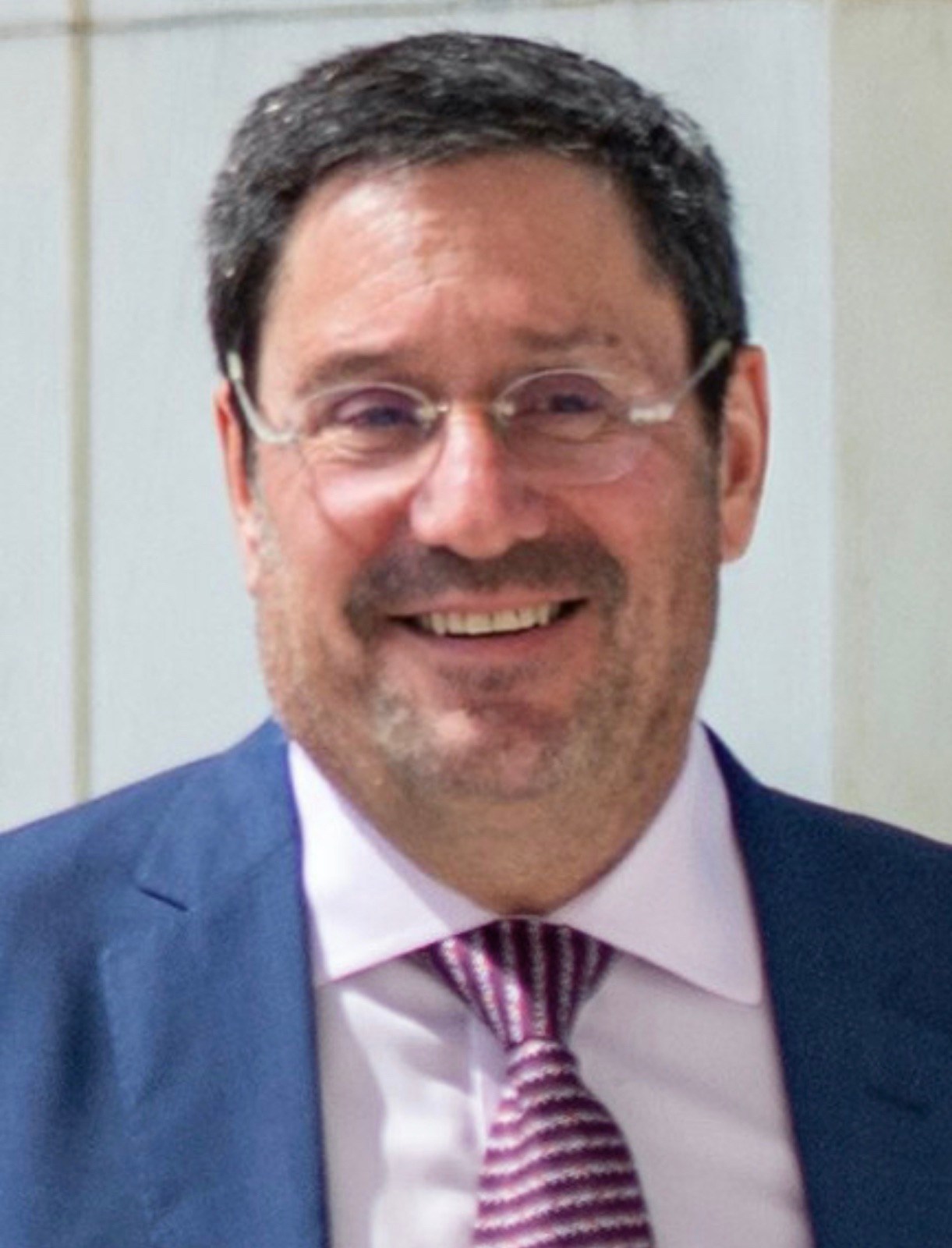
Francisco Santos
Francisco Santos is a Colombian Ambassador who delivers a wake-up call to South American neighbors to beware Chinese offers.
Episode Summary
Colombian Ambassador Francisco Santos delivers an extraordinary, insider wake-up-call to his South American neighbors: beware the Chinese bearing gifts. And to the US-- “It’s halftime and you’re losing 30 to nothing.”
Listen & Subscribe
- Watch on YouTube
- Listen on Apple Podcasts
- Listen on Spotify
Transcript
COLD OPEN
Kosinski: Next up on One Decision. China is a powerhouse.
Santos: But what I didn't know then, and I started finding out and finding out, the cost of doing trade with China, it always has a political cost, and it always has strings attached that you normally don't know it, and I certainly didn't know it.
INTRODUCTION
Kosinski: Welcome back to One Decision. I'm Michelle Kosinski. Today, we have an extraordinary account from someone who held an extraordinary vantage point. Francisco Santos Calderón was vice president of Colombia. He's also been an ambassador, a journalist, has seen quite a lot in his just turned 60. And now he bears a warning about China's hungry investment in his country and beyond. But first, let's check in with Britain's former spymaster, Sir Richard Dearlove, who's also seen quite a bit in his career, most of which he will not tell us about. Hi, Richard.
Dearlove: Hi, Michelle.
Kosinski: So China's growing influence in every potential corner of the world it can get into. I'm sure this has been on your radar for a while.
Dearlove: Yeah. I've certainly been deeply concerned about China's use, specifically of Belt and Road, to infiltrate the economy of countries, particularly in areas, you know, which maybe the West is ignoring for reasons of current policy.
Kosinski: Your use of the word infiltrate is telling.
Dearlove: And I think the interview that you've made with Santos is absolutely fascinating because it's the most extraordinary firsthand account I've read from anybody of, you know, actually what it's like dealing with the Chinese, you know, when they arrive.
Kosinski: Yeah.
Dearlove: Beware, beware of Greeks bearing gifts. Beware of Chinese bearing. I mean, it's an incredible interview, and I think really fascinating.
Kosinski: I'm glad you think so. And the Chinese have been excellent at building relationships. Right? That long game that everybody loves to talk about.
Dearlove: Absolutely true. And I mean, if you look at the rather unique and peculiar history of the way that the Chinese intelligence service has operated. Zhou Enlai, who was, you know, Mao's fellow prime minister, whose big phrase was, quote unquote, make friends for China. Allegedly, you know, they were not interested supposedly in recruiting spies, but they were interested in making economic alliances through friendship, which actually were then exploited in a much more profound manner than just a friendly relationship. And I think in Santos's account of his relationship with Xi Jinping, which I was extraordinary to read that. It's a classic Chinese technique of cultivation and friendship, which then rapidly turns into something very, very different.
Kosinski: When you started to see China spread out and forge these relationships, often involving debt and resources, when did this start catching your attention?
Dearlove: Well, I think it's relatively recent. I think we were already aware that China was taking a strong interest in countries with mineral resources and that the deals that they were beginning to do had a lot of strings attached. But it's got, you know, so much more sophisticated, so much more threatening since that period. China's advance in the developing world has been very, very worrying.
Kosinski: And what is the worry? Like, what is the danger, would you say?
Dearlove: Well, I think that China is creating financial and economic dependence on itself. I mean, I think a good example of this is Sri Lanka, where the Chinese were instrumental in helping the Sri Lankan government defeat the Tamil insurgency. And the cost of doing that to the Sri Lankan economy was incredibly high and, of course, very worrying for India. And I think the sort of infiltration of an economy, creation of indebtedness, then political manipulation, I think this degree of subtle involvement and interference in the affairs of other countries by a regime which is totally autocratic and has, you know, a tendency to push these countries away from the democratic process. It's a very worrying concern.
INTERVIEW WITH FRANCISCO SANTOS CALDERÓN
Kosinski: Okay. Thanks, Richard. Let's get right to it with ambassador and former Colombian vice president Francisco Santos Calderón, who we find in Miami, where he's teaching at Florida International University and back to journalism as well.
Santos: Yes. I'm back in journalism. I'm doing a program on Venezuela every week.
Kosinski: You have had a really interesting life to say the least.
Santos: Well, yeah, it's been interesting. Kidnapped by Pablo Escobar.
Kosinski: You heard that right. Francisco, back in 1990, when he a journalist on his way home one evening to his young family, was actually kidnapped by Pablo Escobar's Medellín cartel. His driver was killed and he was held captive for eight months. It affected him deeply. He and his wife then founded País Libre, or free country, the first NGO to fight against kidnapping. They organized huge marches. Later, his life was threatened by the guerrilla group FARC to the extent that he had to leave Colombia for a while. He's a brave guy.
Santos: I've had a handful of events in my life that have made me what I am now.
Kosinski: Okay. Well, tell us about when you first started seeing Chinese influence or Chinese overtures to Colombia. Was it when you were vice president?
Santos: Yes. As a matter of fact, in the year 2005, I went to China as vice president. I was received by the vice premier. It was a state visit. And in the end, we signed many agreements, some trade deals. And I thought it was a very, yeah, I thought it was a very successful visit.
Kosinski: But, and what did you think of these guys? Like, were they likable?
Santos: Well, yes. To a certain extent, yes. Very serious. Very, very serious. Very business oriented. But I would say the biggest part of my relationship with China came a few years later when Xi Jinping went to Colombia on his first foreign trip as vice premier. For two days, I was with him in meetings with business leaders, with the foreign policy wonks, with universities, with students, with everybody in Colombia. He was very, very charismatic, very charismatic, very charming. And he asked me if I could. He only asked me for one thing. He said, You're not going to Expo Shanghai. Can I please ask you to go to Expo Shanghai?
Kosinski: Oh, so they were having a big expo and they wanted you to be a part of it.
Santos: And I said, Sure, I'll go. And we changed the policy, and we went to Expo Shanghai. We built a pavilion, etcetera. And he told me, call me when you are in Shanghai, and I'll fly to Shanghai and see you. When I was in Shanghai, I called him, that was 2010, said and done, he flew and he gave me a dinner for a very few people. We drank a very special Maotai. We celebrated. And it was a very big personal connection. He said, you know, you have a friend here in China. Whenever you need anything in China, I'm here. And it was, I would have to say, I fell well for it. Very charismatic man, really very charismatic man.
Kosinski: So he was not yet president?
Santos: Yes. He was my counterpart, and they were training him. He became president, I think, two years afterwards. Very, very likable person, and I felt close to him to be family.
Kosinski: Did you guys get to know each other on a personal level at all? Like, how do they operate? Do they ever share details of, like, what's going on in their lives or let's talk about my son? Or, like, did you feel like he was a friend at all?
Santos: Well, we didn't talk any personal, but he very clearly said, you know, of the Chinese, when you're friends of the Chinese forever and you have us here, and we toasted to the friendship between Colombia and China. And I felt close to him because of the two visits. In the first visit, we were in Cartagena the first night, which is a colonial city in the northern part of Colombia. And I told him, why don't we dump our security details, and let's go in a carriage around the old city? And we did that, and we went in the carriage, him, me, the minister of commerce, and a translator. And that was it. And he was surprised that of how beautiful the city was, etcetera.
Kosinski: Oh, nice. So there was a connection.
Santos: I have to tell you, yes. There was a connection. Very nice. And afterwards, when he was premier and reading many of the things that I've read, he used this charisma to do a lot of personal diplomacy. I guess he was very successful.
Kosinski: Interesting. And so I happened to notice that you mentioned just a few words that stuck out there when you said, I fell for it. That does not bode well as to where this was going.
Santos: China is a powerhouse. But what I didn't know then, I started finding out and finding out the cost of doing a trade with China. It always has a political cost, and it always has strings attached that you normally don't know it, and I certainly didn't know it between 2002 and 2010. I even didn't know it until 2015 when a big Chinese company asked me to represent them in Colombia. And I said, sure, I'll represent you, but for bid. Only if you bid in a competition. They said, no, we don't like bids. And I said, if you want me to do the work for you to get you contracts with the government, that's not how we do things. That's not how I want things to get done. If you want to compete, sure. So we ended up not, I ended up not being able to represent them. And out of that and other topics, things started to change.
Kosinski: And soon very personally when Francisco's son, a Colombian lawmaker, was invited with a group to simply visit Taiwan, which of course is seen by China as a renegade province. It did not go over well. This was only around three years ago.
Santos: I would say the biggest issue, and as a person who believes in personal freedoms, who a person who fought for freedoms as I did after my kidnapping and everything that has happened in my life, the Chinese government went ballistic, they said that, no. He can't go and started pushing really hard at the government. They said, you know, the son of the ambassador who's also a congressman of Colombia. And they were successful at stopping that visit and the visit of all of the congressmen to Taiwan. And I said, wow. That's strange. That's not how a friend works. That's not how a friend does things, and it shows a heavy hand by the Chinese government, how they want to protect their political interests. And you know, after they were able to take back Hong Kong practically at no cost, they're starting to sense that they can flex their muscles a lot more. And they're doing so.
Kosinski: What was your reaction to that? I mean, something like a trip, a simple trip of a lawmaker to Taiwan.
Santos: Wow, how can that be? Is that how a friend treats a friend? That's when I started really going deep into what does China bring to the table in terms of costs, hidden costs of many of their investments. We need to be very careful how we do things with China.
Kosinski: When you were dealing with Xi and then he became president, what do you think they wanted from Colombia?
Santos: No. I think, you know, I think they were selling this idea of the good buddy, of the good friend, of a rising power that would help Colombia, that would help Colombia develop and we could be great partners. And so as a vice president, you say, hey, if those guys are gonna help me jump into that type of jump they did, I want them to be friends. So they were selling this success story, which is a success story. They were selling their power, which is real. But the backdoor or the other side of it, which is what I've been able to learn after reading and studying many of the cases of what has happened. And certainly that's something that we need to be aware in Latin America, nothing is for free, never, obviously. But with the Chinese, it certainly comes with a lot of strings attached to political issues regarding Taiwan, regarding many human rights, freedoms, and those values that China doesn't, to be very sincere, give a damn about. For them, the individual rights don't exist. For them, freedom doesn't exist. For them, democracy doesn't exist. And they pursue that road, and they push their agenda, which goes into multilateral institutions, etcetera. And it's a world that I'm not so sure I wanna live in. It's a world with less freedom. It's a world with less rights, and I'm worried that the world is going in that direction, especially now with the dramatic rise of China and the decline of the US, which we can't deny, and especially the lack of policy to counteract, especially in a region, the Chinese influence by the US.
Kosinski: When Francisco started talking to the Chinese back in 2005, the deals were small, things like travel agreements or cultural exchanges between the two countries. But at the same time, China was starting to do much more in other South American nations. So it took time before Francisco's view of things started to sour.
Santos: They started getting involved in Brazil, in Argentina, in the big commodity producing countries, in Peru, in Chile.
Kosinski: Highways here, bridges there, ports, electrical grids. China cannot get enough of South America's resources in mining, but also pork and soybeans. China owns the biggest copper mines in Peru. Elsewhere, gold, iron ore, vast expanses of farmland, and repeatedly displacing indigenous people, ignoring human rights, as well as polluting glaciers, rivers, and groundwater across the continent. China also buys raw resources for its factories back home, which hurts local manufacturing. Ten years after Francisco started seeing this investment, bigger deals started happening with Colombia too after he had left as vice president.
Santos: They landed a very big, the construction of a very big road. They've done sort of well, but the big infrastructure project that they landed is the construction of the subway in Bogotá, the first line of the subway, which is probably, I would say today, the biggest infrastructure project with the subway line of São Paulo in Latin America. It's a 5 to $7,000,000,000 project. It has to be also operated for twenty years. So China landed, I would say, with an aircraft carrier in Colombia. It's a reality that we feel now. And we have to be very aware. I think one of the things they're gonna start asking for, especially for the building of the subway, is going to be allowing more than 3,000 workers, technical workers, to come into Colombia. That's going to be the first big battle because there's plenty of Colombian experts that can fulfill that role. That's gonna be a very, very, very big fight. And so we're in for some interesting times with China. The first thing that the government and Colombian society needs to understand is what they bring to the table, over the table and under the table, and decide how we deal with them with that understanding perfectly clear. Because most of the time we only understand what's over the table and not under the table, and that's a big problem.
Kosinski: Today, for Brazil and several other South American countries, China has become their biggest trading partner and a mega creditor lending more than $140,000,000,000 in the last twenty years. That's more than the World Bank and Inter-American Development Bank combined. China has also sold its 5G Internet across Latin America. The US has been pressuring Brazil not to let it in, but it's now considering it after China gave Brazil COVID vaccines. The Colombian ambassador to the UN praised this, even saying that China had made progress in human rights, which raised a few eyebrows. And how have the Chinese been to work with? This is sort of new.
Santos: We've been, only in the last two and a half years have they started landing deals in Colombia. What I know now is that a lot of the discussion around the subway bidding, and it was a bidding process that the World Bank was supervising. This last weekend, I was with one of the big lawyers that helped structure financing for contracts as big as the subway. Everybody knew that the contract in Colombia regarding the subway wasn't bankable, it was very difficult to finance by the traditional means because of how it was structured. It's a lesson that we need to learn because if they were able to win this contract in Colombia, they'll try to use the same formula in other parts of Latin America. And what we want, to be very sincere, is for the Chinese to compete fairly and openly. I think they understand the importance of Colombia in the region. They certainly understand geopolitics a lot better than the US, especially when the other side is bringing nothing to the table.
Kosinski: So as you start to see China taking hold in Latin America, are you starting to feel like, whoa, whoa, whoa, like, let's slow down here? Like, what was starting to bother you about what they were doing in other countries?
Santos: Let me give you some examples. Today, the Chinese ambassador in Brazil, and this was told by, I will respect his privacy, but a very knowledgeable source that has studied this for years in Brazil said, the Chinese ambassador to Brazil is more important than the governor of São Paulo, the governor of Rio. And whenever there's a law that might affect their interests, they're very much willing to use their power and their influence of buying the commodities to get what they want. A geopolitical game that they play very, very well. A few days ago, I was speaking with somebody from the former Ecuadorian government, and she told me that the Chinese fishing ships were very near Galápagos. And you know that Galápagos is a critical pristine environment that is very well protected, and they were fishing everything. And the Ecuadorians sent up the navy, the small navy they have, to lure them away. And the Chinese said, hey. If you lure them away, we will buy more shrimp from you guys. Oh. They're gonna be the biggest economy in the world in the next ten years, so we are gonna have to deal with them. But we're gonna have to understand that that investment and that relationship is uneven. It has a lot of political interest behind it. And to a certain extent, it will withdraw your possibilities. It will have an impact in your sovereignty. You know, it's very easy to say, oh, American imperialism, and hey, we've got a different type of imperialism now now slowly creeping up our economies. And I think it's important that we how we can protect our own sovereignty to it and see how we cannot become too dependent on it.
Kosinski: And when you saw Colombia, after you had left government, start to make these bigger and bigger deals, did you talk to the government and try to warn them and say, what are we doing here? Did you get involved at all?
Santos: I got more involved. I got a little bit involved. I think I sent to the head a document about where Chinese companies have left projects abandoned without completing them, etcetera, so that they could understand also that it's a different type of story. But believe me, they won it in the bidding process. Was it the perfect bidding process? Probably not. They need to do it. They're gonna have controls. In Colombia, you have big institutions, a very powerful institution that will control and will follow the construction and will follow the usage of public resources in that contract. So I'm not too worried about the results. But I think, to be very sincere, there's so such little discussion in Latin America about this, not only Colombia. And one of the reasons I'm teaching here at FIU, geopolitics in Latin America, the fight for democracy and freedom, is because I think Washington is not listening. And I think that message is very important to get it down here so that in Latin America, the leaders, political and economic, understand the new rules of the game, and understand that if we're gonna play by them, it's going to have X, Y, and Z costs.
Kosinski: When you started talking about how you might see what's on the table, but you don't see what's under the table. What kinds of examples have you seen around Latin America that really bothered you?
Santos: Well, one of the things that really worried me was the construction of this satellite operation center in Argentina, which flew under the radar in the rest of the region. And it's big technology, and we still don't know how transparent there is. The linkage of the Confucius Institute to the universities in Latin America, the universities are so protective of their independence, and I'm not so sure they understand what they are signing when they sign the Confucius Institute's charters in which they cannot criticize the Chinese government. The UN going to be absolutely captured by these type of interests and one superpower managing a multilateral organization as important as that one, with different values than the one we preach.
Kosinski: But aren't some of these projects delivering infrastructure that's so badly needed? What's the harm there?
Santos: Well, it depends. I have an example in Ecuador, which to be very sincere, it's a nightmare. They have huge debt. They have a lot of the workers were imported, and a lot of them stayed there. So not even, there was a benefit of the employment. There's quality issues too. So it depends on the country and on how it's done. They built the infrastructure that those countries needed. The problem is that they now have a huge debt that they can't pay. So the fiscal mess that Ecuador is in, it has to do precisely with, most of it with the debt that they have with China.
Kosinski: Do you think that the current Colombian government is already in too deep with China?
Santos: No. Not too much, but there's a lot of ignorance, to be very sincere. A lot of ignorance in the government, a lot of ignorance in the institutions, a lot of ignorance in congress, and a dramatic ignorance in the public opinion. And I would say from Mexico all the way to Argentina, that's exactly the same case.
Kosinski: Now the fact that Colombia started doing the bigger deals with China fairly late in the game, was that partly because of your influence saying that we should hold off on doing more? Or who was, do you think there was pushback against China for a while?
Santos: No. No. To be very sincere, there was no pushback. I don't think there's any country that has had a pushback against China in Latin America. And to be very sincere, I don't think pushback is the right answer for our countries, especially when the US has left the game totally. There is no counter power. So what's really important rather than the pushback is understand who you're dealing with and understand that even in some cases, sovereignty is at risk. So the costs. The costs that come with that hug, with that investment, with that win-win proposition, with that project, with that buying of resources, etcetera, etcetera. They think differently than us. They play a different game than us. They will use different tools than we do. And those tools can have huge impacts in our economies, in our people's lives, in our independence.
Kosinski: What are you most worried about for Colombia?
Santos: I'm worried about a couple of things. And not only in Colombia and all of Latin America, and I'm worried that when Taiwan comes into play, and I don't think it's a matter of if, but it's a matter of when. They're going to use that to help us, to make many of our countries stand by while democracy in Taiwan is crushed. I'm very worried about that. That's the biggest thing I'm worried about.
Kosinski: Got it. And when you say that the US is nonexistent there, that must be so disappointing. I mean, what would you like to see the US do?
Santos: Well, look. I would like to see many US companies that used to be big bidders in construction in Latin America come back to the region. They left the region twenty five years ago. I think access to American market becomes critical because the US, really, regarding Latin America, with the exception of Colombia, has no policy towards the region. You know? It's right now just looking at migration when you have so many other different issues and topics. So it's very, very, very difficult to balance Chinese influence when the other side is not there.
Kosinski: Do you feel like it's possible that the influence of China financially could affect democracy in some of these countries?
Santos: Wow. That's a difficult question. They tend to say that they don't like to stay in other people's or get involved in other people's issues in other countries. But yet in Venezuela, Venezuela is getting involved in many other countries trying to destabilize them. So how do you say, you're there and you are supporting this type of government. So it's a line that they don't like to cross, but that through a lot of their supports and the support of countries that they give, they're crossing it. The Chinese Communist Party has authoritarian, absolutely authoritarian DNA. And it worries me because I believe in freedom. I believe in the private enterprise. I believe in the free elections and free electoral process. And those rights are gonna come under siege in the next five, ten, twenty years. And I want my grandchildren to live in democracies and to live in liberty and in freedom. So I see that. That's what worries me, that we will not have that in the region, and the worst thing is nobody will say anything about it. So, yeah, that's why I'm involved in this issue so clearly and so aggressively. Before, the idea that economic growth will create a more democratic and free society in China was still part of the naive view of changing in China. And we're part of that too. And like I used to say to many of the administration officials, look, guys, we're in a football game. It's halftime, and you're losing 30 to nothing. So it worries me. Yes. It worries me a lot.
Kosinski: Francisco, thanks so much for sharing this. It's great talking to you.
Santos: Thank you.
ANALYSIS WITH SIR RICHARD DEARLOVE
Kosinski: Let's bring back Richard Dearlove to hash all this out. What do you think, Richard?
Dearlove: Well, I think my own view is that Xi Jinping and the current leadership have massively overplayed their hand. And, you know, the world has woken up to the reality, you know, of allowing China through the front door, through the back door, through the side door as well. And that the cost of this can be politically and economically very high indeed. And there are a lot of countries that maybe now have woken up and are regretting the extent to which they said yes. Basically, they said yes because they were in desperate need, and they were offered, you know, cheap credits. I think that this example of Santos gave of building the subway in Bogotá and bringing in 3,000 Chinese technicians, you know, when he said that there are plenty of qualified Colombians who could do the job themselves is a brilliant example. And I mean, I think that except in one or two countries, the gloss and the enthusiasm for Belt and Road has dissipated. And, I mean, for example, if you take the British aid budget, which, you know, had very few strings, if any strings attached to it, what people don't understand, it's two thirds the size annually of Belt and Road. That's incredible. But no one's standing up and saying, well, you know, look at what the British are up to with their Belt and Road because, you know, it's just the aid budget, which is, as it were, separated from political activity. In my view, it should be more political.
Kosinski: I was just going to say that. I mean, wouldn't that have more influence to be just giving people the means to help themselves and to build things themselves, and you're there for them? Shouldn't that have more political influence than somebody?
Dearlove: Over time, it probably does. I mean, actually, the organization of aid in the UK has been changed because the independent ministry that oversaw aid has been reamalgamated into the foreign office so that, you know, aid has again been connected up with the creation of foreign policy, which I've advocated, you know, is essential. But I think it's very interesting that Xi Jinping has decided not to turn up at COP26, personally. I mean, the world's largest polluter and the head of state is not coming. Why? Personally, I think because his position in China is fragile.
Kosinski: So with China in every imaginable corner, in every imaginable sector in Africa, and starting to be South America. You don't think the world is all gonna be China one day anytime soon?
Dearlove: No. Because I think that the world has woken up to the fact that we cannot afford to allow the Chinese to have free range. But on the other hand, I do personally take the view that the political graph for China is not going to be an ever upward line. And that China is gonna face some massive political and economic problems of its own, which maybe will influence how the relationship with the West is governed in five to ten years' time. Certainly, at the moment, the world is suddenly becoming alive to the realities of dealing with a very awkward and difficult autocratic partner. So, you know, issues like Taiwan. I mean, the fascinating Santos tiny example of his son being invited to Taiwan. And, you know, the Chinese throwing their toys out of the pram, which they do now on a regular basis, you know, if they're offended on any political issue.
Kosinski: And in places where Chinese investment is really growing, what do you think the US and Europe should have done? Just been that partner earlier?
Dearlove: Yeah. I mean, I think that we've neglected a lot of our traditional partnerships. I mean, I was shocked by what Santos said about the relationships between Latin America and the United States. Seems to me an errant act of geopolitical neglect, I think one could call it. The French have remained very, very present in their old colonies in West Africa. And good for them because they have tried to be a beneficial economic and political influence. And, of course, they're militarily quite heavily involved in contesting Islamist terrorism in regions like Mali and the other countries which have been so badly affected. And, I mean, the one thing that the EU is really, really bad at and doesn't do is it's useless at geopolitics. I mean, it has no geopolitical capability. And, you know, its foreign policy initiatives are rather pathetic.
Kosinski: I think that's fair.
Dearlove: But it has huge economic clout, and it's not really been able to exercise that clout for, as it were, the political advantages of Africa, which it might have done. And when I was in Kenya, you know, in the sixties, we were very influential behind the scenes because the Chinese were already probing in Africa in the sixties, unbelievably. But if you go to Kenya now, I'm shocked that all the work we did to keep the Chinese out of Kenya in the sixties was gone by the board.
Kosinski: That is fascinating.
Dearlove: Yeah. And, you know, the erosion of and despite the fact that our aid in many of these countries is bigger. Well, I think aid can be invisible.
Kosinski: It can do things, but does it sway public opinion if it's not constantly worked on on a human level and with a presence there? It can just be taken for granted really.
Dearlove: Yeah. I think that's certainly the case. But we now face a different problem with China's authoritarian market model being pushed down the throats of so many places in the developing world, and we have to contest that.
Kosinski: How would you define the ultimate risk of Chinese influence there? Because there are some people out there who say that perceived threat has been overblown.
Dearlove: Yeah. But these countries will find themselves forced into a position where they're obliged to support, you know, within the UN or within regional groupings. You know, the Chinese view of the world and the Chinese interpretation of international events, which, let's face it at the moment, is graphically at odds with our own view of the world.
Kosinski: Does it threaten democracy itself?
Dearlove: I think in certain cases, yes. And I think that the Chinese could easily encourage a dependent country to adopt its own system of government, which could be democratic on its face, but internally not democratic at all.
Kosinski: Have you had any interesting interactions with the Chinese over the years that you have a burning need to tell us about?
Dearlove: I had one very, very significant interaction with the Chinese, which was the Hong Kong agreement and the winding up of the security institutions which existed in Hong Kong under the British. Which was a super sensitive dossier. And I went to China to negotiate this directly with the Ministry of State Security. It was one hell of an experience.
Kosinski: Gosh. What can you say about it?
Dearlove: We got the Chinese to agree, but the Chinese pretty rapidly started reneging on bits of the agreement in a manner which was rather disturbing. But we had some really weird experiences. And we were accommodated in this extraordinary guest sort of state house, which was somewhere in the northern part of Beijing, which was a compound with these absolutely exquisite beautiful little wooden houses, you know, which were built probably in the late eighteenth, early nineteenth century. And the whole thing was put at our disposal. But, you know, we were obviously surveilled and every aspect of our lives was sort of under Chinese control. And I remember the first night or the second night we were there, we complained very loudly amongst ourselves that, god, the chef was just bloody awful. By the next day, the whole kitchen staff had been changed.
Kosinski: Oh, man. They gave away their spy game.
Kosinski: And today, what else piques your interest?
Dearlove: I think we need to worry about Chinese control and access to mineral resources. You know, the new oil will be rare earth metals.
Kosinski: So true. Great talking as always, Richard.
Dearlove: It's a good discussion, Michelle. And I hope our listeners will enjoy our insights and analysis.
Kosinski: I hope so too. And thank you for joining us. Follow us anywhere you find your podcasts and on social media. I'm Michelle Kosinski. We love hearing your thoughts too here at One Decision.