Hosted by Christina Ruffini and Sir Richard Dearlove
Guests
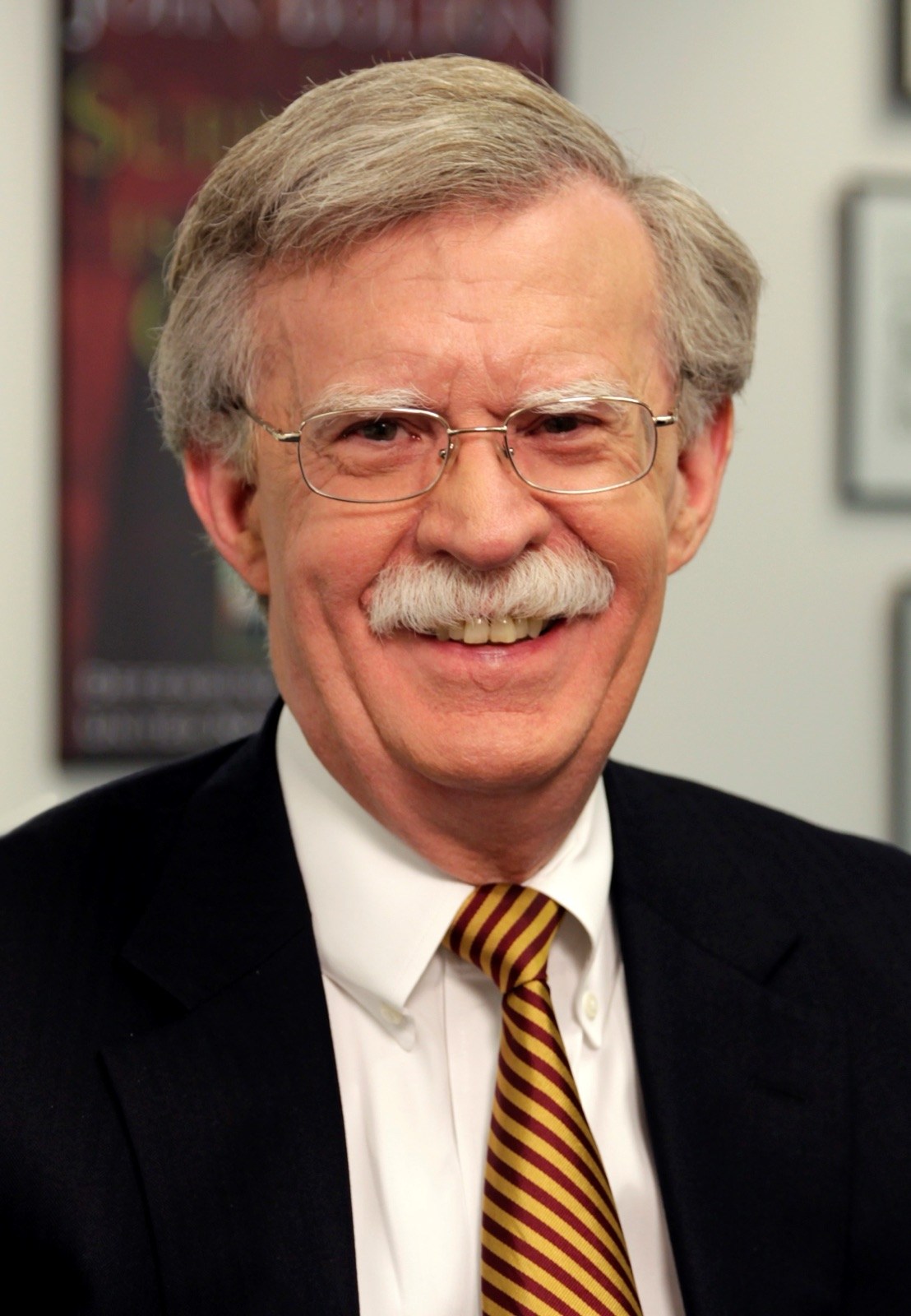
John Bolton
John Bolton is a former National Security Advisor and breaks down why John Bolton believes the Iranian regime will fragment from within.
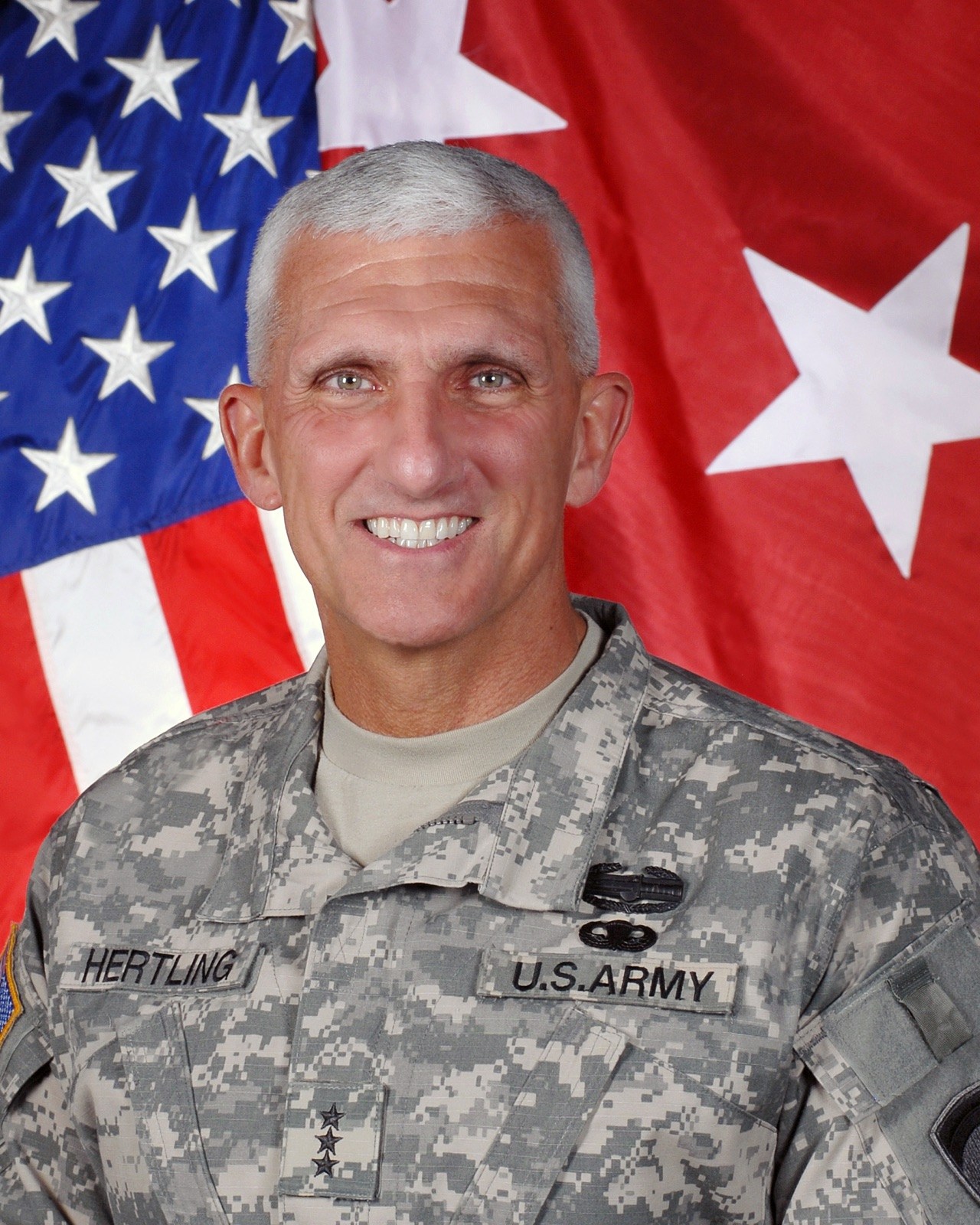
Mark Hertling
Mark Hertling is a retired Lt. General and veteran of multiple Iraq deployments and former Chief of War Plans on the Joint Staff questioning whether there is actually a plan for the day after the strikes.
Episode Summary
Former National Security Advisor John Bolton doesn't mince words: the opening strikes on Iran were just the beginning. In this special bonus episode, Bolton breaks down why he believes the Iranian regime will fragment from within, what the Gulf Arab states are about to do, and how war in Iran affects Russia, Ukraine, and China.
Then, retired Lt. General Mark Hertling brings the view from the ground. A veteran of multiple Iraq deployments and the former Chief of War Plans on the Joint Staff. Hertling has seen this before. He's asking the question nobody in Washington seems to want to answer: Is there actually a plan for the day after the strikes?
In this episode:
01:31 John Bolton
04:32 Power Vacuum Risks
08:44 Gulf States Reaction
10:50 Iran Retaliation Strategy
15:16 Israel Influence Question
17:03 Oil Shock And Putin
19:51 China And Taiwan
23:34 Deterrence And Alliances
29:51 Lt. Gen. Mark Hertling
34:28 Decapitation and Unrest
36:24 Iraq Lessons on Disbandment
42:02 Intel Gaps and Planning
52:19 Wider Regional Fallout
Show Notes:
Opinion | With attack on Iran, U.S. deterrence is being restored - The Washington Post
Order Mark Harling’s book: If I Don’t Return: A Father’s Wartime Journal
Lt. General Mark Hertling recorded on March 2, and Amb. John Bolton recorded on March 3.
Hosted by Sir Richard Dearlove (former MI6 Chief) and Kate McCann (Political Editor at Times Radio).
Listen & Subscribe
- Watch on YouTube
- Listen on Apple Podcasts
- Listen on Spotify
Transcript
COLD OPEN
Bolton: I don't think there's any way we're gonna avoid bloodshed here. In Iran,
Hertling: we've got the potential for not just an implosion, but an explosion.
Mccann: Without Israel, do you think Donald Trump would have had the appetite for this? Where does this actually go?
INTRODUCTION
Mccann: Hello, and welcome to One Decision. I'm your cohost, Kate McCann, and I'm joined as ever by Sir Richard Dearlove. Hi, Sir Richard.
Dearlove: Hi, Kate. It's great to be with you again. I'm really looking forward to these discussions.
Mccann: Well, especially today because we're bringing you a bonus episode all about what comes next in Iran, and we have two incredible guests for you today. Lieutenant General Mark Hertling, who draws parallels to previous US interventions in The Middle East, and he has a wealth of military experience here, so he really knows what he's talking about. But first, we're gonna hear from a guest who wrote the book on being in the room for those regime changing decisions. He served as the national security adviser in President Trump's first term and ambassador to the United Nations under George W. Bush. He was advocating for regime change. He was whispering in Donald Trump's ear. He wasn't listened to then, but he's quite pleased about what's happening now. His book, The Room Where It Happened, really takes us into the mind of the president at these critical decision points. And he says one of his regrets is failing to convince Trump to strike Iran. John Bolton, welcome to One Decision.
INTERVIEW: JOHN BOLTON
Bolton: Glad to be with you. Thanks for having me.
Mccann: Can I begin by asking you, you've been advocating for regime change in Iran for some time, but you've also warned about Donald Trump's transactional approach? What's your assessment of America's approach in Iran so far?
Bolton: Looking at the military performance over just the first few days, it's clearly been exceptional. And working together with Israel, we've accomplished a lot. The problem is knowing what the actual objectives of the mission are and therefore how long it will take and what we would be satisfied with in the end. It certainly seemed at the beginning that the president was pursuing regime change, I think is correct, because although the two dominant concerns that The US has, the Iranian nuclear weapons and ballistic missile program on the one hand and its support for international terrorism on the other are threats that need to be dealt with. It's been my view for a long time that the only way to eliminate those threats is to eliminate the regime. And if you destroy the nuclear program, but leave the regime, it will come back and build it up again. So whether Trump is actually pursuing that logic or not is not clear. I think Israel is pursuing that logic. And therefore, to the extent we're working with Israel, as we obviously are very closely in a military and intelligence sense, we are assisting them in their objective of regime change, whether it's our formal objective or not.
Mccann: Ambassador, when you were calling for regime change, I mean, obviously at the time you were advising the president, why did he choose not to listen at that point? What do you think has changed now? Do you think it is Israel?
Bolton: I certainly, and others did as well, urged on him the logic that regime change was the only long term solution. He was certainly willing at that time to consider the use of force against Iran on the nuclear issue or on the terrorism issue, particularly if it were in conjunction with Israel. Why has he changed now? I don't know. I suspect that he has been persuaded by Prime Minister Netanyahu that conditions inside Iran in terms of the unpopularity of the regime, the discontent of the people, the fact we have now forced a regime change scenario, a regime succession scenario on them by eliminating the supreme leader means that this is a very delicate time and therefore one where regime change might be most likely. Whether Trump can sustain that train of thought over a protracted period is anybody's guess. He has enormous political difficulty in The United States on two fronts. Number one, general opposition to any military action against Iran, particularly from the Democrats. But number two, opposition from his own MAGA base, at least the isolationist wing of it, which is pretty substantial. So he has to figure out how to navigate it. I don't think he's doing very well in that score at this point, but he still has time to make the case if he begins basically right now.
Dearlove: John, Norman Roule, who I'm sure you remember and you know, has spoken about creating the space for political change in Iran and good progress in that direction. But on the other hand, one could argue you're creating a power vacuum, and we've seen in The Middle East what can happen in those power vacuums. I mean, how do you feel that we can strike the balance between the opportunity and the threat of a sort of chaotic breakdown of Iran?
Bolton: Well, I think Norm is right. As we strike the instruments of state power in Iran, the Revolutionary Guard, the Quds Force, the Basij militia, the nuclear and ballistic missile programs, we're systematically diminishing the regime's capability to harm us, harm The Gulf Arabs, harm Israel or Europe. On the one hand, that also its ability to coerce its own population domestically. That is how you open the space. It's not that the attack is gonna cause the regime to surrender or something like that. It means I think it will fragment at the top. You could have commanders in the regular military, not the Revolutionary Guard, but the regular military, in effect, come over to the opposition, and as the regime begins to crumble, to see them be able to take power. I don't think there's any way we're going to avoid bloodshed here. This regime has been in power for forty seven years, and there are a lot of people in Iran with scores to settle. And I think you combine that with the fanaticism of some of the dead enders we're gonna see in the regime itself, and it's gonna be unsettling. It's a legitimate question always to ask, well, what regime comes next? I think the best outcome at this point is a military government, but one from the regular army that is able to restore order and hopefully be led by officers. And this is a bad analogy, but I haven't thought of a better one yet. Officers like General Jaruzelski in Poland, who basically saw at the end of the communist rule, his job was to create a successful transition to Lech Wałęsa in Solidarity. I think we've got a very sophisticated, educated population in Iran. They will know what to do, but they will have to have order restored before that will happen. I think that has to come from the regular army.
Mccann: Does that have to be led, Ambassador, by an actor like The United States or Israel? I mean, there is a really fractured opposition environment in Iran at the moment. There is a population, a huge population, many of whom who are demanding change, but some of whom who aren't and may well be emboldened by what's happening to their country by the death of the Ayatollah. What's the trigger for that change that you're talking about?
Bolton: If the regime begins to disintegrate at the top, what you have is that ideology becomes a less important point, and survival and ambition, personal animosity, family connections, money all begin to get important. I'm not saying these generals are going to become Jeffersonian Democrats overnight, that isn't gonna happen. But in the clash, of rival ideologies, but of rival ambitions, I think you could see the regime fall and come into the hands of military leaders who were serving the Ayatollahs up until the time that they weren't. There is no visible leadership structure from the opposition itself. I think it's a mistake actually to try and decide that now. I think that's one of the mistakes we made in Iraq. And so following that, if you had some kind of non theocratic regime in the immediate aftermath, I'd say leave it to the Iranians to figure it out. I think after the successful overthrow of Saddam Hussein, the mistake we made, and I say it in hindsight, which is always perfect, is we should have said to the Iraqis, now it's up to you. I did say at the time for what it was worth sort of facetiously, we should have given them a copy of the Federalist Papers and wished them good luck. Ultimately, they've got to make that decision. We're not going to do it for them. We couldn't do it in Iraq. We probably shouldn't have tried, and we don't need to try again here. By destroying the regime, we give them the opportunity. God only knows if they take them.
Dearlove: John, some of the authoritative media commentators here in The UK have been saying that the Saudis were opposed to this initiative, which frankly, I just don't believe at all. I think there was probably some coordination with Salman before the attack happened. And you've now got a situation where Iran is striking out even at those Arab states with whom they had a pretty reasonable relationship like Oman and Qatar. Well, first of all, I'd be interested in your comments on the Saudi position, and secondly, on where we now stand in terms of the sort of Sunni Shia divide across The Middle East, because it seems to me that Iran would have created enormous enmity and opposition to itself by its sort of strikeout reaction to what's happened?
Bolton: On your first question, I think basically all the Gulf Arab states, all the oil producing monarchies wanted this regime in Tehran overthrown. They, just like the rest of us, they want to have their cake and eat it too. They wanted it to happen and not be a big pain in the neck. Well, it is going to be a pain in the neck. It is right now for them. It was unavoidable. And while they are unhappy that they didn't get exactly what they wanted, they're not going to sit by and allow this opportunity to slip between their fingers. And I think the Iranian leadership, it may have been by this idea that these were post orders to come effective after the death of the supreme leader and therefore not well thought out. But attacking the Gulf Arab states is like just signing another suicide note by the Iranian regime. The Arabs have not retaliated yet militarily, but they're not gonna sit there and let their territory be attacked. The sanctuary that places in these huge cities in the region look like have now been called into question. They have to vindicate what they had said before. So I don't know when, if at all, they'll begin actual military operations with The US, but I think they're very close to it. I think it was a huge mistake by the regime in Tehran.
Mccann: What do you make, Ambassador, of the Iranian military response so far? Has it been what you expected it would be? You must have given it some thought.
Bolton: I'm not sure we can say at this point that we've seen the full retaliation strategy unfold. But I do think we can say a couple things. Number one, it was very fragmented. It was sort of against everybody, as Richard and I were just saying, with respect to the Gulf Arabs. All the drones and missiles they fired at the GCC countries wasted ammunition. In my view, if they'd targeted them more carefully at American bases, they would have been better advised. If they had sent them against Israel, that would have been better from their point of view. They even attacked the British base at Akrotiri in Cyprus, meaning, just so everybody, probably you all know, but so everybody else does, they've attacked British sovereign territory as a result of that. I don't understand that, I don't get it. And I think what they have done so far has not been consequential. Now, the race here is between The US and Israeli efforts to destroy the missile and drone stockpiles and production facilities before they can be deployed more effectively. Another related target is the Iranian Navy, which directly threatened the Arab states across The Gulf and our deployed forces into bases there, as well as having the capability to mine the Strait of Hormuz, which if accomplished, have had a significant effect on global oil prices. It appears from what we've heard in just these first few days, the Iranian Navy has been effectively destroyed. If that's the case, that's almost as significant as destroying their missile and drone capability. But I think when Trump said a day or two ago that a big wave, the really big hits are now about to come, that comes after you've destroyed Iran's ability to retaliate. And that means destroying the drones and ballistic missiles. Then with air defenses down, with retaliatory capability other than terrorist attacks greatly reduced, then you can go in and really clean things up.
Dearlove: If Trump does pull this off and we get regime change in Iran, you could sort of make a parallel between a sort of Reaganite success at the end of the Cold War. It would be, you know, a tremendous boost to him in terms of foreign policy for a decision which many people felt initially taken was extremely rash and very, very risky. And, I mean, you yourself have been a massive critic since you stood down as national security adviser. I mean, how do you view the prospect now?
Bolton: It would be a fine irony, especially for his isolationist supporters, that his legacy and history will be bringing down the regime. But strategically, when you combine that with the collapse of the Assad regime in Syria, these are huge setbacks for the Russians and the Chinese in The Middle East and around the world. My view is we're on the way to success in Venezuela. I don't think taking out only Maduro constitutes regime change. I think we can get rid of the rest of them, and we will have regime change there. That could mean Cuba's next. Then, of course, we've got the Ortega regime in Nicaragua. But with Marco Rubio as secretary of state, the Western Hemisphere is very much on his radar screen. It's possible to run the table on a lot of the rogue states that are out there. That still leaves us North Korea, so there's still work to do.
Mccann: Can I ask you though, Ambassador, to follow up on what Sir Richard's saying there? Can I put the question in a slightly cheeky way? You have been critical of Donald Trump, and yet he is the man who has achieved some of the things that people said would not be possible or at least begun them. It's too early to say where this will end. Is he due a bit of credit here?
Bolton: I think that's very fair. Well, if he succeeds, sure. I mean, it would just make me even more unhappy that I didn't persuade him to do this in his first term. Lord knows I tried hard enough, but we just weren't able to make it. But you have to judge this from the perspective of US national security interests, not from the perspective of Donald Trump. So, if he does it, great.
Mccann: On that point, and it is, I suppose, a serious one. We heard from Marco Rubio very clearly that the Israeli influence here was quite significant in America's decision to participate in these attacks on Iran. In fact, he made out that Israel had already decided to do it, and if America hadn't, then American personnel would have been very at risk in the region. He called it defensive offensive action. Without Israel, do you think Donald Trump would have had the appetite for this?
Bolton: Look, Netanyahu's objective number one is regime change, and it's been his objective for over thirty years. He's been thinking about it longer than I have, and he has realized that the principal adversary Israel faces in The Middle East is Iran. And Hamas, Hezbollah, the Houthis, other terrorist groups are the threat they are because of financing and arming and other support by Iran. So as Al Haig, our former secretary of state used to say, go to the source and the source is in Tehran. This question about whether Israel was about to strike, it has to do with American domestic politics, because the words that the Trump administration fears are war of choice. They want to be able to say, well, we didn't have any alternative here. But there was reporting last week that Trump was trying to persuade Israel to strike first because he knew there would be immediate Iranian retaliation. And then we could say, ah, we have to come to the defense of our friends in Israel. So the rationale changes. Rubio has another rationale. But what they're trying to avoid, they're trying to say the threat was imminent, which I don't think it was. We had no alternative but to respond, which is also incorrect. That to me does not manage the force of the argument for the operation, but it's a reflection of what Trump sees as his own political vulnerabilities domestically.
Dearlove: John, there's a side effect of this crisis which worries me, and I'm sure may worry you too. I mean, the global price of gas apparently has gone up 95% in the last few days. The price of Brent crude has risen up to 80 plus dollars a barrel. This puts Putin and Putin's shadow fleet in a rather powerful position, particularly if the export of their supplies don't have to go through the Strait of Hormuz. So I'm worried about, you know, Putin temporarily filling his war coffers because the price of Russian even the discounted price of Russian energy is high. And, I mean, one of Trump's policies, of course, has been low energy prices. So, I mean, how do you think we square this circle? I'm worried about it. And the other thing really is in the last few days, I see the Ukrainians have made real progress in Zaporizhzhia. It's not exactly a counter offensive, but they've been pushing back Russian forces to a very significant degree.
Bolton: Right. Well, I think you're completely right on the question of oil. Wrote a piece in the Wall Street Journal a week or so ago, where I said, we all need to get together and sweep these ghost tankers from the sea. And I propose an analogy to the Proliferation Security Initiative from the George W. Bush days, where we went after proliferation of weapons of mass destruction. I think we've got excellent opportunity here. It's a good thing for NATO to be engaged in. I think many other countries would join it. There are many, many reasons apart from what the rogue states do with these ghost fleets to get them off the ocean. So that should be a priority no matter what. But in the short term, yes, absolutely, Russia and the others will take advantage of the prices. And it causes Trump and all Western politicians a further political difficulty at home if the price at the pump, as we call it, goes up, and that figures into voters' dissatisfaction with what the Democrats over here call the affordability crisis. So that is presumably, Trump took this into account. I mean, his own political future is at stake here if Republicans lose control of the House and the Senate, and he must have understood he was taking a risk. I can only assume that they've got contingency planning, which could well be a prior agreement with the Gulf Arab states to increase their production. That of course assumes you can keep the Strait of Hormuz open, or watching market forces dictate the reopening of production and shut down wells in The United States, which is entirely possible. But the risk is very much there.
Mccann: So it's a potential plus for Putin and a potential real problem for Trump. Should we talk a little bit about China, Ambassador? Because China has made a limited intervention so far, suggesting it could mediate in talks. It's called on all sides to end aggression. What's China's game here? What do you think China will be watching, waiting? What do you think China will be seeing when it watches the interaction between America, Israel, Iran and others?
Bolton: Well, I think they're very nervous about the potential of the fall of the regime. China is an energy poor country. It depends on extensive imports of oil in particular. They can certainly get a lot of it from Russia, but Iran had been their other principal supplier, and even under renewed American sanctions. So they've just watched potential elimination of their position in Venezuela, which has the largest reserves of oil in the world, and from whom they were buying 80% of Venezuela's exports of oil. That's gone. They may now see a hostile or at least a far less friendly regime in Tehran, and they would have watched American power in Venezuela and in Iran remove two regimes that they had hoped to do more business with. And it also means for those who call themselves restrainers in The United States, whom I call isolationists, as we solve these other problems around the world, it frees up our ability to do what they say they want to do, which is focus more attention on the threat of China. And so China has to worry about that too. There's a lot of talk that we don't have adequate munitions, that by all the assistance we've given Ukraine, by this conflict now with Iran, that Taiwan will be vulnerable, that we won't have adequate supplies of missiles and precision guided weapons. I think there's an element of risk there. It's our own fault. We should have ramped up production years ago. We've had years and years of just bad budgeting. So we've learned a lesson here. We're going to need significantly increased production. Trump has recognized that with proposal for a huge budget increase, $500,000,000,000 of an increase next year. A lot of it's just going to have to go to replenishing and expanding our stockpiles. But the next real threat certainly is going to come from China.
Mccann: Does it make an intervention by China on Taiwan more likely, do you think? I mean, especially in context of this discussion about international law and how it applies or doesn't apply.
Bolton: Yeah. Well, China never got the memo about international law anyway. They were about to sign and perhaps did sign a contract with Iran to deliver anti ship missiles before the war started. I hope none of the missiles arrived or are arriving anytime soon. But the fact is that whatever they're going to do on Taiwan, they're going to do on their own, in their own good time. And if they conclude that our attention is diverted or our capabilities are down, which I don't think is true, but if they make that conclusion, then I think Taiwan is at risk. I don't personally think what the Chinese will do is invade Taiwan. I think that's much too risky for them. It's across almost a 100 miles of open ocean. They've never done an amphibious operation like that. Even more important, they don't want to see the productive capabilities on Taiwan destroyed, especially the chip manufacturing facilities. They don't want to see happen to Taiwan what has sadly happened in Eastern Ukraine, where industrial infrastructure has been ground into the dust. So I think what they will do is, through some political pretext, throw a blockade around Taiwan and see if we move to break it. Since significant increases in the number of our warships is one of our highest budget priorities, and since the Pacific is a long ocean to go across, that threat of a blockade is a significant threat.
Dearlove: As we get towards the end of the podcast, can I ask you a sort of bigger strategic question? George F. Will, who you must know well, wrote this piece in the Washington Post, I believe, which is about the rebirth of American deterrence or US deterrence. You know, it was a very optimistic article looking at geopolitics. Do you agree with his analysis?
Bolton: Well, I certainly agree with the hope that he's correct. I do think that when the Soviet Union collapsed, a lot of people were declaring it the end of history, and we did take a holiday. Collectively, the West as a whole dramatically reduced its defense expenditures because after all, what threat could be left? Well, thirty five years later, we have plenty of answers to that question. We've lost the way. In The United States, we've lost generations of political leaders who don't understand international strategy. That's one of the reasons why we've got this trend toward isolationism. You have people who don't even appreciate what a danger is if it's not right on our doorstep, which is a huge amount of forgetting of the last century's worth of history. It seems to me a time when the notion that we can effectively resolve threats to The United States is and should be a reestablishment of deterrence, because the whole point of deterrence is to convince your adversary it's not even worth the cost of thinking about a conflict because you know the answer will not be in your favor.
Mccann: Ambassador, can I ask a concluding question? You are a man who understands diplomacy. You've spent your career understanding and appreciating the value of it. One of the elements to come out of what's happening right now is a decrease in the strength of relationship between The UK and The US. And Donald Trump has made very clear that he's deeply disappointed in the Prime Minister, Keir Starmer. And Keir Starmer, for his part, has said he doesn't think Donald Trump has done the right thing. Do you think this is a significant moment, a significant fracture, or do you think it's something that can be gotten over in time?
Bolton: Look, I think Donald Trump is an aberration in American politics. We've never had a president like this. I hope to God we never have another one. He doesn't understand alliances. When people say he's transactional, that means he asks every minute, what have you done for me lately? And that's not how you build alliance structures. There have been ups and downs in the special relationship since 1945. I certainly remember when Harold Wilson was prime minister and refused to get involved in the Vietnam War. That was a very dark time in US UK relations. Then you had Mrs. Thatcher and Ronald Reagan. Everything was fine again. You had Bill Clinton, Tony Blair, and George W. Bush, Boris Johnson, and Trump got on very well. These things come and go. I think Starmer's made a lot of mistakes. Of course, so has Donald Trump. So I think The US UK relationship politically at the governmental level will come back, I think fairly promptly, because the relationships between all levels of the two countries are so strong. That's what the special relationship is. It isn't between the two leaders, it's between the two countries. The bigger problem I think is Europe, because I do think Trump's rambling around on Greenland, for instance, has shredded decades of American and NATO member efforts to try and build relations of trust and good faith and so on, starting in the aftermath of World War II through the Cold War and then continuing it, it's going to take time to get that back. But ultimately, we're all governed by geopolitical reality, and I think our interests are common enough, it has to come back. The Soviets had a principal aim in the Cold War to split the Atlantic alliance. And one reason they lost the Cold War was because we failed. And we just can't do their work for them ourselves. That we've got to get over. I hope and trust once we have a new president of whatever party that that will happen.
Dearlove: Is the president listening now to the PDB, presidential daily brief?
Bolton: Richard, he has never read a PDB in his entire administration. If he listens to the briefers, it's a good day. Usually he briefs them. And Lyndon Johnson, who wasn't the greatest on self awareness, once said, you know, I don't learn very much when I'm talking.
Mccann: Ambassador, to wrap this up, we like to ask all of our guests, what one decision do you have an eye on in the coming days and weeks? What are you looking out for? The decision that might be made that could make or break? It could be this conflict, it could be something else. What have you got in mind?
Bolton: Well, President Trump's going to China right at the end of March, the first couple of days of April. And one of the aims he's had since his first term was what he's called the biggest trade deal in history with China. I don't know that they're going to make it. I don't see evidence of it. But what a lot of people in Taiwan particularly are worried about is to get the biggest trade deal in history, what concessions to China will Trump make? And I do say I'm very worried about that. And we'll know now in a little bit less than a month.
Mccann: Ambassador Bolton, thank you so much for giving us your time. It's been great speaking to you.
Dearlove: Thanks, John. Great discussion.
Bolton: Well, thanks for having me.
ANALYSIS WITH SIR RICHARD DEARLOVE
Mccann: Well, thanks again to Ambassador John Bolton for joining us for that part of the episode. So, Richard, I thought that his reflections on China and the deal that Donald Trump wants to strike on China is a really good way of thinking about what comes next in all of this.
Dearlove: Yeah. I mean, John is so wise, and, you know, he thinks beyond immediate events. And I think his comments about Putin, about the oil price, about China, these were all really insightful. And I think you couldn't have a more profound commentary on the complexities of what's happening in The Middle East at the moment.
Mccann: Yeah. I couldn't agree more. Well, let's get the take now of retired Lieutenant General Mark Hertling. He served nearly four decades in the US Army with high level deployments in Iraq and in Europe. He's the former US Army Europe commanding general, and his latest book, If I Don't Return: A Father's Wartime Journal, comes out on March 10. Welcome to the podcast, Mark.
INTERVIEW: LIEUTENANT GENERAL MARK HERTLING
Hertling: Thank you, Kate. It's a pleasure to be with you and Sir Richard to discuss some things ongoing right now.
Mccann: I suppose that the big question for everybody at the moment who is watching what is happening in Iran and the wider region is, is regime change a desirable or a legitimate motivation for what America is currently doing?
Hertling: It may be a motivation for some, but truthfully, regime change, having unfortunately suffered some of the scars of that kind of operation in the past, is rather difficult to do. I'm not sure the current US administration understands the implications of what that describes. It's a lot harder than it appears. It causes a lot of chaos in the execution. I just came from listening to the Pentagon's briefing, which occurred this morning. And it was interesting to me that the administration rolled the military out first to describe exactly what their objectives were, as opposed to having someone from either the State Department or the president himself saying what the objectives of this operation are, which I believe causes a bit more confusion. There was the talk that this was a regime change operation, then it evolved into a regime decapitation operation, and I'm not sure how to describe that. But anytime the military is asked to participate in something like regime change, it's normally outside the realm of what the military does. And what I've seen over multiple deployments in Iraq is it's much harder to execute.
Mccann: Mark, given what you've just said, and I appreciate what the American president has said about the motivations, and he said a number of different things over the course of the last couple of days and how complex regime change really is. What do you think the American ambition is here? What do you think is at the heart of this particular operation, given your experience?
Hertling: Well, in just listening to the Secretary of Defense comment, a reporter asked him what he thought the objectives of the campaign were. Number one, to destroy the Navy drone capabilities and offensive missile capabilities of Iran, number one. Number two, he said, we won't allow Iran to use a conventional umbrella of weapons to protect their nuclear ambitions. And then number three, he said, we can't allow them to have nuclear weapons. He never once mentioned anything about regime change. He did say something offhanded about it, about really somewhat denigrating those who said that this was about regime change, but it sure looked to me like that was what it was about, at least on the first day of the operation. He also followed all those statements up about the military objectives with someone asked him a question immediately after that about what comes next. And he said, well, it's been the fallacy of this department to tell people in the past what we'll do or not do. And he said, in this Department of War, he used that term, I won't. He says, we'll go as far as we need to go. To me, that's a little bit troubling because it seems disconnected to any kind of political objectives, which are always the end state of any kind of military objectives. I have yet to see what the political objectives are for the conflict.
Dearlove: Mark, you could end up with a situation where the most likely outcome was a more compliant Iranian regime without actually the regime falling. So you could have a group of Ayatollahs who were prepared to negotiate realizing the weakness of their military position in the region and having lost that ability to project power beyond Iran through the Quds Force and the IRGC. There is a sort of vague parallel there with what's happened in Venezuela. But on the other hand, according to what you said, that view isn't being expressed by either the White House or the Department of War.
Hertling: I completely agree, Sir Richard, that it is a disconnect. And you can certainly design a military campaign that will achieve the kinds of objectives you just set to weaken the security forces that would cause the regime to change their approach to the treatment of civilians within the Iranian society. But that's not what's happened. The decapitation which occurred on the first day of this conflict with the strikes against many of the leaders. That's still being reported on that the Israeli Air Force was the trigger for the strikes because they knew they had a meeting and a location for all the key leaders within Iran. That seemed to be the first strike. And if that's so, then what you've done, along with all of the cyber attacks and the asymmetric space attacks that have been conducted in coordination with the conventional air strikes and navy strikes that have occurred has really debilitated the ability for anyone to rise up and persuade their civilian leaders to take a different approach. So I think you're absolutely right that there does seem to be a mismatch between approaches and what's trying to be achieved. It's interesting to me that one of the lessons I've learned in my career is external airstrikes alone rarely produce a democratic change in a society. And in fact, without a follow on action, political action, they usually strengthen the hardliners in Arab countries. They create increased chaos, and they bring the extremists to the forefront who will argue, as Iran has for so many decades, that their nation is under siege from Israel and The United States. So what I think we should be watching right now, even as the military campaign continues, is there going to be a Revolutionary Guard element cohesion? Is there going to be continued public unrest because they don't see leadership stepping up? And do we see Iran within their capability continue to escalate strikes against regional allies to prove the potential that they can still deter any future strikes. Those are the things that I'm looking at from a long term strategic planning approach.
Dearlove: One of the issues in Iraq, which I was heavily involved with, was The US disbandment of the Iraqi military. And I had been of the view, and I had advised Tony Blair on this issue, that the best way to deal with the situation in Iraq was to dump the Republican Guard and the Special Republican Guards, who are the equivalent of the IRGC, let's say, in Iraq, and to form a military council, not disband the army, and to have a military regime in Iraq for two to three years before you went to democratic elections. And I think that would actually have avoided a lot of the problems that we encountered in Iraq with the fedayeen and the fact that the army was disbanded and took all their weapons home and, you know, that transfused into ISIS and all the other problems that we had. I could imagine a situation in Iran where the army or the military, which is not the IRGC, could perhaps take the initiative. I mean, do you subscribe to that sort of view? Maybe there's a lesson there.
Hertling: There is most certainly a lesson, and I will give you a quick vignette to show you how much I'm in agreement with you. I was in Baghdad in 2003 and 2004 with the First Armored Division. My boss was an individual by the name of General Marty Dempsey, who eventually became the chairman of the Joint Chiefs. Marty and I also happened to be very good friends. One of the tasks he gave me as the one star assistant division commander, deputy commander, was to meet with the retired Iraqi generals. We had a meeting set up in one of the grand halls inside of Baghdad. And it was interesting because it was literally the day that Ambassador Bremer made his declaration of de-Ba'athification. And as I was speaking to about 400 retired Iraqi generals, my aide came into me, handed me a note and said, Ambassador Bremer has just de-Ba'athified and said that the Iraqi army is disbanded and there will be no more retirement pay to the Iraqi general officers who are retired. As I got the note, I looked across the crowd and evidently that same message was being passed to all the retired generals in the room that I was speaking through an interpreter to. And I think my first thought was, I better get the hell out of here because this is gonna turn into a riot. And what we saw over the next several days was exactly what you described. They could have been extremely useful. And most of them, even though they were Saddam Hussein sycophants for the most part while they were serving, I think most of them had a very good approach toward nationalism and what they would try to do as a nation. And in fact, one of the generals that was in that room became a very good confidant of mine when I came back in 2007 as the division commander in Northern Iraq. And he told me, he helped me to produce a much better command and control element within the Northern Iraqi command structure. And I made great friends with an individual, a three star general by the name of Mohammed Riyadh, who became my counterpart, who had actually fought against me during Desert Storm. So you can see how enemies can quickly become friends and potential friends can quickly become enemies. I think you're describing that same kind of scenario potentially happening inside of Iran right now.
Mccann: Mark, can I ask how realistic a prospect that is in Iran, though, given, I mean, everything that we hear about the way that Iran is approaching this, from the idea that they think that Hezbollah didn't use all of its weaponry quickly enough and that's why it was so diminished, they don't want to make that mistake again, to the idea of martyrdom, to the sort of presence of the religious aspect of this particular conflict? Is it realistic to say that The US's action with the help of Israel is enough, even over a certain period of time, and that would take some commitment, to really change the way this country is run. Do you think that is possible?
Hertling: You know, Kate, that is the question of the day. It certainly is a hard question to answer because I'm not an expert in Iranian culture. I know enough to be dangerous about it. They do seem to be an extremely rabid military in the IRGC, but they have had forty seven years of adherence to an Ayatollah, two Ayatollahs, and I'm not sure where they stand right now across the board. But truthfully, the answer to that question, I would hope, would be in the administration, because there should be at least a CIA assessment of who are the true hardliners versus who are the pliable within the government that might be leaders. And I don't think right now we have a very good feel for that.
Mccann: And we've heard a little bit from the American administration actually about how many of those people on that list that potentially would have taken over from the Ayatollah have been taken out so far, although I don't think we've had formal confirmation. Can we talk a little bit about the intelligence, about the operation that would have gone on behind the scenes before we get to this point? Because everything we're talking about involves, you know, us pulling at threads, the questions about what happens next. How much of that would have already been done and we are just not being told? Or do you get the sense that hasn't happened with this particular conflict?
Hertling: I hate to be derogatory. I don't believe that it has been done with this particular conflict. Now, I hope I'm proven wrong. I'm hoping that there's a great deal of work that's gone into the preparation for this. I know that there has been a great deal of coordination and cooperation within the military forces, as was described by General Cain, the chairman of the Joint Chiefs, during this recent press conference. That would be expected. But I think the military in The United States has had probably fifty years of practice in joint operations and that they can execute a campaign plan rather well. The same can't be true in my view of the current occupants in the State Department, the intelligence community, and other places that are performing the functions that would be required if you're trying to form a political outcome in a new society within Iran. That doesn't mean nation building. And I think we have a lot of scar tissue in that regard in Iraq and Afghanistan, as do other countries, but it at least requires support. We have still turned off most of the cyber activities within Iran. So even those who want to rise up and perhaps look for new leaders can't communicate with each other right now. There's no outside reporting or media channels contributing to the potential standup of a new government. So I think we're a little bit dysfunctional in those areas, which should be complementing a military campaign.
Dearlove: Some of my American friends have been singing the praises of, I think, Admiral Brad Cooper, who is the commander of this operation, and actually saying, you know, he is a brilliant strategic brain, the best since Nimitz. And I think he does have a formidable reputation. If they have, you know, such a capable commander, surely I mean, some of these strategy issues would at least have been taken into consideration by the US armed forces. And I think the evidence would also suggest there's been huge joint planning with the Israelis who have shown such an extraordinary intelligence penetration of the upper echelons of the Iranian regime. Can you comment a little bit about that? Because, you know, this is, as it were, a practical expression of the military capability that's now being deployed jointly by The US and by Israel.
Hertling: I do not know Admiral Cooper personally, but I've heard the same things about him that you have, that he's a brilliant operational artist and also a very good strategist. But again, I go back to some of my scar tissues prior to the entry of The United States into Iraq in 2003. I happened to be serving my only tour in the Pentagon there as the chief of war plans. So I got a firsthand view of what was happening behind the scenes. And there was a hue and cry by most of the military to our Secretary of Defense at the time, who was a very smart man, a brilliant man. That's Secretary Rumsfeld. But he was also, let's just say, a little bit arrogant in terms of his approach. So while the military planning proceeded within the Joint Staff and there was a cry for what happens during phase four in Iraq. Those never succeeded. Those were thrown together. General Garner's operation was slighted to the point where he finally decided he had to resign because there was no support for his operations inside of Iraq. So even if you are a military mind like Admiral Cooper, and you're saying, hey, we've got to get something together for the post conflict and when the bombs stop falling. I would suggest he's probably at least 95% focused on the kinetic operations right now, and he doesn't have a whole lot of time to worry about the non kinetic follow on actions. That would just be my guess. And the reason I say that is because I saw other very capable generals and admirals in the 2003 timeframe saying the same thing about post combat and being thwarted by an administration that didn't think we needed to do that.
Dearlove: Can I interject a little story there about Iraq?
Hertling: Please.
Dearlove: Because you would appreciate this enormously, I think. I was literally smuggled into the Pentagon because certain people were not keen on me having this meeting for a one to one with Rumsfeld about Iraq and about exactly what you're talking about, which was the sort of civilian aftermath. I spent three hours with Rumsfeld who had those big yellow notepads. I've never seen anybody take so many notes. I have to say that meeting had zero impact in terms of US policy.
Hertling: Well, I've been in several of those meetings with Secretary Rumsfeld and had the same zero effect, so I think we have that in common. You know, what's interesting, again, part of my job as the war planner when I was on the Joint Staff back in 2002, 2003 was whenever you have a contingency plan, you have an annex within that plan that has to do with post conflict operations. And what Secretary Rumsfeld was very keen on was ensuring that assumptions that were part of any contingency plans were questioned before the operations began. My gut tells me, and I wish I was proven wrong, I hope I could be proven wrong on this, is this was a plan that was thrown together under the crisis action criteria versus the deliberate planning process. The synchronization of the military operation has been well executed because it's relatively easy compared to the other things you have to do. So I'm not sure we even have a plan for what comes next.
Mccann: And I suppose that's why I am interested in picking your brains when it comes to the difference between a very targeted intervention like Venezuela and something like this, which is very different. And many people had not thought that this was something Donald Trump really wanted to pursue or had the stomach to pursue. Right. Can I ask you with your expertise and given what you've just said about the potential that this is a short term, not necessarily well thought out plan? Where do we stand in terms of American military capacity to keep this going? How long can America realistically keep this going? And what do we know about Iran's capability? How long can they sustain what we are seeing currently?
Hertling: There was a report. We had claimed that the Iranian capabilities in drones and missiles were 10 feet tall, much like many did with the Russians. I did not because I'd seen the Russians close hand, but there were early estimates of anything from 10,000 to 20,000 missiles that they could launch. There are some that are questioning that right now. Is that accurate? Certainly the kinetic operations that are taking place are targeting those storage, those supplies and the locations where they are stored. Nonetheless, another reporting said that there's been over 2,000 offensive strikes inside of Iran by both The US and the Israelis. And I would bet The US probably have the vast majority of those, probably in the range of 70 to 80%. There's also the requirement, as the secretary said this morning, to defend in the region too. Both those areas concern me because part of my job when I was a young Brigadier General in the Pentagon was to conduct risk assessments in other parts of the globe and talk about what resources were being used in Afghanistan first and then Iraq that would affect other contingency plans. I'll name a few: North Korea, China, at the time Russia, many other places throughout the globe, and did we have the potential for running out or wearing out our resources. We have given quite a bit of Patriot and THAAD ammunition to Ukraine over the last four years. We are now supplying the same kind of capabilities to the seven Gulf states that surround Iran. I would almost say too that when you're talking air defense, the defensive capabilities are put on a point target to defend a specific high value capability. It's not put in places where you're defending hotels or luxury resorts in Dubai. So Iran knows that, and they're going to attempt to strike those locations. And that is going to cause war weariness from the civilian population saying, how come they can't defend us as we're luxuriating at the pool in Dubai?
Mccann: I find it fascinating concerning what you've just said about what Donald Trump has essentially waded America into here. Do you think there could be an implication for the war in Ukraine?
Hertling: Oh, most assuredly. And it is a critical time for the war in Ukraine. And as you both know, I'm a huge supporter of Ukrainians having worked with them during my time in Europe. And that is very concerning to me, as it should be to most European states, especially Poland and the Baltics.
Dearlove: But General, the military defeat of Iran, which is effectively where we are, I'm thinking about their ability to extend power beyond their own territory, is very bad news for Putin, in terms of, let's say, the Kremlin alliance, what people refer to as the Kremlin alliance. I mean, he is losing a key member. How now do you see the strategic balance in the medium to long term? Because it seems to me that the IDF, despite the relative smallness of Israel, has effectively taken the Iranian ability to fight war through proxies to pieces. Okay. The IRGC are probably still potent on the street inside their own country. But apart from maybe mounting some terrorist attacks and continuing to fire missiles, it doesn't seem that the Iranians have many military options left. Where does this actually go? You can't go on bombing Iran indefinitely. Iran doesn't really have the means beyond what it's doing already to respond. Okay. Putin loses an important supporter, an important ally. But whatever happens, aren't we really watching a fundamental strategic change in The Middle East?
Hertling: I think we are, but it's going to depend on whether or not Iran, I think, can continue to create the proverbial knife cuts in the region. We saw early indicators that Hezbollah was going to start rising up again this morning. We haven't seen anything from the Houthis in Yemen that may affect Saudi Arabia. If Iran continues the potential of closing the straits, is that going to affect the world's economy? You mentioned Russia. The other interesting dynamic is China in terms of their capacity to receive oil from The Gulf. So we still see a multifaceted potential to drain The United States and Israel during this period. We've already talked about resource supplies and weaponry, forces that are being allocated to areas where we had not planned to allocate them. Still the potential of the PMF forces in places like Iraq and Syria and Lebanon to conduct operations. I personally don't think even though there was a long war and there's now a peace plan, Hamas is completely finished. So you have Hezbollah, Hamas, the PMF forces across the Middle East, the Houthis in Yemen. The potential for Russia certainly won't support Iran because they can't right now. But will they be able to take advantage of the European Union being distracted by all of this? Because there are several EU forces that have already supplied support to The United States in this conflict. The Iranians are striking Cyprus, which was a surprise to me when that occurred yesterday. So that's trying to pull the EU into this fight. Gosh, I hate to even predict the potential for this, but could this cause a much larger conflagration than just in the region, because everyone is affected by this. Certainly the disestablishment of Iran's military and the IRGC and the Basij could influence the security inside of Iran. But whenever you have a lack of a security force, as you well know, there's going to be chaos inside of a country. And is that going to cause further immigration to Europe and to other Gulf states? What are the Gulf states going to do to counter this given the fact that they've all been attacked by Iran already? So we are still too early in this fight to say it's going to change the region. It certainly could, but I'm worried about the timeframe between now and the time that it starts affecting it, which won't happen quickly. I'm just very concerned. Again, I'm going back to my days as a war planner. Some of the most difficult challenges you face in contingency operations is those where a country implodes. We've got the potential for in Iran, I think not just an implosion, but an explosion of how an implosion in Iran is going to affect the entire Gulf states and beyond when they don't have leadership, when their security force has been wiped out, and when their population is expecting something to happen and it isn't happening very quickly. And because they've been promised that. The president of The United States says, we're going to come there and save you. We're going to relieve your stress and all your oppression. Well, that's not necessarily what's being delivered right now.
Mccann: I know that you've written a book, If I Don't Return, and I'm interested because this book focuses on reflecting on leadership, but the challenges of it told through your own experiences, but also the need for certain values, characteristics, empathy, trust, resilience, all of those things. I suppose I would like to ask you for your personal reflection on what Donald Trump is doing right now. Do you recognize? Do you see in his actions in Iran something credible, something morally right, justifiable about taking on this global policeman role? Or do you feel that he's in the wrong place as an American president right now?
Hertling: I don't want to pass judgment on the president, Kate, but what I will say is one of the big lessons I learned in multiple combat deployments was the fact that you have to understand the culture of the people you're not only fighting, but the ones you're fighting with. It is admirable for any administration to say that they want to stop the malign influence of Iran in the region. I'm all for that. It's the ways you do that. I'm not a big believer in hubris. I've learned that swagger doesn't get you a whole lot in terms of accomplishments, that you have to really put, first of all, your character and your values into whatever action you're considering, but also maybe some reflection on what is the best approach. And it seems to me, and again, I'm not trying to insult the administration, but it's going to come out that way. It doesn't seem like they have a lot of thought into what the end state should be in this. And if they have, it certainly seems disconnected to the way the Iranian culture works. The other thing that I've learned over my career is you can win every tactical engagement. You can put together a military operational campaign plan that's highly successful. But if you don't have a strategic approach, and if you don't know what you're trying to achieve, those plans will cause you to lose the war. We've learned that over and over again in places like Vietnam and Afghanistan. When you start drifting away from your strategic objectives and you start beating your chest with how good the military is. This takes a cooperation of whole of government and an understanding of the global environment. I'm not sure we've applied that in this situation to the best of our abilities.
Dearlove: I'm sure you've heard the anecdote of a senior military commander filling in a personnel assessment of one of his senior officers, and he says his men will follow him anywhere out of sheer curiosity because they haven't got a clue what he's gonna do next.
Hertling: And I think we had an old baseball coach that used an expression that if you don't know where you're going, any road will take you there. And I think I like that one as much as the first one you gave.
Mccann: Is the one decision that you are watching out for in the next couple of days? The one decision that might be made?
Hertling: The one decision that I would be looking for, and unfortunately, Kate, I don't think it's going to come, is the shift from military operations to support, true support through diplomatic and information and even economic means to the Iranian people. Is there going to be that adjustment in the near future? That's what I'm looking for.
Mccann: Mark, it has been an absolute pleasure talking to you. Thank you so much for sharing your insight with us. I know that our listeners will absolutely value it, so really appreciate your time. Thank you.
Hertling: Thank you, Mark. It's been an honor to be on with both of you. Thank you so much for asking.
CLOSING REFLECTIONS
Mccann: So Richard, I found Mark Hertling's perspective really interesting here because he understands what it takes. When we talk about regime change, he understands all of the bits that go on behind that. And I thought his take on the military capacity of Iran and of America is really crucial right now.
Dearlove: Yeah. It's fascinating talking to him. I mean, he's so experienced, and I particularly enjoyed our exchange because we have a certain commonality of experience in relation to Iraq. And talking about the possibility of a military regime in Iran, we drew that parallel with Iraq. And I was fascinated particularly by a story about addressing that room full of Iraqi generals and then, you know, having to tell them that they just lost all their pensions and the army was being disbanded.
Mccann: Just imagine being in that room. Yeah. It was a fantastic lesson. Well, that is it for this special bonus episode. We hope you enjoyed hearing from both of our guests today. Join us later this week for more conversations and insights as the operation continues to evolve. And for more conversations on everything else, we cover pretty much all of it here on One Decision. You can find our YouTube page or onedecision.com for more conversations and in brief discussions about everything in foreign affairs. Thanks to my co host, Sir Richard Dearlove. I'm Kate McCann. Thank you very much for listening.