Episode Info
- Season11
- Episode1
Hosted by Christina Ruffini and Sir Richard Dearlove
Guests
Morgan Ortagus
Morgan Ortagus is a former Trump administration official and former intelligence analyst explaining the administration's reasoning behind the cancellation of the Iran nuclear deal.
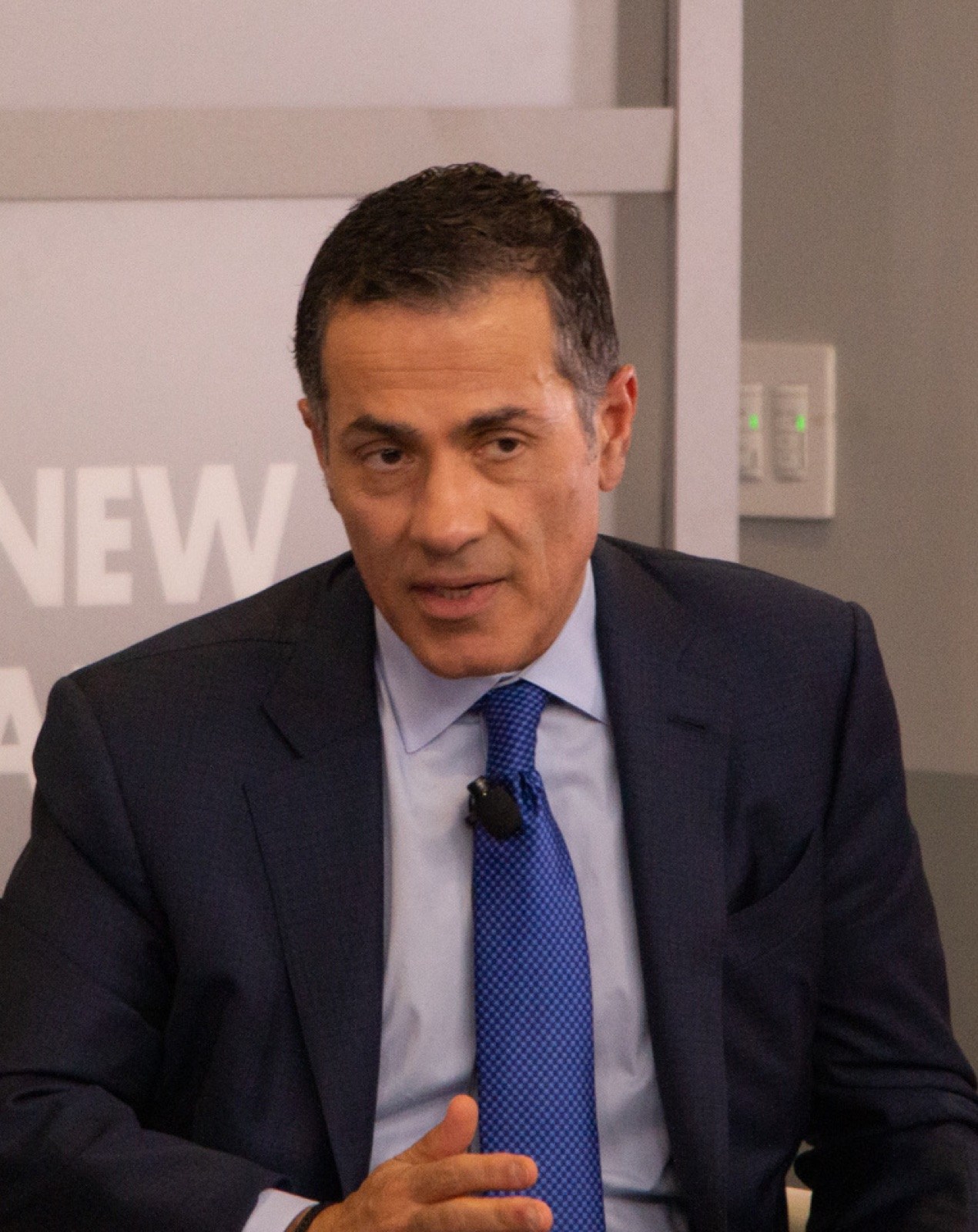
Vali Nasr
Vali Nasr is a leading Iranian-American academic at Johns Hopkins University providing analysis on the Iran nuclear deal and its implications.
Episode Summary
As the world's attention turns to Iran, grave human rights abuses, and those protesting against this regime, One Decision looks at the negotiations regarding the Joint Comprehensive Plan of Action (JCPOA) - or the hotly contested Iran deal. Morgan Ortagus who spent years in the Trump administration after serving as an intelligence analyst explains the administration's reasoning behind President Trump's abrupt cancellation of a deal that placed restrictions on Iran’s nuclear program in exchange for sanctions’ relief. Vali Nasr, leading Iranian-American academic at Johns Hopkins University, goes back to what the deal was and wasn't - and what could happen next. As always Sir Richard Dearlove joins, and makes a key prediction about the coming end to the current Iran regime.
Listen & Subscribe
- Watch on YouTube
- Listen on Apple Podcasts
- Listen on Spotify
Transcript
INTRODUCTION
Mcfarlane: I'm Julia McFarlane, cohost of the One Decision Podcast. We're coming up on a significant milestone. It's our one year anniversary of bringing you in-depth analysis of the critical decisions shaping our world. To celebrate the occasion, cohost and former head of MI6, Sir Richard Dearlove, and myself, will answer questions submitted by you, the listeners. Spies are usually pretty tight lipped, so don't miss the chance to write in. Your question might even make it onto the podcast. For more information, head over to 1decisionpodcast.com. You're listening to One Decision, the show that looks at the key choices made that shape our world. In May 2018, President Trump made the decision to pull The United States out of the Joint Comprehensive Plan of Action, the landmark six nation deal brokered back in 2015 to curb Iran's nuclear program in exchange for sanctions relief. The JCPOA was his predecessor, President Barack Obama's key foreign policy legacy. Since the Trump withdrawal, Iran has resumed uranium enrichment while also entering into negotiations with the Biden administration, both sides working to find a compromise that could resuscitate the agreement or result in a new deal. But after the Trump administration inserted new areas of grievance onto the negotiating table, Iran has dug its heels increasingly into the ground. European allies, increasingly fed up with the lack of progress, have resorted to drafting a final text themselves, but to no avail. Meanwhile, as protests against the regime led by women convulse across Iran, reports have emerged that Biden officials told their Israeli counterparts any deal is now on ice, at least until after the midterms later this year. We've enlisted two expert voices to walk us through one of the thorniest areas of US foreign policy today. First off, Morgan Ortagus is a former intelligence analyst, and she became the State Department spokesperson in 2019 under Mike Pompeo until the closing days of the Trump administration in early 2021. She sat down with One Decision to give us the Trump government's viewpoint of why he made the decision to unravel the nuclear deal and how that decision has affected the current standoff with Iran.
INTERVIEW: MORGAN ORTAGUS
Mcfarlane: President Trump said he wanted a peaceful resolution with Iran and that he said he is willing to negotiate for a new and a better deal, noting that the original deal had fundamental flaws. That original deal from 2015, the JCPOA, under that Iran agreed in exchange for billions of dollars in sanctions relief, it agreed to dismantle much of its nuclear program and open its facilities to very extensive international inspections under those terms. Now it's come back to negotiating table and part of its demands are that the UN probe into its nuclear sites ends permanently. The US is not ever going to get a deal as comprehensive as the 2015 one, is it?
Ortagus: Well, we think that we could have in the Trump administration under Mike Pompeo. And I know, listen, there's a lot of areas in foreign policy in which Republican and Democratic administrations will align. China is probably one of them where there's a lot of commonalities. Iran is not. That's probably one of the more divisive pieces. But when you look at the 2015 deal, you and others have described it as comprehensive. We certainly didn't see it that way and that's why we withdrew from the deal because we thought it actually made the region quite unstable. It did not deal at all with their ballistic missile production which we all know was pretty prolific. We saw that even on the attacks against US facilities in Iraq from the regime after the death of Qasem Soleimani. And then we also saw obviously there was nothing in the original deal that stopped Iran's support for terrorism. For us, it made zero sense to give that regime billions of dollars in a deal where there's nothing to codify that they will not stop the said terrorism which gave them that designation in the first place.
Mcfarlane: Right. I mean, it's interesting that you pick up on the part of the JCPOA terminology, the comprehensive designation to that deal. And you've given a number of reasons why Iran can be argued as a malign actor, particularly to US interests, the missile program, the attacks on US sites and facilities, and then of course, the actions of the IRGC. I believe it was Secretary Pompeo who announced that the IRGC was going to be prescribed as a foreign terrorist organization for the first time. I take a point with all of that, but I put it to you that this was a deal on Iran's nuclear capability. A lot of supporters of the Iranian deal back in 2015 were keen to put a stranglehold on Iran's ability to develop nuclear weapons. Many fervent supporters and defenders of Israel, Israel of course sees Iran's nuclear program as an existential threat. So, I get that The US position is that Iran is a malign actor on many different fronts. Was it not naive of the Trump administration to think that it could take in all these other aspects of Iranian behavior, Iranian foreign policy, its ballistic missile program is something that the Iranians see as quite separate to its nuclear enrichment program. The US was never going to completely reorient Iran from being a malign actor to being completely disarmed in many of the aspects, which it is an antithesis to US foreign policy under one deal. And so, was that really an intelligent strategic decision in that sense?
Ortagus: So I think, you know, to your question about what's naive and what's not, we would argue and by the way, this isn't just The United States. This would be Israel and the Sunni Gulf Arab states around Iran. So, the people in the region who are most immediately affected by them would have argued that it was naive to think that this deal would prevent Iran from achieving a nuclear weapon. So The United States, Israel, the Gulf Arab states, Iran's surrounding neighbors did not believe the logic of the 2015 deal either. When you look at the sunsets on the nuclear enrichment restrictions, when you look at the UN arms embargo, for example, also expiring, I think many of us viewed this as a deal that kicked the can down the road. It did not prevent Iran from getting a nuclear weapon. It just simply delayed it from getting a nuclear weapon. And perhaps, I think the people who originally negotiated it thought, you know, if it buys us more time, if it buys us more years, that's more peaceful perhaps for the region. It gives us more time before Iran will develop a weapon. So I understand the logic of it, but the logic just ultimately didn't work. We did not see a decreasing support for terrorism in the region. We didn't see again, any checks on the ballistic missile program. I wanna stay on the nuclear program and we can discuss terrorism. I would just say that it's important to know that it is a fallacy to say that the 2015 deal prevented Iran from getting a nuclear weapon. It did not. It had sunset restrictions that kicked the can down the road for future administrations to deal with. And Israel and the Gulf Arab states would also back up that assessment. It's not just The United States, so it's important to clarify that no one in the region who surrounded Iran has the opinion that the 2015 nuclear deal prevented Iran from getting a nuclear weapon.
Mcfarlane: Right, that is correct. Israel has said that it is against those sunset clauses in the deal that would eventually give Iran the ability to produce unlimited amounts of enriched uranium. Israel's position is that it wants a deal that permanently ends its ability to produce nuclear weapons, but Israel's also wanting to end its ICBM missile programs and its militancy in the region. Iran has said that it won't negotiate a broader deal. And the reason I asked you that question of whether it would have prevented Iran from achieving a nuclear weapon, eventually you gave the answer that the administration was against the sunset clauses. That makes a lot of sense, but that wasn't just the only reason why President Trump said that he was pulling out, he did bring in other elements, he did bring in the ICBM missile program, he did bring in Iran's actions in the region. And so what I wanna get your thoughts on, if we are looking only at the issue of nuclear proliferation of Iran's weapon program, of the existential threat to Israel, would it maybe not have been better to negotiate solely on restraining the Iranian nuclear program on the basis of adjusting those sunset clauses, of maybe whether you wanted to stay in the deal or not, or whether you wanted to pull out as Trump did in 2018 and negotiate purely on the basis that you wanted to abolish those sunset clauses and say, no, we want this to be a permanent end to Iran's nuclear capabilities, would that not have been a better, more realistic way to determine Israel's security in the context of the threat from a nuclear Iran?
Ortagus: Yes. And I wasn't a part of the administration at the time, but my understanding from Brian Hook and others who were is that there was outreach to try and see before we withdrew from the deal, to try and see if there could be negotiations on those provisions just as you talked about. Again, I can't speak to it because I wasn't personally there, but my understanding was that that outreach did happen. We obviously consulted with our E3 partners quite closely and people who were in the deal. If you'll remember, again, I wasn't in the administration at the time, but I think it was eighteen or nineteen months into the administration before they withdrew from the deal. So I'm speaking second hand here from what I was told, but my understanding is there was outreach on those pieces that you just referred to before the administration ultimately decided to withdraw from the deal. But any diplomat or ally I lived in Saudi Arabia for a year and a half in 2010 and 2011, so anybody who had been working with the Gulf Arab states knew their intense opposition to the deal as well. And I think what particularly irked them is that they did not have a seat at the table. And so there was this almost sort of imperialistic, I don't think anyone intended it to be that way, but it had this sort of almost like creepy modern version of all the white Europeans and Americans sitting at a table negotiating a deal on behalf of the Arabs, the Gulf Arabs and the Israelis who were gonna be most affected by the deal. And so I think that we never thought that that was a good look and we always thought that they should be consulted and should be a part of it. So, listen, we will never know if we were going to be able to negotiate a new deal because we obviously didn't win and there's a new administration in trying to negotiate now. But that was the stated purpose to bring them back to the table, and that was reiterated to our E3 partners, to China, Russia, Israel, Gulf Arabs, everybody.
Mcfarlane: Reporting initially indicated that Iran had actually complied with the deal, that they were complying. And as a result of that perceived compliance, President Obama, his administration went on to lift secondary sanctions on Iran's oil sector, allowing them to increase their exports, almost to the level that they had before the sanctions were put into place. And The US allies also unfroze tens of billions of dollars in frozen Iranian assets, rewarding the Iranians for that. Do you believe that they were complying?
Ortagus: Yeah. So I try not to have too many personal feelings on these things, but the public US intelligence community assessments were that Iran was complying with the nuclear deal. So, that's what was stated publicly and I have no reason to doubt those intelligence community assessments. Saying that, I think the decision for many people, I think that this was heavily debated, at least it was publicly amongst Republicans and administration. I think that it took them, I think, eighteen or nineteen months to get to the decision to withdraw from the deal, so it's not one of those there were certainly plenty of snap judgment decisions in the Trump administration. This doesn't appear to have been one of them. Again, it appears to have been something that administration officials debated for quite some time and I think you hit the nail on the head. The debate was are we and our allies and friends in The Middle East better off staying in the deal and trying to get them to make sure that they don't get a nuclear weapon and abide by these provisions, which again, The US intelligence community assessed that they were. Or is the deal and the fact that the Iranians were getting billions of dollars in sanctions relief, was that too much upheaval for the region?
Mcfarlane: It's interesting you say that, you know, this was not a snap decision from the Trump administration to withdraw from the deal. And there had certainly been for a very long time, a lot of American lawmakers, a lot of Republicans publicly railing against the Iran nuclear deal, it was of course seen as one of the legacy foreign policy agreements of the Barack Obama years. I want to ask you, do you think it is fair to say that perhaps opposition to that deal was more about ideology? In the sense that from the Republican side of American politics, there were lawmakers and officials who are ideologically opposed to the Iranian regime, ideologically opposed to any kind of action that would have benefited the Iranian regime, such as the lifting of sanctions. And the opposition was not so much to the nuclear deal itself, but to anything that may have aided the regime to have given them legitimacy in the eyes of the international community.
Ortagus: I see.
Mcfarlane: And essentially, the opposition was a political opposition.
Ortagus: Certainly, I think those are all fair points that you're making. The question is why is there for me, is why is there such a hardened opposition to the regime? I think no doubt what you just said is true that there is definitely hardened opposition. The question is why? It comes from a fundamental belief that it is a revolutionary regime that had absolutely no plans to change their behavior. They weren't going to build schools or roads or bridges. As we saw during COVID, they didn't use the money from the 2015 agreement to build a public health infrastructure for their people. Listen, one of the things that should have been, I think, in the original 12 points that was not was more of a focus on human rights. And whenever I came into the administration with Pompeo, we made a concerted effort to start talking much more about the human rights atrocities in Iran. It was the fall of 2019. These numbers are really rough, so I sometimes hate to give numbers because we didn't have accurate numbers, but we estimated at least 10,000 people were jailed for the protest against the regime, the peaceful protest against the regime. At least a thousand people we think were killed by the regime as well.
Mcfarlane: Well, I absolutely want to get into what was happening in Iran shortly after the pull out, but I hate to ask this question because I can't stand it when politicians do a bit of whataboutery when they're asked questions, I'm about to do the same, but it's more because I wanna get to the heart of what it is about the Iranians that is such a boogeyman to part of The US compared to other malign actors. In no way am I apologizing for the Iranian regime, a litany of macabre human rights abuses across the board, an oppressive regime hell bent on oppressing their people. All of that is a given. But why is it that there are parts of the American and I was, you know, largely Republican, although it is quite bipartisan. But let's just look at the Republican establishment there. Their hatred for the Iranian regime that is not on a par with other malign actors, why do they not feel the same about the Russians? Why do they not feel the same about the Chinese? We had the Russians invading Crimea back in 2014, that was four years before President Trump took The US out of the Iranian nuclear deal. It was your boss, Secretary Pompeo, who accused the Chinese of actually carrying out genocide against Uighurs in Xinjiang. As far as I know he did not use that word in regards to the Iranians. What is it about the Iranian regime that Republicans and the Trump administration were so hell bent that they couldn't even stick to a nuclear deal that would restrain it from getting a nuclear weapon just on that clause?
Ortagus: Well, I have been asked this question before. I'm happy to answer it. I must say I do fundamentally disagree with the premise that the deal restrained Iran from getting the nuclear weapon. It kicked the can down the road. The sunset provisions meant that they could eventually get a deal. So I just think for point of reference, I only bring that up because I think it's important to know where our heads are for those of us who oppose the 2015 deal and then who oppose this deal as well. So why the focus on Iran? You're right, by the way. Thank you for bringing up the genocide designation against China for the Xinjiang region. I was on maternity leave, I had a baby two days after the election and I came back at the very end. One of the reasons is I wanted that genocide designation to come out under my name in my office, that was incredibly important to me. I often get this question, but The United States has friends and allies very close in the region who also have human rights abuses. And I would say the difference between a friend having human rights problems within their country and an enemy having human rights problems within their country is you sit down with a friend and you talk to the friend, right? You have a relationship. And whenever you are at an embassy, whenever you're demarching that friendly state, say, listen, x y z is happening, you're not allowing I mean, I'm making this up, but you're not allowing women to drive or you're not allowing women to have this opinion, or whatever the human rights issue may be that we're dealing with a particular country on, you have an ongoing negotiation, an ongoing friendship, an ongoing discussion where you hope, right, the end goal would be that that country improves over time.
INTERVIEW: VALI NASR
Mcfarlane: Morgan Ortagus there, former spokesperson for the State Department from 2019 to 2021. Vali Nasr is a leading Iranian American academic at Johns Hopkins, where he was dean between 2012 and 2019, specializing in The Middle East. Described by The Economist as a world leading authority on Shia Islam, he's been studying and writing on geopolitics on both sides of the Persian Gulf for decades. He joined us to give us his understanding of where the Iran deal negotiations currently lie, and he began by giving his assessment of Trump's decision to pull The US out of the JCPOA back in 2018. Vali, thank you so much for joining us today. It's such a pleasure to have you on the podcast. Do you think that the Trump administration's decision to pull out of the deal was about its nuclear program or more about reestablishing The US's position vis a vis Iran as a malign actor and damaging the regime through canceling the lifting of sanctions that was punitive to the regime?
Nasr: I think that decision was a short sighted strategic mistake of monumental consequences. The reason is that it was, first of all, based on the assumption that somehow a nuclear deal, rather than being a limited arms control deal, like the ones we used to have with the Soviet Union, is rather a cure all for everything that we have as a problem with an adversary. And therefore the idea that the nuclear deal did not address these sets of issues and those sets of issues, missiles, Hezbollah, etcetera, was basically saying, well, why didn't we pursue a path of solving everything with Iran? But that would mean that we probably would never have got to a deal and Iran would have continued to build its nuclear program. Secondly, I think President Trump made a mistake that he went against the advice of even some in his own administration who believed that The United States could put a lot more pressure on Iran if it stayed within the deal and use the mechanisms within the deal in order to get more from Iran. For instance, force them to the table for a follow on deal. And by coming out of the deal, first of all, he isolated The United States diplomatically. Secondly, he killed the idea of trust, which is absolutely essential for not just signing a deal, but for the other side actually implementing the deal. And that made deal making with Iran far more difficult. Thirdly, I think he made a mistake in believing that somehow sanctions can get him something that he couldn't get President Obama or hasn't been able to get us all these years with North Korea, that somehow he's gonna choke the regime to come to the table. And that proved to be a complete mistake. And then finally, he was not willing to go to war. I mean, he ran on a campaign of non intervention. He thought wars were for fools. He criticized President Bush over Iraq. He wanted out of Syria. He wanted to end the war in Afghanistan. And if you don't get a diplomatic deal with Iran, the only solution you have to doing away with those problems is to go to war. And the Iranians brought The United States close on multiple occasions, downed an American drone and then attacking Saudi oil facilities. And even after the killing of General Soleimani, they lobbed over a 100 missiles at an American air base. And every time it was Trump who blinked. So he dismantled diplomacy, basically declared an economic war on Iran, closed the doors essentially to having a political resolution to the nuclear crisis, and then was not willing to back up where he was going with actual credible threats of force.
Mcfarlane: Why hasn't the Biden administration, rather than maintaining how the Trump administration left it and keeping those things like the ICBMs, like the IRGC on the table? Why do they not narrow the scope to make it purely about the nuclear program?
Nasr: Well, partly it's because President Trump added those issues as a way of pressuring Iran. They also made a number of sanctions against Iran designated on multiple fronts. So Iran was sanctioned for something for nuclear reason, they attached human rights, Hezbollah, missiles, regional, etcetera, to it. So those sanctions no longer can be lifted just for the nuclear issue. This is also largely a domestic issue. In other words, lifting the terrorism designation on IRGC would have been purely symbolic because IRGC is under sanctions for a variety of other things. It would not have had any material impact on its behavior or on its resources. It is largely something that is symbolic for Iran. But even to think about that, it would have been a huge political issue domestically for The United States. The symbolism here becomes very important.
Mcfarlane: So what you're saying is that the Biden administration is sort of stuck with the palette left behind by the Trump administration. They cannot narrow the scope of the terms of the nuclear deal by saying, actually, we only want this to be about nuclear because that would be seen in a sense as a concession to the Iranians before talks even take place in that sense. Is that what you mean? And the optics of that would be?
Nasr: Right. I mean, even if Iranians tomorrow came and said that, okay, we're in agreement with that final draft. President Biden still is going to get hugely attacked in The United States by Republicans as well as a number of Democrats because Iran, the reality is Iran has become the only bipartisan issue that the president could face pushback on from Congress, from Senate, from the broader public opinion, and that he needs to spend political capital in order to justify why this deal was necessary. So in a way, the Biden administration is in a very delicate position. It cannot afford for this deal to fail because then Iran will be on a path of becoming a threshold state. The United States would have to dedicate diplomatic military resources to manage Iran at a time where so much is being focused on Ukraine and Taiwan and other issues. On the other hand, if you actually are going to arrive at an agreement with Iran, and I'm not saying that the Iranians are necessarily making it easy, but let's say if there was an agreement, he would have to face serious domestic political consequences and be willing to spend the political capital to sell the deal and also to lift the sanctions that the deal would promise Iran. And that's why I find it difficult that the Biden administration would have told Israel so point blank that basically there's not gonna be a deal, unless what the intonation was is that we wanna keep the stalemate going. So we don't wanna sign a deal right now because midterm elections are coming up and the president doesn't wanna spend political capital and the Iranians are asking too much. And the same also plays in Tehran as well. The Iranians are not ready to sign. Some of the reasoning is logical. Some of it is not. Some of it is symbolic and domestic. Some of it is misreading of the situation, but they also cannot afford or don't want to go to a situation where they say, okay, there's no future in nuclear negotiations. Now we have to go to 90% enrichment and start much more aggressive policies in the region. I don't think they want to go there either.
Mcfarlane: Vali, I guess, we hear a lot about the hardliners making any kind of negotiation or engagement with The US very, very difficult. It was difficult for Rouhani, it's difficult for Raisi. But what about the Supreme Leader? I mean, how beholden is the Supreme Leader to appeasing the hardliners who, as you say, will never accept a deal with The US under any circumstances?
Nasr: Well, I wouldn't say that all the hardliners would not accept it. One of the issues that's happened, which might be beneficial is that because now the hardliners control all the instruments of power in Iran, the nuclear deal is no longer an issue between moderates and hardliners. So they can get it to a consensus like the response they sent to The US and Vienna more easily. Nobody's posturing against a Rouhani or a Zarif, thinking that the nuclear deal is gonna empower reform in Iran. I think you have people who are ideological or even based on their own strategic calculations think that this deal is a bad idea. There are those also who think that this deal could work if Iran gets certain guarantees that it's not going to be left holding the bag again. And yes, there is going to be negotiations back and forth in terms of how do you assuage concerns about certain things. But Iran's chief nuclear negotiator was categorized as a hardliner. Iran's foreign minister is very close to IRGC himself. So this opinion is no longer hardliner reformist. It really comes down to the political and strategic calculation about Iran entering into a new deal with The United States. Iran is always gonna be a more vulnerable party in any deal with The US. Last time it got burned, it ended up under maximum pressure. It survived by the skin of its teeth. Does it trust the same process again? And who's gonna take responsibility, political responsibility internally for this? So this is one side. The other side is that Iranians are unhappy with their economic situation and the country is suffering. It may hold its nose above the water, but that's just about it. So what compels them to talk to The US is also the need to find a way to address their own domestic economic issues.
Mcfarlane: The geopolitical landscape has changed back from when the first deal was being brokered pre-2015. And we've mentioned Israel a few times already as the elephant in the negotiating room where this issue is concerned. And so, I wanna get your thoughts on how have the Abraham Accords changed the dynamics on the negotiating table when it comes to the Iran nuclear agreement discussions?
Nasr: Well, it's a very good question. The Abraham Accords perhaps led Iran to also try to assuage some of the fears of UAE and Saudi Arabia about Iran and to engage them more positively. On the other hand, I think Saudi Arabia and UAE, which actually joined the Abraham Accord and led it, did so largely because they were worried about US commitment to their security. So they were trying to build a deeper relationship with Israel to balance Iran. So you have to look at this in a context that during the Trump era, and then after that the region really has lost trust in The US. It's not just Iran over the nuclear deal. The Saudis were attacked by Iran and The US did nothing. US is focused on Ukraine and China. But having said that, unlike Israel, which wants to expand the Abraham Accords into a full sort of Middle East NATO with US backing to contain Iran, Saudi Arabia and UAE want to deepen relations with Israel, but they also want to engage Iran and start relations. So UAE just a few weeks ago, sent back its ambassador to Tehran. Saudis have been talking with Iran and those talks are now suspended because Iraq, which was hosting the talks, is right now not in a situation to continue to do so. But Saudis and Iranians are talking about Yemen. They're talking about potentially restoring diplomatic relations. It does not mean that there's going to be a love fest between them, but it means that Saudi Arabia and UAE on one side and Iran on the other have decided that it's better for them to have more normal relations than not. And that's not necessarily the Israeli position. Israel would much rather have the Arabs line up behind Israel in a much more aggressive policy against Iran. So the Abraham Accords, I don't think it's gonna expand to be sort of a Middle East NATO, unless the current scenario changes in a major way. And that Iran becomes aggressive with UAE and Saudi Arabia. And I think the Saudis and UAE want to be much more in the middle than sign up for a situation where they're gonna get bloodied in any kind of American Israeli confrontation with Iran.
Mcfarlane: That's really interesting. And the idea of a Middle East NATO, as in what some kind of mutual defense clause between the parties of the Abraham Accords. Is that something that you think the Israelis are actively pushing for? And do you think they'll get anywhere given what you're saying about some of Israel's allies actually changing their position slightly to try to talk to Iran on a number of issues?
Nasr: Well, it was part of President Biden's sort of talking points or the media talking points before he left for his trip to the Middle East. And Israel was talking about this very openly about not calling it necessarily a NATO, but calling it a sort of an alliance, military alliance, open military alliance between Israel and Persian Gulf States against Iran. But I think during this visit to Saudi Arabia, the regional countries poured some cold water on that. They basically, I think said that for now they wanna follow a strategy of both engaging Israel and Iran. And they don't want a situation in which they will end up being the battleground on which Iran and US and Israel are gonna fight their war. And so the only way they're gonna get off the target list, Iran's target list, is to improve relations with Iran. And on the other hand, the Iranians have been wooing them. President Raisi, as soon as he came in said that regional relations and trade with the region was his top priority. He doesn't wanna open up to Europe like his predecessor did. He wants much more regional trade and trade with China and Russia. So I think these hardliners in Iran also want better relations with their neighbors. So there is a different dynamic we don't read about.
Mcfarlane: Does the regime actually want a nuclear bomb in itself, or is it a tool in these negotiations?
Nasr: My belief is that for now, it is a tool. I think they understand that actually having it is going to involve a whole different set of strategic economic political considerations that changes the lay of the land. I think they wanted it much earlier on in the program, between 1989 and 2003, because they were convinced that Saddam would come back for Iran and would use weapons of mass destruction against Iran. And Iran was helpless at some levels during the Iran Iraq war and had to have WMD deterrence capability. But after Saddam was overthrown, I think that logic no longer mattered. And Iran, I think, has tried to use its nuclear program as leverage to get The United States to the negotiating table and then to get concessions from The United States. Without a nuclear program on the table, the US would never ever lift sanctions on Iran so long as the Islamic Republic was there. And so that's why they were willing to negotiate and implement a deal. If sanctions got lifted, when the US left the deal, the conclusion in Iran was that Iran's program had not been big enough for The US to take it seriously. Trump could walk away from the deal because he wasn't worried about Iran's nuclear program. And then we know when President Biden came in, we forget that the first few months he just sat on the maximum pressure and was not willing to engage directly. And it's only after the Supreme Leader said that, okay, we're gonna go to 60% enrichment that the Vienna talks started. So the Iranians have also learned that The US, just like they respond to pressure, The US also responds to pressure. And for them, the way is to keep enriching and getting closer. But there might be a point if they come under a sustained attack that they make a strategic decision to build a bomb. But I don't think they're there yet.
Mcfarlane: Yeah, I think one can make a similar argument that that is a calculation the North Koreans have made as well. And actually the North Koreans today have taken further steps in their nuclear ambitions. And so that's another thing on the horizon to contend with. Vali, we're out of time, but thank you so much. It was so great to talk to you. Really great to have you on the podcast. I hope you'll join us again in the future.
Nasr: Thank you. It was great talking to you and thank you for inviting me to the program.
ANALYSIS WITH SIR RICHARD DEARLOVE
Mcfarlane: And now we bring in my cohost, Sir Richard Dearlove, the former chief of MI6 for his analysis. Richard, thank you for joining us. I guess the first question to ask you, following on those two conversations about the Iran deal and the state of the negotiations at the moment from two different perspectives. I guess the first question I want to ask you is about the balance of power in Iran. In your opinion, who do you think is pulling the strings in Iran? Is it the supreme leader? Is it the Guardian Council? Is it the Majlis, the Iranian parliament? I mean, who is it do you think is really the key decision maker here?
Dearlove: Well, I think no question on something like the JCPOA. The ultimate authority is definitely the supreme leader. But what you have to understand when you're thinking about Iran is that Iran uses the concept of different constituencies in its power structure to, as it were, in different areas, particularly foreign policy, often to pursue contradictory policies. So Iran will use the power structure to say, well, the Guardian Council wants to do this. But you know, probably, that the view of the Supreme Leader is different. So the Iranians are incredibly tricky. And I think tricky is the word to deal with. And they're incredibly tricky to negotiate with. They have some very sophisticated negotiators and diplomats. But in the end, what the supreme leader says, and it's usually only on very big key issues, and of course, the JCPOA is the key issue in foreign policy at the moment for the West's relationship with Iran and probably for Iran's relationship with the West.
Mcfarlane: Yeah. I mean, the buck may stop at the supreme leader, and I think you're totally right to point out that he has to consider the competing points of views and the constituencies across Iran. But you mentioned the IRGC, and we briefly talked about how the IRGC has actually done quite well in a financial sense from the kiboshing of the nuclear deal, because it's pushed a lot of Iran's oil exports onto the black market. And so that is really where it has been able to take advantage of that. And the makeup of the IRGC and its business conglomerates has grown since Trump pulled The US out of the nuclear deal, allowing the deal to unravel. Talk to me about that dynamic. I mean, how weighty is the IRGC's influence now? And could the supreme leader, if he wanted to, push through a negotiated settlement, perhaps against the wishes of the IRGC? Does he have the power to do that?
Dearlove: The IRGC are in effect the praetorian guard of the regime, and the whole character of the IRGC is to sustain the power structures that lead directly to the Supreme Leader. So to sort of characterize the IRGC as an organization that's sort of benefiting specifically, I think you've got to look at it as the organization which is key to the regime holding power. And therefore, it's a natural recipient of benefits in order to sustain its mind. I mean, it's both an intelligence organization, a terrorist support organization, and a military organization. It fulfills all of those three functions. However, I think what you also have to understand about Iranian policy, its policy in The Middle East has been to fight what I would call arm's length distant wars. So it doesn't necessarily engage directly with its enemies, but it uses the Houthi in Yemen to fight Saudi Arabia. It uses Hamas and Hezbollah to conduct its battles. And the IRGC are deeply embedded with those organizations, both in terms of supplying them with weapons, but more importantly perhaps supplying them with military advice, training, and in certain cases direct involvement and leadership with IRGC officers seconded into those movements. So there is a clear model that the Iranians use to cause such instability and dislocation in pursuing what they see as their strategic interest.
Mcfarlane: You described the relationship between the IRGC and the Supreme Leader as the IRGC being the Praetorian guard of the Supreme Leader. So is it a symbiotic relationship, or does Khamenei have the IRGC under his heel? You know, do they take orders directly from him or?
Dearlove: Well, I think the supreme leader, in terms of direct orders has a certain detachment. But let's say the interpretation of his word and his wishes are, as it were, the drivers which direct the IRGC. I would say one thing that before Qasem Soleimani was killed by the Americans, there was a suggestion that Qasem Soleimani was a potential successor as head of state, or let's say top of the power structures, whatever, if or when the Supreme Leader moved on or died or whatever it was.
Mcfarlane: So he was seen. I heard those reports, but I questioned that because Qasem Soleimani was a general, he was a military figure, he's not a mullah, he's not a cleric, he doesn't have the sort of spiritual credentials to be eligible for the role of supreme leader. Is that not right?
Dearlove: I think that's true to an extent. But then you have to, as it were, think to what extent are the power structures in Iran truly religious, or to what extent are they purely power structures? And I think Qasem Soleimani was certainly in a position, or was getting into a position which was so powerful he could have challenged for leadership, despite the fact that he would have been sustained, of course, by the power of the IRGC. Okay, that's the theoretical discussion. And I don't think now, I'm not knowledgeable about his successor, but I don't think his successor is by any stretch. I mean, if you'd ever watched videos of Qasem Soleimani, he was a very charismatic figure. He had a remarkable physical presence. There was a sort of aura of power and serenity around his persona. And it's not surprising. He overreached himself and clearly had become rather arrogant, and to act in a way where the Americans could target and kill him like that was pretty extraordinary.
Mcfarlane: I want to ask you, in the intervening years since the deal has started to unravel after President Trump withdrew The US out of the JCPOA, Iran hasn't stopped exporting oil, it's just stopped doing it on official markets, and we briefly mentioned the IRGC facilitating a lot of this down back channels and black markets. What do you know of that process? What has Iran been doing with its oil at the moment? And how is that likely to change if a deal is reached, presumably after the midterm?
Dearlove: Well, there's clearly a market for Iran as long as the buyers can avoid the impact of The US's global sanctions. But there is a sufficient established network and obviously China that doesn't accept the consequence of American sanctions is a significant player. If it were not for China, I think the Iranians would be in a far more difficult position. What I would say about the JCPOA at the moment is I think it suits both the Iranians and the Americans to be in a state of negotiation but not to have an agreement. And I think that that situation is probably going to last for a very long time, because there's no doubt that the Democrats, I think, are very reluctant to sign a deal which is going to get them an awful lot of stick in The United States domestically. The other thing that you need to bear in mind is, despite the Abraham Accords in The Middle East and the way that that's changed the strategic situation, there are a lot of back channels between the Sunni Arab world and Iran. I mean originally those back channels were operated largely by the Omanis, who have never broken off their dialogue with the Iranians, and they've been important for the Americans because Oman is a close Western ally, particularly close to The UK and The US. But now I think we see clear evidence that even the Saudis have a back channel and that even, well, maybe The UAE depends on others' back channels and doesn't have one itself.
Mcfarlane: Yes. That was something that Vali Nasr briefly mentioned, which I find very, very interesting because a lot of these countries are building on their new ties with Israel. And presumably, the Israelis are perfectly aware of these channels and these conversations. I mean, how will the Israelis be, you know, they can't be happy about the Saudis and some of the Gulf States?
Dearlove: I think probably the Israelis get some benefit from it, because what you have to understand is that the Trump administration sort of really did change, surprisingly, the strategic agenda in the Middle East. I mean, not fundamentally in terms of the relationship between Sunni and Shia, but what has happened is that the Palestinian issue has actually been sidelined. All Middle Eastern politics used to circulate around the Palestinians. I would say now that the focus is the issue of Iran's relationships with the rest of the Middle East. So the Palestinians have the disadvantage of no longer being in the center of the strategic optic, and of course, that's very difficult for the Palestinians. And you can see the consequences of that in the way that their star in relation was, Hamas is not as influential as it used to be. But the key issue now is how to deal with Iran, and it is a pretty extraordinary series of events that when Saudi Arabia and Israel become allies, which they have done, in looking at the problem of how to deal with Iran, and of course for Iran the lineup now of the Sunni states plus Israel against them is a pretty powerful alliance which gives them much less room for maneuverability. Okay, they still, as it were, have that influence, their patronage with Hezbollah, with Hamas, and with the Houthi.
Mcfarlane: Right. And you mentioned their patronage of groups like Hamas and Hezbollah, but no one is patronizing Iran. And when we think of how the Iranian economy and the rial has been doing under these sanctions, under the difficulty in doing business with anyone and nothing through the dollar exchange, how long are they gonna keep on being able to spend money on these foreign adventures by sending these very expensive missiles to the Houthis in Yemen, funding the Shia militias in Iraq and across the Middle East? How secure is the Iranian regime's grip on power really?
Dearlove: Yeah, excellent question, and the answer is I'm not sure. But there will come a point for sure when the Iranian revolution as it currently continues to exist will fall apart. But predicting that, predicting its timing, it will probably be triggered by economic hardship and with the current pressures of inflation. But on the other hand, the price of energy markets means that the regime has more money available even on the black market from selling energy. So it's a very difficult equation to calculate. I don't think that the Iranian revolutionary regime will endure, let's say, for more than another four or five years, but that's a pretty rash prediction, and it's just based maybe on a gut feeling that they can't go on like this, and that there's huge dissatisfaction which we know there is when you really get down into the populace and see that the way they really suffer. They've really suffered from international sanctions. They continue to suffer. The economy is in a huge mess. And with the rise in commodity prices, the scarcity of grain supplies, and all those things, they're probably facing a pretty dire winter. Let's see what happens.
Mcfarlane: That's all we have time for for this episode of One Decision. If you enjoyed this episode, why not like and subscribe to us wherever you listen to your podcasts so you never have to miss an episode. We drop new shows every Thursday. From me and the team, thank you for listening, and see you next time.