Hosted by Christina Ruffini and Sir Richard Dearlove
Guest
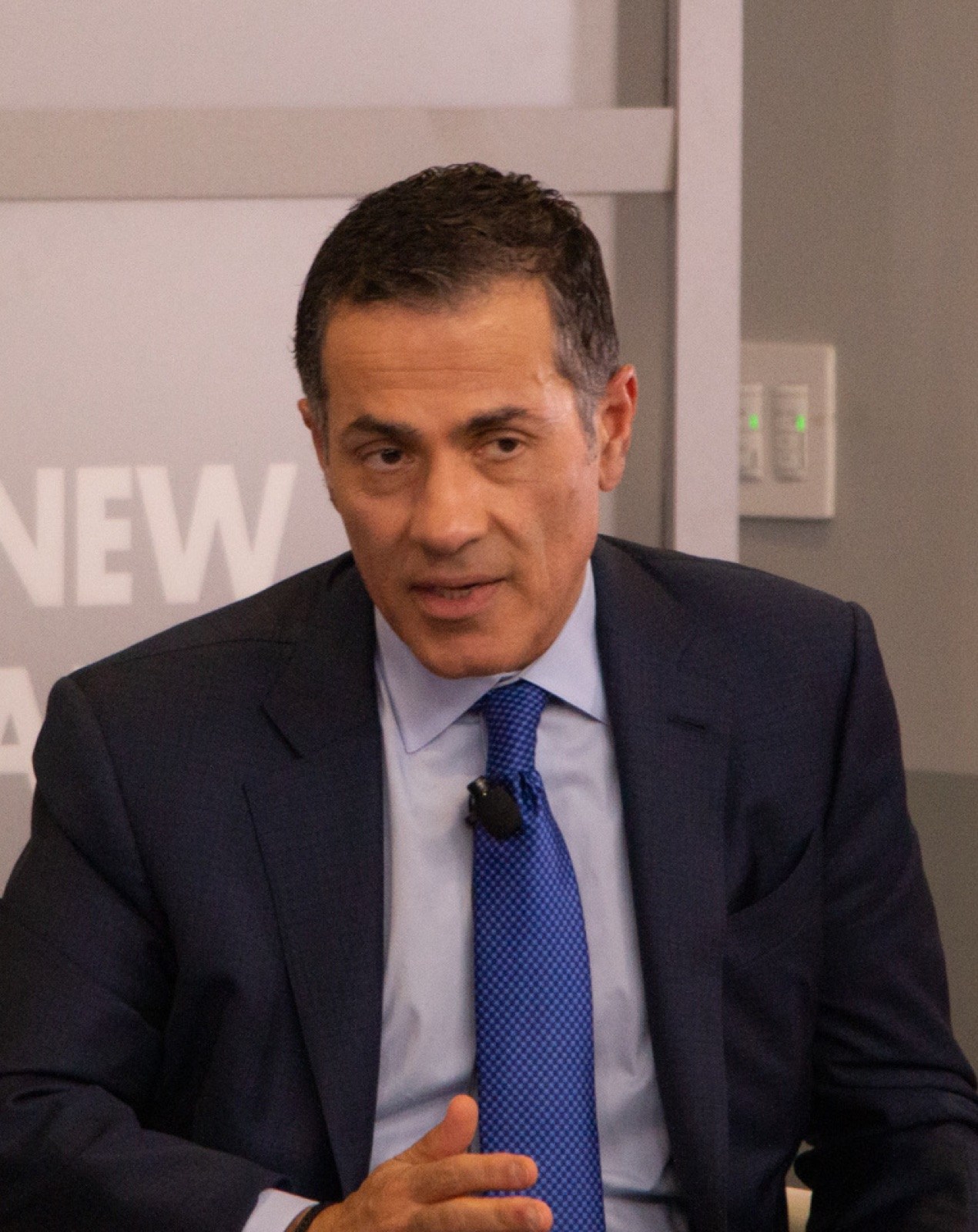
Vali Nasr
Vali Nasr is a professor and author of 'Iran's Grand Strategy' who argues that the single objective driving Tehran since 1979 has been defending its independence from the US.
Episode Summary
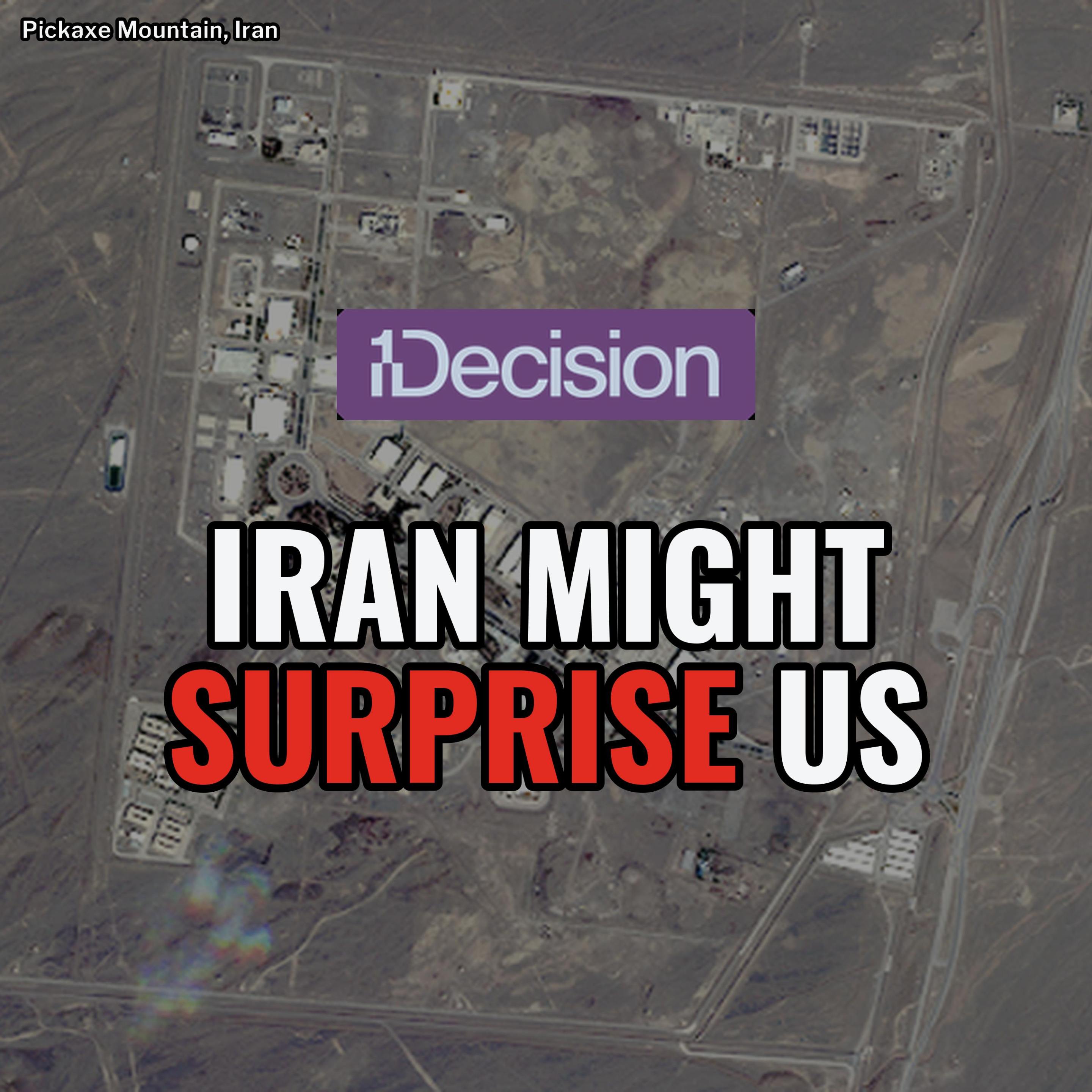
Professor Vali Nasr argues that the single objective that's driven Tehran since 1979 has been defending its independence from the US. Author of Iran’s Grand Strategy, Nasr says that logic, more than ideology, explains the current war. He unpacks Iran's shift toward hard-nosed nationalism, what leverage it has left, and whether the country will take a more pragmatic approach to geopolitics.
Sir Richard Dearlove and guest co-host John Raine talk through the headlines shaping today’s geopolitics: Japan's intelligence overhaul, the fallout from Zelensky's clash with his defense minister, China's new AI cooperation push, and the UK's untested new PM Andy Burnham.
03:16 Japan Builds Spy Agency07:35 Ukraine Defense Shakeup11:14 China Pushes AI Rules14:49 New UK Prime Minister18:24 Guest interview begins23:20 From Islam to Nationalism28:15 War Pragmatism and New Leaders32:27 Proxies and Forward Defense38:21 How the War Ends43:43 Gulf Markets and Hormuz48:12 Buying Peace49:49 Energy Shifts and Long Game55:37 One Decision to Watch56:23 Takeaways and Wrap Up
Show Notes:
Iran’s New Grand Strategy: How a Remade Islamic Republic Will Reshape the Middle East | Foreign Affairs: www.foreignaffairs.com/iran/irans-new-grand-strategy
Hosted by Sir Richard Dearlove (former MI6 Chief) and guest co-host John Raine (International Institute for Strategic Studies)
Listen & Subscribe
- Watch on YouTube
- Listen on Apple Podcasts
- Listen on Spotify
Transcript
COLD OPEN
Nasr: This grand strategy is not development, is not enrichment, is not prosperity. This grand strategy is defense of Iran's independence.
Raine: Is this a policy which the Iranian leadership can afford to abandon?
Dearlove: The effect of the conflict has been to make the Iranian leadership just much more pragmatic.
Nasr: Iran is after a true end to hostility. It can only get there through war.
Raine: If you can't bomb your way out of this war, you can buy your way out.
INTRODUCTION
Raine: Hello and welcome to One Decision. I'm your guest co-host today. I'm John Raine, Senior Advisor for Geopolitics at the International Institute of Strategic Studies, and also an independent advisor on geopolitical risk. Before this I was a member of the UK's Diplomatic Service for over 30 years. And it was in that role that I had the pleasure of working with my fellow co-host today, Sir Richard Dearlove.
Dearlove: Hello. I'm your customary co-host, Sir Richard Dearlove. As you all remember, former chief of MI6. John, we've had you on the show as a guest, and great to greet you today as co-host. I have some good memories of working with you in the past. I was recalling a house in the Green Zone in Iraq, sharing a bedroom with you which seemed to be heavily loaded with ordnance under the beds. Also, I seem to recall you chasing chickens round the garden, which either were roasted or maybe it was just in pursuit of their eggs.
Raine: Indeed, Richie. Well, that was a bit of frontline geopolitics for you. I also remember taking you on a helicopter tour kindly arranged by the UK military, and you were sitting on the tailgate high above Iraq, and I was just quietly praying I didn't lose you that day.
Dearlove: I was, if I remember, hooked in or strapped in. But we were sitting on the tailgate with our legs hanging over the edge. It was a good way to tour Baghdad in those days and a good deal safer than driving around anyway. I seem to recall we flew very, very low. The pilots were young enough to be my son, but I thought, well, they've probably got a hell of a lot quicker reactions than I have.
Raine: They'd had a lot of practice at it. One thing's for sure — after that you're never nervous about flying again.
Dearlove: No, it certainly cured me 100% of concern about getting on an aeroplane. Some of those trips were quite hair-raising, but they were always tremendous fun as well.
Raine: Well, as we look at a similar problem set today, Richard, I'm delighted to say that later on we've got an extremely insightful guest joining us this week: Professor Vali Nasr, who will be helping us understand Iranian strategy as it evolves and to understand in turn what this means for the US playbook on handling Iran. And don't forget: you can hear more if you subscribe to One Decision on YouTube or wherever you do your listening. But first, it's time for In Brief, where we have a look at major geopolitical developments this week. And I'm going to start with Japan, where we're seeing an extremely interesting move by Prime Minister Takaichi to update the Japanese intelligence agency and with it their intelligence culture. So I wonder, Richard, what are we to make of this? What's the challenge that she's trying to deal with? And where should she go for advice?
IN BRIEF: JAPAN'S NEW INTELLIGENCE AGENCY
Dearlove: Well, I think it's pretty straightforward in terms of what she should do organizationally. Obviously within the Japanese political system and given its attitude on foreign policy, this is still quite a controversial move. But she's made a big announcement already, and they're talking about creating a really significant formal intelligence community with a hefty budget — in the $400 million range, I think, expressed in US dollars. But it's a large initiative. I've been talking to the Japanese about this years ago when I was professionally involved and visiting Japan quite frequently. So it's not a new idea, but no one's been prepared to take this bold step which Takaichi now has introduced and is definitely going ahead. Everything previously was either in a research organization in the Japanese Cabinet Office, which was really just an analytical department, and there were operational bits and pieces in the National Police Agency, the NPA, and then there was another bit in the Japanese Armed Forces, the Japan Defense Agency. What's happening is that all of these bits and pieces are being amalgamated formally into something which will look like CIA or my former service, MI6. It will make it much easier for Japan's allies to talk to the Japanese government about key issues which are of huge regional importance to Japan — primarily the rise of China and how to cope with a very aggressive China in that particular region, and looking particularly towards the Pacific. And it's pretty clear who Japan's key allies are going to be: the United States helping them do this, definitely Australia, who have quite a sophisticated intelligence and security community built on the UK model; definitely the UK, with whom they have close liaison at the moment. And frankly not before time, because the Japanese would have a huge amount to contribute if they formally had a service with a decent product. The fact is that Japan was really, in intelligence terms, almost a protectorate. It's relied for its national security — given its sensitivity, as it saw itself. The reason this arose is because after World War II, the Allies, the Americans in particular, wouldn't allow Japan to have an intelligence service. So that's why they leaned heavily on the CIA and to an extent on the UK and other Europeans to a lesser extent. So there’s definitely that role. And obviously the two big issues for this organization will be China and North Korea. Not to forget about North Korea, because there's a very significant Korean community in Japan, and that community has really significant links back into North Korea. And the intelligence opportunities which hitherto were not really properly exploited by the National Police Agency will now, I think, be given proper treatment.
IN BRIEF: UKRAINE — ZELENSKY FIRES DEFENSE MINISTER
Raine: Richard, fascinating. Thank you very much for that insight. I'm going to move us on now from Japan to a more familiar item on the global security agenda, which is Ukraine, where we've seen extraordinary developments at the political level. President Zelensky has fired his defense minister, Mykhailo Fedorov. He has subsequently, as a result of popular pressure, offered him a modified portfolio. For many Ukrainians and Ukraine's allies, this is an unwelcome development. What do you think lies behind this, and how do you think it gets worked through?
Dearlove: I don't think we've got a definitive answer to that question. I've consulted one or two people who are very well informed and actually talked to one or two people in Ukraine. Partly it's a personality clash between the army commander and this very dynamic 35-year-old Fedorov. And there's a situation arisen where command and control of the armed forces is becoming a problem because you've got two schools that are not necessarily in agreement. And Fedorov had put all his energy into developing this drone warfare, developing medium-range drones, developing the speed of manufacture, developing the speed of development — which actually has been, as we know, hugely successful and I think given a lot of political and to an extent military initiative back to Ukraine. But I think there are further dimensions than just those two reasons. Maybe you've heard more about that than I have.
Raine: I've heard only a little bit more from commentators who point out a couple of things. One, this really comes at a bad time in that Russia is under huge pressure at the moment, has a crisis inside its own political economy, and it's losing to the way of war which Fedorov must take a lot of credit for. So that very high pace of innovation, close connectivity between defense providers and consumers on the battlefield — all of that's been a winning combination. So now seems a very difficult time to do this for the Ukrainian war machine. And the second one is really echoing yours — there is a generational divide here too over how you should fight a war. General Syrsky is old school, certainly by Ukrainian standards. And as you rightly said, Fedorov is as new school as you can get. But it does leave, I think, a lot of people anxious as to how this gets resolved. And by the way, there may be echoes of this debate, this division over how you fight wars and what the remit should be of defense ministers, in other jurisdictions.
Dearlove: I just think it's a very good point about the influence of the way this war is being fought on the future of European — including the UK's — defense procurement. It is going to have a fundamental influence on the way that money is spent and what should be given priority.
Raine: As well as illuminating the difficult politics of Ukraine, it illuminates the difficult challenge all governments face in running the new way of warfare. Listeners may be interested in the Chrystia Freeland interview, available on YouTube — Chrystia Freeland of course having unique knowledge of President Zelensky, with whom she worked closely. So I’ll move us on from Ukraine, if I may, Richard, to another resident on the international security agenda: China. Significant developments, I think, for China in the AI and multilateral domain. President Xi has now established the World AI Cooperation Organization, in an attempt – it would appear – to compete with the US in developing cutting-edge artificial intelligence, but also to posture as the champion of the Global South on AI, offering training and financial support. And also, in a move that will worry a lot of people, offering to play a leading role in the setting and presumably enforcing of global standards on AI. So this is something else to feed into the China challenge. How do you read it?
IN BRIEF: CHINA'S WORLD AI COOPERATION ORGANIZATION
Dearlove: Yeah, it's sort of reminiscent, isn't it, of the battle between the Chinese and American currencies and the Chinese wish to undermine the dominance of the dollar by setting up competing organizations, particularly in countries which they see as dependent on their relationship with China. I think it's an age-old theme. China would like to dominate a global regulatory system — obviously, AI being at the top of their list of priorities now. And this is just naked Chinese political ambition in an area where they have massive strength and massive investment, and where they will use that to bind in, I would have thought, a number of developing countries to a Chinese system, and hope that that will displace US influence. And the problem really on the American side is you have these major Silicon Valley players, but essentially they're private companies. Most of the big ones are sort of anti-state regulation — they want a pretty anarchic free market. Whereas of course China, in typical fashion, is thinking 5 to 10 years ahead, has one government strategy, combined all their players into one policy. Where is this going to end? My prediction is that in this instance the Chinese will not come out ahead. I think that the speed of development and the amount of capital being pumped into AI now in the States — and particularly the speed at which data centers are being constructed and all that — will still give the Americans the edge. But watch this space, I think.
Raine: I would agree with that, Richard. It's interesting to see how the Chinese — whilst they may at one level want to undermine what we call the rules-based international order — do like rules. They just want to make them rather than take them. So it's interesting to see them trying to put themselves in that position, and secondly working this very popular theme with Xi of a very special partnership with the Global South. But I tend to agree with you: scale, ecosystem, and just speed are all on the side of the Americans here. Well, Richard, let's turn now to what for you and for me is home turf really: the United Kingdom, where we have a new Prime Minister, Andy Burnham. I wonder, Richard, what his appointment means for geopolitics and particularly the UK's role in geopolitics.
IN BRIEF: UK'S NEW PM ANDY BURNHAM
Dearlove: You know, I'm really not sure I can answer that, because he's been notoriously silent on any foreign policy issue except Palestine, where he has made a statement appeasing the left wing of his own party, talking about how the Labour government should have called much earlier for a ceasefire in Gaza. He’s made that as one point. He's made a rather bizarre appointment as Foreign Secretary — Ed Miliband, who has been an extremely vocal critic of Trump. And the only other area where he's expressed some sort of view is getting closer to the EU. He seems more interested at the moment in putting Manchester on the map as a center for geopolitics. Manchester as a center for soccer, given it's got two of the world's leading teams, I understand. But Manchester as a geopolitical center or optic for the future pursuit of international politics leaves me puzzled. Anyway, it's very easy to be rude about Burnham in these early stages, because a lot of his appointment has been tied up with the difference in his personality between him and Starmer. And we don't really have much substance yet to go on. I think it's worth pointing out to our listeners that he's not really an elected prime minister. He's been made prime minister by acclaim in the Labour Party without an opponent. And I think a lot of people feel pretty uncomfortable about that.
Raine: Richard, one thing that occurs to me — and I'd love to hear your comment on this — is that like many prime ministers, he's come to power, however he's come to power, on a strongly domestic agenda, and suddenly he's going to be introduced to a full-fat global geopolitical agenda. How do you think he's going to cope? And if you were amongst the briefers, what's the advice you'd give him?
Dearlove: The advice I would give him initially is: look, sit down and do your prep on the geopolitical situation. Start working out how you're going to balance this obsession with — I mean, they're not petty if you're living in the UK, but they are petty internationally — domestic issues. I mean, his first statement was about rough sleepers. I mean, come on. I have a great deal of sympathy for rough sleepers, but when you've got two major conflicts, both of which the UK is involved in either directly or indirectly, I want to hear something from him about that. I want to hear something about how he views his relationship with the United States as our most important ally. Whatever you think of Trump's personality, that situation hasn't changed. The future of NATO, defense budget, immigration — there are all sorts of things which remain unaddressed at the moment.
Raine: Well, let's hope, Richard, that as part of his briefing and his geopolitical prep, he listens to One Decision.
Dearlove: Well, he should actually. He’s probably get more value from this than a lot of other advice. GUEST INTRODUCTION: PROFESSOR VALI NASR ON IRAN'S GRAND STRATEGY
Raine: Richard, thank you very much for all those wonderful insights and comments. And now we turn to our interview. All eyes are once again on the Strait of Hormuz, where both sides have resorted to kinetic exchanges. The memorandum of understanding has broken down. The question arises: are we now on the way to yet another Middle East forever war? To help us make sense of this, I'm pleased to welcome today Professor Vali Nasr from Johns Hopkins University, where he is Professor of Middle East Studies and International Relations. He has a wealth of experience as both a commentator and as an advisor to US administrations and presidents. His latest book is Iran's Grand Strategy. Vali, welcome. I wanted, if I may, to start with a question about grand strategy. Many who have been involved in government — and there are two on this interview at the moment — have noted how difficult it is for governments to prosecute a grand strategy. Much easier for academics and commentators to talk about it than it is to do it. And in your book you make reference to Iran both drawing up a grand strategy, pursuing it, and refreshing it. And indeed, in your most recent article you suggest we might be into another phase. So what is it about the Iranians and grand strategy? Do they really do grand strategy? And if so, how have they managed to do this?
IRAN'S GRAND STRATEGY: INDEPENDENCE, NOT PROSPERITY
Nasr: First of all, thank you very much for inviting me to this program. It's great to be with you. Countries have strategies around a variety of things. Let's say the United States has a China strategy, an economic strategy, a strategy towards the Middle East, towards Europe, et cetera. I think the term grand strategy, the way I use it — and some have used it historically as well, people like John Gaddis, for instance — is when a country has a singular objective and everything about its state, society, and economy is focused on achieving that objective. So it's not pursuing multiple different objectives in discrete periods of time, but has one grand objective. And my sense when I wrote the book was that too often — particularly observers in the West — have come to the conclusion that Iran is just driven by ideology, that this is a revolutionary regime born of Islamic ideology, led by men who belong in the 7th century, and therefore it's driven by ad hoc policymaking, it's angry at the world, it's lashing out, and its anti-Americanism is cultural and religious. And looking closer, you would see that — for right or wrong — this country since 1979 has been focused on one very big goal, which is to maintain its independence from the United States. This maintenance of independence has taken many forms, starting with taking American diplomats hostage, closing the American embassy, fighting the US in Lebanon, fighting it in Iraq, and now actually fighting a direct war vis-à-vis the United States. For right or wrong, it's driven by this notion that Iran's independence is at risk — at risk from American aggression, economic interest, subjugation — and that the country has basically sacrificed everything, organized everything, in order to achieve this goal of independence. And so it is pursuing a grand strategy. This grand strategy is not development, is not enrichment, is not prosperity. This grand strategy is defense of Iran's independence as the sine qua non of the country's existence. And if we want to know how Iran arrived at this point in its history — in a war with a superpower, starting from 1979 when the Islamic Republic was established — we have to understand the way in which the country has pursued this goal above all other goals. Its grand strategy has essentially been maintaining this independence. And I argue that everything about the Islamic Republic was shaped by this pursuit: from the nature of its system, from the way it uses ideology, its economy, its society — all have been shaped by the pursuit of this grand strategy.
FROM ISLAMIC REVOLUTION TO NATIONALIST REGIME
Raine: That's very helpful, thank you. You noted that Islam, of course — the Shia interpretation of Islam and the concepts that Khomeini brought to that — have been very important to the revolution. But you also suggest that now there's something of a change in the next generation of leaders who are capitalizing, at the least, on a feeling of nationalism inside Iran. How would you characterize the agenda of the next generation of leaders? Is it still resistance to America, or has it shifted to something else?
Nasr: I think in its early years the Islamic rhetoric and the Islamic ideology was much bolder — a much bolder color in the rhetoric and the thinking of the leaders of the Islamic Republic. But I don't believe that at any point in time they stopped being Iranian. It's rather that they saw this mix of Iran and Islam in a very particular way that secular Iranians did not share. Ayatollah Khomeini, in my view, also believed that Islam alone can give Iran independence. In other words, Iranian nationalism can only achieve its goals and its aspirations if the country is Islamic. Now, we could easily take issue with this, but it didn't mean that in his mind Islam and Iran were posed as opposite poles — that he had to make a Faustian choice between Islam and Iran. Rather, he wanted both. In fact, the early leaders of the Islamic Republic — including the Supreme Leader who was just killed — at one point in time faced the same choice that early Bolsheviks faced. Is the revolution an international phenomenon that happens to have first happened in Russia? Is it a global agenda? Or is it a Russian revolution that then can be given as a gift to everybody else? And Khomeini and Khamenei sided with the second view. They were not internationalists in that sense that they wanted to pursue revolution anywhere all the time. But over time, I think the ideology has lost a lot more of its verve. There's a smaller portion of the population that actually believes in it. And the idea of a nation state of Iran — even on a day-to-day basis, managing its economy, its society, its employment, its demography — has basically routinized, if you would, the Islamic Revolution, much like it happened in China and in the Soviet Union. You go from ideology to nation state. Yes, it's still communist, but it's much more of a nation state idea. And now where we've arrived at this point, it's very clear that Iranian nationalism is much more ascendant. It's part of the rhetoric of both the leadership as well as the public that is rallying against the war. That this is not a war — this is a war of defense of the country, that Iran is under siege. So nationalism has become a lot bolder. Of course, the Islamic Republic is putting its own imprint on how it interprets nationalism, much like Putin puts his own imprint on what Russian nationalism is today. But Iran — we should no longer think of it as an enigmatic Islamic ideological phenomenon which we cannot understand. We've dealt with regimes like Iran before, and we're dealing with two of them right now: one in China and one in Russia, in which you have authoritarian regimes — both of whom came out of the bosom of communism — who have a view of nationalism in their countries which is on a collision course with the interests of the West, each in its own way. And Iran is better understood in this way. Iran is today ruled by hard-headed right-wing nationalists who also see Islam as a component of Iranian nationalism, who see the interests of the country as inimical or on a collision course with those of the West. So their anti-Americanism is now less put in the garb of ideology — that we're fighting the great Satan — although some of that rhetoric is still there — but more that we're dealing with an adversary who's out to break our back, change our regime, probably break up the country. And particularly in a situation of war, this is now much more of a classical sort of confrontation. It's very interesting that Iran doesn't use the word jihad at all. THE NEW IRANIAN LEADERSHIP — MORE PRAGMATIC, MORE NATIONALIST
Dearlove: Just picking up on that point you're making, which I think is fascinating — it seems to me that the effect of the conflict, even in the last weeks or months, has been to make the Iranian leadership just much more pragmatic. A lot of what we thought of as characterizing the leadership in the past almost seems to have been discarded. And war isn't just a period of innovation politically — it's having a fundamental impact on the way that the Iranian leadership views its own society. There seems to be a sort of down-to-earth pragmatism about the way that they're conducting this conflict. Do you agree with that?
Nasr: I agree with that. First of all, they couldn't have conducted this conflict, they couldn't have survived two wars against two nuclear-armed superior militaries, if there wasn't a certain degree of pragmatism. So whatever grand idea is up there, on a day-to-day basis the decision-making is pragmatic. Should we talk to the Americans? Should we accept a memorandum of understanding? Should we go back to war? Should we hit these tankers? How do we back off the US? How do we get Trump's attention? These are much more pragmatic. But I would also say, Richard, other things have happened. There has been a change of leadership in Iran. Israel and the United States between them, in these two wars, have killed over 135 senior Iranian leaders, including the Supreme Leader of the country — a whole generation of Revolutionary Guard commanders. I mean, if you thought about that happening to any country, that brings about regime change. There's a new top guy, even though he may be close to the position that was before — it's a very different decision-making. And also, Iran for a very long time was able to maintain, in this struggle of independence under the previous Supreme Leader, a no-war, no-peace scenario. So the old Supreme Leader's pragmatism was: I don't want to go to war with the US or Israel, but I also don't want to make peace with them. But I think the country can exist within these guardrails. That idea has been eviscerated in Iran. Nobody can basically say that that is actually achievable or sustainable or a resilient situation. So you either have to be at war or now you have to be at peace. And both of these require a different kind of pragmatism. Yes, Iran is attacking the United States in a vicious way. But the highest-level direct face-to-face meetings between an American and an Iranian — on two occasions — have happened under this new leadership. So it's leaning more into war in a pragmatic way, I believe, in order to create deterrence and defend the country. But it's also leaning into a potential negotiated settlement to the war, which they desperately need. And then you're absolutely correct — I think the war has brought a certain new realism with their population. Because in two major uprisings — one over the hijab in 2022-2023 and one in January 2026 — they understood that Israel and the United States view the Iranian public as Iran's Achilles heel. And that they may even try to weaponize that population. Israel's war plans, both in June and February, were premised on the idea there would be a mass uprising in Iran. And I think pragmatism also means that they cannot fight on two fronts, at home and abroad. And they've sort of now realized that you could actually have the population — not necessarily all of them on your side, but at least much more pacified — if your language is much more nationalistic and if you give in on a lot more of the cultural freedoms that they want, and potentially also find a way to address economic issues. So they are also much more pragmatic in governance, and going forward they will look for a different kind of social contract with the population once the guns fall silent.
IRAN'S PROXY NETWORK: CAN IT BE NEGOTIATED AWAY?
Raine: I wanted to pick up on a very interesting thing you said earlier about Khomeini's decision not to be internationalist in the revolution in the same way that the Russian Revolution was. Nonetheless, the Iranian regime has projected aggressively into lots of other jurisdictions overseas and has sought to alter the course of politics within those countries through terrorism and through the presence of militias. So the question really for you, Vali, is: is this a policy which the Iranian leadership can afford to abandon? Would they put that on the table as a negotiating card? Or has it now become so integral to Iran that they can't give that up?
Nasr: I think the origins of this presence go back to the time of the revolution and internationalism. And what I meant by internationalism is that Iran had its versions of Trotsky — people who believed it's the Islamic Republic in Iran, not the Islamic Republic of Iran. Whereas Khomeini was more like Stalin or Lenin: this is about Iran. And yes, we will project power, but in the interests of Iran. Iran is not a component of a much larger global revolution, a sort of equal among whatever else revolution may happen. But rather Iran is the home of the revolution, and then it can give this gift to others. And I think over the years Iran built on those early internationalist embers to create instruments for projection of power. I think where it's become entrenched in Iran's defense strategy is particularly from 1982 onwards when Hezbollah emerged, and then when the United States invaded Iraq. Iran discovered the strategy of fighting the US — which is not to fight it on its own borders, which it's doing right now — but to fight the Americans and the Israelis in the Arab world and take advantage of broken states: first Lebanon, then Syria, Jordan, Iraq, to basically create a perimeter of defense — what they called forward defense — in those territories. And they believe it was highly successful on a purely military front for at least two decades. Yes, it collapsed after the Gaza War and the fall of Syria in 2024. But between 2003 and 2024 it was a highly successful defense strategy, although it had a tremendous amount of political cost. It turned the Arab world against Iran. It created a basis for an Israeli-Arab alliance against Iran. These are all true. But the generals who advocated it still say: why didn't Israel attack Iran 5 years ago? Why didn't they attack 10 years ago? Even according to President Trump's rendition, when he decided to kill General Soleimani, Iranian commander, at the beginning the Israelis were on board, and then at the last minute the Israeli Prime Minister disappeared — he didn't want to have anything to do with it. Why? Because he was afraid of Hezbollah's retaliation. So for Iran, this was a very successful deterrent strategy. Now that deterrence strategy has been downgraded significantly, and Iran's footprint in the Levant in and around Israel has been weakened. That's exactly why Israel feels perfectly comfortable, and the US feels perfectly comfortable, attacking Iran in the manner they are. I don't think Iran can go back to rebuilding those ramparts the way they were, although it still sees benefits in them. They can still launch attacks against Israel, keep Israel busy in Lebanon, keep the US busy in Iraq. The Houthis can still close trade in the Red Sea. So there is still value in them. But I would also add that sometimes strategies are sticky. Because you're dealing with proxies and they're people based in communities, it's much more difficult to shutter them than you might do a missile program or an artillery unit – although even that sometimes is sticky in countries to do that. Hezbollah and Iran now have decades of co-relationship. And it's not just about Hezbollah — it's about millions and millions of Lebanese Shia. And they have influence in Iran. They have relationships in Iran. And so Iran cannot easily walk away from them. That's for instance why Iran included a peace in Lebanon in its memorandum of understanding — just to sort of say: we're not abandoning Lebanon. Now, I think everything can be negotiated if you arrive at that point in the negotiation. Because Iran right now sees itself on the defensive against the US, and it sees that the US is asking for all of its weapons at once. Give up your nuclear program, give up your missiles, give up the Strait of Hormuz, and give up your proxies. Basically become like Syria today, without any defense capabilities, or like Lebanon. And it is too scared or too vulnerable to accept that level of disarmament. But it's not inconceivable that if there was, let's say over a number of years, steady progress over a number of years towards greater security, at some point Iran may no longer see any value in investing in these proxy forces in the Arab countries.
WHERE DOES THE WAR GO NEXT?
Dearlove: So Vali, where do you think we go next? You've mentioned — or sideways mentioned — the alienation that exists now between the Sunni world, the Gulf States, Saudi Arabia, and Iran, particularly after Iranian attacks even on Oman, which was perhaps their closest interlocutor if not an ally. What would be the most likely step now for the US, particularly as it advances towards midterm elections? And where do you think this is going to go? Because it seems to me that if you look at it through the optic of the Middle East, the divide between the Sunni and Shia states is getting deeper. There's more enmity. The leadership of Saudi Arabia must be dying to get shot of the Iranian regime, perhaps even more so than the West now. So the dynamic of the war has changed a lot of people's priorities and conceptions — but it doesn't seem at the moment that either the Iranians, or the Americans, or the Israelis for that matter, have a clear pathway forward. But you presumably have advice for them.
Nasr: Given where we are, I think the first priority for the US and Iran is to get to the end of the war. Each of them may have a different conception of what that end looks like, and that's why the memorandum of understanding ultimately proved untenable and the two resumed their hostilities. But I think the United States has got itself in a pickle. It went in to change the regime in Iran. It has now realized that the regime is not about to fall. And actually, given the size of the crowd that came out for the funeral of the former Supreme Leader, this is now a very, very hard country to force to concede. So I think President Trump is going back to the basics: at least I want to take away what they won in the war, which is the Strait of Hormuz. And then I can keep them under maximum pressure sanctions, and Israel or the US can mow the lawn if the Iranians begin to make any moves on their nuclear program. Iran is trying to avoid exactly this scenario. Iran is after a true end to hostilities — no more war, no more assassinations, no more mowing the lawn — and serious economic relief. And it is of the belief that it can only get there through war — only by raising the cost of war on the United States and convincing Washington that there is genuine cost to picking wars with Iran. Then the US may actually be open to a more lasting cold peace. A more lasting cold peace, the Iranians would argue, would have to have security guarantees and economic relief in it. I'm not saying they're going to get there, but if you're asking what is being debated in Tehran, that's the nature of the debate. You have to disabuse Trump and Bibi Netanyahu of thinking there is a military solution to Iran. And if the global economy wants to not worry about periodic closure of waterways, then it has to basically give Iran a stake to keep it open — which is the security guarantee and the economic relief. That's the Iranian game plan. So I think the fighting is going to go on until one or the other side basically decides that they've reached a maximum and this is the time they should talk. I don't think President Trump is there yet, and perhaps Iran isn't there yet — but some degree of talking has started, because I think President Trump has realized even this renewed attack on Iran is not changing anything, and Iran has shown willingness and capability to hit back hard. Now you raise the second point, Richard, which is this idea of Iran attacking its neighbors and now going all the way to Jordan. This has been debated in Iran also — that this could prove to be extremely costly to Iran in the medium to long run. I would suspect that the military men who are pushing for this are saying: we have to survive the short run before we can think about the medium to long run. The existence of the country and the survival of the country is at stake. Whether the Jordanians like us or not at this moment in time is immaterial. We have to survive a concerted American-Israeli effort to break this country. Then we can think about our neighbors. And in fact, our neighbors are likely to be willing to deal with us in a different way if we survive. If we don't survive, then there's absolutely no hope with them either. I think that’s the logical calculation. And I think there's also a practical side to this: the conclusion in Tehran, and I've heard some analysts mention it, is that Washington thought it could park military assets in countries where Iran may have had some kind of diplomatic second-thinking about attacking. THE GULF STATES: CAUGHT BETWEEN IRAN AND THE US
Raine: Vali, can I just pick you up on that? Because I know our listeners are really interested in the market implications of this. And in many ways the most market-sensitive bit of this war has been the impact that it's had on Gulf economies and of course Gulf seaways. Can you see a way in which the Gulf states can either themselves or through their multiple channels to the Iranians — and of course to DC — drive through a solution which might not be pretty, and it might be highly customized, might look like some kind of consortium, just in order to restore the confidence that they need for their economic models? And some of the Gulf states we know are seriously suffering, most particularly Kuwait, the northern Gulf being particularly vulnerable. So do you think there's both the political will and creativity to do that, and the imperative?
Nasr: I think the imperative is there and the will is there, but they also can neither influence Tehran nor influence Jerusalem, Tel Aviv, or Washington. The Gulf had a very neat model, which is: Iran is a threat, and we will invite the United States to create this chain of bases from Kuwait to Oman to Jordan, which would defend us against a potential Iranian attack. Now, how do we avoid Iran attacking so that the US would have to defend? We opened diplomatic relations, we built ties with Iran — Qatar, even Saudi Arabia, UAE, et cetera. And so you can essentially create a situation in which Iran will not attack and therefore the US does not have to defend. You can then pursue this future-oriented economy — services economy, AI, et cetera — and oil can flow through the straits freely. And even the Saudis made a pact with Iran to keep the Red Sea open as part of that. But the United States upended this model. The US went to war at the behest of a country that's not in the Gulf — that is Israel. According to Secretary Rubio, the US started the war because otherwise Israel might have, and Iran would have reacted. So the United States invited the Iranian retaliation on first the bases, then on the Strait of Hormuz, then on infrastructure, et cetera. And since then, the Gulf economies are caught between an Iran which has crossed the red line that it had never done before — which is attacking them, and closing their strait, and claiming control over it — and a United States that is not capable of either finishing the job with Iran or actually defending the Gulf States or defending its own territory. And the more the Iranians hit — they hit Kuwait, they hit Qatar, etc. — they're basically sending a message to the US: don't think that because Qatar was a mediator, we won't attack them. And as a result, they've now forced most of the US military assets to move to Jordan and to Israel. And then they're trying to attack Jordan as well. So there is a logic to Iranian action, which is to force the United States out of these bases. And the Gulf countries basically in the short term have no solution. In the medium to long term they could develop partnerships, buy weaponry, create resilience — and I'm sure they're going to be spending a lot on that. But in the short term, the only way in which you would de-risk the Gulf, open the waterways, and bring back some normalcy to the Gulf and begin the process of trust-building in its economies is by a negotiated settlement — and in fact an end game here that would give the markets a signal that this is a resilient cessation of hostilities. And I don't think the markets care about whether Iran charges a fee — that's more of an international law question – than they are about the fact that this kind of disruption is highly damaging to their supply chains. I think the Gulf countries want the war to end. And then once the war ends and once they're able to say that this is really ended, then they can think about how they deal with the Iran that the war produced and how they address the gaps they saw in the American security umbrella that they experienced. CAN YOU BUY YOUR WAY OUT OF THIS WAR?
Raine: Might it be the case that if you can't bomb your way out of this war, you can buy your way out? And that a commercial agreement could work where kinetic exchanges don't? Would that tap into the pragmatism in Tehran?
Nasr: Absolutely. Look, that's why I think the US put the idea of a $300 billion investment fund on the table. Iran's economy was already in dire straits before the war started. And yes, there is mismanagement and corruption there — much like many countries in the Global South. But Iran has also been under really draconian sanctions for a long time, at least since Trump's first term. On top of this, the country has suffered north of $300 billion worth of war damage — in fact much more since the war has resumed. Bridges, steel factories, petrochemicals, a variety of things. So it has a massive economic need. Ultimately, whatever you think about Mojtaba Khamenei and the Revolutionary Guards, etc. — once the war ends, right now they're managing a war, but when the war ends they have to manage a country. And so they're not going to accept any money or any deal, but I think they're very open to it. Iran has always been at the table, willing to exchange whatever it is that the West wants against veritable economic relief. And this is not going to be any different this time.
THE US ENERGY WINDFALL FROM THE WAR
Dearlove: Vali, one of the aspects of the conflict which is not much discussed is the United States' emergence as the largest global energy supplier, with the development of the Permian Basin, their export of gas in particular, but also the exploitation of what was the Gulf of Mexico, now the Gulf of America. You no longer have, as far as the US is concerned, this dependence on Middle Eastern energy. So there has been a huge shift in that fundamental tectonic plate. And although Trump looks as though he might be in electoral difficulty, the country suffering most or likely to suffer most in the medium term is actually China. So if you look at this through a different optic — the bigger geopolitical optic — suddenly the war takes on a different interpretation, because there is an extraordinary side benefit to the US economy. Do you agree with any aspect of that analysis, or do you think this is just a chance by-product of a mistaken strategy?
Nasr: Well, I think if that's come to pass, Richard, it's going to be more medium-run onwards. The decision-making on the war is really going to be driven much more by inflation and the short term. And ultimately the United States is not going to be immune to an economic downturn elsewhere in the world as well. American farmers are hurting — or were hurting before the MOU — with the shortage of fertilizer. The president himself said at the G7 meeting that the US was only 4 weeks away from running out of its strategic oil reserves, after which you might have had a much bigger spike in gas prices. And ultimately the booming economy on Wall Street does impact the president's thinking, but it doesn't really reflect the day-to-day prices that people face in the United States. And in the midterm elections, or even perhaps as an overhang on the 2028 elections, I think the economy matters. I also think the Chinese are better prepared in the short term — not only because they have much more reliance on alternative energies, but also because they built massive amounts of strategic reserves. Including that Iran pre-sold them huge amounts of oil in expectation that the war would be coming. And Iran also has oil storage facilities in China, which it could continue to release oil to the Chinese economy at least for some period of time. It's not indefinite. One of the broader consequences is that the Middle East in many ways may be diminished from the kind of importance that it held to the global economy. The Middle East was always very important because of oil — although the United States has not really been buying Middle East oil for at least a number of decades. But China, Europe, and now natural gas particularly — with the cutoff of Russian natural gas to Europe — became more important. But the other thing that was very important, particularly for Europe, was the sovereign wealth funds of the Middle East countries — a huge infusion of capital, the sort of recycling that happens on an ongoing basis. And if oil revenue begins to shift elsewhere, the incomes in the Gulf will also get less. And if there is no true peace in the Gulf, then it's very difficult to see where the services economies would go or would continue to boom the way they had. So this war could actually change the wealth center of gravity in the region in a way. And that's actually, I think, in the longer term a great worry to the Gulf countries, although higher oil prices are good for them. But there are many other fundamental assumptions about the economies they were pursuing before the start of this war that may now be open to question. And I would say even their own internal spending priorities are going to change. They're going to be spending a lot more on infrastructure resilience, on defense than they were on the kinds of things they had been doing before, or parking their money in financial institutions in the West or buying varieties of property in the West. And for the Iranians, this could prove to be a Pyrrhic victory, in the sense that this fight over the Strait of Hormuz may ultimately lead more and more countries around the world to hedge around the strait — which means be less dependent on petrochemicals or goods that transit the strait, even though they might be cheaper — and try to find alternative sources of supply elsewhere. Some of these may be from the Gulf itself. The Gulf itself may open port facilities in the Arabian Sea, may open port facilities in India, to sort of replace the reliance on Dubai. But these are going to take time. So one way of thinking about this is that this war has been big enough to change some very fundamental things about the Middle East and the way that we have thought about it, at least in the past decade.
ONE DECISION TO WATCH
Raine: Vali, thank you very much. I agree — I think we've got some structural impacts on the economy of the Middle East to take into consideration now. Vali, finally I'm going to ask you the question which all guests are asked on One Decision: what's the one decision coming up in the next week or so that you're going to have your eye on?
Nasr: I think the most important one is President Trump's: will he decide to escalate on the assumption that a higher level of military pressure on Iran is going to force them to acquiesce to his demands at the table? Or will he decide that escalation will not work and he's not going to risk it, and then basically look for ways to get back to the table?
Raine: Vali, thank you very much.
Dearlove: You've certainly broadened our understanding of this extraordinary crisis.
POST-INTERVIEW DISCUSSION
Raine: Well, Richard, we covered a lot of ground there — that just shows how sprawling this crisis is. But what were your particular takeaways from that?
Dearlove: Well, I think the thing that interested me most was his discussion about the transformation of the regime away from its revolutionary origins to a much more pragmatic, nationalistic identity, and how that has fundamentally changed maybe the way that the regime itself sees its internal vulnerabilities. And I was very struck by the phrase he used — with Israel and the United States seeing the Iranian people as a weapon against the regime. And of course that's an ambition of theirs that hasn't been realized. And I think it just brought home to me the complexity — which you and I are familiar with — of a country like Iran: 90 million people, massive history, massive identity, massive cultural identity, really complex historical creation. And the idea that Iran is going to fold its cards — he was very clear about what strategic cards Iran held. He listed the four points: the missile program, the Strait of Hormuz, their relationship with proxies. How much are they actually going to give up? And then what would be the vulnerability of Iran afterwards? So I thought he spelt it out extremely well. It's quite interesting, at the end, to try to ask him that bigger geopolitical question as to what the impact was likely to be in the longer term over the Middle East. I agree it doesn't really perhaps affect the war over the next months. But the shift of Middle Eastern countries away from being a central concern of geopolitics — and he also used that phrase that ultimately it might be a Pyrrhic victory for Iran as it lost its geopolitical importance and identity as a consequence of this war and focus shifted elsewhere. I don't know if you agree with that.
Raine: I do agree with that, Richard. In fact, I was talking to another commentator this morning who made the point that whilst there's still an appetite to understand what's happening and to get the best guess on where it's going, there's an awful lot of discounting going on already. And the war's gone on long enough to become a fact to which populations, leaderships, flows of money, goods, and people all start to adapt. So when he was talking about those big impacts on Gulf economies in particular as a result of this, I was thinking: of course they will continue as long as the two sides remain committed to the use of force. I thought he laid out very graphically that at the moment both sides are locked into the application of force. So therefore these impacts on the Gulf economies in particular are going to continue, and over time there certainly will be a lot more discounting — but also some real harms endured in the more vulnerable economies in the Gulf. So I thought that was particularly interesting. And I think his idea of there being a new leadership and a new approach — I think time will tell on that. Maybe they’re more pragmatic, but let's see how that translates into their policies. We've still got at the very top a lot of IRGC blood and genes. And lower down, whilst it is true that's a different generation not formed in the 1979 revolution, amongst them are some even harder hardliners.
Dearlove: But I think one thing he didn't talk about is the vulnerability of the regime. We're all assuming it isn't vulnerable — I'm not so sure about that. It's taking a terrific beating. The economy literally is on its knees. There is still massive opposition to the regime amongst the population. Okay, they're cowed into submission. I just think there's a brittleness and a fragility about Iran now which is disguised by the fact that they've held out so long in this conflict. But I'm still open-minded about internal developments. And the one thing I also feel that we don't have a clear view of is the policy of negotiation designed to split the regime. I'm absolutely sure there are strongly differing views within the regime leadership — those who want to compromise and those who are absolutely against it. I wonder how much intelligence the Americans and the Israelis actually have on that.
Raine: Yeah. I was just going to make the point, Richard, that he writes very interestingly about the institutionalization of debate inside the Iranian system — how there is genuine debate, multiple voices, and how this is reconciled. And of course that's a valve for the regime, but it also means that for us as commentators and observers, you shouldn't assume that this is a monolith. And related to that — and your intelligence point — one of the notoriously difficult things about Iran is just its legibility. It's just an extraordinarily difficult country to read because of its size, its complexity, and the barriers that have been put around it by the regime. So I think some of the insights that he's giving on the way in which the population are starting to shift in their relationship with the regime — all of that's very valuable to have.
Dearlove: A fascinating discussion. Our listeners will learn a lot from it as we have done.
CLOSING
Raine: That's all for this episode. Please do join us every Thursday for more exciting conversations about world events that go beyond the usual headlines. Subscribe to One Decision on YouTube so you never miss out on a conversation putting the global news in context. And don't forget, you can email us at hello@onedecision.com — send us your questions, comments, insights, pet theories. We want to hear all. For more conversations with leading decision makers and thinkers, check out onedecision.com where you'll find additional commentaries, conversations, and explainers. I'm your guest host, John Raine. It's been a pleasure. Thank you for listening.