Episode Info
- Season8
- Episode4
Hosted by Christina Ruffini and Sir Richard Dearlove
Guest
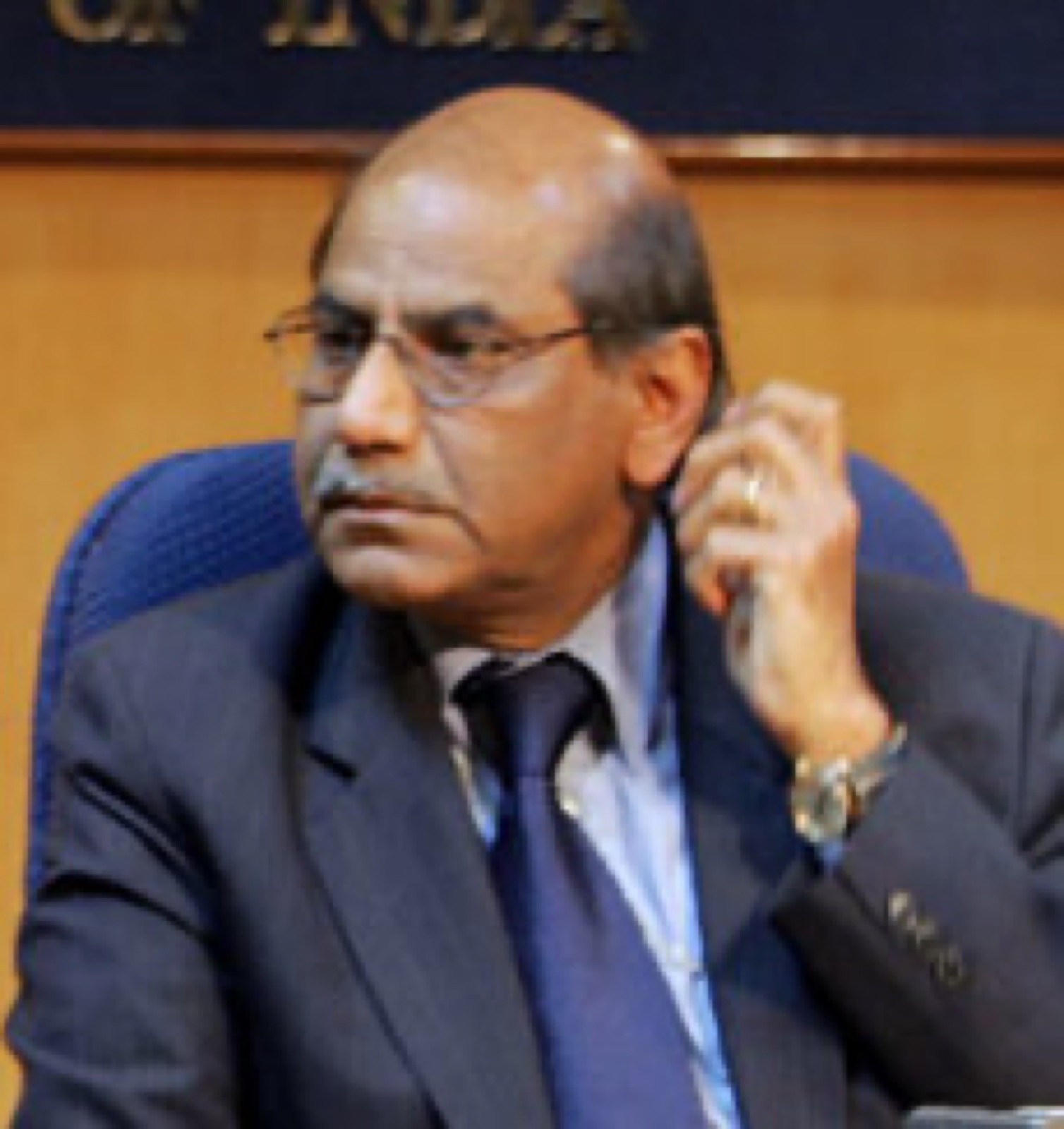
Shyam Saran
Shyam Saran is a former Foreign Secretary of India discussing India's options as it navigates pressures from Russia, the West, and China.
Episode Summary
India is finding itself pulled in different directions - by Russia, one of its major trading partners. By the west, working to isolate Russia. All while navigating a tricky relationship with China, which has competing interests in the region. Ambassador Shyam Saran, former Foreign Secretary of India, discusses India’s options with One Decision's Julia Macfarlane who later gets the unfiltered analysis from host and former Chief of MI6 Sir Richard Dearlove.
Listen & Subscribe
- Watch on YouTube
- Listen on Apple Podcasts
- Listen on Spotify
Transcript
INTRODUCTION
Mcfarlane: Welcome back to One Decision. I'm your host, Julia McFarlane. India is at a crossroads. An important counterterrorism partner for the United States, a key regional partner of Asian countries anxious about a rising China, the world's largest democracy is finding itself being pulled in two directions, between the US and its allies, and on the other side, Russia, China, and the anti-Western alliance. Ambassador Shyam Saran, the former foreign minister to India, sat down with One Decision to ponder India's current place on the geopolitical map and to explain its policy of avoiding having allies in favor of having partnerships, more casual commitments to its friends and neighbors often based on trade. High on the agenda, of course, is India's maneuvering amid the rising threat of China, which is also the subject of his fascinating new book, How China Sees India and the World. I would really recommend it if you're curious, not just about the relationship between these two Asian giants, but also on Chinese history and why its history can explain the lens through which Beijing sees and behaves in today's world. Let's go straight to our discussion. Shyam Saran is a former career diplomat who served as the Foreign Minister of India between 2004 and 2006 under Manmohan Singh, and he has been ambassador to Myanmar, Indonesia, and Nepal. He's now a fellow for both the Lowy Institute and the Center for Policy Research, as well as a columnist for The Hindu, the India Express, Business Standard, and the Print. Shyam is also an author. A few years ago, he published How India Sees the World, and his latest book, which is out now, is called How China Sees India and the World. Shyam, welcome to One Decision. Thank you very much for having me. Thank you so much for joining. Now I wanted to start off by saying that in my reading of the position that India now finds itself in, not just currently, but throughout the last few years and especially since the fall of the Soviet Union, I get the sense that if India were to have some kind of theme song or anthem, it would be that excellent song called Stuck in the Middle With You. And I think coming from a Western point of view, we really take for granted some of the competing interests and power struggles within Asia. I think because we're so preoccupied with framing geopolitics through this binary bipolar frame that analyzes everything through how it relates to China and the United States' rivalry. And there's been some attempts to sort of correct away from it with all these trilateral and multilateral organizations and partnerships as one way of sort of drawing attention to some of the more interesting alignments that you see around the world. And that is where you see India as kind of omnipresent in a lot of these organizations. It's in the BRICS, the emerging economies of Brazil, Russia, India, and China. It's also in the Quad, the Quadrilateral Security Dialogue, which includes the United States, Japan, India, and Australia. It's also in the RIC, which is the Russia, India, China Tripartite Group, and it's in the Shanghai Cooperation Organization, which is China and a number of its regional Asian partners too. And so India sort of masterfully manages to be friends with everyone, and yet it's allies with no one. And it's a position that's been described as the sort of principle of strategic autonomy. Now where that, I think, can create tensions is probably best illustrated at this particular moment when it comes to Ukraine. India has rather angered the West recently for how it's been dealing with this crisis. It's avoided condemning Russia's invasion. It abstained in a vote in the UN Security Council. It abstained in a vote in the UN General Assembly. India has this opportunity to engage diplomatically in external conflicts. But is it choosing not to? Because at the end of the day, India always has India's own interests first.
INTERVIEW WITH AMBASSADOR SHYAM SARAN
Saran: Well, let's start with the last statement. I suppose every country has its own interests in mind. So India is not an outlier in that respect. Also, I do not think that when we talk about nonalignment or strategic autonomy, that implies that India is somehow sitting on the fence or it is not taking positions. It is a matter of, you know, what the issue is and whether it is important for India to take a stand. And even if it has taken a stand, is that stand going to be expressed in language which is condemnatory or language which is very, you know, aggressive, or interests are better served by perhaps dealing with issues in a somewhat quieter kind of a frame. So, I see that, on the particular issue that you have spoken about on Ukraine, the position that India has taken, let me say, very clearly that because India abstained on the UN resolution does not therefore mean that India supports Russia. I think it should be fairly clear from the statements which have been made by the Indian representative at the UN, that India has in fact very categorically stated that territorial integrity, sovereignty, these are inviolable principles and has also drawn attention to, particularly when there have been very major human rights violations like the Bucha affair for example. India has taken actually a fairly explicit and very critical stand on that issue. So, I think there is disquiet in India about what has been happening in Ukraine. It is not supportive of Russia, but yes you are right that India has not taken an explicitly condemnatory kind of a position. You said that the West is angered by India. That is not the impression that I have, because yes, it is certainly to be expected that our friends will try and persuade us to join them in whatever position they have taken, that is par for the course. But I think in terms of our engagement with our Western partners, whether it is the US or Western Europe or Japan, in fact, there is a fair degree of understanding why India is where it is. So, I do not think that India is in some way sort of discomforted because it finds itself torn between two sides or walking a tightrope. That's not quite the position that India is in.
Mcfarlane: Well, I want to ask because surely actions speak louder than words. And while you're very, very right to point out that India had words of condemnation against atrocities such as the Bucha massacre, I'm reading today that India has increased its imports of Russian crude by 700%. It is jumping at the opportunity to buy cheap crude from Russia, as Russia scrambles to find new customers in Asia because it is being heavily sanctioned by the West. And in that sense, it is throwing a lifeline to Vladimir Putin, is it not?
Saran: No. Because, when you are talking about a 700% increase, that 700% increase is on a purchase earlier of a very tiny amount of oil from Russia. If you compare what India even with 700% increase is buying from Russia, it is a small drop in the ocean compared to what Europe is still buying from Russia.
Mcfarlane: It is still quite a symbolic move, is it not? That it is accepting business with Russia at a time when the West is trying to put a stranglehold on Putin in order to curb his war in Ukraine.
Saran: The simple fact is that the West has very selectively put a stranglehold on Russia. But what I want to point out is that these sanctions are not put by India. These are not sanctions which have been put by the United Nations. And we have always consistently stated we are ready to apply sanctions which have been in fact imposed by the United Nations. But we should not be asked that because certain selective sanctions are taken by one country or the other that India must jump and fall in line. Why should we be expected to do that? And secondly, as a result of these sanctions, a tremendous amount of economic damage has been done to India. You know we are heavily dependent upon energy imports for example. We are very heavily dependent upon many other items that we get, you know, from the world market. All these have been disrupted. So surely India is entitled to also try and safeguard some of its economic interests.
Mcfarlane: That's absolutely fair enough. And I do want to move away from Russia and Ukraine and talk about China. But lastly, before we move on from this topic, I want to ask you, Russia is the overwhelming provider of military equipment to India. I believe it accounts for nearly 70% of its defense and arms imports. This is obviously a hugely important factor to consider when you look at how India is responding to the war in Ukraine. And as you say, balancing its needs and its priorities. But India is also friendly with Ukraine. You mentioned that it relies on lots of imports from Ukraine as well. So I want to ask you, what is India's most important factor in this conflict? What is the most important trade relationship in this scenario or strategic partnership that India is prioritizing above all, in this conflict that is forcing a lot of nations to pick a side?
Saran: So let me try to give you a certain context within which, you know, these decisions are taken. One, I would like you to perhaps appreciate that India-Russia relations are not Indo-Soviet relations. So up to 1990 before the collapse of the Soviet Union, yes, India and the Soviet Union had a very strategic partnership, which was very much focused on the common threat from China, which is a very strong ally of China today. And the defense hardware relationship that you are talking about, it is in terms of spares and maintenance that the dependence is quite high. It may be close to 70% as you mentioned. But as far as fresh supplies of hardware are concerned, they do not amount to more than about 36 to 37. And they are in categories which we are not able to get from other sources. For example, our nuclear submarine program, it has been very much assisted by what we get from Russia. There is also the S-400 missile system which we have got from Russia. But if you look at the trajectory, the trajectory is that India's dependence on Russia has been progressively declining partly also because Russia is selling the same armaments to China which it is to India.
Mcfarlane: And that's not a very comfortable position for us to be in. That makes a lot of sense. India's relationship with Russia has obviously evolved from the Cold War when it was very close to the Soviet Union. But China was able to manipulate that during the missile crisis in 1962 when it knew the Russians needed Beijing and Mao was able to force Khrushchev to row back on his support of India during the Sino-Indian war that happened that same year. Today, you have a partnership that's largely based on trade and geopolitics since India's location means that it has anxieties about Chinese influence in its region. So how is Russia getting closer to China affecting India? There's big consequences for one, India's defense market and the South China Sea conflict. There's the Indo-Russian BrahMos cruise missiles, which are sold to the Philippines. And the Philippines have perhaps the biggest grievances against Chinese expansionism in the South China Sea, as do both Vietnam and Indonesia, who've both expressed an interest in purchasing those cruise missiles. So what happens then if the Chinese then start to leverage the dependence that the Russians have on them now in that particular sphere of conflict in the South China Sea?
Saran: If Russia is much more beholden to China than it is today, then yes, there could very well be a shrinking of the space that Russia enjoys today. Now as far as the BrahMos missiles are concerned, they are not being manufactured in a joint venture, but India has now acquired that technology and the IPR and has done a lot of its own research on that particular system. And therefore, it is now allowed to sell the missiles to whoever they wish to. I mean it is an Indian decision with regard to whether the political judgment is that yes this can be supplied. So far we have not seen any kind of pressure from Russia that you know it will have to be consulted when it comes to the sale of such weapons. But I am conceding your point that if Russia becomes much more dependent upon China than it is today, then conceivably there could be a pressure on Russia to diminish its defense relationship with India. No doubt about that. But let me also add that the situation is more complicated than that for the simple reason that thanks to the Ukraine war, much of the supply line of defense hardware from Russia itself has been disrupted. You know? Because a lot of things there Russians need themselves, in terms of spares and maintenance. The other aspect which most people do not recognize is that, you know, in the old Soviet Union, it was Ukraine which was the engineering base of the Soviet Union. So even when the Soviet Union collapsed and Ukraine became an independent country, a large number of weapon systems, components, and sometimes very significant components did not come from Russia. They were coming to us from Ukraine. So immediately, just to give you an example, we have bought four very modern frigates from Russia. But we can't use those frigates because the marine engines come from Ukraine. So that has been disrupted. So just to make the point that the situation is somewhat more complicated than what appears always outside.
Mcfarlane: Yeah. When it comes to geopolitics, that's always the case, isn't it? Nothing is ever as simple as you think it's going to be. It sort of sounds like India's relationships are more issue-led than ideologically based or dealing with one single partner at a time, which makes a lot of sense. I do very much want to talk to you about your book there, because I found it absolutely fascinating. There was this very interesting quote that you gave where you said, and I quote, in China, religion was sometimes harnessed by the state to advance its interests. But most often, this was done to prevent religion from threatening political power. In India, in its different incarnations, the state proved by and large to be remarkably accommodative of different religious persuasions despite periods of violent persecutions or of adherence of this or that state faith. This was also because the state in India intervened less in the lives of ordinary citizens than was the case in China. What was striking about both countries is that immense diversity. But while China has a certain preference for strong central authority, India's strength may lie in managing diversity. Now I have to ask you, Shyam. Prime Minister Modi, he's been very criticized for his Hindu nationalist agenda, and India has, by many accounts, regressed from a pluralist or at least a more pluralist society than it is today. So I just wanted to get your opinion on religious freedom in India. And should its non-Hindu minorities feel concerned at all at the direction that Modi is taking the country in?
Saran: So let me make it very clear that some of the things that are emerging in India, these do cause a concern. I mean certainly for somebody like me, it is a matter of concern, which is why I have written what I have written in the book. Because I do believe that the great asset which India has, the great strength which India has precisely lies in its proven capability of handling immense diversity, not regarding diversity as a threat to the state. That a strong state is compatible with a very plural society. And I think in the early years of India's independence and even in history, this has been largely the case because we are very diverse. Now I also believe that even if there are attempts made to try and put some kind of monochrome frame over this vast diversity, it is not likely to succeed.
Mcfarlane: Right. But Modi and the BJP have this Hindu nationalist agenda, do they not? And how worried are they?
Saran: They certainly have a belief that, you know, in terms of India regaining its confidence, in terms of India being able to project its power in the world, you know it has to go back to sort of original principles as it were. But even that is not fully the accepted ideology of even the ruling party. Even amongst them there are very big differences. So, what I am trying to put across is that yes there are certain things which are happening, certain trends which do cause a concern. But ultimately I am optimistic about India's prospects for the simple reason that it has never proved to be possible in the past.
Mcfarlane: What would your advice to Prime Minister Modi be? Would you advise for him to move away from his divisive nationalist rhetoric?
Saran: Well, I'm not so sure that he has bought into a divisive national strategy because I think there is a lot of experimentation going on, what works, what does not work politically. But you know at least the kind of message that he has been giving. The message is that you know, what we represent is being together with all sections of our society wishing for the development of every single person in our society. We want to have the faith and the trust of all Indians irrespective of their caste, creed, or religion. So at least the messaging is very much very inclusive. I believe that India will flourish. That the plurality of India is in fact its strength.
Mcfarlane: That's, I think, a really, really important point as somebody who comes from Indonesia, which is full of lots of different languages and lots of different cultures and lots of different religions as you know.
Saran: Indonesia, because of the fact it looked at India as a cultural inspiration. Also a country which was...
Mcfarlane: Their slogan is unity in diversity. Exactly. Exactly. They don't always live up to that expectation, but they do, I think it's...
Saran: It is the same, I would say, with India that we also claim unity in diversity. We may not always live up to it. Yeah. Yeah. Well, let's try.
Mcfarlane: Let's try at least. Thank you so much. Shyam Saran, thank you for joining us on One Decision. Thank you. Thank you, Julia. I very much enjoyed our conversation. Thank you. Ambassador Shyam Saran there.
ANALYSIS WITH SIR RICHARD DEARLOVE
Mcfarlane: And now we welcome my partner in crime, Sir Richard Dearlove, for his take on the conversation. So obviously, there are a lot of really interesting things that the ambassador brought up in our interview. And I suppose that I think given what's happening with the situation between Ukraine and Russia, I suppose a good place to start would be hearing your thoughts on the ambassador saying that just because India abstained on the resolutions, he says, therefore, that does not mean that India supports Russia, claiming that India has actually taken a very critical stance on Russia. And he mentioned the massacre in Bucha and that there has been disquiet in India about what's been happening in Ukraine. I mean, what do you make of that? Do you buy his argument?
Dearlove: Well, to an extent, yes, I do. I think that you have to accept that India is in quite a complex situation in having, as it were, to decide how it behaves, a, in relation to the West and b, in relation to Russia. And to put it in context, you know, it's had in the past a very close relationship with Russia, particularly in the area of armaments. And also the political relationship has been close. But I mean, one of the most significant changes internationally, I mean largely went uncommented and unobserved, is that during the Bush administration, India really shifted its politics quite significantly and moved much closer to the West. And I would argue that one of the great achievements in foreign policy of the Bush administration, and it's not credited with many, but this was an important one, was really to bring India out of the non-aligned camp and partially into the Western camp. And that having been said, I think India is still quite cautious about how it talks about itself. And I think my comment is that I would see India as a potential ally, but that doesn't mean we should expect India to behave in the way that we would like India to behave and fully support us because India's relationships are complex and it's just not gonna do that. So India's always been a tricky and difficult sort of post-colonial partner. But on the other hand, I think it's a very, very important one. And I would largely accept his explanation of why India had abstained in the UN vote on Ukraine rather than voting with the West, which I don't think we ought to be particularly concerned about.
Mcfarlane: Is China India's biggest security concern or is it still Pakistan? And is that also perhaps a dimension to it given the US and its long-standing relationship with Pakistan and the amount that it sends to Pakistan in aid historically. I mean, is that why India has always been a bit funny about partnering up with the West?
Dearlove: Well, it's complicated, but yes, to an extent, I think that the drift of that question is correct. I mean obviously India's regional view, and I mean that immediate regional view, is dictated by its relationship with Pakistan. And of course it's complicated because of Pakistan's nuclear weapons program, which has been more advanced than the Indian program. And I mean I'm out of touch now with the detail, but I would guess that it's still more advanced than it was. And the problem in the area is that Pakistan, because of the preponderance of the Indian conventional military capability, has a policy of first use for nuclear weapons.
Mcfarlane: That makes sense. I hadn't realized that its nuclear weapons program is more advanced than the Indians. Although I don't know much about the Indians' nuclear weapons program other than the fact that apparently their main warhead is called the Smiling Buddha, which I just absolutely love.
Dearlove: I'm not sure where they are now. But I mean, my guess, and it is an informed guess, is that the Pakistani program is still more significantly advanced. But the problem is that, you know, if there were a new war between India and Pakistan, the Indian military would probably run over the northern Pakistani plain pretty rapidly. Therefore, the only way that the Pakistanis feel that they can deter this is through having a more effective nuclear program. And of course, you know, Chinese, okay they developed the nuclear program on their own but the delivery system basically is developed with Chinese assistance.
Mcfarlane: That's interesting. So...
Dearlove: I mean if you look at that, then the border problems that India have had with China in the Himalayas, you know, you have a significant set of problems there. And there's no question that looking ahead, you know, India is gonna need Western allies to confront sort of Chinese expansionism.
Mcfarlane: I think that's interesting because it's similar to what Ambassador Saran said was one of the issues that they have with the Russians, is that Russia is selling a lot of the same military ornaments, as he described it, to China, which it sells to India. And he said that that was not a very comfortable position for us in India to be in. And so it is interesting that he seemed to sort of downplay the tensions with China. Yet it is China that seems to be a recurrent threat in a lot of its handlings and how it sees a lot of its relationships, such as with Pakistan, such as with Russia. And I completely agree with you that India will need the West a lot more in the coming years. And yet it seems kind of resistant to sort of buddying up with the West with much enthusiasm at the moment. And I think it was very interesting just harking back to that interview you did with the former Australian Foreign Minister, Julie Bishop. Because she was talking about, you know, how do we recruit India to our cause in terms of solidifying, you know, an alliance of countries. So in Asia to serve as a sort of counterpoint to a rising China. You know, we really need to get India to play a more active role in the Quad and in regional dialogue. But she described it as being quite tricky to get the Indians to sing from the same hymn sheet as the West when it comes to China.
Dearlove: Well, I think Julie Bishop was right about that because, I mean, I would say that in a crisis, the Indians are converted. They've already made their choices. But in terms of the way that they behave now, you know, they want to sort of demonstrate their independence as, you know, a highly consequential power in the region. And, you know, they don't want to be seen to be playing the Americans' game. But on the other hand, you know, I can see the Security Council in Delhi rubbing their hands with glee when the UK and the US announced the AUKUS agreement on the provision of nuclear submarines, well, nuclear attack submarines to Australia. I mean this plays right into their strategic priorities. And I mean I just think India have had a certain amount of experience in dealing with the Indian government. They are difficult and they're deliberately... No, I'm not going to go into detail but I mean I went to India with Tony Blair and we had some seminal meetings. This was after 9/11. And they were very good and they were very positive, but they were never easy. I mean the Indians are definitely difficult in asserting their own identity. And I don't blame them for that at all. I think I rather understand the position that they take and I'm sympathetic. But I mean, bear in mind, you know, India's economic and commercial importance, but it is the world's largest democracy. And as a democracy with all its faults, it actually functions surprisingly well. And you know, to accommodate the massive sort of diversity of the Indian population and to still have properly elected governments, which they do, I think is a stunning political achievement. So I'm a big admirer of India generally, and I'm prepared as it were to tolerate their foibles and to say to people, well, okay, they are gonna be our allies in the future. They're gonna be important allies, but we shouldn't necessarily expect them to behave the way we do. And I think actually in the background, that's where we are. And I think what you have to understand when you're thinking about India is on a day-to-day basis rather than maybe on a long-term strategic basis, the main concern is always Pakistan and the flash points like Kargil, like Kashmir, you know, where there's literally a running sore which is never going to be resolved or agreed because of the intransigence of both sides. And that's how their day-to-day thinking is dominated by those issues. And I think their long-term thinking now is dominated by the fear of what happens in China.
Mcfarlane: India tends to prefer diversity and power centers around the world, which is why it has all these multilateral agreements. It doesn't like any one country calling the shots. Is it more to do with regional dynamics? Or do they also have concerns about China's maritime sort of aggressions to its neighbors? What is it about China that the Indians are concerned about?
Dearlove: Well, I think the primary strategic concern is India being encircled by China as a maritime power. So you've got the Chinese in a very strong position in Burma. You've got them building, you know, strategic roads down through Burma to ports on the Indian Ocean. You've got significant Chinese involvement in Ceylon, Sri Lanka, and the construction of a port there which the Sri Lankans are now finding quite an embarrassment. And that was very much as it were the quid pro quo of the Chinese helping the government there defeat the Tamil Tigers. And you've got a major Chinese port with a massive Belt and Road initiative coming down through Pakistan. India is worried about encirclement, and I think it's also very worried about its northern border and, of course, the Chinese domination of Tibet, its position in Nepal. And I mean of course the other point which I've made already really is you know there's India which is an extraordinary democracy in its own way and confronting an extraordinary autocracy which is becoming more and more autocratic. So you know India will strive I think to be China's main competitor both strategically and politically in that part of Asia. I mean, it's almost inevitable I think.
Mcfarlane: So I think that's really, really interesting because what I'm trying to understand is whether the Indians' main concern is that of influence, the kind of encirclement, as you say, China is very, very close with Myanmar. It's obviously very close with Nepal. It's got ties to Pakistan. And yes, there is unease with the Himalayas. But I don't know how realistic a concern that China would try to take a bite out of India the way that Vladimir Putin is taking bites out of Ukraine. But the fact that you mentioned, you have the world's biggest democracy of a similar size to China, and will in fact overtake the population of China in a few years, given their growth in population, and the fact that China is a huge autocracy. So leads me to ask you, does China actually not have more to fear from India, if it has a giant, huge democracy right next door to it, where they hold general elections that take almost a year to carry out, and they have a peaceful transfer of power at the end of every administration. Do the Chinese not look at that and think, oh gosh? The biggest threat that the Chinese Communist Party faces is that from its own population. And what happens when the Chinese, all of a sudden, the penny drops and they see what happens in India and think, why can't we have the same?
Dearlove: I find that a very astute analysis. And, you know, you could apply, I mean, if you look at the countries around India, I'm thinking of Nepal, I'm thinking of Bangladesh, I'm thinking of Burma, all where India I would argue has a legitimate strategic interest. And I'm sure that in a way there's a sort of competition for influence. And of course, the Indian influence because it's a democracy and, you know, is a very vibrant, youthful democracy is probably very threatening to China's interests in those countries. So you can, as it were, imagine in the future how a contest might be played out. And I mean, you know, one also has to consider, you know, Bangladesh and Pakistan in that equation, which are democratic to an extent, although have always been vulnerable as well to military control, a military coup. So you know their commitment is less to democracy, I think, is less profound and is more fragile. But I mean, look at the Chinese reaction to the virus of democracy catching on in Hong Kong. I mean, you've got an example there of the fear of the Chinese that little Hong Kong will, you know, not project COVID back into China, but would project the democratic virus backwards into China. And in a way, if you're taking a longer-term view of the regional parities and the way these nations counterbalance each other, there is a complete sort of disconnect between the political traditions of these two giants. And I think looking to the future one is going to see a sort of ring around China of a much more proactive strategic Japan in international affairs. I mean no longer really virtually being a country without armed forces. Obviously Australia building up its capability with the help of the UK and the United States in particular. And then obviously, you know, the other country in this rig of crucial importance is India. Absolutely crucial importance, India. And you know the containment of China, if it continues down its current track, is going to depend on our alliance with Japan and India in particular. I mean, assuming that we already have that close relationship with Australia. And I mean, Australia is in the process of becoming a more consequential regional military power. And then you've got the smaller players like Singapore, but I mean, they are strategically so small that I'm not really including them in this analysis, although they are actually potentially quite important too. Taiwan as well.
Mcfarlane: I think Singapore are fascinating because obviously the size of their army is totally minuscule, but they are extremely high-tech. And I don't know much about their cyber capabilities, but I expect they are extremely... And they do, of course, have that really interesting relationship with the Israeli military and a lot of joint ventures in that realm. But I do think there's, you know, we talk about containment.
Dearlove: It's also worth making the point that India has a close relationship with Israel too, which we don't know much about. And I mean, that is a dimension which is sort of hidden because I think one can assume, and I'm not gonna go into detail here, that the Indian nuclear program has been helped by the Israelis.
Mcfarlane: That is an extremely tantalizing thread, Richard, that I'm going to have to pull a bit more on. Tell us more because I know very, very little about the relationship with Israel and India.
Dearlove: Well, I know a fair amount about the relationship. And of course, Israel technically is not a nuclear power. So how could it have helped India with its nuclear program? But let us say we can make the assumption that that has probably happened and that, you know, there are relationships which are largely unwritten about and go on beneath the radar. And I personally think that in all probability, the Israeli-Indian relationship is pretty important.
Mcfarlane: That's very interesting. But you were saying just a short while ago that the Pakistani nuclear program, your assessment, although you did caveat, you did say that you were a little out of date, but you thought that the Pakistani nuclear program was way more advanced than the Indians'. But does that not sort of not speak well of Israeli partnership if the Indians' nuclear program is lagging behind the Pakistani?
Dearlove: Well, I think the Indians would have used the links with the Israelis to try to catch up with Pakistan. So I mean, there's no question that there has been a type of arms race. And, you know, if you look to the one place in the world where the threat of nuclear war is most imminent, it is probably even with the Ukraine crisis flowing, actually between India and Pakistan. And I mean, I think it's worrying, that is largely because if there were a crisis, Pakistan's policy of first use to overwhelm the, you know, conventional military might of India is a very, very worrying aspect of that regional situation.
Mcfarlane: That is a subject for another podcast. Richard, thank you so much for discussing with me today. Julia, as always, a pleasure and a good discussion, I think. Definitely. That's it for this week's episode of One Decision. Don't forget to subscribe so you never miss an episode. And if you are enjoying our shows, please consider giving us a rating on Apple, Spotify, or wherever you listen to us. From me and the team, thank you for listening.