Hosted by Christina Ruffini and Sir Richard Dearlove
Guest
Episode Summary
In this edition of One Decision In Brief, hosts Christina Ruffini and Sir Richard Dearlove, former head of Britain's MI6, explore the opening of Greenland to U.S. tourism and what locals thinks of American influence. They then dive into the latest tariff tensions between the U.S. and Canada, assess Trump's trade tactics, and unpack reports on Iran's nuclear program after recent airstrikes - questioning whether the regime might rebuild, retreat, or escalate.
Episode produced by Situation Room Studios. Original music composed and produced by Leo Sidran.
Listen & Subscribe
- Watch on YouTube
- Listen on Apple Podcasts
- Listen on Spotify
Transcript
INTRODUCTION
Raffini: Welcome to One Decision in Brief. I'm Christina Raffini here, of course, with my cohost, Sir Richard Dearlove. Alright. This week, we've got a wide range of topics. We're gonna talk about Greenland, tariffs, and, of course, Iran. So let's get to it.
GREENLAND
Dearlove: So, Christina, we're back. I've missed you. How was how was NATO?
Raffini: It was very, very interesting because, you know, I was, like, the other side of the fence with the press. Two weeks. Yeah. That's right. The press. We had good fun. It was it was great. I really enjoyed it.
Dearlove: You've you've been in Greenland, so I'm dying to hear how you got on and what happened and what impressions you got of this country that could one day become a state of the United States of America. Unlikely, I think.
Raffini: So I've been once before. I went a couple years ago with Blinken on an official diplomatic trip. And at the time, you could only land in this place called Kangerlussuaq. And, yes, I had to practice saying it because I had to sing out for it for my live piece. But, basically, it's a former US military base in the middle of nowhere. So you couldn't previously fly into the capital Nuuk because the runway wasn't long enough. You'd have to fly into Kangerlussuaq and then take this teeny tiny prop plane into Nuuk. So it was such a pain. Really, nobody did it. But last month, United started its first direct service from Newark, New Jersey directly to the capital because the capital has built a new airport, and you can now land a larger flight. So we were on the second ever flight. The inaugural flight was still there because they're only running it, like, once every three days. And people were so excited and most people were there with a really good attitude. But when we landed, we were talking to some local Greenlanders and they were saying the first flight that came from New Jersey, there were a couple of people walking around Downtown Nuuk. And Downtown Nuuk is about four blocks to be clear. They were walking around loud and proud with their Trump hats on, which took everybody a bit aback. It was really incredible. I've been to Iceland as well. It's pristine. They're not quite ready for prime time yet with tourists. The hospitality sector is still getting up on its feet, so it's a good time to go. But politically, when you walk around, all the shops had different versions of shirts that said Greenland is not for sale. So they're they're not being subtle about it. And almost every shop we went into, somebody would ask us kind of slow roll it how we feel about things, how we feel about the president. And we got to speaking with this one woman who ran a kind of high end shop of Danish clothes. She said the goal was because for a very long time, anyone in Greenland, if you wanted anything, you had to fly to Denmark to get it. And this was so that they could have this stuff here because they are starting to get more of a retail sector. She'd grown up in Greenland, but gotten her schooling in Denmark. So she kind of straddled both worlds. And she said, the irony is Greenlanders have hated the Danes for so long that they've said apparently for decades, you know, if the US ever came in and said, come be part of America, that would be great. And we could ditch Denmark. We go join the US. She's like, we wanted to be part of America for so long. And we're like, forget it. We hate all of you. We're going to do our own thing. So it seems like there's a real missed opportunity because there is such hardship and contempt for the Danes and kind of how they just took what they wanted and didn't respect the local people. This didn't need to be contentious. It seems like they would have come with open arms had it not been taken in this tactic.
Dearlove: Well, it sort of reminds me a little bit, but not quite in those terms of Iceland because you know, the Icelanders also detested the Danes as their colonialists and fiercely independent and fiercely of their own identity. And, of course, my wife's family comes from West of Iceland and Reykjavik and further north in particular. And, I mean, then what happened in in Iceland was after the end of the Cold War. The Icelanders, you know, chucked Keflavik Naval Air Force Base out of Iceland because of the weight of American influence. They didn't want their culture contaminated. So it's it and, of course, it's a tiny population in Greenland. It's only what? Sixty, seventy thousand?
Raffini: Yeah, it's 60,000 total. And most of the population lives in Nuuk. And there's also a there's like a twenty year wait list for housing is the other problem. And so now that they're building big hotels for more tourists, the people who live there are saying, now wait a minute, you're building hotels, but we don't literally have places to live. I mean, there's these huge apartment blocks that we couldn't tell if they were operating or not because they looked condemned. And then you'd look up and see clothing hanging or people in the windows. And it was clear people are still living there, even though we were told they were supposed to be shut down three or four years ago because they are derelict. There's just no place to put folks, so they're still living there. But I think Greenland is where Iceland was about ten years ago. So I think they're hoping to stand up the tourist sector, use that revenue and maybe get independent.
TARIFFS AND TRADE
Raffini: I do want to talk a little bit about what's going on with the tariff spats or trade wars or whatever we're calling them. What's going on with Canada? Can you explain to me what's going on? Canada was going to do this tech tax, and they've dropped it now to go back to the table with negotiations.
Dearlove: Trump, I think, threatened to cut off all negotiations to go back to square one because Canada had confirmed it was gonna charge this 3% digital tax on, you know, US tech companies. The EU has talked about this too because that's one of the services the US really exports. So if you wanna hit us, that's how to do it. Yeah. Carney backed down immediately because of the threat in general to go back to the original tariffs that Trump had threatened. So it's sort of completely off the agenda with one move, which is surprising, which shows, let's say, the weight of America's negotiating position with the Canadians. They're terrified. And I think the the first stages of our tariff deal with with the US come into force today, but there are still large chunks of it like steel, I think, which is still being negotiated. The automotive stuff, I think, comes into force today.
Raffini: From an America First perspective, it seems like, is this effective for Trump? Is he getting what he wants? People seem to be capitulating, but I don't know if it's helping the economy, and the business community is really unhappy about all this.
Dearlove: If you look at it through the collection of the tariff tax for the federal government, it looks on paper beneficial. But I think the broader economic analysis really boils down to its timeless growth of the American economy. And that you've gotta balance the two out. And I think the majority of economists would say to you now that the growth factor is more important in the medium to long term, and that it is closing off the US economy in some ways to opportunities that come from its dominant trading position. But there will always be economists arguing about this.
Raffini: The US Mexico Canada part of it is really an issue, right? Because we had NAFTA and then in his first term, Trump blew it up and replaced it with the USMCA, which is the trade agreement between those three countries. And a lot of especially car companies reassured some of those factories and operations to Mexico and Canada to be compliant. You know, these are billions of dollars worth of operations and startup costs on ten year timelines. And then to have that all cut off again, it just it seems I can't see how it's not going to damage some of the bigger industries in the US, especially as the US car industry has really come roaring back from near collapse, you know, when we had our our little economic meltdown in 2007, 2008.
Dearlove: Yeah. Well, I think most of the examples of disadvantage to the economy that I've heard had to do with automotive spare parts, particularly coming down through Canada from the North. Well, it applies in both directions, but I think it makes a huge difference. And I think it'll upset a lot of the manufacturing. And I think that's been one of the lead arguments against the whole project. But Trump seems unmoved. You know, he's sticking with it for the moment.
IRAN AND THE NUCLEAR PROGRAM
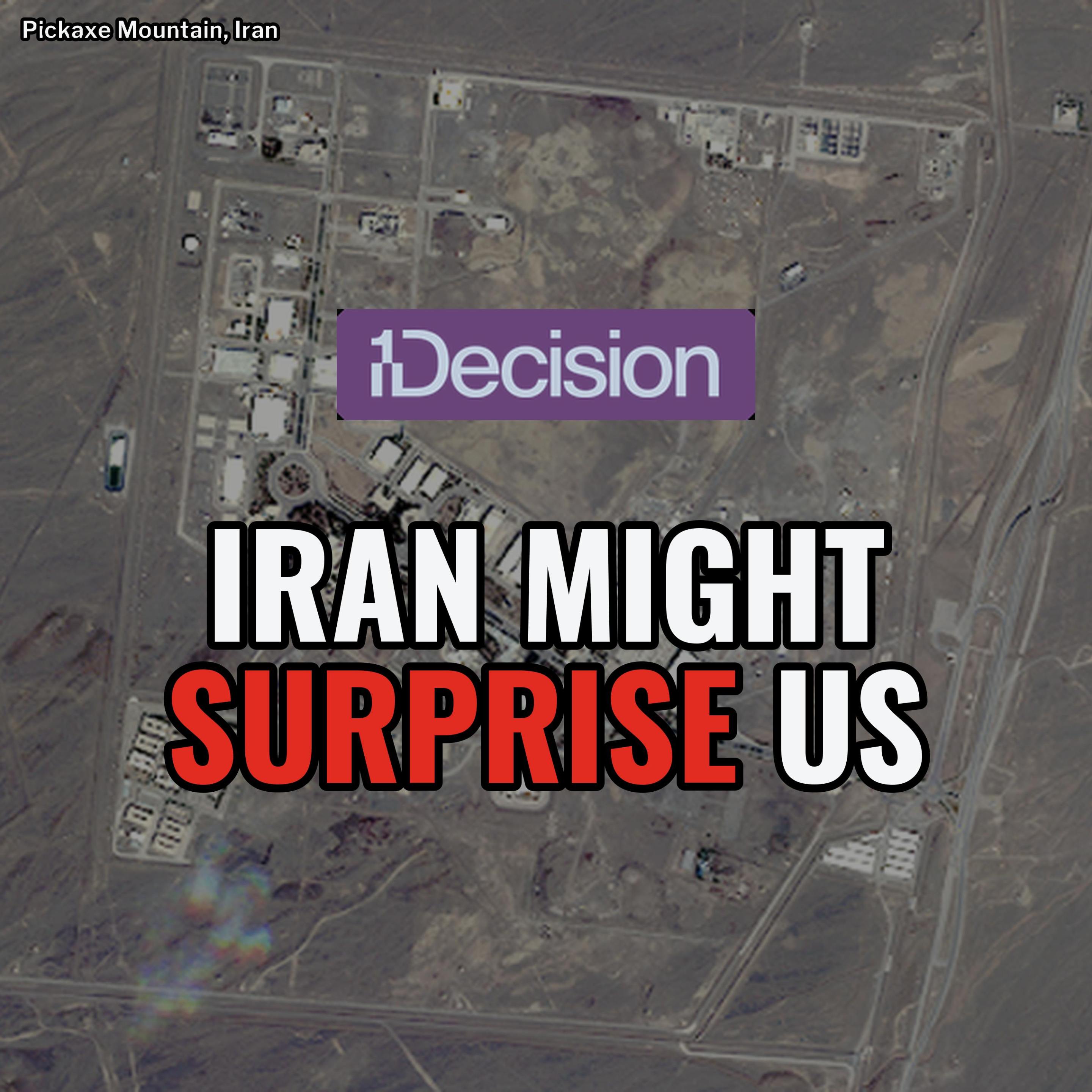
Raffini: There's this interesting report of this leaked intercepted phone call of Iranian officials where they're saying, oh, you know, the attack wasn't that bad. We really, we can recover. You know, they didn't get what they thought they did. But I'm wondering what your take is on that report.
Dearlove: Well, I think they're pretty obvious. You just set up a few conversations and make sure the Americans intercept them. I don't you know? You think the lady doth protest too much? I think the lady doth protest too much. I think the accumulation of evidence indicates that this program was pretty badly and extensively damaged. Of course, at some point in the future, it could be restarted. But the moment you restart it, you've gotta restart the construction. You've got to track in all the equipment. You've gotta track in the experts. And I would have thought, you know, from overhead, you can immediately tell when there's a resurgence of activity. I'd be very and from intercept, by the way. So I think the Iranians are in a bad position, vulnerable position, and I wouldn't give any credibility at all to phone calls, which have been intercepted. The Iranians are not stupid, let's face it.
Raffini: So I've heard a couple different things. First of all, my IAEA sources are telling me there's no way they could have moved all of it out of there because inspectors were there less than two weeks before these hits happened and all the stuff was where it was supposed to be. So there's just logistically, they couldn't have gotten it all out because they had eyes on it less than two weeks before these strikes took place. Having said that, the same source was telling me they've got the recipe, right? Like they know how to do this. They can keep killing off Iranian scientists, but they've got their Google Doc of how to do this so they can import folks from Pakistan. They can train up new folks. It is going to delay them. It is going to slow it down. But it's not like they don't know how to make it. The counter argument to that is what you were just talking about. If they now know that the US is going to just blow it up every time they rebuild this program, they may make a financial decision that it's not worth the money to keep trying to stand it up if in fact the US is just gonna keep dropping bombs on it.
Dearlove: Well, I think that's the conclusion I personally would have reached myself. The other thing is that you say they've got the knowledge. They have got the knowledge. But have they actually got enough of the kit? The ability to manufacture the centrifuges is a highly sophisticated engineering requirement. You know, AQ Khan, at one point, you know, this is way, way back when it was an issue that the Pakistanis were exporting their technology. They were creating factories with a Swiss set of engineers, and these factories, which were all separate, were designed to make little bits of the centrifuge. And the the Swiss family behind it, who got bought out and shut down, were super sophisticated high precision engineers. And I don't know whether the Iranians have been manufacturing their own centrifuges, but my guess is they're probably still getting bits from the Pakistanis. I don't know. The supply chain to set up the centrifuges was always complicated and difficult. And these things are so sensitive. And if you've damaged them and you've got to start replacing them, that's a really complicated exercise as well.
Raffini: The other factor in here is Khamenei. Does he at this point capitulate, give in, and say, all right, we've lost, which they have done once before. In the Iran Iraq war, he basically gave up and gave a speech that said, we're not gonna win this battle. We're gonna keep our powder dry and fight another day. Or does he just go for broke and burn it all down and attack the US in some fashion we have not yet seen? I don't know. What is your take? Interestingly, the woman down the hall from me in my apartment building, because welcome to DC, is Persian. She was saying when Khamenei finally came out and gave that speech for Iranian listeners, it seemed like he may not have even been in the loop because what he was saying didn't track with reality. And I said to her, but isn't that part of the bluster? Isn't that part of the game? Isn't he just coming out and say we've beaten the great Satan and we were victorious? And she said, yes and no. It was so much more than usual. I guess regular Iranians are asking themselves, like, is he even being accurately briefed on what's going on? He's been in a bunker. Does he even know what's happened? What is your read on his cognitive abilities and whether or not he's still running that country?
Dearlove: Look, he is aging. I've been sort of of the growing view that possibly if the IRGC are being diminished as the praetorian guard, you might see a resurgence of the generals in the Iranian military who, let's say, are possibly more reasonable people. And they may be sitting there thinking, oh my god. We're on, you know, we're on a track to nowhere. The other thing that not many people have talked about is the tradition of martyrdom amongst Shia leaders. So there is this sort of tradition of exoneration by becoming a martyr. So if Khamenei wants to be remembered as a Shia martyr, martyrdom is the track so that he is respected in the Shia faith, but he's not necessarily respected as a ruler of Iran, you see what I mean. And maybe, you know, he's on the point of making the Shia choice rather than the Iranian choice because he's in such a tight corner. I don't know. This is just speculative, but I think people ought to think about this possibility. And if if you ask me to guess what's gonna happen, I think the regime is in a very fragile situation. And over the course of the next six months, you could see some significant changes. I think they'll come from inside. I don't think there's an opposition, but there's plenty of people, I think, inside the tent who would like to see changes. And that's probably the most the best positioned are some of the officer corps in the Iranian army.
Raffini: Because there has been such a clampdown on any kind of protest, democracy, opposition party there, the fear is there really is no one to take over outside of this regime. So to your point, I guess it would have to be someone slightly more moderate, whatever resistance or civil structure. There's nothing there.
Dearlove: If it's like few degrees different, as you travel away from the center, the few degrees becomes quite a large angle. And I think something like that may well happen.
Raffini: The only other thing I've heard is this all makes sense to us. But if you are in Tehran and you are thinking, listen, we built this nuclear program as a deterrence so that the US would not hit us. And they came after us anyway because we didn't have an operational weapon. Watching Ukraine and how reticent the US has been to engage Russia directly because they do have a nuclear weapon, I might make the decision, screw it. Now we're going full force. Now we need a nuke because that's the only thing that's gonna protect us at this point is a functioning nuclear weapon. And it might actually have the opposite of the intended effect and spark a small arms race because if Iran gets one, Saudi's gonna want one. All the neighbors are gonna want one, and it's gonna be a problem.
Dearlove: And there's no question that it would start an arms race and it would be sired, as it were, by Pakistan and Pakistan's technology because they have already gone nuclear. But interestingly, the the Indian nuclear capability is more related to the Israeli capability, if you see what I mean.
Raffini: Yeah. I mean, the other thing is, does Iran pull out of the NPT and does it matter? Which was my question to some folks in this in this realm. They're cheating anyway.
Dearlove: Does it does it really matter if they're still members of the NPT, if if inspectors can still go in? It does matter because if you can go in, there are sophisticated ways, even if you're not being shown the right stuff by taking swabs and doing all sorts of things when you're in the country which can give away what might be going on which you haven't inspected. So that sort of expert access is incredibly important because without it, you're gonna lose the evidence you might gather. Definitely outweighs the negativity. Well, yeah, they should still have access.
Raffini: Alright. Thank you, Sir Richard. That'll do it for us this week. Please be sure to check out our feed this Thursday for our scheduled episode and of course be sure to log on to our website onedecision.com and our YouTube page for videos, extended interviews with world leaders and much much more. I'm Christina Raffini, thanks for listening.