Hosted by Christina Ruffini and Sir Richard Dearlove
Guest
Episode Summary
Chinese President Xi Jinping is firing top officials in the People’s Liberation Army at an unprecedented rate—is he preparing for an invasion of Taiwan, or simply worried about challenges to his leadership? On this week’s One Decision: In Brief, co-host Kate McCann joins former head of MI6 and host Sir Richard Dearlove to examine what’s actually happening in Beijing through the lens of UK Prime Minister Keir Starmer’s upcoming meeting with Xi Jinping. Sir Richard explains why Europe’s economic dependencies on China may be cause for national security concerns. Kate and Sir Richard also discuss what to look for in the coming week regarding potential US military intervention in Iran, and why the US’s focus on Greenland was a distraction from just that.
Listen & Subscribe
- Watch on YouTube
- Listen on Apple Podcasts
- Listen on Spotify
Transcript
INTRODUCTION
Mccann: Hello, and welcome to One Decision in Brief. I am your host, Kate McCann, and I am joined as always by my co-host, Sir Richard Dearlove. Hi, Sir Richard.
Dearlove: Hi, Kate. Yeah. Good to be on the podcast again with you. Haven't seen you for a while.
Mccann: I know. It has been a while. Great to see you. Look, there's always so much to talk about. It feels like every single time we do this, there is a wealth of stuff to pick through. But for today's In Brief, I think we both thought that China would be a good focus, partly because Sir Keir Starmer, the prime minister in the UK, is going to travel to Beijing, and he will meet with Xi Jinping in the coming week. That's a big moment for the UK in and of itself. But there's some interesting stuff going on at the same time in China when it comes to Chinese politics. What's happening?
XI JINPING'S MILITARY PURGE
Dearlove: Well, there's a continued crisis between Xi and the People's Liberation Army, because the background to this is that over the last eighteen months to two years, there has been a change in almost all of the top leadership, all the top generals of the PLA. Most of them have been sacked and disposed of, starting with the disappearance of the defense minister. So this latest change, which is now the most senior general in the PLA, who is supposedly being pushed out according to an allegation that he's passed Chinese nuclear secrets to the Americans, which sounds to me completely fanciful, you know, because a top general is never on his own. He's with his staff. He's in secure accommodation. He wouldn't have an opportunity to talk to the Americans. I think, and I've said this for some time, that there's quite a serious power struggle going on between the PLA and Xi. Okay. Xi is absolutely dominant, so we're told, but he can't be so dominant. He must be worried if he's having to push all of these people out. And almost the complete top command of the army has been changed. Now, you know, if you're gonna invade Taiwan, you would have thought you need all your top generals available, your experienced military, rather than a crowd of newbies. So I just wonder what's going on. And I don't think it's a great moment for Starmer because I think this is probably more significant in terms of what's going on internally in China than is apparent at first glance, but that's my own informed opinion.
Mccann: Well, I think it's a really important point to make because Zhang Youxia, who is this very, very senior, most senior general, who is the most recent one to have been purged, and that's the word that's being used. This is a significant moment, and it is being read as Xi Jinping clearing the way for action he may or may not want to take in Taiwan. And while I take your point about you would have thought you would want your top military expertise in place if that were your direction of travel, it seems that the suggestion is that Xi wants the ultimate control of whatever happens next and sees this as a moment to seize all of those levers of power. I mean, not since Chairman Mao has there really been a leader in place who has that much power at his fingertips. And I think, you know, given that that's the context that Keir Starmer is walking into, I mean, this is a British prime minister. We've not seen this kind of appetite for a relationship with China in quite some time. I remember being a reporter when David Cameron and George Osborne were talking about a golden age of relations with China, which lasted basically all of five minutes. I then remember Boris Johnson coming into office and deciding to strip all of the technology that Huawei had introduced into the country out because of concerns about it running the 4G network at the time. The relationship with China that the UK has had has been so up and down. Keir Starmer is basically walking into a situation that he cannot possibly know the full details of.
Dearlove: No. I don't think he does unless, you know, the intelligence is very good. And, you know, our intelligence community, the American intelligence community, and probably we would be talking to each other, has a clear understanding of what on earth is going on. It seems to me that this is probably not a great time to make the visit because the Chinese leadership, and I mean by that all the people who live in this area in Beijing, will be preoccupied with what on earth is going on. And, you know, if you just sack the head of your military overnight with a peculiar story to justify it, it does indicate there's a pretty severe problem. The commercial relationship with China is important, but on the other hand, it's highly nuanced, it's highly sensitive, and we have got ourselves into a problem with the Chinese because they're building a number of dependencies in the UK, which I think are not desirable for our national security. The obvious one is in the whole issue of energy. We cleared up the Huawei business by excluding them from 5G, so we solved that problem rather late in the day, in my opinion. And, I mean, there are other European countries which have been the same as us and have gone down this track of allowing the Chinese to create dependencies inside our economy. And I mean, I'm a great critic of our dependence on particularly electric vehicles manufactured in China because I think that's a massive security vulnerability in the medium to long term, because these cars can be reprogrammed by the Chinese manufacturer. And if you say that I'm speaking nonsense, it's exactly what John Deere, the tractor manufacturer, did in Ukraine. And I've talked about this before. When the Russians captured all these Ukrainian tractors, they just switched them off. They couldn't use them.
Mccann: And I think, you know, there are many people who've made that very same point and raised questions. And, you know, those questions also exist when it comes to wind turbine technology, for example, in the UK. There are ethical questions about the UK's reliance on solar panels, which are manufactured using slave labor in China. I mean, this government has clearly taken a view that with growth not particularly, well, I say not particularly good, it's poor, poor growth here in this country, you know, a real focus on trying to grow the economy, that China is an important part of that story. In terms of the UK heading over there, taking business leaders, is that a good enough reason to be looking at links? Because you and I talk often about defense spending, and we talk about capability and longevity of defense spending. And you and I both know that this country at the moment cannot support the level of defense spending that is required if we are going to stand more squarely on our own two feet. If the answer is China, are you comfortable with that?
Dearlove: No. I'm extremely uncomfortable with it, and I don't think it is the answer. I mean, China can, you know, if we have a good relationship with China, contribute a bit to our economic growth. But the answers to these issues lie internally in the UK, and they lie also in terms of, you know, partnerships. And we all understand that the urgency for investment at the moment because of the change in the international situation is to build up the defense budget. And, certainly, that is not an area where China is going to be any sort of partner at all. And, you know, I think the government, in a manner of speaking, have got their priorities wrong. I think it's an inappropriate moment for Starmer to be heading in this direction. There are so many other issues that should be preoccupying his attention.
STARMER ON THE WORLD STAGE
Mccann: Can I ask you, Sir Richard, you have a wealth of experience of, you know, these high octane moments and also of world leaders, you know, interacting with these people? How do you think Keir Starmer does in terms of representing this country and achieving his aims on the world stage? And I ask you that because, you know, we've just come off the back of a week of ups and downs in Davos. You know, for anybody who follows the domestic political situation here in the UK, the prime minister is not having a great time of it. There's a row over whether he should be removed from leadership that's coming from within his own party, the Labour Party here in the UK. Is he good on the world stage, Keir Starmer? Can he match up with the likes of Donald Trump's masculine presence, Xi Jinping sort of eliminating all his own critics in his party? How does Starmer stack up?
Dearlove: Well, I don't think he really is able to stack up with the big timers, you know, however pleasant or unpleasant or influential. And, you know, Xi and Trump are, I guess, in another league. But that isn't so much because of their personality. It's what they represent. I mean, okay. In Trump's case, we have this bizarre personality. I mean, I think, actually, if you look at Starmer's record, he's done rather better on foreign policy, or a little better on foreign policy, than he's done on domestic policy. And I think there's a temptation for any prime minister to focus on foreign affairs rather than domestic affairs. I remember this very, very clearly spending time traveling with Tony Blair. He loved the international stage, and you could almost metaphorically see his heart sink when he stepped off the plane in London. He had to go to a cabinet meeting with grumpy cabinet ministers with whom he had severe disagreements, or pretty severe disagreements, even within his government, which was pretty successful. But I don't think Starmer, for example, has achieved Blair's status or influence on the international stage. I think, in a way, if you judge him, his personality, his background, I don't think he's going to do that. I mean, interestingly, another Labour personality who actually has been quite influential globally because of his ideas on development, and people listen to him, is Gordon Brown. He actually had a surprisingly good reputation internationally, where his sort of domestic political reputation was not, the equivalent of being polite. So, you know, it is possible to make an impact internationally, but you've got to have a pretty clear stand, a pretty clear position. You've got to have weight behind you, both intellectually, ideologically, and in terms of state power and influence. I don't think Starmer is really in that league at the moment.
Mccann: Is that because this country is no longer in that league?
Dearlove: Well, all I would say is some people will be familiar with something called the Henry Jackson Society, and it did an audit of power. Obviously, in terms of military power, the UK doesn't count much anymore. In terms of soft power, actually, we still are a consequential country, particularly when you get away from politics and you start talking about culture and music and fashion and literature. And these things do count. So I think that the UK, with the right leadership, with the right government, still has very significant soft power globally, if it cares to focus on that and exercise it. And at the moment, it doesn't.
WHAT TO WATCH: IRAN AND GREENLAND
Mccann: So we've covered the visit to China this week. That will dominate for the UK prime minister. Donald Trump has obviously got his own domestic concerns with the shooting of another observer or protester, depending on how you want to look at it, in Minnesota. What else have you got your eye on that's coming up this week? Where else in the world should we be paying attention?
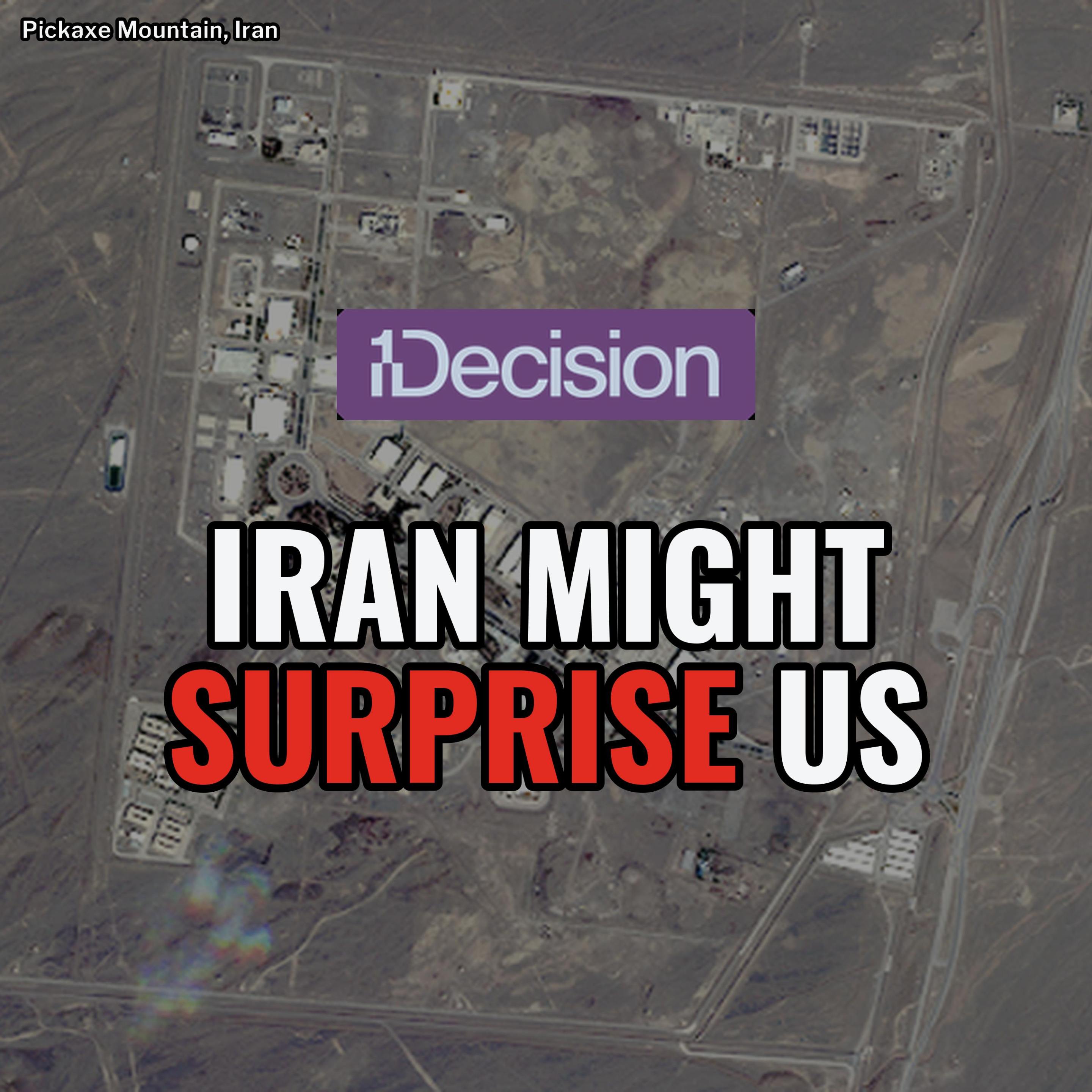
Dearlove: Well, I think I agree with our very recent interlocutor for the most recent podcast, which is Iran. I mean, clearly, we now have a US carrier group sitting in the Eastern Mediterranean, ready deployed. We have the Israelis anticipating, and I would go as far as to say, expecting some sort of American intervention. And I think we have a very, very fragile internal situation in Iran. So for me, unequivocally, the item at the top of the agenda is Iran. And I think, you know, in comparison, Greenland was a complete distraction. Trump was never going to order a military occupation of Greenland. It would have caused chaos in his own party. And I think almost would say that the whole Greenland issue was deliberately deployed for people to take their eye off the Middle East and off some of the other things going on.
Mccann: That's so interesting. So then, in your view, should we ignore what comes out of Donald Trump's mouth in the future or not take it so seriously? Because people do still take it incredibly seriously.
Dearlove: Well, I think Greenland was a terrific windup. I mean, I had certainly some of my contacts in the States, Republicans. I think that behind the scenes, a number of very senior Republican politicians told Trump, look. No way. You know? And it wasn't Rutte's conversation which was influential. It was probably what happened domestically in Washington. And, you know, it's all very well. But you can't treat a country like Denmark in the way that Trump did and be serious about it. And I think we all got far too wound up about it. But you would have to judge the issue and the sentiments expressed in relation to the issue to be able to make that sort of call. But I was certainly of the view that this was farcical.
Mccann: Well, there you have it. Keep your eyes on China this week. If you're a UK watcher, for Keir Starmer's visit to speak to Xi Jinping in person, and if you're interested in Iran, you might want to keep an eye on where the American military assets are positioned around the world in the coming days. And of course, you can catch up with all of our latest episodes, and you will hear the episode that Sir Richard mentioned there, where we will cover Iran and China and everything that's going on behind the scenes in the world at the moment. That'll be out with you on Thursday. That's all for this episode of One Decision in Brief. Thanks for listening today, and join us on Thursday for our conversation with foreign policy analyst Richard Fontaine. And if you like this, there's plenty more where it came from. You can check out onedecision.com or our YouTube page where you will find lots of additional commentaries, conversations and explainers. I'm Kate McCann, and Richard, thanks for joining me this week.
Dearlove: Thanks, Kate. Great discussion and so much that's important to talk about at the moment.
Mccann: Indeed, and there'll be plenty more next week too. Thank you very much for listening.