Hosted by Christina Ruffini and Sir Richard Dearlove
Guest
Episode Summary
In this edition of One Decision In Brief, hosts Kate McCann and Sir Richard Dearlove, former head of Britain's MI6, catch up and discuss the United Kingdom's Defence Secretary John Healey's recent announcement that Britain will increase its defense spending to 3.5% of GDP. They also go over the recent phone call between President Donald Trump and Vladimir Putin and whether the discussion was productive in resolving the war in Ukraine. Lastly, Kate and Sir Richard explore the political significance of the public spat between tech mogul Elon Musk and President Trump, and look ahead at the NATO Summit in The Hague, Netherlands.
Episode produced by Situation Room Studios. Original music composed and produced by Leo Sidran.
Listen & Subscribe
- Watch on YouTube
- Listen on Apple Podcasts
- Listen on Spotify
Transcript
INTRODUCTION
Mccann: Britain is opening up its wallet, and NATO is following suit. That means defense budgets are on the rise. But will it be enough? Because President Trump and Vladimir Putin may have been on the phone again, but it doesn't look like the end is in sight for the war between Ukraine and Russia. Welcome to One Decision in Brief. I'm Kate McCann, and I'm here with my co-host, Sir Richard Dearlove. Hi Richard.
Dearlove: Hi Kate. Good to see you again.
Mccann: We should talk a bit about the NATO meeting in the context of the UK's recent strategic defence review, because that was a really important moment for the Prime Minister, Keir Starmer, for the Defence Secretary, John Healey. We know, I know, as a political journalist in the UK, that John Healey has been pushing for more money from the treasury, more capability, more ability to stretch the UK's capability. And now the dust has settled on that strategic defense review, do you think it goes far enough?
Dearlove: No. It doesn't. Look. It's taking two easy decisions to build twelve more submarines. That's not controversial. It's a sensible decision. To modernize the warheads on our nuclear deterrent, that's to do with multiple targeting where the UK has very good technology. The question is, what else do you do? What else do you spend? How quickly do you increase the size of the military and the navy? And in the light of what's happening in Ukraine and the emergence of, let's say, new technology on the conventional battlefield, what are you actually gonna spend your money on? So there's a huge challenge, and the UK actually hasn't been very clever or very innovative in its defense procurement. So we're heading for a big cultural shift, which I think is really important.
Mccann: The economic question is an interesting one, isn't it? Because it's come out in America too, this question of how well the economy is doing, how much can Western economies really sustain. It's also that strange tension, and I'd be interested in your take on this. We've spent a long time pricing in peace in this country and in other countries, and it's almost not been a consideration. I get the sense from military figures that I speak to, they've already made the mindset shift to, okay, we haven't got that peace premium anymore. We need to stop thinking that way. But the country and maybe some of the politicians here and in America are not yet there, and they probably need to get there.
Dearlove: Yeah. That's absolutely right. I think, you know, some of them haven't realized the urgency of the situation. And it's why people like me are being asked to speak out all the time in interviews on the issue. And what's interesting is each time I do it, you know, more and more people seem to be listening, and more and more people seem to be standing up, taking notice, and thinking, okay. What what do we do? How do we manage this? But I think there's another aspect to this is we haven't really envisaged growth in terms of defense spending. But given the manufacturing capability that we have and we could revive, it's actually a really dynamic part of the economy. And we have managed to maintain the sort of serious weapons manufacturers like BAE Systems. But they're going to play an important role, I think, in the whole question of economic growth now. So it's not a negative issue. I think the problem is the clash with welfare spending, and somehow the government have got to solve this. It's very difficult.
Mccann: Yeah. And it's the same problem that other European countries have. In fact, even nations like Japan and America, that huge pressure of an older generation and not enough growth to be able to sustain paying for it and healthcare and everything that goes along with it is a big part of this conversation. But I just think, you know, in the last week or so, it's really crystallized for me this idea from politicians who've got it. Something's clicked.
Dearlove: But if you, for example, if you cut the zero carbon subsidies, you would have plenty of money for the defense budget. So you could actually do this without damaging significantly the welfare budget. And if the government could, as it were, push Miliband's approach to one side and say, we're postponing this because of the urgency of the security situation, they would have the money to spend, and they would have the flexibility. But this doesn't seem to be yet on the agenda. But they're gonna have to take some decision of that nature to solve the problem.
Mccann: Yeah, you're talking about Ed Miliband, who's the Secretary of State responsible for the green agenda in the UK, and that climate change question is such a good one, the trade off between that and where we are in terms of defence. All of the things that we're talking about play into a bit of an open wound really in America at the moment. There've been various spats between very senior American politicians about Donald Trump's big, beautiful bill, whether or not it's going to add lots and lots of debt to the US economy, whether it's the right move from a president who promised not to do that. And most recently, over the course of the last couple of days, it's resulted in this epic fallout between Donald Trump and Elon Musk.
Dearlove: Incredible. I've never seen anything like it politically. And, you know, it is rather demeaning for American politics, as it were, to see these people squabbling like two bad tempered teenagers. The issue is pretty straightforward, really. Would Trump's budget push forward the American economy at such speed that the indebtedness becomes irrelevant, if you see what I mean? Is that liberal casting of massive funds on the waters going to produce an economic boom, or is it just going to make the country's indebtedness even more severe than it is at the moment? So you can see which direction they're both coming from. It's interesting that the entrepreneur Musk, who you think would perhaps incline to Trump's view of expanding the economy through indebtedness, would actually take perhaps the more risky view and go with Trump, but he doesn't. He's saying, you know, this is catastrophic because of the heaviness of American debt globally. So let's see how it's resolved. I can't see them making up with each other at the moment. It's probably gone too far. But they need to turn down the volume, I think.
Mccann: Well, they do need to turn down the volume, not least because if you think about how many pies America has its finger in at the moment, I mean, Donald Trump specifically even, there's a lot riding on what Donald Trump says. And it struck me in the last couple of days that we spend a lot of time, not just us, all of us in the West, trying to decipher Donald Trump's phone calls with other leaders, trying to work out where is he on Russia, where is he on Ukraine. I guess the same could be said for President Putin. But Putin must sit in his office thinking, where is Donald Trump on these issues and how do I respond? And it struck me in the most recent phone call between Donald Trump and President Putin. It seemed to me that maybe Putin is learning and that potentially he'd offered, I don't know what you think about this, that Putin may have offered this sort of hand, this reaching out on Iran, almost to distract Donald Trump because we know how much Trump cares about the Iran issue and nuclear, that maybe Putin thought if I say I'll help you sort the Iran problem out, he'll stop asking me about Ukraine.
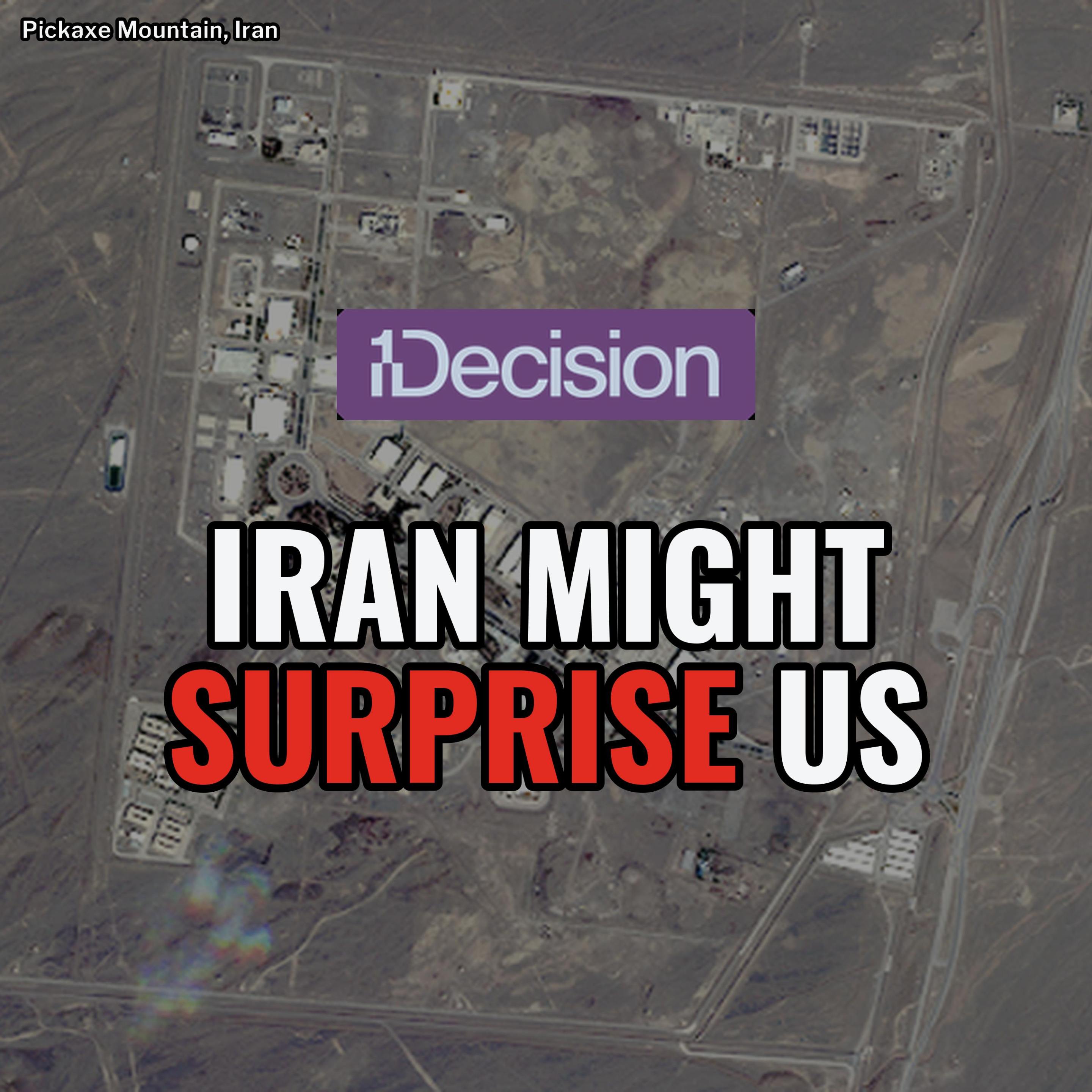
Dearlove: Yeah. Well, what's interesting is we don't know what was said on Ukraine. We have some idea which what was said on Iran. And, of course, the crucial issue on Iran, I think, is will the Iranians completely abandon the nuclear program? Because if you let them keep anything, even a civil program, all the evidence historically is they'll cheat on it. But, basically, the what the conversation seemed to be about was a nuclear weapons capability. But the question goes much deeper than that. So I'm really not sure how this is gonna play out. I mean, I'd love to know exactly what was said to each other on Ukraine. And I think what's interesting about Ukraine is the worst hasn't happened. I mean, Trump hasn't walked away, or if he is gonna walk away, they haven't actually closed off American support to Ukraine. And we're, you know, we're still on the cusp of uncertainty. I think it's becoming clearer, though, that there is more confidence on the European side that there are more nations prepared as Europe rearms to step up to the plate, and that replacing American support for Ukraine is not completely out of the question as we previously thought it was. So I think that perception of the Ukrainian issue is changing as well. There's a lot of movement at the moment on these really big strategic issues.
Mccann: And also seems to be a lot of movement from Ukraine in terms of the types of action we're seeing, you know, the hitting of the Russian planes, tackling Russian infrastructure, huge drone attacks. It seems to be that they've recognized that they need to be fighting this almost a PR campaign to prove that they are winning, just on a very sort of gritty frontline.
Dearlove: Yeah. I think that the morale point is important. But I think also the Ukrainians have realized that if the Russians are gonna go after civilian targets in Ukraine, it opens up their targeting possibilities. And they're now clearly prepared to go much deeper into Russia. They're developing the technology through drones and these very clever deployments of the drones to do some pretty crucial and difficult things. And, of course, it brings home to the Russian population that this is the sort of distant war, which is talked about more in theoretical terms, and the soldiers come from the peripheral parts of Russia, and, you know, the big white cities in Russia are not feeling so much the damage. But this is gonna change Russian thinking, I think.
Mccann: Do you think that the UK, or Five Eyes, I guess, have been involved in some of the intelligence around these big operations? Because I know the Ukrainians have come out and said they didn't tell the US in advance. And Trump said in his phone call with Putin, I didn't know anything about the attack on Russian planes. You think they could be doing this kind of stuff without our intelligence?
Dearlove: Well, what's extraordinary, I think, is if you're talking about attacking parked planes on military airfields in Russia, all you need to do is to go to Google Maps. The stuff that you can see visually through commercial satellites. Okay. There are all sorts of issues of cloud cover and there's other complications. But bearing in mind, they can gather an awful lot of targeting material from open sources. I think satellite overhead as provided to them by the Americans, tactical day to day intelligence, is also really important, probably a combination of the two. But they wouldn't necessarily, having got these sort of files from the Americans, then say, well, this is what we're targeting. I mean, if I was Zelensky and I had commissioned the intelligence community to carry out that drone attack, the one thing you don't do is talk about it. Even to your allies, you just get on and do it, and they clearly had enough material to do that significantly. But there's no question that, generally on a day to day basis, the overhead that's provided by the Americans through Ramstein and Wiesbaden, I think, is pretty important. But for planning those long term operations, you can see that that's probably done slightly differently. I bet Ben Wallace, to an extent, made this point. I don't think when we interviewed him so much, but he's certainly written about it and written about the importance of overt material. I mean, for example, you've got Musk's Starlink system as well, is really important to the Ukrainians.
Mccann: So tying all of that together then, we are heading towards NATO. We will obviously be at NATO, both of us. What do you think the main theme will be? Do you still think it will be focused on the money, or do you think we will start to see that focus on the broader question of how do we bring this Ukraine Russia war to a close if Trump is not going to be actively involved in it?
Dearlove: I think it'll be focused on the money, and I don't think the Europeans are keen necessarily to bring this war to a close at the wrong point in time, if you see what I mean. As some of the Ukrainian leadership have famously said, you know, we don't need Trump's help to surrender to the Russians. Although there'll be that issue potently in the background, it will basically be about money, and I think it will be about not making strategic concessions to Russia at a crucial point when Ukraine doesn't actually need to make them. And the Ukrainians at the moment, no way are gonna do any sort of deal on the conditions that Russia are still stating. And they haven't made one concession, the Russians, from their original military and political objectives, which is to submit Ukraine to Russian domination eternally.
Mccann: Yeah. And even if they were to seemingly make that, I suspect in the long term, we would never see that concession from Putin at any point. So, Richard, it's been great catching up with you.
Dearlove: Great, Kate. Lovely talking to you as always.
Mccann: And we will be at NATO, of course. I'm really looking forward to it.
Dearlove: Yeah. Me too. Me too.
Mccann: So we'll bring all of you up to date, of course, from our time there, and we'll bring you lots of lovely interviews too. Thanks very much for listening. I will be back this Thursday with our regularly scheduled episode featuring an exclusive conversation with General Stanley McChrystal. Of course, be sure to check us out on our socials and subscribe to our YouTube for exclusive content, interviews with world leaders, and much more. I'm Kate McCann with Sir Richard Dearlove. Thanks for listening.