Hosted by Christina Ruffini and Sir Richard Dearlove
Guest
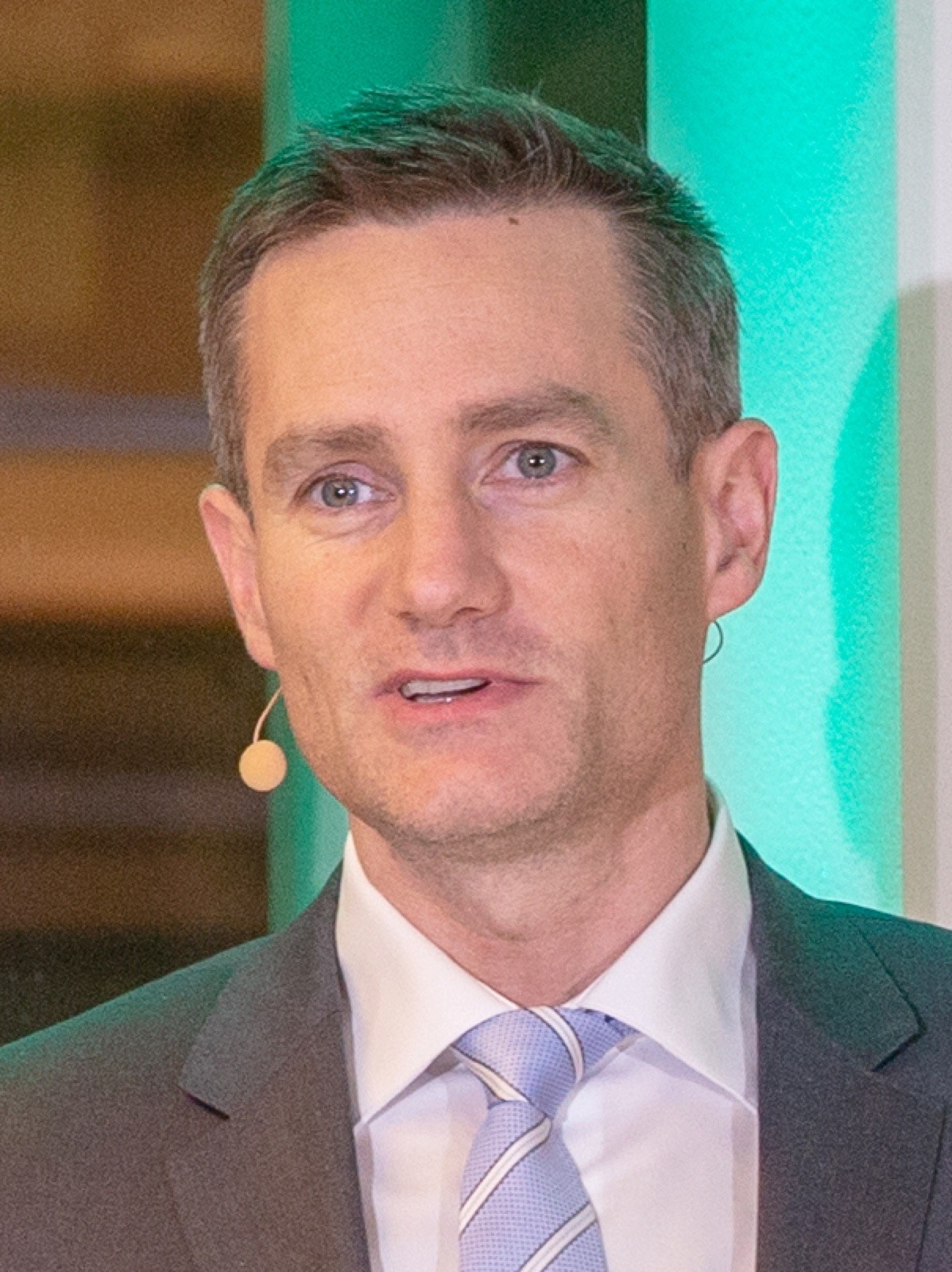
Rasmus Jarlov
Rasmus Jarlov is Denmark's Defence Committee Chair exposing the truth behind Trump's territorial claims on Greenland and explaining why Denmark has drawn a hard line against Trump.
Episode Summary
Denmark's Defence Committee Chair Rasmus Jarlov exposes the truth behind Trump's “framework of a future deal.” In this interview, Jarlov explains why Denmark has drawn a hard line against Trump's territorial claims. Jarlov admits that he's no longer sure if America would defend a NATO ally under attack.
In this episode of One Decision, we explore:
What's Trump really after in Greenland
How Trump’s Greenland threats are fracturing NATO
Why the "Chinese threat" in Greenland is "exaggerated to the extreme"
Would Denmark block a Greenland independence referendum to stop US annexation?
Europe's defense spending surge
Why allies can no longer depend on America
With trust between NATO allies at its lowest point in decades, Jarlov draws a hard red line: Denmark will not accept territorial demands from any country. He reveals how Trump's threats have backfired, bringing Denmark and Greenland closer together while pushing Europe away from relying on U.S. military defense. Plus: What "losing a friend" means when that friend is a global superpower.
Listen & Subscribe
- Watch on YouTube
- Listen on Apple Podcasts
- Listen on Spotify
Transcript
COLD OPEN
Jarlov: It's great that we've drawn a line in the snow now and said that that's the line you can't cross. You can't start to take land and territory. That's a bare minimum of respect for allied countries that you must have.
Dearlove: Is it possible that the Greenland sort of issue was possibly a faint or a distraction whilst America deployed a large fleet close to Iran? What is the deal? What's been agreed?
INTRODUCTION
Mccann: Hello, and welcome to One Decision. I'm your host, Kate McCann, and I'm joined by my cohost, Sir Richard Dearlove. Hi, Sir Richard.
Dearlove: Hi, Kate. It's very nice to be with you again.
Mccann: Great to have you with me. Now at a time when NATO faces its most serious test in decades, we're speaking to someone at the very center of that storm today. Rasmus Jarlov is the chair of the Defence Committee in the Danish Parliament, and Rasmus can offer us some real insight into how it's been on the receiving end of President Trump's claim to Greenland and what it means going forward. Rasmus, welcome to the show. Thanks so much. It's been a bit of a wild ride, I imagine, for you. How does your defense committee feel after what's been a bit of a tumultuous two weeks or so?
INTERVIEW
Jarlov: It really has been. Well, we're hoping that we can land an understanding with the American government, but we are struggling to find out what it is that the Americans actually think they need in Greenland, and of course why they crossed the line of starting to claim territory from a country that has done absolutely nothing to them and a territory that they have actually absolutely no legitimate claim to. That's the line that should not have been crossed, and of course, has real serious consequences for the trust that we have in the Americans and our relationship moving forward. But now for now, we're hoping for constructive talks about how to land an understanding on concrete projects in Greenland.
Mccann: Well, should we get straight into it? Because that's one of the questions that Richard and I were talking about before you joined us today. What is the deal? What's been agreed?
Jarlov: Nothing. There is no deal. That's one of the puzzles over the past weeks that a lot of international medias have talked about. What is in that deal that they've made? There is no deal. There has been a talk between Trump and Mark Rutte, the general secretary of NATO, but he doesn't have the deed to Greenland. He cannot give away anything in Greenland. Only Greenland and Denmark can do that, and we haven't made a deal, and therefore there is no deal. So we're hoping for a proposal from Trump, and that would be very welcome. We welcome Rutte's role as a mediator. He seems to have a good relationship with Trump. And if he can broker a deal that respects our clear red lines, then that's great. But there is no deal before we have made one.
Dearlove: Presumably, you're familiar with the UK's arrangement in Cyprus where we have sovereign base areas.
Jarlov: Yes. I've been there.
Dearlove: Presumably, you've looked into those sorts of agreement. I mean, is it something, without, you know, breaking confidentiality, of course, is something like that, you know, possible in terms of doing a deal with the Americans?
Jarlov: We're not going to hand over sovereignty over Greenland or over parts of Greenland for two reasons. The main one is that the Americans don't have any right to it. We can't accept a situation where you just wake up in the morning and you look at a piece of land and you say, well, I think I need that, so therefore, I'm gonna take it. Especially when it's a territory in a country that has done absolutely nothing to you and does not pose as threat in any way. There's zero legitimacy behind this whatsoever. And the second reason is that it's not needed. Americans wouldn't gain anything from it. They already have a right to place as many bases and troops in Greenland as they want. There's no expiry date on that. So it's not something they're going to lose, and it's not something we'll take away from them. They have that, and therefore they don't need anything more than that. It has worked really well for seventy five years with no complaints from the Americans. They just haven't used it very much, but they are welcome to move more troops into Greenland if they want.
Mccann: So go on then, Rasmus. People will be asking themselves, what's really going on here? If if America can build more bases if they want to without having to do this, what's really at the heart of this?
Jarlov: We honestly can't really figure out the motivation behind wanting to annex Greenland because there won't be any benefits from it. The entire Western alliance will be burned down if the Americans insist on taking territory from a NATO ally like us. But even if you disregard that problem and we just imagine that we sold or gave the Americans Greenland for free, there wouldn't be any gains, because they would only have more expenses. Denmark pays a lot of the expenses in Greenland today. The Americans would have to take over those expenses, and they would have a population that would be very hostile to them and would never recognize their ownership, and they wouldn't gain more access to Greenland because they already have that full access. So it really doesn't make any sense unless you start believing in weird conspiracy theories, or if you just boil it down to a simple desire to put your name on a map.
Mccann: So when you talk about you're hoping for a proposal when it comes to a deal or an agreement with America, what would that look like?
Jarlov: Well, it'd be great if they would tell us if they have, for example, a need for more military bases. We'd be happy to let them have it. I think we can even build them for them if they need us to. If they have concrete mining projects in mind, then we can talk about how to get them up and running. Then we can talk concretely about how to achieve concrete objectives. That will be constructive, and then we could have a real sensible negotiation with the Americans. As long as it's just about sovereignty, then we're not really getting anywhere because it's something we can't agree to.
Dearlove: Rasmus, is it possible that the Greenland sort of issue was possibly what I would describe in English as a faint or a distraction whilst America deployed a large fleet close to Iran? Because, I mean, one of the things that subsequently I certainly heard from Washington is that a lot of Republican senators actually said to Trump, you know, you really can't do this, and you risk an impeachment if you do. We're all aware of the sort of absurdity of the United States trying to take over the territory of another NATO member. So it just seems to me there was no sort of political logic behind it, perhaps just to make us look the other way. I mean, do you agree with that or not?
Jarlov: That's beyond my competence, to guess about the motivation and if it could be a distraction for some other political agendas. I don't know enough about that. But you start wondering, could there be other reasons? Because you can't find any logic in what's being said and done. So, yeah, you start thinking, is there something we're missing here? Is this is a completely different agenda that we don't understand? But I don't know.
Mccann: I mean, of the things that the Trump administration and Donald Trump especially have said, and you tell me whether there's any legitimacy in this, they've two reasons. They've said that because of climate change and global warming, it's now much easier to access Greenland and that the Chinese and the Russians want to do that. Now the Chinese to develop trade routes, which they might seek to close off, which would be bad. And potentially, there is the issue of mining of rare earth minerals, which could be exploited. Is there any legitimacy in either of those two arguments?
Jarlov: Very little, I would say. The Chinese threat is being exaggerated to the extreme. Trump has said several times that there's Chinese warships all around Greenland. The fact is there hasn't been a Chinese warship near Greenland for more than ten years. Like, literally ten years. The Chinese and the Russians, they don't own anything in Greenland. They don't control anything. They don't do any mining. They don't have a consulate up there. We've kept them completely out. It's not really a fair criticism to say that Denmark's not able to keep China away, and therefore the Americans have to take over. That's simply not true. We have kept them completely out. China has shown some interest in Greenland. About, I think it's about ten years ago, they tried to invest and buy ownerships of new airports in Greenland. But Denmark stepped in. Now we own the airports, and we built them. And that's how we operate the whole time. If there's been an interest from China, we've stepped in and we've kept them out. And we've done that very successfully. So I think we should get credit for that rather than get criticism.
Mccann: What about the argument about the shipping routes though, which it's not about control, it's about use of and maybe domination of?
Jarlov: I'm glad the American president recognizes global warming, that's new. I'm glad he does that, because it does really change the shipping route and the options of sailing North of Russia or North of Canada. So you can sail from Europe to Asia much faster by going north. And, of course, many ships will do that. But ships sailing that way, it does not mean that there's a threat to Greenland. I'm in Copenhagen right now. We have ships sailing from Russia out of the Baltic Sea right next to Copenhagen right now. I mean, they're literally a few kilometers away. All the time, they sail right next to our capital. Doesn't pose a threat to our country. You're allowed to sail in international waters. People are allowed to do that, and you can't legitimately say that China and Russia can't sail North of Russia. Of course, they can, and that's not a threat to anyone. So, of course, there's an increased interest, and we wanna know what's going on there. We want to monitor it, but it doesn't pose a threat to Greenland or to the United States.
Dearlove: Rasmus, what if the Greenland population voted to join the United States? You can see a scenario with such a small number of people where the US could say, well, we'll offer every Greenlander a $100,000. And that's not entirely an impossible scenario. I mean, how would Denmark then react? Because it would really be an act of self determination.
Jarlov: Yes. That's a very interesting question. That's not where we are, because the Greenlanders don't want to be bought, and they don't want to be sold. So you can't bribe the Greenlanders, and you cannot bribe Denmark to sell the Greenlanders. And the sovereignty lies with Denmark, so only Denmark can give the sovereignty away. But the Greenlanders have been given a promise by the Danish parliament for seventeen years that if they held a referendum, they could leave Denmark. In that very hypothetical situation that they wanted to leave Denmark because the Americans have stepped in to try to bribe them, I believe we would probably block that. Because that would not be something that a country should accept. Let's imagine China going to Hawaii to bribe the people there to join China. I imagine the Americans probably would block that. I don't think that's something that a country should accept. But it would be a little difficult situation. I'll admit that.
Mccann: That's really interesting, Rasmus, because there is, as you say, there is this provision for an independence referendum. And there is, you know, there is an independence movement in Greenland. You know, I've spoken to some of the politicians out there who would like to see an independent Greenland. It's not insignificant. So are you saying if they were to get their act together and there were a vote, you would just block it? You would not think it was legitimate?
Jarlov: No. Not if they wanted to be independent. But if we're talking about a targeted American campaign to sort of wrestle Greenland away from Denmark so that they could take over as a next step, I think we would have to address that somehow. But we will cross that bridge if we come to it. I don't think that's a likely scenario, because even if there was anybody in Greenland that was willing to be bought by the Americans, I don't think that point of view exists anymore after all of this because the Americans have been so disrespectful to the Greenlanders. I don't think they've won a lot of support over the past month. So I think this is a very hypothetical scenario. I don't think it's gonna be realistic. But I do think, of course, hypothetically, it's interesting to discuss that situation. Would other countries accept a similar situation? How about France goes to the Basque country to try to make them vote for independence from Spain and support the independence movement and then make them get out of Spain so they could get control over the Basque country? I don't think that would fly. How about Argentina going to the UK trying to bribe people there? There's a very, very tiny population in the Falkland Islands. Let's imagine Argentina gave them a lot of money to get them away from the UK. Would that be acceptable to London? I don't think so. So I don't think a country should accept a targeted campaign by another country to try to get them away from that country. But the independence movement in Greenland, we don't want to force the Greenlanders to be part of Denmark if they don't want to. I can't see how that would work out well. So of course we can't and we don't want to do that. So we're not blocking that, but I don't see Greenland becoming independent anytime real soon, because especially not after this, where it's really clear what the alternative to being part of Denmark is, and that is to be swallowed by the Americans.
Mccann: Has it brought Greenland and Denmark closer?
Jarlov: Absolutely. It really has. The Greenlanders, it's my impression, they've been very happy with the support they've gotten from Denmark. They can see that we care about them, and we are willing to take a confrontation with the world's superpower to protect them. So I do think definitely that we are closer now than we were before.
Dearlove: Rasmus, I've recently read that the population is in significant decline in Greenland, and that the largest number of immigrants, surprisingly, are Filipino, is English speaking Filipinos. And that, in particular, the tourist industry, which is now beginning to develop in Greenland, is very dependent on that sort of immigration. You could argue this is sort of changing the demographics of Greenland in rather a significant way because they don't learn the language, which I'm told is very difficult to speak.
Jarlov: It is. Yeah. They don't even learn Danish either.
Dearlove: Is that a sort of true picture, or is that an exaggerated issue?
Jarlov: Yeah. The largest group that's not Greenlandic depends on whether you see the Danes as foreigners because they make up 15% of the population. But other than that, I think it's true that it's Filipinos. And yes, they have the same demographic issues that we have in Europe as well with they haven't gotten enough children, so population is declining, and there's significant immigration from Greenland to Denmark. You know, a quarter of all Greenlanders live in Denmark, which also shows that we have very, very close ties. Of course, it's a challenge to get the economy up and running. Extracting minerals is not as profitable as it has been presented to be, because it's actually super expensive to extract minerals under these very, very tough arctic conditions. And tourism is exciting. Greenland is so beautiful. I mean, I definitely recommend to go up there because it's fantastic. One of my favorite places in the world, I think, so great. But, of course, it is difficult because you can only have tourism about three, four months a year. You don't want to go up there right now in January. It's simply too cold and dark. And it's difficult to make a good living off something you can only do three, four months a year. So that makes tourism challenging, but it is a good contribution to the Greenlandic economy, and it has a bright future for sure. So they are struggling, but they are making progress, especially with tourism.
Mccann: I find it really interesting that you feel that, you know, the people of Greenland and Denmark have become closer because of this. What do you think it's done to the relationship within European nations? Because I think it's fair to say European leaders reacted in slightly different ways. I mean, everybody was pretty supportive and pretty anti the Trump position. But there were very different approaches to it. I mean, Keir Starmer here in the UK, for example, was pretty steady away in public. President Macron maybe a bit more vocal, a bit more robust. Others had a different view. What's it done to the relationship between European nations?
Jarlov: I think overall, we've been extremely grateful and happy with the support that we received from our European friends and neighbors. And we've really seen who our true friends are, and that's our European neighbors and Canada. I want to mention Canada as well because they've also shown an outstanding support for Denmark and Greenland. And that means everything to us, and I don't think we would get through this without their support because it's very difficult for a small country of 6,000,000 people to stand up against the Americans. So we really need the UK, France, Germany, Spain, Italy, and Canada, and all our other friends in Europe to stand by our side. And I think they have, with the only notable exception being Hungary and Slovakia. The usual suspects, wasn't that surprising, but everyone else has been very, very supportive, and that has meant everything to us. And I think it brings us a lot closer together in Europe. I also think we're forming a much closer relationship with Canada, and I think that's gonna have real long lasting consequences, because we have to be less dependent on the Americans. We can't be in a situation where they hold power over us militarily, where they sort of decide whether Russia wins in Ukraine or not, and therefore, they have so much leverage that we have to put up with unfair tariffs and unfair trade deals and even threats about taking parts of our country. It's great that we've drawn a line in the snow now and said that that's the line you can't cross. You can't start to take land and territory. That's a bare minimum of respect for allied countries that you must have if you want to work with us.
Mccann: You've spoken about European responses. Do you still have faith in the NATO alliance? Because I know that you, as a nation, are already spending 3% of GDP on defense. I know this has been a big bugbear for the American administration. Actually, not just Trump. Pretty much every American president, you know, in recent history has said the same. The UK is still not there. Is the NATO alliance as strong as it needs to be right now?
Jarlov: Yeah. The NATO alliance is strong enough. I have 100% trust in Canada and our European allies that they would come and help any NATO country that were attacked. It could be the Baltic countries. If Russia attacked the Baltic countries tomorrow, all of Europe and Canada would be there with no hesitation, and no question about that. I don't know so much about the Americans. I don't feel sure. I think on a good day, yes, they would. But they're moving away from us, and they don't seem very committed to the NATO alliance, and there's been some statements that are very concerning. But NATO is still strong because European allies and Canada and the potential of the Americans also stepping in is still a very, very powerful alliance that Russia would be very stupid to attack. So I do still think that it has a great significance, and it is very strong. But of course, it would be more than twice as strong if we had a fully committed USA.
Mccann: And given what you've just said there about you are not confident in the US anymore in its commitment to defending a NATO ally, Article five, is it the time to be honest with one another and say, everyone needs to step up here. We need to be spending more money on defense. The UK has got a nice, you know, ideal aim to do it, but is not fully committed right now.
Jarlov: We absolutely have to strengthen our defense and our weapons industries, and we are doing that. We still have to understand that Europe alone, especially if you include Canada, UK, Norway, not just the EU, has economies that are more than 10 times larger than Russia. So if we spend 3% of defense, that's like Russia spending 30% on defense. So there's no way they can match us, and we are more than capable of protecting ourselves and to be strong enough. And we have to ensure that we are, because we can't be in a situation where the Americans abuse their military power to get advantages that they're not entitled to. The trade deal that was made last year, where the Americans imposed 15% tariffs on all European exports to the United States and 0% tariffs on American exports to Europe, is openly unfair. And Europe only accepted that because we needed the Americans in Ukraine to hold back Russia. So already there, we already lost and got into a very bad situation because the Americans are strong, and we are weak militarily. So we absolutely have to strengthen our defense, and I think we are doing that. In Denmark, we've gone from about 1.4% of GDP to now 3.2% of GDP in 2025. And that's even with a very rapidly growing GDP. We have a very good economy at the moment. And all our neighboring countries are doing the same. Southern Europe is still trailing. Spain, Italy, and even France is not doing as much as you could want them to. But Northern Europe, the Baltic countries, especially Poland, but also Germany, are doing a lot. And we are already much, much stronger than we were four years ago.
Dearlove: Rasmus, I very much endorse what you were saying about NATO, particularly the European members and the raising of their defense expenditure, and Poland obviously leads the pack and is a great example. I just wanted to mention another former Danish colony, Iceland. And Iceland isn't, of course, an original NATO member and has no armed forces. It's the only NATO country without armed forces. Although recently, I think quite a prominent Icelander published a book saying, should Iceland have an army? I mean, my own view is that Iceland should have a navy. From your point of view, because you're in a rather crucial position as the former owner of Iceland's sovereignty, I mean, is there any discussion with the Icelanders about getting them to develop, let's say, some sort of naval capability, which would be very important in terms of policing the gap between Greenland and, you know, and Iceland strategically in the future?
Jarlov: No. We don't have that discussion with the Icelanders. I think they're very sensitive to anything coming from Denmark, because they have exactly that.
Dearlove: I know that. And I should admit that my wife was born in Reykjavik, so that's why I happen to know quite a lot about Iceland.
Jarlov: Because I think exactly because of that history, we are not the ones that should raise any criticism of Iceland. But you're right. Controlling the North Atlantic is something that the UK, Denmark, Iceland must do, and today Iceland has outsourced that to the Americans, who basically have control over Iceland in military terms, which has worked fine so far. But again, now that we don't know if we can really trust the Americans to the extent that we've been able to so far, of course, it would have been better if they had their own capacities, maybe with the assistance of Denmark and the UK.
Dearlove: It's really important to control the North Atlantic. The Americans did close their base in Keflavik. Although, I think still technically it's a forward operating base for NATO. But are they going to redeploy into Keflavik as far as you know? Or I mean, I thought they hadn't done so yet.
Jarlov: I'm not updated on exactly what the Americans have in Iceland, but I know that from Iceland, you can control the waters towards Greenland and the waters towards the UK, Faroe Islands, Orkney, and Scotland. So really from the access that the Americans have to Iceland, they can already do so much. But we could also do it. I mean, Europe, UK, Denmark, we could also do that. And I think it's fair enough that the Americans don't want to do all the monitoring and defense for us in European waters. But I would think with regards to Iceland, they would consider that so crucial that they would probably want to stay there and have hands on themselves.
Mccann: Rasmus, can I ask you finally? We've covered quite a lot of ground in terms of relationships between countries in this conversation. But I think one of the things I will take away from this is your strength of feeling, your emotion actually towards Donald Trump, America, what's gone on. I mean, just from your personal perspective, how do you feel now talking to us today about it? And more broadly in terms of a country, how damaging do you think it's been for the relations between you and America?
Jarlov: It has been very damaging for our relations with the Americans. People are quite angry, and they feel betrayed, and they feel they've lost a friend. And it's a friendship that's difficult to build back because trust can be destroyed very quickly, and it takes many decades to build it back up. So it's a real loss for us that we don't trust the Americans to the extent that we used to, and we have to work to become more independent. But we can't afford to be emotional about it. We have to look at it rationally. We have to get an understanding with the Americans in Greenland, and we have to strengthen our own defense and be more closely aligned with our European allies. That's the only choice we have now strategically.
Mccann: Were you angry? Are you angry? Did you do a bit of shouting in the mirror at any point?
Jarlov: I haven't really allowed myself to become really angry because I have been very, very focused on explaining the situation in Greenland, getting the facts on the table, and also talk to the American public about the access that they already have to Greenland so that they don't need to annex the country. So I have not allowed myself to be angry, but I imagine once it settles down, there'll probably be some emotions coming up.
Mccann: Well, Rasmus, we appreciate you taking the time to do exactly that with us today on the podcast. Thank you, Rasmus.
Jarlov: Thanks a lot. Nice talking to you.
Mccann: We do lots of conversations just like this to help you get behind the story and really understand what's going on from the people at the heart of it. So if you like this conversation and you want more like this, you can find more on ourdecision.com or our YouTube page where you'll find lots more. I'm Kate McCann. Thanks very much for listening.