Episode Info
- Season1
- Episode3
Hosted by Christina Ruffini and Sir Richard Dearlove
Guest
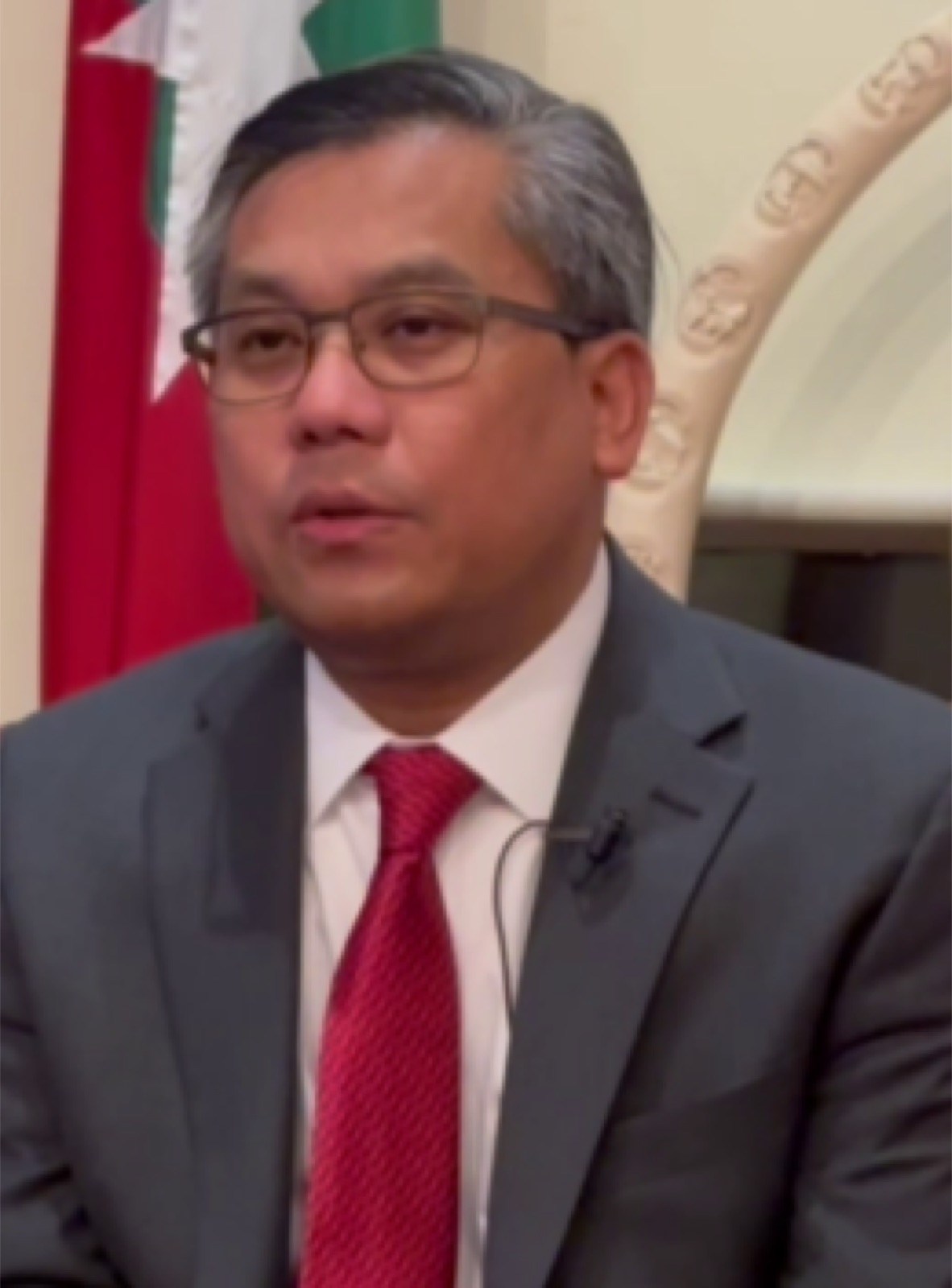
Kyaw Moe Tun
Kyaw Moe Tun is an ambassador whose country's troubled democracy crumbled in a violent coup and who was forced to risk life and go rogue.
Episode Summary
Kyaw Moe Tun’s country’s troubled democracy has just crumbled in a violent coup. Forcing an ambassador to choose a path, risk his life—and go rogue.
Listen & Subscribe
- Watch on YouTube
- Listen on Apple Podcasts
- Listen on Spotify
Transcript
INTRODUCTION
Kosinski: Hello, and welcome to the One Decision Podcast, as in you had one decision. Yes, a hard decision. And that decision would then shape things. Maybe it even did something to change the world, hopefully for the better. But outcomes are often uncertain at best. Sometimes people's lives depend on your decision, and you have to summon everything inside of yourself and jump. Here, we will talk about global politics, but not in the usual way. Because as a longtime foreign correspondent and a lover of true stories of all kinds, what fascinates me aren't leaders and those carefully orchestrated events that we all see on television. At One Decision, you will come along with us for the ride as we explore the international intrigue farther away from the bright lights and more behind closed doors. We will be observer and interlocutor in the hidden spaces of diplomacy, the once smoke filled rooms where stressed diplomats, beleaguered advisers, and sly strategists meet in the shadows, knowing that what they choose could have wide and unforeseen consequences. These humans are often the unknowns in the grand sweep of history, but as you'll hear, they are the men and women who make the decisions that shape the events that shape our world. You will hear how it all works. We're going to start this journey with the story of a now rogue ambassador who will tell us what went into his choice of that status. But first, to help us navigate those out of the way spaces of international diplomacy, I have with me someone who flourished in those very shadows, former head of MI6, Britain's legendary spy agency, Sir Richard Dearlove. Welcome, Richard. Hello. I'm here, yes. So Richard, is it all as romantic and exciting as we've set up? More so, right?
Dearlove: Well, it depends from which perspective. More so in some respects, less so in others. But I could honestly say that in that position, never had a boring day.
Kosinski: That's, not many people can say that about their work day, I think. But tell us, in the years that you served your country, you must have had to make countless decisions, both big and small, that I would imagine kept you up at night.
Dearlove: Frequent, yeah. Operational decisions, tactical decisions, strategic decisions. They come at you thick and fast. Kept me up all night. I'm not so sure about that. I think one of the qualifications for the position that I held is that you don't suffer too much from anxiety. It would be undoable if you wouldn't be able to do it if you did. So I would claim I didn't very often suffer from stress. Did you love this job? Of course I did, it was an extraordinary experience. You know it's an opportunity given to few. I was the thirteenth Chief of the Secret Intelligence Service, which was founded in 1909, and I held the position for about five years, so it's a pretty unique and unusual position, partly because you know you're responsible for the service and running the service, but the actual job has a certain amount of mythology attached to it. And of course, it gives you phenomenal access internationally, which is almost unparalleled probably.
THE FIRST DECISION
Kosinski: Thank you, sir. So let's dig into our first decision. If you follow international news, you may have heard the name Kyaw Moe Tun. Depending on where you're hearing it, a decision that he made has made him either a national hero or a traitor worthy of being murdered for a few thousand bucks. The guy is now being hunted. And today, he is begging the world for help for his country.
Tun: To save lives of innocent civilians, to protect the people of Myanmar, the international community must act now with the strongest and the, you know, timely manner.
Kosinski: Joe, as he likes to be called in the United States, was the ambassador to the UN representing the democratically elected government of Myanmar. Now, though, his homeland is suffering, teetering on the edge of civil war, and is crippled by COVID. He wants the world to step in, do anything it can for democracy, but that ain't exactly happening in this environment of global crises. Before Joe tells us what he did, Richard, help us set the scene a little. Why does this tragic situation in Myanmar matter to the world today?
Dearlove: Well, it matters geopolitically. You only have to look at a map and you understand that Myanmar is situated between China and India, let's put it like that. It's a country which has had a very disturbed post colonial past, politically fragile, therefore let's say it vibrates in relation to its geopolitical circumstances and it has vibrated pretty unhappily. So those are the geopolitics, and I think for me that would be the issue that's at the forefront of my mind. But then of course equally important is the whole human rights aspect of what's actually happened in the past in Myanmar and what's happening now. And then there's the issue of how it well I suppose this is also part of the geopolitics but how it relates to wider political events and developments. And I think what's happening at the moment in Southeast Asia is a sort of mini Arab Spring. And maybe we should, you know, discuss that as part of the issue.
Kosinski: Myanmar had only become a democracy again in 2011 after the military regime there had allowed an election ending nearly five decades of dictatorship that had crushed dissent and sparked multiple civil wars. Within just a few years then, the notoriously closed off impoverished country of 55,000,000 was opening up. International election observers were allowed in. The longtime democracy activist and Nobel Prize winner Aung San Suu Kyi had been let out of house arrest, and her party was winning elections by landslides. By 2019, Myanmar had one of the fastest growing economies in the world, but the persecution of certain ethnic minorities remained and then escalated. Over the last five years, nearly a million Muslim Rohingya people fled their homes north into Bangladesh with extreme violence ravaging Rakhine state where they had lived. We're talking villages burned to the ground, rapes and murders reported. And Aung San Suu Kyi, once the hero, the smiling, lovely face of victorious opposition, was now viewed by the world as allowing this violence to happen. Her Nobel Prize was rescinded. But everything changed for Myanmar on February 1. It all came crashing down. Another coup. The military again took control and threw Suu Kyi and other leaders from the elected government in jail.
Tun: On the February 1, it's really we got shocked, including me. Many of us got shocked.
Kosinski: Kyaw Moe Tun or Joe just passed the milestone of his fiftieth birthday and is the picture of the diplomat with his tidy look, not a hair out of place, starting to gray a bit at the temples and the occasional wire rimmed glasses. Now having to watch his country devolve from his post as UN ambassador in New York City. So as we approach what is now happening in your country, what were your thoughts? Did you have a sense that this coup was coming?
Tun: For me, a week before the February 1, I got some indication from the some ministers in the NLD saying that there was a negotiation going on between the government and the military, but it is not going very well. Since then, you know, before February 1, I already got some sort of, you know, worry. But I didn't expect that, you know, the military would do it.
Kosinski: He can't be there at home with his fellow citizens, with the young people now taking to the streets. At this point, he has a choice to make. What can he do from afar, from his position at the UN to speak to the world. What were you facing, and what did you feel like at that moment?
Tun: This sort of, you know, the vision has already come after the February 1. And so since then, I'm just thinking of what should I do, how can I contribute to the people of Myanmar and the country? So because for me, I really wanted to contribute something. And then also whatever the contribution that I made that has to have the maximum impact. That is my humble thought with regard to what would be going to do with my decision and with the military coup.
Kosinski: Now in the past, Joe himself has been called out for not doing enough to oppose the military while they were devastating the already destitute Rohingya families in Rakhine state. Today, though, he takes issue with anyone claiming that he defended the military then. He says he and others within the elected government always felt like they could find a way to pressure the military and evolve the situation without triggering another coup back when they were starting to see the Rohingya violence erupt. He says he felt for these people and that he was also shocked to find out about the atrocities that were being committed then. Now in New York, his home country falling to pieces, he decides the military no longer deserves any time. The UN Human Rights Council met on the Myanmar situation, and then Joe is called on to brief the world on the floor of the UN General Assembly on February 26.
Tun: But as you know, at the informal meeting, we cannot expect anything, I mean, any outcome from the briefing. So but for me, what I was thinking a lot is that, I want to use the occasion to have the maximum impact on the ground because our people, especially our young people, our future of the country, they're risking their own life. For me, I feel like to some extent, I need to contribute to them to make some encouragement to them. So that when it's time came on the February 26, I make myself clear that I will be with the people. I will be for the people.
Kosinski: In his mind, Joe's decision is made to not only very publicly break with the military that now ruled his country, but to publicly, directly, absolutely excoriate it, denounce the military for its crimes. At the UN, where often diplomats very diplomatically dance around the faults of their own countries or even defend them or place the blame elsewhere. This was a very personal decision and a life threatening one that had to be kept secret. So secret that he told no one, not even his wife or daughter there in New York with him?
Tun: Yeah. You know, nobody expected, that, you know, I would deliver such statement at the general assembly. So also, you know, many of my colleagues here in our mission and also even my family members, nobody knows what kind of statement I would do. If this kind of information reach to the, you know, the military side, definitely they might take, you know, some precautions, preventive measures against me so that I have to be discreet.
Kosinski: The ambassador, about to become his country's loudest dissident extraordinarily on the world stage. That morning, he set out to do it. He composed his words in secret. He says he felt sweaty and unsteady, the scene seeming surreal as he stood nervous but with determination to deliver the words.
Archival: In that regard, we, the committee representing Pyidaungsu Hluttaw, CRPH, duly asked the United Nations, the United Nations Security Council, and international community that aspire to build peaceful and civilized global society to use any means necessary to take action against the Myanmar military, and to provide safety and security for the people of Myanmar. In addition to the existing support, we need further strongest possible action from the international community to immediately end the military coup, to stop oppressing the innocent people, to return the state power to the people, and to restore the democracy.
Kosinski: So emotional, his voice broke over and over again, and he didn't hold back.
Archival: Myanmar Military has become the existential threat for Myanmar as a polity and civilized society.
Kosinski: Was it painful to you to say those words? I'm sure you never imagined yourself to be in this situation.
Tun: Yeah, it's true. Of course, you know, painful each and every word, you know, that I deliver and chose. Is of course, know that for me personally and professionally, definitely it will be affected. If I choose that direction, definitely there will be negative reaction from the military. Of course, also when I deliver the statement, it's something come out like those people being killed on the street, those people being shot dead on the street. So that make me, you know, bit emotional. You know, maybe my voice is cracking and that sort of thing, you know. Even especially in the last part of my statement when I deliver, I spoke in Burmese. So in that time, to be very fair, I have to control myself until the end of the delivering the statement.
Archival: And thank you, mister president.
Kosinski: He says the whole time he could barely control his emotions, thinking of those students in Myanmar demonstrating in the streets, training in the jungles to fight their country's military, and hundreds of them now losing their lives for democracy. He knew that his choice was incomparable to the sacrifices that they are making every single day. Imagine going out in your hometown to fight the army. That's what was in his mind that day, every word stirring the complex emotions that he was battling. Joe ended his speech with a three fingered salute from the Hunger Games movies that's now used by pro democracy demonstrators in Myanmar and in the region. I feel like that emotion that was so visible made the speech even more powerful. And how did your colleagues react afterwards? And your family, what did they say to you after you made that speech?
Tun: Yeah. Let me start with my family, you know, because they didn't know. But now what I told my wife is that please watch the UN webcast. And so that is the message that I give before I get home to the office. And then I returned back home in the evening of that day on Friday, February 26. And my daughter, when I enter into the house, my daughter, the first thing that she said, there, you your three fingers, you did the three fingers wrong because that's supposed to be together.
Kosinski: You did a part. Just like a 12 year old, right? First to know that and to be annoyed by it.
Tun: She said anyway, she said she is proud of me. So my wife also told me that she also proud of me. So that is the reaction from my family members. Of course, my mission here, you know, on that day, everyone in the mission cheers me and congratulate me for what I did.
Kosinski: Almost immediately afterwards, the military in Myanmar sent a cable to his office, first firing him and then charging him with high treason.
Tun: I expected two options. One is if they treated me very softly, they would issue the instruction to recall me back to Myanmar. Right. And then if they want to take a little bit tougher one, they will dismiss me. So they took the tougher one, they dismiss me. Right. So that I what I expected. Not only that instruction, but also the additional instruction also given to all mission. Yes. All Myanmar missions abroad. It's saying that no one is allowed to engage with me. If those who engage with me, they will be taking action in accordance with the civil servants rules and regulations. And then for the high treason, to be very frank, I didn't expect it. They find a case against me under the article, I think, one to two of the, you know, the penal code. And so that can be sentenced up to twenty years. And even though I didn't expect that, but I feel happy that they make it clear between the military and myself. I see. If they make it clear that I am not with the military. I am with the people of Myanmar. So that's the way I feel happy.
Kosinski: What has it been like to see this happen to your country, to have to watch it really from afar?
Tun: Yeah. It's very sad. And so it's sort of mixed feeling. Right? One is the, you know, very sad because we, it's our future is already we don't know what would be our future. Because you look at the economy of the country, you look at the direction, it's very, you know, uncertain. And then also but the happy thing that, you know, the people express their, you know, their willingness, their desires, their disappointment, you know, openly. Look at the millions of people came out on the street, you know, and then they engaged in the peaceful protest. You know? Each and all strata of life came out on the street. You know? Look at, you know, our, you know, celebrities. You know? Usually, they are very soft. Usually, you know, the way that they grow up, the way that their day to day life is different from what what we are. Even those people join the peaceful protest, and they express their disappointment with the military. They demand for the, you know, restoration of the democracy, the demand for the, you know, the return, the state power to the people. All people from the different walks of life came out on the streets and then against the military regime. So that is very incredible. And then also, even some analysts pointed out that, you know, the unity among ourselves have the highest ever that we have since the independence that we came in 1948.
Kosinski: Joe grew up in Yangon and always felt he wanted to serve his country, but the people, not the military. He started studying international relations, thought about being a diplomat. But when pro democracy protesters took to the streets back in the 1980s while he was in college, he didn't join them. His father was part of the Socialist Party that was aligned with the regime then. He was conservative. He trusted the government because, Joe says, he only watched state propaganda on TV all the time, and he frowned on that kind of activism. The protests and violence got so bad, though, that Joe's university was shut down. He was forced to make his own way, leaving his country, getting a job in Malaysia, putting refrigerators together. He was a migrant worker, only able to return home years later and finish school. But he says he was changed. He had seen life function in more developed countries, freer countries, and he knew he wanted to contribute to that.
Tun: To some extent, we ourselves and those in the government to some extent we make ourselves a little bit ready. I don't want to say we are ready, but a little bit ready. So that the protest that we make, whatever the measures that we make against the military is compared to 1988. To me, a little bit more organized. We can grab the support from the people at large. And then luckily because of the advancement of the digital technology that make whatever happened on the ground, it easily reached out to the international community all over the world. So that is also the advancement for the people, for us.
Kosinski: His decision didn't end with taking a stand at the UN though. Kyaw Moe Tun, after being fired and charged with treason, has stayed in his position. He's now a rogue ambassador, not leaving, but representing the people instead of the military in opposition to the regime. Now, like those young protesters in the streets, his life is in danger too. In early August, two Myanmar citizens were arrested in New York and accused of taking payments from some arms dealer in Thailand to kill or harm Joe. One of the guys who were both in their twenties allegedly took the cash to do it, $5,000. Today, with more than 800 protesters having been killed in the streets, Joe is begging, begging the international community to do what it can to restore and protect democracy, to cut off the regime. This is his goal now, to convince the world to act. What do you think right now would have any real impact on the situation?
Tun: I ask the international community to protect the people of Myanmar, and then humanitarian assistance should be provided to the people in need. And then also the shelter should be provided to those who seek refuge in the neighboring countries as well. And then the no flying zone should be declared to avoid the further bloodshed caused by the military's airstrikes. And then also the bank accounts of the military and its associate have in the bank outside Myanmar should be reviewed and cut off immediately. And then also, we ask for the suspension of the foreign direct investment until our democratically elected government is restored in Myanmar.
Kosinski: Is anyone doing any of this?
Tun: Not really yet. But I think the United States government because the government United States is leading, you know, whatever sanction imposed against the military, the United States is the one. So that is why I thank the United States and administration for their continued support. But the action that taken by the United States so far, it hasn't met our expectation yet. So that is why we will continue requesting the United States to take further decisive actions against the military, even we are talking about, you know, intervention, you know, because we really ask the international community to applying the, you know, principle of responsibility to protect in order to save lives of innocent civilians and in order to protect the people of Myanmar.
Kosinski: I remember being at the State Department and asking the Trump administration day after day, you know, why don't you put more pressure on the government and the military? This was before the coup. And one very senior state department official told me they needed to tread very carefully because they were so worried that if the US did too much in its statements or its pressure, that the military would stage a coup and democracy would be gone. And this is exactly what ended up happening anyway. It just happened later rather than sooner. You know, world leaders always make these grand statements when ethnic cleansing does happen after the fact. They say the world will never allow this to happen again, and then the world literally watches it happen again. This still happens to this day. It is one of the toughest decisions for leaders when to step in and how much. Look what just happened in Afghanistan after twenty years of US military force.
Tun: During 2018, 2019 also, a lot of rumors persistently spread over in Myanmar, in particular in Naypyidaw that the military might stage a coup at any time. So that is also a worry that we always have.
Kosinski: There are other rumors now too that Joe says can't really be verified yet, but he believes them, that the timing of this coup on February 1 may have been because a general wanted to extend his retirement age, but the elected government wouldn't let him. Then, allegedly, he had asked to be named the next president, but also a no go for what was then a democracy. Given what you've seen so far, where do you see this ending?
Tun: You know, of course, you know, as a diplomat, I believe in engagement. I believe in dialogue. Yeah. So those dialogue has to be meaningful one, not the one-sided one. So that is why we always, you know, ask for the release of our leaders and lawful detainees before any dialogue take place. And then also our basic right should be respected before any dialogue take place. That is including the freedom of expression, freedom of assembly, right to information. And even, you know, the high commissioner of human rights, she warned the international community that if we don't do anything with regard to the crisis in Myanmar, the crisis will become full blown conflict. She rightly find out that, you know, that is, you know, highly possible. Yeah. Even people are talking about civil war. Yes. So that is why as the one who's sitting here in New York, so I keep, you know, requesting the international community to take action, to take decisive action as quick as possible. So that is why I always trust that must act now to save lives, in no sense, save millions. So through you. I also like to request the international community to take action without delay, to take decisive and stronger actions against the military regime without delay. That will save lives of innocent civilians, and that will save the country. To be very frank, before, we didn't, I myself, you know, I didn't think that, you know, the military would be horrible like what they are doing now. We saw on our own eyes, the atrocity that they committed even in the daylight, even in the other area. So that really make me really angry about the, you know, the military because every country, the military is the one who protect its own people. For sure. Now in our case, it's very different. Instead of, you know, protecting people, they are killing people.
Kosinski: It must be frustrating. It must be exhausting to be a rogue ambassador at this point. And to ask for that international help, and it's so slow to come. So when people out there in the world might think to themselves, why should the world care about what's happening in Myanmar right now? What would you say? What is the answer of why the world should step in?
Tun: Because we don't want this, you know, crisis become a precedent to the other developing countries. So the secretary general of the United Nations, he clearly stated that, you know, in this modern world, the military coup is not acceptable. The military coup must fail. That is what he stated in his statement. So I fully agree with him. You know, if we let this authoritarian, this military coup, you know, go on in Myanmar without any challenge from anyone from the international community, it might follow to the other developing countries. So that is why my reason is very simple. The international community must step in to put pressure the military regime and to end the military coup in Myanmar and to restore the democracy in Myanmar. Because every one of us, we believe in democracy. We are always talking about, you know, the government is of the people or for the people and by the people. That is why we always believe, you know. That is why everybody want to go in that direction. That is why the international community must step in to save lives of innocent civilian in Myanmar. So we need really the stronger decisive action from the international community to protect the people of Myanmar and to bring the democracy restored in Myanmar. That is why we really need it.
Kosinski: In case that isn't clear, Kyaw Moe Tun, now rogue ambassador representing the people against the military government, is begging for the world's help.
Tun: To save lives of innocent civilian, innocent and to protect the people of Myanmar, the international community must act now with the strongest and the, you know, timely manner. And the military coup must fail. The democracy must prevail in Myanmar. Our fight will win. Thank you so much.
ANALYSIS WITH SIR RICHARD DEARLOVE
Kosinski: Thank you, ambassador. Joe could have made the choice to wait and see what would happen or to simply call for calm, but he could not stand to see that violence against protesters back home. And he knew from experience that a measured approach with the military would no longer prevent it from going to the extreme. He's done with that approach now. Joe still supports Aung San Suu Kyi, though, saying she tried, that her efforts did bring about democracy, and that she is the rightful leader of the country. Today, Joe's future and that of Myanmar remain uncertain. He's choosing to risk his own life to keep reminding the world. So let's bring in Sir Richard Dearlove again. What do you make of this decision? Pretty powerful one, right?
Dearlove: Powerful decision, courageous, admirable, and actually very difficult to decide to do that. Because you know, if you're the ambassador you represent the head of state, and you know you're as it were throwing yourself into isolation. But I don't want to be too cynical, but I mean I would say to a certain extent it's a futile gesture. What is it going to change? I mean it's a big news story for a week to ten days. The world moves on, he's cut off by his home country. I mean this is very provocative, but wouldn't he have been better as a person of great influence to fight the regime from inside?
Kosinski: Let's sort of pinpoint the kind of impact that taking a stand like this can have publicly. Where does it resonate?
Dearlove: It does resonate globally with those who believe in democracy and attach importance and value to the preservation of human rights. So there is an audience, there's a significant audience, and that's you know an awful lot of people globally. I think the problem we have at the moment is that you know China is pushing very hard an alternative value set and an alternative model. And if you wish, Myanmar in a way is in the front line, because it's right in the centre of Belt and Road. It's going to be a massive beneficiary from Chinese support and Chinese aid, and at the moment there is that confrontation, that contrast between two opposing value systems. I think that the decision that we're talking about you know does resonate on both sides of the argument, and okay I'm saying maybe it's a futile gesture, but we don't really know what its long term effect is going to be. I was recently listening to a wonderful solo performance of TS Eliot's Four Quartets, and there's a quotation in there, midwinter spring is its own season. And this is midwinter, the darkest time of the year. But on the other hand there is an element of light about it, there is a little bit of spring there, and you know one doesn't actually, you know, you don't know how that's going to evolve, how it's going to blossom, how it's changed, know. And I mean the end of the piece I'm talking about has unimaginable summer, zero summer I think it is. You know maybe that will come out of it at some point in time, but it's very very difficult to see the passage between those two extremes. And at the moment, it's a very dark passage that Myanmar is in.
Kosinski: Thanks so much, Richard. And the debate will continue. What responsibilities do democracies have for the freedom of human beings in other countries? Our team will be at the UN General Assembly to capture the decisions, big and small, that will have global consequences. Follow us on all podcast platforms, One Decision and One Decision Podcast on social media. We'd love for you to rate and review and send us your thoughts, as well as decisions on social media. I'm Michelle Kosinski. Thanks for joining us at One Decision to delve into the minds of those playing for high stakes and whose decisions can shape our world and our lives in it.