Hosted by Christina Ruffini and Sir Richard Dearlove
Guest
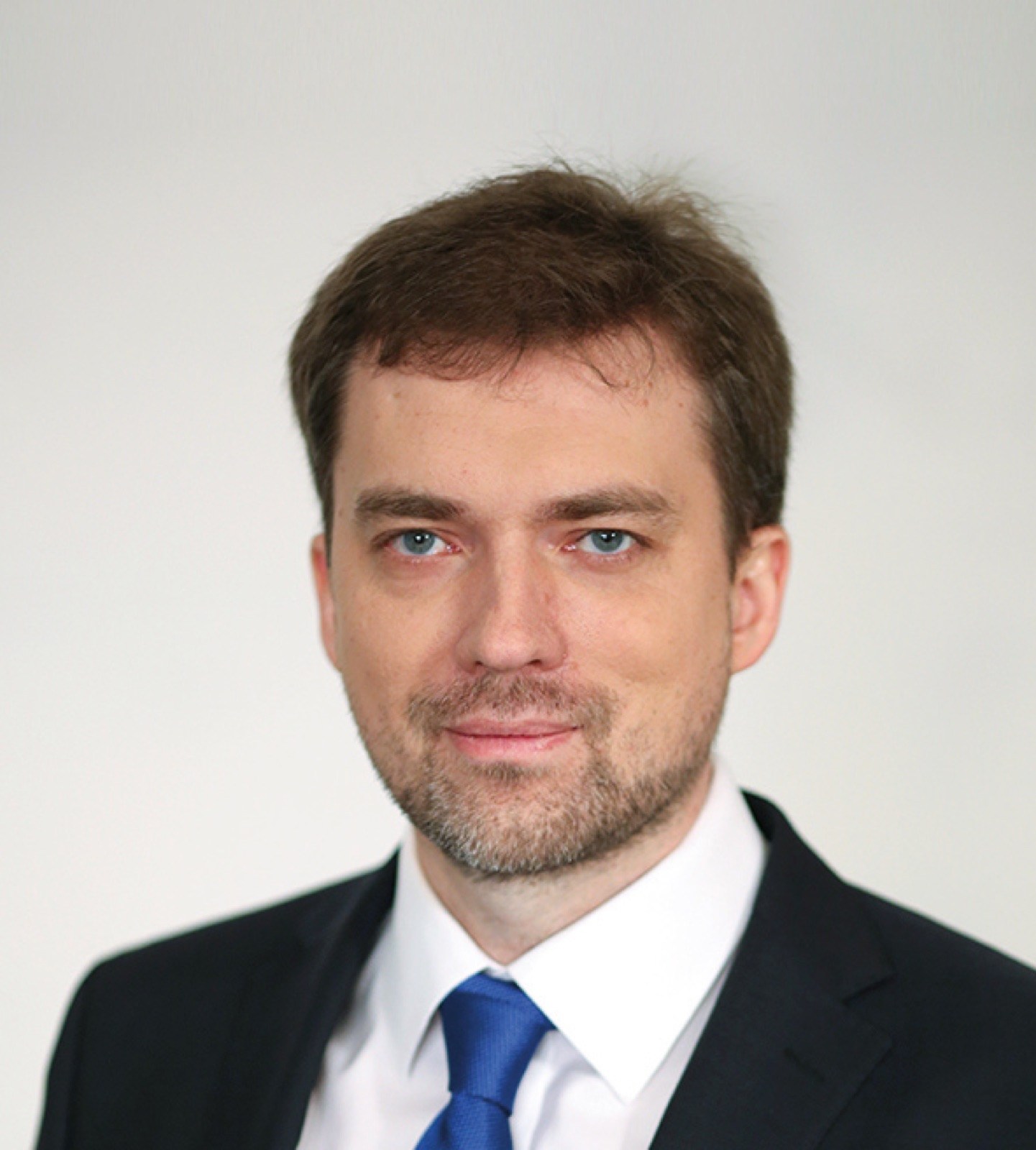
Andriy Zagorodnyuk
Andriy Zagorodnyuk is a former Ukraine Minister of Defence.
Episode Summary
In this week’s episode of One Decision, hosts Kate McCann and Sir Ben Wallce, former UK Defence Secretary, sit down for a conversation with Andriy Zagorodnyuk, former Ukraine Minister of Defence. Zagorodnyuk reveals how Russia is revolutionizing warfare with rapid weapons innovation and how Ukraine is adjusting to these changes to stay in the fight. They discuss Vladimir Putin's motives for continued aggression, including his vision for Crimea and how Ukraine's defense technology has changed the landscape of modern warfare. They also question whether NATO is prepared for a Russian attack and explore the ramifications of the war on the West and its allies.
Episode produced by Situation Room Studios. Original music composed and produced by Leo Sidran.
Listen & Subscribe
- Watch on YouTube
- Listen on Apple Podcasts
- Listen on Spotify
Transcript
COLD OPEN
Wallace: He doesn't consider losing his own people something to lose. He considers it as a sacrifice for mother Russia.
Zagorodnyuk: We are bracing for a difficult winter, and we are bracing for some technological complications, which Russia is clearly trying to bring to the front.
Wallace: Putin is in love with Crimea. He romanticizes about it. He cries over it. He declares it's Russia.
Zagorodnyuk: So is nature ready for that type of a challenge? I don't think so.
Mccann: You're talking about those tanks that have wild spikes all in him. What's going on there?
INTRODUCTION
Mccann: Hello, and welcome to One Decision. I'm Kate McCann, and today, I'm joined by my cohost, Sir Ben Wallace. And today, we are speaking with the former Ukrainian defense minister, Andriy Zagorodnyuk, and we talked at length about the future for the war in Ukraine, about what happens next when drones aren't enough and whether European allies and the Americans are going to step up on new technology. It's a really fascinating conversation about the realities of war on the ground, and it might change the way you think about the war in Ukraine and how winnable it is. There's plenty more besides that too. Andriy, welcome to the podcast. You are obviously the former minister of defense for Ukraine. So it feels like a good place to start to ask you where you think things currently stand in the war with Russia.
INTERVIEW
Zagorodnyuk: Answering this, well, first of all, thank you very much for inviting, and it's great to see you here. And Ben, it's been some time. Amazing to see you as well. So answering this is always helpful to look at operational and strategic pictures and not mix one on another. So in operational picture, Russians are trying to advance, and they do it with a certain success. But, of course, we can discuss the degree of the success, and we can discuss the cost of success, whether this success is something which they can scale and turn into a strategic breakthrough. And there are serious doubts for analytical community about that, and I agree with these doubts. Also, need to say that that defines the Russian policy right now because we do believe that they still think that they can do better. They still think that they have some better developments in the future, and that is fueling their trust into the possible success in the war, even if it's partial success. And that is why, on a sort of political level, chances for any serious negotiations are essentially, you know, these chances are pretty much like equal to zero. Right now, not even any serious talks are currently taking place, and also even formal talks are not taking place. So that's why we are bracing for a difficult winter. We are bracing for new attempts to break through. And we are bracing for some technological complications, which Russia is clearly trying to bring to the front, and some of them they're bringing. And all what matters right now for us is how to ride that technological wave, which is currently we're seeing. So unless we get leadership position in that, things would be extremely difficult. So now we have to figure out how we can do that. That's basically, in a nutshell, where we're at.
Wallace: Andriy, can I ask? Because all the way through this, even before the illegal invasion, I always used to get the feeling that people see everything through their own eyes rather than through the eyes of Putin. Right? Which was what we haven't yet seen is any indication that Putin thinks he's got something to lose. Right? He, unlike you and I as politicians in sort of European countries, he doesn't consider losing his own people something to lose. He considers it as a sacrifice for mother Russia. And I wonder whether the strategic direction of Ukraine at the moment, the strategic plan, is playing on his mind about what he could or couldn't lose. Because I took a view some time ago that Putin is in love with Crimea. He romanticizes about it. He cries over it. He declares it's Russia. Was it Crimea's Russia and Russia's Crimea, what he announced, I think, in 2014. And, you know, fighting tragically for Ukrainian lives over small settlements in the Donbas is not going to change his romance. Feeling undermined about Crimea or even threatened about the viability of Crimea, and I don't mean invading Crimea, but I used a phrase in Poland recently, choking it, making it unviable, is the sort of thing that does play on his romance and his conscience. And I wondered if you felt that, in all of this, partly being distracted by Trump and his rhetoric that we've lost, that this is really a competition and a conflict between the West and Putin, the individual.
Zagorodnyuk: Ben, you do know very well the situation. You know very well geopolitics in this region. And so yeah. So the questions are obviously spot on. So regarding the Russian losses, the, you know, I obviously cannot look at the situation from eyes of Putin for obvious reasons. You know? But if we can see what other people say about his mentality and his approach in this situation. And many smart people with some intelligence background, with just a cultural background in Russia and so on, they're saying that in the World War Two, Russia has lost 20,000,000. Now it's just one. So there's quite a way to go in terms of how he sells the sacrifice. You know? Of course, they don't have 20,000,000 to spare. But if we are trying to play the war of exhaustion, like exhaust them from the people, that's not the war where we would feel comfortable because we have much less people, and for us, each death is a tragedy. You know? So, basically, the war of attrition through the exhaustion of enemies' resources and human resources is not something where we would feel comfortable in saying, okay, let's just focus on that strategy, and let's just kill as many Russians as we can. And there will be a day when they will kind of finish up. That is not our scenario. So scenario should be leading to the operational paralysis. So essentially, within 2023, James Heappey called the functional defeat in the Warsaw Security Conference. So functional defeat means that we may not destroy Russian forces completely, but we will make sure that they are unable to achieve any results. And that's what happened in the Black Sea right now. And with some success, we are maintaining that situation. So they're trying, but it sounds like we destroyed the whole Black Sea fleet, but they cannot do much, and we still keep running the grain corridor and so on. And we're still harassing them and pushing them to the east corner. It's difficult to replicate that in a land domain and particularly in air domain, but it's possible. And we have written about that. I have written personally about this, and then there's been a number of documents about that. So if we look at that, then, of course, Crimea becomes enormous, like answering your third question, Crimea becomes enormous asset for Putin to lose. So, obviously, in this case, making Crimea operational paralysis, Crimea-based capabilities must be clearly one of our key goals. And I believe we're trying, but then we need better tech to do that. So eventually, so far it comes to tech.
Mccann: Can I ask you about — you were talking about better technology in order to do what you're talking about on land and potentially in the air? President Zelenskyy is in Europe this week. I mean, is that part of his kind of political mission at the moment? Is that part of what he's seeking to do when he's meeting leaders like President Macron in France?
Zagorodnyuk: Well, they reached a very big deal as we have seen from the news here with Macron. There's about 100 planes and missiles and many other items. So, yeah, for sure, it's a several levels. So one is the collaboration, like a strategic collaboration with France on military supplies, which obviously has an operational effect, but also political effect and partnership effect and so on. It's switching Ukraine to European systems. Despite the fact that drones are changing the war in Ukraine and probably future wars everywhere, we cannot say that drones are doing everything now. There are like massive parts of capabilities with traditional, particularly airborne, such as missiles, such as tactical aviation, which are irreplaceable. I mean, drones cannot replace fighter jets and drones cannot replace missiles.
Wallace: I think the thing that distracts lots of the public is that drones have cameras in them. Right? So all the war that we're witnessing is coming from a camera. And as a result, everyone's attention is on drone warfare. But as you say, Andriy, behind it, there's huge amounts of traditional brigades, armor brigades, large part Ukrainian army, and air force are conventional looking. It's just that what we see every day on our social media is drone because that's where the cameras are. And I think there's a slight danger that we, in discussing defense reform, which is very, very important and very needed, we also forget that there are these platforms that are really important sort of on the inner circle of defense that you need to have.
Zagorodnyuk: Right. No. Well, I mean, we cannot say that drones are replacing completely all doctrines and all types of traditional capabilities. That would be a huge mistake to say. However, we see that certain doctrines are being substantially challenged by the new forms of the warfare. And, of course, not to reflect that and ignore that would be equally a big mistake. So the truth is somewhere in the middle.
Wallace: While people have come to terms in NATO with the existence of drones, if you look at the follow through into the doctrine, it hasn't changed yet. They're still in a 1990s mindset of military formations fighting in that way. And it's deeply frustrating because you're having to change your doctrine every day and every week in response to the Russians, and the Russians are doing the same to themselves. Yeah. But if you look at NATO, it will talk about drones, and it talks about improving its resilience by using drones and using space and all these other things. But it still organizes itself with divisions, brigades, platoons, all at the same.
Zagorodnyuk: There is a big distinction between the capabilities, which are enhanced, existing formations, existing organization, and which is so substantially changing it that the previous organization becomes less relevant or, in some cases, irrelevant completely, and it needs a drastic change. So for instance, the whole ground force maneuver warfare principles are based, like modern ones, current ones, particularly after the 1990s when the precision guided munitions became, like, dominant in the Western military, it's been about a necessity of establishing air superiority before anyone moves on the ground. So you can open a NATO war fighting document, and it's, like, literally on the first chapter, you know, straight away. So I mean, you cannot imagine you're not controlling the airspace, and you're moving the armored vehicles, you're moving people, and so on because these people will be destroyed, and armored vehicles will be destroyed, and you will see a very drastic picture like Russians have seen in the beginning of '22. So but now, the whole premise of air superiority, ability to secure airspace is challenged. And it's challenged because of the air defense from both sides, but it's also because the airspace right now is not a single domain. We have echelons. We have, like, literal airspace where we have FPV drones, and we have then small, bigger drones, and then bigger drones, and then fighter jets and helicopters and so on. So which means that with fighter jets, you can establish air superiority, at least for some period of time. But on a lower level, with FPV drones, you may still have an extremely contested airspace. And so imagine moving your equipment, moving your ground forces where you think you have air superiority because, yeah, your planes are better than Russians, and so you keep Russian aviation away. But at the same time, on a level from zero to, let's say, a couple 100 meters, you have, like, an enormous saturation of the small FPV drones, which can attack each specific piece of equipment and basically stop any movement at all. That's what we see with the so-called kill zone in Ukraine these days. So is NATO ready for that type of a challenge? I don't think so because I haven't seen any single publication which addresses that properly. You know? We are not ready. So we withdrew our troops from that. Some tanks are looking like a Mad Max movie, you know, protection from FPV. And that's not how people thought the tank technology would develop. You know? They thought it would develop in something much nicer.
Mccann: Andriy, why do they do that? You're talking about those tanks that have wild spikes all over them. What's going on there?
Zagorodnyuk: Because 90% of the FPV drones which are attacking them carry the payload of, like, a few 100 grams or maybe, like, a maximum a kilo. So essentially, stopping it on a distance of, like, even half a meter gives a chance to save the tank. So it doesn't have a direct contact with the armor. And so, basically, all they're trying to do is to set up some sort of a barrier which will stop the FPV from direct impact. You know?
Mccann: Okay. And is that why — because you're also seeing Ukrainian cities now with netting over the cities.
Zagorodnyuk: Yeah. Net over the road. For the same reason. Because then they at least have a chance to stop it on a specific location. That FPV drone with a few 100 grams of explosive through the net, the net would be torn, but at least the people would survive beneath it.
Mccann: Which as you say is quite a low technology solution to a very high-tech problem. I mean, at the very start, when we began this conversation, you said to us that there would be tech complications that the Russians would try to take advantage of. What did you mean by that?
Zagorodnyuk: Well, Russians are inventing and scaling at mass a lot of new types of weapon systems, which we currently don't have the answer to. And the problem that we don't have the answer to is not even that we don't today, but is that we are trying to find the answer to Russian systems which are currently on the battle space. And I don't see any policy, any movement of joint efforts to shape the battlefield, you know, to shape the operational environment. We are sort of in a reactive mode right now. And that's, I think, our biggest issue. Because, like, let me give you example. So for instance, JDAMs weren't invented in Russia. Russia just took massive stockpiles of their aerial bombs, added some inexpensive GPS, inexpensive wings, and used gliding bombs for the duration of this war. But then now they're putting jet engine to this, and then it suddenly turns into something completely different. And then it can fly over a 100 kilometers, and that already is the mid strike drone with a payload of 500 kilos or 250 kilos, which is enormous. So then they use these Shahed drones, which they took from Iran, and they improved them substantially. So before, Shahed was a very slow sort of cheap drone with 50 or 40 kilos of payload and basically no proper guidance. Now it has artificial intelligence, it has swarm intelligence, it has 90 kilos of payload. Now it has the ability to connect to local cell network. Now it has an ability to transfer the signal to somewhere like a control station somewhere deep in Russia where we don't even know. So it's a totally different weapon right now. They are developing something which we will see in a half a year or maybe even in four months. And so the only way for us to survive, and when I say we is Ukraine, of course, but also allies because, clearly, this is a danger to much more than Ukraine, is to be leading the technological wave, you know, rather than following. For that, we need to have some kind of a joint effort of sharing technologies and so on.
Mccann: Can you explain to me what the technology is and what the problem is? What's the holdup?
Wallace: I can tell you from my side. Andriy can tell whether he understands the technology and the sensitivity. So maybe you can explain a safe description of it, and then I can explain what happened in our system.
Zagorodnyuk: Well, the description is this. So you're looking at the different types of weapon systems, and then you understand that, for instance, in NATO, in some cases, you would use a small diameter aerial bombs, you know, for instance. And this is extremely effective method because it's a precise munition, something which helped you a lot in the Iraq war, for instance. But you need a tactical aviation and, again, air superiority to deliver them to their location. We don't have that, and I don't think we'll have that in a sort of near future. So the idea is, for instance, is to develop the drones which would replace those bombs, which would basically be that bomb which takes off by itself and delivers and so on. But for that, we need technology of guidance. We need technology of this and that. And for that, we need to have an exchange with our partners, allies, in order to get this quickly, try, throw away which doesn't work, bring something which works, and quickly adapt and so on. And for that, we need a super fast policy of technological transfer.
Wallace: This is where the government gets itself stuck. So over a year ago, they required an export license for some of this equipment. And none of it, by the way, is controversial. But just like the military doctrine isn't keeping pace with technology, Kate, the legal frameworks for defense exports aren't keeping pace with the changes. So old treaties like ballistic missile treaties are defined by things like ranges. Right? They're not defined by what you and I would think is a ballistic missile like a Trident or a Polaris or a Russian, or a Minuteman. I mean, these massive things. They're defined by actually things like range. So even the most basic, dual use technology that we have in this country, when it gets to the Foreign Office, some lawyer in the Foreign Office decides that something is in breach or not aligned with this treaty, which is, by the way, written probably, I think, in the 1950s or 60s, and has been blocking defense exports to Ukraine. Britain has been blocking exports to Ukraine of weapon systems that are not remotely as dangerous as the Storm Shadow, a much longer range cruise missile, but some person with no — you know, I had no idea who their name is, some low grade lawyer in the Foreign Office is blocking both the Ministry of Defense's and BAE's requirements. And the casualty of that is Ukraine. And that's an example of our legal frameworks not keeping up with technology in the same way our military doctrine is as well. But it's quite a scandal. It's been months and months, and it's denying Ukraine the ability. And it is not — I can't tell you the technology, but it is not — I know what it is, but it is not controversial in the realms of, you know, ballistic missile treaties or indeed weapons of mass destruction. Very simple technology that should be allowed.
Zagorodnyuk: Generally speaking, there's been a number of cases when export control took months and months, and we're talking about, like, over half a year, for instance, with different results. Sometimes it's positive, sometimes it's negative. But the thing is that the operational environment in Ukraine changes so fast that by the time when the positive resolutions are coming, the technology may be not that relevant anymore, and there's something else needed. The UK right now and others are too slow. As you know, the acquisition in the military traditionally been very slow generally because people weren't much in a hurry. There's been years, and there's been a lot of checks and a lot of various bureaucratic procedures, approvals, and so on. But if we are in this situation currently here, that whole system cannot be effective like that.
Mccann: Can I ask you finally, Andriy? And it's a big question. But given everything that you've said, and I'm fascinated by the idea that this is a war of adaptation, I think that's such an interesting way of looking at what's going on right now. Is it possible for Ukraine to win the war if that adaptation, that need for innovation doesn't keep up with the demand from the front line? Can Ukraine win without that help?
Zagorodnyuk: No. I don't think so, and I don't think there is a consensus. I think that I'm sure that there is a consensus in Ukraine that we need to be leading. Leading is not just being faster. It's also being more creative, and then fast, and then scale. So it's, first of all, read the operational environment, understand how it works, that we can do. Then understand the different doctrines, different approaches, and so on in order to come up with the new solutions. And then as soon as we find something which is working, then scale. Scale like crazy, you know, like build up facilities and so on. And scale with our partners, with UK, with Europe because in Ukraine, it's not always safe. Well, it's actually always unsafe, but sometimes it's not even possible to build up something large because we know that next day it will be a hit, you know. So combining local assembling and manufacturing in the West, if we follow that path, then yes, then we certainly can win.
ANALYSIS WITH SIR BEN WALLACE
Wallace: One of the lessons that you and I shared from Ukraine in advance — Kate and I, Andriy and I went down to Mariupol. We went down to the front in 2019 together. And we're both politicians, but we were both deeply frustrated in our own systems about the institutional nature of military leadership. And that was even before the war. So what's happened in Ukraine that's remarkable that the public don't really see is people have gone around the institutionalized. At the beginning of this war, when the military couldn't produce what it was supposed to produce within Ukraine, a combination of innovative Ukrainian officers and innovative Ukrainian politicians and former politicians literally went round the problem. Some of the most innovative units that you see used in Ukraine were not there before the war, and they have been crafted by politicians, technicians, scientists, and innovative military middle ranking personnel. Our example of that was the SAS in 1940s, David Stirling, a captain in the army, didn't come from the chief of the general staff. And so the thing that we're both experiencing and the lesson that is not being absorbed by Western Europe is really that you've got to be more nimble, innovative, that it is a tech war, and it's a learning as you go. And that if you had a completely clean bit of paper, the biggest changes that will stay with us are in the places of range and in the places of technology and precision. So artillery ranges didn't really change from about 1918 till about, really, probably 2010. It was on average about 25, 24, 30 kilometers. Anything beyond 30 kilometers when I was a young officer belonged to the air force. Right? So can you imagine now an infantry soldier can fly something with a 100 kilometer range? What that does psychologically? Air superiority that Andriy was talking about came from aircraft, but now there's an in between area called drones, cheap drones, that can take away any air superiority, and that's very hard for our generals and admirals of today. Look at the Russians. They can't cope with Ukrainian drones on the Black Sea. They have no idea what to do with their ships, so they hide in a port. And we are not seeing any evidence in Europe that we're learning the lesson. And that's why actually Ukraine helps us, but we should be using Ukraine to not only help them, but to also reform ourselves.
Zagorodnyuk: So if we are talking about substantial change, I don't know, revolution or just simply like a serious evolution of the military technology. It's not like we would call that a drone revolution because drones happened before, and they existed before, and they played a substantial role before. It's the affordable, precise, intelligent mass. So it's about, like, a lot of small but very precise, very lethal weapons, which are — the budget for which is quite low, for one piece is really low. And they can deliver the charge to the target with a very high probability. It's not something which people have seen in the recent wars at all. So, yeah, that's a precise, intelligent, affordable mass. That's what's happening right now.
Wallace: If you were the president today, right, of Ukraine, and you had a blank checkbook and, you know, anything goes. What would you do to regain parts of the initiative and be able to turn where we currently are, the direction of travel, I think, towards a bit of a frozen conflict at the moment with still casualties, etcetera? What would you do both with your allies, but also with your credit?
Zagorodnyuk: Yeah. Luckily, I'm not a politician anymore. So I'm, frankly speaking, stepped out of this some time ago, but we run a think tank, and we are writing exactly answers to these questions to our guys and trying to push this through. So, yeah. So first of all, regardless of the volume of your checkbook, what we need to do is we need to develop the reading of the future trends. We need to develop such a strong capability with allies, ourselves, together with Americans, with Brits, of course, with Europeans jointly, and to try to foresee. So such a, like, R&D powerhouse, which would understand where the next technology is coming from and what is the next solution will be. And then we would need a lot of money, I have to say, but that's, again, for benefits of everybody to build these gigafactories, which can be adjustable, so then we can immediately super scale the winning solution. Having that capability makes Russia simply, like, constantly following, not leading. And that's where this operational paralysis would come from. We have that in a maritime domain, probably still. But in a land domain and aerial domain, we don't yet. With mixed success in the land domain and with less success in aerial domain. So that's what we need, I think.
Mccann: Andriy, it's been absolutely fascinating speaking to you. Thank you so much for giving your time this afternoon. Yeah. Great to see you all. Thank you so much. Thank you very much. Stay safe, Andriy. Well, that's it for this episode of One Decision. Thanks very much to Andriy Zagorodnyuk for joining us on the podcast today for that fascinating discussion. And if you enjoyed that, you can find plenty more episodes wherever you get your podcast from. You can visit onedecision.com and on our YouTube page, where you'll also find all of our short episodes, which give you a bite sized take on what's going on in global affairs. Thanks very much for listening.