Episode Info
- Season5
- Episode4
Hosted by Christina Ruffini and Sir Richard Dearlove
Guest
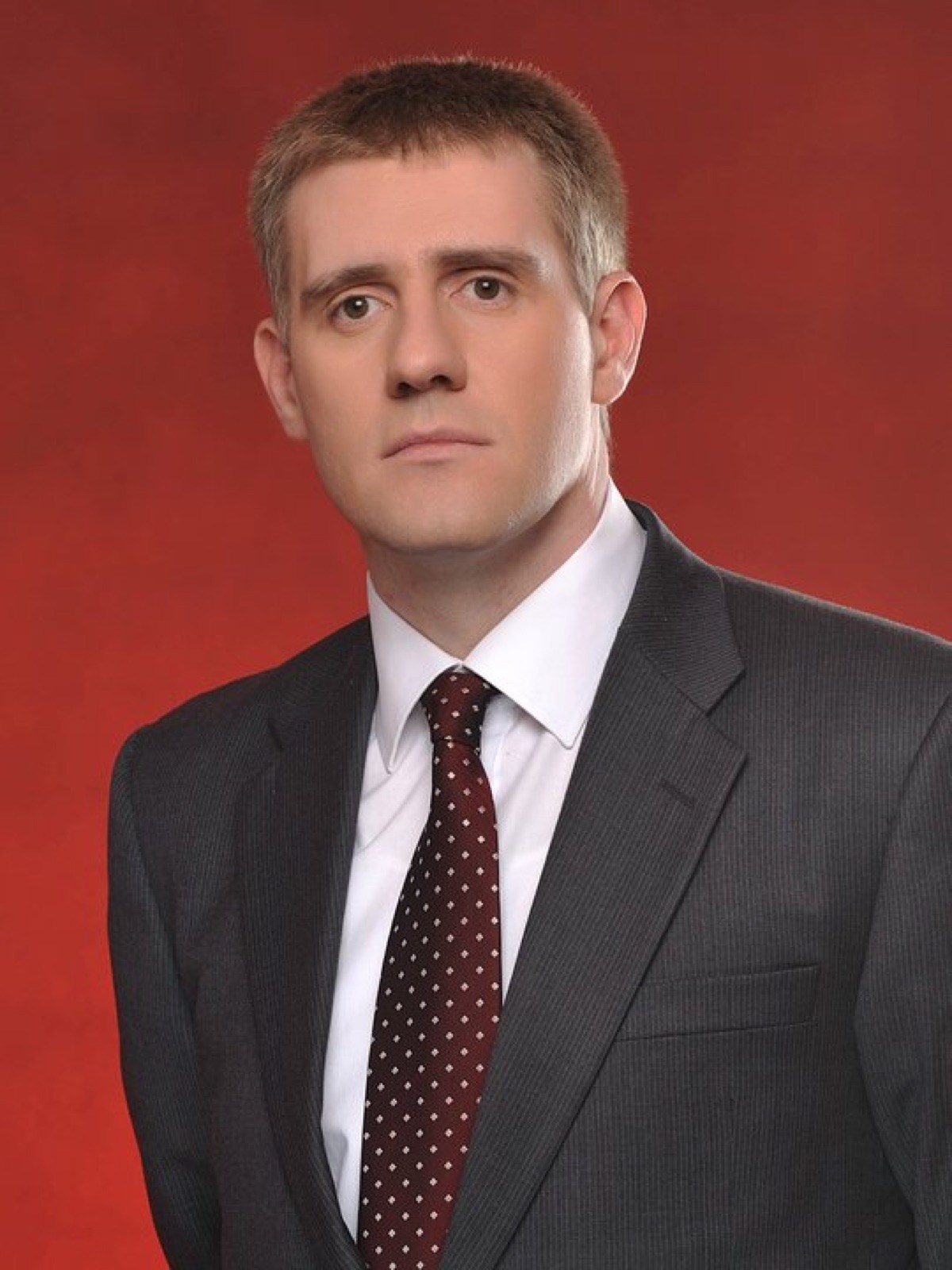
Igor Luksic
Igor Luksic is a former Montenegrin Prime Minister who shares challenges and lessons learned from independence to NATO integration.
Episode Summary
Montenegro is a young country where the stakes are especially high as the United States along with its NATO allies look to prevent a further Russian invasion of Ukraine. Former Montenegrin Prime Minister Igor Luksic shares the challenges and critical lessons learned from their independence to integration into NATO with our guest host from the Wall Street Journal, Vivian Salama. They take a close look at the current crisis in Ukraine and how the experience of freeing itself from Russia's nexus may provide valuable recommendations and even a roadmap for other nations.
Listen & Subscribe
- Watch on YouTube
- Listen on Apple Podcasts
- Listen on Spotify
Transcript
INTRODUCTION
Salama: Welcome back to One Decision. I'm Vivian Salama, your guest cohost for today. I'm joined today by Sir Richard Dearlove, the former head of the British Secret Intelligence Service, MI6, for an extraordinary discussion about Doctor Igor Luksic, former prime minister of Montenegro, and a decision that he made that's helped shape the world. Sir Richard, great to be with you.
Dearlove: Vivian, very pleased to join you and I look forward to our discussion. There's a lot of material relevant to the present moment.
Salama: Well, there's no shortage of things to discuss these days, especially in the world of national security and intelligence.
Dearlove: Absolutely.
INTERVIEW WITH IGOR LUKSIC
Salama: Hi, prime minister. How are you?
Luksic: Hi. How are you, Vivian?
Salama: Mister prime minister, thank you for joining us. It's really an honor to talk to you. And, obviously, it's been a very eventful couple of months in your neck of the woods. And so we have a lot to talk about. And you, of course, have served as Montenegro's fourth prime minister from 2010 to 2012. You also served as foreign minister and a number of other roles you had, including your incoming role as secretary general for the Regional Cooperation Council this year, among a number of other things. I wanna turn our discussion probably focus largely on some of the events taking place in Eastern Europe right now. The stakes are quite high this time for The US along with its NATO allies, which are looking to prevent another Russian invasion of Ukraine. Of course, Montenegro became the twenty ninth member of NATO back in 2017, and so your country is very much involved in a lot of these discussions to prevent any kind of invasion.
Luksic: Obviously the situation is serious and complicated. And it's been so for any number of years. Going back to the invasion of Crimea back in 2015, when Montenegro was not yet a member state of NATO. And again, the complexity of the Ukrainian situation, I have to say, cannot resist by drawing some parallels and talk also about the complexity of the Montenegrin situation, because of historical background, because of relationship with Serbia, because of Russia being, for many centuries, a big Slavic brother who was there to protect small Slavic brothers from the Balkan region against the Turkish Empire, or Austro-Hungarians, or whoever was important player at what time. And there are so many, I think, parallels that one can draw between two situations. Of course, the invasion of Crimea was the game changer, because it put everybody on an alert, put everybody on a different narrative, because you don't, just like that, violate international law principles, at the same time, you call upon all those principles when defend your position, either within the UN Security Council or OSCE, European security umbrella, and so on and so on. That's why not only because of the security situation, but it's also economic impact and repercussions in many different fields, we all really hope that the discussion between the two will be more substantial and would lead into something which is very concrete. But again, going back to the situation in which we were as an aspiring NATO member, so a couple of years before we got the invitation, many eyes were turned to Montenegro and how we would behave ahead of the decision of the EU, or actually, in the wake of the decision of EU to introduce sanctions against Russia. Montenegro was put in what was, to many people, an impossible situation, where you need to choose between your future and your alignment with the EU foreign policy. And by that point in time, we had had 100% alignment in all international issues. And on the other side, many people were like, well, but you see there is economic interest. There is historical background. It's so complicated. How can we explain that to many of our people, many of our population who actually still see Russia some particular lens, let's put it that way.
Salama: And Montenegro was put in a very, as you say, the very awkward position between the EU and Russia at that point. And Russia is accused of being behind an attempted coup in 2016 against prime minister Milo Djukanovic, among other things.
Luksic: Exactly, exactly. That came afterwards as sort of a reaction, including because of our decision to introduce sanctions and relentlessly continue our road towards membership into NATO. And that was a very interesting period of time, a very interesting sequence, let's put it that way. As again, talking to many ambassadors of the EU and so on, we kept receiving the same message. Listen, now is the time. We know it's complicated, but you need to take your decisions, and that's it.
Salama: What was the big takeaway of that? You say that there are lessons learned. What were those lessons that Montenegro learned during that period?
Luksic: I think the main takeaway is that you actually do not play with your key ambitions, key goals, key principles. And for us, since regaining independence and since passing the Declaration of Independence, it was about European and Euro-Atlantic integration process. And here and there, we had different and difficult decisions to take. But I think it was in all of those situations, it was relatively easy because we knew that without taking those difficult situations, there wouldn't be any progress towards membership into the NATO or eventually membership into the EU. Because on this one, it was about aligning ourselves with EU, and it was not really aligning ourselves with NATO. So many times, and when key decisions were taken, both of those decisions straddled between the two, because it's very much aligned between the two. Interestingly enough, there were a lot of people, not only the opposition, but some NGOs, the church, and so on, who actually opposed anything that Montenegro might do to confront Russia. Because historically, it has been a very important benefactor to Montenegro, and so on and so on. And I mean, that's true to a big extent, because especially throughout the nineteenth century, Russia was kind of a guarantor of the Montenegrins' de facto independence. The Jure, we won it in Berlin in 1878. But in between, there was Russia, very important guarantee.
Salama: One of the biggest grievances that president Putin has repeatedly stated is the extension of US and NATO military exercises and other activities into Ukraine. He sees those activities as crossing a red line, but The US and NATO, first and foremost, believe that they're supporting an ally. Second, they believe that those reinforcements were what was missing in 2014 when Crimea was invaded. Why do you think president Putin believes that this so called red line has been violated? And how do you navigate around that situation?
Luksic: I think it's going to be very hard to build consensus over further expansion of NATO. Montenegro joined in 2017, as you mentioned, and then following the very difficult and decades long problem North Macedonia had with Greece. After that having been resolved, North Macedonia was admitted. But I think both of us, both North Macedonia and Montenegro, were in a way in a different position, being on the Western Balkans, being still a little bit far off from Russia, being your immediate neighbor, and so on, made things a lot more different. When you talk about Ukraine or Georgia, which has been a similar situation with the problem with Russia in South Ossetia that took place in 2008. One can draw parallels again with that situation, Donetsk region. Crimea is most evident or example of it. But I think given the existence of frozen conflicts, so to speak, in those countries which aspire to be or would like to become member states of NATO, I think creates a lot of ambivalence within NATO due to different reasons. One of the obvious reasons is that I mean, Russia is, security wise, it's still a giant. Their economy may not be that heavy loaded. Their economy is somewhere like the Italy's. But the country is vast, and nuclear power and so on and so on. And plus, interests have also been very much present. And traditional economic links between some of Europe's countries and Russia have always been very strong. And democracy operates through a myriad of networks, which is not only direct or indirect representation through your senators, or congressmen, or congresswoman, or whatever. It's also interest groups that behave in their own interests. And it's always very complicated. So honestly, I'm not sure whether that consensus can be built, especially if security concerns are going to grow. And I don't think that anybody's interest after seeing several twenty first century examples of military interventions and the follow-up, I don't think that anybody's particularly interested in going into military adventures. So I think that many would rather opt for alternative mechanisms, economic sanctions, and stuff like that. But again, there is also a very fine line you need to walk between what are geopolitical or security issues, and economic impact or economic repercussions, and those vested interests and so on and so on.
Salama: One of the things that the Biden administration keeps talking about is deterrence, and it's partially a reflection from the lessons that they learned in 2014, keeping in mind that President Biden was vice president at the time and also many of his top advisers in the administration were around him then and lived through the crisis. And so they keep saying now that they're trying to do more in advance of an escalation, in advance of an invasion, including threats of sanctions, including military support for Ukraine. And so do you see any of this working so far to deter president Putin, or do you think that his ambitions with regard to Ukraine go beyond what the EU and The US and NATO can really do?
Luksic: Well, I think as a matter of principle, I think that approach makes sense. You know, in 2014, when there was a lot of discussion about, you know, marking one hundred years since the beginning of the First World War, which started in the Balkans. And the same year when also Crimea happened and so on, there was a lot of talk about the need to take a different approach for what was, for example, lessons of First World War, let's put it that way. Because once it escalates, as you know, it's terribly complicated. So, let's see if it will work, and let's see if the whole strategy has been kind of put together, but already a little bit late, because would you wait until mass military has been placed along the border with Ukraine? Or shouldn't you have already done some activity or try to work out some approach if we're talking about this deterrence before it escalates. Because one can argue that even putting such a big army along the border is already escalation. So what's the next step? Next step is obvious. Is the next step obvious intervention or invasion? So, one can take different views over this, but I think as long as people are talking, that's good.
Salama: I mean, to ask a blunt question, do you think president Putin views capturing Donbas as unfinished business for him? Is it part of his legacy?
Luksic: Well, I'm not so sure, because I think what probably President Putin would prefer is having the whole Ukraine under Moscow's, I can't say rule, but under Moscow's clear influence or something like that.
Salama: Fair point.
Luksic: You remember, at one point, he said that one of the geostrategic catastrophe was dissolution of the Soviet Union. Actually, he obviously views himself as, probably on equal terms, you would put Peter the Great, or Catherine the Great, Czar Alexander I, and so on. Someone who's been around for already twenty plus years, who intends to stay on board for another decade, let's put it that way. And he's probably thinking towards, well, my historical role is to build back what we have been, make sure that we don't lose what we've been building for the last five hundred or six hundred years, one thousand years, as he says, despite whatever historic ambiguities, but we don't have enough time for that. So in my view, it's actually even more complicated than pure transactional aspect of whether I'm happy with just chopping off part of or piece of Ukraine or chopping off piece of whatever Georgia or this and that. You see what I mean?
Salama: Absolutely. One of the issues that keeps coming up in my conversations with US officials is Russia's two pronged approach, at least their concern of Russia's two pronged approach to this conflict. On the one hand, the potential for using energy and gas specifically as a weapon, and secondly, the weaponization of migrants. Talk a little bit about these two issues. Is it a concern for Montenegro as well as Europe more broadly?
Luksic: Well, as far as Montenegro is concerned, well, not that much. I don't think we've been on, I mean, see migrants here and there. But since 2015 and that large migrant crisis, I can't say that we've been so much affected by it. And the same accounts for energy. When I say energy, I mean oil and gas in particular, because most of Europe is actually very much frightened by the fact that any deterioration of relationship between Europe and Russia may actually lead into terribly high gas prices, something we've already seen, and stuff like that. Because Europe has not yet been able to end up energy transition and move away substantially from either coal based or gas based economies. And there is still a few more decades to fork, to make sure that Europe has accomplished the talked about energy transition. But in the case of Montenegro, we're not that concerned because most of our energy comes from electricity. And we are actually on the road to make use of alternative renewables, such as solar, which is gaining a lot of prominence these days, wind and so on. And being a small country where energy consumption is also very important, that's been growing. But I think we have options that do not put us at any complicated situations. But our immediate neighbors, like Serbia, they may suffer to a certain extent. And let us not mention other countries. The more Eastern you are, the dependent you are. And that's really a very big problem.
Salama: Another issue that's come up quite a bit, and the administration, the White House has said numerous times is that they're becoming more keenly aware of Russia's use of disinformation as well as its election interferences to destabilize countries around the world, but particularly those in its backyard. Montenegro has definitely had experience with this. If you could talk a little bit about what you learned through those experiences and how that reflects on the situation in Ukraine as well as other countries around the world.
Luksic: Yeah. Well, it's, I mean, even The United States have witnessed that at full speed, so to speak, meddling into the electoral process was later on discovered. But it's not only United States, other countries that belong to traditional democracies, Western liberal democracies suffered from that sort of interference. And we're talking about countries which have sustained democracies for already a couple of centuries. And can you imagine then how fragile the systems of new democracies are? Because don't forget that Montenegro has been a very, very new democracy. And despite the fact we were independent in the nineteenth century, all along until 1918, when we were submerged under Serbia and then joined the first Yugoslav Kingdom, people were really never democracy before setting up the new Montenegrin independent nation. And so we're talking about past couple of decades. So there is a lot to learn for us, but there is also a lot to catch up to make sure that we are resilient. Because resilience, to me, equals quality of institutions. And unless institutions, and when talking about these institutions, I'm also referring to checks and balances within the system. I'm referring not only to formal rules which are stipulated in your constitution, it's also spirit of democracy. It's also informal rule of law, rules that one needs to obey to develop political culture. So we are still not there yet, and we still have to invest a lot of efforts to get there, so to speak. So if we're talking about such fragile countries, then one can imagine how very targeted interference and malign interests or ambitions can run amok your whole political system.
Salama: And so corruption, with regard to government infighting and Montenegro's journey, now successful into NATO, but also its ongoing effort for EU integration, how do those issues play out?
Luksic: Exactly. I mean, obviously, we're not there yet when it comes to building our institutions, eradicating corruption, and so on and so on. Of course, one can argue that no country in the world is fully immune or protected from corruption. Corruption always finds its way to work somehow. But again, I'm going back to the quality of institutions, which is very important firewall from those malign destructive forces which operate in every society.
Salama: Well, Montenegro is evolving, but it's also still ruled by a leader who in one position or another has essentially ruled the country for thirty years now. And there's a large percentage of Montenegro's population that have never known a time without Milo Djukanovic at the helm of government. And so how do you work toward EU integration when you still have some of those old guards in power?
Luksic: Well, I mean, but yeah, he's now in the position of president. President, according to our constitution, has very much limited authorities, and his term expires next year. So it was probably also Djukanovic's ability to adjust, to politically evolve as time passed by. Even from late '90s, when he picked the Westernization road, he has been on that road. One can argue that foreign policy was very much aligned to that ambition, but internal policies suffered from deformations of different kinds, inability to complete the rule of law system, and so on. It was my government that opened accession talks to the EU. And in the course of the following years, we managed to open, not only my government, but the government after the one I left managed to open all the negotiating chapters with the EU. And it's still an accomplishment. Fine, one can argue, well, but that's only half of the road and so on. But it's complex. It's tough. Now, the focus on rule of law is much stronger than it used to be in case of some other enlargements. So, you want to make sure that a country really deserves that invitation to join EU. On the other hand, you see the complexity of the EU, especially post Brexit EU. It's also a compilation of problems, let's put it that way, with some mavericks like in Hungary or Poland, actually putting to test some of the validity of some of the key principles on which even EU is based. So this delay of enabling new member states is also caused internally by some of the challenges even EU faces. So, in principle, I agree with ones who say, well, Montenegro has not yet done enough or has been having this, let's say, problem with the quality of our political system for many years. But let's not overdo it. Let us not underestimate the importance of other contributors to all this. In a small country like ours, especially now with political changes, our political system will further evolve. If you ask me, as a bystander and now watching from outside rather than being a part of the inside game, I think today, we see even some vulnerabilities which are even more visible than a few years back. But let's hope that this is part of the process of adjusting to the fact that political systems are based ever changing governments, ever changing coalitions, and so on and so on.
Salama: Switching gears for a minute, you kind of flicked at this earlier. I want to talk about China. Lithuania has been embroiled in somewhat of an unlikely confrontation with China in recent months as it attempts to push back on Chinese influence in the tech sphere and the security world. And China's increasing influence in smaller countries around the world like yours is becoming a primary topic in foreign policy circles. And so just talk to me a little bit about finding a balance between engaging with China on the one hand, which so many countries believe is imperative. And this is a huge issue in Europe in particular, which is finding that balance between cooperation with China, engaging with China, but also confronting its malign or unfair practices.
Luksic: I mean, talking about China, we're talking about the country or a culture that has seen thousands of years of civilization. So, the only comparable that belongs to the Western world is if we'd like to draw our beginnings to Mesopotamia times, Babylon, and so on. So that's a comparison. And I think one of the issues with the Western world is inability of this intercultural understanding, which has actually probably produced the situation or the context like it is today. Because probably, if you talk to Chinese leaders or to Chinese people, all of a sudden, they will talk about a number of mistakes that the West has made, or security threat that they feel have been imposed on them, and this and that. On the other hand, if you talk to the Western people, then they have obviously their own part of the story, and they will put emphasis on some of the classic examples of where those potential time bombs, like the situation of Taiwan or Korean Peninsula and so on, and also the Chinese Sea and so on. Because Western people and Western countries are sometimes too transactional, whereas the Chinese, as you know, their time horizon is much different. They talk about centuries, whereas we talk about years or decades. And this fundamental discrepancy somehow needs to be resolved in order to move forward. As far as Montenegro is concerned, we've seen that interest. And especially, it was last year, there was a lot of discussions about whether Montenegro as a small country has potential to fall into that trap highway, because credit that the government took from the Chinese Exim Bank to build the highway, which is part of the corridor between Montenegro and Serbia, decades long story, which in its first piece started to materialize over the past few years. Back then, when decision was taken, three options were discussed within the government. One was the American Bechtel company. The other one was classic approach together with European investment financial institutions. And the third was the Chinese loan. And when three offers were compared, the European approach was a lot more gradual in terms of do it piece by piece gradually. You're not ready, your fiscal capacity is not there yet to make a big highway right now, and so on. Whereas the other two were in principle very much similar. It was only that Bechtel's offer was, when some figures were compared, a lot more expensive. Well, I don't know right now, after five or six years, if you draw the line, how the calculation stands there. But I'm just talking about the logic of the decision, which was probably not the ideal back then. But right now, when I also hear the stories about the debt trap, and I was Finance Minister, and I pretty much know the structure of our debt. Repaying this loan, which is, let's say, around $50,000,000 or euros per year, compared to hundreds of millions of bonds that you need to roll over pretty much every year or every two years. Let us be both pragmatic and rational human beings who try to make best of the responsibility that we've received from the people who elected us. So that's my take. I think the more discussions, the more honest discussions, the more understanding, I think the better. Given the complexity of this multipolar world, it's obviously not easy. But whereas Russian position is a bit more destructive, in the sense that they would not hesitate using their special forces for this and that. Sometimes I get the feeling that the Chinese just want to make sure that everybody accepts them, that they are equal partner in the new world, and that people need to discuss. And one of the bright examples was the joint declaration from Glasgow, where The United States and China came together with the joint declaration about how to confront the climate change. That's a good example, and I believe we need more of that.
Salama: So you do believe that there is a difference between, say, Russia's aggression toward Ukraine and China's aggression toward Taiwan? Because something I hear here in Washington often is that the way that the Biden administration and its European allies handle Russia with regard to Ukraine will ultimately send a message to Beijing regarding its own interests.
Luksic: No, no, I didn't say that I saw some particular difference. I think globally speaking, I think the approach is different. But probably, the same as Russia holds that Crimea or Ukraine should naturally belong, or Kyivan Rus' historical story about the beginnings of the Russian empire and so on. So, they probably believe that it naturally belongs into their realm, so to speak. Probably to the same extent, China believes that Taiwan naturally should belong to the Chinese state. But those examples also, and I come from Montenegro, those examples remind me also on our situation, where many Serb nationalists believe that both Montenegro and Kosovo should actually belong to the big Serbian state or Greater Serbia realm or whatever they titled it. Because in Serbia, there was the beginnings of the church and important battles, or historical battles, were waged. Whereas Montenegro, throughout the centuries, being pretty much isolated, but also independent and free of the Turkish Empire, the state actually kept the transition and kept that blaze alive, and so on and so on. And watching all that from Montenegro, naturally, our position is we should, you know, let people determine where they want to live.
Salama: A lot of food for thought in that final topic, but I feel like we should give the last word to your dog. He seems to have a lot to say.
Luksic: Yeah. Yeah. Sorry for that. I hope it didn't distort too much the sound. Yes.
Salama: He had some very important views. Obviously, he wanted to share. So dogs are always welcome. Former Montenegro prime minister Igor Luksic, thank you so much for joining us.
Luksic: Thank you, Vivian. It's been a pleasure talking to you. You too. Thank you.
ANALYSIS WITH SIR RICHARD DEARLOVE
Salama: Okay. Joining me now to discuss my conversation with Montenegro's former prime minister Igor Luksic is Sir Richard Dearlove. So you heard the conversation with the former prime minister. Lots to unpack there. But one of the most interesting things that turned into essentially the theme of our discussion was really the similarities that Montenegro experienced in its own pursuit of independence and integration into NATO, which we're seeing now with Ukraine. A lot of similar issues, particularly with regard to its relationship with Russia and how that's evolved. What are your thoughts on some of those dynamics and just the countries freeing itself from Russia's nexus and trying to integrate into Europe more?
Dearlove: Well, there's massive difference in scale obviously, so Montenegro is not Ukraine, and that as it were gives Montenegro perhaps more room for maneuverability, because what happens there is not going to be so consequential to Russia. And although you know Montenegro traditionally through its Serbian links has had a close emotional relationship with Russia over time. I would say that the relationship between Russia and Ukraine is even closer, and historically obviously is much more important to the Russian national identity. So yeah, there are definitely parallels.
Salama: Some folks have even told me that Ukraine is an existential matter for Vladimir Putin in some ways.
Dearlove: Yeah I think that's been true, I mean people have compared it to the relationship between England and Scotland for example, and you know one has to try to think oneself into the shoes of the Russian leadership to imagine, you know, what they actually feel about Ukraine and the historic links with Ukraine, and the fact that let's say, you know, it's really tied up so closely with the Russian identity that I think it does become a difficult issue for the Russians to think and talk about rationally, let's put it like that. But I mean the Russians are real chess players, and you know they're using the opportunities they have. They perceive at the moment a period of weakness, I think in Western Europe, period of political change, and I think that Putin is seeking to, let's say, try to recover some of the influence and some of the losses that Russia suffered in that period of enormous sort of disintegration and weakness at the end of the Cold War. But if you actually look at this historically, which I think is important as well, Russia is acting in historical character. I mean it has always interfered on its periphery to ensure that its neighbors were strategically weak, or that it exercised strong influence over regimes, so that they didn't as it were present a problem for Russia. And you know the history of this is long established, it's not necessarily communism or how the Soviet Union behaved, it's how Russia's behaved within its air of influence since the time of Ivan the Terrible. You can go right back, Peter the Great, Catherine the Great. Russia's been doing this for so long that there's nothing new about it.
Salama: I wanna actually tap into your expertise, something that is new and that as you've been talking about this historical context and just the way that Russia plays chess, one of the differences, and my colleagues and I have been writing about this in recent weeks, is the technology that's changing. In particular, satellites are watching every move that the Russians are making right now. So how does that complicate matters or not?
Dearlove: Well it complicates matters because as it were, it raises the tension. I mean we can track their every move. To what extent do we respond to that? I mean I think that Putin is trying to put himself in a position where his behavior militarily on the ground can influence, you know, whatever forthcoming negotiation and conversations there are. You know there's going to be a meeting between Biden and him to talk about this, the EU is sort of nervous that you know this is a sort of Yalta agreement which will leave out the Europeans. I mean that's interesting in itself because you know the EU doesn't really have any geopolitical capability in my view, it has very little geopolitical capability. But I mean I think that Putin probably understands that the West in its current configuration, and I include NATO in that, is not going to go to war over Ukraine. I don't think Russia's going to go to war over Ukraine, but what Russia is looking for, you know, is a guarantee, some sort of security guarantee, about what it considers to be its own area of influence. I mean some people have drawn some very interesting parallels between let's say the Cuban crisis in the 60s. My own personal view on this, which might surprise you, is okay Ukraine's free to make its own strategic decisions, but there's no way that we should welcome it into NATO. Historically it's a hinge between east and West, that's its geopolitical fate, and unless there was severe political change in Russia, you know, should treat it as such. It can have a close relationship with NATO, but I think it's too provocative for the Russians to pull it into the NATO alliance. What would the benefit be to the West? It would be negative because Russia would become that much more nervous, that much more aggressive, that much more difficult to deal with.
Salama: It kind of then raises this question, and I asked mister Luksic this as well, is, okay. Fine. Putin says that expansion of NATO into Ukraine is a red line for him. There really doesn't seem to be a growing sense that Ukraine is imminently going to be joining NATO. And The US has made clear that it has no intention of sending troops to defend Ukraine. And so what is this red line that we're talking about? Putin says, okay. There are forces training Ukrainian troops, US and European forces training Ukrainian troops. That has crossed the red line, and that for him is an expansion of NATO. We're parsing words now, but if Ukraine is never going to be admitted into NATO, at least not in the near future, then what is he so worried about? Why does he have troops at the border with Ukraine? Is it just to intimidate?
Dearlove: Yeah, he's not worried about anything. He's trying to, as it were, reassert the Russian dominance over, you know, areas which the Russians feel are, you know, strictly within their area of influence. And you know they're playing a tough game, they're taking a risk, and I think the risk is one, you know, of escalation where something goes wrong. I mean I think you also got to look at this a little bit through the optic of Russian domestic politics, because Putin's been in office a very long time, I mean he's turned into a latter day czar essentially. But you know bear in mind he's had to lock up Navalny. There are signs you know when Navalny was out and about politically active that he had a pretty strong following, especially amongst the Russian intelligentsia, and Putin I think is partly playing to a domestic audience to demonstrate that he's that traditional strong nationalist Russian leader. But I think the danger for the West is if Putin, as it were, sees his position in Russia as seriously weakening, then he might do something excessive and dangerous. But you know there are various complexities. It's not just about sort of East West. We tend I think to underestimate the political problems that Russian leaders have internally, and I think Putin has certain uncertainties, and you know the Russian economy too is not in great shape. I mean he's in a pretty bad place. They've had a slight respite because the price of oil and gas has gone up again, and therefore you know as a commodity economy they're doing better than they were. But this dreadful lack of foreign investment, lousy demographics, you know declining rural population, a lot of deprivation, Russia's not necessarily in such a good place at the moment.
Salama: They say that one of the biggest lessons they've learned is how Russia uses disinformation and this kind of meddling to disrupt and to cause chaos in the countries that are trying to pull away from its sphere of influence. And so you saw that in Montenegro big time, and you see that in Ukraine now. So can you talk to Richard a little bit about how Russia, how we've seen it in The US and The UK, you've seen it all over Europe, but in these countries in particular, how does Russia use these tactics?
Dearlove: Well Russia's very well equipped to, as it were, work from the inside, in countries where there's a significant pro Russian community, where there is significant sympathy you know for Russia's objectives. So if for example you take you know, the special services in a country like Montenegro, you can bet your dollar they're thoroughly penetrated by the SVR. There are people in significant places who you know may purport to go along with whatever Montenegrin political developments are happening, but retain their very close links with the Russians. I mean the Russians have developed over time, and I mean we're talking about you know going back to the time of the NKVD and the period after the Russian revolution, you know very sophisticated intelligence and security apparatus, and they've learned very quickly, you know, how to use technology and let's say social media to their benefit. So they are a very formidable opponent, and they demonstrate these powers, for example, you know in the Baltics when they've had problems there, in Georgia, you know they switch on their full power, and these countries, these small countries, these small players, and I mean Ukraine relatively speaking, you know there's no way it can contest the sort of full force of Russian power. So and you know we, then we've seen it practiced globally in relation to the US elections, in relation here to the vote on the future membership of the EU, all of these areas. I don't think actually they changed the results in elections, far from it, they've just sort of muddied the water, but in smaller countries which are closer to them, where they have much more purchase and influence, you can see that they have an immediate effect.
Salama: One of the interesting things that I've been writing about a lot, and a number of my colleagues in Washington too is just the strain of domestic pressures that are taking place, certainly here in The United States, but also across Europe. With the pandemic now completing its second year and just the economic strains that have resulted from the pandemic and a number of other things. I mean, inflation is soaring here in The US. What is the appetite, even if there is an invasion, if we get to that point for European countries and The US to rescue Ukraine when there's so many domestic pressures at home?
Dearlove: Well I think you make a strong point and I don't think there is any appetite. You know it's not just post pandemic, it's broader than that and I mean I think the international community, I think Russia would have to pay a very high price if it does intervene militarily in Ukraine, but the price would be largely economic over time, and you know its relationship with Germany, which is very important to Russia economically, would be severely prejudiced. I mean it's obvious relations with other European countries, but Germany is by far the most consequential. I don't, yes I don't think there's any European or American appetite to fight a European war, you know even a conventional war, I mean if that's how it would remain conventional, you know to save Ukraine. Frankly it's just not going to happen, and I think Putin probably understands that, but he also understands that the price for Russia economically, and let's face it, they're not in great economic shape, would probably be far too high. Relations have got worse, far worse, and you know we need to start putting them back together again. No one gains from the sort of tensions that are being generated, and of course as I've said and keep emphasizing, the chances of miscalculation are hugely high at the moment. And of course the other element in all of this you know is gas prices in the Nord Stream pipeline, but the fact that you know Russia knows that it has got a very powerful card to play, and it's certainly not going to be able to sell its gas unless there's a sort of de-escalation, and I mean there's disagreement I think inside the new German government. Certainly, interestingly, the Greens, as far as I understand, are in favor of taking a very tough line on Nord Stream. It's been fascinating to see how the new chancellor, Scholz, has come straight out and said that he will be cutting the pipeline. Well, because it's, you know, this takes us really into the realms of the German economic relationship with Russia, which of course is miles closer than people generally understand. And although I think Scholz is concerned about that and probably favors opening if he had a free hand in the Nord Stream, but the Greens in his coalition are definitely opposed to it, that's pretty clear. So you know you've got a period of quite significant political complexity coming up because you've got this new German government and we don't really know, you know, the color of its money yet, and how it's going to play internationally. And then of course you've got a presidential election in France as well, with Macron certainly beginning to look vulnerable. So and then of course you've got The UK, I mean Europe's leading military power which is The UK, okay not reinforcing its membership of NATO but leaving the EU. So it's a good moment for the Russians to probe, to see whether there are opportunities for recovery of some of their influence in areas which they consider, you know, their backyard. I mean I'm much much more worried about China in the medium to longer term than I am about Russia. I mean Russia is a declining power. It shows all the evidence of a post imperial power misbehaving. It's got the capability to cause huge problems in Europe, but if you're taking a twenty, thirty year view, Russia is going to be a much lesser issue, and in a way I think Putin realizes, you know, maybe this is the last throw of the dice for Russia. He's identified some great short term opportunities to increase Russian influence, and he knows, you know, the Chinese dragon is breathing down Europe's neck, and also to an extent down Russia's neck. I mean, they're allies of convenience for the moment, but I just don't believe in the longer term that that alliance means anything at all really. I think China's intentions are deeply strategic. It's about them you know displacing The United States as the leading superpower over a long time frame, and the Chinese are long term thinkers and good strategists, and I think that The US in taking on that threat needs to be subtle, needs to think hard about how it's going to cope with that situation. I mean, I'm reasonably confident that The US will not be displaced by China, but that's a separate discussion. But the next decade will define how that plays out, and I think China is a much greater challenge. The post Soviet Russia is a classic post imperialist troublemaker with significant assets which it can deploy to its own advantage, but I mean the economics are just so obvious, and you know the myth that Russia is, you know, surrounded by NATO. I mean this is old thinking which the Russian general staff just can't get rid of, but if you take the massive, whether Russia has the longest borders in the world, I think only a sixteenth of their border length do they actually juxtapose with NATO members. But Russia just can't escape this thinking that somehow the West is trying to isolate and surround it. It's rubbish, but we've got to break through that Russian thinking, and the best way to do this is to talk to them. I'm not sure that Biden or Biden's team are capable of this, but let's make some progress.
Salama: That's it for this episode of One Decision. I'm Vivian Salama. Don't forget to subscribe so you never miss an episode and get in touch what decisions have impacted your lives and your part of the world. Find us on Twitter. Our handle is at one decision pod, and we're on Facebook at one decision podcast. See you next time.