Episode Info
- Season16
- Episode6
Hosted by Christina Ruffini and Sir Richard Dearlove
Guest
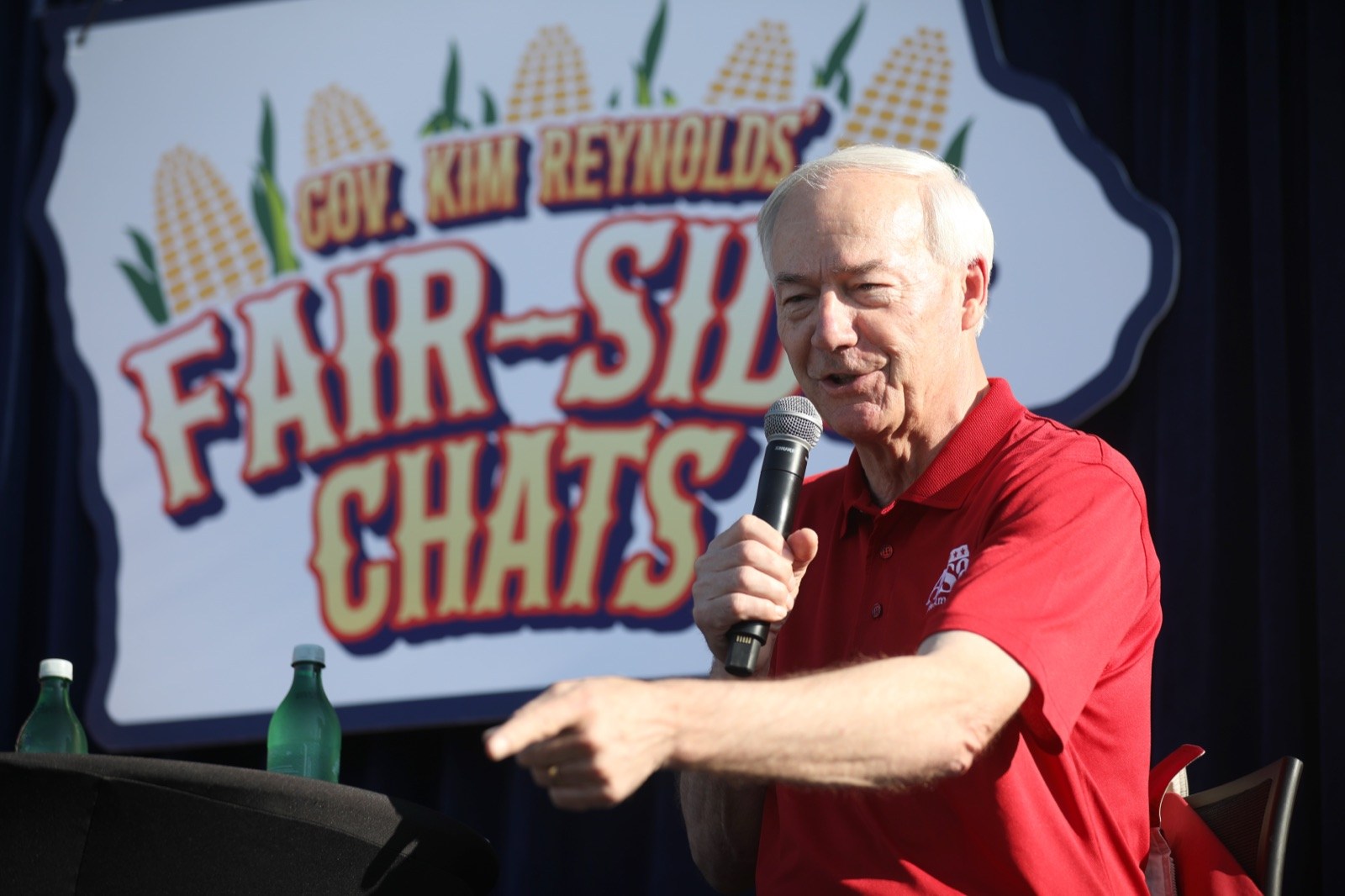
Asa Hutchinson
Asa Hutchinson is a former governor of Arkansas and Republican presidential candidate who argues to widen the parameters of debate against Trump and DeSantis's populist, nativist vision of America.
Episode Summary
One Decision sits down with Republican presidential candidate Asa Hutchinson, the former governor of Arkansas to talk about America’s foreign policy priorities and what should be done about China. Hutchinson is an outsider in the race, but insists he is there to widen the parameters of the debate, as Trump and DeSantis continue to offer a populist, nativist vision of America to voters. And, Sir Richard Dearlove reacts to the unsealing of the criminal indictment against former President Trump, as the world learns what exactly was sitting in the rooms at Mar-a-Lago before the FBI carried out raids to retrieve the highly classified intelligence Trump was hoarding nearly a year ago.
Listen & Subscribe
- Watch on YouTube
- Listen on Apple Podcasts
- Listen on Spotify
Transcript
COLD OPEN
Dearlove: I think the difficulty that American democracy faces is that, you know, you've got this apparent group of right wing voters who have this irrational attachment to a man who clearly is a political and national security liability and is a very destructive, divisive political figure.
INTRODUCTION
Mcfarlane: You're listening to One Decision, the podcast that looks at the choices made that shape our world. I'm your host, Julia McFarlane. As a foreign correspondent at ABC News, I covered the twists and turns of the presidency of Donald Trump, the controversies that dogged his time in office, and how America's allies were reacting and readjusting to a US administration that was not afraid to shake things up. From the sudden withdrawal from the Paris climate accords and the Iran nuclear deal to the threat of dismantling NATO, the military alliance that has underpinned European security since the Second World War. Building a US embassy in Jerusalem, reversing long standing US policy that that should only ever occur after Israel signed a final peace agreement with the Palestinians, choosing Saudi Arabia as the first destination for a state visit after inauguration. Taboos and conventions once thought to be immune from the changing of administrations were swept aside. President Trump changed how many people saw America and the different directions a new administration could take. Well, he's back in the news and back breaking norms and conventions yet again. Trump is the first president in US history to have been criminally indicted, twice. There's the ongoing case against him with regard to violating campaign finance laws. That's the Stormy Daniels affair, you might remember, is being heard in the state of New York. But it was in Miami, Florida this week that the world watched as he turned up at a courthouse to plead not guilty to 37 counts, mostly related to the mishandling of classified government documents, which the FBI found him to be hoarding in rooms at his Mar-a-Lago resort on Palm Beach. NEWS CLIP [2:22] The sham indictment put forward by the Biden administration included staged photographs of boxes at Mar-a-Lago. Many people have asked me why I had these boxes. Why did you want them? I hadn't had a chance to go through all the boxes. It's a long tedious job. Takes a long time. By happy circumstance,
Mcfarlane: my One Decision cohost, Sir Richard Dearlove, just so happens to be in the US right now. As the former chief of MI6, he knows rather a lot about intelligence and how one ought to handle it. He advises against keeping it in boxes and publicly accessible hotel rooms and toilets, which you might have guessed. I asked him what he made of the latest developments in the case against Trump in Florida.
THE DOCUMENTS CASE
Dearlove: It's an issue of what the hell is going on, you know, at the top of any American administration. I mean, when we circulated sensitive papers to the prime minister, there were all sorts of rules and regulations. And once you'd read them, they were collected off him and taken back to safety or destroyed. So I just am absolutely flabbergasted by the fact that this situation could arise in the first place. And Trump is such an oddball. Did he hang on to them? Did his staff hang on to them? I mean, did he even ever read them? I mean, what on earth's going on? The whole thing for me is just completely bizarre and peculiar. I mean, interestingly, there is a sort of historical parallel here, but it's years and years old in the UK. And that is if you go to the Churchill archives in Cambridge, you will find all of these papers that belonged to Churchill and were bequeathed to the college and the archives. And what's always puzzled me about the Churchill archives is these are not really Churchill's papers. They're state papers that surrounded a prime minister during wartime. And clearly, Churchill hung on to this stuff, which should never have happened. It should have been in the public records office at Kew. And in fact, it was Churchill's family that sold them to the nation. I mean, this is ridiculous. And they didn't belong to the nation. Won't go into all the complexities of that. But there are precedents, but they're very, very old and a long time ago, where people hung onto state papers, you know, which ended up in their personal archives. But having dealt directly with the White House in my previous career, having dealt directly with Number 10, I just think the situation that has arisen around Trump was quite extraordinary. And particularly if you have a president that's as ill disciplined as this one, you tighten the controls so to make sure that things don't go wrong. They need to be controlled, and they need to understand that there's a process in the system which has to be respected to the letter. So the whole business is quite alarming.
Mcfarlane: So if you were still the head of MI6, what would your assessment be of why Donald Trump would have these documents deliberately and meaningfully sort of refuse to hand them back after receiving multiple requests from the US government to bring them back?
Dearlove: I do not know, and I can't really understand. To the extent that maybe knowledge is power, maybe, you know, you can construe a sort of extreme scenario where having access to material. But, you know, the man's got a brain after all. I mean, he's read the papers, a lot of the content, he should have remembered. He doesn't have to have the papers. Now, maybe he did. Maybe he's such an inattentive reader that he couldn't absorb the facts. But what I'm saying is that he and the people around him put himself in a situation where he's extremely vulnerable to a serious prosecution. I never violated any, you know, procedure in paper handling, not for five seconds. And, you know, I was handling papers of super, super sensitivity. And it's something if you're in a position like that, you just don't do.
Mcfarlane: I do wonder how that former government employee who left highly sensitive documents in the bin, in London not that long ago, how they are feeling watching the Trump story unfold.
Dearlove: Yeah. Well, there's been some rather extraordinary goings on in the UK where I won't name the particularly senior MOD official left super sensitive documents by accident, take care, at a bus stop, which were then found by the banded international newspapers. And for reasons I do not understand, that man was never prosecuted. In fact, he was promoted, which is an absolute outrage in my opinion. He should have been prosecuted.
Mcfarlane: There's been quite a few stories like that. I expect it happens more often than is made public. I wanted to ask you, you worked a lot with the Israelis during your time at MI6. Obviously, they work in absolute lockstep with the US on matters of security and defense. We saw in the indictment that some of the documents pertain to the defense capabilities and vulnerabilities of the US and, quote, foreign countries and allies in a different part. I wonder if the Israelis might now be sweating at the idea that potentially their top secret defense information has been sitting in a bog in Mar-a-Lago for the best part of two years. How do you think the Israelis will be feeling about this story?
Dearlove: Look, I'm gonna challenge one thing you said, which is the Israelis work in lockstep with the Americans. They have a very close relationship with the Americans, but they do not work in lockstep. They've actually been caught out. In the past, they've been caught out spying on the Americans themselves.
Mcfarlane: So I'm not saying that they don't, but they obviously trust the US with a lot of their own national security secrets.
Dearlove: To an extent, they do. The Israelis are very cunning, very careful to essentially do their own thing. They have their own national security rules and regulations. And they are even of their closest friends, they can have suspicions and keep stuff from them and not share. So, I mean, I don't think the Israelis will be the slightest bit faced by this.
Mcfarlane: Well, I wanted to bring something up, and anyone who has worked with me in the past will be groaning as I said this because I have referenced this story so many times because six years later, I'm still absolutely astounded by it. And that is that Oval Office meeting back in 2017, not the Oval Office meeting with the Russian ambassador, but rather the Oval Office meeting with the foreign minister of Russia, Sergei Lavrov, where then president Trump was reported to have revealed the details of a covert Israeli operation that exposed ISIS's plans to create laptop bombs and smuggle them onboard commercial airliners. After that story emerged, there were sources speaking to the Israeli media and other outlets that there was an anti-ISIS mission that did take place in the winter of the year before, and it involved a team of Mossad operatives going into Syria to gain information about this new kind of ISIS weapon. Shortly after this, Haaretz, The Jerusalem Post, a lot of Israeli media came out with reports that claimed US intelligence officials were reportedly warning their Israeli counterparts against sharing highly sensitive information with the Trump administration. Given president Trump, they were insinuating that president Trump could have relayed information to Russia, and of course, the Russians are close to Iran, obviously, the Israelis' arch nemesis. I mean, back then, that was a huge warning with regard to how the then American Trump administration was handling intelligence and classified information and how it was dealing with the secrets of its allies. That was obviously a huge sort of warning sign to a lot of America's friends. Do you remember that story? What were your thoughts on that, and do you think this compares to that?
Dearlove: In intelligence liaison, which happens between all sorts of different countries, there's something called the third party rule. And that's the standard, as it were, rule on how this business is conducted. And the third party rule is that you are not allowed without specific agreement or permission to share intelligence with anybody which you've received from another government, unless you have their explicit agreement to do so. And this is an absolutely standard. And the problem that the Trump administration had was Trump blowing off his mouth, and saying things and talking to people, which was a violation of the third party rule. If your partner violates the third party rule, you become very wary of sharing material with them. And I mean, I can think of instances, I'm not going to specify, you know, where we got fed up with another nation because they breached the third party rules. We go and see and say, talk to them and say, look, hang on a moment. You know, you breached third party rule. This will prejudice what material we share with you in the future. And I'm sure that I remember that incident, and Trump spoke out of turn, without probably understanding the significance of the third party rule, or maybe his staffers were not able to control him. And therefore, you know, he behaved in a manner which he thought was clever clever, but didn't realize there was a cost attached to it when he did so. So, yes, there are parallels. And I mean, all these issues are latent or present in the question of, you know, why Trump had all these papers, why he was hanging on to them. And I think there'll be a lot of Americans now who might have been more sympathetic to him are going to realize, look, this guy is just one massive liability. And it'll be interesting to see whether the Republican Party support for him as a potential candidate is sustained. Because listening to the chat on the media and speaking to people, I think more and more you're going to find that it really is an extreme rump of Republican voters that will remain loyal to Trump. I would have expected to see his support begin to dissipate and his prospects of being a presidential candidate begin to be prejudiced. I mean, particularly if he's found guilty in this trial. And remember, it's a federal trial. And I think the facts look, in terms of the indictments, to be pretty clear cut. I don't see how he's going to defend himself. The only thing that I still stick to is to say, you know, what the hell was going on around him? I mean, how did Trump get into this position where he had these bloody documents?
MAR-A-LAGO AS A SECURITY RISK
Mcfarlane: Back in 2017, Politico did a piece on Mar-a-Lago, and they looked into the myriad security concerns there. They talked to former secret service and intelligence officials who told them that the resort is, quote, a security nightmare both to casual and professional spies. Lists of the people who work there or on the Internet, their work email addresses, their phone numbers, lists of the membership, had leaked to the media at the time, which experts said could have given foreign intelligence the names of potential targets for surveillance, blackmail, or bribes that could have helped them get closer to the president. I mean, how are hostile foreign intelligence agencies, how are America's allies, do you think, maybe reacting to this news, and how much of a danger was Mar-a-Lago as a place, given that it remained open to the public even when president Trump was there?
Dearlove: Well, clearly, as someone has already said, a potential nightmare, you know, particularly for the people responsible for trying to preserve national security around this bizarre president whose lifestyle, whose private living arrangements must have made everything very very difficult. I mean the problem is you know if you're president or if you're prime minister there is no separation between your public and your private life. I mean, you have to be incredibly disciplined, and you have to live and work in a manner which is suitable to the office which you occupy.
Mcfarlane: Which countries do you think would have been among the first to plant spies and bugs at Mar-a-Lago and Bedminster and Trump Tower back in the day?
Dearlove: Let's face it. Even with all these terrible failings, let's not underestimate the difficulties of doing something like that. It isn't straightforward at all, and there are all sorts of ways and means of, let's say, mitigating the threat even when the threat is difficult to control. But which countries? Well, you know, China, Russia. You know, the Iranians would, I think, find it difficult because they don't have the means to work in that manner, probably very easily given the isolation of their regime. The Russians similarly, getting themselves into a position of isolation, but then you've got the Cubans, you've got there are all sorts of nations that could try to take advantage of a situation of national security weakness. And we already mentioned the Israelis. I mean, the Israelis in a way are ruthless in pursuing anything which they perceive as being in their national interest, whether it's a friend or a foe.
REPUBLICANS BREAK COVER
Mcfarlane: Well, one thing that I think is very interesting, we spoke earlier this year to Mike Pompeo, who was the former CIA director and then secretary of state under Trump. At the time, there was a lot of speculation that he was gonna run for the highest office himself. It seems like that's no longer gonna be the case, but that's not to say he may not return to a government position in any future Republican administration. But he was so, so, so adamant against criticizing his former boss. And something that's happened this week after the unsealing of this indictment, after we've all had a chance to read through some of the really quite extraordinary claims in this indictment, he has come out and he has gone further than he ever has in criticizing Trump. He said on Fox News, two things I think both are true at this point. First, if the allegations are true and lots of indications they are, Trump had classified documents when he shouldn't have had them. And then when given the opportunity to return them, he chose not to do so for whatever reason. I suppose we can all make mistakes, but when someone identifies that, you've gotta turn them in. That's inconsistent with protecting America's soldiers, sailors, airmen, and marines. And if the allegations are true, some of these are pretty serious important documents, and so that's wrong. Nikki Haley, Trump's former UN ambassador, she has said that former president Trump was, quote, incredibly reckless, if the federal charges against him in the indictment are true. Tim Scott has called the indictment a serious case with serious allegations. And then most sort of flamboyantly of all is the former New Jersey governor Chris Christie, who's also running for president. He said in a CNN town hall this week, he really kind of went off on Trump. He said this is vanity run amok.
Christie: He has shown himself, and I think most of this, particularly in his post presidency, to be completely self centered, completely self consumed, and doesn't give a damn about the American people, in my view, if what the American people want is in conflict with what Donald Trump thinks is best for him. And I don't think that's who we want sitting behind the desk in the Oval Office.
Mcfarlane: I think perhaps we are starting to see now Republicans start to break cover and criticize Trump. Do you think this is gonna be the straw that breaks the camel's back? And do you think that Republican candidates really now have to take a stand against president Trump if they are to claim with any credibility that they hold national security in the highest regard as candidates running for the highest office, and particularly as Republican candidates, Republicans who historically have always we've always thought to be hawks when it comes to national security?
Dearlove: Yeah. I think, you know, comments like reckless and, you know, vanity project, I think these are very, you know, justified criticisms. And to be a serious presidential candidate, you know, even in the era of Trump, I think you've got to demonstrate that you take issues like national security very, very seriously. Look, I haven't met a single Republican who isn't in the process of, as it were, detaching themselves from Trump at this point in time, realizing that the man is a total liability. I would hope that, you know, this is the beginning of the demise of his candidature and the fact that, weirdly, he seemed to have captured the Republican Party, that that's in the process of being unstitched. Of course, there will be what is now being referred to on the media here in the States as the crazies who will continue to support him and idolize him and adulate him. But on the whole, I think people who take a serious interest in politics and bearing in mind, you can't win a presidential election without really appealing to the center in American politics. So an awful lot of sort of balanced ordinary people going about their daily lives and who don't have a sophisticated understanding of the issues maybe around national security, but they don't need to. They just need to exercise common sense and say, god, this is ridiculous. How on earth is it that we've got a former president who's behaved like this, is behaving like this, and has been intransigent, and hasn't obeyed the rules? And I mean, what's crazy is that Trump could have turned around and said, oops, my staff failed me. I've got all these bloody documents in my house. For goodness sake, send down a couple of five ton trucks, and let's get rid of them. And I wanna get them back to the Pentagon as quickly as possible. I mean, that's what a sensible person would have done.
Mcfarlane: So, Richard, our One Decision colleague, Cole, has rightfully pulled up, to remind us of a whole bunch of incidents during Trump's time in office where he made a number of intelligence sharing faux pas. In August 2019, he tweeted a classified image of damage to Iran's spaceport. And when it was online, within hours, experts and amateur satellite trackers had determined that the photograph came from a highly, highly, highly sensitive, highly classified reconnaissance satellite that was part of a multibillion dollar spy satellite program. In April 2017, president Trump told Rodrigo Duterte, the president of the Philippines, that the US had positioned two nuclear submarines off the coast of North Korea. That was back in the days when Trump warned of a possible major major conflict with North Korea. That was the time of the whole Rocket Man saga situation. The locations of nuclear submarines are, of course, an incredibly closely guarded secret even from the navy command itself, according to Reuters. In 2018, over Christmas, president Trump posted a video, after he and the first lady flew to the Al Asad Air Base in the Middle East, he posted a video of several members of SEAL Team Five in their camouflage, revealing the team's location and unblurred faces. In a 2019 December interview with Bob Woodward, Trump said, I have built a weapon system that nobody's ever had in this country before. This whole saga with the classified documents in the toilet at Mar-a-Lago is not the only time Trump has played fast and loose with the dissemination of highly sensitive information. Would you say that if president Trump were to run for office again, is Trump a danger to national and frankly international security?
Dearlove: Yeah. I think he's completely ill disciplined. His attitude is I'm the president of the United States. I can make the rules. I can do what I like. Even when he's not president. He's not the president right now. Well, even when he's not president, he's still behaving in that manner. And the fact is that if you're the leader of the world's most powerful nation, there are certain rules and restraints that have to apply to you, not just because you're subject to the law, that's one thing, like any other citizen, but because the safety, you know, of the nation's national security depends to an extent on your discretion, and it's absolutely clear what you should and shouldn't say. I mean, I can see look. It's not uncommon for leaders to make the odd national security mistake. I can certainly remember that happening when I was head of SIS and having to —
Mcfarlane: Can you give us any examples of that, Richard?
Dearlove: I'm not gonna be specific. But quite often, there's a wish on the part of a government to publicize something for political reasons, which is highly sensitive and possibly highly secret. I mean, this came up on a number of occasions. I'm not going to give you the specific instance. During the war in the Former Yugoslavia, politicians for political reasons and good political reasons wanted to say something or publicize something. But we had to say to them, look, you can't do it on this occasion because the information is based entirely on super sensitive secret information. And to an effect, you know, by revealing that knowledge, you'll be prejudicing the source.
Mcfarlane: Just to explain, prejudicing the source, that means you can kind of identify where information has come from and therefore betray who an agent might be. Right?
Dearlove: Yeah. That's a specific and obvious example. And I know that has occurred in the US system. You know, I can remember instances where the Americans wanted to publicize stuff, which we had given them as a liaison service where the third party rule should have applied. And then they wanted to stick it in the headlines of the national newspapers. And we said, absolutely no way. But it's very difficult to stop, you know, a politician who's uncontrollable with a bit between his political teeth who wants to go ahead and say and do something.
Mcfarlane: Do you think that the US intelligence community will, at this moment, be rushing to reassure allies that despite everything that is in the headlines right now about the kind of information that has been, as I say, sitting in the bog in Mar-a-Lago, that the US can still be trusted with handling sensitive information?
Dearlove: Oh, I think, you know, generally speaking, look, the US can be trusted with handling sensitive information. There are always — Really? There are always political aberrations, but in my experience, the best thing to do is to not try to explain them, is just to say, look, this is a political aberration. And, you know, it's part of life in a democratic state. Okay. The Trump example, you know, can't be described quite like that because it's extreme, it's exceptional, and it's terrible. I think that the Americans will have rebuilt trust during Biden's administration and that by and large, you know, they can sit there and say, look. This is a Trump hangover problem that you know about and a problem that we're trying to deal with.
Mcfarlane: Well, it may not be a hangover. That's the thing, Richard. He may go back into office.
Dearlove: Oh, he may go back into office. I agree. But I think that this actually becomes less and less likely.
Mcfarlane: Who in the Republican race do you think is going to benefit from this, if any? I mean, do you think this is maybe gonna give Ron DeSantis the edge he needs, or do you think this is not enough by the time the primaries roll around? And obviously, we don't know how this trial is gonna go, but who benefits from this story, and do you think it's enough to dash Trump's hopes of getting back into the White House?
Dearlove: I think it probably is enough to sabotage his hopes. Because I think with all this baggage, if the Republicans were to run him as their candidate, his chances of beating even Biden, and I don't think Biden is a strong candidate, I think will become less and less. And what we're not talking about Democrats and Republicans. We're talking about sensible Americans in the middle of politics who, I think, when faced with this dreadful choice, will not vote for Trump again. And that would be my expectation and my hope. I think another candidate will emerge as the front runner. And, I mean, even DeSantis is looking vulnerable and fragile. And I rather rate one of the more mainline candidates, but most of them seem to poll extremely low. But having seen one or two of them interview, there's some very sensible, balanced, credible people amongst them, but they don't seem to have any popular following at the moment, which is worrying.
INTERVIEW WITH ASA HUTCHINSON
Mcfarlane: We did manage to have a brief chat with Asa Hutchinson, who is a Republican candidate, and he's the former governor of Arkansas. We talked about him earlier, and you described him as being quite sensible on a number of matters. I think probably one of the more interesting positions that he's taken, he's advocated for a kinder attitude to refugees and immigrants. That certainly casts him quite aside from a lot of his Republican colleagues and possibly his voters. But he's also advocated something that other Republican candidates certainly are not, which is being pragmatic when it comes to China.
Hutchinson: Well, for two and a half years in the Biden administration, they basically ignored China and kept the same Trump policies in place in terms of tariffs, and there was very little dialogue in terms of making any progress. And so they're just now starting to reengage, and our relationship has been frayed, to say the least. There's risk that we understand here in the United States based upon our dependency upon that supply chain with China. So I understand that first of all, we've got to put our national security interests at a higher level in terms of our trading relationship. Secondly, we're going to have to move the supply chain in our critical industries both in military component parts but also in terms of the supply chain for our medical equipment, our pharmaceuticals away from China so we're not dependent upon them when a crisis hits. And so these are critical issues that we have to change from and change the supply chain. There's others that we can't delink, that would not be beneficial to the United States to delink those economies. So you've got to be pragmatic about it. In the national security area, we have to recognize that we've got to continue our communication with China. Hopefully, can work together to suppress the threats from North Korea. That is very real, and China shares a concern there. So we've got to be pragmatic as to where we can work with them. But right now, they're in alliance with Russia, which is adverse to our interest. They are stealing our intellectual properties, and we've got to make sure that we are more careful when we do not have an international rule follower that we're trying to deal with. And that's been the biggest disappointment in our relationship with China. We're gonna have to have a tougher stance with them because they're not following the international rules.
Mcfarlane: You've just said we've got to work with China. I mean, those words, how do you think that is gonna go down with the American public who've been told by your colleagues for years and years and years, China is the big bad boogeyman? I mean, how do you persuade your voters that we have to engage with China? There are an awful lot of Republican voters who see Vladimir Putin as a lot less of an issue for America than China and see Xi Jinping. How do you persuade them to get on side with your views?
Hutchinson: Well, I don't think you're gonna change their view on that. And there's a realistic concern about China, a realistic threat about China. So I don't diminish those concerns at all. But just like we still have our embassy in Russia, we still try to have diplomatic dialogue even though we are adverse on our policies in reference to Ukraine and their invasion of Ukraine. And so in reference to China, communication is important. And right now, have the two largest economy in the world. And if we try to isolate the United States from that economy, that doesn't mean the world's going to follow us. And so we're really hurting our own economy. And so we have to be strategic about it, acting in our national interest, and being very practical about it. And so there is a threat there. I recognize that both militarily in reference to Taiwan, and secondly, economically, and thirdly, as a competing superpower. So absolutely, we have to be tougher and we have to be clear in protecting our national interest.
Mcfarlane: You've given some criticism of president Trump, of some of the arguments he's made, some of the things he's done in his time in office. He is, of course, the leading front runner in the Republican race so far. You are polling extremely low. I don't think it's rude of me to say 2%, 1%, 0% in some of the recent polls and in the last month or so. You have said that you're running to give American voters an option that is not president Trump. You've said that that is not the future you want to see for America. You don't want to see a second administration of president Trump. But since you're polling so badly, why are you running as a candidate yourself instead of giving your backing to one of the other front runners aside from Trump who are more likely to defeat him? I mean, would it not be better for there to be a coalescing of support against Donald Trump, for other Republican candidates to bow out in favor of a main challenger, rather than staying on and splintering the vote against him and making it more likely that he will win the nomination?
Hutchinson: There are strength in numbers, and so whenever you see multiple candidates of national stature getting in and saying we need a different leadership in our party and the country for the future, that's a powerful message in and of itself. All presenting ideas on where we need to go as a nation, how we lead in the world or contract, and if you feel strongly about these values and the role of America, you've got to get in the debate. You've got to be able to make your arguments to the voters. This is early, and you'll see the field narrow as you get closer into the election season next year. I know everybody thinks we're already there, and we are in a sense, but there's gonna be a lot of self evaluation. But right now, this is good for our democracy. It's good for the party when there's these ideas out there, and it's gonna produce the right nominee for our party. So there's a lot of time left.
ANALYSIS WITH SIR RICHARD DEARLOVE
Mcfarlane: We'll see how those poll numbers look six months from now. What did he make of the conversation with Asa Hutchinson? And do you think he's gonna continue to poll badly after this saga with Trump?
Dearlove: Well, I don't know enough about the local politics of the Republican Party. But, I mean, he's hardly on the radar screen. You know, he's a candidate that has one or 3% following, which is tiny. But on the other hand, when he talks about China, I think he's making a lot of sense. And, actually, even if you listen to what Pompeo says carefully and Hutchinson, they agree that, you know, China is the big threat. And they do express their concern about China as national security opponent possibly mutating into an enemy of the United States. But on the other hand, they both realize, and I think Asa Hutchinson just expresses it more clearly, that an international security system that is balanced is gonna have to, as it were, build some sort of working relationship between China and the USA. And, I mean, the fact is I've said this many times, and I'll say it again, that we're not talking about a cold war with China. And the reason we're not is because the economies of the United States and China are so thoroughly intertwined in a way that the economy of the Soviet Union was not intertwined with the West during the Cold War. So, you know, unless China goes to the super extreme and invades Taiwan and completely sort of prejudices its relationships with the West generally and with the US in particular, then I think most pragmatic Republicans, even though they will say very clearly China's a huge threat, which it is, you know, we've got to handle this, and we've got to have a relationship which is based on realism so that China understands the rules of doing business with us and having a commercial partnership with us in some areas. And I don't think Asa Hutchinson is saying anything more or less than that. And I think the view he's taking is extremely realistic, is extremely balanced. Of course, it's not necessarily the view that you want if you're up on the stump, you know, preaching to a Republican crowd and you're trying to make a splash in the press. But I must say I admire him for his pragmatism, his honesty, and actually his apparent understanding of foreign relations. I think he comes across extremely well. On his domestic policy, I know less about that. And I would have different views from what I do know of him, but on his foreign policy, for him, he's doing a good job. And I think when we interviewed Mike Pompeo, it also came across, I mean, unsurprisingly, as he's ex head of CIA, that, you know, Pompeo really understands what he's talking about. Well, he was secretary of state Pompeo as well. So I mean, these are guys who are really clued up. They know what they're talking about. I think the difficulty, you know, that American democracy faces is that, you know, you've got this apparent group of right wing voters who have this irrational attachment to a man who clearly is a political and national security liability and is a very destructive, divisive political figure. And I hope that the Republican Party, which I greatly admire, has or can come to its senses and say, you know, the grandees of the party can say, no way can this man be our presidential candidate again. I mean, there are just so many strikes against him. I listened to someone on the media listing all the court cases and all the indictments, in addition to the one, the federal indictment, which is happening today in Florida. And it's just extraordinary what he's managed to accumulate, and it should make him completely untouchable politically. But the nature of American politics at the moment is that there's a trench as deep as the deepest trench in the ocean, which seems to separate reasonable people from people who have this really weird populist attraction to Trump.
Mcfarlane: I mean, Trump is someone who has always seemed to defy political gravity. I think the question is, is this now too much now?
Dearlove: Well, let's hope that political gravity has caught up with him and his feet are gonna touch the ground. And, you know, as they touch the ground, you know, he's gonna be heading towards a prison sentence.
Mcfarlane: That's it for this week's episode of One Decision. We drop new episodes every Thursday. Like and subscribe so you never miss an episode. Drop us a line. Tell us your thoughts. What decisions have impacted you and where you live? You can write to us. Our email is 1decision@1decisionpodcast.com. From me and the team, thank you for listening, and see you next time.