Hosted by Christina Ruffini and Sir Richard Dearlove
Guest
Mike Baker
Mike Baker is a former CIA covert operations officer with nearly two decades of running intelligence operations in the world's most hostile environments who gives an unvarnished assessment of three crises dominating global affairs.
Episode Summary
When a former CIA officer and the ex-Chief of MI6 agree something is coming — pay attention. This week, Sir Richard Dearlove, former Chief of MI6, and guest co-host Baroness Ayesha Hazarika are joined by Mike Baker, a former CIA covert operations officer with nearly two decades running intelligence operations in the world's most hostile environments.
Together, they give an unvarnished assessment of the three crises dominating global affairs right now: whether US military action against Iran is imminent and what it would actually target; why Putin has little incentive to end the war in Ukraine and what could change his calculus; and why Cuba, just 90 miles from Florida, may be closer to collapse than anyone is reporting.
Hosted by Sir Richard Dearlove (former MI6 Chief) and guest co-host Baroness Ayesha Hazarika (House of Lords).
Listen & Subscribe
- Watch on YouTube
- Listen on Apple Podcasts
- Listen on Spotify
Transcript
COLD OPEN
Baker: I think the initial strikes would be designed to try to drive home the point that the Iranian regime seems to have not gotten yet, that they really don't have that many options. By the way, call me Richard. Okay. Okay. Well, if you can call me sir Baker, that would be terrific.
INTRODUCTION
Hazarika: I'd like to be called Baroness Hazarika, actually, sir. Hello, and welcome to One Decision. I'm your guest cohost, Ayesha Hazarika. I'm a broadcaster, and I'm also a member of the House of Lords, Baroness Hazarika. And I'm joined by our cohost as ever, sir Richard Dearlove. Hello, sir Richard.
Dearlove: Hi, Ayesha. Or maybe I should call you Baroness.
Hazarika: I'll call you sir. You can call me Baroness.
Dearlove: I'm actually not in The UK at the moment. I'm in The States sitting in the beautiful valley of Aspen in Colorado.
Hazarika: Beautiful. Well, I am in quite a drizzly London, near parliament. But look. This week, we're marking four years of fighting in Ukraine as president Putin's war grinds on. The United States is weighing strikes on Iran, and Cuba is in crisis. In moments like these, accurate on the ground intel is everything. And that's exactly what our guest has spent a career providing. Mike Baker is a former CIA covert operations officer who spent nearly two decades running and supporting intelligence operations in some of the world's most hostile environments. He's also host of the podcast, The President's Daily Brief. Mike, welcome to the show.
Baker: Thank you very much. It's a real honor to be here with you.
INTERVIEW
Hazarika: Let's begin where the world's attention has been for a number of weeks and particularly over the last few days, and that is Iran. We are seeing that after this very brutal crackdown, there have been a small number of fresh protests, not as large as the previous, but very anti regime. We know that The US is building up this military capability across The Middle East. What are you picking up? What is all of this saying to you?
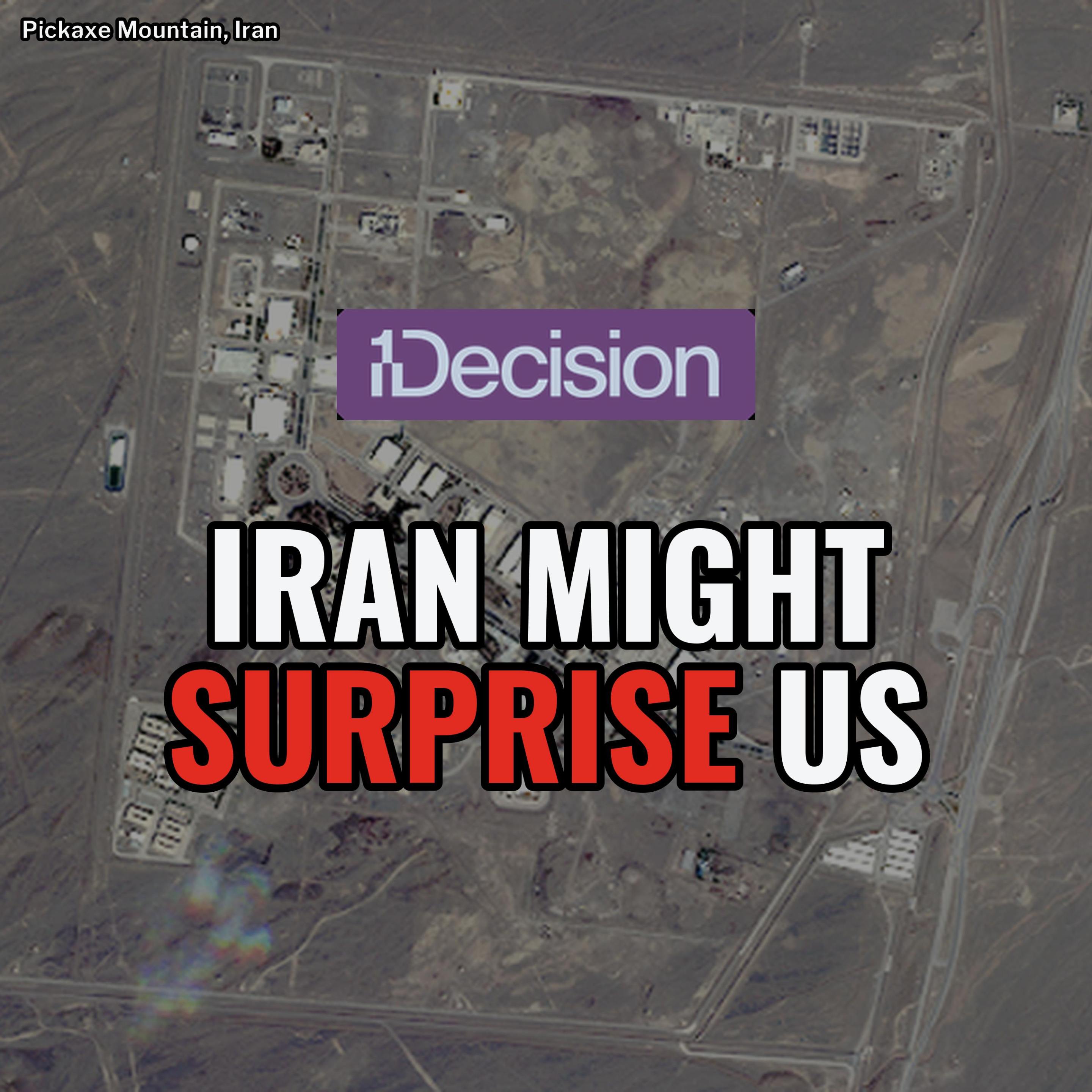
Baker: I think in a normal environment, we'd probably be able to read the table better, but the Trump administration tends to thrive, and president Trump tends to thrive on sort of, I don't know whether you want to call it strategic ambiguity. It's ambiguity. And now you could argue that's not a bad thing in a, you know, geopolitical sense or for national security purposes to keep the other side on their back foot. But at this stage, with the buildup that's out there in The Middle East from The US military side, it's the largest buildup we've seen since 2003. Two carrier strike groups, a number of squadrons moved into position, a lot of support assets. It's hard to imagine that that entire posture is simply leverage. There's a real anticipation that there will be something popping off in a very short order. Again, what that is, very limited strike or something more sustained, could be a weeks long campaign, we don't really know. But it appears as if the Iranian regime is certainly acting as if a conflict is coming quickly.
Hazarika: And so, Richard, is that your reading of the situation at the moment?
Dearlove: Yeah. I think I'm taking the view that it's gonna be very hard to deploy all those assets and then just remove them. I mean, we saw a long buildup along the coast of Venezuela. And in a way, what happened in Venezuela certainly took a number of commentators by surprise. So we have a direct precedent. There is new negotiation this week, which Oman is facilitating, which indicates a new meeting of American and Iranian negotiators. But the last interviews I watched with Iranians, they don't seem to be making any concessions. And if you look at the sort of negotiations that surrounded the last agreement with Iran on nuclear, I mean, they are past masters at spinning this out, putting in conditions, altering the conditions, restarting the negotiations. And I just don't think Trump will stand for that. He wants an imminent decision, and it seems to me all the pointers are unlikely that that's coming. So I'm very much of the view that we're on the cusp of some sort of military activity. And if you actually look at the gas prices, energy prices globally, which I think is a pretty good indicator of what the market thinks, I think we're on the cusp of a military action personally.
Baker: I think sir Dearlove is absolutely correct. That opening comment about how you can't deploy these assets and pull them back with some justification that you've reached a limited deal. And the Iranian regime so far has refused to expand the negotiations beyond an element of their nuclear program. By the way, call me Richard. Okay. Oh, okay. Well, if you can call me sir Baker, that would be terrific. I really enjoy that.
Hazarika: I'd like to be called Baroness Hazarika, actually.
Baker: No, I just think if you just look at it from a pure political perspective in Washington, if what happens is there is a limited deal, again, just focused strictly on some element of the enrichment program and nothing else, and they've gone through all of this buildup, I don't know how the White House paints that as a victory, particularly when it was just weeks ago when president Trump was very explicit to the protesters who died by the thousands saying help is on its way.
Hazarika: Question to both of you. How does the White House frame a potential strike? Is it framed as we're doing a limited and specific attack to disable nuclear development? Or is it broadened out to human rights and to the protesters? Because as you say, Donald Trump has spoken out a lot in support of the protesters, Richard.
Dearlove: Well, I'm of the view that, obviously, we're not talking about boots on the ground. We're talking about some sort of aerial attack. I think that the targeting, if it happens, will be the supreme leader, putting it bluntly, and the people around him, the command and control of the IRGC, and the sort of biker gangs, which are under IRGC control, which were so lethal in the demonstrations, which, of course, had such a massively high casualty rate. I think the objective will be to knock over the regime or to destabilize it to the extent that it's knocked over then by the Iranians themselves. Of course, this is a huge gamble because you don't know what the outcome will be, but something along those lines. And I think it's important thinking about Iran to draw a distinction between the Iranian military and the IRGC, and maybe out of this will come some sort of patriotic Iranian regime of a different color and a different ideology. And that's a pretty wild prediction, but that's the sort of scenario I think we're looking at, and it's important to include in this, of course, the Israeli participation because they hold the key in terms of detailed intelligence.
Hazarika: Mike, do you agree with that?
Baker: I do. I think there's credible reporting over the past handful of days that indicates the regime, the Iranian leadership have gone through the process of succession planning in the event that Khamenei is killed in a targeted strike or just in some incident. They've tried to identify three or four next layers of leadership to ensure that the Islamic Republic stays viable during the course of the war or afterwards. I think the initial strikes, whatever that target package looks like, would be designed to try to drive home the point that the Iranian regime seems to have not gotten yet, that they really don't have that many options, they're still acting as if they're in the driver's seat in the way that they dictate the terms for these indirect negotiations that have been going on. So I think that there would be that effort, then perhaps if that doesn't work, we move into a longer term campaign, possibly weeks long.
Hazarika: It's interesting seeing some of these fresh protests popping up again, very anti regime, very anti Khamenei. And he has recently given a speech saying that those that took part in the January protest had been naive and inexperienced and they were deceived, but they were still part of the family, as you will. Do you think those very brave protesters, because there was a very, very authoritarian crackdown, the figures are pretty high, do you think that these latest protesters are feeling emboldened by the fact that there is this US military buildup in the region? Do you think they think actually America will sort of swing in in some way to help them, Mike?
Baker: Well, there's been a history of that not happening. The international community has been pretty feckless over the years. I think there was a burst of hope when the White House, when president Trump made that comment that help is on its way. But then it morphed. It changed. And suddenly, you know, the red line was not killing protesters, which again, they did by the thousands and detained by the tens of thousands. The red line then became, well, you have to sit down and negotiate over your nuclear program.
Dearlove: I would add is that there's no opposition leadership. You've got an amorphous group that is clearly massively dissatisfied with the regime. And I think the main driver is economic and the state of the economy, but you don't have a cohesive political movement. You have a certain amount of cohesion amongst the Iranian diaspora outside of Iran, but that, you know, will only become significant if the regime were to disappear. So I think it's very, very difficult to predict how this plays out. And I don't think we see any evidence of clandestine organizations, let's say, within the universities or within groups in the big cities, able to coordinate. So the regime holds, let's say, the initiative, not just in the street, but on a national level, which I think, I find this, you know, rather depressing analysis. And I think this adds a huge element of uncertainty to how events could play out.
Hazarika: Iranian diaspora that I've spoken to have said that one of the big problems in terms of organizing an opposition is that there hasn't been that capacity building on a political level, on an organizational level. There's, you know, civic society and all those kind of bits have really been hollowed out, and that does make it very difficult to rise up against this very violent authoritarian regime.
Baker: The IRGC, the Revolutionary Guard Corps, they are thoroughly embedded within every element, every sector of that country, and there is no upside for them to hand over power or to take a back seat. And when you have an angry population, which they do, look, regime right now is dealing on two fronts in a sense, right? They're trying to understand how to deal with the military conflict from external, from The US, from Israel, and they're also trying to understand how to suppress the population in the event there is a conflict. One of their big concerns is what happens if this unrest builds in the cities during the course of any military conflict. So they're expending a great deal of resource working to keep their boot on the neck of the population, as it were.
Hazarika: So Richard, I just wanted to ask you as well. What do you make of this development over the last few days where we've now learned that The UK has not given The US permission to use RAF bases for any strikes in Iran. What's going on there?
Dearlove: Well, I don't think this is particularly surprising. What we're talking about are US Air Force assets at Fairford in Gloucestershire. If you're going to, as it were, carry out an attack on a foreign country using those assets, the arrangement in Fairford is you have to get the permission of the British government. And I would say that if you look at the views of the present government, Starmer, to an extent, is the prisoner of aspects of his party. He has not got a free hand in this, and they only have to, as it were, make an interpretation of the political situation in The UK to see that Starmer's position is fragile politically for reasons that we don't need to go into in this podcast. But, you know, that decision does not surprise me at all. People say it also extends to the American base in Diego Garcia in the Chagos Islands. My understanding is that that agreement does not actually apply to Diego Garcia. There may be a convention that permission should be asked, but there is no more than a convention, and that Trump could easily disregard that and just launch aircraft from Diego Garcia. So the reporting on that in the media has been a bit confusing. So let's see how it works out in practice.
Hazarika: And, Mike, what did you make of that news? And what do you think the international response will be if there are airstrikes on Iran?
Baker: Well, that's a really key point here, right? Because what we don't know in real detail is what's being said by the regional players, the Saudis, Jordanians, and others. Right? I suspect if you had a private conversation with any of them in the region, they'd be like, yeah. We actually hope this happens. We would love to see regime change. You're not going to get long term peace or stability in the region as long as the mullahs and the IRGC are in charge. Ideally, everybody wants some sort of internal change brought on, but I think that in public, they're certainly not going to say that. And so the general narrative in the public has been that they're pushing the White House to find that diplomatic resolution. I think this is one of those instances where they're saying one thing publicly, and perhaps behind a closed door, they're nodding quietly. I don't think we'll see anything from the Russians or the Chinese. Right? They've had joint naval drills in the strait now, but that's something that's not unprecedented. They've had those in years past. You just look at recent examples where The US was engaged in action that you could have argued maybe the Russians, the Chinese would be a little more forceful. They weren't. They stood by. The Chinese in particular, they always act ruthlessly in their own best interests. I don't think they see it in their best interest to get engaged in some sort of conflict should there be kinetic action.
UKRAINE
Dearlove: Can we shift on to Ukraine? It's the fourth anniversary, more or less, this week of the invasion. The key issue I would like to understand from your perspective is where you believe The US now stands in relation to Zelensky. And the key element, given the change of US policy under Trump towards Zelensky, it doesn't seem to have affected the intelligence support that is being given to the Ukrainians. And I find this as a point of confusion in my own analysis. I mean, I'd love to hear your perspective on that.
Baker: It is interesting. Look, again, going back to earlier comment, if there's anybody who's able to predict what president Trump is going to do from one week to the next, then, you know, God bless him. It's proven to be almost an impossible task. Now he's got a track record obviously so far bouncing back and forth. Right? So one moment he's frustrated and expressing irritation with Zelensky. The next, he seems to have run out of patience with Putin, that only goes so far. And then he's back to, you know, saying that it's down to Zelensky and Ukraine to come up with a deal, which is where he is right now. More importantly is what you've pointed out, I think, and you know this far, far better than I do, but oftentimes there can be these public disagreements and off the radar, there continues to be a working relationship on the intel level, and that's where we are. I think there continues to be despite sort of the mixed messages from the White House on occasion. And again, you know, his supporters will say that's strategic, the way that he's doing this. I think there continues to be a great deal of support in the Pentagon up on Capitol Hill elsewhere for Ukraine and for providing continued support in some fashion. I don't see us backing off of that, and I don't see us stopping that intel support. There was a blip a while back where, you know, they pulled that intel support briefly. But that's a bridge too far, I think, even for Trump when he does express frustration with Zelensky.
Hazarika: Talk us through how you think specific US actions have actually influenced Moscow's calculations, Mike?
Baker: I can be very cynical when it comes to the way we've approached this. There's so many layers here. As Richard pointed out, four year anniversary, it's about two years beyond what the average attention span is here in America for anything, particularly after the global war on terror. So much of it is driven here in short term political considerations that you can't look at this from an operational perspective. Everything has to go through the lens of what's happening on Capitol Hill in Washington DC, when's the next elections. In this case, it's November, the midterm elections. There's a very good chance that the Republicans lose control of Congress, possibly the Senate, in which case you're looking at the remainder of the Trump administration's term being basically dysfunctional. And I mean, there will be people that would say it's dysfunctional anyway, but in terms of just lack of activity, there will be nothing happening. That drives part of this consideration over where support goes for Ukraine, because they're looking at what does the population think. And honestly, in The US, when this started, everybody had a flag on their front yard for Ukraine. Everybody was putting little emojis of Ukraine on their Twitter site or X. Not so much anymore. And that's a shame because we keep forgetting that Putin started this tragic mess, and it's his responsibility. It's his fault. Saying, well, Ukraine should be giving up territory, even territory that Russia doesn't currently hold, is, from my perspective and a lot of other folks, is nonsensical. It would be as if, this is a terrible analogy, but it would be as if Mexico invaded The US, had Texas, New Mexico, Arizona, and the international community said, well, you know what? Just so we can get some peace deal, give them Texas and half of New Mexico. You know? Of course, we're not going to do that. So we're asking Ukraine to do something that we would never do.
Dearlove: Zelensky said in a BBC interview just recently that, you know, Putin had started World War three. That sounds like an outlandish statement. But on the other hand, I think, looked at the perspective of the European nations, Ukraine is actually, you know, fighting and containing a war which has global implications and global significance. I mean, how do you see this now evolving? Because there's no apparent end in sight. I think we know quite clearly, and you've made that very graphic comparison, the Ukrainians are not gonna concede territory which the Russians haven't occupied. They're not gonna concede it anyway, de jure. They may have a ceasefire. So, you know, this war could just drag on. I mean, four years is one hell of a long time. And if there's no end in sight, it could drag to seven years. Weariness comes in somewhere. But I'd be fascinated, Mike, on your sort of longer term perspective as to where this may be going.
Baker: Apropos of nothing, Richard and Ayesha, my favorite museum anywhere is the Imperial War Museum. And I was over there not that long ago. I had my boys with me. I've got teenage boys and walked them through the World War one exhibit, which is a terrific piece of work. And when you realize we've been going through that same mess, and we thought that's never going to happen, of course, then we have World War two. But the idea that we've got this land war going on, it's trench warfare, grinding efforts to claim a 100 meters of territory is astounding. So trying to predict where this goes is about as difficult, I think, as predicting what president Trump's gonna do from day to day. I do think that Putin sees no downside to continuing. He's got the manpower advantage, obviously. Some say three to one. I think he feels that he can continue. He probably feels even despite the reality that NATO is stronger now than it was before he started this invasion. I think he believes he can still have a go at splintering European Union opinion. And given Hungary and Slovakia's behavior, perhaps he's correct. I guess maybe it's the product of all that time working for the agency, but I tend to be a fairly pessimistic individual. And so I do think this is going to grind on certainly through this year, next year. I see no off ramp that Putin's looking for, and I think that it appears anyway, you would know this better than I, but it would appear that the EU continues to believe that this is a fight worth fighting.
Hazarika: Following on from that, Mike, from what you're seeing, sounds like you're saying that Putin really does have the cards in this in the sense that if he just wants to carry on feeding the meat grinder, carrying on with this, he will just do that. No matter how tough Trump talks about Putin, he's not going to get Putin to change his mind. Do you think all the sort of power does sit with Putin, even though Ukraine has done pretty well in terms of how it's defended itself and on a military basis has over exceeded people's expectations. But do you think Putin, when it comes down to it, he is the one that's in control of this?
Baker: Well, I think for now. Now the wildcard there is the economy. They do have serious problems. Right? And so if he senses that all he wants to do is maintain a grip on power. If he sees that he's losing control of the population in some fashion because the economy continues to slide south, then perhaps you get some level of compromise when he comes to the table. But right now, he hasn't backed off his demands all this time. And I think he does think, I don't know whether he thinks he's holding all the cards because, again, efforts to squeeze the revenues on the Russian energy sector have had success. But, you know, he's survived in part because of China and China's support for Russia. He's not an idiot, but I think that he doesn't see any reason to stop right now. And the only indicators that he would see, I think, that would say that is perhaps internal dissent from senior military leadership. He's done a pretty good job of tightening his circle of advisers. I think if the economy really takes a massive hit, if we were more successful in those sanctions on the energy sector, but again, there's only so much you can do in terms of China or India, Iran. Maybe you do get some movement on his part, but not right now. And look, he's, you know, he's demanding territory. He's demanding the Eastern part of Ukraine. You can't say he's got all the cards because he didn't start this invasion four years ago with the idea of just taking the Donbas. Right? He wanted the whole thing.
Hazarika: Still wants the whole thing. And he thought it would be easy. He thought it would be quite easy.
CUBA AND LATIN AMERICA
Dearlove: Can we move on to a third interlocking issue? My first experience of geopolitics was being at school in The United States in 1963. Yes. I am that old. During the Cuba crisis. And, you know, we're now seem to be on the cusp of the possible collapse of the regime in Cuba as a consequence of their energy isolation and the fact that there's no cheap oil coming into the country from Venezuela. I mean, this is hugely important to the geopolitics of Latin America and The United States. How do you see this playing out? Because it really is a big deal, and maybe in Europe, we're not giving it quite enough attention. I'm sure it's getting that attention in Washington DC. But how do you see this now playing out, Mike? And you must have a pretty clear view from where you're sitting because it's so important.
Baker: Yeah. Well, Cuba sits, what, 90 miles south of Florida. I'm glad you brought this up because the potential shift in that region in Latin America is massive. Right? If it goes in this direction. And, obviously, Venezuela was a sea change depending on how that transition continues. You know, some would argue maybe it was just a reshuffling of the deck chairs, but it does appear at least for now that they are engaged with the White House. The Cuban issue is different. You can't compare the two in terms of possible changing government. Right? And to your point about Iran, there's no defined opposition in Cuba as there has been. There's a history of democracy and of elections in Venezuela. There were characters that you could target, and they did and had off the radar discussions prior to the capture of Maduro that set the table for that. But there's not that in Cuba. The regime has been very good, much like the Iranian regime. It's suppressing any ability for an opposition to surface. The security apparatus in Cuba is extremely efficient, built by the old Soviets. And so it's a much more difficult process, but by all accounts, they are existing on fumes. It is a massive crisis. There are reports that there have been some back channel communications, interestingly, with the grandson of Raul Castro, the former president, the younger brother of Fidel. Raul Castro is now 94, 95 years old. But his grandson, Raulito, apparently, if the reports are accurate, has had some conversation with Marco Rubio, secretary of state. And so it's interesting if that's the approach, if they're thinking, well, maybe we need to target someone like that with the idea that it's a bit of a page off the Venezuelan process. You find somebody who can maintain some level of consistency or at least allow a transition without chaos. So that is interesting. But look, there's no doubt that, you know, if you could affect internally a change in Cuba, that it would be better for the Cuban people.
Hazarika: And where are the Cuban people at the moment? Because, you know, you've got a situation where schools are shut, universities, non essential state offices? I mean, it feels like the country is in crisis. What do you think the mood will be of ordinary Cuban citizens?
Baker: There's generations that know nothing else. This is what they know. And then you've got a very, very vocal Cuban American community, again, just 90 miles away in Florida primarily. So I suspect that three years ago, four years ago, they would have bought into the line that this is all just, you know, a US capitalist effort to overtake Cuba. I think now with the state of the economy, and as you pointed out, the shutting down of all basic infrastructure and the problems that the people are having, who knows? Perhaps they'll welcome, as Richard said, Iran is driven in part, well, significantly by economic troubles, which led people out into the streets. So that has to factor into this. It's just, I would just caution that even though it's Cuba, we're not talking about a massive country, it could still be messy. And then you've got the outside external concerns. You've got Russia who looks at that. You've got China, which had, you know, over the years has been busy trying to establish themselves there as well through communications capabilities. So it's that same problem that you always face. You know, what backfills? What comes in behind?
Dearlove: I think we have a new emerging American geopolitical policy. Political change without regime change. Because if you look at Venezuela, you look at Iran, you look at Cuba, there is a consistency here where, you know, you want to see a different regime. And I think Venezuela is very interesting in this respect. So you leave what's there in place, but you then begin to pressurize the country over time. And I can see perhaps the same model emerging in Cuba. And I've noticed too these conversations with Castro's grandson who clearly, I think, ideologically, is looking in the direction of, let's say, mild capitalism in Cuba to try to regenerate the economy. Is there anybody in the White House perhaps thinking like that? I wouldn't credit the president for thinking like that, but there's some very interesting people around him, whether you agree with him or not, who clearly do have some sort of strategy.
Baker: I think that if you start from the point that president Trump is a very transactional individual, that gets said a lot. But what does that mean? Well, look. He was a tri state property developer for his entire career. Right? That's what he's done. He makes deals. So people talk about it a lot. They talk about his book, The Art of the Deal, and all that. But there's truth to it because that is, well, we all exist based on our own life experiences. And his was working in the Tri State area, New York, New Jersey, and Connecticut, and punching people in the nose and getting punched in the nose over property deals. So I think he also has been fairly clear that he is not a fan of long term conflicts, of long term engagements like Iraq, Afghanistan. And so I think he wants to avoid that. So I think he looks at these situations in very short bursts. He looks at Venezuela and says, okay. How do we get a deal? Right? And to your point, you're absolutely right. He wants change, but he doesn't want that to involve a twenty year conflict. So everything he does is in these bite sized pieces of negotiation, of use of leverage, which he clearly has no problem using military posture for leverage. I think you're right. I think that is the strategy. I think there are people in the White House who are fully on board with that. Marco Rubio has proven to be a very capable, astute individual as secretary of state. And I think a lot of people in Washington look at him as sort of the adult in the room a lot of times. Where that leads down the road, I, you know, we go to the next presidential election. I don't see anybody moving JD Vance off the top of the ticket. That's not how politics works in the two party system typically. So I don't know where Marco Rubio lands down the road, but I think he has done well to date in navigating both the Trump administration and the crisis that we're seeing around the world.
Dearlove: I think you've given us a very balanced assessment of the current geopolitical crisis. And the only thing that concerns me and worries me is that when I was living and working in this environment, that it was very difficult even then for the US government to deal with more than one crisis at a time. I think that was a very striking aspect of life in DC. And, you know, I lived there, and I was there frequently, professionally. And at the moment, you've got multiple crises, and that worries me.
Baker: I agree with you a 100%. We've always had a hard time multitasking. I remember there were decades long stretch where we were so focused elsewhere, we couldn't pay attention to Latin America. And then we, you know, suddenly turn around and find out, well, wait a minute, we have a lot of nations in our neighborhood that don't like us, or that, you know, China has made significant inroads on. And it was because we were having a hard time. The global war on terror just took our focus completely. Right? And it was very tough. Now there were things happening behind the scenes. I don't wanna make too much of it. But overall, your point is, I couldn't agree more. And now when we have all these hot spots, all these crises around the world, yes, you have to hope that you've got your A team well focused and that we are able to keep all these plates spinning at the same time.
Hazarika: Now before we bid you farewell, Mike, what is the one...
Baker: That sounds very permanent, doesn't it?
Hazarika: It does. Wow. Sounds like you're on your way out. Sorry.
Baker: Well, that was the last we saw of him.
Hazarika: He had good innings. He had good innings, Mike Baker did. What's the one decision you're watching out for this week?
Baker: The potential for kinetic operations in Iran. I don't think anything can top that in terms of short term. We've got a lot of other things, to Richard's point, going on. There's some real violence sparking up in Mexico right across from US border as a result of the takeout of a very senior, very violent cartel boss. So it will be fascinating to watch what happens in Mexico. Obviously, Venezuela, Cuba, as we've discussed. But next few days, it's what pops off related to Iran.
Hazarika: Well, Mike, it's been such a pleasure speaking with you, a really illuminating, interesting conversation. Thank you very much for your time.
Baker: No, thank you. It's been a real honor, Richard, to be with you. And Ayesha, thank you very, very much for your time.
ANALYSIS WITH SIR RICHARD DEARLOVE
Hazarika: Thanks, Mike. Great discussion. So Richard, I found that such an interesting conversation that we've just had with Mike. And I think my main takeaway is his sort of quite honest but depressing assessment about the situation in Ukraine, particularly his analogy with the visit to the Imperial War Museum and reflecting on the First World War. We are in the fourth year of this conflict. And at the beginning, I think people just thought this would be over very quickly. And I think my big takeaway is that this does feel like it's quite relentless, never ending conflict at the moment.
Dearlove: Yeah. I think you're absolutely right. And, you know, one has to cast one's mind back to president Trump saying, you know, he'd end the war in twenty four hours. And in fact, here we are four years later. Well, if you include the period back to the invasion of Crimea, a lot longer, we are, yes, in a seminal European conflict, which has huge consequences socially, politically, economically, and really will dictate the sort of future defense and security strategy of the European continent. So I found his comments, you know, very well informed, very balanced. And I think what's striking is despite the pessimism, you can talk sensibly about the US administration under Trump when so much commentary is outlandish and emotional. And I understand that, but it doesn't actually get us anywhere in trying to sort of analyze the geopolitics of our world. And, I mean, at the center of it sits these two issues at the moment, Ukraine and Iran. And we could be at a more poignant and difficult moment, I think.
Hazarika: I really agree with that. And I think he explained brilliantly about just how many fronts on which we're fighting at the moment. And Latin America becoming this geopolitical hotspot is really interesting as well. But as you said, I think it's really important to be able to analyse and dissect and join up the dots. And you made a great point about the threads that are linking these things together in a way which is clear eyed. Because whether you love Trump or whether you loathe Trump, he's here for a while. He is shaping geopolitics. And you have to be able to discuss and analyze the reality of what he and his team are doing away from the hysterics.
Dearlove: Yeah. You've gotta face the reality. I've always said that about Trump, that he's the president of The United States. However uncomfortable you feel about that, it's a fact we have to live with and we're gonna have to live with for quite a long time. So how these events play out in the next months. I think Iran is a very potent example because it's so imminent. Of course, Ukraine is really the long playing record, which is gonna play for a very long time. But the two issues are interconnected in an extraordinary way. We'll be talking about these two issues on the podcast, I'm absolutely sure, for a long time to come because they have such importance. Whether you're living in The UK, living in The United States, living in Europe, they're gonna impact all of us.
Hazarika: That's all for this episode. Join us on Tuesday for One Decision in Brief, where we analyze the most important global affairs stories. For more conversations with leading decision makers and thinkers, check out onedecision.com and our YouTube page, where you'll find additional commentaries, conversations and explainers. I'm Ayesha Hazarika. Thank you for listening.