Episode Info
- Season17
- Episode2
Hosted by Christina Ruffini and Sir Richard Dearlove
Guest
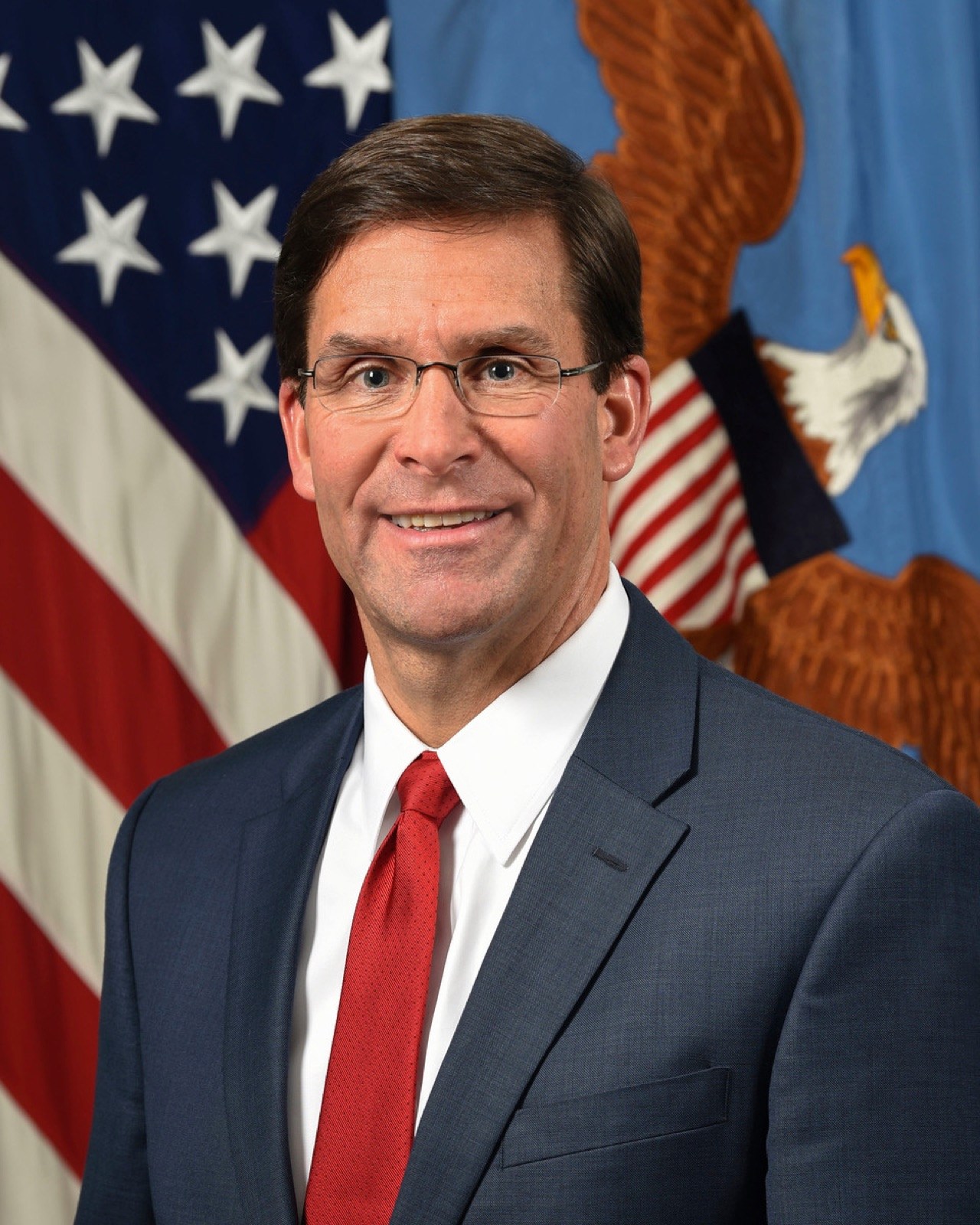
Mark Esper
Mark Esper is a former Defense Secretary under President Donald Trump who was fired by tweet in November 2020 and revealed in a memoir that Mark Esper stayed in office to hold the line against suggestions to bomb Mexico, Venezuela, or send troops to the southern border.
Episode Summary
Former President Donald Trump’s Defense Secretary Mark Esper has come out against his old boss who fired him by tweet in November 2020, just days after the election. Esper has revealed in his memoir that he stayed in the administration in order to ‘hold the line’ against suggestions that the United States might bomb Mexico, Venezuela, or send a quarter million troops to the southern border. One Decision's Sir Richard Dearlove and Julia Macfarlane sit down with Dr. Mark Esper to discuss the current threats to Western interests originating overseas, his assessment of the Ukraine counter-offensive, and if Europe is sleepwalking into a security crisis, arming Ukraine but not refreshing their stocks fast enough. They also discuss the threat China poses to Taiwan and what he would change about AUKUS, the pact between the United Kingdom and the United States, to assist Australia in acquiring nuclear-powered submarines.
Listen & Subscribe
- Watch on YouTube
- Listen on Apple Podcasts
- Listen on Spotify
Transcript
INTRODUCTION
Mcfarlane: You're listening to One Decision, the podcast that explores the choices made that shape our world. I'm your host, Julia McFarlane. Many of our listeners may have some experience in running departments, managing big budgets, and a large amount of staff. Consider, if you will, what it might be like leading an organization of 3,000,000 people, equipment and infrastructure in more than 160 countries, an annual budget of 740,000,000,000 US dollars. Oh, and you are charged with the defense of the most powerful country in the world. Doctor Mark Esper served under president Trump as defense secretary for two years after the resignation of his predecessor, Jim Mattis, who quit over Trump's withdrawal of US troops in Syria and Afghanistan back in late 2018. Since leaving office by way of unceremonious sacking via presidential tweet, Esper has spoken out against Trump, calling him a threat to US security. He writes in his memoir, he stayed in his post in order to hold the line against some of Trump's outlandish suggestions of bombing Mexico or Venezuela, even suggesting firing at George Floyd protesters. My cohost, sir Richard Dearlove, and I sat down with doctor Esper. And I should note, we recorded this interview the day before Yevgeny Prigozhin's attempted coup in Russia. Sir Richard leads us off in what was a fascinating conversation about global national security priorities in 2023.
INTERVIEW
Dearlove: I was recently in Ukraine on a security visit, and it was clear then, because we got quite a privileged briefing and we met a lot of the key people, that they were actually saying to us privately, look, there isn't a counter offensive. There will be a series of counter punches and that this will be over a period of time. I mean, I get the impression that the Ukrainians are quite good at misleading the media and, you know, creating a theme in the media, which actually is rather different from the situation on the ground. I mean, do you agree with that?
Esper: So look, I agree. I've always felt that we are part, all of us are part of an information campaign that we may be from the from the government, which is fine, getting being sent some type of disinformation with regard to the operation, because it's part of a ruse. It's, you know, they're trying to convey stuff. That's part and parcel of warfare, what you need to do. So I've never discounted the fact that we might be part of that. We could be part of this now. And so, and look, offensives are a series of counter punches until you find the real weak spot, and then you then you really penetrate and exploit. And that's why I say this takes time, to suss things out. So I'm not, I don't, I think we should be reluctant to cast judgment on this offensive two weeks into it.
Mcfarlane: I have a question on European defense post Ukraine. The UK here, we illustrate a growing problem that is facing a number of countries that have sent arms to Ukraine, and that's the issue of resupply, particularly at a time of economic downturn. The Economist reported this week that ammunition stockpiles remain a serious problem. Storm Shadow cruise missiles, which Britain has given to Ukraine quite recently in May, they've been out of production for over a decade. It took almost a year to revive the supply chains for NLAWs, those anti tank weapons, and arms companies say that European governments are not placing and will not place long term orders, particularly given the economic climate here. We spoke to a colleague of ours recently at a defense journal based in The US, and he told us about how artillery is really, really key here. Ukraine needs a huge amount of that. European stocks are running very low. Arms companies that manufacture this, they don't want to ramp up their production scales without guarantees that the demand will still be there after this war is over. Are you worried that there's gonna be a looming shortfall when it comes to European weapon stocks, particularly artillery? Is this a major security concern of Washington's? Could it be leaving Europe vulnerable? What risk comes out of Europeans not really having many weapons supplies in this day and age?
Esper: Yeah. So, look, I think many of the dynamics that you outlined there with regard to Europe are true for The United States as well. Case in point is Stinger missiles. They've been out of production for many years, and now contracts have been let to produce a new version and many quantities of it. So this is a problem not unique to Europe. It's with regard to The United States as well. I know this issue fairly well. And part of it was over the years, we fine tuned the defense industry to meet just in time, just in need production. And as people like to say, we need to get to a point where it's just in case, because wars aren't fought in thirty days or two weeks and they're over, as this war has proven. My concern goes back to the bigger issue about European defense spending. Will Europe, and I'm really focusing on the NATO allies, which, of course, includes Canada over here in North America. Will they commit to the spending commitments that they agreed to in 2014? And right now, fewer than 10 countries have done so. And that's a problem. And it has a political impact back here in The United States with regard to how much we spend and how much we should support NATO, and how much we should support our allies. The complaint about NATO allies not meeting defense commitments is a bipartisan complaint. Goes all the way back decades. Right? Obama complained about it. Bush complained about it. Clinton complained about it. It's bipartisan on Capitol Hill. And I think it's time for the Europeans to live up to their commitments when it comes to defense spending. And that's going to mean a commitment to sustaining the supply of key ammunition, key weapon systems for years on end, even if it doesn't appear that a conflict imminent, let alone on the horizon. So that's my concern, is will we somehow get over this hump and everybody will forget the lessons learned and go back to business as usual? That would be a concern of mine.
Dearlove: I think you and I probably see eye to eye on this issue of European defense spending. But, you know, there are huge variations nationally. And, I mean, the big development, but it doesn't seem to have been implemented, Scholz standing up saying Germany is going to increase its GDP and spend €100,000,000,000 on defense. But it does seem to me that there's been no sort of political momentum towards implementation. If Germany really were to commit, it would transform NATO because, you know, they've got such vast resources, but it doesn't seem actually to be happening at the moment, which is very frustrating. While in Poland, you have a big announcement on defense spending and you have clear evidence that the Poles are carrying it through.
Esper: Yeah, but before I'm critical of an ally, I wanna be complimentary of one and I just say, you know, my good friend and former colleague Ben Wallace, I think has done a great job in The UK. I think, you know, The UK has done a tremendous job with regard to supporting Ukrainians and introducing, you know, weapon systems that they've needed before anybody else, such as, you know, the Challenger tanks and the Storm Shadow. So kudos to London. Berlin has been a disappointment and it's a shame because it's the largest economy in Europe. And when I would go around in Brussels, when I was in office and speak to other allies, they would say, well, look, why should we invest 2% or more when the Germans won't do it? Right? And I don't think the Germans recognize they have this leadership role. And as you said, Sir Richard, if they meet their 2% commitment of an $80,000,000,000 a year economy or whatever, that's not the right number, but they've got the largest economy in Europe, one of the top 10 in the world, it would have a tremendous effect. And so, but they have not yet. I don't think they've spent €1 of that €100,000,000,000 commitment they made right after the invasion. And so they've done good. They've committed funding to Ukraine. That's fine. But I'm talking about a real, as they say, it really hasn't happened yet to the best of my observations.
Mcfarlane: As I say, you're complimenting our defense secretary, mister secretary, Ben Wallace has recently ruled himself out of the running for the next NATO secretary general. Were you disappointed by that?
Esper: Yeah. I think he'd do a great job. I mean, Jens Stoltenberg has been tremendous, and I think Ben Wallace would just pick up the ball and keep running with it and do a fantastic job. But, look, there's there's alliance politics about who they want, who wants whom, and I think it's a missed opportunity because Jens has been at the helm now for, I don't know, eight, ten years, something like that. He's gonna have to stay on at least another year by the look of things. I think so. Right.
Mcfarlane: Mister secretary, we're seeing, for now, at least, broadly a bipartisan attitude to the war in Ukraine when it comes to at least mainstream Democrats and Republicans. Senators Graham and Blumenthal recently introduced a draft resolution saying that the possible use of tactical nuclear weapons by Russia or its proxy Belarus on Ukraine or the destruction of the Zaporizhzhia nuclear power plant should be considered an attack on NATO. And if that happened, the response should require the application of the article five of the NATO treaty. Graham warned they will be in a war with NATO should that be the case. Poland and Romania would be the closest allies in the firing line. Do you believe that this consensus will really hold in the event of either tactical nuclear attack or destruction of the Zaporizhzhia power plant given how Trump and DeSantis are trying to push their bases against the idea of supporting Ukraine?
Esper: Well, first question first. I think back in The United States with regard to support, you do see skeptical voices on both sides of the political spectrum, far left and far right, more on the right, on the Republican side, because of views, you know, put out there by Donald Trump that this war isn't in our interest, that we should focus elsewhere. Other people have echoed that. You know, there was a Republican support was more than a majority a year ago, but it has been weakening over time, which gets back to, I think, your first question. I think Ukraine's success in this counter offensive will be important and will influence that to some degree. On Russia, look, we gotta be concerned about the nuclear issue. We have to monitor very closely, but I don't think we should be deterred by it. I think we have been, at least here in Washington, too timid when it comes to supplying certain arms and ammunition and doing so in a timely manner. But I think laying out hypotheticals and drawing red lines, I wouldn't do that. I think, again, we should put a clear warning to Vladimir Putin about not using the weapons. We've been joined surprisingly by the Chinese and I think the Indians as well about the use of nuclear weapons. I've argued for months now that one thing we could do is send a clear signal that if we saw tactical nuclear weapons moving, for example, from their storage areas to the delivery systems, that we might put an air cap over top of Ukraine and be willing to kind of shoot down anything that is carrying a tactical nuclear weapon. People can play with that, but in the spirit of throwing out ideas to help defend and deter. But I'd be careful about drawing red lines and making assertions if the Alliance won't back it up. And air cap is essentially a no fly zone. Yeah, but it would be a no fly zone focused on ballistic missiles, or aircraft that are delivering tactical nuclear weapons. So you could obviously do the former with Patriot and other air defense systems. And you could do same with the aircraft, but it would give you another tool in the toolkit and send a clear warning to Putin.
Dearlove: How long do you think it would be before Ukraine has an operational wing of F-16s? I mean, given the logistics are complicated, it isn't just, you know, having the pilots. It's the spares. It's the backup. It's the ammunition. You know? All of those complexities. My understanding when I was there was if they get F-16s, a lot of this will probably be based in Poland and not actually in Ukraine. But so the practicalities are severe. How do you see that being solved?
Esper: It's a great question. And unfortunately, you're asking an army guy. Look, I would say months. Right? You get the aircraft and you're right. The pilots have to be trained up. I think we've done a study back here in The States, it would take four months, six months to train pilots, it typically takes eighteen months. The same is probably true for maintainers. I've actually said publicly as an interim solution, go back to World War II that used the example of the Eagle squadrons. So could you get, for example, volunteer pilots who have flown F-16s and certainly maintainers and people who could work on the aircraft and pay them, right, do that until Ukraine could have its own people up and running and fully manned to do that. But I think it's gonna take several months would be my guesstimate based on what I've pieced together.
Mcfarlane: You don't think that would be too inflammatory? Would that essentially be, like, foreign boots on the ground? I'm assuming these volunteers would not be Ukrainian nationals.
Esper: Well, we have volunteers. We have an international battalion right now in Ukraine that's been fighting, Americans, people from all countries.
Mcfarlane: But they're not officially sanctioned, though. It would be a bit different if the West is actually sending foreign pilots to fight Ukraine's war.
Esper: Oh, no. I'm not suggesting sending foreign pilots. I'm saying in World War II, they were volunteers. People who were retired, were former pilots, who felt motivated to help, in that case, it was The UK, in this case, it would be Ukraine who would volunteer to fly and to maintain and to, you know, to load the weapons. I mean, the challenge is it's not just flying as Sir Richard said, it's, you have to maintain it and to maintain it, you have to have a logistical supply chain includes all the parts and then you got weapons, right? Everything from the guns on the plane to the missiles to the bombs, everything else. And all that has to be stored and maintained. And it's quite an operation. It's not as easy as one might think because of logistics.
Mcfarlane: We're getting increasing numbers of reports that the Chinese are in fact sending lethal support to Russia during this war. The current secretary of state, Tony Blinken, has said that while Beijing has assured Washington that it was not providing lethal assistance to Russia for use in Ukraine, but there is now concern over private companies in China that may be providing that kind of assistance in actuality. Now there are reportedly several instances last year of Chinese firms shipping tens of thousands of kilos of ammunition, at least ammunition constituent parts, gunpowder, and things like that across the border to Russia, according to the New York Times, to a cartridge plant that apparently has some kind of history with the Wagner mercenary force. China has by and large mostly stuck to that red line of no lethal aid, and it's not clear to what extent these deliveries may be a violation of that. At this point, it doesn't look like it's really too much of a meaningful amount. But is this area a potential red line that could ignite something far worse if we continue to see movement in this issue from Beijing?
Esper: Yeah. Well, first of all, look. I don't trust the Chinese. Beijing has proven itself not to live up to its commitments in any number of areas. Right? And they famously, in 2015, promised Barack Obama that they wouldn't militarize islands in the South China Sea, Xi Jinping went around and did it. For years, they've been ostensibly abiding by UN sanctions on North Korea, yet they continue to provide North Korea with sanction items. Now they don't do it officially, but they turn a blind eye to this trade going on. And we all know that they can crack down on this. I mean, because this is obvious that the Chinese Communist Party shut down China for two plus years with COVID and serious lockdown. So they know how to curtail trade if they really wanna do it. So why is this important? Look, I think an advantage that Ukraine has is that the West is providing them with material, ammunition and assistance, and Russia is not getting that from anybody that I can tell right now. And if you, China, were to enter the game and provide lethal military assistance either directly or indirectly, that could embolden Putin and extend the war. And so that's my concern. Now China is gonna be careful here because they know that if they do it overtly or with official sanction, The United States would likely push for financial and economic sanctions on China, which would hurt them, particularly at a time when the Chinese economy is not doing too well. So this is a careful game, a careful calibration. China does not wanna cross that red line, but at the same time, they do not want to see Russia fail. And so I think you'll see and hear more of these gray zone deliveries. It's been openly, I mean, President Biden said that we know they're delivering dual use items, right? Semiconductors, drones, things like that could be used. I think we should clamp down on that too. But the line has been drawn at lethal military assistance such as one fifty five millimeter rounds, things like that.
Dearlove: Can I just ask you one further question about the Russian military? I mean, you're a military man with a strong military background. I mean, how poor, how bad is the performance in your view of the Russian military actually been on the ground?
Esper: I was gonna say other than the terrible equipment, the poor leadership of the generals, bad soldiering, the lack of an NCO corps, terrible logistics, it's a really good army otherwise. So obviously I'm being quite facetious, but, you know, we, The United States regard them as a peer or near peer threat. And clearly they are not, I think. And I'm just going to focus on ground forces right now, because we know the Navy has not been committed and they have capable, for example, very good submarines, and their strategic forces haven't been committed and we hope they won't be. And the Air Force has had limited commitment, we can talk about that. But the ground army, 90% of it's been committed and a large number of it's been decimated. And the weapon systems have shown their vulnerabilities on the battlefield. And again, we have seen weak leadership at the officer level, poor generalship. They don't have an NCO corps, which is a hallmark of the British and American and other armies that really sustains the force. And then, of course, you're dealing with conscriptees now that don't wanna be there. So I think the Russian army is a second, if not third rate army at this point in time. And Ukraine, conversely, proven itself to be a very good army and developed into a very good army because of Western training, because of how we built their NCO corps over the last five, six, seven, eight years, so forth and so on. And so I think it's been a turnaround, at least for me, in terms of my assessment of those two armies on the ground.
Mcfarlane: Mister secretary, I want to pose a question to you that was actually brought up by Richard after he returned to Ukraine, and he wrote an op ed where he finished asking the question of what does Europe, and what does the West do with Ukraine after this war? Because we will have an incredibly equipped battle hardened modern military with incredible firsthand knowledge of fighting Russia on the battlefield. You know, it's not just the question about whether the West wants to admit Ukraine into NATO, but what does the West do with Ukraine after this war is over?
Esper: Yeah. Look, I think you've hit the nail on the head. Ukraine needs to be in NATO. That is the way that we deter future Russian provocations and as a consequence, preserve the stability of Europe. Because, and then partly because they've earned it. Right? Ukraine is probably now one of the largest land armies in Europe, one of the most interoperable armies in Europe, and they showed a willingness and eagerness to fight Russians. And so they've earned the right, I think, to be in NATO. Now there may be other steps they have to take, but I think for everybody involved, the key is to get them into NATO as the final step.
Dearlove: I mean, when we were with various sort of senior officials in the government, their concluding comment at one of our meetings when we were talking about NATO membership was you can't afford not to have us in NATO. And they drew the parallel, you know, we would be like an Israel sitting in the middle strategic center of Europe. And I think that's a really forceful political and strategic point that they made.
Esper: Yeah. I mean, it's a very good point. And look, for the last at least since 2014 when Russia first invaded, you can go back to Georgia in '08, we've been wringing our hands about Putin and what he might do in Europe and so forth and so on. And here, he crossed the line in February of last year, and Ukraine has really knocked him down several pegs. It's gonna take them years, years to rebuild the Russian army. It's not gonna be the threat anytime soon to NATO, again, from a ground perspective that we thought sixteen months ago that it would be. And so, I think they've earned a place in NATO for sure.
Mcfarlane: I wanted to switch gears and ask about The US and its relationship with some of its old allies in The Gulf. Those relationships have gone through quite dramatic ups and downs in the last decade. It's come from quite a high during your old boss president Trump's time. He chose Saudi Arabia for his first state visit overseas after his inauguration. He clearly got on very well with crown prince MBS. Jared Kushner was very close to the Saudis and the Emiratis. President Biden, however, has done a total one eighty. He campaigned on making a pariah out of MBS after the assassination of Jamal Khashoggi. He did not, as far as the Saudis and the Emiratis are concerned, respond enough to Houthi attacks on their territories, and they're both pretty furious still about Washington talking to the Iranians again after Trump pulled out of the nuclear deal. And they made their feelings pretty clear last year during the OPEC meetings after Biden traveled to the region to beg them not to cut production along with the Russians, which invariably they did. I wanted to ask you, which out of the two presidents do you think has the correct attitude when it comes to the Gulf nations?
Esper: Well, I don't think it's a choice between one or the other. Look, I think when it comes to foreign policy, you have to lead with your values. But not to the exclusion of dealing with the world the way it is. And I think, as we look at The Middle East, at least two big things we're always concerned about is making sure that the world and The United States by extension has access to the energy in that region, and then second commerce passing through the Persian Gulf. But then we have to deal with Iran, which is a real rogue in that region. It's caused mischief for over forty years in not just the countries of the Mideast, but extending into Africa and into parts of South Asia. And, of course, pursuing a nuclear program, terrorism, support for Hamas, Hezbollah, we can go on and on and on. So that's it. So I've given you an economic reason and a security reason for continued American presence. Now, much like we face with our NATO allies, I always think that the Middle Eastern states can do more to enhance their own security and not just rely on The United States. I think that's something we should push. And then I think through engagement, we can continue to bring those countries along to a point where they share more of our values and our respect for human rights, so forth and so on that we appreciate. You're not going to get that by leaving the region or by pushing them away. So I think all those things factor in. You know, with the Iran deal, I shared criticism about the 2015 nuclear deal. I write about it in my memoir about this. I think the mistake then and the mistake now is you can't cut a deal with the Iranians and not be talking to Israel and your Arab allies at the same time and getting their input and making sure they're aware of what's going on. I mean, that's diplomacy one zero one. And yet right now, you can't pick up the paper and not read that there's some secret deal going on or blossoming between Tehran and Washington. And I don't know, again, to what degree the administration has involved our allies and partners. And I extend that because you have other players as well who've been involved in this issue over the years, specifically, The UK and France. And so I think all those things have to factor in, but we have to deal with the world the way it is. That's why, you know, President Biden's getting a lot of heat this week from people in his own party about welcoming Modi from India to The United States and concerns about his human rights record, so forth and so on. And in my view, look, those are issues that we could talk about. But if we're going to deal with China in the twenty first century, I think our most important strategic partner we need to keep building up is India. So we have to take a very practical look at these types of things and approach them in a deliberate manner.
Mcfarlane: Mister secretary, you mentioned that there was obviously the obvious national security dimension to those relationships, particularly with states in The Middle East. I wanted to ask you specifically because The UAE, which I think was officially probably still is a close US ally, they've made increasing moves towards Moscow and Beijing. They've sharply stepped up trading between both of those nations. It's been growing its relationship with Wagner Mercs in Libya, supplying arms to a warlord there, general Haftar. The UAE are also reportedly involved in Wagner's activities in Sudan where the Mercs have been exporting gold from Sudanese mines and shipping it off to Dubai. Emiratis, they've been sanctioned by The US for a number of things, including helping the Russians to bypass US sanctions, even collaborating with transfer Iranian drones and support equipments through The UAE and onto Russia. We spoke last year to predecessor of yours, doctor Bob Gates, who served under Bush, of course, and he said that president Biden's scorn for Gulf allies was creating a vacuum that was being filled by Russia and the Chinese. How much of a concern is this for you, and what happens if America loses The Gulf to Russia and China, in terms of its partnerships and influence?
Esper: Yeah. Well, that's what I mentioned up front in the previous question that we cannot create a vacuum because we have those national security and economic security interests. And if you do create the vacuum, then those countries will seek to find somebody else to fill it. And by the way, Russia and certainly China want to fill that vacuum. I mean, we know that China is looking to establish some type of port facility, if you will, in UAE. And for those countries, they get nervous. If they don't see a strong commitment from The United States, they don't get the right reassurances, they get concerned about Iran once again, because this is, you got the Shia Sunni divide. And so they look to repartner. That's why I think we have to be engaged and both feed in. That doesn't mean that we have the entire United States military there or we do things that are unreasonable, but we have to have a presence, have to engage, we have to make sure that that vacuum is not created in the first place, because otherwise they will look for other partners.
CHINA AND TAIWAN
Mcfarlane: I really wanted to talk to you about China because China is, of course, the great challenger, something that is truly bipartisan in both ends of the political spectrum in The US. Can't agree on much, but they do agree that China poses a potential threat to The US. And earlier this year, the Center for Strategic and International Studies carried out this war gaming simulation of a war between The US and China over Taiwan. It found that a war between the two superpowers would most likely leave a victorious US military in just as crippled a state as the Chinese forces it defeated in this hypothetical scenario. I think it found at least two US war aircraft carriers would end up at the bottom of the ocean, and the Chinese navy, the largest navy in the world, at least in terms of numbers, would be in total shambles. What was your reaction initially to that experiment wargaming exercise earlier this year? I mean, does it strike you as plausible? And do you think there are maybe some sort of wild card factors not considered such as experimental use of AI or cyber attacks and things like that?
Esper: Yeah. You always have to be careful with wargames. I think they can be informative, but you can't allow them to be determinative. If I recall, because I talked with the folks at CSIS, the outcomes, as you rightly noted, were based on two assumptions. Again, if I recall properly, one is that Taiwan fights. And number two, that The United States makes a decision to enter quickly and does so. If any one of those two things doesn't happen, then China wins nearly every time. And again, based on those assumptions and the outcomes, there were some important lessons learned that I think we're taking action on some of, right? So you need more long range, air to surface missiles to destroy Chinese shipping, so forth and so on. And then you rightly pointed out about the aircraft carriers and ships, and that causes me distress because you know, that was a conclusion I'd come to during my tenure as Secretary of Defense, that the carriers were not the best platform going forward in a war with China. And so much so that we designed a new navy, if you will, that emphasized attack submarines rather than aircraft carriers because they are far more survivable. We have a leading edge around the world when it comes to attack submarines. In fact, I think the two things that CSIS noted that were important in this fight were long range air to surface missiles and attack submarines. And so we're not yet making those adjustments to really deal with the Chinese navy effectively. But again, I think a big part of this is Taiwan, making sure they have the capabilities they need, the will to fight and the stockpiling of ammunition and water and a number of things. But they're important lessons. And I've been to Taipei to talk about this, but important lessons from Ukraine that I think the Taiwanese are taking on board.
Dearlove: Can I ask you briefly about the AUKUS agreement? Because it's very relevant in the context of what we're talking about. I mean, that is focused on providing Australia with attack submarines. And, I mean, presumably, the sort of strategic implications are quite significant for the area as a whole because it will make the Australian Navy, which is pretty small and inconsequential at the moment, but it will give them a very, very powerful deterrent in terms of Chinese expansion in the Pacific. I'm interested in your comments on that.
Esper: I think it was a very good agreement, a strategic agreement from a political sense. I wish I had come up with the idea. I think you're right, sir Richard, that with the Australians having advanced nuclear attack submarines presents another dilemma for the Chinese. My concern with it, as I understand it right now, though, it doesn't change the net number of submarines. In other words, we're not adding to the number of attack submarines. The United States will be sharing some of ours. So I think that goes in the wrong direction. I'd rather see us build more submarines. I'd rather see the Aussies build more submarines and the Brits for that matter build more as well. Because the Chinese, I think, have us outnumbered in submarines. Now more of theirs are diesel than nuclear. But again, I think the most important naval weapon in the fight with the Chinese is the nuclear attack submarine, and that's what we should be really investing in. So that would be my change to that plan as I understand it right now.
Dearlove: The People's Liberation Army, the PLA, have been building and trying to develop an amphibious capability because, obviously, without an amphibious capability, you can't invade Taiwan. And my understanding is that a cross strait invasion would actually be very, very complex operation and very difficult to carry out. But on the other hand, you could argue the Chinese don't really need to invade Taiwan, they just need to blockade it. So, I mean, I'd be interested in your comments as a sort of military analyst as how you see China's options and whether it is just an issue of a blockade or whether an amphibious invasion is realistic.
Esper: Yeah. I mean, I think you've hit the nail on the head on the first part. Amphibious operations are very complex, complicated operations, and they're gonna have to cross a 100 mile strait under withering missile fire from Taiwan, The United States, whoever else. I mean, you think about the D Day invasion, they only had to cross the English Channel, which is what 13 miles or so wide, and did it under the protection of air cover, so forth and so on. So I think it's a very complex operation that they're not trained to do and that they don't have the capacity to do currently. I do think in some ways a more challenging dilemma is a blockade using ships and missiles, right, where they can basically sit outside the ports. There are only so many major ports for Taiwan, but they could sit outside those major ports and block them off by threatening international traffic and slowly strangle Taiwan. And that presents a different political dilemma for all of us, about how do we deal with that. To me, that's a more likely scenario right now for me.
Dearlove: Yeah. I mean, I agree with you that, you know, the strategic logic points towards a blockade rather than invasion were China to escalate the Taiwan issue.
Esper: Yeah. We saw almost a mini rehearsal of that last summer after speaker Pelosi visited Taipei. You know, they declared exercises, naval exercises, and they conducted it on the North Coast, the South Coast, and I think the West Coast of Taiwan, which were just, again, opposite the ports and around the major shipping lanes. And, again, I think the message is we can shut you down pretty quickly, Taiwan.
UFOS
Mcfarlane: Mister secretary, I have a very, very important, very serious question for you. And we go back your time in office at the Pentagon where you established the Space Force and Space Command saying America's airspace and cyber warriors will be at the forefront of tomorrow's high end fight. Earlier this month, there were stories that claimed a combat veteran Pentagon staffer came forward as a whistleblower testifying under oath to the House and Senate Intel Committee's councils that there are long standing covert programs within the US government that possess crash materials of nonhuman origin. And earlier this summer, we had the first open congressional hearing. Don't laugh, Richard. I'm, this is very, very serious stuff. Earlier this summer, we had the first open congressional hearing about UFOs in more than fifty years. Mister secretary, what's with all these UFO stories lately? What do you know about this crash? Are aliens bad at parking? Is the government lying to us all? What's going on?
Esper: Yeah. There there are aliens. I'm hiding them in my garage right now because I didn't want them to be found out. Look, I'm as curious with this stuff as you are. I obviously pulled the thread on all those stories during my time. I have nothing to report. You know, when the first UFO reports came out in the internal office about this, you know, my guidance to folks was, we have a responsibility to defend The United States Of America, right? And so if there are unidentified aerial phenomena happening off our coasts, then we need to find out what's happening. It's our duty, our obligation, not just sit out there and admire the problem. And so my guidance to the team was let's figure out a game plan by which, if we see these things, we go out and we send aircraft or we position ships or whatever to interrogate them using radars and sensors and whatnot. Because, again, you have to figure out what's going on. Is it, are they weather balloons? Are they, you know, Chinese surveillance drones? But my view is we had an obligation to do that. And we should pursue and try and resolve the issue and not admire the problem.
Mcfarlane: Did you meet any aliens during your time as secretary of defense?
Esper: Yeah. Not from outer space.
Mcfarlane: It's an excellent excellent answer. Good answer. That's brilliant. Mister secretary, thank you so much. That was a really great discussion. Former defense secretary Mark Esper speaking to us there just one day before an extraordinary turn of events in Russia, a weekend that may have set in motion events that could change the course of the Ukraine war and the long reign of power of Vladimir Putin.
ANALYSIS
NEWS CLIP [37:35] It's a stunning turn of events as Vladimir Putin accuses the head of the Wagner military group, Yevgeny Prigozhin, of an armed mutiny. In a televised address, the Russian president said that decisive action would be taken to stabilize the situation in Rostov-on-Don, a southern city in Russia where Prigozhin claimed that his forces had taken control of all military installations. Putin also said that anyone who had taken up arms against the Russian military would be punished. The leader of the Wagner Group, Yevgeny Prigozhin, has ordered his mercenaries to turn around and return to their bases to avoid bloodshed.
Mcfarlane: We've covered the antics of the Wagner mercenary force on this podcast a few times now, and we've paid particular attention to what they've been up to in the continent of Africa. In 2021, when France withdrew their forces from Mali after the government there signed a deal with Wagner to fight against Islamist militants, Prigozhin started making serious cash from his mercenary exploits on the continent. They've expanded their presence now across Africa to the Central African Republic, Libya, Sudan, reaping millions from Africa's natural resources, trading conflict minerals and timber. The enormous wealth generated from Africa has helped fund operations in Ukraine, where Wagner Mercs have been a far more effective and well equipped force than the Russian soldiers meant to be leading the war. That momentum now looks uncertain, with Prigozhin now reportedly in exile in Belarus and the future of Wagner in doubt. The government announcing that the group was to be effectively absorbed into the Russian military. But Mercs fight for money, and Russian soldiers don't exactly get paid the big bucks. Furthermore, this was a humiliation for the Russian president Vladimir Putin who had to bargain his way out of this bungled mutiny with the whole world watching. We'll be looking to this in a bit more detail this Friday with my cohost, sir Richard Dearlove. Stay tuned for that. And if you haven't already, hit subscribe so you don't miss our full or bonus episodes throughout the week. From me and the team, thank you so much for listening to one decision. See you next time.