Hosted by Christina Ruffini and Sir Richard Dearlove
Guest
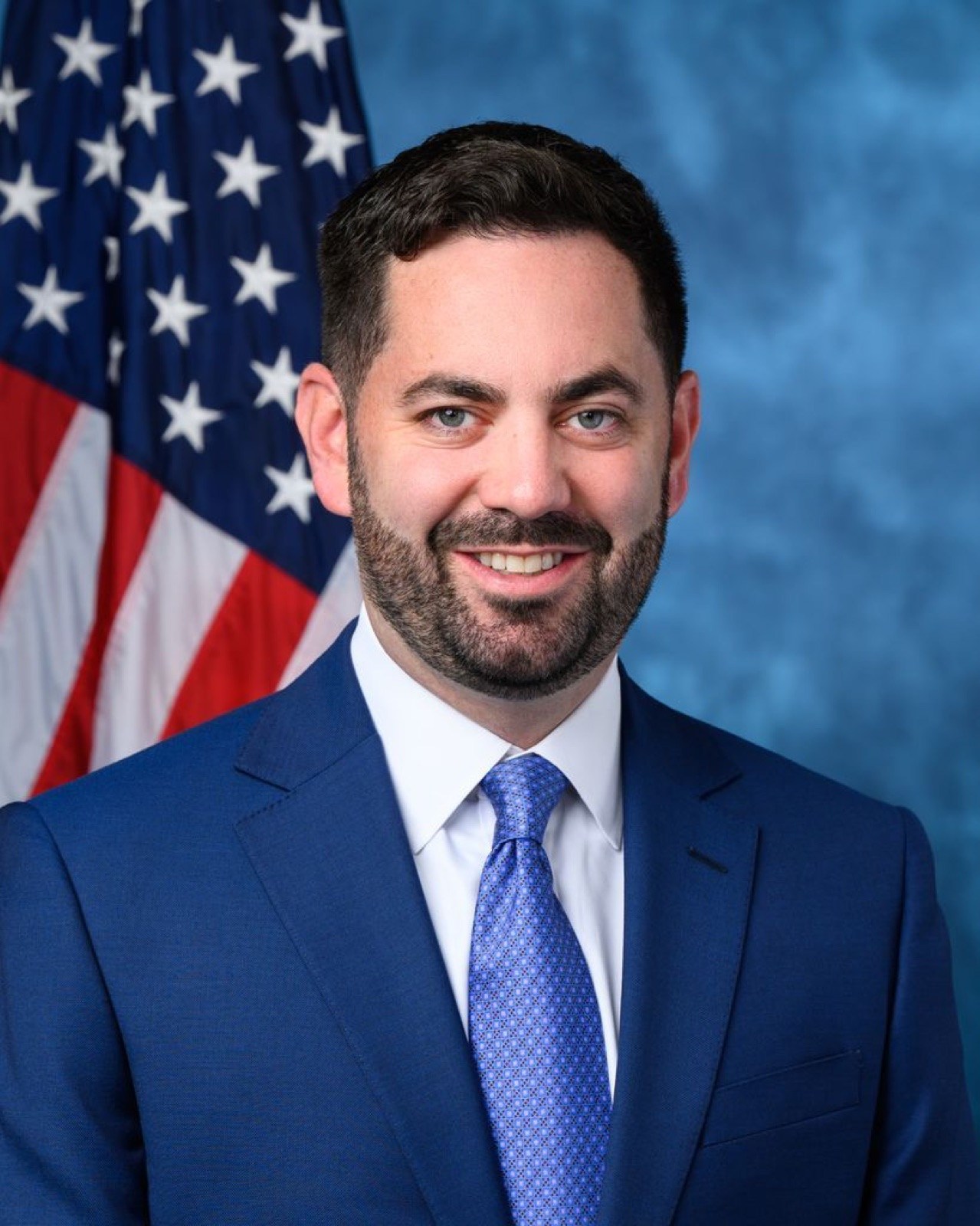
Mike Lawler
Mike Lawler is a Republican Congressman with a strong bipartisan stance on foreign policy, including supporting Ukraine and ending Iran's nuclear program, and argues that the United States should take military action against Iranian nuclear facilities if Iran fails to dismantle its nuclear program.
Episode Summary
In this week's episode, Christina Ruffini and co-host Sir Richard Dearlove, former head of MI6, sit down with Republican Congressman Mike Lawler, whose strong bipartisan stance on foreign policy includes supporting Ukraine and ending Iran's nuclear program. He shares his thoughts on India's airstrikes against Pakistan, the recent elections in Romania and Moldova, where a growing wave of right-wing nationalism has created a fraught political response. Lawler also argues that the United States should take military action against Iranian nuclear facilities if Iran fails to dismantle its nuclear program. Plus, Sir Richard reflects on the time when Tehran imposed sanctions against him.
Episode produced by Situation Room Studios. Original music composed and produced by Leo Sidran.
Listen & Subscribe
- Watch on YouTube
- Listen on Apple Podcasts
- Listen on Spotify
Transcript
COLD OPEN
Lawler: If Putin doesn't come to the table, if he continues to delay. I do think there's going to come a a moment soon where the president is going to take a very aggressive posture, economically and otherwise, that will not be to Putin's benefit.
INTRODUCTION
Raffini: Happy Thursday, and welcome to One Decision. I'm your host, Christina Raffini, and we are here today with our cohost, Sir Richard Dearlove. The voice you just heard was Republican congressman Mike Lawler, who's positioned himself as one of the leading GOP lawmakers with a strong bipartisan foothold in foreign policy. He's on a variety of caucuses and subcommittees including India, Haiti, and Moldova. Also Korea. We'll talk to him about why that is. And we also talked to him about the recent attacks in Pakistan, why he thinks a settlement in Ukraine is really important, why he doesn't trust Vladimir Putin, and why he thinks The United States should take direct action on Iran's nuclear program if the latest deal doesn't work out. Let's take a listen. Alright, congressman. Thank you so much for joining us. There's some news about these India strikes, striking into Kashmir two weeks after this terror attack. This is not the first time there have been cross border strikes in this area, but obviously it's concerning because this is farther into Pakistani territory or disputed territory that India has struck. I'm wondering what's your take on this, how concerned we should be, and if you think it's gonna stop here.
INTERVIEW
Lawler: Well, the terrorist attack a few weeks ago was deeply disconcerting. The conflict in this region of the world certainly would not be good. I think obviously you have two nuclear powers here. Certainly from the standpoint of an escalation, it would not be helpful. But obviously this has been a long running dispute for many years. I have a very large Indian American community in my district. People have been extremely frustrated by the situation in Kashmir and certainly Pakistani aggression over many years. India is responding, which they said they would. I think ultimately The US should engage with India and Pakistan to try and diffuse the tensions and not see this escalate given so many of the other challenges we're seeing around the globe right now. This would not be obviously a helpful escalation and now Pakistan, of course, saying they're going to respond, so obviously Pakistan needs to do more to address some of the challenges within their own country and making sure that there are not terrorist attacks against India.
Dearlove: It is not surprising that India defended itself here. Well, the only thing I've got to say is that the Pakistanis, the ISI in particular, that's the Pakistani intelligence service, have done nothing to close down Lashkar-e-Taiba, which is the group responsible. And, I mean, this group's caused mayhem and done some really lethal attacks.
Lawler: So, you know, I'm not surprised that the Indian response is so fierce. I think this has been certainly within my district, a lot of frustration from the Indian American community given the history here, given the actions by both the Pakistani government and terror networks within, and frankly, the lack of action to crack down on that. And so as you pointed out, it is not surprising that India defended itself. Certainly, if we were subjected to that type of attack, we would respond accordingly. So, I think the objective is to obviously make sure this does not escalate well beyond this because that would create real challenges in that part of the world right now.
Raffini: Congressman, you mentioned this is important to a lot of your constituents because there's a large Indian American community. But reading the different committees and caucuses that you're a part of, you've got the Korea caucus, the India caucus, the Haiti caucus. I know you're on the Moldova caucus. I didn't even know there was a Moldova caucus. My wife is from Moldova. Oh, brilliant. Okay. We're coming back to this because I'm gonna grill you on Transnistria because I know all those breakaway republics, and we're gonna talk about it. But for people who don't know your district, can you talk a little bit about why it's so diverse and how your constituents are feeling about America's place in the world given that so many of them, you know, outside of New York are first generation, second generation Americans who come from all these different places? How are they feeling about The US and the world right now? Well, I have one of the more diverse districts certainly. It's immediately North of New York City, the immediate suburbs, Westchester County, Rockland County, Putnam, Dutchess Counties. And so it's a melting pot. 19% of my district is Latino, which obviously is not monolithic.
Lawler: I have large Mexican American communities, Guatemalan, Ecuadorian, El Salvadorian, Dominican, you know, a very big mix within the Latino community. I have the second largest Haitian diaspora per capita in my district. I have the largest Irish per capita in my district. I'm half Irish, half Italian. You know, we have a large Italian American community, but certainly growing Indian American community. I have the largest concentration of Jewish Americans in my district. So it's a very, very diverse district, a lot of different issues, concerns, needs, and obviously when it comes to foreign affairs, people are very interested. And so these issues are playing out and certainly given my population within the Jewish community, what's happening in The Middle East is certainly top of mind.
Dearlove: You just destroyed the argument that Europeans often make about the states that they're not interested in foreign affairs. I've never heard such an intense cross section of diverse and different international interests. That's quite extraordinary.
Raffini: So it accounts for your specialism in these areas, I think. But that has to make it difficult for you because there is so much going on in the foreign affairs landscape right now. And I know I don't wanna say you've butted heads with the president because that's not accurate, but you have been a little more supportive of Ukraine and more openly vocal of Putin perhaps than president Trump has been. What is your take on where these negotiations stand with Ukraine? Is Rubio leading this? Is Witkoff leading this? Do you think there should be more congressional involvement? And are you really confident that they're gonna get a deal that's good for Europe and Ukraine or that they're gonna get a deal that's best for Moscow? So, I've been very clear from the start that Vladimir Putin is a vile dictator and thug,
Lawler: and certainly the world will be better off when he is no longer president of Russia. But the fact is that obviously we are three years into this conflict. I have been a strong supporter of Ukraine. I do believe Ukraine collapsing would be a calamity for Europe, especially for Eastern Europe. Former Soviet satellite states like Moldova would be in harm's way. I mean, Putin would not stop at Ukraine. That much is clear. It is imperative that Ukraine's sovereignty is protected. Now, I think where the president and I agree very much is that the longer this conflict drags on, the more likely it is that Ukraine does collapse, and that would not be good. And I think what the president is trying to do is get a negotiated settlement that quickly brings this conflict to an end and does in fact protect Ukraine's sovereignty. I think it was very good that the president and president Zelensky met while at the Vatican for the funeral.
Raffini: Yeah. That was a hell of a photo. That's one of those splendor of the Vatican kinda knee to knee on those chairs. It was very different than the Oval Office meeting, which you were also critical of. A much better moment in American diplomacy and global affairs.
Lawler: You know, I think there's a realization that this can't continue. I mean, the longer this conflict drags on, my concern is just that Ukraine is not in a position to win, but at best to drag this onto a stalemate and at worst that it would fall. And so, you know, I think that's really the objective of the president. I think he wants to see this come to an end. I don't think it is a function of him supporting Putin over Ukraine. I think it is him recognizing that in order to negotiate a settlement, you have to deal with both parties. Obviously, Vladimir Putin is not someone you can trust, and so that complicates any negotiation. But barring US troops going in, the concern is what are we really talking about here? How much longer can this continue? And that's really, I think, where the challenge is here and why Putin is pushing the limits because he knows that in the absence of troops going in by The US or other European nations, this is a waiting game. And so I think the president, though, has made it clear if Putin doesn't come to the table, if he continues to delay, if he continues to proceed forward with attacks, killing innocent civilians, I do think there's going to come a moment soon where the president is going to take a very aggressive posture, economically and otherwise, that will not be to Putin's benefit.
Dearlove: You're sensing there's potentially an appetite for that. There's gonna have to be, and that's the reality. It seems to me over the last couple of weeks, there's been a shift in maybe Trump's thinking or in American policy and that things have moved more favorably towards the Ukrainian position. Okay. This is partly because of Putin saying yes to a ceasefire, but actually doing absolutely nothing to progress in that direction. So I'm interested so much in what you're saying, because some of us that are very concerned about Ukraine's position. It looks as though it's improved recently, and there's no sign yet that Trump is actually gonna cut off American support.
Lawler: I think that's right, but I think if you go back and listen, sometimes people get caught up in president's rhetoric as opposed to fully listening to what he's saying. And I think at the very beginning, he made clear, he wants to give a negotiation a chance. He wants to give Putin the opportunity to come to the table and negotiate, but that there would be consequences if he didn't. Obviously there was clearly frustration with president Zelensky in that Oval Office meeting and some of the back channeling and negotiation.
Raffini: What do you think that was about? I mean, you know these people. To me watching, it seemed to be really driven by J. D. Vance, not even the president. I was wondering if Vance hadn't been in that meeting, if it would have gone quite as sideways. But what is your take on that whole thing? When you're a foreign leader and you're coming to the Oval Office, and certainly when you are asking for
Lawler: the help of the American people and the president, you gotta compose yourself. Even if you're frustrated, you gotta do it behind closed doors. I mean, we all know diplomacy is messy. We all know there are fights between allies and strong disagreements, but that can never spill out into public view like that. And I think there was plenty of blame to go all around there on how that could have been handled a lot better. But at the end of the day, to me, I think the president's point has been very simple, which is, look, we wanna protect Ukraine's sovereignty. We want to obviously end this conflict, but in order to do that, you gotta get both parties to the table to negotiate. And I think the president wanted to open up lines of communication with Putin for the purpose of getting there. And after three years of not communicating with him, you gotta start somewhere. And I think that was the president's point. Obviously I certainly get the frustrations, but I think at the end of the day, we have two choices here, either you negotiate a settlement or this conflict continues. And so that's really where things stand. I think obviously Ukraine agreeing to the minerals deal was good. I think that is a positive step. I think that helps solidify long term relationships. I think it also builds trust between the administration and President Zelensky, which is important as we work through the next steps here. And ultimately, again, Vladimir Putin is solely responsible for what has happened here. And he proves it every day with his actions and his conduct. And so the fact is, if he does not come to the table, if he does not agree to a ceasefire and an end to this war, then ultimately, The United States and our European allies are gonna have to take action. And so that's really where this stands at the moment.
IRAN NUCLEAR TALKS
Raffini: I do wanna talk to you about Iran as well because obviously the Trump administration is trying to enter a new round of negotiations with Iran. But what strikes me, because I covered Pompeo. I was a correspondent at the state department during the first Trump administration. And, you know, we heard the rhetoric. This was the worst deal ever. This was just a disaster for foreign policy. It strengthens Iran. It shortened their breakout time. But what strikes me as a bit ironic is the Trump administration went into these negotiations saying upfront, we want complete denuclearization from Iran. That was met with this is a nonstarter pushback from Tehran. And now you're hearing some moderate voices, including vice president J. D. Vance saying, well, it may not have to be complete denuclearization. We could do monitoring. This is sounding a lot like the JCPOA. So talk to me about what you think the parameters of this deal are gonna be and how similar they're going to be to the last one. Look, I was opposed to the JCPOA.
Lawler: I was opposed to the Biden administration trying to renegotiate a new version of the JCPOA. I would be opposed to a JCPOA 2.0.
Raffini: Okay. So how is this different then?
Lawler: The issue again, same thing kind of in the way I think the president views the conflict between Russia and Ukraine, is that, look, you have to try to give a negotiation a chance. You have to try to avoid use of military force wherever necessary. But ultimately, if you cannot come to an agreement that is acceptable, then action will have to be taken. And so my view on this is, Iran cannot ever have a nuclear weapon, period. They cannot have the capability to build a nuclear weapon, period. And they are closer today than they ever have been. And the world has been saying this for twenty plus years. And so the question really becomes, given the landscape we're in today, given what happened on October 7, given the aftermath of that, given the proxy network that Iran has funded through its illicit oil trade with China, which we are cracking down on and seeking to cut off at every turn with the SHIP Act, the Iran China Energy Sanctions Act, I have a new bill, the Enhanced Iran Sanctions Act, to cut off that funding source. We will give Iran the opportunity to end this program. If they do not, my fundamental view is that The United States needs to be prepared to strike at that program. It is not and should not be Israel's sole responsibility to deal with this. And so I think that's what the president is trying to do. He's trying to give Iran the opportunity. I think the president made clear last week that they cannot have a nuclear weapon, they cannot be able to enrich uranium. And so, you know, we will see how this progresses. I think Secretary of State Rubio really should be at the forefront of these discussions. I think obviously Steve Witkoff has a role to play, but I think Secretary of State Rubio should be leading these discussions and negotiations.
Raffini: So to clarify something really quick, so if these negotiations fail, you would support direct US strikes on Iranian nuclear facilities?
Lawler: I would, and I fundamentally believe that it is not Israel's responsibility alone to handle. The fact is that this unholy alliance between China, Russia, and Iran is what has destabilized the world. It is what has created these conflicts abound. And Iran, the greatest state sponsor of terror that has continued to fund Hamas, Hezbollah, the Houthis and other terror proxies in the region, what they're doing in Iraq right now, these are real challenges to global peace and stability. And so ultimately, from my vantage point, if a negotiation does not come to fruition
Dearlove: and Iran is in the position of having a nuclear weapon, we must stop that at all costs. I'm sure, congressman, you'll be aware that in the last few weeks there has been the arrest of seven Iranians in The UK, Iranian nationals, on terrorist charges, although the government's made no announcement yet as to what that actually consists of. So, I very much endorse a lot of what you're saying. But one of the problems with Iran has been that if you leave them with a vestige of a nuclear program, so called civilian use, which they don't actually need because of the amount of energy that the country has anyway, they will cheat. And if you go back to the original IAEA inspection regime, which was given a lot of help by various intelligence services when they went into Iran to look and see what was happening, to search and to inspect, they had to be efficient. And it wasn't just there, there were several services helping make sure that their inspection regimes were efficient. But they were always cheating. And I think what I'm concerned about is if you leave them any bit of a civilian program, it will then allow them to exploit that to continue their weapons program. So it's gotta be a total cutoff of the program, which the Iranians at the moment are saying is out of the question. And it seems to me there's also an existential question that the survival of the theocracy in Iran is actually tied up with the continuation of a nuclear weapons program.
Lawler: A thousand percent, and they know that. And that is what has been the source that has kept them in power and kept the people suppressed. Look, they have obviously more than enough oil for their energy needs in Iran. I do not believe they need nuclear power. I think they have proven themselves untrustworthy over decades now. And so from my vantage point, again, if they cannot reach an agreement, action needs to be taken.
Dearlove: But I'm also fascinated by your secondary sanctions bill in congress, which is absolutely what should be done. But the problem is it's not just China buying. It's India and other countries. Do you think it's enforceable sort of internationally when you get on, let's say, to India rather than China? I mean, I'm quite interested to know what you think the mechanics of enforcement is going to be.
Lawler: Look, I think the two countries, in my view, that are most critical to stability around the globe working with us in the coming years, Saudi Arabia and India. And I think it is imperative that we continue to strengthen the relationships, address where there are challenges, but strengthen the economic cooperation between our countries. And obviously from a national security standpoint, getting India to stop buying, for instance, Russian military equipment is paramount. Getting India not to engage in any oil trade with Iran is critical. Energy policy obviously matters, which is part of the reason why domestic production of energy in The United States is so critical. It's vital to our national security. We need to be exporting energy to other parts of the world so that they are not purchasing energy from bad actors. And so there's a lot at stake here. I think obviously President Trump and President Modi have a very strong relationship going back to the first administration. I think that can be very helpful in dealing with the specific issues. If India continues to persist, my view is that the sanctions are necessary. The only way you are going to end the threat from Tehran is to cut off this oil supply and end their nuclear program. Otherwise, this will continue in perpetuity. They will continue to finance terrorism. They will continue to pose a threat to the peace and stability of the world. And so it is paramount, and our allies need to understand that.
MOLDOVA AND EUROPEAN ELECTIONS
Raffini: You know, given we've been talking about your wife being from Moldova, I'm wondering if you have any fabulously relevant anecdotes about either traveling there or culture clashes or interesting moments you had in that area of the world?
Lawler: So certainly, you know, Moldova, a lot of folks are like, where? Who? It's between Ukraine and Romania. So my wife's family lives up in a village in Soldanesti near the Ukraine border, not too far from the Transnistria portion of it. I've been a few times, we're gonna be going back again soon, but I went to spend Thanksgiving there one year. It was the first time I was away from my family for a holiday. So my in-laws bought a turkey months in advance knowing that we were coming. They plumped it up over those months. Oh, like a live turkey. I was thinking like a frozen, like they bought an actual living bird. A live turkey. And then on the day of Thanksgiving in the morning, we went outside in the back. They took it out of the coop, and that whole phrase about a chicken running around with its head cut off, well, that's true. And it was fascinating. But that's how they do it.
Raffini: Okay. First of all, this is incredible. And second of all, this is months of commitment they made for you to get this turkey and keep this—
Lawler: Oh yeah, I actually, I was very appreciative of it because they, you know, obviously they don't celebrate Thanksgiving in Moldova, but they made it very special and the turkey was very fresh. So it was great.
Dearlove: The Moldovan election was a close rather thing, but it came out in the right place. Thank goodness. But we've got this election now in Romania, and that's looking pretty desperate in terms of continued Russian interference with a nationalist candidate. Okay. He says he's pro Trump, but he's also strongly pro Russian and anti Ukraine.
Lawler: You know, obviously, the Russian interference in these elections is significant. It's been going on for years. Obviously, there's been real challenges in Moldova. President Sandu was able to hold on. Obviously, in Romania, there's been significant challenges. I will say, even with the Russian interference, I thought the removal of the one candidate was not good from the standpoint of it really creates a dangerous precedent. And so obviously the interference is one aspect of it to deal with, but I also think the courts then removing a candidate, it just has created a disaster in their elections. And I've spoken with the ambassador several times about it. I'm obviously very concerned about what this portends for the future, but also the trust people have in elections. And so it really creates a very significant challenge. And yes, in The US, I believe our elections are very secure. There are challenges along the way. But when people act as though it can't happen, we see it happening. It is happening around the globe and it is a problem. You've got Marine Le Pen in France being removed by the courts from the French presidential election. You're starting to see kind of a breakdown in the election process, and that is not good. That is not good. No matter how you view it, it creates real distrust.
Raffini: Congressman, thank you so much for joining us. We really appreciate it. This is very fun.
Lawler: Thanks so much.
ANALYSIS WITH SIR RICHARD DEARLOVE
Raffini: So Richard, that was great. Obviously, someone who really knows the issues and is willing to talk. He's a moderate Republican, and he talked about how diverse his district is. So he's got a lot of different ways to be pulled. One of the other things is he's one of the few members of Congress still doing town halls that's a Republican, and they've been very animated and contentious and people have had to get removed. But he's still willing to do them, and he's willing to come talk to us. So, we appreciate it.
Dearlove: Quite surprised. I mean, he was balanced but extremely knowledgeable and really knew what he was talking about. And, for example, I've never heard any American politician express the situation in relation to Iran in particular so clearly. I would imagine that that would massively worry the Iranians listening to him and what he's saying because it puts primary responsibility on US foreign policy as an issue to close down their nuclear program, if necessary, with a direct attack on it.
Raffini: I mean, that's not something you hear from a lot of people, and the fact that he is not really out there. He's a moderate guy and is still saying that. That seems significant. Is there any appetite for that in The UK? Do you think The UK would ever directly strike Iranian nuclear facilities? I think they'd be extremely nervous, particularly as the foreign office in The UK has tended to be pro dialogue with the Iranians.
Dearlove: We don't even have a terrorist ban on the IRGC. The two countries that have proscribed the IRGC, I think, are The United States and Canada, whereas in The UK, the foreign officers have always argued that it would complicate the diplomatic relationship and that the dialogue with Iran would be disrupted. And I sat at a table recently with actually former British ambassador to Washington, Peter Westmacott. Peter started his career in Iran and is a Persian speaker, I believe, was arguing forcibly against me about how wonderful the JCPOA was. So you have got completely the other side of the coin. I don't know whether I told you, but the last time that we sanctioned various Iranians by name in Europe, they retaliated. And my name was on the list. Amazing. So I've been sanctioned by the Iranians. How about that? It's a mark of distinction.
Raffini: I remember after the war, the Russians started sanctioning a couple friends and journalist friends, and it is. It's a badge of honor. You know you're doing a good job. You know you're getting through, and they're listening to you. We wanna thank, again, congressman Mike Lawler, who was our guest this week. If you like this conversation, please be sure to go to the website, 1decision.com, and check out many of our other conversations. We're gonna be talking to a lot more interesting people in the next couple weeks, myself and our new host Kate McCann. And you can also go on our YouTube page for explainers on current events and topical commentaries. I'm Christina Raffini.
Dearlove: And I'm Richard Dearlove, former chief of MI6. And thanks for listening. We'll see you next week.