Hosted by Christina Ruffini and Sir Richard Dearlove
Guest
Episode Summary
In this week's episode, host Sir Richard Dearlove, former head of Britain's MI6, is joined by Sir David Manning, a former colleague and friend. Manning is currently Director of Gatehouse Advisory Partners and previously held several diplomatic posts including British Ambassador to Israel, NATO, and the United States, among others. They sit down to discuss the tensions in the Middle East, including the developing conflict between Israel and Iran, and examine the role of President Donald Trump in peace negotiations. They also explore what to expect from the NATO Summit in The Hague, Netherlands, including whether Ukraine should become a member of NATO, and the recent rise in far-right politics in European countries. Plus, Sir Richard and Sir David share stories of working in the field together.
Episode produced by Situation Room Studios. Original music composed and produced by Leo Sidran.
Listen & Subscribe
- Watch on YouTube
- Listen on Apple Podcasts
- Listen on Spotify
Transcript
COLD OPEN
Manning: One of the things that I think is really worrying about by this activity in The Middle East is that countries that have thought that the international situation is basically stable are now going to think to themselves, well, actually, you know, it's a mistake not to have nuclear capability of our own.
INTRODUCTION
Dearlove: Hello. Welcome to One Decision. I'm your host, Sir Richard Dearlove, the former chief of MI6. And today, our guest is Sir David Manning, a very distinguished, retired British diplomat who has filled many senior positions. Ambassador in Israel, ambassador to The United States, diplomatic adviser to the prime minister, ambassador to NATO. In fact, his career is pretty unique. David, welcome to One Decision. It's really fantastic to have you on the podcast because in the past, we have done so much together in different times.
Manning: Well, thank you very much, Richard. It's lovely to be with you.
INTERVIEW
Dearlove: The obvious issue to start with taking your Israeli experience as a primary qualification is what's happening at the moment in The Middle East and with Iran in particular. And, you know, I've just been listening to the latest report of the interview that's been conducted this afternoon with Khamenei, the supreme leader, and he seems to be unsurprisingly intransigent of demand that Trump sort of seemed to be making that Iran, quote, unquote, should surrender, which is pretty unthinkable for them to do. So I just wonder, you know, how you interpret the situation now and what direction you think it's gonna go in.
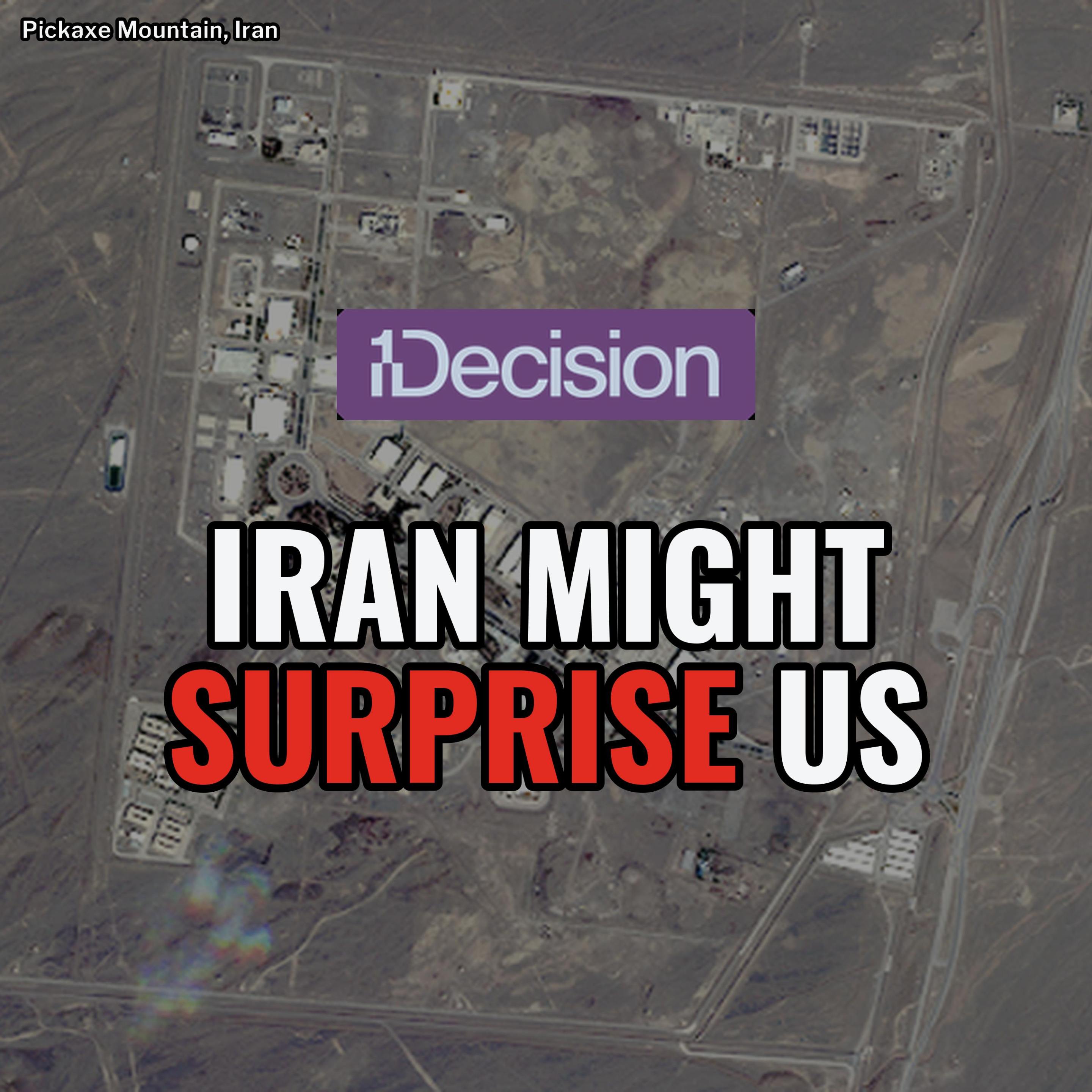
Manning: I think that the operation started out probably as aimed at destroying Iran's nuclear program, and this is something that goes back an enormously long way as far as Netanyahu's concerned. And he's, I think, wanted to do this at various points in the last twenty five years, and he now sees a series of circumstances which seem propitious for him to do this. I think it's broadened out. It may always have been part of his agenda that at the same time he hoped this might bring about regime change in Iran. But the way in which he seems now to be trying to bring down the regime in Tehran makes this a very big political roll of the dice, I think. So we're looking at an Israeli play here that seeks both, I think, to destroy the program, the nuclear program, the weapons program, but also to, if they can, to make this the cause of such an upheaval inside Iran that the Iranians will get rid of the regime. Like you, I am struck by the fact that president Trump has called for the total surrender of Iran. And like you, I think that's extremely unlikely. And I think the question now is how far the Israelis press on, how far they press on with Trump's support, and whether or not he really does decide to become involved in this campaign as clearly Netanyahu wants him to by using American bombers to attack the Fordow nuclear installation, which is very heavily fortified and deep underground, and probably only the Americans with their busting bombs have the power to deal with this, or whether Trump holds back and decides, actually, despite the rhetoric, he is going to look for some kind of deal and try and push the regime into agreeing some kind of diplomatic arrangement whereby they forego their nuclear capability without the use of American weapons.
Dearlove: He's just said in an interview, you know, I might, I might not, I mean, to quote him. You know, he said, well, you don't expect me to answer that question, which is, of course, a completely unsurprising reaction. But just to go back to the issue of regime change, I think you and I both understand very well that there is no organized opposition inside Iran. It's very difficult to see the streets sort of rising up given the repressive force that the regime controls. So I'm sort of puzzled by the concept of how regime change might take place unless, for example, there was some sort of loyalist army coup, if you see what I mean. I mean, a group of army officers who thought, well, hang on. It's gonna be better to negotiate than not negotiate, and therefore pushed the supreme leader out on the grounds that, you know, he was getting too old to do the job.
Manning: I'm personally doubtful that that will come about. It seems to me change in Iran is much more likely to come about as a result of a squabble after the supreme leader dies. You know, he's not going to be there forever. I suspect that the idea that the Iranians will change their regime at the behest, either the Americans or the Israelis, is something that they will all resist. Whether when the supreme leader goes, there will be some sort of power struggle. Seems to me to be a different question. And if it's internally generated, I find that a more plausible option, frankly.
Dearlove: But standing back from the specific issues that, you know, we're dealing with at the moment or watching on a day to day basis, I mean, of course, what's happened in The Middle East with the, you know, decline in the power of Hezbollah, the military defeat of Hezbollah, the disappearance, the extraordinary disappearance of the Assad regime. I believe you and I went to Syria together with Tony Blair, I seem to recall.
Manning: We did. It was an amazing experience and one for which he got quite a lot of stick at the time, but I think we both felt at least it was worth a try. You know, if you don't go, you don't know.
Dearlove: But, I mean, this sort of exhibition of raw Israeli power after, really, the catastrophic failure to predict a crisis in Gaza, how do you sort of view that now given your knowledge and understanding of, let's say, the aggregation of the rather extraordinary intelligence capability plus the aggregation of a very sophisticated weapons and defense capability that the Israelis have.
Manning: I think Netanyahu does believe that he's in a position to try and as he sees it, remake the Middle East and make Israel the dominant regional power, and the weakening of Hezbollah, Hamas, and so on has certainly encouraged that thought. My problem with this is that military dominance doesn't bring you political peace and prosperity. And I think one also ought to make a distinction between Netanyahu and, you know, other Israelis. We tend to think that Netanyahu's position on this is, as it were, the Israeli position. I think it's worth just remembering that quite a lot of Israelis don't agree with his approach. I don't think any of them would weep if the existential threat as they see it from Tehran is indeed dealt with, but I think the problem they've got is the neighborhood they live in. And when you start these campaigns, they're much harder to end very often than they are to begin. And Israel really needs a peaceful region and environment. And Netanyahu's view is I think this can be delivered by military domination. And I think unless there is a political approach that goes with this military approach, the risk that Israel faces is of continued instability, perhaps low grade terrorism, perhaps these are gonna be cyberattacks, but whatever it will be, there will be no obvious peace. And the law of unintended consequences may also make the neighborhood more dangerous because others in the region may now conclude, well, they've gotta have a nuclear weapon. You know, one of the things that I think is really worrying about the attack on Ukraine by the Russians and by this activity in the Middle East is that countries that have thought that the international situation is basically stable, that there are rules of the road, are now going to think to themselves, well, actually, you know, it's a mistake not to have nuclear capability of our own. I worry that what we've been seeing with the attack on Ukraine by Russia and by the instability in The Middle East and actually possibly the threat that China poses to Taiwan will make a lot of countries consider whether actually they do need their own nuclear weapons. And the period that we've lived through and that you and I worked during, Richard, where we relied on the nonproliferation treaty to contain nuclear proliferation, it may be coming to an end, and then it becomes a much more dangerous world when you have multiple actors with nuclear weapons. So I think this is also a risk from the crises that we're witnessing at the moment.
Dearlove: Do you think — I mean, the Saudis have been notoriously inactive during this whole period. They've kept pretty quiet, and they've made a few policy statements, but haven't really done very much to frustrate Israeli activity. Do you think there's a chance that we might move back towards some sort of Abraham Accord, which the Saudis will exploit in a sort of revival of the relationship with Israel. Okay. I agree. It's very difficult whilst the Gaza crisis is still running for the Saudis to do that. But it's extraordinary the way that they have sort of kept their powder dry and stood to one side. I mean, you and I, you know, we visited Saudi together, I remember, and we both have that experience of dealing with the ruling family. And as long as they can keep control of their street, they are pretty autonomous in the way they decide their policy.
Manning: I think this is a difficult crisis for the Saudis. I think it's something they really don't want. First of all, it's, as you say, very difficult for them to move any further towards rapprochement with Israel as long as you have the Gaza situation, and as long as there is no commitment by the Netanyahu government to any sort of political process that might lead to Palestinian statehood, whatever that might look like. So I think that's one issue. Then on top of that, I think they've been cautiously moving to some sort of new relationship with Iran over the last three, four years, which I think has been motivated on both sides, actually. And now suddenly, they find that there is this crisis and confrontation. And after all, Saudi's now bent on rapid development, economic development, social change, and I think it would like to see a stable regional arrangement, and both of these crises make that very difficult. So I think both with Israel and with Iran at the moment, they're in a sort of a watching mode and hoping that somebody else will bring these two crises to an end so that maybe they can get back in, and pursue the sort of relationship that you were talking about.
THE TRUMP EFFECT AND THE WESTERN ALLIANCE
Dearlove: I mean, you having been ambassador in Washington at key pace, both of us having spent considerable amounts of our career dealing with The US and US issues, I think the question I'm really keen to hear your views on is whether you think Trump signifies a permanent change in US sort of foreign policy in particular, or is this just another dose of isolationism? Or really, you know, is MAGA republicanism an aberration which is gonna disappear, let's say, at the midterms if Trump were to lose those elections? So I mean, you've got a variety of possibilities there, but I'm so keen to hear what you feel.
Manning: It feels to me, Richard, more like a fundamental change than a temporary blip. I, like you, would very much like to see the relationship between Washington, Britain, and Western partners sustained on the basis that we've known it. But I think that's quite hard to imagine now. We have in president Trump somebody who is quite clearly not interested in leading the Western alliance in the way that his post World War Two predecessors have done. It's become a cliche to say he's transactional. He's interested in America first, but he's clearly not only not interested in alliances, but suspicious of them. He has called the EU, you know, an organization that's designed, I think, if I quote him, to screw United States. He's at best highly equivocal about NATO. These are fundamental building blocks in the Western alliance, and the current American president is clearly not enamored of either of them. How much damage will be done over the period of this presidency remains to be seen. But even if we look at just policy differences with president Trump, and, of course, they're clear on things like Ukraine as well as on Gaza and so on. The idea that you have an American president who can say what he said about Canada, can threaten Greenland, can declare a trade war on his partners, and at the same time, apparently, give a pass to somebody like Putin in his, you know, unprovoked aggression against Ukraine and all that means for Western alliance, I think it's quite hard to imagine that doesn't do lasting damage. It will obviously be different with a different personality. But I think what you can't do after the Trump experience is go back to having that sort of sense of trust and community unchallenged. There's always going to be, well, if this could happen once, it could happen again. So I do think something quite profound is happening. I also think as an additional point that certainly for me and my generation and probably for you, I mean, I think we always looked to America as the organizing principle, if you like, of liberal democracy. It was the champion of it. It was imperfect. We're all imperfect. But the shining city on the hill idea was not wholly fanciful. And I think that's going to be very difficult to restore after one sees what's happening to the fabric of American democracy under Trump. So I think the combination of this shock to postwar system, the uncertainty about how America's gonna handle its relations with its allies in future, the spectacle of what is going on domestically, I think all that, for me, is going to change basic working assumptions about how must we deal with America, how must we approach this relationship.
NATO AND EUROPEAN DEFENSE
Dearlove: But there are two aspects which I think are obvious. One is the compulsion that is created for Europe to look after its own defense. So there's this sort of rethink of what NATO member countries' contribution should be to NATO. And, of course, we've got the NATO summit coming up next week. Obviously, you've got unique experience having been at NATO in a key position. Where do you think we're going to go next week? Is it gonna be insistence by The United States on 3.4%, 3.5? We've already got Poland spending way above that. We've got a very big change of attitude in Germany. I mean, this seems to me almost a historic moment for NATO in its postwar existence. What are your observations on that, David?
Manning: First of all, I think Trump was obviously right to tell the rest of NATO that it needed to spend more, that it needed to modernize, that it needed to take responsibility for much more of NATO's operations and defense. And I do think the Americans will insist on the 3.5% target, which as I understand it, Mark Rutte, the NATO secretary general, wants to top up with 1.5 additional spending on what is going to be infrastructure and additional spending on aspects that you can argue are important for defense. So, you know, transport links, whatever it may be. And I think the Americans will insist on that. I think the question is how many people sign up for it? What target date are they willing to attach to it? And I note that the British government's equivocal about this. We've had the chancellor this week saying that she's kicking the 3.5% target into the next parliament, although we've now committed ourselves in Britain after the defense review to reach 2.6% in this parliament. I mean, I have questions about this. You know, is this enough, and is the timetable too leisurely? You know, we also have plenty of people in Europe, very well qualified military, but not only military, saying Russia is possibly contemplating some kind of attack on a NATO member before the end of this decade. And we know how slow military spending is to get underway and how cumbersome procurement can be. And I also think it's worth remembering when you and I were still working on issues like Eastern Europe, Richard, when I left Moscow in the early nineties when I was there in the British embassy, I think — I wouldn't die at stake for this — but I think British defense expenditure was still 4%. And to think that we're now saying when we have a war in Europe with the Russians rampaging in Ukraine and trying to destroy Ukraine, it's a bit of a struggle to get to 3.5%, gives you some indication, I think, of the gap. And Trump is right. I mean, it's worth saying, it's worth adding, it's not just Trump, as you and I know. I mean, you know, people like Bob Gates, who was defense secretary under both George W. Bush and Obama, warned the Europeans they must do more. And the fact that we are in this parlous state with our armed forces and our capacities is not something that was not foreseen. It has been a political choice, and so we have run down our capabilities in an alarming way. I'm all in favor of the shift. I think the most important thing that's happened is the shift in Germany. I think with chancellor Merz coming in and clearly being really serious about doing something about defense expenditure in Germany, it's such a big economy. If you start going up one or 2% in Germany, really, and it's effectively spent, you could have a very different capability. But it will take time.
Dearlove: And the question is, have we got time? This may well come down to the lessons that we take militarily out of Ukraine. And the question is, actually, how are you gonna spend the money and what capabilities are you gonna develop? To this extent, I think the UK strategic defense review does, to an extent, point this issue out. But at the moment, I don't see the government reacting to it. And in fact, what they've done is they've actually pumped up the figure to 2.8 by including the security and intelligence budget, the SIV, which you and I are so familiar with. And, you know, they've pushed additional stuff into it to make it look bigger than it actually is. I find this extremely worrying.
Manning: I think that we have to show that we are suddenly vastly more agile in producing low cost effective technologies like the Ukrainians have shown with their drones. It's an amazing achievement, what they've done. If you think that whatever pressure they're now under, they have been resisting the Russian military for over three years and holding them in place pretty much. This is an extraordinary achievement, and they've done it through their inventiveness as well as because of their extraordinary courage. And I think when it comes to things like drones and these technologies, we have so much to learn. The trouble is we do need the big platforms as well. We do need some kind of new capability that is between a strategic nuclear weapon and no nuclear weapon. There is a gap in our escalatory ladder. We do need new submarines. We have got to find ways of building these things. But the urgent necessity, I think, is to show that we can very quickly adapt to the sort of new battlefield that has been pioneered in Ukraine by the Russians too, by their, you know, their asymmetric warfare, by the little green men, by the things they've tried to do and I imagine would try to do if they had the Baltic States in their sights. So I think that this has to work at two levels. And it does need the money, and it does need the urgency.
UKRAINE AND RUSSIA
Dearlove: Would you favor Ukrainian membership of NATO? And if we don't give them membership, what actually do we do? What's our relationship gonna be with the biggest, most battle hardened military in Europe? I mean, they've now got a million men, I think, under arms, more or less. They've proven themselves as a very tough and formidable opponent. I mean, they become a key part of European security. And, you know, in fact, they're gonna be the frontline with Russia. So whatever arrangement we have in the future, it's gonna have to be institutionalized, in my view, in some way.
Manning: Well, I agree with that. I would favor Ukrainian membership of NATO, and I would favor it because I think the only way you have a very clear line that stops possible resurgence of violence and Russian activity across this border, is if it's clear that Ukraine is inside a really effective NATO. And, I mean, that does presuppose that the Americans are absolutely committed to NATO, and we're not gonna have any equivocation about article five. I wouldn't have said that before, certainly, 2014. It seemed to me that it would have been quite a neat arrangement if the Ukrainians had lived alongside Russia in a fairly peaceable bilateral relationship, perhaps not Finlandized in the old way that you and I knew about Finland in the Cold War. But, you know, these were two countries and two societies enormously intertwined. But I think that what Putin has done since 2014 and certainly since, you know, 2022 has made that absolutely impossible. The idea that they can live alongside — Putin clearly wants to eliminate Ukraine as an effective sovereign state. And the only way I think that certainly the Putin regime in Russia will get the message is if that is completely impossible because we are not going to allow Ukraine to go through this again. Like you, though, I don't think it's about to happen. I don't think Trump can entertain this idea. So what do you do instead? And the degree to which there is cooperation between NATO and Ukraine will depend on what sort of Ukraine can be sustained if the Americans decide that they're not going to continue with their aid at current levels. What will we actually be able to do? And were there to be some sort of truce, peace deal, whatever, what sort of institutional links will be possible? I assume these will not be something that the Americans are hugely enthusiastic about. I might be wrong about that. I think they are something that the Europeans will be much more enthusiastic about. So query, what would the Europeans do? Is there scope for UK plus the EU, which we now have in embryo with the new defense arrangements that the prime minister has negotiated? Can you then see this embracing much tighter relations with Ukraine? And my guess is that's what you Europeans will want, not just for the sake of Ukraine's independence, because as you point out, Ukraine is the front line, and it will be very important that we have the maximum degree of solidarity in Europe as long as we've got Putin, with his imperialist and revanchist vision.
Dearlove: I mean, I do find this the most worrying aspect of the current situation. Well, what I would say is that it appears in the last six to eight weeks that, you know, Trump hasn't actually withdrawn support from Ukraine in quite the way that he threatened. I mean, it's clear that they're still getting the intelligence support and, you know, the advice from Wiesbaden that's so important to them militarily. And, okay, maybe the funding isn't quite flowing in the way. And I mean, I have discussed this in a podcast with Rubio, and Rubio is pretty tough on Ukraine, interestingly. Do you agree with me that there might be a sort of nuanced shift in their policy in spite of the sort of crazy things that Trump still does, like refuse to agree a G7 statement.
Manning: I think it's become more nuanced because Putin hasn't responded in the way that, in my view, naively, Trump hoped he would. And if Trump really believed he would get at least a ceasefire by day 100 of the new administration, there's clearly nowhere in sight. And so I think he probably feels frustrated about this. So I do think he is, for the moment anyway, willing to keep up whatever levels of support and pressure there are. It does not persuade me that, basically, he would not be unwilling to do a deal that's not favorable to Ukraine. I can't prove that, but that's my suspicion. And I think the fact that we've again seen him slightly shift position in the last few days talking about maybe Putin could negotiate some kind of deal between Israel and Iran. Now perhaps, you know, the reason that the war is there is because Putin was kicked out of the G8. This would never have happened if he'd been president. I mean, all these are signs, I think, that Trump still hankers after a big relationship with Russia and sees Ukraine as very much a subordinate player and isn't really interested in, you know, the values that are at stake here, the defense of democracy, the threat that Putin poses. I, like you, take encouragement that the worst hasn't happened, but I think let's see what he says when he goes to the NATO summit, Trump, assuming he does and that the Iran Israel crisis doesn't prevent that. I mean, you mentioned he didn't see Zelensky in the margins of the G7. And let's see what he says when it comes to continued NATO support for Ukraine.
THE RISE OF THE HARD RIGHT IN EUROPE
Dearlove: You and I, you know, know France politically pretty well having served there in the embassy. And, you know, I had a lot to do as you did, you know, in a senior position with the French government. You've now got this extraordinary position where, you know, the Rassemblement National looks as though it's the largest party or could be the largest party with Le Pen disqualified legally, probably, for running for the presidency. Therefore, it falls back on this young character, Bardella, who's clearly very smart and very interesting. And similarly, I find it extraordinary that you've got a situation in Germany where the BfV, the German security service, have just listed the largest right wing party as an extremist organization. So the AfD, which is commanding 20 plus percent of the vote, is being sort of signified as a political pariah. You know, if you aggregate these issues, I do find this uncertainty about how the hard right is really ingratiating itself into a significant political position in very key countries in Europe.
Manning: There are similarities and there are differences. They're not the same hard right across Europe. You know, you can see, if you include in your category, Richard, Giorgia Meloni in Italy being very staunch on Ukraine and NATO, whereas Orbán is just the opposite. And the far right in France, if we can call them that, or the hard right, clearly have taken their distance from the AfD in Germany. This is such a complicated issue. I think there are things that are in common. I think there's a sense that liberal democracy has failed or doesn't deliver in the way that a lot of people want it to. And I think that's particularly the case when you have low growth, populations that expect more from a state that increasingly can't find the money to deliver it, and probably a series of politicians who make promises in government that they can't deliver. I think structurally, both in Germany and in France, you've had government of the center. And so if you want to protest, you almost by definition have to go to parties on the extreme. So I think that is part of the explanation. It's not the whole explanation for the rise of Le Pen and the rise of the AfD. I think there's a feeling of precarity, of precariousness about life. It's not just that governments don't deliver, but, you know, how am I gonna get by? Am I ever gonna get a house? I think there's also been a sense of rising inequality. It's not just the system doesn't deliver, but it's loaded against me. The 1% or the 0.1%, it delivers fine for them. They just get richer and richer. And my own view is democratic societies — of course, you must have a gap. Aspiration means that there'll be a gap. But I think it's got far too big for many people to believe that democracy is working as it should be designed. I do think it's important that our politicians are more honest with us. I also think it's bizarre that we don't educate people to understand democracy and the difficulties of making modern societies work. As far as I'm aware, there's very little, as one might call it, civics taught in British schools. I think you have to try and address this question of inequality. And I think you've got to do more to take on the simplistic arguments and explain why simple solutions, which are actually, you know, much more attractive than complicated compromises which have very little appeal. But I don't see any easy fix for any of this. And like you, I look with disquiet at the rise of this across Europe.
TECHNOLOGY AND THE LIMITS OF GOVERNMENT
Dearlove: I was at this technology conference in California, and one of the themes that sort of came out of three days of discussions with some really extraordinary companies, you know, putting forward what they were doing was the sort of gap that's developing between the speed and the originality of entrepreneurship, particularly in a place like California, and the fact that government just can't keep up because of the complexity of modern government with, you know, the speed at which the circumstances around government are changing and developing. I mean, AI, obviously, being the most poignant contemporary example of that. But it isn't just AI. It's lots of other issues as well. And what we concluded as a sort of general point was this gap is widening, and the business of government is becoming very, very, very difficult. And a lot of administrations really aren't up to managing the problems.
Manning: No. I think the message to people that government is really hard is important. It doesn't mean it's an excuse, but it does explain why so many issues are difficult to tackle. And being elected and then being told you've got to sort out the impact of AI on contemporary society is a pretty tough proposition even if you are highly technical yourself. And let's be candid. An awful lot of our MPs and ministers are not highly technical, and I'm sure that applies across most governments in Western democracies. You also have, I think, this phenomenon. I won't call them Western oligarchs, but you have governments who are now dealing with the people who are running some of these, you know, these tech companies who are richer than countries. So the impact these companies could have on what's going on in government and what's going on in their societies is out of all proportion from anything I think would have been true, maybe twenty five years ago. So I think the whole landscape of government has become much harder, and the forces at work on government are quite different from the ones that certainly you and I grew up with.
REMINISCENCES
Dearlove: I was wondering whether you and I can remember any anecdotes from the times that we spent together traveling around the world largely with Tony Blair. Or, actually, you and I went and did certain things together, I seem to remember, particularly in the White House. I mean, I do remember being on a Hercules aircraft flying into Afghanistan. Were you on that flight?
Manning: I was.
Dearlove: Yes. We got brushed by radar, and all the chaff — these things, the stuff that they fire out of the side. So there are we flying in the darkness into Afghanistan. And I remember as we got on board, the crew's advice was don't put your flak jackets on, sit on them.
Manning: Yes. And I don't know if you remember. When we arrived, Richard, it was the middle of the night. Because the prime minister wasn't allowed to visit during daylight hours. It was considered too dangerous. And we were briefed before we got off the plane. You must only walk on the paths that are designated because of the minefields and so on. But the thing I remember that was, you know, charming in its way was when he came off the Hercules in the middle of the night, a band struck up.
Dearlove: Yes. I remember that.
Manning: And I can remember somebody saying to us, well, that's awfully nice. Is that the Afghan national anthem? And somebody turning and saying, certainly not. That's God Save the Queen. And it was just sort of one of those extraordinary moments, really, that live with you forever.
Dearlove: The other one I remember is you and I, and I've mentioned this before in the podcast, but as we were both there together, the super high speed banquet in Saudi Arabia when we arrived late, and the beauty —
Manning: Yes.
Dearlove: You couldn't pick your fork up before the dish beneath it disappeared and the next one was shoved —
Manning: I mean, sometimes these banquets are so enormous that it's quite a good thing if you find you've missed two courses because you blinked. But you're quite right. It was —
Dearlove: I think speed dining is what I'd call it. And I also remember that you and I were placed very high on the table, so we were sitting right in front of the Saudi TV cameras. Do you remember that?
Manning: Yes. It's very uncomfortable. You can understand why royalty always insist they mustn't be filmed while they're eating. It's very, very inhibiting, I must say. It's also very curious. Any time in my life, I've eaten off a gold plate. I don't know about you, but I remember that too.
Dearlove: Look, David. Thank you so much. It's great talking to you. It's really wonderful having the benefit of your long experience and wisdom on foreign affairs, and it's great as well remembering a few of the extraordinary situations we shared together earlier in our careers. So thank you very much.
Manning: Well, thank you, Richard, very much, and hope to see you soon.
Dearlove: So stay tuned to One Decision because next week, we are going to be at the NATO Summit. I'll be there with Kate McCann, and we'll be following up in detail on some of the issues I've just discussed with Sir David Manning.
Raffini: That does it for this week's One Decision. If you enjoyed this conversation, be sure to subscribe to our feed on Apple Podcasts, Spotify, and wherever you get your podcasts for more in-depth conversations with politicians, military officials, world leaders, and more. I'm Christina Raffini. For me and the whole team, thanks for listening.