Hosted by Christina Ruffini and Sir Richard Dearlove
Guest
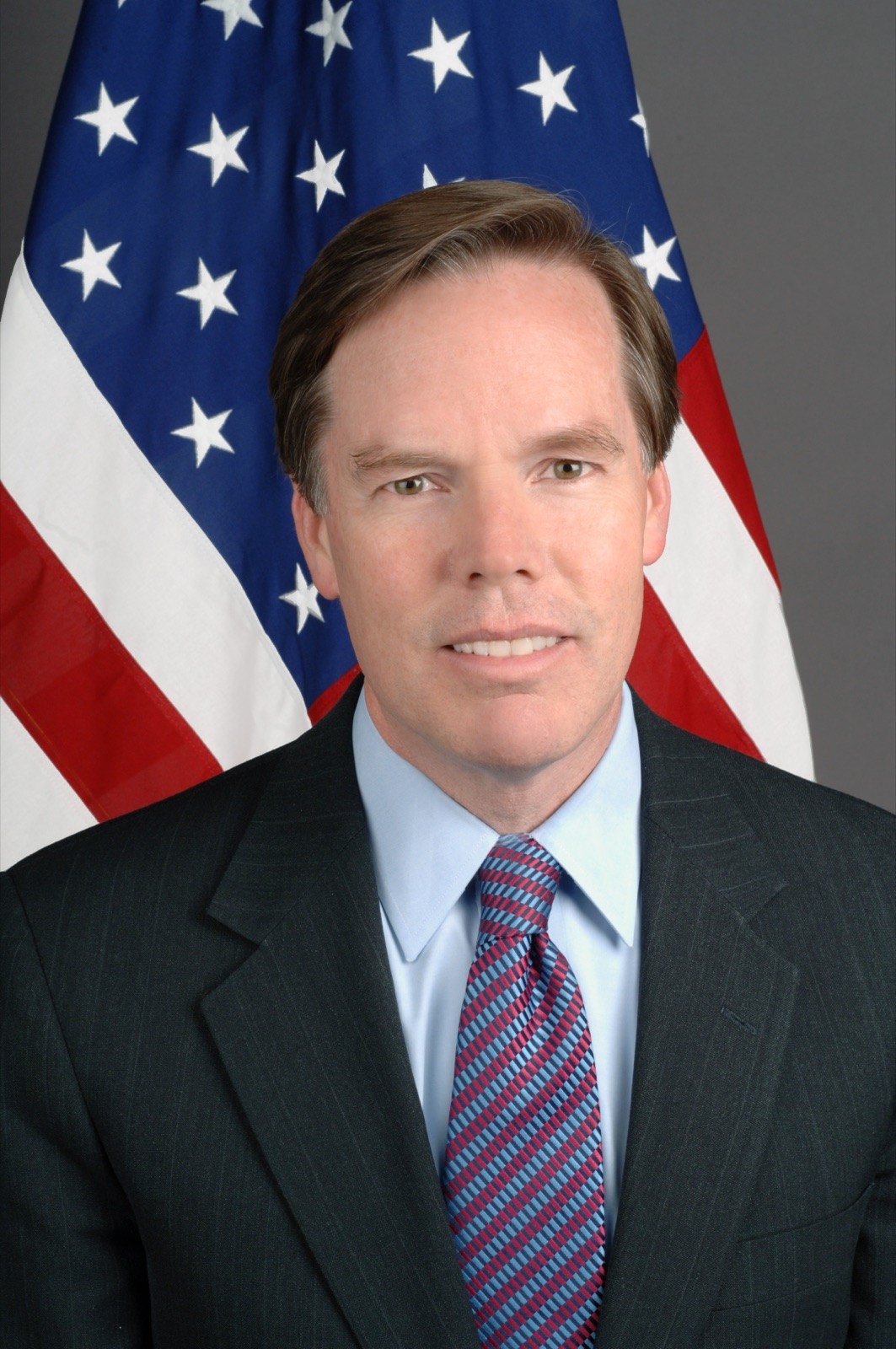
Nicholas Burns
Nicholas Burns is a former U.S. Ambassador to China. Nicholas Burns has discussed the recent 90-day tariff deal and shared insights on negotiating with Xi Jinping and Chinese officials.
Episode Summary
In this week's episode, hosts Christina Ruffini and Leon Panetta, former US Secretary of Defense and CIA Director, sit down with former U.S Ambassador to China, Nicholas Burns. They discuss the recent 90-day tariff deal, share insights on negotiating with Xi Jinping and Chinese officials, and discuss the state of US global soft power. They also unpack the security challenges related to President Donald Trump's acceptance of a gifted Qatari jet and reveal what it's like to travel on Air Force One. Plus, the significance of the first US-born pontiff, Pope Leo XIV, and what it means for American pride.
Episode produced by Situation Room Studios. Original music composed and produced by Leo Sidran.
Listen & Subscribe
- Watch on YouTube
- Listen on Apple Podcasts
- Listen on Spotify
Transcript
COLD OPEN
Burns: But I think that the threat from China today is even greater than the threat from the old Soviet Union for one reason. China is more powerful. Xi Jinping's China is a much more powerful economic, technology and military adversary than even the Soviet Union was.
INTRODUCTION
Raffini: Welcome back to One Decision this week. I'm here with co-host former secretary of defense and former CIA director Leon Panetta. And we're joined this week by Nick Burns. He is the former US ambassador to China, NATO, Greece, State Department spokesperson, NSC member, Harvard Kennedy Center fellow, all around nice guy, and overachiever, and we're very glad to have you with us this week. We're just gonna launch right in into it since China has been so in the news. Obviously, weekend, you had, you know, US interlocutors go to Geneva because apparently all diplomacy must happen in Switzerland and try to negotiate down this 140% of tariff. They did come down quite a bit. They're now around 30% for most goods. Manufacturers are rushing to try to place orders because there's this ninety day hiatus while these negotiations continue. Talk to us about your take on this whole issue, how it came about, and then kind of like what it's like to try to negotiate with China in general.
INTERVIEW
Burns: Well, first of all, great to be with both of you. I'm a longtime admirer of Secretary Panetta. I think this is the biggest story in the world today. If you think about the import of it, these are the two biggest global economies. And we saw what happened after Liberation Day, April 2, when President Trump rolled out his tariff plan. It nearly ended the dollars. You know, it sent the dollar plummeting. It sent global stock markets reeling. The fact is we're competing with China. You also have to work with China, and especially on the economic side. I would say, however, there's a theory of the case here where President Trump, President Biden, President Clinton, President Obama all agreed, and that is that China's a problem on trade. Has it been for a generation. You look at hallowed storefronts, probably in all the hometowns of the three of us in The United States, you see a lot of failed businesses because of unfair China trade. So the fact that we've imposed tariffs on China is not new. A year ago, this month, President Biden elevated tariffs on Chinese electric vehicles to 100%, semiconductors 50%, and lithium batteries 25%. What was new was this 145% Trump tariffs. The Chinese responded with 125%. That basically was a trade embargo. Trade stopped. So there had to be an event like last weekend where they called a pause, said they'd take ninety days to figure it out. But even if we end up ninety days from now at 30 or 20% tariffs, that would be historically high tariffs. It would still have a major impact on trade. And I just end this by saying, what's at stake? About a million American jobs linked to China trade and probably 20,000,000 or so Chinese manufacturing jobs linked to trade with The US. So we cannot decouple these two economies. We've got to keep trading with China as, and I'm sure we'll talk about this, we compete on the national security issues.
Raffini: I know you've written about the China shock, you know, when China was allowed, you know, into these trade organizations and the ripple effect it had through The US economy, through places like North Carolina that manufactured furniture and through all these small businesses throughout The US. But this almost had the same effect in reverse because it happened so quickly. It didn't give people the ability to can't just create a factory out of thin air in ninety days and compensate for this lack of supply chain. The Liberation Day shock had a similar impact on markets, on the economy, and on the price of the dollar and the value of the dollar. Secretary Panetta, what was the first thing that you took away from those initial market reactions watching all that happen?
Panetta: My first sense is that China called Trump's bluff. I've always tried to figure out just exactly why would you start a trade war and raise tariffs to 140 plus percent, knowing full well that you're going to basically disrupt the economy. But I worry about the message that all of this is sending that if Trump can basically do this kind of blunderbuss approach to tariffs in ninety days, where will we be, and what will happen again? And at what point do you begin to lose your credibility in using that kind of tactic? Because the rest of the world is obviously watching. Europe's watching. The other countries that have been impacted are watching. And I'm just not sure. You know, I've I've ever felt very confident that there was an overall strategy here. I think this is kind of a very hit and miss kind of approach to dealing with something that for Nick and I, tariffs are a tool to be used in very carefully used in certain situations where you need to to basically send a message. My concern is that it's hurting the credibility of The United States at a very dangerous time in the world.
Burns: Can I just say how much I agree with Leon, with Secretary Panetta, and think of it this way, even the Wall Street Journal editorial page, which has called this dumbest trade war in history, they reminded their readers this morning, it would have been far more effective if President Trump had lined up on our side of the table Japan, South Korea, Canada, Mexico, European Union, our major trading partners outside of China. We all have the same trade problems with China. And not impose tariffs on them at such a high percentage, but gone after the Chinese on some of the systemic issues at stake, intellectual property theft, forced technology transfer, their currency manipulation. We would have had real leverage, Leon, on our side of the table. You're always looking for leverage in a negotiation. We gave it up by basically treating the allies as if they were the adversary. And I think that's a wider problem for President Trump. He doesn't appreciate the NATO allies. Look at how he's gone after Canada, fifty-first state nonsense. He's gone after our great small but great ally, Denmark, always with us in every tough battle. And so I think this not working through allies has has really limited the effectiveness of The United States, much less our leadership position in NATO.
Raffini: I want to ask you, just because you've been there in your years in Beijing, talk to us about how you facilitate a trade negotiation with the Chinese. I know you weren't there, but you can kind of talk us through how this gets set up because what I was trying to explain to people is it's not like some of our other relationships with other countries, especially in the last few years. You know, there's not always direct contact between working level groups, and it's just a more fraught relationship. So how do you even get the infrastructure in place to get these principles or, you know, demi principles to agree to meet at a certain hotel at a certain time? And and, frankly, it was surprising that there was an outcome out of Geneva because even members of the Trump administration were telling me this is just a first step. Don't expect much because the first time we're getting everybody in a room. How does this happen?
Burns: One of the battles with the Chinese, and I think it's really decades old, but I certainly experienced as an ambassador sometimes just agreeing on the meetings. There were two instances in my three years in China following Speaker Pelosi's visit to Taiwan August 2022, following that mysterious balloon incident. And, you know, part of the problem is when we have a crisis like that, the Chinese reaction sometimes is to shut down all communications. And that's really dangerous in a relationship like that. So they're literally leaving you on read. They just, like, won't answer the phone. During the balloon crisis, I was talking to the Chinese vice foreign minister several times at the beginning, and I kept saying, I really want your senior PLA leader to talk to Secretary Austin, our defense secretary, or Chairman of the Joint Chiefs, Mark Milley. They're the people who need to defuse this situation, and they refused. And so the same thing has happened on trade over the last couple of months of the Trump administration. And I think we, under President Biden's leadership, we competed in a very tough way with the Chinese. And yet we also thought, you know, you've got to have engagement, you've got to have contacts so that when you have a crisis, you can at least talk. And I think part of the problem in the last couple of months was just agreeing to have a meeting. So good that Secretary Bessent had that meeting. Good that he said, when he came out and addressed the press, Secretary Bessent, we agreed that we're not trying to decouple the two economies. I think that would be ruinous for the global economy and for stock markets worldwide, but also for the American economy.
Raffini: Secretary, how did you deal with China? What were your interactions? Did you have the same problem where it's like, you know, dating a guy who just like, if he doesn't want to talk to you, he just, you know, mutes you on his phone. They're just not going to address it. And has that been an effective policy for the Chinese? Is that why they do this? They just don't you know, is that a negotiating tactic? What is that?
Panetta: Well, I have to say that in the Obama administration, the basic approach was to reach out and to create a dialogue. Xi came to the Pentagon. We gave him a parade. We had very good talks. He talked with Joe Biden, talked with others. I've had the opportunity to go to Beijing, and sit down and meet with him in Beijing. We can't underestimate this guy. He's in his own way very sharp in terms of dealing with challenges. I thought when I sat down that, you know, I'd probably go through talking points as Nick knows, and go through a bunch of talking points. He basically didn't use any talking points. He basically wanted to talk one on one and was very concerned at that time because we were basically trying to reallocate our military to the Pacific, and he was not pleased with that. And he made clear that he was not pleased with that. And I said, look. I said, we are a Pacific power, just like you're a Pacific power. We don't intend to walk away from the Pacific. There are a lot of issues, frankly, we can work on together. We're concerned about North Korea. We're concerned about trade. We're concerned about the freedom of the seas, and other issues. There are areas we can work. And he said something I've never forgotten, which was that, you know, you're right. And, actually, it's a better path to peace and prosperity. And I said, no. You're right. That's absolutely the case. So bottom line and and we also did exercises. As secretary of defense, we did exercises with the Chinese navy and improved our relationship. Now like everything else, you have to watch yourself. You have to watch who you're dealing with. These are an adversary in many ways. But on the other hand, our ability to have a dialogue, particularly on issues like cyber and other areas, technology, is very, very important. And I think, frankly, from a national security point of view, we are better off if we have that kind of continuing dialogue to try to deal with these differences.
Raffini: Yeah. It's an interesting gamble, and I've talked to a couple economists about this, asking The US population, the chronically self centered US population to endure hardship in a competition with the Chinese population. It's less than it would be, but also it's a top down government, and there's a lot more ability to institute and force a population to endure that kind of thing. Whereas here, you know, people voted for Trump according to polling because of the price of eggs. So I just thought that from the beginning was an interesting gamble. And then, Ambassador Burns, to talk about what you were talking about, I covered the Pompeo administration. I went to Vietnam, I think, three or four times because Trump one point o was trying so hard to recruit those Southeast Asian nations and bring them into the fold with Japan, with Korea in this kind of countering China bloc that I also found it really fascinating that they're putting these tariffs on China, but also putting them on alleged allies like Vietnam, like Cambodia, places where US manufacturers, European manufacturers are making a lot of clothing, a lot of things these days as an alternative to China.
Burns: Well, I think both of you are right, I agree with what you've said. The Chinese are they watch very carefully. They have, you know, in a negotiation, they have the relative advantage. They're a one man show, authoritarian dictatorship. Xi Jinping can set the agenda for the Chinese people. And they were prepared, I think, to endure months of hardship. I don't think it could have gone on forever because that would have really hurt the Chinese economy, but there's a discipline there. And, obviously, I'd take our system any day over the communist system. I'm not saying I admire it. It's just that you've got to account for it. And that's what Secretary Panetta is saying. In a negotiation like this, the Trump administration and the president personally came out firing against the Chinese, really tough talk, and then did not back it up. I think that's a problem. Let me give you an example. Taiwan. We have a very tough position in Taiwan, but if Xi Jinping concludes from the tariff negotiations that The United States is in essence a paper tiger, that it doesn't mean what it says, that it blinks first, that's not what you want to have in his mind on something even more serious, which would be Taiwan, for instance, and a cross strait invasion by the People's Liberation Army. You want the other person on the other side of the table to know that you are credible. That's the word that Leon used, he's right to use it. And high level diplomacy, war and peace negotiations end up relying more or less on that very difficult to explain concept that the other guy or woman is credible in these negotiations. And we may have lost that. President Trump might be able to gain it back, but even before Scott Bessent got to Geneva, President Trump had announced he might reduce the tariffs to 80%. Why give them a concession before the talks have even started?
Raffini: Well, we've spoken to Taiwan's representative to The US, Alexander Yui, on this podcast. And at that point, he was still saying he was confident that The US would defend Taiwan, you know, even even if Trump won the election. I also, when we were at the Munich Security Conference, was asking a bunch of US allies on the record if The US was a reliable NATO ally. In the short few months, I've heard at least off the record some different answers, and I'm wondering if that tune is starting to change. Secretary Panetta, are you confident that this administration would defend Taiwan?
Panetta: I worry about it because of these credibility problems that are being created. Nick knows this better than anybody, but China deals in the long term. They don't want to go ahead and charge into something that will create a real problem for them economically with the rest of the world. I tend to think that they're gonna watch it closely. They'll take their time. I they they don't operate the way Putin operates. And in some ways, it's Trump's position in other parts of the world too. I mean, he he threatens, but then there isn't a a real follow through as a result of the threat. And I think that this image of a paper tiger is becoming prevalent. And if that's the case, it really does create a concern as to whether or not we'll be there.
Burns: You know, I think to their credit, Secretary Rubio, Secretary Hegseth, and when he was NSC adviser, Mike Waltz, all were very strongly supportive of Taiwan when that subject came up in the first few months of the administration. The administration has reaffirmed our commitment to The Philippines because they've got a big problem with China contesting their exclusive economic zone in the South China Sea, and they've reconfirmed the centrality of our relationship with India. So I think they've said, at the cabinet level, all the right things, much consistent with this bipartisan consensus that I think we have a rough consensus that we've got to deter China from expanding further in the South China Sea, East China Sea, Taiwan Strait. And yet, in our system, the ultimate decider, obviously, is our commander in chief, our president. And so hearing this kind of thing from President Trump would really be critical here on Taiwan, on East China Sea, on South China Sea.
Raffini: Yeah. We really haven't heard that from him, especially not this administration now that you mentioned it. I also wanna ask you, how much experience with the Chinese on a high diplomatic level did you have before you were assigned ambassador? Because you also had this interesting role where you were assigned to the Soviet Union as it crumbled and turned into Russia. Can you tell us a little bit about what's different between dealing with those two tricky and kind of autocratic regimes and what you learned, I'm assuming, pretty quickly when you got to Beijing?
Burns: I first went to China in 1988, a long time ago, with Secretary of State George Shultz. I was a young Foreign Service officer and went multiple times and dealt with the Chinese quite actively when I was Under Secretary of State for Political Affairs on Iran, on North Korea, on Afghanistan, lots of issues. So I knew them, but I hadn't lived there. And of course, that makes all the difference to be permanently stationed there for several years as I was. You know, a lot of people have asked, how do you compare this new Cold War type situation, although it's not an exact replica, with China versus the old Cold War, the Soviet Union, I was with Condoleezza Rice when we were both in our early thirties, early to mid thirties, I was part of the two person Soviet team with her at the NSC for President George H. W. Bush. I was not stationed in Moscow, but for the last two years of the Soviet Union. And I must say, you know, we just felt, actually at the time, this was the biggest issue in global politics, the biggest threat to The United States, and that the fact that the Cold War ended peacefully because, in large part, the magnificent diplomacy of President Bush, George H. W. Bush, that really was one of the fundamental lessons that I learned in my diplomatic career. But I think that the threat from China today is even greater than the threat from the old Soviet Union for one reason. China is more powerful. Xi Jinping's China is a much more powerful economic, technology, and military adversary than even the Soviet Union was. I know that Bob Gates was one of the first people to make this statement. He also lived through the old Cold War at a very senior level and has been involved in the new complicated relationship with China. So I think that's how I compare them. But now we're dealing with a power that is really, in a way, our peer technologically, our near peer economically. And if you look at certain industries, steel, robotics, electric vehicles, lithium batteries, solar and wind power, they're actually exceeding us in effectiveness. This is a major challenge for The United States and they've got a leader who's very experienced, very intelligent, and he is focused on making China the strongest power in the Indo Pacific, wants to surpass The United States. And because of their cyber power and because their power in space, and Secretary Panetta, given his, you know, his multiple roles, but certainly in the intelligence community, but also the Pentagon, this is the strongest adversary we've ever had in both of those domains.
Panetta: It took these tariffs for Americans to realize that we're taking in an awful lot of stuff that comes from China that Americans are buying. And that tells you a lot about the economic relationship that we've built with China over the years. There's an economic relationship there that is very important and that we have to keep our eye on because if the dollar for some reason has a crisis as it almost did, you know, within these last few weeks, China's gonna think twice about investing in our bonds that we have to sell because we're in great debt, and we're now paying more in interest than the defense budget. I think it is giving China in some ways that much more capability to be able to deploy its own economic strength to support what it's trying to do on the national security front. So that that's a concern.
Burns: When I first went to China thirty-seven years ago, you know, our trade relationship didn't amount to much, just as China was emerging under Deng Xiaoping's leadership to try to reform its economy open up to the rest of the world. Since then, as Leon has said, we really have a symbiotic economic relationship with the Chinese in terms of what we buy, what they buy, what we and they manufacture. And the fundamental lesson that President Biden used to talk about after the pandemic was we can't be so reliant on China for critical materials and critical minerals. And we began to do what Secretary Yellen talked about, friend-shore. Can we work with Canada, for instance? This is why you have to be nice to allies and not denigrate them and not undermine their sovereignty. And you know, I think if we went to the Danish government, I'm sure if we went to the Danish government and said, and Secretary Panetta could comment on this, can we please reestablish four or five bases in Greenland? Can we please work with you on a joint venture basis to mine for some of those? The Danes would say, of course we can. We're NATO allies. But on the other hand, if you go to the Danes and say, you've done a lousy job running Greenland over the last two centuries, exactly what J. D. Vance has said, Vice President Vance, and we actually want to acquire Greenland, you're going to get a very different response from a proud nation like Denmark. So getting rare earths, for instance, secure supplies, whether it's reopening mines in The United States, and we can do that with federal subsidies and direction or Canada or Australia. We don't wanna be in the captive to supply chains from China, and that's President Biden tried to move us away. It takes a while to do that. You know, in the end, that's what alliances are all about.
Panetta: I'm a believer in alliances. And very frankly, every president, except Trump, Republican and Democrat alike since World War Two, strongly believe in alliances and in allies. I think the only way, frankly, today that we're gonna be able to deal with a very dangerous world, whether it's dealing with China or with Russia or these other challenges that are out there, is by building strong allies, not just in NATO, but in The Pacific, South Korea, Japan, Australia, India. The same thing is true in The Middle East, very frankly. I mean, if there's anything Trump could really try to accomplish on his trip, it's to basically get Saudi Arabia to become part of the Abraham Accords so that you begin to have, you know, moderate Arab countries creating an alliance with Israel to try to deal with both Iran and terrorism. That is the key to our ability to provide national security.
Burns: Leon, I find it ironic and sad at this time. I was ambassador to NATO on 9/11, and the very first country that came to me at NATO headquarters, three hours after the attack was Canada. David Wright, the Canadian ambassador, said, let's invoke Article Five. We wanna defend The United States. And as you remember, the Canadians went down to Kandahar and took on a really tough problem with the Taliban there. The Danes went into both Afghanistan and Iraq. If we didn't have NATO, we'd have to invent it. It's so important to The United States, and the same is true of our East Asian allies. And I think that's probably, Leon, maybe the most important lesson that I learned in my career that, of course, we're supremely powerful in the world, and we're proud of that as Americans, but we can't live alone in the world.
Raffini: The president's on his first trip of his second term, his first international trip, and it's interesting because he's not visiting traditional allies. He's not even visiting Israel on his swing through the Middle East. He started in Saudi. While he's down there, he might pick up a nice new plane from the Qataris. I don't know if you all have heard about this. It's been a bit of a headline. I was messaging with some Qatari sources, and the summary of the response I got was, hey. Don't hate the player. Hate the game. Basically, if this is how The US is gonna operate, we're gonna do what we can to promote our country and get goodwill from a president who is clearly willing to take a $400,000,000 aircraft. I know you've both been on the various Air Force we know it's a call sign, but colloquialism. Air Force Ones, Air Force Threes. I will say they are old. They are miserable. It is not a comfortable flight. Does that make this okay? Argument President Trump himself is making, even amid some pushback from some of his most ardent supporters, is it's a gift. We're saving the Air Force $400,000,000. This is good for the American taxpayer.
Panetta: You know, I find it really interesting that the whole purpose of these tariffs is to try to bring our industry back to this country so that we can buy American. And here is the president of The United States going to get a gift from Qatar and basically then use that plane to fly around in as a great example, not of American manufacturing capability, but of the ability of this president to get a gift wherever the hell he can get it and take it. And it's just it's a very bad message to the world. More importantly, I think there's a constitutional issue that is involved here in terms of accepting a gift from a foreign entity. More importantly, I put my CIA hat on, and they're gonna have to go through that plane very carefully to make sure that there aren't a lot of recording devices that have been installed, trying to pick up intelligence on what the president of The United States is doing. So if the president wants to get tough, you know what? Get tough with Boeing for God's sakes. Why are we stalling around? It puts a pressure on Boeing to do what needs to be done. And they've got planes that they can immediately put into place.
Burns: This is not rocket science for Boeing. I'm in complete and violent agreement on this. The constitution forbids it expressly the emoluments clause. And just the symbol of it, shouldn't Air Force One, which is really the symbol of The United States for people all over the world as the president flies in and out of countries, shouldn't it be truly American made, American manufactured? Shouldn't it look like an American plane? Of course, it should. He should not take this gift.
Raffini: You guys have spent a lot of time on government planes. Any anecdotes? Ambassador, I'm sure you've been on some terrible flights. Any terrible but allegedly luxurious flight moments come to mind?
Burns: Well, can I just say, you know, for a young officer, and I first had a chance to fly on Air Force One when I was fairly young, it's just so thrilling, and you're so proud to fly as a passenger on that plane with the President. When I was a State Department spokesperson in the Clinton administration, we were flying Secretary Madeleine Albright, Secretary Warren Christopher on President Eisenhower and President Kennedy's Boeing 707 Air Force One. It was still in operation towards the late 1990s. It didn't have a lot of legs. I mean, you had to refuel in Elmendorf in Alaska or Pearl Harbor en route to Asia. But it was thrilling to ride in that plane because of all the history in that plane. And Air Force One, it's just an honor to be with the President and, you know, to be able to spend time with the President. Did for H. W. Bush, Bill Clinton, President Clinton, and President George W. Bush, you know, to relax a little, to be able to talk outside the office. It was a special experience. And I'll tell you one interesting thing. You asked me about, you know, what's the value of doing this? I was President Clinton's special assistant for Russia and Ukraine at the NSC. In 1995, we were flying to the Budapest Summit. That was the key summit on Ukraine. We had to decide with the Ukrainians how they would dispose of their nuclear weapons. It's come into light given what's happened in the last three years. I sat next to this young speechwriter for President Clinton. I didn't know him well. We were seatmates on Air Force One and we had a great talk. His name was Tony Blinken. He became a friend of the last thirty years and that friendship was really formed on Air Force One. So be nice to the person seated beside you as well.
Panetta: It reminds me of one more story, as chief of staff to Bill Clinton. We had gone to LA and had spent the whole day there, and we were very tired and we just wanted to get back on Air Force One and get back to Washington. Bill Clinton decided at the last minute that he wanted to go to Chinatown and have some Chinese food. Went ahead and did that. Finally got back, and I thought, oh, man. I'm just gonna be able to settle down. And the first thing that Bill Clinton said is, we gotta we have to play a game of hearts, and he was a big hearts player.
Raffini: The card game?
Panetta: Yeah. The card game. We played hearts all the way back to Washington, which was not unusual for Bill Clinton because he loved the game, and he didn't sleep that much to begin with.
Burns: Leon, the other story we have to tell is I remember flying with him to summits with President Yeltsin in Moscow, President Kravchuk in Ukraine, and Bill Clinton was such a smart guy. He is such a smart guy. He would be doing the New York Times crossword puzzle as all of us seated around the conference table in Air Force One were trying to brief him. So the big trick, the big parlor game was who can get the president to look up from the crossword puzzle because he was a multitasker. So I learned that you had to have a topic sentence to the briefing like, Mr. President, Yeltsin's in big political trouble. Then he might look up for a second from The New York Times crossword puzzle.
Panetta: We did the same thing. We were in the Oval Office about ready to deploy forces to Haiti, and we were trying to find out just exactly Colin Powell and others, the delegation had been there, trying to find out whether they had any success. And General Shalikashvili said to the president, Mr. President, we've just got a few minutes here before we have to land our frog teams there to blow up any mines so that our forces can land. And Bill Clinton was doing a New York Times crossword puzzle, and he was working at the desk and everybody was standing around him. We had all the leadership, national security leadership standing around him. And finally, I was new to the job of chief of staff. I said, you know, Mr. President, I think we need a decision here. Fortunately, at that point, Colin Powell called in, and he had made a breakthrough, and so that took care of it. But it was amazing. And Nick knows this. He had this kind of mind that could basically do a New York Times crossword puzzle, but also handle the other aspects as well. It was just amazing.
ANALYSIS ON SOFT POWER
Raffini: One of the things I hear consistently now from European ministers is American soft power has all but disappeared. One minister expressed to me that they were worried that it may not ever come back and was arguing that Europeans need to come up with another alternative because America is going to take a decade at least to rebound from some of the damage that's been done to American soft power. What's your take on that?
Burns: It's not just force of arms. Our great military, and we have a great military, it's not just our Foreign Service that makes America great, it's our culture, it's our values. It's our credibility. It's our First Amendment rights. It's freedom of the press and so on. And you can spend that down quickly if you're unilateral, if you are not respectful of your allies or don't stand up for them. I think a lot is at stake right now. I do think the pendulum can and will swing back at some point, but it's incumbent upon all of us who are involved in any way in global affairs to stand up for those American values, I would say, that made us great.
Panetta: As a Catholic, I'm really pleased with the appointment of an American Pope. And the fundamental reason is we now have another American leader who really is a good person and has good values. I think that's really important because I think The United States, strength lies not just in our belief in democracy, but our belief that our responsibility is to reach out and help people in need.
Burns: Leon, I never I'm also Catholic, and it never occurred to me that the cardinals would elect an American citizen, born and bred in Illinois, White Sox fan, normal person. But I agree with you. He represents the American character and American goodness in the world, as well as Catholic social gospel teaching that both of you and I learned as young, probably, I was an altar boy, you probably were too. It's not just for Catholics. It's for the whole country. We're a good country.
Raffini: He's gonna express that side of it. That's gonna help us, I think, as a country. I was anchoring some live coverage for one of the networks as the pope was on. And it's shocking to me that in this day and age, news networks, nondenominational networks are doing wall to wall coverage of a religious leader. And when you think about it, to your point, there's no other single person who represents or can claim to represent 1,400,000,000 people of all walks of life from all continents, from all areas. And it is a bit significant that that person is an American. But I think it's gonna be interesting to see these two individuals who have megawatt star power kinda clash, and we'll have to see where we go. I think that's gonna have to do it for us this week. Thank you so much again to Ambassador Nick Burns, Secretary Leon Panetta. For more conversations like this one, of course, be sure to check out our episode. Hey. Why don't you go listen to that one we were talking about with Taiwan's representative to The US, Alexander Yui, who shed some light on the relationship between The US, China, South China Sea, and the whole thing.
Yui: Dictators are not rational. They'll do whatever they think is right. They don't care about people's well-being. They don't care about people dying. They just think what's best for them or themselves.
Raffini: Of course, you can always visit our website, 1decision.com, and our YouTube page for more videos, explainers, and important commentary. For this week, that'll do it. I'm Christina Raffini from the whole team. Thank you so much for listening.