Episode Info
- Season24
- Episode4
Hosted by Christina Ruffini and Sir Richard Dearlove
Guest
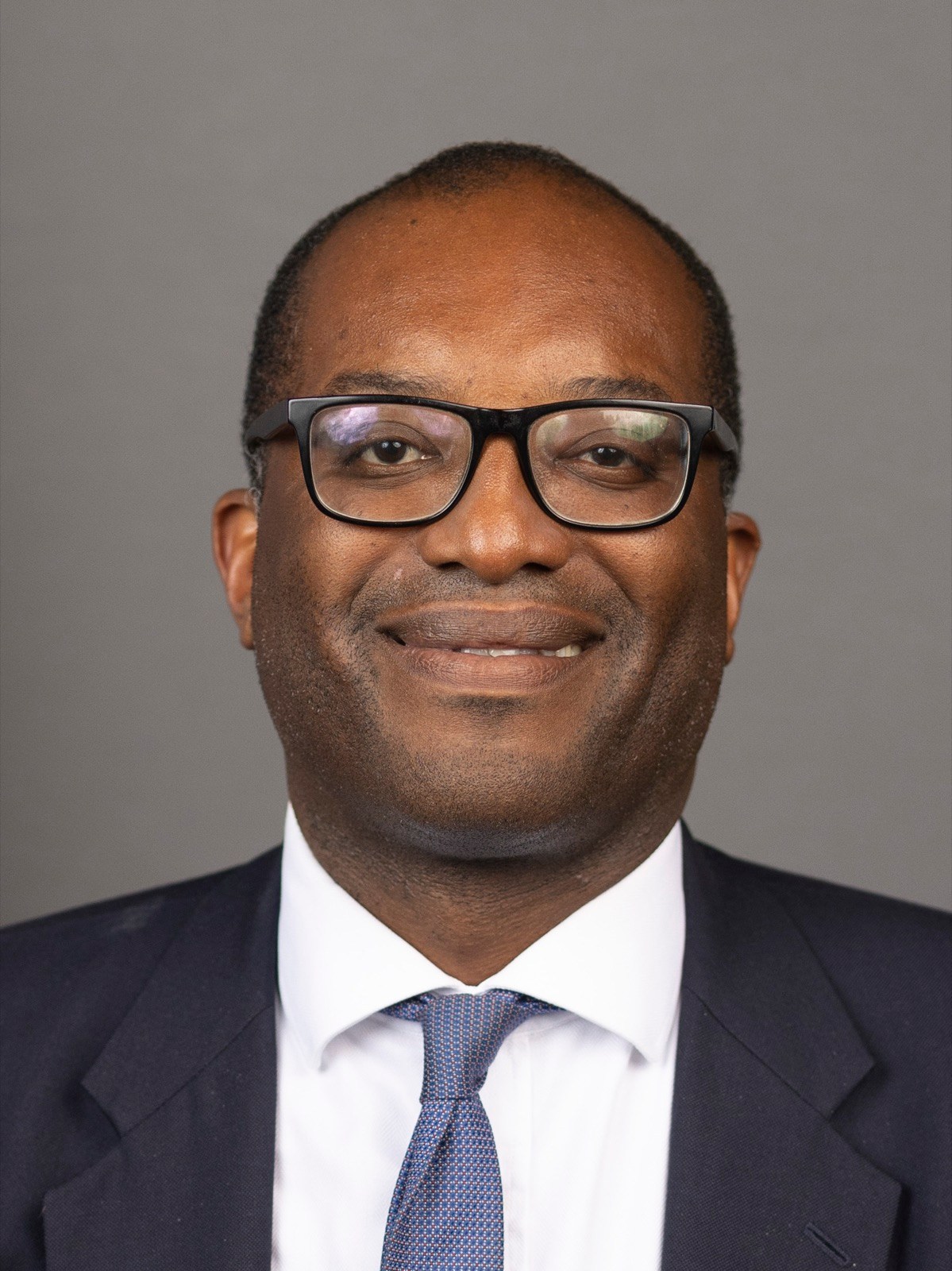
Kwasi Kwarteng
Kwasi Kwarteng is a longtime rising star of the right and a former Finance Minister who oversaw a brief period of huge instability with a controversial package of tax cuts and spending that sent markets into turmoil.
Episode Summary
As the British Conservatives head to what may be the end of 14 years in power, One Decision speaks to some of the most influential voices from Britain's ruling party on what's gone wrong, what's gone right, and what lies ahead for the UK and its allies in the West. In the first of these conversations, Julia Macfarlane and former MI6 Chief Sir Richard Dearlove speak to the longtime rising star of the right and former Finance Minister Kwasi Kwarteng, who oversaw a brief period of huge instability with a controversial package of tax cuts and spending that sent the markets into turmoil. Kwarteng reflects on the disastrous 'mini-budget' that caused him to get sacked and ended Liz Truss's Premiership, if the Tories will lose the upcoming elections, and how his party has handled recent issues of racism and division in an increasingly fractious time.
Listen & Subscribe
- Watch on YouTube
- Listen on Apple Podcasts
- Listen on Spotify
Transcript
INTRODUCTION
Mcfarlane: You're listening to One Decision, the podcast that looks at the choices made that shape our world. I'm your host, Julia McFarlane.
Dearlove: And I'm Richard Dearlove, former chief of British intelligence,
Mcfarlane: otherwise known as MI6. Together, Sir Richard and I speak to the key decision makers, the power players, and the influencers who shape some of the biggest events that impact us all. And today, we're launching the first episode in a special series looking into the state of British politics and examining what could be the end of the Conservative Party's leadership after fourteen years in power. Let's go back to autumn 2022 when British politics was up in smoke. After the government announced a bonanza of unprecedented tax cuts and spending, the markets panicked. The central bank undertook an extraordinary intervention to keep the economy stable, spending tens of billions of dollars buying government bonds. The then prime minister Liz Truss was out after forty five days in office, the shortest serving PM in British history. Today, we're talking to her chancellor at the center of the storm. A Kennedy scholar at Harvard, a King's scholar at Eton, prolific author, academic, and the son of Ghanaian immigrants, Kwasi Kwarteng was once seen as a rising star in the Tory party. But his chaotic mini budget now lives in infamy, seen by many as one of the most disastrous political miscalculations in recent years. But was it all his fault? How does he feel about it a year and a half later? And how does Britain's first black chancellor feel about the recent arguments about race in the Conservative Party? We sat down for a fascinating and frank conversation with Kwasi Kwarteng. You became an MP in 2010, what feels like eons ago. What would you say are the biggest changes that you've observed in politics since you made your maiden speech in the House of Commons all those years ago?
INTERVIEW
Kwarteng: Yes. I think 2010 does feel like a very long time ago. And in some people's lives, fourteen years goes in an instant. But I think in our political life, it's been a very, very long time. And my own view about this is that because of social media, because of the twenty four seven culture, a year in politics feels like an eternity. So fourteen years is a very long time. And in that time, I think we've seen huge changes. I mean, not only with Brexit, which has been a monumental thing in itself and will be debated for many years, I have no doubt. I think the position of MPs, their accessibility, the fact that there's a lot of anger, there's a lot of rage, I think MPs are more exposed. I think they're more vulnerable. I think the whole social media world makes public life, you know, representatives' lives more challenging. And I also think there's much higher expectation from the point of view of the electorates and constituents. And that's a good thing, but it does mean that I think MPs are under quite a lot of pressure these days. Is that perhaps why you are not running again as an MP? Yeah. I mean, I'd probably do it all over again. It has been a hugely enjoyable and fascinating experience. But I think the MP shelf life these days is much shorter because of all those pressures than would have been the case maybe forty years ago. I was in the house with people like Kenneth Clarke, and he was an MP for forty nine years. And I think that the tempo, the pace at which political life is conducted now means that it's a lot less likely that people are going to be around for forty years than was the case in the past. And I think just the pace, the scale of the MP's engagement with constituents, I think, is much much greater than was the case twenty or thirty years ago.
Mcfarlane: Kwasi, you've given some very reflective and open conversations since your time leaving office, since your time as chancellor. Talk to us about that mini budget. How much of that budget was yours to shape and how much of it did you have to negotiate with Liz Truss? I mean, how aligned were the two of you?
Kwarteng: I think the main point one has to remember, I've said this many times, it really starts with the leadership contest that summer. And people say, well, you were a chancellor, the executor in charge. But the whole premise of the leadership contest was about the economic question. That was what she spoke about at length. And it was clear to me that her pitch to the members was we can't keep doing the same thing as far as the economy is concerned. That was pretty much her central message. And I think what happened was having won pretty decisively the leadership campaign, and people said it would be more, but it was pretty decisive. I think that was the moment when we should have really slowed everything down. But I think we went the other way. Having won, the euphoria of winning, there was a slightly kind of surreal period which she talks about in her book, when her majesty, the queen, sadly passed away. And that created a kind of very odd vacuum, if you like. The queen told her to pace herself, apparently. Well, yes. And she really admitted that that was the right advice. But, of course, hindsight is a beautiful thing, and we pushed ahead. And we all made mistakes, and we've gotta be honest about that. And of course, then I think also the environment was difficult as well. But one of the things that I feel bad about, among other things, was that having gone in, I think the whole thing, she capitulated very quickly. And that was my own personal story. So I came back, and I was sacked essentially on Twitter. It was a kind of Trumpian. Yes. Because you were at an IMF meeting in Washington. I was called back a day earlier. So I was due back, I think, on the Saturday morning. And I came back on the Friday morning, and I was driven to Downing Street, and I was essentially sacked. But on the way to Downing Street, I could see on Twitter, I think it was Steve Swinford of the Times, had said, the chancellor — I can't remember which tense it was, whether it was will be or has been — but I just remember the chancellor, Kwasi Kwarteng, sacked. I don't know what tense it was, but the message was clear. And I remember my special adviser was in the car with me and said, oh, do you think this is true? And I said, if it's Steve Swinford, it's definitely true. Everything he — I don't know whether that's the case now, whether he's the go to man now, but his Twitter was very reliable back in the day. How was that meeting? Did you feel like there was still an opportunity for you to argue for your job? I thought it was definitive. But I was surprised because it was obvious to me that once I'd been sacked, it was over for her. I was sort of slightly incredulous. I was thinking to myself, you have just destroyed your premiership. There's no coming back. And I think I said to her, or maybe a spad afterwards, that she had about three weeks. And that was reported actually in the Sunday Times after the Friday I was sacked. So, Kwarteng says PM has three weeks or so. A headline to that effect. And, of course, I was wrong. It was six days. And I was sacked on the October 14. One remembers these dates. And then on the October 20, she announced that she was gonna resign. And then the current prime minister, Rishi Sunak, took office, I think, on the October 25. So things happened very — Were you essentially asked to fall on your sword at that point? No. I was sacked. We can be very British about things. I was sacked.
Mcfarlane: And you made that very clear in your resignation letter, which is interesting.
Kwarteng: Well, it was actually — if you look at the Steve Swinford tweet from about 11:30 that morning, he uses that word.
Dearlove: One of the things that I find really extraordinary is that you have the Office of Budget Responsibility, which is an unelected body, telling you you've got things wrong. Now it's not a political body. It was created, I think, with a perhaps a subtext. And I think, you know, someone like me who's quite sort of radical in my view of democracy finds it quite objectionable that a body like that can turn around and just create chaos. And they have huge power. And that's one of the things that — Or provide a check. Yes. I mean, that's one of the things — okay. The idea is that it should be a check.
Kwarteng: But on the other hand, it's a check based on one interpretation of the economy. And this is the point that I think Liz was trying to make in her book and other people have made, and I think it's a fair one. A lot of these bodies have huge power. And, of course, they've got no accountability. I don't think one viewer, listener in a hundred knows who is running the OBR. And even if they know the person who's at the top, they certainly don't know the people in the organization. And over the last — I'm 48 now, so I've been following politics probably for thirty years of my adult life. And I think over the last thirty years, we've seen a huge proliferation of these quangos, and they wield enormous power. And it is a question, I think, about, when you're in an open democracy as to how much influence and power these organizations should have.
Mcfarlane: That's something Liz Truss has been speaking about recently, and she has been very critical of the role of the governor of the Bank of England and the Monetary Policy Committee and making that point that they are unelected, they're not accountable. I mean, would you advocate for a change to that kind of system? Should the government have more of a role in the Monetary Policy Committee and in the OBR? What do you think? Is there a problem here that needs to be fixed?
Kwarteng: I think it's quite tricky because once you've essentially created these bodies, and you'll understand this from your days in government, it's very difficult to kind of put the bureaucracy back into its box. I think there are ways you have to work with the bureaucracy, and that's how you've got to try and navigate change. But I think where I differ from Liz Truss is that just saying they should be abolished doesn't make any sense because — well, it does, but how are you gonna do this? You gotta think of the means and the process. You can't just wish them away, and you've gotta work with them. And I think that's one of the things probably we got wrong when I was in government. You can't just circumvent them. You've gotta try and play ball with them.
Mcfarlane: Is there a world in which the mini budget could have succeeded? Is it if there had been more communication with the OBR before the publication of the report? You know, what would have happened if the Bank of England had not intervened in the aftermath?
Kwarteng: So I think, like everything in life, the problem was the pace at which we tried to do things. The prime minister, as well as Liz Truss, I think, went to Balmoral on the September 6. I think it was a Tuesday. She won the Conservative leadership on the Monday, the fifth. She flew up to Scotland on the sixth. Her majesty, the queen, passed away on the eighth. That was the Thursday. And we had all the obsequies, the accession council, the funeral. All of those things happened within about two weeks. And then the mini budget, so called, itself landed on the twenty third. So that's less than three weeks between the conclusion of the Conservative Party leadership contest and the mini budget. And then we had to deal with all of that ceremonial circumstance around the sad passing of her majesty. And I think that was the problem, not the fact that we had to deal with this sad event. But I think, in light of that, there was just too much pace.
Dearlove: But a lot of people now are saying that the policy was right. The implementation was wrong. It's interesting because it doesn't seem to me now that the policy is as controversial as it was at the time.
Kwarteng: So I think where the prime minister and I were agreed, and I think we were right, was to identify economic growth as the single biggest problem facing this country. Because without economic growth, we can't essentially pay for the welfare state that we have. And if we can't pay for the welfare state that we have, then you've got all sorts of social problems relating to everything, relating to immigration, relating to housing, relating to the welfare state if you can't get economic growth. And I think it's interesting when you listen to Rachel Reeves, she talks about economic growth as well. She might have a different way of doing it, but the central question, exam question, if you wanna put it that way, still remains and has essentially been unanswered. And I think as time passes, more and more people will be thinking, oh, it was a lousy implementation, they got things wrong, they tried to do too much too quickly. But actually, the fundamental problem that they were trying to solve is the thing we should be trying to address. And I think as time passes, you've got a growth level of, what, 0.5%, 1%. Your public sector is probably growing maybe 5% a year. It becomes a more critical question. How are you gonna grow the economy to pay for all the services that you want to provide for the people?
Mcfarlane: Something that has really struck me about all this is you personally. You've, you know, been an Eton scholar, double Kennedy scholar at Harvard, double first at Cambridge, a really incredible academic background. I think it was the Economist in their profile of you when you became chancellor said you were probably the most intelligent chancellor we've had since Gordon Brown, or something like that. You were in the best possible place to be a successful chancellor and to be seen as successful, and you have just one chance to get it right. And is there an issue that we have here in the way politics works that you can be as qualified as you like, you can be as academic and intelligent as you like, but you will never be prepared for getting your hands on the levers of a multi trillion dollar economy. There is no apprenticeship for this kind of thing, and it's almost trial and error. And is that just a mad way of doing that?
Kwarteng: No. Look. I think people should distinguish a couple of things. Education, knowledge, experience even. In my view, having seen lots of prime ministers, I think all of that is secondary to temperament. Because the thing about politics, it's not like revising for an exam where then you go to the exam room and everything is still and you've got precisely three hours to answer the question. Actual politics isn't like that at all. Actual politics, there are things flying around all the time. There's people saying things. There's panic. There's all sorts of human emotions involved. And I think the best leaders — and as you know, I'm a historian as well, but I've thought a lot about my experience and I've read a bit about other people's experience. I think the best leaders are people who have the right temperament. They're cool and considered, and they don't panic when things go badly. And I think that was the element that one really needs, and we need it. And I think you have to have a much more kind of steady approach. And I was reading about people like Dwight Eisenhower. He wasn't the most intellectual. He probably wasn't the most on top of things in the sense of being right in the weeds. But he had an incredible temperament as a leader, and he could bring people along with him. And that's why, I think, in the surveys of presidents, he's really high up. He's like fourth or fifth, obviously, after Lincoln and Washington and those sorts of people. But he's very high up, and that is really a testament to his temperament as a leader. And I think that's something which is often overlooked because the world we live in wants immediate answers. We've got to respond to the media twenty four seven. We've got to be seen that we're hyperactive almost. But actually, I think an ability to step a little bit back and consider your actions over the longer term, I think, is something that's missing a lot in modern leadership.
Dearlove: I really agree with you in that judgment that temperament in leadership is absolutely vital. Absolutely vital. And not panicking. In my own experience, I've seen that happen so many times. People throw their toys out of the pram and just completely lose balance and judgment.
Kwarteng: That's right. And I was looking at this from not only my experiences, because I've worked with all the five prime ministers. David Cameron, Theresa May, Boris, Rishi — I worked with him very closely when he was chancellor — and, obviously, Liz. And I think temperament is a big issue. I won't comment on their respective temperaments, but obviously, that's — and when you look at the past, you read about wartime scenarios, you read about all of these things and problems. I think the key to solving a lot of these problems is the right temperament.
Mcfarlane: And do you see enough politicians these days trying to bring the temperature down as opposed to ratcheting up?
Kwarteng: I think it's really hard to do. Funny enough, I think Rishi Sunak has a good temperament, but he's got a host of other problems that he has to deal with. Notably, the fact that we're at the end of — well, not the end, but we could be at the end of fourteen years of conservative rule. And as I say, fourteen years is a very long time. But I think the way that modern politics and modern media is twenty four seven, a hundred and fifty miles an hour. It's so fast paced. What was relevant two days ago is not on the news anymore, and it's moving all the time very quickly. And politicians have to react very quickly to the headline of the immediate minute, let alone the hour. I think all of these things make the kind of cool decision making much harder and the ability just to step back and try and work out what it is you're trying to do and convey that sense of calm. I think it's much harder for politicians to do that now than might have been the case many years ago.
EUROPEAN POLITICS AND THE RISE OF THE RIGHT
Dearlove: Kwasi, if you look at the general situation in Europe and what's happening here in the UK, you could argue that we're moving to the center left. That perhaps is a temporary phenomenon rather than a trend. But at the same time, if you look across the European political landscape, there's a very significant movement to the right. We have the seeds of a movement to the right in the UK as well with the Reform party. I mean, how do you interpret those general political events? Because I think they are the framework within which we have to see, as it were, the future of the UK.
Kwarteng: That's right. So the big issue, I think, as I look at Europe and I look at Meloni, her party sort of came from nowhere. They haven't been around very long. I mean, they have, but they haven't been in power. And surprisingly successful. A lot of people predicted she'd be a disaster. That's right. She was seen as a far right, in inverted commas, candidate. And then, of course, once she got into power, she essentially moderated or has projected herself in a more moderate way. And I've been in frontline politics for many years now, and I had interactions with people in Germany, in Italy, in France, in America. And it's the same issues that are coming up. And what has fascinated me is that the center right parties — I remember going to France and you'd see the Sarkozys, Les Républicains, that's what they call themselves, and they imploded essentially, and they were outflanked by Le Pen. The center right of Italy, the Christian Democrats, the old — no one talks about them anymore. And then there was Berlusconi's party, but that's now in the background. And Meloni, the Brothers of Italy, have essentially taken that ground. Even in America, I went to the Republican convention in 2008, which seems like a very long time ago. And all the people I spoke to, and many of them are friends, some of them I've still kept in touch with, were essentially center right, but, you know, cool kind of Wall Street types, if you want to characterize them in that way. And they've been essentially eliminated by populists, the Trumpian movement. So you see all across Europe and the West, generally, a lot of center right parties have essentially been superseded by more populist parties.
Mcfarlane: Why is that? Is that social media? Is that globalism failures?
Kwarteng: I think globalism and immigration, which obviously are linked, have led to a complete metamorphosis of the center right. And I've seen this happen over the last six or seven, eight years. Trump stood when he announced his candidature in 2015. Nine years, let's say. And even in Holland — I visit Holland a lot — Geert Wilders was seen as a kind of right wing figure that was never gonna get anywhere near power. He topped the — his party was the first placed in the election. So when you look at this over all these different countries, you think, what the hell is going on? And I think this question of immigration, of national identity, it sort of dovetails into the kind of anti woke movement or all of this sort of thing. Cultural politics is a very strong current. And I think that one of the problems that the Conservative Party has had is that it needs to kind of coalesce the right, if you like. And that's one of the things that a lot of these center right parties, movements, whatever you wanna call them, fail to do in other countries. And we're kind of shielded a bit by the first past the post system. I have no doubt in a proportional system — my left wing friends said, oh, well, the Liberals and Labour will win forever. They won't. In a proportional system, I think you could find a party like Reform getting 25% quite easily. Because the electorate isn't stupid. They know that if it's proportional, every vote counts. So in a way, the patterns we would see would be very different.
Mcfarlane: You mentioned a lot of these cultural issues, the war on woke. A lot of these talking points seem to be talking points that have been carried over from the United States. And we've seen Liz Truss being on a podcast with Steve Bannon, saying nothing when he said that Tommy Robinson was a hero. It's difficult. The Tory donor who made those comments about Diane Abbott — but it was you who were actually the first senior conservative to say this is racist and sexist. Yes. Why did it take so long for your colleagues to use that word? Was that disheartening for you?
Kwarteng: It was crazy, that response. He said something like, this makes me want to hate black women, and I want to hate — this makes me hate all black women, she should be shot. Extraordinary. To argue that that wasn't racist or sexist seemed bizarre to me. And, actually, you're right. I was on the TV program, I think the BBC politics, and I just called it for what it was. It seemed obvious to me. And then, Kemi, I think, a few hours later, and she was within the government, within the cabinet, said, this is crazy. How can you justify this? And then they scurried and they supported her.
Mcfarlane: But there was also something similar with the former deputy party chairman, Lee Anderson, who made those comments about the London mayor, Sadiq Khan, and said that he had given the capital away to his mates, the Islamists. And there were so many interviews with senior conservative officials who tried very hard to avoid using terms like racist and like Islamophobic. Why do you think that was?
Kwarteng: So it's a very difficult issue. Funnily enough, with the Lee Anderson issue, I wouldn't have taken the whip away from him because, again, I think it's overreacting. Taking the whip away from somebody is a very serious act, and you can do it. If he'd said something really inflammatory, which I don't think those remarks quite were. If he'd said something about Muslims, all Muslims do terrible things, that's clearly racist. That's clearly something that you could act on. He was making a specific comment about Sadiq Khan, and I think it was possible — again, hindsight's a wonderful thing — but it was possible to say, look, we totally disagree with this. This is wrong, but we're not gonna take the whip away. Opposition parties will always say, of course, you've gotta take the whip away. They will always put that pressure. But, again, I think taking the whip away from somebody used to be, anyway, quite a serious step.
Mcfarlane: So at that point, the comments — I don't know if you were saying that they weren't racist comments or they weren't Islamophobic. A lot of people do feel that they were. In a big multicultural capital like London, to say something like that is going to be very inflammatory for a lot of Muslims. You feel discriminated against already, and to see that from the top of the Conservative Party, that wasn't problematic enough to lose the whip over.
Kwarteng: I think we've lost sight of what taking the whip away from someone means. You don't take the whip away from someone just because they've made inflammatory and wicked comments. Really? No. I don't think you — I think it's more fundamental than that. If they vote against the government or if they are campaigning for other parties from within the party, it's quite a technical thing. If someone says something that is rude and I disagree with, I don't, as a leader, think that's grounds for taking the whip away from somebody. It's interesting. Admittedly, this happened a very long time ago. But when Enoch Powell made his inflammatory remarks, and they were racist — that was in 1968, Rivers of Blood, it's called — he was sacked from the shadow front bench. He was the defense secretary, and he was kicked out of the shadow cabinet. The whip wasn't withdrawn even then, and I know it was a long time ago. But I think it's a very big step to take the whip away from somebody for saying comments and not voting against the government and not acting consistently over a long period of time. Generally, in the old days, people would have the whip removed because it was chronic. It was consistent behavior over many — it wasn't just a comment. He'd always voted with the government. Anyway, I don't want to rehearse this, but I think the way in which we react, it was a clearly reactive step. I think that inflamed the situation.
Dearlove: Because what Lee's doing now is essentially he's campaigning for the Reform party. What impact will that have on the conservatives? I mean, Reform — they could sort of ruin —
Kwarteng: I think they're a big problem.
Dearlove: The conservatives' prospects at the next election.
Kwarteng: Because they won't get many seats themselves. They won't get any seats. No. Exactly. Well, they might get a few, but I'm not sure. But what I was talking about in terms of, as I look — I've had a lot of time to think about this, and I go visit countries like France and Germany. And as I say, I think this is happening all over the Western world. You've got center right parties that are quite vulnerable to more right wing parties, if you want to describe them in that way, on questions of identity, on immigration, and also other social issues. And I think the problem that Rishi Sunak faces is this insurgency on the Reform side, on the right, if you wanna call it that. And if you look at the numbers, when I left office, two weeks before Rishi became prime minister, I think Reform were on about 4%.
Dearlove: Three or 3%.
Kwarteng: They're on 18 now, aren't they? They're well into double digits. And that's why we were in the kind of low twenties when I left office and when Liz Truss left office, and we're in the low twenties today. And the reason why we don't seem to have made any progress in those eighteen months can be explained very considerably by this phenomenon, this Reform.
Dearlove: You've got two elections coming up. You've got the local council elections, and then, of course, you've got the European elections. The European elections, the predictions seem to be that, for example, in France, there are some — Le Pen, you know, she might well be the largest French element. I mean, that's pretty —
Kwarteng: I go to France quite a bit, and I speak to a couple of people who are in the political system there. And for them, it's very difficult to know how to deal with the Rassemblement National. They were the old National Front, but they've rebranded themselves. And it's very difficult. They're gonna get 30%. They're gonna probably come top. And what do you do? Do you try and make accommodation with them? Do you try and fight them on their issues? It's very difficult. If you look at the Dutch elections, essentially, center right parties tried to campaign on immigration like Geert Wilders, and all they did was help Geert Wilders because they essentially were talking about his issue. But at the same time, you can't just ignore the issue. So it's a very difficult thing to balance.
Mcfarlane: Is it a problem that for a lot of right wing parties, for them, immigration is a negative issue? It is something that has to be tackled. It's something that has to be clamped down. There is not really a positive case for immigration. There is not really anyone making the argument that in the years to come, we will need migrants. I mean, look at yourself. Your parents were immigrants. And look at the success story that you were.
Kwarteng: I've got a lot to say about that. And this is where I am sympathetic to more conservative voices on this. Even Powell, funny enough, said this in '68. It's about the numbers. It's about the scale. And if you look at our country, when my parents came, my mother came, I think, in '63, sixty years ago. But for about fifty years, from 1950 to 2000, the average net figure, I think, was 50,000. If I'm wrong, someone will correct me, but I think it was something like 50,000 a year. That caused some social anxiety, but essentially, the country absorbed that. I think the point that people on the right are making about this is the scale of the immigration. So I've said 50,000 a year for fifty years. But if in one year, you've got 700,000, that's a totally different scale to the 50,000 net a year that we had between about 1950 and 2000. And that's what is driving a lot of this anxiety on more traditional right wing facing, if you like, voters. And it has to be addressed as an issue because if it isn't, you're simply just gonna give more succor and more credence to a lot of people who are, for lots of bad reasons, malevolent reasons, willing to exploit the issue.
Mcfarlane: Right. But it's not like it was all halcyon when we had low levels of — it wasn't. I'm sure that there are, as has happened to me, as has happened to lots of people of color, questioning your Britishness because you are not Caucasian. So the fact that there is a lot of xenophobia and, you know, Lee Anderson's comments about our mayor, Sadiq Khan, taking the politics out of it, that kind of flavor to a lot of these discussions and othering of people — aren't you concerned that parties like Reform are almost goading traditional conservatives to match them in that kind of rhetoric?
Kwarteng: I think everything you say is right, but you can't simply ignore the issue. You can't simply say, well, a million people, let's say, have come — talking about this as racist. I think that's really irresponsible. And actually by not talking about it or by pretending that it's not an issue when people do feel it's an issue, I think you're just giving succor to proper extremists, who are racist, who want to sow division. But at the same time, you gotta be sensitive. You gotta mind your language, but you can't pretend that it's not an issue.
Dearlove: But if you compare us with France, it's a bigger issue in France. Much bigger. Much bigger. And I think in a way, if what you're saying is correct, that would explain why it's the worse problem in France politically than it is perhaps here.
Kwarteng: So you — the fascination — and I love France as many English people do, many British people do. And I think the issue with France is that a lot of the tension is around Islamism. Political Islam, terrorism, we've seen all sorts of things. And how you integrate a large North African Islamic community into French society is a question which, you know, many people think they haven't really addressed. And I think we've done probably a better job in integrating our immigrants. I'm always struck looking at conservative cabinets, looking at conservative MPs. They're quite ethnically diverse. It's much more diverse in the UK than in France. France is very — way more diverse here. You look at a French cabinet, and they may have one or two people from an ethnic minority background. They're probably Algerian. Or there might be one, a Senegalese woman or somebody, almost like a token. And they're very able people, but the way you look at their cabinet, they're completely different to British cabinets where you've got a whole host of people who've held very senior positions from families that have come from outside of Europe. It's very striking, I think. So I think the question of Islam, given also what's going on in Gaza, I think that has a whole host of other questions.
ECONOMIC POLICY AND THE GLOBAL ENVIRONMENT
Mcfarlane: There's always a friction between spending to invest and trying to balance the books, as it were, and cutting spending to be responsible for future generations. And this is a tension and an argument that is happening all around the world, not just in the UK, but we are likely to see more destabilizing events in the future, not less. We're likely to see another pandemic, more wars, maybe even putting economies on war economies, lots of that sort of thing. What do you think is the right path in your opinion?
Kwarteng: So I think that, and Richard, I'm sure, is better qualified than I to speak on this. But clearly, with more geopolitical risk, you've got to spend proportionately more on defense. And I think both Keir Starmer and Grant Shapps and Rishi Sunak have essentially committed to that. They're saying we should spend two and a half percent of GDP. And I think that's the case around the Western world. We feel that it's a more dangerous world. There are more risks out there, and we've gotta make sure that we can defend ourselves properly against those risks. So that seems to be something that's generally agreed upon. I think in terms of public expenditure, I think we haven't really had a debate about that. Because unless you get, as I've said at the beginning, commensurately large growth, you're not gonna be able to pay for the public services you want. But I think it's a very tricky thing because, take for example, the triple lock on pensions. We're still committed to that. The prime minister, the chancellor, they've said that they're committed to that even though it is quite a costly commitment. Does it need to go? I think everything needs to be questioned, but that's my own private view. But I understand, having been in a senior cabinet position, politically, it's very difficult to do that. And you're not gonna have this debate six months before a general election. But I'm sure whoever wins, whether Rachel Reeves is at the treasury or Jeremy Hunt or another conservative, whoever the chancellor is and particularly the prime minister, I'm sure they'll have a discussion about this.
Dearlove: Can I ask a follow-up question which is closely related in terms of economic policy? It seems to me at the moment that the sort of risk environment, I guess, is a hangover from 2008 — is very much risk averse. The regulatory regime, of which I have a fair amount of personal experience because of jobs I do in the city, it is so controlling. And it seems to me that this is holding the economy back.
Kwarteng: I think you're right. And I think that was one of the things that I was focused on, obviously, in my short period as chancellor. And I think Jeremy Hunt, he talked about the Edinburgh reforms. But to what extent those so called Edinburgh reforms will change the situation? I don't know. But you're quite right. I speak to friends in the city. You know the city.
Dearlove: And they are always coming up against this regulation. I mean, if you take the AIM exchange, the valuation of companies now is rock bottom because the regulatory process you have to go through to register on AIM is just unbelievable. It's so heavy.
Kwarteng: It's easier to go back and be a private company. Exactly. And they don't have as much regulatory burden. They don't have to pay for teams of compliance people and the rest of it. And I think it's a big problem. So the regulatory side — given my providence, given what I've done, I think the tax side is also an issue in terms of attracting people, in terms of allowing companies to succeed and thrive. And I think that mixture, that context, makes economic growth very difficult. And going back to the mini budget as was, I think the thinking behind that, such as one can call it that, was very much a frustration at the fact that things were holding the British economy back. And I'm sure that Rachel Reeves or whoever the chancellor of the exchequer is at the end of, after the election, we'll be looking very closely at how we can grow the economy.
Mcfarlane: Does it stick in your craw, that phrase Kamikwasi, and the fact that, you know, Keir Starmer, that you're a butt of his jokes? And do you feel that you are unfairly sort of blamed? And no one talks about the cluster Truss budget.
Kwarteng: I think a lot of — I'm not, I don't wanna feel sorry for myself. I don't think — many people think it was my budget and had nothing to do with her. So let me be fair. The name thing is a bit silly. KamiKwasi, it's a silly pun. And I am associated with it, and I accept some responsibility for it. But I was not the prime minister. I was not the person who essentially campaigned on that particular issue. But as time passes, a lot more people try and understand what we tried to do. So I'm not living in the past on that. You can feel indignant. You can feel that things were unfair. But actually, you've gotta move on and look to the future and learn from the past. That's the most important thing. You need to be able to learn from those experiences. A few jokes here and there, the circumstances of it — those are just the perils of the high profile position. Gosh. It's almost like you have that ideal temperament suited for politics as you mentioned. Well, I've learned it. I've learned it. It wasn't — it was a raw experience having been in that environment. And my wife said to me, you've been on the front page of every newspaper for the last two weeks. It's quite an intense experience. How was that for your family? I think it was okay. They were kind of shielded from it a little bit. Also, my baby daughter — she won't know. She doesn't know about any of that now. But I think that once you go through a period like that, you've got to reflect and try and understand what your own failings were, the things that you couldn't control, how you might have done things differently, and what the big lessons are. And that was why I go on about this temperament thing. Because if you'd asked me three years ago, I probably would have said, oh, you need experience, you need knowledge, you need brains, you need all this information, all of that sort of stuff. But actually, when things are so intense and you're being assailed all the time, I think that ability just to have a clear mind —
Dearlove: We all learn from crises. That's right. That's right. You put it beautifully. We all learn from that. Nine eleven was a pretty searing experience for those of us directly involved, as was all the things that happened subsequently. And also intelligence failures. And you feel much better equipped to make decisions after you've been through these really difficult experiences.
Kwarteng: I think Richard is a hundred percent right, and let's put it much more crisply than I can. But that's right. The thing is to learn and grow, and I think that's very important from that point of view. What would you make of Rachel Reeves? What advice would you give her if she were to become the next chancellor? Again, temperament. I think if they do get in — I don't know, a lot of it will depend on the majority if they have one. But she will have, one expects, at least three or four years where she can be responsible with Keir Starmer for the economy. And my understanding is that in terms of that relationship, she is very much the economy person, whereas Keir, interested as he might be, is less involved. And I think what she will, I'm sure, have learned from our experience, my experience, is that there's no point trying to change everything on the first day. Looking back, that was very much my view at the time, but I think you've got time. I remember at one point, and I talked about this, the prime minister said, I've only got two years. And I said, you'll have two months if you carry on like this. Two years is actually quite a long time. In these days, it is a long time. It's not the blink of an eye. You can do a lot in two years, but I think you've got to, as her majesty said, pace yourself.
Dearlove: You can't simply try and sprint your way around a marathon. A brief question — it's a big question, but I'm sure you can manage a brief answer. The global economic environment. We've got a US government, which you could argue is furiously overspending and heading into massive debt despite growth figures in the United States. You've got a Chinese economy, which is claiming 5% growth. It's a black box for all we know. Sorry? It's a black box for all we know. But which is almost certainly not the case. That's right. So you've got China facing economic difficulties. You've got the insecurity by two significant wars happening, and we're out of Europe standing to the side. I mean, what would be your brief summary of this rather challenging framework?
Kwarteng: You're quite right. I think there's huge amounts of uncertainty. I think one of the saving graces, and it sounds paradoxical, is that because interest rates have risen, you do actually have a monetary policy response, which is to lower interest rates. Whereas the problem we had, relatively recently, was that because interest rates were so low, you couldn't do anything. In a crisis where you would want to loosen money, you couldn't do that. But, of course, now they're at a reasonable rate. They're sort of 5%, 5.25 in the UK. I think that gives the bankers, the monetary policy people, some ammunition. But I think the biggest threat is this geopolitical uncertainty. The Hamas invasion, which is what it was, on October 7, none of us knew about that. Even the Israelis didn't know about that, and they had the most interest to know about those things. And given that experience, there are other things — what did Rumsfeld call them, unknown unknowns? It's that world of things that could just come out of nowhere.
Dearlove: Venezuela claiming a big chunk of — all of this stuff. Venezuela.
Kwarteng: It's very unclear what China are doing with Taiwan. People say they won't necessarily invade it, but that's something that could happen. And I think the other thing, the most uncertain thing, if you talk to any people in business and politics, is the whole Trump question. Is he gonna come back?
Dearlove: But at least he agreed to 60 billion —
Kwarteng: Yes. He did. In Ukraine, which is a big event. That was a big event. I was very surprised actually that that happened. And I was speaking to Republican people just last week, and they were saying, why are we spending this money there? The Ukrainian government is not our friend. All of this stuff. And then I was very surprised that the speaker showed gladiatorial enough — enough decency, in my view, to support Ukraine because I think that's critically important.
CLOSING
Mcfarlane: That's it for this week's episode of One Decision. We drop new episodes every Thursday. Like and subscribe so you never miss an episode. Drop us a line. Tell us your thoughts. What decisions have impacted you and where you live? You can write to us. Our email is 1decision@1decisionpodcast.com. From me and the team, thank you for listening and see you next time.