Episode Info
- Season20
- Episode3
Hosted by Christina Ruffini and Sir Richard Dearlove
Guests
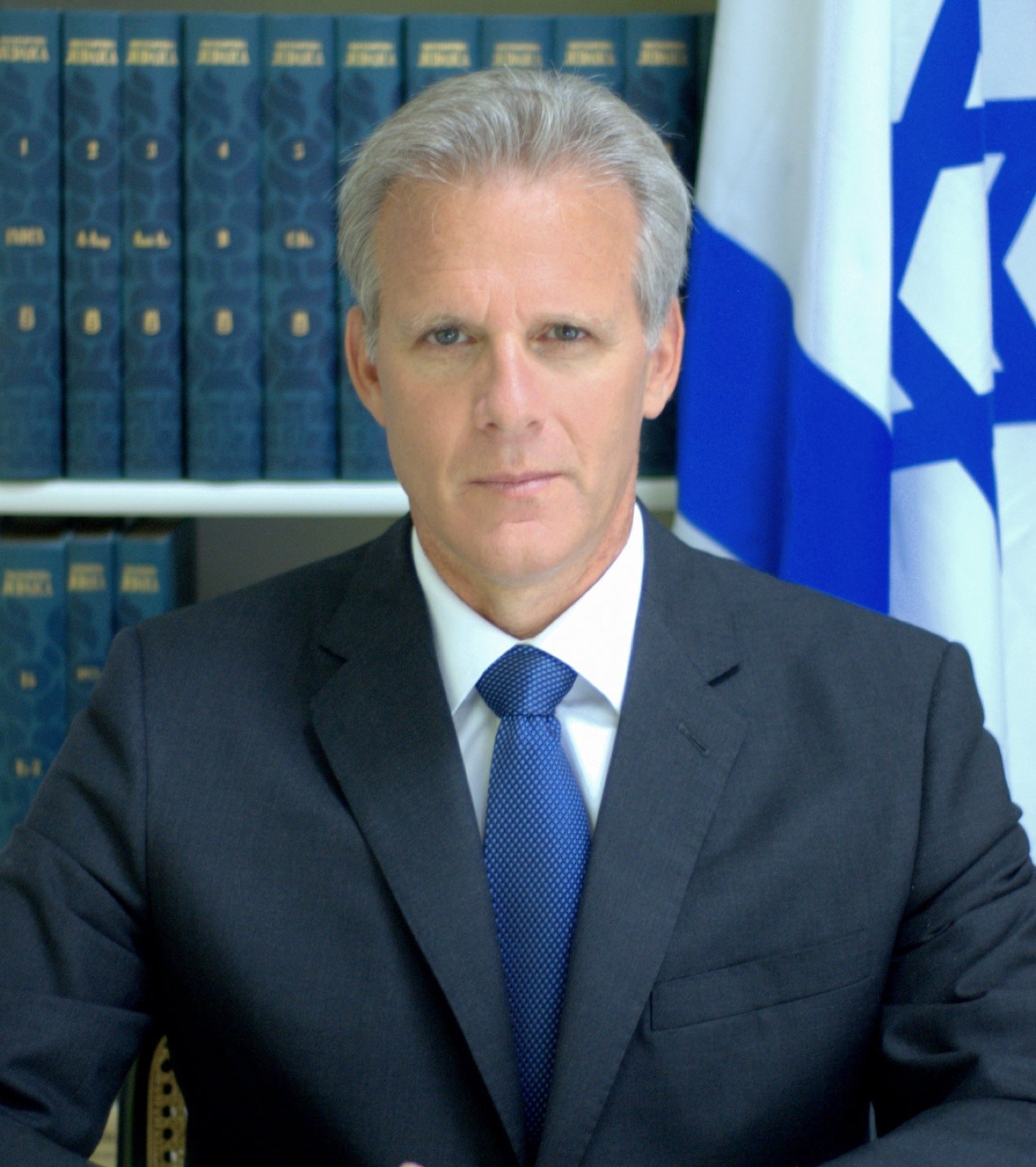
Dr. Michael Oren
Dr. Michael Oren is a former Israeli Ambassador to the United States and a former member of the Knesset.
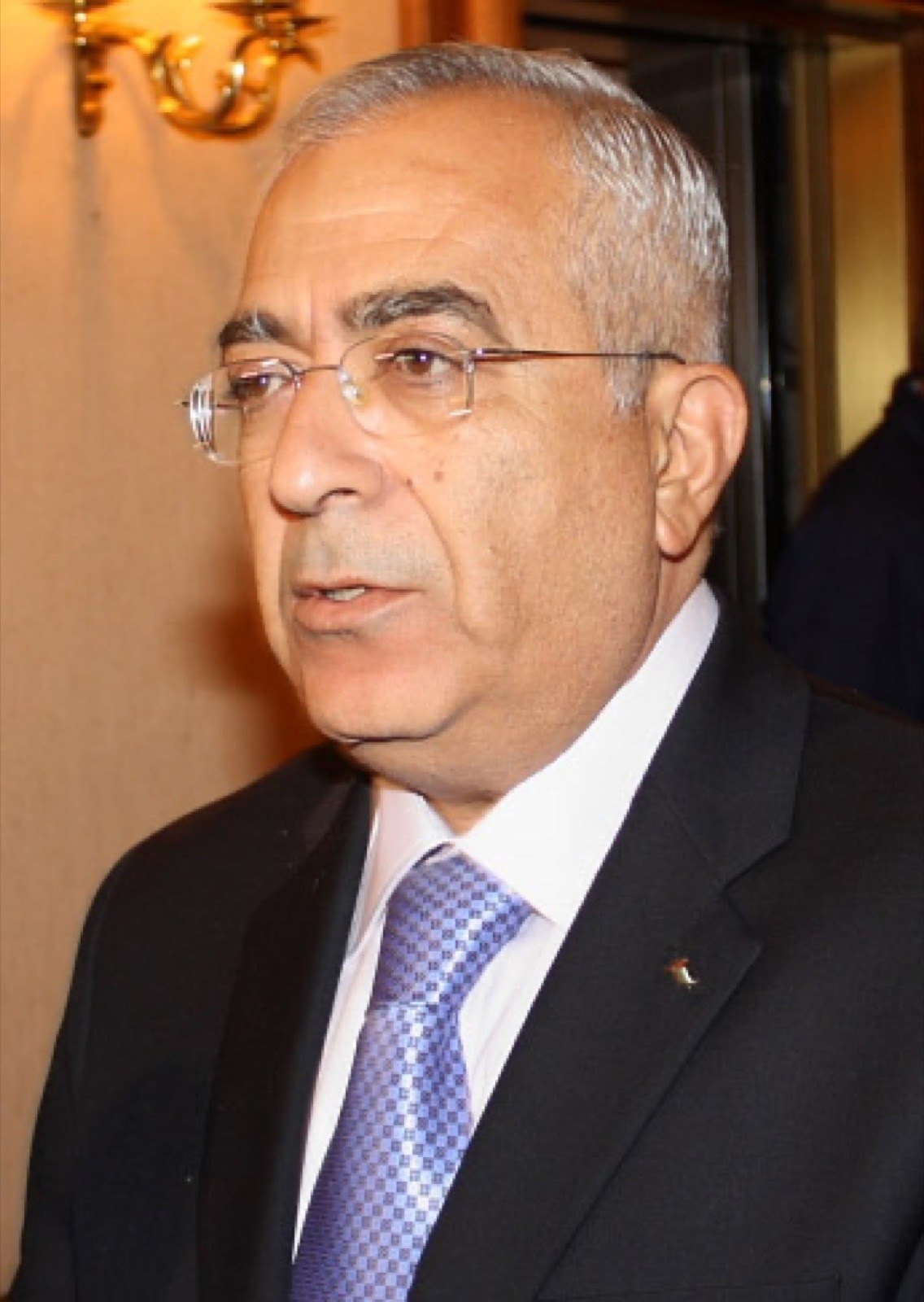
Salam Fayyad
Salam Fayyad is a former Prime Minister of the Palestinian National Authority.
Episode Summary
This week, we sit down with Dr. Michael Oren, former Israeli Ambassador to the United States and former member of the Knesset, and Salam Fayyad, the former Prime Minister of the Palestinian National Authority. We hear from both perspectives on the main roadblocks to peace and what needs to happen going forward. Meanwhile, Prime Minister Benjamin Netanyahu spoke in a U.S. television interview, saying that Israel must be responsible for security in Gaza. One Decision's resident spymaster, Sir Richard Dearlove shares his thoughts on how the international community needs to get involved in the future of Gaza's security.
Listen & Subscribe
- Watch on YouTube
- Listen on Apple Podcasts
- Listen on Spotify
Transcript
INTRODUCTION
Mcfarlane: You're listening to One Decision, the podcast that looks at the choices made that shape our world. I'm your host, Julia McFarlane. And I'm Sir Richard Dearlove, the former chief of British intelligence, otherwise known as MI6. Together, Richard and I talk to the top decision makers and influencers who shape world events to try and understand what it is that drives the defining choices and decisions that have global impact and affect us all. It's now been a month since the October seventh massacre by Hamas on Israeli soldiers and civilians, the worst attack ever in the history of the State of Israel and the worst loss of Jewish life since the Holocaust. It's also been a month since the start of the newest Israeli military campaign in Gaza on Hamas in retaliation for that attack. We're now also seeing an erosion piece by piece of international support for Israel in terms of its military response to that attack, given the very stiff loss of life being incurred in Gaza. The mounting civilian casualties has now caused more than a dozen UN agencies and NGOs to condemn the mounting death toll, calling for an immediate ceasefire. The UN Secretary General has said this week, Gaza is becoming a graveyard for children. President Biden has kept close contact with the Israeli Prime Minister Benjamin Netanyahu, who recently gave an interview to ABC News, my old parish, where he said that ultimately Israel will have overall security responsibility in Gaza for an indefinite period after its war with Hamas.
Netanyahu: I think Israel will, an indefinite period, will have the overall security responsibility because we've seen what happens when we don't have it. When we don't have that security responsibility, what we have is the eruption of Hamas terror on a scale that we couldn't imagine.
Mcfarlane: The Israeli army is now deep in Gaza and has effectively split the territory into two and encircled the largest city, Gaza City, after more than a week of its military incursion. Richard, we are going to hear from both Israel and Palestine today on our podcast. We have got Doctor Michael Oren, the former member of the Israeli Knesset and Israeli ambassador, as well as the former prime minister of the Palestinian Authority, Salam Fayad. But before we hear from them, I just wanted to hear your thoughts on what Netanyahu said on US TV. It was the first and clearest indication, I think, that we've had from Israel on what a post-Gaza operation reality might look like.
Dearlove: Well, I would characterize it as a sound bite. It's a very simple thing for Netanyahu to say, and of course there will be an expectation when the fighting stops that Israel doesn't surrender the position it will have won militarily, and therefore it's going to play a prime role in the security of Gaza. The question I think is how would that be configured and what would it actually mean in practice? And I think the idea that somehow you're going to have Israeli security forces in there policing Gaza is probably impractical and unlikely. I think what one's looking forward to is some sort of political negotiation with an authority, probably an international authority, which is invested with support from the Israeli state itself and of course from moderate Arab states as well. I mean to have something which is going to be basically workable even if it's not really acceptable to the local Palestinian population, it's probably going to have to be based on Arab nationalities. What I mean by that is the resources of countries like Oman or Jordan or the Emirates, Dubai, Abu Dhabi, and you can see how they could configure some sort of peacekeeping force in which the Israelis would retain some sort of say. I mean, look, this is a very complicated issue, and I think what's important now is that people do begin to think a little bit about the aftermath, because when you have purely military objectives they're largely meaningless, unless they're linked up to what your political objectives are going to be when the fighting stops. I think we're all very much aware that Israel has been maneuvered by Hamas and by the international response that Hamas has, as it were, provoked into a very difficult position. And at the moment it's getting more and more difficult for them.
Mcfarlane: A lot of people have said that there is no military solution to this conflict. Sound bites obviously a lot easier to get out there than the accompanying details and logistics. I mean, you could have a phrase like that, which is like four or five words.
Dearlove: And then you know you've got to imagine that behind it there's going to be a file with 500 pages. So it gives a small indication of direction. It certainly doesn't give an indication of methodology or actual solutions to a very, very intractable problem.
INTERVIEW: MICHAEL OREN
Mcfarlane: Thanks, Richard. Well, as I said, we're hearing from both sides today. First, Doctor Michael Oren, the former ambassador to the US and a former member of the Israeli Knesset between 2015 and 2019. He also served as a deputy minister in the prime minister's office in charge of public diplomacy. I started by asking Michael his thoughts on that interview with Netanyahu and what he thought was the future of Gaza and the security of both Israelis and Palestinians.
Oren: Well, first of all, thank you for having me on, Julia. And it's a really interesting question. It's a new question. Every round of fighting we've had with Hamas, this is now the fifth round going back since 2008, Americans particularly come to us and say, okay, what's your endgame? What's your plan for the morning after? Frankly, we haven't had one. The morning after was you go back to the status quo ante. You pay off Hamas with Qatari money. You try to improve the quality of life in the Gaza Strip, for example, letting thousands of Palestinian workers into Israel every day. It turns out Hamas wasn't really interested in that. And so now, finally, as Israel's thinking about the endgame, and there's many discussions, so I'll give you my idea, if you would. It in some level dovetails with Netanyahu. I'm not a spokesman for him. But clearly we have to change the status quo. We may have to create a cordon sanitaire around Gaza to make sure that people can't come to the border anymore. Previously, Hamas could come up pretty much to the border, and that was too dangerous. We have to work to demilitarize the Gaza Strip to make sure that there are no missiles there anymore, no more arsenals there. I think the most crucial thing is to internationalize Gaza. So it should no longer be Israel's problem. It shouldn't even be Egypt's problem. It should be the international community's problem. And the fact of the matter is, it is the international community's problem. We've seen now how massive American naval forces have had to move to the Middle East and some of them actually engaging in combat because of Gaza. So it's clearly not just our problem. And I would hope that we work with some type of international force. I think we would hope that that international force would have a large inter-Arab contingent in it, perhaps Saudi, perhaps Emirati, other Arab countries, but that the overall security for the Gaza Strip would remain in our hands. And what does that mean? It doesn't mean necessarily Israeli troops patrolling the streets of Gaza. It means the air, the sky, the ability of hot pursuit. It's a very similar arrangement we have in Area A of the West Bank, which is under exclusive Palestinian political and police control. But we do have the right of hot pursuit. We know that there's a terrorist cell operating in those areas. Our forces can go in there and arrest that cell. And significant security involvement we will continue to have in Gaza. I think the bigger question, much bigger than Israel security goes, is what's going to be the governance of Gaza? What's that going to look like? And there we get some thorny questions, and I'll be very candid about it. The big question is: do we permit or facilitate the re-installment of a Palestinian Authority governance in the Gaza Strip? Now, last time that didn't work out so well. In 2005, we withdrew from Gaza. And we watched this and then almost immediately Gaza became a Hamas stronghold and immediately Hamas began firing rockets at Israel. It's only less than a year later, in 2008, that the first Gaza war broke out. It wasn't built by accident. So the question is, do we do this again? It's the same Mahmoud Abbas who runs the Palestinian Authority. He's in the eighteenth year of his four year term. He won't stand for reelection because he knows Hamas will win. He and his administration are notoriously corrupt and disliked by the Palestinians. So it's a real thorny question. And yeah, there are some Israelis who think we should keep the Palestinians divided and somehow get out from under the pressure of a two state solution. I'm not one of them. I'm interested in having peaceful governance in Gaza and, if possible, political horizon for the Palestinians. The question is who?
Mcfarlane: Who and what? And I think here we're premature and looking at that, we should carefully keep it as a goal. You made that point recently. I think you were talking to Jake Tapper of CNN when you raised that issue of Mahmoud Abbas, the fact that he's in the eighteenth year of his four year term. You said the fact that he doesn't stand for reelection is because Hamas always destroys him. Hamas had a landslide victory. Hamas is very popular among the Palestinian population. Let's say for example that Israel is successful in its strategic objective of wiping out Hamas as it currently stands. It's not able to wipe out Hamas as an idea. And the Israeli operation in Gaza is incurring a very steep civilian casualty. I know that there is not a consolidated verified number of civilian casualties because we have to rely on Hamas for those figures. Let's say there is new Palestinian leadership in Gaza, as you suggest. Does that include a Gaza that is essentially still under siege by the Israelis? A Gaza that is still home to Palestinians who do not have freedom of movement, where there are not enough trucks coming into Gaza daily compared with the daily requisite number of calories per person in the population. Will it still be under siege? Will it still be sort of cut off and the Palestinians inside unable to leave, giving credence to people who claim that Gaza is essentially, quote, an open air prison?
Oren: Okay. A question about the siege. You're talking to the bad guy here. You're talking to the guy who was in charge of the Gaza blockade. And this was back in 2017. I was in Knesset. I was a deputy to the Prime Minister. One day he calls me and says, I have some bad news for you. You're in charge of Gaza. And you're in charge of trying to find ways of increasing or enhancing the quality of life in Gaza. You don't want this job because one of the many things you find out immediately is that Iran, which is deeply embedded in Gaza, is willing to fight Israel to the last Palestinian. They don't care about the Palestinians. Mahmoud Abbas is willing to fight Hamas to the last Israeli. And Hamas itself doesn't care about its people. So we have a crossing. It was called in Hebrew, Kerem Shalom, but it's kind of an ironic name. It was called the Vineyard of Peace. A huge crossing. It had the capacity of handling 1,200 very large flatbed trucks every day, filled with everything: food, medicine, building materials, everything. Because the blockade was not a food blockade. It was just a military blockade. It was arms and what was known as dual use issues. So if you brought in an irrigation pipe, it wasn't going to go to irrigation because Hamas was going to get it and make it into a rocket. So we had to be very careful about the dual use issues. It was never food. There was never medicine. There was never a shortage because Hamas wanted a shortage. So of the 1,200 trucks, some days Hamas would let in 800, sometimes as little as 400, because Hamas actually wanted a level of humanitarian distress in Gaza to keep the population a little hungry, to keep the population angry, to keep the population dependent on Hamas. I mean, you can't make this stuff up. I mean, this is Hamas who uses and loses hundreds of children digging their own tunnels every year. They're losing about two hundred, three hundred children a year in tunnel construction. They don't care. Throw out everything you know about human decency when you're dealing with Hamas.
Mcfarlane: I appreciate the need for Israeli security and why the Israelis feel they are justified in the blockade. But would you not say that the Israelis are kind of falling into a trap and it helps Hamas with their recruitment. It helps Hamas paint Israel as the bad guy, and it essentially gets you nowhere.
Oren: And I would say, you know, to some degree, yes, we can destroy Hamas. We can uproot and we can devastate. We can't destroy the idea of Hamas. No more than the coalition could destroy the idea of ISIS or the idea of al Qaeda. What you can do is degrade the organization. So today, al Qaeda and ISIS are far less threatening because the organizations have been degraded. I say this too with Hamas. There'll be Hamas, there'll be Hamas because Hamas is basically the Muslim Brotherhood. The Muslim Brotherhood are everywhere. The Egyptians basically creamed them in Egypt and they're still around, aren't they? And that's a fight that is a generational fight over education, the way children are educated. Hamas educated Palestinian kids from the age of two, three to kill, kill, kill, stab, stab, stab. Summer camps, you know, with the violence you've seen in the pictures. That will end, but the idea will still be there. And maybe we can offer the Palestinians an alternative.
Mcfarlane: I know you have a history of working with Benjamin Netanyahu. Obviously Hamas is to blame for the massacre of October 7 and the horrific, horrific things that happened in Southern Israel. Do you think it is fair to apportion some of the blame to Netanyahu and some of his policies? And what do you make of the reports recently from 2019 where he allegedly made some points in a Likud meeting where he was quoted as saying, those who oppose a Palestinian state should support the transfer of funds to Gaza because maintaining the separation between the PA in the West Bank and Hamas would prevent the establishment of a Palestinian state? He's not the only Israeli politician who said this. Far right MK Bezalel Smotrich, he's now the finance minister in the government, he said so himself in 2015 that it was Israeli policy to treat the PA as a burden and Hamas as an asset.
Oren: Well, let me say this. I am not a spokesman for Benjamin Netanyahu. I haven't worked with him in many years. I know him. He's a very different man today than when I knew him. I want to say that because the Palestinian issue is immensely complex and frankly very intractable. And there are no solutions. There are better management situations. And this is a conversation I actually used to have with him because I saw my job with him as being the voice that he didn't want to hear. And this is the voice that I said to him. I said, Israel's security is like a bank account. And you have to put deposits in your bank account. For example, in 1948, after the UN had partitioned Palestine into a Jewish and Arab state, we, the Zionist movement, accepted it and the Arabs rejected it and they went to war. And because they rejected and went to war, that put a deposit in our bank account. We were able to draw on that diplomatic bank account to give us leeway on the battlefield. We went way beyond that partition resolution because the world understood that we had done our best. That was the deposit. We had made a deposit in our peace account. And I can give you other examples. In 1967, the Israeli government went the extra mile to prevent war. The Arabs wanted to go to war. So that was a deposit in our bank account. And so in 1967, we were able to triple the size of the State of Israel. And no one in the international community gave us a hard time. Nobody. Not Great Britain. Not the United States. But in other cases where we were perceived by the world to have not tried to make peace, when we went to war, we went to war with an empty bank account. And I used to say that now if we go to war, and I was pretty sure we'd go to war soon, we are going not just with an empty bank account, we're going with an overdraft. And I think you're seeing the results of this now. We gained a tremendous amount of international sympathy because of the massacres of October 7. But if you are sitting in the UK or elsewhere, you saw how long that sympathy lasts, which wasn't very long. And I think if we had gone the extra mile or more in convincing the world that we wanted to make peace but the other side didn't, I think we would have had more leeway.
Mcfarlane: I wanted to ask what your thoughts were on the fact that there is still strong but diminishing support for Israel as the years have gone by. There was a new Gallup poll that suggested support from Democrats for Israel is at an all time low. Net sympathy is solidly positive among older generations, including baby boomers, but among millennials, there are now 42% sympathizing with the Palestinians and 40% with the Israelis. How worried are you about the fact that there is lessening support for Israel among Americans who are Israel's strongest allies and really guarantors for their safety and security?
Oren: Well, of course, I'm concerned. And when people come to me and say, well, two thirds of the American public support Israel, sometimes it's higher, as much as 80% of the American public support Israel. And yeah, this Generation Z problem is a problem, but these people will grow up and they'll see the world in a more nuanced way. Maybe that doesn't give me any great solace. It doesn't. And it's something we have to work on. And it eventually will find its way into policymaking. We have to be prepared for that. Again, I want to go back to my metaphor of the peace bank account. We have to keep on making deposits and to show the world that we want peace. And if there's no peace, it's not our fault. And that's not always easy. We have a public opinion, too. And I must say after this fighting, everyone's talking now about the day after there's going to be a two state solution. I can't think of probably a less conducive time to start thinking about a two state solution because the vast majority of Israelis, and I'm talking about Israelis I know who were significantly left of center, are now dead set against it. Why? For the same reason I said earlier, why Mahmoud Abbas won't run for reelection. Hamas will take over. Just who is gonna take over the Palestinian state? We have a Palestinian state in the West Bank. We're not gonna be facing a tactical problem. We're gonna be facing an existential problem. It's the longest border we have. It goes from the Golan Heights in the North to the Gulf of Eilat in the South. We'll be dead. And everyone said, well, in your right mind, we're not going to let Hamas take over the West Bank. So if you want to think about solutions, certainly think about creative solutions that don't include the two state solution. You can talk about federal solutions. You can talk about local autonomy. There's ways you can move forward if you're not wedded to a solution that's not going to work.
Mcfarlane: Are you saying that the two state solution essentially is dead in the water in all practical sense?
Oren: Well, you're asking the wrong person. I never thought it was ever alive. So it's not dead in the water. It was never alive. And for very deep historical reasons. It's not because of the Israeli government or any particular Palestinian government. It has to do with whether these two peoples are willing to sustain a state structure that is permanent and legitimate.
Mcfarlane: On that, there was a really interesting interview recently with Mustafa Barghouti, I'm sure you know, a Palestinian doctor who has been a long time Palestinian political activist. He said essentially, he believes that this can only end one of two ways: that either there is a two state solution on the 1967 borders, that Palestinian refugees have a right of return and all the Israeli settlements in the West Bank are essentially dismantled. The other option he gave was one where Palestinians were allowed to have full citizenship. He didn't specify Israeli citizenship, but he said for all people living on this land to enjoy full citizenship, equal rights under the law. Of the two options, do you think either one is more likely? Is there either one that you are more comfortable with? Or is there a third that you can see that is viable, that is legitimate, that would be fair to both Israelis and Palestinians?
Oren: Neither of them are going to happen. And neither of them do. I've heard about them for, you know, for thirty, forty years now. But there are many alternatives. And the chances of these alternatives happening is if we abandon that sort of Manichean view, it's either/or. Because either/or is not viable. Israel's not about to commit national suicide. And the Palestinians have proven, I would say, spectacularly incapable of sustaining a state structure. What we can do, though, is we can look at other solutions. I don't know if maybe solution is the wrong word, but certainly ways of going forward. So I mentioned federal solutions, where you have a consortium of smaller states. Gaza could be a smaller state. What we call Samaria could be a smaller state. You can have federal solutions with Jordan. And this has been advised in the past. There'd be a Palestinian federation that would link with Jordan. It could certainly link with Jordan and Israel. It could be a tripartite federation. You could have cantonment, where you can have a great degree of regional autonomy, but be linked by some type of overarching structure. You could have a trusteeship. A trusteeship could be an international trusteeship. It could be an intra-Arab trusteeship. By the way, that was once proposed for Israel back by the Americans in 1947. Nothing's new here, by the way. These ideas are tried, sometimes work.
Mcfarlane: When you say linked with Jordan, what does that mean? Does that mean Palestinians leave Israel and become Jordanian?
Oren: No. Israeli Arabs remain Israeli Arabs. But there can be links, there could be an economic link, there could be diplomatic links, you could have federal solutions. The idea is to be thinking creatively. And I must say, I've been talking to officials in Washington, Democratic officials, they understand that the two state solution is a non-starter. Nobody knows who would run that state. No one would know what the nature of that state is. There's no discussion even among the Palestinians about the nature of that state. Fifty years ago, they used to talk about creating a democratic secular state in Palestine. You haven't heard that since before you were born. So what does the state look like? The Palestinian Authority's biggest singular expenditure is en masse. So what does the state look like? And can it sustain itself? Nobody knows these questions. I'm very skeptical about its ability to sustain itself. Maybe I'm wrong. So, all right, that's my feeling. But you're talking to someone who actually wants to see the needle move. I'm not doing this to in any way say that the Palestinians don't deserve self determination, they don't deserve to end what they call the occupation. All that I accept. The question is, how can this actually be done? I'm all about real, real solutions and not slogans.
Mcfarlane: I don't think I've heard you say that about the occupation before. I think that's really interesting.
Oren: Well, I say what they call the occupation. I have a problem with the word occupation because people can't occupy its own land, but definitely I acknowledge the fact that we occupy people. There's no question about it. Not a land. We have to make that distinction.
Mcfarlane: I just want to go back to the current situation in Gaza, last of all, because I did want to ask you about your feelings on the hostages. The Israeli government said that they are targeting Hamas in the tunnels. Do we not think that a lot of civilian hostages are being held in those very tunnels? Obviously, this is a really, really difficult position for the Israeli government to be in. I'm not offering any other sort of options for how the Israeli military should carry out this operation, but what are your thoughts on the fact that the Israelis are bombing areas where their own hostages are thought to be held? I mean, are you hearing from angry families about this?
Oren: Some. I visit a great number of families. Others understand that there's actually no alternative, and that a ceasefire means the death of the State of Israel. Ceasefire means Hamas gets away with mass murder. It means we cannot actually restore the 250,000 Israelis who have been evacuated. We can't restore them to their homes. You wouldn't go back to a home. Hamas can reconstitute itself and strike again. And it also kills our regional security, our regional deterrence power, because everybody in the region will get wind of this and say, oh, you can bomb Israel, you can massacre Israelis, the international community is going to tie our hands and propose a ceasefire. You get to get away with it. This is the hardest issue. Can you imagine having to make this call as a decision maker? I was of the opinion, and I may pay harshly for this in the future, saying that we had a better chance of releasing the hostages by sending in ground forces than not, because sending in ground forces increased the pressure on Hamas. My feeling is a gut feeling, I may be wrong again, is that Hamas will treat the hostages better knowing that they will be used as a bargain card. And for want of saying this more delicately, a living hostage is worth more than a dead one. And I think they also want to keep the hostages looking good and healthy so that when they go before the cameras, they can say all those things you heard about homicides is wrong.
Mcfarlane: Do you think the Israeli government are doing enough to safeguard the potential of rescuing these hostages?
Oren: I would be confident, and I say this without any authority, they're doing the utmost. They're talking about hundreds of miles of tunnels underground. It's exactly inconceivable to us. And they go down hundreds of feet. I mean, the easiest solution would be to flood them with seawater. You flood them with fuel and set them on fire. We can't do that because of the hostages. They're down there somewhere. You have to assume they're down there. They may not all be down there. They're not all in the hands of Hamas, they're in the hands of Palestinian Islamic Jihad, many are in the hands of families. Families have the family hostage that they're hoping to sell. My assumption now is that as the encirclement of Gaza gets smaller and smaller, as Israeli forces get closer, for example, Shifa Hospital and that Hamas headquarters, there's going to be someone who's going to say, okay, we're going to make a deal. You get the hostages. We get out of here free. Now, again, I'm old enough to remember Beirut in 1982. We did the same thing with the PLO. They all got on boats and they went to Tunis. If I were calling the shots, I'd say, if someone said that to me, Hamas gets to go away to Algeria, but we get the 240 hostages, I'd say, go for it. And I would make that deal.
Mcfarlane: Let's see if it actually happens. Doctor Michael Oren there, the former Israeli ambassador to the US and former member of the Israeli Knesset.
INTERVIEW: SALAM FAYAD
Mcfarlane: On the need for creative solutions and what needs to happen next, we now turn to Salam Fayad. He's the former prime minister of the Palestinian Authority between 2007 and 2013. I started by asking him, given what happened on October 7, the atrocities that took place, could he at least agree that Israel must surely be given a right to respond to Hamas?
Fayad: Thank you very much, Julia, for having me on One Decision.
Mcfarlane: 18 different United Nations agencies and NGOs have called for an immediate ceasefire to Israel. They have expressed shock and horror at the mounting death toll from the conflict. It's really upset the Israeli government. They've been really upset with the rebukes that they have received from the international community, given the scale of the airstrikes. The thing is though, because of what happened on October 7, the Israelis see Hamas as an existential threat. The idea that this organization may retain the capabilities to carry out what they did against the Israelis again in the future, this is something that Khaled Mashal speaking to Al Arabiya recently, he said, listen, nations are not easily liberated. The Russians sacrificed 30,000,000 people in World War II. The Vietnamese sacrificed 3,500,000 people until they defeated the Americans, so on and so forth. Palestinians are like any other nation. No nation is liberated without sacrifices. Ghazi Hamad from the Hamas political bureau on Lebanese TV, he said the Al-Aqsa Flood operation, the October seventh massacre in Israel, is just the first. There will be a second, a third, a fourth. Will we have to pay a price? Yes. And we are ready to pay it. We are a nation of martyrs, and we are proud to sacrifice martyrs. Hamas leadership have expressed plainly that they are willing to throw as many Gazans under the bus in order to attack Israel. Would you say that for any peace, for any long time secure peace, there can be no Hamas? Because Hamas will just inevitably drag Palestinians and Gazans into more endless cycles of conflict with the Israelis. I'm asking if Hamas needs to be eradicated for the benefit of Palestinians as well as Israelis.
Fayad: The point is Israel now is engaging in a massive campaign against people in Gaza, essentially. Now October 7 happened, and then Israel said we definitely have to retaliate. Look at what happened to us, and don't come cry to us when we retaliate and respond in kind to deter. But they're really going on with a campaign that's about eradication. They use the expression about Hamas in reference to what you just said. We need to eradicate Hamas. We need to fully destroy it and all of that sort of thing. Now when you look at Hamas actually and what it is, I would say that that's an impossibility. Hamas is a political movement. So when you set a goal of your campaign, I'm talking about Israel here, as one that is targeting the elimination, eradication of a political movement, I mean, you know that that's an exercise in futility at best. For us, Palestinians, it is catastrophic, and look at what's happening. So what I'm really saying is that going after targets, when you know that civilians are in harm's way, putting civilians' lives in danger knowingly, that is a crime under international law. And when you introduce into the discourse what we're really talking about here in terms of the disproportionality, that then it really all begins to make sense.
Mcfarlane: I appreciate where you're coming from, Mr Fayad. You can absolutely disagree with how Israel is carrying out its aim of getting rid of Hamas because as a terrorist organization that targets civilians, that kills children, people indiscriminately, and that has stated explicitly in its charter terrorist goals that it seeks the destruction of Israel and all the Israelis and Palestinian citizens of Israel, that there can be no future for a group like Hamas in that form. Now I'm asking you this specifically because you wrote in Foreign Affairs recently and a lot of people agree with you that there needs to be a new Palestinian leadership. There needs to be, as you say, a properly reconfigured Palestinian Authority, which you wrote was the best option for the day after, the day after the military operation in Gaza and beyond. And you go into a bit further of what you are proposing. You said the first step must be the immediate and unconditional expansion of the PLO, the Palestine Liberation Organization, to include all major factions and political forces, including Hamas and Palestinian Islamic Jihad. Now you've said already that there are large parts of the Palestinian population that do support Hamas, that do support Palestinian Islamic Jihad and other terrorist organizations. But how can any future rely on the legitimization of a group that calls for the indiscriminate murder of children, of civilians, that wants the destruction of the State of Israel, that will not see the Israelis as a viable partner for peace? They don't want a state of Israel living alongside a state of Palestine. How does that work?
Fayad: First of all, you know, characterization of factions as terrorists or not terrorists, as you know, these are characterizations that are made by certain countries bilaterally or maybe even a group of countries. But, you know, beyond that, what you're really talking about and raising as a question of maybe impossibility or difficult to see how could it be possible that an organization like this might be included in the future. To get to that future, we need some kind of political process. How can an organization that stands on the kind of platform Hamas stands on be a party to a process that could lead to peaceful settlement or reconciliation? My answer to this question is that it happened before, not only in the Israeli context, but elsewhere. And doing otherwise actually produced results that are counterproductive relative to the insistence on exclusion from the outset. Let me just basically remind your audience, actually, that the PLO itself, if you go back thirty, thirty five years ago, if you go back to 1988, before 1988, and especially 1993 when the Oslo declarations were signed, you can look at what was written in the media now. Take out PLO, and you can put in Hamas. You would find the story not changed at all. That's where the PLO was, and that's how the PLO was viewed. And actually, as you know, I'm sure, it was not before 1988 that the Palestine Liberation Organization signaled its willingness to accept as a solution to conflict the emergence of an independent Palestinian state on the territory Israel occupied in 1967, and that the world started to really engage with it in a process that ultimately culminated in the signing of the Oslo Accords. So that's where the PLO was. And yet, it was the partner for peace, and it was. What I'm really talking about here is a PLO that includes all of these points of view. And the PLO acting on behalf of all of us Palestinians then would negotiate with Israel provided that the process this time around is preceded by a formal recognition of our rights as a people, including the right to self determination, including the right to such a state.
Mcfarlane: It's a good point. But do you not think, however, that October 7 has changed that? That Hamas have crossed the Rubicon? That now there is no way Israel is going to be willing to sit down with this group. Perhaps they would have been before, perhaps, you know, maybe they could have been persuaded to. But now given what happened, the scale of the savagery, the horrific things that happened, that now Hamas have gone to a point where they cannot return back. And they have also demonstrated with their words that they have no remorse over October 7, and they have even threatened to do it again. It's different from the PLO in the eighties when the PLO were carrying out bombings and targeting civilians. You're right to point out that the PLO was able to turn around its image internationally and present itself as a partner for peace. We're not talking about that kind of Damascene conversion for Hamas here in 2023, are we?
Fayad: Actually, we can go back in history and find instances where in the immediate aftermath of a transgression, particularly what was at a massive scale, things like that were said. This may sound like foreign right now, but as a matter of fact, Israel itself tried desperately to find an alternative to the PLO to deal with. It's possibly the case, arguably the case from my point of view, that Israel really never internalized the idea of a sovereign Palestinian state on the territory it's occupied in 1967. So for example, it looked for ways to deal with local leadership, helping them out and all of that in the face of the PLO. And it is no secret, actually, that as best as it could, Israel tried to avoid having to deal with the Palestine Liberation Organization. I remind you, some factions of the PLO did engage in acts of violence and aggression throughout the world, and that's how the PLO was characterized. If you really want to move outside of the Israeli context, actually, without really necessarily stories being completely identical, contexts identical and all of that sort of thing. It is not really the first time in history that in the aftermath of something horrific, your parties, at least eventually, end up having to really deal. Look at Northern Ireland, for example, and what happened. So history is replete with examples. Look at Afghanistan, case in point. I mean, what possibly could be more horrific than the attacks that took place on the United States, 09/11/2001? I mean, and here we are twenty years later, Americans were negotiating with whom? With the Taliban to really exit from Afghanistan. That's one way. The other way is to really say we will not deal with anyone. That's point number one. Point number two, without in any way wishing to be understood as someone who condones violence, certainly not against civilians, for sure, and where acts of aggression were committed against civilians, just to be totally condemned, for sure. And I myself call for that, to be given the conflicting stories about what happened, what didn't happen. Let the guns be silenced today, and tomorrow, an international commission of inquiry, an independent commission of inquiry, undertake a thorough investigation of what happened on October 7 and what has been happening relentlessly since October 7. Any one party or state and non-state actors are not exempt from the operation of international humanitarian law, the law of the Geneva Convention, what have you, regarding the protection of civilians. I'm very serious about this. And there has to really be accountability. There's no question about that. And good part of the reason why we keep finding ourselves in the position we are in, because no such accountability was exacted or expected or pursued before. So that is the issue.
Mcfarlane: I take your point. Mr Fayad, you were prime minister of the Palestinian Authority for six years between 2007 and June 2013. You had previously served as finance minister for a couple of terms before then. What do you say to critics of the Palestinian Authority who say that for many Palestinians, it was not legitimate leadership, long standing accusations of corruption, the Palestinian ministers who drove very flashy cars in the West Bank, had mansions built for them in Ramallah in the West Bank. Only two years ago, just over two years ago, PA security forces stormed a house of a Palestinian dissident, beat him with clubs, took him away. This is Nizar Banat. I'm sure you've heard of him. He was dead an hour after PA security officials dragged him from his house. Officials responsible have still not been charged for that. What do you say to people who do not regard the PA as legitimate leaders and representatives of the Palestinian people?
Fayad: Look, Julia, in the article that you cited that I wrote recently, and I wrote about this before, I used only one word. You'll find that I said misrule. Yes. It's one word, but it really captures all of the transgressions that it is meant to. It's not really meant to kind of sweep any of what you have said under the rug. The failure is there, a doctrinal failure, the one that I referred to, the bet that the PLO made. And what is the PLO? PLO, a creation of the Oslo Accords, essentially. So that paradigm failed. It's a failure of a doctrine. But in addition, there was misrule that took many of the forms that you have outlined. And these forms of misrule are actually, first and foremost, felt by the person in public. And so that's why I myself stood always on a platform that said good governance first with all its precepts, and not only in finance, in the sense of, you know, transparency, you mentioned some aspects of financial successes here and there. But really fundamentally, at the core of good governance is how it is that you really manage the relationship between those who govern and the governed. If consent of the governed is not possible to secure for one reason or other, elections are not held, that does not exempt the government from really putting the interest of those governed front and center. So clearly, there is that failure, and that has definitely, I'm here to really tell you, I acknowledge without any hesitation. It's not only the failure of the doctrine, but also the failure when it comes to judging how the PA went about the business of governing, administering the affairs of the Palestinian people of the West Bank and Gaza. If you allow me, Julia, just like one point that I really meant to say before we really got into this, and I have no issue really continuing this conversation on this particular issue, because until and unless we start by looking in the mirror and seeing what it is, what the failures were, and what really needs to happen to redress them, and that's part and parcel of the reconfiguration that I'm talking to you about. But on the question of who is to be excluded, who is to be included, all of that sort of thing. And I don't want to really spend too much time looking at history here. But look at the makeup of the current Israeli government. Now, as a matter of fact, we certainly have no say on who governs Israel. We, Palestinians, do not vote in those elections. But look at what they have. Look at what was happening in the West Bank before October 7. For about a year, there was speculation, with good reason, that we're not very far removed from an eruption from south to south. Gaza had nothing to do with this. It really was all based on what was happening in the West Bank, what was happening in Jerusalem, what was happening in Al-Aqsa, and all of those grievances with all that settler violence, outright acts of terror, with the protection of the Israeli army. Houses burned, places of worship, etcetera, etcetera. This is the government. It's not really some renegades, you know, going out and rampaging here or there. This is policy. These are actually cabinet officers who actually say these things. They say to us, Palestinians, forget it. State, forget about it. No such thing. Those elements in the Israeli government even do not wish to see the PA, which is a product of Oslo, which has turned into an instrument with its importance for the Palestinian people and which has really been providing Israel, the occupying power, with the cover, political cover, to say we're not an apartheid state.
Mcfarlane: Before speaking to you, I spoke to Doctor Michael Oren, who's a former US ambassador to Israel. And I put to him something that Mustafa Barghouti said recently in an interview to the BBC, where he said either the two peoples, the Israelis and the Palestinians, end up living together side by side. He said on 1967 lines that there was Palestinian sovereignty over their own areas in the West Bank, or the Palestinians are given citizenship. There is an end to the occupation. They're given their rights and full equal rights. He didn't say state of Israel, but I think that's what he was meaning. What are your thoughts on this? Because I think a lot of people now do say for many reasons, including the fact that there is no viable contiguous area for Palestinians in the West Bank now, that the two state solution is essentially dead in the water. What are your feelings on that?
Fayad: Yes. We are prepared to engage in a political process. One that is not based on just let's start over. You know, that's not really what we want. Given the major structural defects that I talked to you about, I think it's important for us to condition our willingness to engage in a political process that's about the emergence of a Palestinian state on the territories Israel occupied in 1967 by an explicit formal recognition by the government of Israel of our right to that state. That's very important. We need to have that before we really sit around any table to negotiate an outcome because we cannot just really start over ignoring how damaging it was for us to get into a process that was not based on recognition of our own rights as a people. Key amongst those rights, since we've talked about a Palestinian state, is our right. It does not mean lack of willingness to negotiate. To the contrary, I mean, you hear it said time and again. Israel is not willing, and this is not the current government. You know, Netanyahu himself said repeatedly, said before this government, there is not going to be at all ever allowed Palestinian sovereignty or any sovereignty other than Israel's on the territory between the River Jordan and the Mediterranean. His words, his words. How can we possibly be expected to rush again into a political process without at the beginning, wait a minute, if you want a deal, let's just first hear it, just as we recognize your right to exist in peace and security back in 1993, we need for that to be reciprocated. That's language that maybe Netanyahu himself was fond of when he first became prime minister. The shoe is on the other foot now. There's a lot of damage that has happened, a lot of lives lost. And if this war does not stop immediately, there'll be a lot more, thousands killed.
ANALYSIS WITH SIR RICHARD DEARLOVE
Mcfarlane: Salam Fayad there, the former Prime Minister of the Palestinian Authority. Now I'm joined again as always by my co host Sir Richard Dearlove, the former chief of Britain's MI6. Richard, let's just get into Doctor Oren's arguments. It's difficult now for Israel. It's losing a lot of its international standing. They have had this very big public spat with the UN. What can and should they do going forward? I mean, we heard from Salam Fayad in this podcast. A lot of people have argued, as has Fayad, that there has to be a sort of a rejuvenation of Palestinian leadership. But Salam Fayad is pointing out that he thinks that leadership should include Hamas. It should include Palestinian Islamic Jihad. The fact that the previous leadership didn't meant it was less legitimate. Michael Oren has said in previous interviews, he's made the point that Hamas enjoys a lot of support from Palestinian members of the public, from a lot of Palestinian demographic. Not all Palestinians support. So how do we go forward from this?
Dearlove: Well, strangely, in the UK we actually have a model. The Provisional IRA was a terrorist movement, and then its political wing mutated into a political party that has participated actively in the peace process in Ireland. So all I'm saying is if Hamas were to, as it were, publicly disassociate themselves from terrorism, and as it were become a political negotiator in a process following this conflict, then I don't think it's completely to be ruled out, but it could be part of a Palestinian alliance representing different interests. I mean this is exactly what happened between the UK and Irish terrorism. They mutated into a political movement. And they did that because they basically took a decision, the terrorists themselves, that they would achieve more through pursuing a political path of negotiation. And I mean, the irony is they have done that. I mean, they've now emerged as a very, very significant political force in Ireland, you know, with that particular extreme nationalist bent. Okay, some of us may feel uncomfortable about this, but it's better than the violence that preceded it. Now I'm not suggesting that as a model for Palestine, but I would advocate myself if there's going to be a political solution in Palestine, there has to be a political mechanism which somehow embraces the extremists in looking for a durable political solution. So I'm not surprised by that suggestion particularly. I just think we're a very very long way still from expecting that sort of process to grow out of the circumstances of the aftermath of this conflict.
Mcfarlane: Well, I think that's true. And I think the Good Friday Agreement, you're not the first person to draw the parallels. But I would put down that I think a key difference is that the IRA leadership were on the ground, whereas Hamas leadership, they are living it up in Doha, in Qatar, in Beirut, having a very nice time. Thank you very much. They are not in Gaza. They actually don't have skin in the game. If anything, they have skin in the game for the conflict to continue.
Dearlove: I agree with you on that, and I think that's why the parallel might in theory have some validity. In practice, it's hard to see how it would be applied. And of course there is another fundamental difference, which is the role of Iran behind Hamas, which I personally think, and I've said this already, that is a defining issue and I mean as Oren said, the Iranians don't care about the Palestinians, they have their own objectives. And you know there is this exploitation of the Palestinian identity for Iran to pursue its own objectives in the Middle East in a ruthless way.
Mcfarlane: I totally agree. If we have time for one more thought perhaps, you know, I thought it was interesting what Michael Oren said about the occupation. We didn't really have the time to talk about the occupation, because on the one hand, the flare ups of war and conflict between Israel and Hamas in Gaza is one thing. But the reality on the ground in the West Bank is perhaps the bigger, more difficult problem to solve. The intractability now of so many settlers in the West Bank, the fact that there is now no longer any possibility for any kind of contiguous Palestinian state, given how many settlements have eaten into that territory, what hope is there for Palestinians to have sovereignty eventually, to not live under occupation? Or do you think it's time for us to start thinking about how a one state solution would work?
Dearlove: Well, strangely, I've always advocated a one state solution because I think it is the only political solution that still has a little bit of life left in it. And that may be a surprising comment. But we've got way, way beyond the point, because of aggressive settlement policies on the West Bank, where a two state solution could work. It's just not possible. There's too much to dismantle to create a two state solution. Plus, the fact that within a two state solution would be inherent for eternity the seeds of conflict, whereas in a one state solution you actually could imagine two peoples within a single nation learning over time to live together. I mean, you could argue the Northern Irish parallel between Protestant and Catholic as an example of what we have in mind, but it takes generations to achieve that. I thought what was interesting about Oren, I mean he completely ruled out a one state solution, but given his ideological views on the State of Israel, that's not particularly surprising. He ruled out a two state solution, but then was talking about federal solutions, cantonment, other pragmatic, I wouldn't say call them solutions, pragmatic arrangements which might include some sort of confederation with Jordan. It's interesting, but let's face it, those ideas are even more complex to implement than anyone has hitherto suggested. Which is why I think if you go back to the simple idea of a one state solution, but it requires a fundamental change of ideology amongst a large number of Israelis.
Mcfarlane: That's it for this week's episode of One Decision. We drop new episodes every Thursday. Like and subscribe so you never miss an episode. Drop us a line. Tell us your thoughts. What decisions have impacted you and where you live? You can write to us. Our email is 1decision@1decisionpodcast.com. From me and the team, thank you for listening, and see you next time.