Hosted by Christina Ruffini and Sir Richard Dearlove
Guest
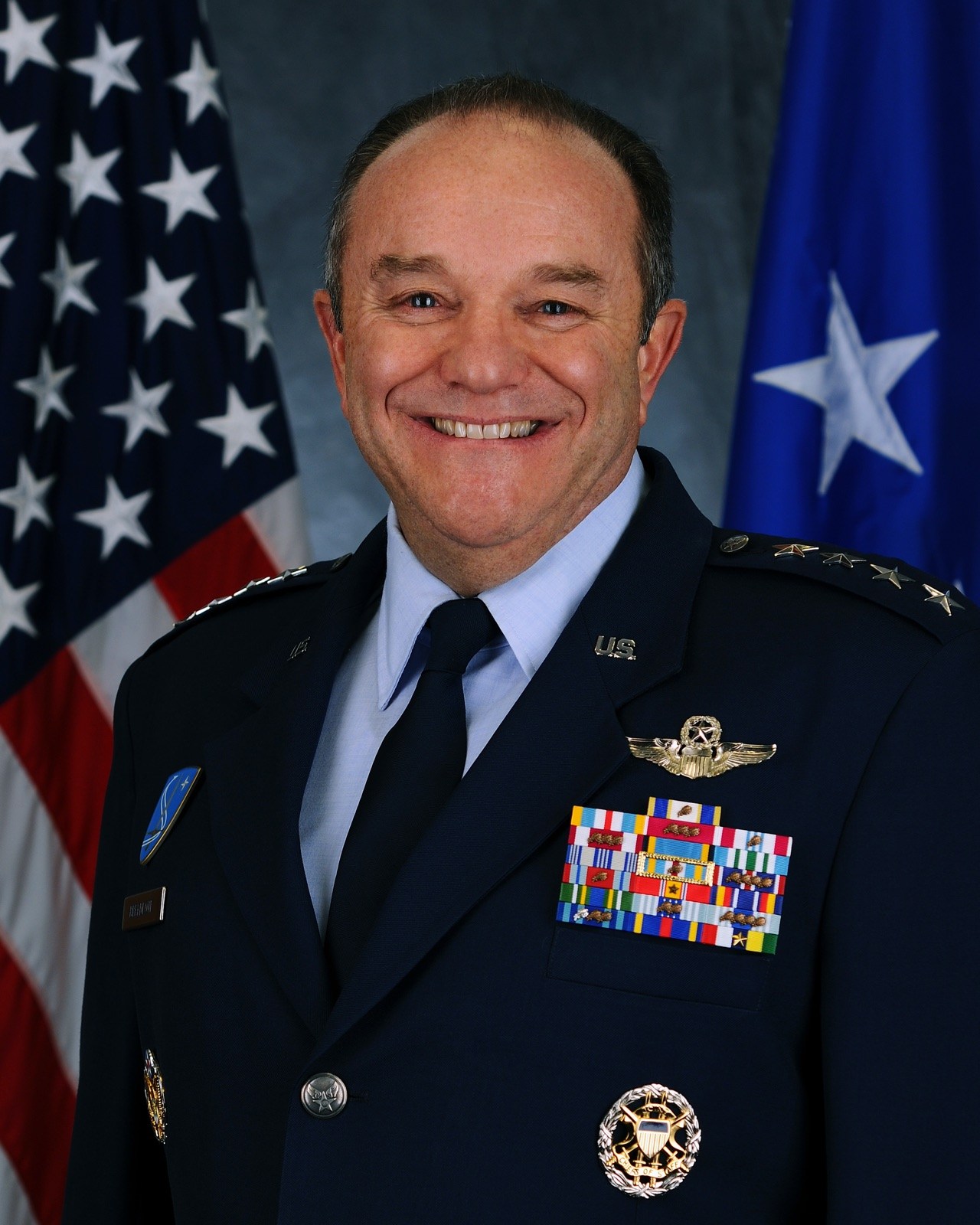
Philip Breedlove
Philip Breedlove is a retired four-star United States General who served as NATO's Supreme Allied Commander in Europe from 2013 to 2016 during Russia's annexation of Crimea and discusses the impact of Trump's tariff plans on military preparedness and Ukraine's defense strategy.
Episode Summary
How Should Donald Trump Approach Russian President Vladimir Putin’s Ukraine Plans? And could the American president’s tariffs impact military strategy? In this week’s episode, Christina Ruffini and co-host Sir Richard Dearlove, former head of Britain's MI6, are joined by retired four-star United States General Philip Breedlove who served as NATO’s Supreme Allied Commander in Europe from 2013-2016, during the time of Russia’s annexation of Crimea. Breedlove’s career has been influential in shaping U.S. military air strategy domestically and abroad. He discusses the impact President Donald Trump’s tariff plans have had on military preparedness and strategy, the fortification of NATO, Ukraine’s defense strategy, and how Trump can negotiate a ceasefire agreement with Russia. Plus, with decades of conflict experience under their belts, Dearlove and Gen. Breedlove share stories about working in the field.
Episode produced by Situation Room Studios. Original music composed and produced by Leo Sidran.
Listen & Subscribe
- Watch on YouTube
- Listen on Apple Podcasts
- Listen on Spotify
Transcript
COLD OPEN
Breedlove: If Trump wants to win the Nobel Peace Prize, tell him not to sign a ceasefire deal too soon.
Breedlove: If we let this drag on, but we continue to strangle the intelligence and strangle the support to Ukraine, it won't be as clear as as you and I just expounded.
INTRODUCTION
Raffini: Hello, and welcome to One Decision. I'm Christina Raffini, and I'm joined today by cohost, Sir Richard Dearlove, of course, the former head of Britain's MI6. The voice you just heard was retired General Philip Breedlove, whose illustrious career commanding US forces abroad, including as the head of NATO, has continued to shape US air strategy both domestically and in Europe. He joins us to talk about how current US policy is impacting allies in Europe and Asia, how Ukraine's military innovations despite their smaller footprint are giving them actually an advantage in the Black Sea, and why timing is the key factor in negotiating a ceasefire with Russia. Let's take a listen. General Breedlove, thank you for being with us. We have a whole bunch of things we wanna talk to you about, but I figured to heck with it. I'll start with what everyone is talking about, which is in your wheelhouse, but also kind of your wheelhouse adjacent, and that's the tariffs that are economic policy heard around the world. And I just wanted to get kind of your impressions on them from a national security standpoint and from someone who's worked very closely with NATO, with the EU, with forces all around the world, if you were still in your old position, would you be banging your head against a very secure desk right about now? Or does this not impact military readiness all that much, at least not yet?
INTERVIEW
Breedlove: Well, I think it will eventually, maybe not in the immediate short term. We are an alliance that needs to be completely compatible when it comes to kit and software and things like that. And we really need to get almost past compatible to interchangeable. And that means that we should be buying things from Europe and Europe should be buying things from us. This allows us to make sure that we've got the right kind of mix, but everybody can communicate both electronically and by voice across the many pieces of equipment we use. And this is where I see the biggest impact. I mean, already we see European nations talking about is the United States dependable? Will they be there for us? Will they turn off our equipment if they don't like what we're doing kind of thing? But the fact of the matter is people were worried because America is seen as being less reliable. And so I think in the end game, if we don't get this sorted out pretty soon, the alliances and our EU partners, etcetera, etcetera, might start making decisions that will make us less compatible, less capable of interoperability or interchangeability, which is that ultimate goal.
Raffini: But there's also the significance of, you know, pushing other countries into other alliances that might spill over into military collaboration, intelligence collaboration. What's your take on any of that, Sir Richard?
Dearlove: I think that's a pretty alarmist conclusion. I mean, I think I've said this to you before. Don't be distracted by optics. Think about outcomes. And we don't actually know what the outcomes are gonna be yet. And, I mean, frankly, the idea that sort of Japan will end up cooperating militarily with China is just unthinkable. There's no way that the Japanese are going to move in that direction. It's just not. I mean, what I would say is there's massive nervousness and uncertainty, and there's a big need for reassurance. I've just come back from Spain. All of these people who, you know, they're sort of senior Spaniards in very influential positions, ex head of intelligence, big business, and they're all so dependent on the world. Okay. And okay. We accept that that world is changing, but the element of uncertainty as to which way I wouldn't say the administration, but Trump might jump next, is causing massive levels of anxiety. I guess that's what the problem is. I'm not as alarmist and as not as pessimistic as a lot of people are saying. But on the other hand, I would like to see some element of reassurance. And, I mean, what's interesting is that you've got Trump unpredictable, particularly when he's in Mar-a-Lago as opposed to when he's in the White House. I mean, I think there are two Trumps almost. When he's in the White House surrounded by people who we know and understand, who are bright, and we might disagree with their politics. But they're, you know, they are really clever, able American bureaucrats, if you see what I mean. Okay. The whole tariff thing has had a huge psychological impact. But my own feeling is that over time, you know, this will moderate. Some of the lumps will be ironed out. I mean, in some instances, I'm actually quite sympathetic, I have to admit, to some of the lines that Trump has taken. But I think, look, it's too early to draw conclusions. The only thing I would like to say, this excessive uncertainty is dangerous.
Raffini: So can you talk to us a little bit about just your career and your experience and kind of where you ended up working with NATO in Europe? Because I want people to understand, you know, you have a lot of experience in this area.
Breedlove: I started off in the military like most other young military people. You know, my job for twenty four years was to fly F-16s and lead others who fly F-16s and deploy them to our nation's wars and do my job. But then later in life, of course, as you get more and more senior, you move up in responsibility. And frankly, the further you move away from the troops, the closer you move to the nations around you. You become almost military ambassador. And I lived in Europe eight times. I had eight different assignments across four different nations in Europe, almost seventeen years of my life spent in Europe. And then I had three long tours in Asia as well. So my career was overseas as opposed to in garrisons in America. And I think when it was time to find a SACEUR, they looked out there and said, there's only one general, one four star general who has seven tours already in Europe and said, this must be our man. So having been there for so long, grown up and commanded at the colonel, one star, three star and four star level in Europe, I knew most of the Europeans. I know a lot of them still. Some of the people who work for me are now leading nations.
Dearlove: I think I have to say there's a commonality in our careers. You have a lot of fun as an operational officer doing operational stuff, and then suddenly you get up to another level and the world changes. And you have to be ambassador. You have to be political. You have to be a messenger. I mean, I was in the intelligence service for thirty eight years. So I think we actually have probably quite a lot in common. So, Richard, we like to say at some point in your career, you got to learn how to put your fancy pants on. That's pretty much the same thing. And I must say I had more fun when I was at the operational level.
Raffini: I was gonna ask you guys, like, you know, you get more important, you get more authority and more responsibility, and that's the goal. But, like, what did you, General, what did you miss most about being in the field? And so, Richard, what did you miss most about operations?
Breedlove: For me, it was being with the troops. The closer I was to the people who were actually doing the fighting, the happier I was. The further you get away from it, your duties become much less about the fight and it becomes more about enabling the fight and working with the people you're fighting with and for. And that's a little harder. I can remember my first trip to the palace in Afghanistan. These things are not easy.
Raffini: So Richard, same. What did you miss the most when you got out, the field, the operational stuff?
Dearlove: Doing difficult things with colleagues, teamwork, supporting each other, having hilarious drinks after the tension was over. I was gonna say being part of a tribe, if you can understand what I mean if I say that. But then you get detached. You lose a lot of friendships, actually, you know, because of the way when you move up, the relationships become different because of your responsibilities. And, okay, they're engaging, extraordinary and super interesting, but it's not quite like the buzz you get at the level, you know, when you're on your way up. I really did do some pretty weird stuff. And, of course, once you're at the top of the service, you don't because you're living in a sort of capsule, and you've got so many people around you that you don't have that opportunity to escape.
Raffini: So when you get to the top, when you were at NATO, you worked a lot on coordination and air strategy operations, particularly with Europe and Africa.
Breedlove: Yes. I had done the air work before when I was the commander of NATO AIRCOM and the US Air Forces Europe and US Air Forces Africa commander, but I moved from that position up to SACEUR. It's a kind of an audacious title, but it's Supreme Allied Commander Europe.
Raffini: It is the best title in the military as we've talked about on this podcast. It is, like, Supreme Allied Commander, really hard to beat. Sir Richard will remember this. We were purring along on how to draw down Afghanistan.
Breedlove: The US President Obama wanted to come down to 5,200 people, and Joe Dunford, went on to be our Chairman of the Joint Chiefs, was my subordinate commander in Afghanistan. And he and I were working with the president on how to draw down, right up until the moment where Russia invaded Crimea. And then several weeks later, Russia invaded Donbas, the Donbas region in the Luhansk and Donetsk areas. I must tell you then for some number of months was probably the toughest time I had as a SACEUR because we had to take an alliance that had been embracing peace dividend and slow down, get smaller, spend less for almost two decades. And now we were facing a Russia that for the third time, starting in 2008, had amassed its army, marched across internationally recognized borders and invaded neighbors. Trying to change NATO from that sort of dormant peacetime outlook, sort of operation, small unit operations in Afghanistan into a machine that could then meet the former Warsaw Pact forces on the battlefield in large force employment. That was probably the most exciting year of my life working through the Wales Summit, making all the changes to readiness, starting to deploy forward the assurance forces into the Baltics and Poland and eventually putting some things in Romania. The whole thing was about as tough a job as I had done in my life.
Raffini: So Richard, from an intel perspective, you know, when Russia did its big move this last time, US intel, British intel put out big warning signs saying this is gonna happen, this is gonna happen, this is gonna happen. At that point, did the intelligence services know that Russia was gonna make these moves and decide not to say anything publicly that time around, or did it come as more of a surprise than I'm sure folks like you would have liked?
Dearlove: The answer is I'm not sure because, you know, I wasn't in service at the time, so I can't give you a, and even if I had been, I probably couldn't give you a definitive answer. And, I mean, I think that Putin instinctively understood that the West was not gonna go to war over Ukraine. It was difficult to sort of understand what the response would be, but I think General Breedlove described, I think, very extraordinarily how actually the event regenerated NATO. I mean, that's the significance of the 2013, 2014 crisis. It had exactly the opposite reaction that Putin anticipated. It put NATO back on the map. And it was the beginning of the rejuvenation of NATO, which is an ongoing business as we speak. And, you know, it's what we're all concerned about. It's what we're all focused on. I mean, going back to my visit to Spain, you know, we spent most of the time talking about the issue of NATO coordination, European rearmament, what role the EU might play in this, you know, what was left of European defense policy, on which I'm not an enthusiast. So Putin's behavior has triggered exactly the reaction, which he said he didn't want, you know, which is the complete military revival of NATO. And psychologically, pre-2013, many of us would sit there and scratch our heads and say, well, what's the purpose of NATO any longer? But the Russians, ironically, well, Putin in particular, has given NATO back its identity. And, okay, we haven't solved all the problems. We're far from having solved all the problems, but at least we know really clearly now why we've got NATO, why we need NATO, what we need to do with NATO next. And this takes us back to your original question about Trump. I mean, I wish, in a way, that, you know, the Trump administration would be clearer on their commitment to NATO because NATO's learned the lessons, and all the European powers now are set on the route of rearmament to 2.5% plus much, much more in the case of Poland and the Baltics.
Breedlove: The UK, you know, Greece. After the invasion of Crimea, which we did not have exquisite intel. You know, we had exquisite intel in 2022, but we did not have exquisite intel in Crimea. And we, again, didn't have exquisite intel in the invasion of the Donbas. And I got a little livid. Well, we were just getting surprised. You remember they were doing exercises and they were conditioning us. So, Richard, remember that word from the Cold War. They were conditioning us and then we were just saying, oh, it's exercise. Well, I went to Brennan and Clapper, the director of the CIA and the DIA, General Clapper. And I said, guys, I've had enough of this. I can't be surprised like this again. And they actually hosted me and they agreed with me and they said, we want you to scream because our funding has been cut so much. We can no longer do this. You know, they pointed out to me that at the end of the Cold War, not at the height of the Cold War, but at the end of the Cold War, we had 12,800 something, I won't remember the exact number, analysts working the Russia problem. On the morning that I was sitting in their office and screaming at them, they showed me the number, it was 800. So we had gone down 94%. And that's how we get surprised. We had a small cadre looking at the strategic problem of Russia, but we had lost contact with the operational and tactical level of Russia. And that's how we got surprised.
Raffini: So Richard, what happens when intelligence agencies start to get away from contacts with real people, real analysts, and lean too much into data and gathering? I mean, it seems like that was right about the era when that was starting to shift a little bit, and then they, you know, as the General's talking about, they realized some of their mistakes.
Dearlove: I gave a lecture at the Royal United Services Institute for Defence Studies after I'd retired, and it was about allocation of resources. And I got very mixed reactions to what I said because what I said was that the war on terrorism had massively diverted the West's resources into terrorism. What I said was, look. Terrorism, okay, kills our citizens, and it's catastrophic politically. But I said, it isn't a systemic threat to the existence of our countries, and it isn't a systemic threat to our sort of value systems. We will always dominate a terrorist problem eventually. But I said in the background, we have still got Russia to worry about. We've still got China. And I said, the whole thing has got out of proportion. We must put resources back onto Russia. We must put resources back onto China. I mean, that was not received in a very friendly fashion because this is going back pre-2013. But in fact, I think I was right at the time. We had run down much too far on the study of what I would describe as hostile or unfriendly nation states.
Raffini: Where NATO was in 2015, trying to gear itself back up and fight for relevancy, can you compare a little bit to what you saw in 2015 versus what you saw the last three years with the invasion of Ukraine and a reinvigorated NATO and where you think the alliance stands now.
Breedlove: So it's good news and it's bad news. At the Wales Summit, we took some decisions and we saw them almost to fruition. We have yet to see them all the way to fruition. Every summit since we have added to the requirements of our readiness. And it's really talking about the readiness of forces. We are in far better shape now. Now we are not where we need to be yet. In no way are we where we need to be yet, but we are better. And what we now understand better than ever is where our shortfalls are. Where are those shortfalls? What are the biggest holes? Well, I don't want to make enemies here. Sir Richard will tell you that the British Army is the smallest it's been since the Napoleonic War.
Dearlove: War.
Breedlove: You know, used to in NATO when I was a SACEUR, we didn't ask the nations, how do you define readiness? The nations reported readiness. When the forces came across the border into Donbas, this particular nation was very worried that they were gonna be next and they had 12 units. And I said, how fast can you get those 12 units to your border? Because they were all reporting ready. Well, what we learned was two of the units were on forty five day readiness. 10 of their units were on three hundred sixty five day readiness. I don't wanna get protested here on you, but we had to have a come to Jesus in NATO about what readiness was and getting everybody to understand how they were all addressing readiness because readiness costs money. It's not really flashy to tell Congress I need to do exercises. I need to buy practice. And they're wanting to talk about ships, airplanes and tanks and all of that. So we really were back then not ready. And we are still not as ready as we should be, but we are much more ready than we were in the winter of 2013 and 2014. You know, we've had plenty of time to learn the lessons. We've been rather slow in picking them up.
Dearlove: Suddenly, there's an acceleration. Suddenly, there's a change. But the problem now is that to rebuild these militaries, you know, with the right state of readiness, the right equipment, the right amounts of ammunition, all the rest of it, it's expensive. It has to happen. It's gonna happen. But, you know, five years will not completely solve the problem. Ten years will.
Breedlove: But I say it this way. Do you know how long it takes to correct a twenty year procurement holiday?
Dearlove: It takes twenty years to correct a twenty year procurement holiday. Well, General Breedlove is being even more pessimistic. When you go to Ukraine, you see what war does to innovation. And, I mean, what I find extraordinary is they're experimenting on benches with new attack drones. They've got them flying on the battlefield eight weeks later, six to eight weeks later. And another six to eight weeks later, they've got them in production. There's no question that war drives innovation.
Raffini: One of the remarkable things, and, General, you've spoken about this a little bit, is the Ukrainian operations that have been successful without a lot of help from the US and without a lot of help from Europe. And this Trump versus Zelensky ongoing battle, of especially after the Oval Office blow up, you know, US stopped sharing intelligence with the Ukrainians and everyone was very rightfully concerned about that. But, General, talk to us about how the Ukrainians have been able to keep going and keep being successful sometimes without.
Breedlove: Well, I think the most extraordinary example is what I call the battle of the Black Sea. The Ukrainians, they had one ship and they sank it so that the Russians wouldn't take it. So now really Ukraine started the battle of the Black Sea with zero capital assets, capital assets meaning large fighting vessels in their fleet. Zero. I believe everybody who follows any military history or study will tell you that Ukraine has completely defeated the Russian Black Sea fleet. They're all hiding in the Southeast part of this Black Sea, and they will not venture towards Crimea because they'll sink if they go up there. This whole innovation of, and it's bigger than the little mosquito boats and things. If you look at the last two or three big ships that they sank, they were employing air drones to distract radars and fire. And then they were doing a dance of mosquito boats choreographed to get one or two through to blow up big ships. And they have fully 100% defeated Russia's Black Sea fleet with all these little innovative things and zero, I'll say it one more time, zero capital assets.
ANALYSIS WITH SIR RICHARD DEARLOVE
Dearlove: General Breedlove, I've just argued in an article, which is actually in The Daily Telegraph, that if Trump wants to do a ceasefire, the whole issue in terms of strategy boils down to timing and not to sign any ceasefire or push a ceasefire too early because Russia is at a cusp, and things are not actually going well for Russia. And I've argued, for example, that from the summer, its military capability actually begins to decline, not increase. So it is gonna inexorably go down. Similarly, its economy is on the cusp of crisis because it's run out of reserve funds. And the third issue that affects Putin is that the oligarchs around him are saying, hang on. We're not getting the deals, and we're not making the money that we thought we were gonna make, and this war isn't really suiting our interests. So his leadership too is in question. And the other thing, I think the final argument, is Putin's policy in Ukraine has no reverse gear. He can't go backwards. He can only go forwards. So, in fact, Russia actually isn't in the fantastically strong position that everybody imagines. He actually needs a ceasefire quite badly, although he doesn't understand. How do you sort of resolve this conundrum? Because I think, you know, if you sign a deal too early, you take the pressure off Putin. If you let this play through until the autumn and we don't do a deal, and the interesting thing is that it's Putin himself who's trying to delay a deal because he wants more of Ukraine.
Breedlove: One addition and one caveat. Read about the effects of tuberculosis right now on the Russian army. And that's coming out of the prisons. The prisons were having problems with tuberculosis and it came out of the prisons into the force as they started bringing all of the prisoners out to serve. And that's another drag as you mentioned, and I'm in violent agreement with all the other things you said. Here's one caveat, Sir Richard, that I would say. If we let this drag on, but we continue to strangle the intelligence and strangle the support to Ukraine, it won't be as clear as as you and I just expounded.
Dearlove: No. But it's maintaining that whilst Russia's in this vulnerable position. So we've gotta stick with it for another six to eight months. I sent a copy of my article to Washington and asking people to circulate it. And I said, if Trump wants to win the Nobel Peace Prize, tell him not to sign a ceasefire deal too soon. Sit it out. It's timing. Everything is timing in strategy.
Raffini: I do wanna ask you, General. We've talked a lot about readiness. I want to ask you about the F-35 program and what its status is and how big of a factor cooperation with Turkey plays into that. All of the above, you said you think it's really important not to take, you know, the foot off the gas of that program. The US has to stay competitive with jets. Why do you think it's so important?
Breedlove: Christina, you bring up a great point. The airplane is performing magnificently. Because Russia's air force has largely failed it. They can't even project air superiority over their own troops. And because Ukraine's Air Force was so small, and let me just brag on them, they were small and mighty, and we made them smart with our intelligence. But in the big scheme of things, Ukraine's Air Force is unable to do what traditional air forces do. Even to today. They cannot project air superiority over their own troops and the troops get hammered. The fact of the matter is that, yes, we have had not an evolution, but almost a revolution of what drone technology brings to the battlefield. And the very best people in the world is not the United States, not the UK, not France, not Italy. It is Ukraine, but we aren't in the top five. Okay. And we have got to get in the top five. These airplanes will make drones more successful. When you control the air, your drones get through it easier and their drones don't get through it. And so controlling the air is vital. But an incredibly senior member of the Ukrainian military and I were in a conversation and he said, you know, this year we're gonna buy 1,300,000 drones. I said, Jesus, why 1,300,000? He said, because I need to get 600,000 through. If you are like we are in the West, we control the air and then we won't be attrited as much and we will attrite them more. When was the last time that an American soldier died on the battlefield to the fixed wing attack of an enemy airplane?
Raffini: God, I do not know the answer, General. Korea?
Breedlove: May 1953.
Raffini: What? Korean War. Korea. I was Korea.
Breedlove: We have had air superiority over our forces ever since that time. Now the caveat is we have to acknowledge that what a year and a half ago, we had a drone that we thought was ours returning to kill some soldiers in the Northwest part of Jordan. You remember this? That was a drone, not a fixed wing airplane. But the fact of the matter is we have always put over us and our allies air superiority and that would change how their drones affect us. That would also change how many of our drones make it to their target. And so, yes, Christina, we have this revolution we're gonna have to deal with. But that doesn't mean that we don't need the traditional forms of air power because my children wear the cloth of my nation. And I don't want them going to a war where they're not gonna be protected by US air supremacy or air superiority over the battlefield.
Raffini: General, gotta let you go soon. But before we do, we always like to get at least one somewhat embarrassing story out of our guests. But, you know, since you flew for so many years.
Breedlove: I have flown in many theaters. I don't have an awful lot of combat time because I was so senior when our nation was fighting most wars. But I do have some combat time and, you know, I've been in places where people had ill intent towards me and my aircraft. I think the closest I ever came to getting shot was actually flying down the Euphrates, Tigris-Euphrates River area in the back of a helicopter. And in fact, the embarrassing part of the story is I wasn't even awake. I have this bad propensity that all of my aides and executive officers who've worked with me, they say the same thing. When General Breedlove gets in a helicopter, especially if it's hot and we're in our battle rattle, you know, all of our gear, they say it's about the fourth whop, whop, whop, whop and he's sound asleep. I'm going to a very bad place with some of our special forces on the river. I'm in the back of a helicopter and sitting beside me is an embedded reporter. Sure enough, I don't think we were off the ground and I was already asleep. And we're flying and all of a sudden I felt this just gross wet feeling on my leg. And so I woke up and we were maneuvering violently and the embedded reporter had thrown up all over my right leg. We stopped maneuvering violently and my executive officer said that was close. And I said, what do you mean that was close? And I guess we had been dodging fire for almost ten minutes violently. And I slept through it all until the guy threw up on my leg. But that's what wakes you up, was the vomiting. That woke me up. And so I told my executive officer, I said, you're killing me. How am I gonna tell my grandchildren that the most dangerous moment of my life, I was sound asleep until somebody threw up on me?
Dearlove: Can I add a similar one? Flying down the Euphrates, standing up in the back of a Chinook, you know, strapped in with the gun ports open, and we're, we've all got headphones on, and we're listening to the pilots. And you're very, very low. And I say to the pilots, my god, you know, you're very, very low. And they said, Sir Richard, do you wanna go under the bridge?
Raffini: So you were backseat driving, but in a helicopter.
Dearlove: In a helicopter. I said, no. I prefer if you just hop over it. Because, of course, if you fly very low, very fast, you're much, much safer. Anyway.
Raffini: General, thank you so much. That was a great conversation. I love that. Come back anytime. Thank you for your service and on we go. I guess we'll see where all this lands and come back in six months to see which of our pessimistic projections were most accurate. Great to talk to you both. Thanks very much. That's it for this week's episode of One Decision. A special thank you to our guest, General Philip Breedlove. If you enjoyed this conversation, be sure to check out a previous episode featuring my friend, former ambassador John Sullivan, who shared a variety of stories on what it was like to be the US man in Moscow during a particularly contentious time. But the unofficial rules are just the advice that the station chiefs and the ambassadors and the political chiefs have passed down over generations.
Sullivan: You know, things like, there are no coincidences. The person you see behind you in the grocery store who looks like the guy who was behind you the night before at the movie theater, that's not a coincidence.
Raffini: That's a person who is getting close access to you. As always, for more exclusive content, be sure to check out our website, onedecision.com, and our YouTube page. I'm Christina Raffini. From the whole team here, thanks for listening.