Hosted by Christina Ruffini and Sir Richard Dearlove
Guest
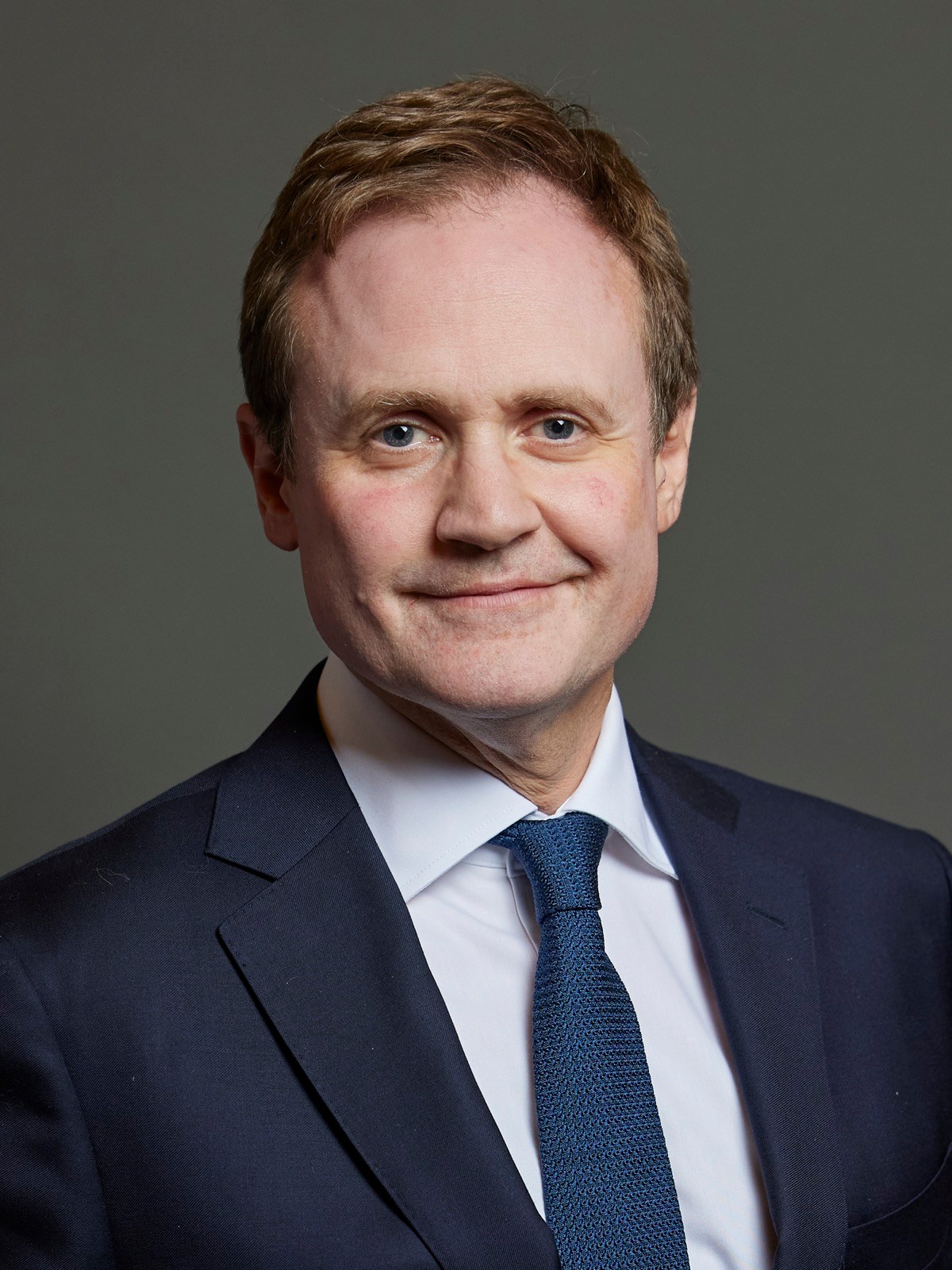
Tom Tugendhat
Tom Tugendhat is a former United Kingdom security minister and Conservative Member of Parliament. Tom Tugendhat discusses what President Donald Trump's second administration could mean for U.S.-UK relations and the future of the Chagos Islands.
Episode Summary
In today’s episode of One Decision, host Christina Ruffini and resident spymaster Sir Richard Dearlove, former head of Britain’s MI6, are joined by former United Kingdom security minister and Conservative Member of Parliament Tom Tugendhat to discuss what President Donald Trump’s second administration could mean for the future of US-UK relations. They also discuss how Trump’s foreign policy could shape the future of the war in Ukraine and what lies ahead for the Chagos Islands, a British archipelago in the Indian Ocean. As British Prime Minister Keir Starmer plans to hand over the islands to Mauritius—what potential role could the Trump administration play in the final negotiations? Later, Sir Richard and Christina unpack the events of the Presidential inauguration in Washington, D.C. Plus, it’s Sir Richard’s birthday, and he shares his thoughts on what he believes is the biggest, most impactful foreign policy shift he has witnessed.
Episode produced by Situation Room Studios. Original music composed and produced by Leo Sidran.
Listen & Subscribe
- Watch on YouTube
- Listen on Apple Podcasts
- Listen on Spotify
Transcript
COLD OPEN
Tugendhat: There's a there's an advantage. But, again, with Trump, there's always an up and a down, isn't there? There's a the upside is that you can get an efficient, and rapid response. The downside is it can shift.
INTRODUCTION
Raffini: I'm Christina Raffini, and this is One Decision. Today, my cohost and former head of Britain's MI6, Sir Richard Dearlove, and I are joined by Tom Tugendhat, whose voice you just heard in that clip. He's a former minister of security and current member of the UK Parliament, and we sat down to discuss what a second Trump administration could mean for that special relationship between the US and the UK, as well as what the next four years of US foreign policy could look like and why the UK is hoping America will back its territorial claims over an island in the Indian Ocean. Well, first of all, thanks so much for joining us. You know, I just wanna start by saying it's been, what, three days of the Trump administration. How's the view looking from the other side of the pond? What are your takes?
INTERVIEW WITH TOM TUGENDHAT
Tugendhat: Well, look. It's it's been a hell of a few days, hasn't it? I mean, it's it's quite something to see so many executive orders signed on a single day.
Tugendhat: Look. It it it's a problem, isn't it? Because I don't think anybody wants government by executive order, and I don't think it's it's the way that anybody in any of my American friends would have chosen to govern. But it's it's quite something that those orders have gone in, and in fact, they've they've hit people who many of us would consider patriots. You may or may not agree with with with their decisions at various points. So there's a real mixed view, and I think there's a lot of hope that the new administration will fix quite a lot of things in the relationship, not just with us, but, of course, in terms of standing up to Russia and reestablishing credibility against China and reestablishing credibility against Iran. So there's a lot of hope, but let's not pretend that there's there's not some some concerns as well.
Dearlove: I was gonna ask you what the sort of ripple effect politically is in Westminster because there must be a lot of people, for example, in the Labour majority, these very young new MPs, who must be scratching their heads and thinking, what on earth does all this mean?
Tugendhat: Well, Richard, I think probably like you, I was expecting this for most of for much of last year. In fact, the only moment I stopped expecting this was when I started to read the opinion pages of The New York Times, The Washington Post, and actually our own papers about two weeks before. And I read that, you know, Harris was ahead in the polls, and this was, you know, this is what it was gonna be. And so I thought, oh, well, I must be wrong. And then, of course, the results came in, and it was very clear. JL Partners, you know, was was very accurate with their polling, and it's and it's certainly something I think many of us expected. But the reality is this has been a shock in Westminster. I mean, it's been a shock now that people have got used to over the last few months, of course, but it has been a shock in Westminster. And, Richard, you've seen quite a lot of senior British officials rowing back on words they've used in the past, whatever it is, you know, four or six or eight years, as we're eating humble pie.
Raffini: One of the things that I'll be interested to see, and I'm wondering how you think UK politicians are gonna navigate this, is it shifted from the Biden administration, which was almost pathologically bureaucratic to the point where everything went through 18,000 committees and nothing really got done, to kind of a cult of personality and your ability to get things done depends on your ability to ingratiate yourself to really Trump and, you know, a very small circle of other people. So how does that change your calculation with how you're dealing with the US, and and how do you get access to that as a foreign official who might need something from a US counterpart and doesn't have a ticket to Mar-a-Lago?
Tugendhat: Look. I think that's where relationships have always mattered. I mean, Richard, in your time, your relationship mattered with your opposite number vastly. When I was the security minister, my relationship with Homeland Security, with DNI, with with various other intelligence agencies mattered enormously. I found myself on the plane rather more often than I would have liked, perhaps, to Washington. Well, certainly more often than my wife liked to Washington anyway. And those relationships have always mattered because, you know, Washington, like London, can be an unbelievable bureaucratic beast. And so there is some advantage to the efficiency of a Trump decision. There is a disadvantage, of course, as well, which is moods can shift quickly. And a lot of the stuff that we're doing requires serious long term invested relationships to be able to deliver over time. And certainly when you look at things like the relationship with Ukraine, which I think could be a bulwark for European and, in fact, Western liberty against the autocracy, the dictatorship in in in Moscow, or when you look at the lessons that could be drawn from that or from Taiwan in the dictatorship in Beijing, you can see some real, really important relationships that need to be maintained. And certainly when you look at the relationship with Delhi, that's not something that you wanna be spinning on a dime. Right? That's something you wanna be building up to. So I think there's a there's a there's an advantage. But, again, with Trump, there's always an up and a down, isn't there? There's a the upside is that you can get an efficient, and rapid response. The downside is it can shift.
Dearlove: I'm looking at the incoming administration and thinking, well, at least Trump has an affection towards the UK, which Biden, in my view, certainly did not share. We all know that Farage is there already with this apparently close relationship. We're not sure about that, but the evidence would suggest that. We've got a new, highly controversial ambassador going to Washington. How do you feel, from the UK's point of view, we're set up to handle this bilaterally with this administration?
Tugendhat: Well, look, I think there's various different levels of that, Richard. And, you know, you know, Mike Waltz has been a a friend of mine for many years. He's been a fantastic congressman for Florida. Marco Rubio and I have worked together on China issues. That way, he's been a phenomenal leader and a great partner. Alex Wong, the deputy national security adviser, I've known since we were in the, since he was in the Romney team, and I was going over there to hear whether or not Romney might might just about make it, and, sadly, he didn't. But, anyway, you know, so so there's a very, very, very long personal relationship between many people in the in the incoming administration, and those of us certainly on the conservative benches and probably even some with the Labour benches. But you're right. This personal relationship matters, and that's where I think, you know, we should pay tribute to Karen Pierce, our outgoing ambassador who's done a phenomenal job, just about maintaining relationship with the Biden team and as somebody whose family, well, partly anyway, emerges out of Limerick, I'm not gonna I'm not gonna go down your anti-Irish line. But, you know, I mean, one of the most important speeches I've given was in criticizing the Biden administration's catastrophic withdrawal from Afghanistan, an appalling decision taken at appalling time, for appalling reasons. So, you know, I'm not, I'm not blind to the cost of the Biden administration's foreign policy. And certainly their weakness over Iran, I think, is is something that has cost us all very dearly. So, you know, I think many of us are quite hopeful that the change is coming. I have to say, I think Peter Mandelson as the incoming ambassador, I mean, he's a mercurial guy, and he's he's got a remarkable political ability. I say that both in the up and the downside. But he's he's starting from a low base because he's he's seen as I may may not be fair, but he's seen as being very pro-China, and he's seen as being anti-Trump, and and and let's see how he plays it. I mean, he is an operator. So to be fair to him, if anyone's an operator, he is.
Dearlove: How did he get the job? As people who don't don't I'm not really very familiar with him. Where did he come from?
Tugendhat: Well, for us, it's unusual to have political appointments. I mean, Karen Pierce is a as you know, she's a career diplomat, and in fact, her predecessor was a career diplomat. It's unusual to have political appointments in our system. But he he was very close, as you may remember, to prime minister Tony Blair, and he was very close after after a small break in relationships with prime minister Gordon Brown. And he seems to have built up a relationship with prime minister Starmer as well. So that's where he emerges from, and he's certainly very close to the national security adviser in in London who's Jonathan Powell. So I think that's where he comes from. He's got a hell of a hill to climb in in Washington. But as I say, he's a remarkable political operator, and I wish him all the best. You know, I want the British ambassador in Washington to succeed. I want the British ambassador to have a close relationship with the administration and to make sure that we see UK national interests advanced. I think that's of vital importance to us all.
Dearlove: His consultancy, and I think some journalists now looking at this pretty closely, has got quite a significant Chinese dimension, and I think you could argue that Peter Mandelson's gonna be conflicted, and he hasn't even got his agrément yet, so it'll be interesting to see how this evolves. But I mean, I agree with you. Why not keep Karen Pierce there? She's been phenomenally successful and got on really, really well with the Trump inner circle. But that doesn't seem to be the case, so it's a shame that she's coming to the end of her tour.
Tugendhat: Yeah. Well, I'm biased. I happen to have worked with Karen in Afghanistan and in other places. I think she's genuinely exceptional.
AFGHANISTAN AND THE SIV PROGRAM
Raffini: I wanna ask you a bit about Afghanistan because one of the other things that comes with this kind of scattershot, howitzer approach to executive orders is obviously Trump has made no secret of him being very anti-immigration and he's put a hold on incoming new visas for immigrants, especially what's colloquially referred to as this Muslim ban. But what it's done, and I'm not sure they realized this was going to happen, maybe they did, but it stopped the flights for a lot of these approved Afghans with SIV visas who have been in this limbo since the collapse. And when I tell you it was a bipartisan issue, I I was on the phone twenty four hours a day during the fall of Kabul, Republicans, Democrats, State Department officials, CIA officers, all of us calling in every favor we had to get these folks who'd helped us out. I'm surprised that they didn't do a carve out for the Afghan SIV program. What's your take on that?
Tugendhat: Look, like you, I spent, I mean, I don't know, days, weeks. I was supposed to be on holiday with my wife, but like many others, I was on the phone 24/7 quite literally, getting friends through various gates in Kabul, working with friends of mine in CIA, in Green Berets, and whatever else. You know, we were all basically calling in every favor we could, and sometimes it was Brits who got your guys out, and sometimes it was Americans who got our guys out. I mean, it was everybody was was was was helping everybody else, and it was an extraordinary network of of people who'd served there together, working again to serve to save those who'd served alongside us. So I am concerned if that's what happens. I suspect that people like Mike and Marco will find ways of making this work to to make sure that it works. I mean, you know, folk like congressman Dan Crenshaw have been really, really powerful advocates for the Afghan veterans community, as you know, really impressive congressman over over the years. And and and I know that there are many others who who will understand what it means to serve alongside somebody in combat, what it means to what it means to to come home and and to leave your friends behind. And, I mean, that was the speech I gave in, I think it was 2021, because it was it was a it was a traumatic moment for all of us veterans to see what had happened and and what and what had been abandoned.
THE CHAGOS ISLANDS DEAL
Dearlove: Tom, one of the sort of what I would describe as a bellwether issue for the special relationship is certainly this Chagos deal. I'm personally hoping that Rubio will persuade Trump not to sign up to it because I don't see any benefit for the US and very little benefit for the UK. And the ICJ ruling is only advisory. And I can't see why, you know, one should, you know, determine an extraordinary decision on sovereignty in those circumstances. How do you have any insight into how this is gonna turn out?
Tugendhat: I I mean, for me, I think it's important because of the strategic importance of Diego Garcia. The Chagos Islands have been part of the United Kingdom's overseas territories now for hundreds of years, and they only became part of Mauritius because of a bureau bureaucratic shift in the early nineteen hundreds. And when Mauritius got its independence in in the sixties, the islands weren't included. In fact, there was a one-off payment to to to recognize that as sort of goodwill gesture. But funnily enough, shortly after the Falklands War, Mauritius started to exercise what it argued were its rights over these islands. Now I know you'll be surprised to hear that various different countries, including the Soviet Union, started to look at lawfare as a form of action against various different elements of ours. I'm sure the two are completely unconnected, of course, but just imagine that that could have been the case. And, rather extraordinarily, the UK decided to enter into discussions about this in 2022. We should have, as Richard says, ignored the advisory verdict of the ICJ on the grounds that it was purely advisory, and we should have maintained our sovereignty. But, because swapping sovereignty for a hundred year loan, as everybody knows, is not exactly the same thing.
Raffini: Are they still in play? What is the current status, and how does the Trump administration factor or not factor in?
Tugendhat: Right. So the so the argument of the Labour administration in London, of the Starmer administration, was that the US agreed that this gave some sort of continuity to the status of the US airbase. I think that's a rather laughable position. It's like saying, having a mortgage on your house is better than having a freehold. I don't think anybody would argue that. The argument is that, therefore, this is, you know, supporting the special relationship. Well, I think it's very unlikely, and having spoken to friends of mine on the Hill at a dinner in DC last week, it is clear to me that the security people in in the incoming administration and indeed people in the Senate in the Senate and in the House of Representatives are very aware that this actually does threaten US strategic interests, not just in the Indian Ocean, but as I say, in the Middle East and, of course, in elements of Central Asia and Southeast, the Asian Subcontinent. So it's a it's really I think it's a very bad deal. It's basically where we swap a freehold for a mortgage, which we then pay a vast sum of money for, and it strikes me as an extremely unwise agreement to continue. I very much hope that the Trump team will see the error of the Biden administration, where the Biden administration and the Starmer administration worship international law as that was the 12, you know, 10 commandments come from God on Mount Sinai. I think they'll recognize that this is actually a moment of national interest and national security.
Raffini: Well, having covered the the State Department during the last Trump administration, I can say categorically they are not fans of international law. And usually if something a ruling has come down, they will do their best to go the opposite of it. So I think the odds are ever in your favor.
IRAN AND FOREIGN POLICY
Dearlove: Tom, one of the, I think one of the key immediate issues of foreign policy, which you've already referred to, which is gonna be very important for Trump and certainly important for all the European nations is, you know, what happens next with Iran? Where do you see this going? I mean, do you see Trump being aggressive on Iran, or is he certainly not gonna go back towards the JCPOA? I, you know, I would have thought he's looking forward to seeing the end of the theocracy in Iran.
Tugendhat: Well, I think in many ways we all are, aren't we? I mean, I don't think there's a there's huge debate over that, Sir Richard. And, you know, when I wrote against the JCPOA in, I think it was 2015, I may may have got the year wrong, but I I wrote against it then. I was one of the few conservative voices to do so. I'm now in a vast majority of people who realized that the JCPOA basically handed hundreds of millions of dollars over to the theocrats who then used it to murder Syrians. You know, it was an extraordinarily bad deal, and it's I think largely the Iranian government has killed it, to be fair. The Iranian regime has killed it. Now what's interesting, of course, is that the Trump administration is not returning to the position it left in 2020 because Israel has rewritten the rules. Now when you look at the Middle East today compared to 2020, there's some really big changes, and it's not just Assad. It's the it's the the the large amount of destruction of Hamas. Of course, that's obvious, but it's the elimination of Hezbollah's command and control and threat from the North. It's the erosion of Iranian influence, not just in Syria, but, of course, in Iraq too. So you're all seeing a very, very strategically changed environment, and I think that means that you have an ability or rather the United States government has an ability to change the tone on Iran. Now I think one of the things that we need to be aware of is that there are huge amount of pressures inside Iran, and we need to make sure that when the change happens, and I'm sure it will, whether it happens tomorrow or in ten years, I have no idea, but when the change happens in Tehran, it's an Iranian change. It's not imposed from outside, and I think that's where we need to be cautious.
Dearlove: Do you see any bright spots in foreign policy?
Tugendhat: I do see some bright spots, actually. I see the way in which the focus is back on Taiwan as an important element of this. I see the fact that secretary Rubio's first meeting was with foreign minister Jaishankar demonstrates a real depth of a relationship, an important relationship, I think, between the United States and India. And I certainly see the greater emphasis on NATO spending that we're seeing out of European partners being one of those areas where we're beginning to take our responsibilities more seriously. So I think there are positives to draw from this. There there are real opportunities for the United States and for our partners to defend the liberal order, if you'll excuse the expression, but it's sort of the free world in in years to come. The one thing I'm most worried about, I think, though, is Ukraine. I agree with you. But there again, you see I mean, if you listen to what Marco Rubio, Mike Waltz, and folk like that have been saying or listen to Tom Cotton. I know he's not in the administration, but he's a very powerful voice outside it. You know, you're you're hearing really serious support, people who understand what it is to defend democracy against totalitarian dictatorships. And they understand that standing up to Putin is not just about defending Ukraine. It's about standing up to to dictators. You know, when we abandoned Afghanistan, it it almost gave a license to Putin. It almost empowered Xi. And so we need to remember that that's what we're defending. We're not just defending Ukraine. We're defending ourselves.
Raffini: Thank you so much both for joining us. I appreciate it.
Tugendhat: Thanks very much.
ANALYSIS WITH SIR RICHARD DEARLOVE
Raffini: So Richard, I also wanted to get your thoughts before we go on the very cold, and I mean, like, literally temperature cold Trump inauguration. How much of the inauguration did you watch, and has anything really stood out to you in the last two, three days? I mean, so much has happened.
Dearlove: Well, I watched bits and pieces of the inauguration, and trouble is I was doing other things. But in the evening, one tended to sit down in front of television and watch the high points. It was extraordinary. I've never seen anything quite like it.
Raffini: And you're not just talking about Melania's hat, I'm assuming.
Dearlove: Well, Melania's hat was brilliant because it was placed in such a way that you couldn't see her expression.
Raffini: Correct.
Dearlove: So I've got a feeling it was deliberately designed to cover her facial expressions, which I thought was very theatrical and very clever and quite a good way to cope with Melania's presence.
Raffini: I did have to explain to a lot of people here, we don't wear hats in the US like the UK, your women wear hats. Anytime the royals are going to a day event, they've got a matching hat or especially any kind of church service. And Twitter was kinda lighting up with, oh, Melania still has her hat on inside. And I had to say, no. No. Ladies are allowed to wear hats inside until cocktail hour. So we're not a we're not a hat wearing country, but, you know, maybe she'll bring back a trend. I do love a fashion accessory. So I'm here for the hat.
Dearlove: She you know, to be fair, she cuts a fantastically impressive figure, but you just cannot tell what this ice maiden is thinking, what actually is going through her head. And I mean, the outfit I think was maybe designed to disguise even more profoundly, you know, so that she wouldn't give anything away. But anyway, I thought that was an amusing aspect of it. But I think what was incredible was to see the way that Trump, from the podium, just rubbished Biden's inheritance. I mean, all the sort of finesse and politeness of political life was sort of brushed aside, although they seemed, as it were, to do the basic social minimum, like shaking hands and so on and so forth. But, I mean, it was incredible. And I felt that one was seeing, you know, government by businessman and government, I wouldn't say by lawyers, but government by lawyers and regulators, this sort of clash of cultures between these two men was quite profound.
Raffini: And also the other thing that people commented on a lot is the immediate seats, the VVIP seats, because obviously it was going to be outside. And that stadium that they build kind of on the steps of the Capitol, ironically where the rioters were, a lot of them were last January 6, they build this inaugural stadium and it has a lot more seating. So when they moved it inside, a lot of VIPs found themselves literally out in the cold, but the people who got the key seats were not Trump's cabinet. Trump's cabinet was in the second row. The first row was the Musks and the Zuckerbergs and the TikTok CEOs, and it's very clear where the priorities are going to be.
Dearlove: It looked to me pretty chaotic, and whoever did the precedence and the seating had sort of lost control. And there was something sort of almost like the Shakespearean pit of a theater about it. There were just people milling around. It looked absolutely chaotic, but it clearly had been orchestrated. And I think that what is extraordinary about Trump, and you have to give him credit for this, he is fundamentally a showman, and he has this sort of showman ability, which is peculiar because you don't see that quite so aggressively presented normally in a political context.
Raffini: Amazing. Well, and it's just such a contrast from last administration. I mean, the presentation couldn't be more different, where Biden maybe one in his day might have been, but this last administration was, I think, the antithesis of a showman. So going from that to having rallies in Downtown DC and there are, I'm not kidding, literally Cybertrucks driving all over DC and Florida license plates all over DC because all the supporters have come into town. It's been a whiplash. And it's going to be interesting to see from a foreign policy standpoint, we've been here before. The Trump administration, this is their second time at bat, but it does feel different. I think the thing that keeps coming to mind is this time they're saying the quiet part out loud, right? Last time they would put into place policies that had a specific goal, but they tried to wrap it in a veneer of bureaucracy status quo rule of law. It seems to me, and I don't know how it looks to you, that this time their tactic is do what we want, push it through, and let the courts, which are stacked in our favor at the moment anyway, sort it out later.
Dearlove: Absolutely. They've come in with the deck already stacked. There's no experimentation about this administration. They've obviously got a playbook and they've written the first couple of 100 pages. And okay, there will be legal challenges, but I thought what was fascinating as a sort of cultural clash was the sermon preached in the prayer meeting by this lady bishop who criticized—
Raffini: Yeah. I don't think she's gonna be getting invited to the White House Christmas Eve. I don't think she—
Dearlove: But what's interesting is our right wing press here, and they would normally be quite careful about this, have completely rubbished her, you know, saying, what a nonsensical and ridiculous performance. Obviously, those who are on the left take a rather different view of it, but I would have thought that—
Raffini: For those who didn't see, she made a plea for compassion for illegal immigrants and LGBT members of the community.
Dearlove: But she says some pretty wild things about lives being threatened, which didn't seem to me to be particularly logical anyway. It was one of these sort of symbolic incidents that summed up the sort of extraordinary juxtapositions of the day, and my God, what a clash of cultures. I think that one did feel very strongly that one is now confronted with an administration of businessmen of different types, but people who are essentially transactional. This is transactional, and it's lost a lot of the political dimensions, which in the past we've taken for granted, they've all just been swept aside.
Raffini: And look, I mean, there is an efficiency to that. There are reasons China can do things the US can't, because you don't have to go through levels of bureaucracy. It is led by one person and his will is law. And Trump has made no secret of the fact that he admires dictators with that ability to command power. And there is a level of efficiency to that. The problem is it does get chaotic and we're going to have to see whether or not these policies, once they're implemented, some of them seem to have they're lacking a back end, right? Like the order goes through, but the implementation, I think, for them is going to be the tricky part because they don't have not everybody they have in office has a lot of experience. Like we were just speaking about, they put the kibosh on all these new immigrant visas coming into the country, and it's unclear if they realized that was gonna impact over, you know, thousands of Afghans who helped American troops and are you know, were basically waiting for their flights to come to the country. You know, I wonder just from from a national security perspective, what you're hearing inside the intelligence community. I mean, Mike Waltz, Marco Rubio, these are the people that everybody kind of exhales a sigh of relief about, but there are others that seem to be going into the administration, including Pete Hegseth and Tulsi Gabbard. And it looks like they're going to get through the approval process. What do intelligence agencies in other countries think about this? And what do you do if you can't really trust your US counterpart?
Dearlove: Well, I think they will start off on the basis of, as it were, operating what I would describe as institutional trust. Look. You don't try to personalize the relationships. You accept who the individuals are, and you get on with it until something maybe goes radically wrong. And then you might have to reconsider the position. I mean, I'm certainly worried about Tulsi Gabbard's track record, and similarly Hegseth seems to me also to look like a bit of a political liability for Trump. I was rather hoping that those two would not get their approvals and that we would get someone more conventional. I mean, obviously, Rubio I mean, there are other people who command great respect, there's no concern about them. They'll be important players in the team. But I think to begin with, certainly as far as the UK's concerned, it won't be personalized. The relationships will get off on the footing of a new administration. I think there'll be a big effort on the UK's part to make sure that whoever's there, that the relationship works. And then, you know, it'll have to, as it were, be submitted to scrutiny as the situation evolves.
Raffini: Well, I think that's going to do it for us today. We're going to have to wait and see. But before we go, I did want to congratulate you on your birthday tomorrow and wish you happy birthday. 35? 36? Are you 36?
Dearlove: It's the big 80.
Raffini: Congratulations. I can only hope I'm still as active and dialed in and abreast of the world events in forty one years.
Dearlove: God. Forty one years. My word. It seems incredible. I don't feel 80, but I am. And, yeah, I I'm I'm surprised myself that I'm 80. But there we are. It's happening.
Raffini: What's the biggest foreign policy change you've seen in your lifetime, do you think?
Dearlove: Well, I think the biggest foreign policy change was the disappearance of the Soviet Union, unquestionably, was the end of the Cold War. And if you'd served behind the Iron Curtain and sort of experienced the oppressive weight of the Soviet empire and the Warsaw Pact and, you know, the intensity of the structures that kept it in place, the fact that that could implode and collapse and disappear so quickly is an extraordinary lesson in geopolitics. Don't be persuaded by the solidity of institutions. The closer you get to the top, the more fragile they are. And I think that applies both in democracies and autocracies. But but that that was unquestionably the biggest thing that happened in my career. No question. And still is the biggest thing that's happened.
Raffini: Sir Richard, thank you so much.
Dearlove: Okay. All the best, Christina.
CLOSING
Raffini: Thanks for listening to One Decision. If you like this conversation, be sure to check out next week's episode with Nick Warner, the former director general of the Australian Office of National Intelligence.
Warner: So much depends on the Trump administration. And there are real opportunities, and there are real risks. You know? Trump has the chance of bringing about some sort of bargain, some sort of arrangement, some sort of deal in the Middle East, in Iran. He has the chance of doing that in the Ukraine as well.
Raffini: And to unlock more exclusive content, get timely updates on crucial global events, and listen in on meaningful conversations with thought leaders, be sure to check out onedecision.com. From me and our whole team, thanks for listening.