Hosted by Christina Ruffini and Sir Richard Dearlove
Guest
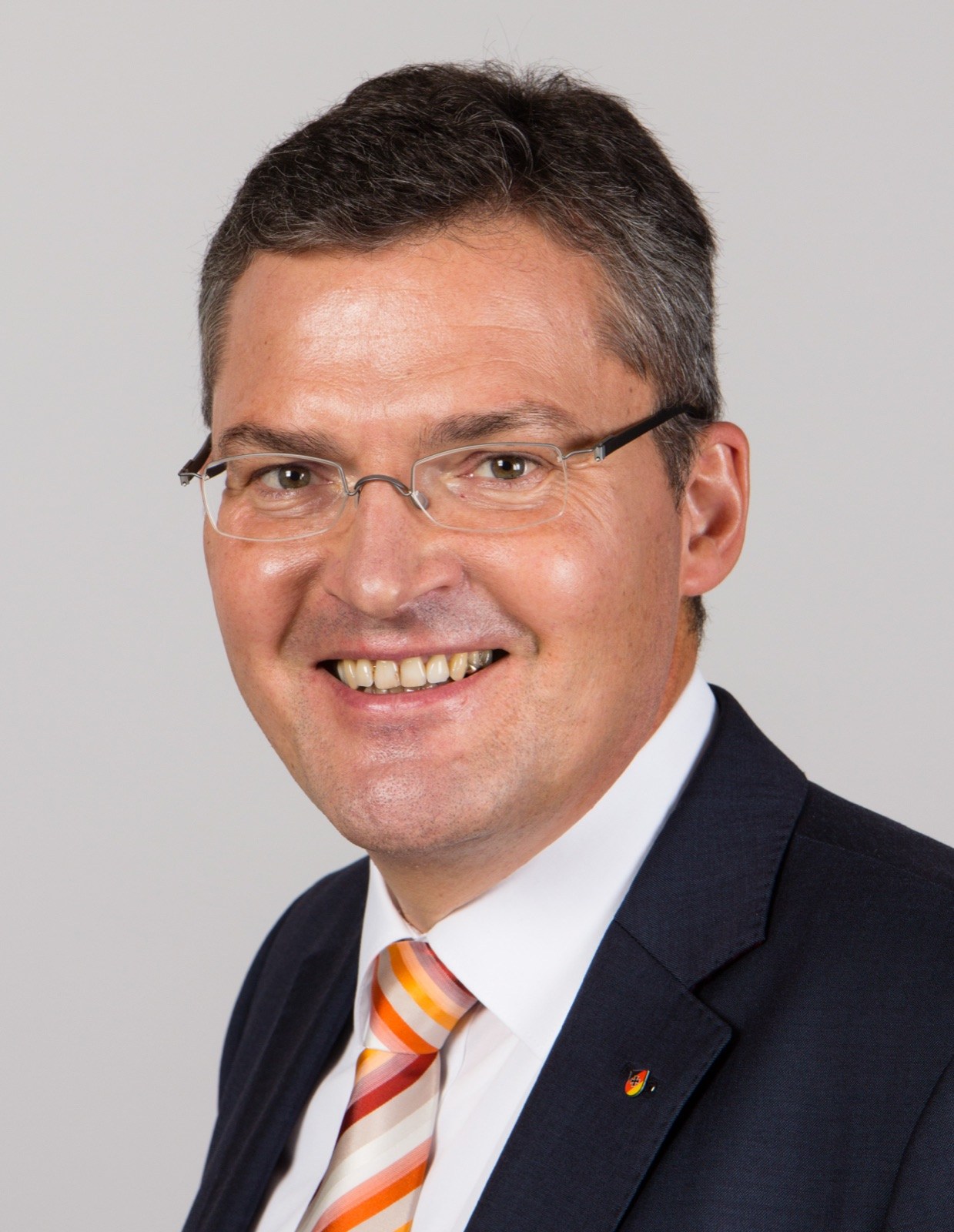
Roderich Kiesewetter
Roderich Kiesewetter is a current member of the German Bundestag who discusses what to expect from Germany's pivotal polls and addresses immigration, foreign policy, and the economy as major voter concerns.
Episode Summary
Sir Richard Dearlove, the former head of Britain’s MI6, sits down with Roderich Kiesewetter, a current member of the German Bundestag, to discuss what to expect during this weekend’s pivotal German polls. Immigration, foreign policy, and the economy are among the biggest concerns for voters. A rise in support recently for the far-right AfD party has alarmed some observers. Meanwhile, the center-right Christian Democratic Party is hopeful they will hold on to power. Sir Richard and Kiesewetter also speak about tech mogul Elon Musk’s growing role in politics, including in Europe. They also look at how Germany is addressing the threat of Russia and the future of its support for the war in Ukraine.
Episode produced by Situation Room Studios. Original music composed and produced by Leo Sidran.
Listen & Subscribe
- Watch on YouTube
- Listen on Apple Podcasts
- Listen on Spotify
Transcript
COLD OPEN
Kiesewetter: It is not a question of left or right, it's a question of who is closer to Kyiv or closer to Moscow.
INTRODUCTION
Dearlove: Hello, and welcome to One Decision. I'm your host, Sir Richard Dearlove, former chief of MI6. The German federal elections are to be held this weekend, and throughout Europe, the result is awaited with great anticipation as the continent's economic giant goes to the polls. It's a moment of divergence in Germany's traditionally consensus driven politics. Amongst the biggest concerns for German voters is the dire state of the economy and growing concern about immigration. And these two factors have certainly contributed to the rise of the far right, the Alternative for Germany, the AfD. However, the center right's Christian Democrats are hopeful they will emerge as the largest party from this election and take the lead in forming a new government. Today, I sit down with Roderich Kiesewetter, a senior Christian Democrat member of the German Bundestag, to discuss why this election is a pivotal moment for Germany's political future and how it may influence Germany's foreign policy, especially with regard to the rest of Europe, Ukraine.
INTERVIEW
Dearlove: Mr Kiesewetter, welcome to the One Decision Podcast. And I'm going to ask you to explain a little bit your position in parliament.
Kiesewetter: I'm the representative of our caucus in the Committee of Foreign Affairs, where I am a member of since 2009. Then I am the deputy head of the parliamentary oversight panel, is taking care for the control of our secret services, especially the governmental role in that. And third, I'm a spokesperson of crisis prevention.
Dearlove: The first issue I want to ask you about, which is of such concern to those of us who follow German affairs closely, is the forthcoming election. Obviously, this has been billed internationally and in Europe as one of the most important German elections in recent times. Could you explain to our listeners why this is such a crucial election and what is at stake?
Kiesewetter: First of all, we have the return of war to Europe, and Germany, one of the strongest economies in Europe, it is very necessary that this economy is not only living in complacency and looking for our own interests and belongings inside the country. Inside the country, we are focused too much on domestic issues, but the expectations, especially from our Eastern partners in France and the Baltic States and the Scandinavian States, is much higher. They are investing up to 2% of their GDP in confronting Russia with better support, improved support, military support of Ukraine, whereas Germany is only investing 0.1% of its GDP for military aid. We are supporting much more the refugees who came to us in comparison to our military support. And in the last three years, our country has itself a little bit isolated because our close ties to Poland, to France, but also to UK and Italy were a little bit contained by our focus on a close cooperation with the United States, especially from the chancellery with the White House, instead of trying to assume a kind of hinge function for Europe, so that Germany is encompassing the ideas, desires, but also expectations of our closest neighbors, not only the larger ones, but also, for example, the Baltic States. We are threatened. It's a day to day threat from Russia against our infrastructure. So we can elaborate it a little bit later on, but our domestic debate is focused on migration, refugees and less on the need for migration for skilled workers, for example, and less on how to enhance, enable our economy so that we have growth again and especially investment in innovative technologies. We are losing capital. In the last three years we have lost about €300 billion to our neighbors, because our energy prices are very high, our bureaucracy is consuming huge resources of especially the small and medium enterprises who are core for the supply chains, for example Volkswagen or Rheinmetall and others. So, in a nutshell, it is of utmost importance to combine the expectations of our neighbors and the threat of Russia with much more information of our population, much more attitude and orientation to our population, but we are living in a mood of complacency. For example, last remark in this context, the Zeitenwende speech on shift of time of our chancellor in February 2022 after the full invasion was his best speech, but afterwards it was only focused on our military refurbishment, instead of changing the societal mindset, the strategic culture and as a whole society approach, no, it is only focused on our very own belongings. The only exception is our Defense Minister Pistorius, also a Social Democrat, who has asked our society to support an army which is war able, Kriegstüchtig, but he is contained by the chancellor and is not receiving the necessary money. So we are in the kind of deadlock, hoping that Russia will stop and Ukraine not fall into pieces, but this is really not mentioned and very much neglected in this election campaign. The new topics are especially migration, border protection, and not the relevant topics which might improve our security and strengthen our innovative power.
Dearlove: What I find surprising is that after the February 2022 invasion of Ukraine, Scholz made this very clear statement about this massive increase in the German defense budget, which I must say, for those of us who follow these things closely, was a really seminal and important moment in European politics, that the German defense budget would be transformed because of the size of your economy means that that would be a huge augmentation, not just of German defense but of NATO as well. Why has Scholz's coalition government completely failed to follow up on that undertaking?
Kiesewetter: It's just nothing, it hasn't happened. First of all, at that time there was a defense minister, she was Mrs. Lambrecht, and when she received the €100 billion fund, if you so wish, she avoided to talk to the defense industry. She asked me what, as a politician of the opposition, what do you recommend? And I told her talk to the soldiers, but please talk to the defense industry. And she said, no. I'm coming from the peace movement. I never will do that. I said, well, I'm a vegetarian. I also talk to butchers. And she laughed, but never talked to the defense industry. The defense industry was ready one day after the speech of Scholz on the February 28. They offered that they immediately could invest 42 out of the €100 billion. They were stopped. The defense ministry started talks with the defense industry, but the defense minister stopped all talks, then it took three months from February to July, that on the July 1, there was then the first meeting in the chancellery with the defense industry. So we lost three months. And in the meantime, it was really heavily damaged to our reputation, also the armaments industry, because Poland asked in March for the delivery of 600 Leopard 2 tanks, at least to start the production of them so that they could hand over 600 T-72 to Ukraine. They got an answer in mid July, and the answer was you can have 220. So Poland invested in South Korean defense industry €5.6 billion, which were not invested on the European ground. And in the meantime, the South Korean defense industry has delivered already some of the tanks, of the howitzers and the infantry fighting vehicles. They have ordered thousands of each. So all in all, we have now invested €66 billion, but we have not invested in the refurbishment of our armed forces. We are still lacking at least 20,000 soldiers.
Dearlove: Can I just touch now? Well, I know it's a potent issue in German politics as it is across Europe and including the UK, on migration. One of the recent events in German politics which got huge publicity, certainly European wide, was Merz's disregard of what I believe is referred to as the 'firewall' in German politics. I mean, can you explain to our listeners the significance of this and exactly what happened. I mean, of course, it's a degree to which center or other political parties cooperate with the right wing or the extreme right wing AfD, but perhaps you could explain this in more detail.
Kiesewetter: We have had some incidents last year in Solingen, in Magdeburg, in Aschaffenburg, in Mannheim, where we had foreign migrants, especially from the Islamic world, who killed people, policemen, but also children and a very small child. Our chancellor's candidate, Friedrich Merz, is a grandfather. He has seven grandchildren. And when he listened to the report of the murder of the two years old American boy who was killed in Aschaffenburg, he said, We have to change our attitude and we have to come to action. Nevertheless, he made some promises some months ago in November, and he told to the still existing government that he never would look for a majority with a very right wing party, and he promised to find solutions with the Greens, the Liberals, and the Chancellor's party, the Social Democrats. But due to the fact that this killing was so cruel and full of atrocities, he changed his mind. And this brought my party in a situation that especially the Greens and the Social Democrats said, now we have the chance to push the Christian Democrats closer to the very right wing party, because Friedrich Merz said, independent from who is voting for us, I will seek for a majority, also if this majority is coming from those who we never cooperate with. But this, I believe, was a disadvantage in the aftermath. We see a split in our population. We did this on the Holocaust Memorial Day when we had our memorial day. It was an hour full of grief where an 89 years old Ukrainian Jew spoke about the killing of his brothers and sisters in 1941 in Kyiv when he was nine years old, and now he was then telling us that he sees the same with his children and grandchildren who are losing their houses and losing their health. And on the same day, we found a majority with the AfD in a five topic agenda where we found the majority, and then the very right wing party stood up and said, now we have a really memorial day because the blue, they have the color blue, and the black are cooperating. It's a new era. The blacks are following the blue. You have copied all of our requests. Now we have a new era in Germany. And this was really very difficult because we have a split in the German society. More than half a million were on the streets in fear that the party who founded the Federal Republic, the CDU and the CSU, might tend to a right wing cooperation. And Friedrich Merz is now explaining that this never will be the case. But indeed, Sir Richard, it was a big mistake because we need a comprehensive society, a societal approach, and not a split in our society.
Dearlove: So if the CDU emerges from the election, which seems to be indicated in the polls as the largest party, you seem to be ruling out any coalition with the AfD. So basically you would be looking to the Greens and other sort of left center parties, is that correct?
Kiesewetter: The Green Party is the only party in Germany which has no Moscow connection at all. Second, the Greens are very left. That's true. But in the consequence, they are very much supportive of Ukraine, much more than my party is, much more than the Social Democrats. They really defend peace and freedom and self determination due to their past. So it is not a question of left or right, it's a question of who is closer to Kyiv or closer to Moscow. The Social Democratic Party and ours, we are very used to each other. We cooperated for decades together in this Federal Republic of Germany, but we have a split also in the Social Democratic Party. Pistorius, the defense minister, is asking for a war able Bundeswehr, completely against cooperation with Russia, but sees also Ukraine as a potential NATO member, whereas the other part of Scholz and the caucus leader and the whips and so on, and the secretary general look for appeasement with Russia. So the question is, it's depending who with whom we are in a coalition. So with the Greens, we would be much stronger in the support of Ukraine. With the Social Democratic Party, nothing would change in our attitude.
Dearlove: As a member of the Foreign Affairs Committee, maybe I can ask you to go a bit deeper on this issue of Ukraine, which is of such concern certainly to people like myself who look at it as central to obviously the future of European security. Do you think that Trump and Trump's position, I know that there's great uncertainty about this, falls towards appeasement, or does it fall towards, as it were, strengthening the Western effort to make sure that Putin does not emerge from this war being able to claim victory? I'm not talking about a military victory, I'm talking about, you know, psychologically where we end up and what Putin or Russia says if there's some sort of deal. How do you, I mean, you and Germany now are in a really important position because maybe the German defense budget will be forced to shoulder a much larger burden as the American support for Ukraine is reduced. And I mean, the UK has been doing its share as well. So how do you see the situation now? Because you must be talking about it an awful lot in the Bundestag.
Kiesewetter: First of all, we have missed a chance in the last three years to show the Americans that we have understood and that we are able to take over burden. So burden sharing is not fair, because the Americans bring in 60 to 70% of the resources of the Transatlantic burden sharing, and Scholz, in his last visit in the United States February last year, missed a chance because he said, if the Americans don't step in, we Europeans cannot support Ukraine. This was a signal to Ukraine that the Europeans are not willing with Germany to better support them, a signal to Moscow that Europe is weak, and a signal to the United States, we need you, but we are unwilling to do more. But what is of much more importance, we get controversial signals from the United States. We have a delegation there from Heritage Foundation, and they told us, and this was really very trustful, they told us, well, America cannot afford to be weaker after this war, so we want to be strong. So Crimea must not be in Russian hands, because then the Black Sea would be in Russian hands. Second, we would like to see Europe stronger after this war, Ukraine should not fall into pieces. And they see three nuggets in the language of Trump in Ukraine. They can pay their debts with raw material, with resources. Second, they have a population which is very strong, fighting for peace, freedom and self determination. And third, they have a military knowledge if this transfers to non state actors, to rogue states, to enemies, to the CRINK coalition, China, Russia, Iran, North Korea, we would be in a huge disadvantage for our future security. So this we really support, but then they came up with a strong demand. You have to pay the bill. Our workers have twelve days leave. You German workers have thirty days leave. The Polish workers have twenty days leave. We cannot afford the welfare of our workers for your complacency. So this was very clear. So we in Germany must understand that the Americans will give us leeway in the Indo-Pacific, that they will support the supply chains there, but our security in Europe, we have to define ourselves.
Dearlove: I'm encouraged by what you are saying, and I think I'm of a similar view that Europe has to bear more of the burden of this themselves, but there is a problem with the German economy at the moment. And I suppose my follow-up question is, is the German economy in a sufficiently healthy state to carry this significant extra cost. And I might just add another point to this. You know, a lot of Germany's trading wealth has been dependent on its relationship with China. And there again, you know, we have another problem, which is the future of that relationship and how it works out in practice, because that could affect the health of German industry if it goes into a more, let's say, competitive relationship than at present.
Kiesewetter: The idea is the state is still healthy, but the state of economy is really worsening, and that's the key. So what we are doing now after being in government, we will try to refurbish our economy by giving up some of the restrictions regarding bureaucracy. Second, we will change the work level of a working week, so give up some limitations. We cannot afford thirty two hours week or a thirty five hours week, so we will give leeway to the enterprises to organize the work as much as it is needed depending from the tasks. But third, we have to change the mindset in this society that we are willing to create resilience in disaster relief, in the question of service, not conscript service, but volunteer service, it is limited of 10% of a birth year, so 80,000 out of 800,000 of a crew are only enabled to do a service, so we would like to quadruple this to a half of a crew, up to 400,000 young people in Germany between 18 and 25, with some incentives like a lorry, driver's license, or some other issues which is very attractive. What is also important is we have invested about €40 billion for Ukrainian refugees and only €11 billion for the military aid of Ukraine. So if we help the Ukrainian refugees to find work in Germany instead of hampering them to find work due to restrictions, we could change it to deliver the same sum of now €50 billion since 2022, but then one fifth for societal questions and welfare and four fifth of them for military support. Why not much more for military aid and then bring people to work, Ukrainian refugees to work? This is possible by some administrative measures where the current government is shying away from.
Dearlove: I guess this is just a historical question, but it fascinates me is how Angela Merkel steered German industry towards dependence on Russian energy, and made that fundamental misjudgment about the future development of Russian sort of behavior in relation to European security. One would have thought that someone of her background, Russian speaking, and with knowledge of Russia, that she would have made a better judgment. It seems to me it's taken a long time for Germany to make this sort of U-turn away from that policy. I mean, the attitude now in Germany fundamentally changed in this respect, or is there still a sort of, as represented maybe by members of the AfD, a wish still to look East rather than West in terms of that political sympathy, that political alliance, and even, let's say, an economic alliance. Because after all, Germany historically has been a huge investor in Central Europe and a really important economic player in the countries of the former Soviet Union.
Kiesewetter: Well, we have already unveiled three life lies of Germany, which were very present from 1990 until 2021. And these three life lies are: we are surrounded by partners and friends and therefore can define security only as social security, societal cohesion. And we did not invest in economic security, competitiveness, we did not invest enough in domestic and foreign security. But to be able to invest so much more than 52% of our annual budget into social welfare we started the second life lie: cheap energy from Russia, cheap supply chains from China and cheap security from the United States. So we decreased our defense commitment down to 1.1% and the 2% goal is an original German goal which we raised in the 90s to show some thresholds for the countries who wanted to go to NATO, especially Poland, Hungary, the Czech Republic, but these three countries within three years achieved the 2% goal, so then we had to be honest and we help them to become a NATO member. But the third life lie is also very important. The third life lie was that we believe in change by trade. So our hubris was that if we cooperate with Russia and with China, these two countries might transform to transformational democracies. The only thing which changed was not changed by trade, but changed into dependency of Germany from Russia and China. This now is unveiled, but the lessons are identified but not yet learned, because there is a belief, a hope within the Moscow connection, smaller part in my party, but very strongly in the Social Democratic Party, that at the end we have to accept the right of might of Russia, Ukraine has to adapt, and then we could offer to Russia, again if they appease or if they are ready to be appeased, that we could in the future again start a Nord Stream XYZ or other pipelines. And this is really ill advised. We have an East Committee of our industry, and this East Committee is completely biased by entrepreneurs who have invested in Russia. And our chancellor has told them some years ago, don't cut off your lines to Russia. Once in a while, you will need them again. So we have to overcome this ill advised thinking, and therefore the question of the coalition partner is key for the future and also for the German credibility.
Dearlove: And I want to ask you more an anecdotal question because it's affecting our politics too. What about Elon Musk's intervention in your internal politics? How is this viewed in Germany?
Kiesewetter: It's really strange because the AfD, the Alternative for Germany, was completely against the Musk plant of Tesla in Brandenburg, completely against. But we see he is behaving like an oligarch, and if he is assuming the idea to become the next president of the United States, we will have a strong challenge to defend our Western alignment with the United States. So the answer, the consequence must be, well, it's not the influence of Musk, but a lesson identified, I believe, that we have to organize our European security together with the United Kingdom, also due to your secret services, to your navy, to your connectivity, commonwealth and so on, your knowledge, your naval power. But we need to organize a European pillar inside NATO, a stronger one. We only have a single set of forces, so multiplication with European Union, but better connectivity. I believe this must be the consequence of this Musk intrusion, invasion, or name it.
Dearlove: Yeah, and I must say I agree with what you're saying about, you know, a European pillar. I'm not a great fan, as you probably know, of European defense policy driven out of Brussels. For me, it's largely a waste of time. But I think that NATO and then a firm inner alliance of the primary European defense powers is what will make effective European defense in the medium to long term. And it's an issue that needs to be answered pretty crucially and pretty quickly. Look. It's been a wonderful discussion, but I'm assuming if your party emerges in the lead after these elections, maybe this is an indiscreet question, I would expect someone in your position to be heading for ministerial office.
Kiesewetter: Let's wait and see. First of all, we have to find the bear, then to shoot the bear, and then to portion the bear. So they have to be diligent as well, so, and decent. Once you have a government, it would be great if we could do another podcast with you. Grateful, Sir Richard. I'm really grateful. It's a great honor for me. Great honor. Thank you very much indeed for your time.
Dearlove: Thanks for listening to One Decision. That was German Bundestag member, Roderich Kiesewetter. For more exclusive content, be sure to check out 1decision.com. I'm Sir Richard Dearlove, as I said, former chief of MI6. Thanks for listening to us, and don't miss our next podcast.