Episode Info
- Season27
- Episode13
Hosted by Christina Ruffini and Sir Richard Dearlove
Guest
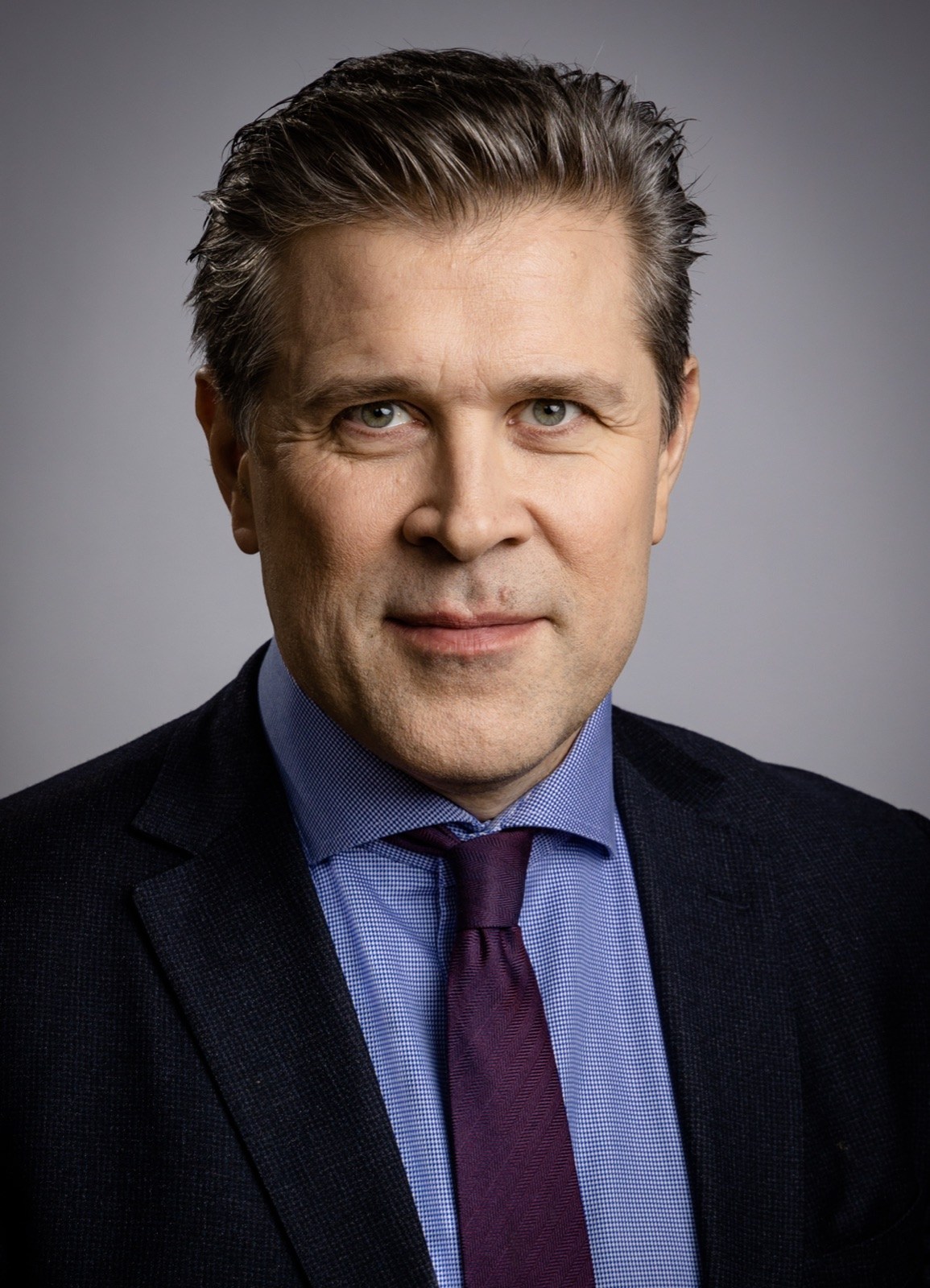
Bjarni Benediktsson
Bjarni Benediktsson is Iceland's Prime Minister and discusses Iceland's strategic importance amid concerns over increased cooperation from Russia and China in the Arctic.
Episode Summary
This week, host Christina Ruffini and One Decision's resident spymaster, Sir Richard Dearlove, the former head of MI6, discuss former President Donald Trump's recent complaint accusing United Kingdom's Prime Minister Keir Starmer and the Labour Party of election interference in support of Vice President Kamala Harris's presidential campaign. They also talk about the Israeli intelligence that led to the killing of Hamas leader Yahya Sinwar and Russia's potential interference in Moldova's recent election to join the European Union. Later, Sir Richard and Christina sit down with Icelandic Prime Minister Bjarni Benediktsson to talk about Iceland's strategic importance amid concerns over increased cooperation from Russia and China in the Arctic.
Listen & Subscribe
- Watch on YouTube
- Listen on Apple Podcasts
- Listen on Spotify
Transcript
COLD OPEN
Benediktsson: The functioning democracies of the world are the places where human rights are best protected, where prosperity is best or highest, economic growth has been highest, and those functions of democracies are all being attacked.
INTRODUCTION
Lockwood: That was Icelandic prime minister Bjarni Benediktsson. We caught up with a leader of one of the world's safest, prettiest, and definitely coldest nations earlier this fall at the UN General Assembly in Manhattan. But before we get to that chat, I'd like to first bring in Sir Richard Dearlove, of course, the former head of Britain's MI6, to talk about what else, the election. Sir Richard, the election in the US is now twelve days away, which does not feel at all real. How are you guys feeling about this on the other side of the pond?
Dearlove: I'm very well, but I'm getting very nervous about your presidential election.
Lockwood: I don't think you're alone in those nerves. I first wanted to ask you, there's this interesting report out. The Trump campaign is filing a complaint against your guy, the British prime minister, Keir Starmer, saying the British Labour Party essentially has encouraged its staffers to go volunteer in swing states for Harris. Now the PM has said, he's on a plane with journalists, he was asked about this. He said, look, Labour has done this every campaign, you know, for the last twenty years. It's on a volunteer basis. It's not official. So, Richard, are you buying that? This is a — the Trump campaign might have a point here.
Dearlove: I think they do have a point. Maybe it's a small point rather than a large point. Look, there are always exchanges between the Anglophone nations when they're holding significant elections because there are a number of sort of guru guys who advise on campaigns who flake between Australia—
Lockwood: Right. Steve Bannon went over and advised at some point.
Dearlove: Yeah. I mean, that's not unusual. And there are always politicians too visiting privately, not officially. But what happened here was slightly odd because the Labour Party put out some sort of tweet which looked official. It was on LinkedIn. It was on an official's LinkedIn. They may have 10 slots that they wanted to fill with volunteers, and they said housing would be covered. Now, it is illegal, as I understand it in the States, to assist in an election if you're a paid participant. There is actually some strange rule, which wouldn't certainly apply in the UK, but it does apply in the States. So, what I'm saying is that the Trump campaign may actually have a procedural point which has a little bit of validity. But, I mean, frankly, I think it's been a bit blown up because the links between the Democrats and Labour have been quite close. But, ironically, in the past, there have been links between the Democrats and Conservatives. So, it's quite a tangled web, but at the moment, it's all over the British news, it's headlines, and people are saying, well, if Trump wins, it's really an embarrassing start for Starmer because it looks as though Starmer helped his opponent, so on and so forth. And they've withdrawn the LinkedIn announcement, so that's disappeared from the media. So, obviously, they're feeling a bit guilty and a bit exposed, and Starmer's falling over himself to apologize. He's on his way to the Commonwealth Heads of Conference, which is in, of all places, Samoa, I think. That's where he's — yeah, he's on, like, a twenty hour flight. It's about the longest flight you could take from the UK. It's a thirty two hour flight or something. Well, they stop somewhere, I'm sure, but the whole journey takes—
Lockwood: thirty something hours. With a bunch of rabid journalists asking him how he's gonna get along with Trump if he wins after all this, which, I mean, I recently had this supper with Trump in New York, and they said that they got on well. But what else would they say? They're not gonna say that they didn't get on. Anyway, let's see how this plays out. I mean, I wouldn't see Trump as a natural partner for Starmer.
Dearlove: No. And he doesn't really have any reservations about lambasting America's closest allies either. I mean, he's gonna come right out, if he's got a problem with the guy, you're gonna know it no matter what it does to alliances or anything else. But we all know that behind the scenes, the sort of defense relationship, the intelligence relationship does actually go on in spite of what personal feelings presidents and prime ministers may have.
Lockwood: It's always better when they get on well, though. Is there a concern, though? A lot of the people who ran those agencies under the last Trump administration are not gonna come back for round two. Those are people like Pompeo, Esper, some of the more statesmanly like folks who kind of held it together, especially at the end there. Is there a concern in the intelligence community who might be given the keys to that apparatus and what they might do with it?
Dearlove: Well, I can't say officially that the answer is yes. My suspicion is the answer is strongly yes because people like Bolton, Pompeo were highly respected. You may not agree with them, but they were serious, you know, heavyweight professionals. I mean, I know both— They were grown ups, yeah. They've both been on the podcast and, you know, you had great podcasts with them. And they're really grown up serious people. I haven't a clue, and I'm assuming Bill Burns, who's there now, is a pretty impressive individual with a very strong diplomatic background, really balanced, sensible, forward looking guy. Not particularly partisan, I mean he's a hardworking American, whatever we call, you know, civil servant. I mean, it's not just who's gonna win. And there's been some very interesting stuff in the British press about, you know, where Trump might be favorable to international issues like, you know, continuation of a tough policy on China. And then you've got this latest development in Ukraine, which is crazy with these North Korean special forces turning up, you know. Wow. That is an act of desperation by Putin.
Lockwood: You know, I asked Jake Sullivan, director of the National Security Council, when it came out that they were using North Korean artillery. And I said to him, what is the quality of North Korean artillery? And the consensus was kind of, well, we wouldn't want to fire it, but this is where they're at. They need — yeah, it's desperate times. And I think, as you mentioned, it's no secret that Trump has said they want that war to end and they want it to end by settling it most likely, it seems favorably to Russia. Speaking of that general part of the world, Moldovans voted this week on whether or not to join the EU. And the EU vote won with a very slim majority, 50.46% of the vote was in favor of joining. There was a lot of efforts by Russia to try to get that vote to go the other way. Does this outcome surprise you? And can we read anything into this?
Dearlove: Well, doesn't surprise me that it was close run because I think the evidence is clear. There was massive Russian interference. And, you know, there was this famous interview, which certainly was broadcast on European media, where a woman turned up to vote and then turned around, walked away and said, where do I get paid? So the evidence — I mean, the problem is, when you've got a very small electorate — Moldova is a small country, it's much easier to skew the vote. I think that the voting difference in numbers was 12,000 to 15,000 or something, but the figures I've seen suggest that at least 130,000, maybe more, were bought by the Russians paying cash. And if you read about the intercepts of cash coming into the country at the main airport by customs from Russia. I mean, it was an absolutely blatant attempt to actually secure a defeat for Maia Sandu. But, in fact, thank God she won by a slim margin. But the fact is that there is a definite majority of Moldova, whatever the result of the vote, for going in the EU's direction. But, of course, this is anathema for the Russians. And then you've got the complexity of Transnistria and the fact that the Russian military is sitting in Transnistria. And the inhabitants of Transnistria, which are essentially Russian, because their sovereignty is Moldova, they can cross into Moldova, and if they're there, they can actually vote. So, they probably all voted, I don't know, for Russia, probably, or to stay with Russia. So, it's a very complicated situation, but she won. That's the important thing. It doesn't matter that it was marginal, but she's got to have a second round runoff for the presidential.
Lockwood: My god, let's hope she wins. And for those who are unclear, Transnistria is one of those breakaway Soviet republics along with South Ossetia and Abkhazia and those places within another sovereign nation that Russia either claims or it's disputed as to — well, it's never disputed by the country they're in, but the Russians dispute who has sovereignty over them. So is it your thought that even though on paper this looks like a slim win for the pro EU Moldovan side, that it's actually a much larger part of the population given how heavy the foreign interference was and how big the effort was to get this vote to go the other way?
Dearlove: Yeah. I would say it's probably — well, there's heavy Russian influence in Moldova because of the Transnistria issue. But I would say the true result would be sort of sixty-forty or even more than that for pro EU. I mean, it's quite clear the country's going in that direction. It's a very — what's worrying is it's really how the crisis started in Ukraine as well. So we're gonna see a similar crisis in Moldova. Yeah.
Lockwood: Speaking of crises, Yahya Sinwar, the political leader of Hamas, was taken out by Israel, and there's this really startling drone video where they essentially hit the building he was in. Then the drone flies into a second or third floor. And you can see him in this bombed out building sitting in what looks like an armchair covered in dust. He throws a stick or a pipe at the drone. The video is then stopped. It's a handout from the IDF. And then they show him dead soon thereafter. What was your take on, first of all, having them release that video and the intelligence ability of them to locate an individual with that level of precision?
Dearlove: Well, yeah, I was puzzled by it because some of my well informed friends say that they actually found him by chance. Yeah, that they didn't expect to find him there. The unit that found him were not a sort of top notch special forces unit, they were a group of reservists. It's very hard to know what the truth of this is, because I'm sure that mixed in with this, there's propaganda being deployed on both sides. But they probably had isolated the area to where he was, but to come across him in the building — and there's something pretty bizarre, you know, because this is the most sensitive leader of Hamas. And he's sitting there on his own without bodyguards.
Lockwood: That was my thought. Where is everybody else? What happened?
Dearlove: Why was he in this extraordinary situation? Was he that beleaguered? Was he really on the run? But my understanding is from quite well informed people who talk to the Israelis direct that literally it was a chance and it wasn't a planned operation, but I can't really confirm that. But the whole thing looked extremely peculiar.
Lockwood: It was very strange. For me, it was strange to see it released as well. Now that the Israelis have got Yahya out, what significance is that? I mean, one of the problems with stopping this conflict has been the stated goal by Netanyahu that he wants to eradicate Hamas. They are doing a pretty good job of picking off these leaders. How significant is it that he's gone? Is someone going to pop up and replace him or is he an irreplaceable figure?
Dearlove: Well, I would have said he is pretty near to irreplaceable because he has been the hard line, very hard line leader of Hamas and has been very important in, let's say, no success towards a ceasefire in terms of negotiation and taking the hardest possible line on the hostages. So, you know, maybe there will be a change. I mean, clearly, within these organizations, there are always factions. That's what we tend to forget. And there will be other groups within Hamas who have their differing views. I mean, all terrorist organizations — that happened within the IRA, a sort of parallel example of a terrorist organization, highly organized, sophisticated, political, but there were groupings within that. And, I mean, when someone as influential as Sinwar disappears, I'm sure it's going to create problems. What's extraordinary about Hezbollah is the rate at which they've bumped off not just the leadership but the alternatives and people further down. So they've really taken out a huge number of the senior ranks of Hezbollah, and I think probably they will be aiming to do the same with Hamas.
INTERVIEW WITH PRIME MINISTER BJARNI BENEDIKTSSON
Lockwood: All right, and on that note, Sir Richard, I think we're going to turn now to our conversation we had a little while ago with Icelandic prime minister, Bjarni Benediktsson. Now you have your own Icelandic connection. Correct?
Dearlove: I do indeed. And, you know, it's quite strong. And I gather that he's surprisingly called an election since the interview. I don't know whether you have heard about that. So he is fed up with the coalition. He doesn't like dealing with, I think it's the left wingers that compose part of the coalition, so he's called an election and that's going to happen I think in about six or eight weeks' time.
Lockwood: Yeah. My understanding, I've been speaking to some people in the government about this, is it was a tenuous coalition and it's just kind of stopped working. So they've decided to resolve it. They also are having internal party elections, I think, coming up fairly soon as well. Now keep in mind, the country also had a recent volcanic eruption that left a lot of citizens grappling with physical and economic distress. And this is coming at a time of political and economic turmoil. And as Iceland tries to kind of position itself as a nation without a standing army, but as a heavy hitter in alliances like NATO trying to show what it can bring to the table. So with all that, let's listen on our conversation. Thank you so much for making time with us. As you might have heard, we're having a little bit of a presidential election here in the US. Are you concerned that the divide between the two parties in the US is making the US an unreliable ally for NATO, for the EU, for Iceland?
Benediktsson: I really can't say that I feel that there is big risk that the US is going to be an unreliable ally. I mean, the US has been, if not the most important ally of NATO, and it would change everything if the US would contemplate to change their position with regards to NATO. I really can't see that happening. However, we need to make sure that the dialogue that takes place within NATO is balanced and fair and that we develop the organization step by step reflecting the situation as it changes from time to time and don't make any fundamental changes or make decisions that make it impossible for long standing partners or founding members not to continue the way they've done. I think whilst this discussion is taking place, what I see is a stronger, bigger, better financed NATO than ever before. So hopefully the elections will not change that. I really can't imagine that happening even though I hear those voices and I understand that there could be some change of policy. But it's not keeping me up at night yet. And I just won't accept that the US will not be a reliable member.
Dearlove: Being aware how threats to Iceland might develop, maybe the argument is rather than having an army or any armed forces, you should have a small but highly professionalized security service. Now, me saying that perhaps reflects my background. But if you want early warning of problems that Iceland may face, maybe that's not a bad idea.
Benediktsson: Yeah, and we are making big changes in that area. We are financing and we are increasing cooperation with our partners. This is a completely different world and we've done a lot in the past two years or so and that is being recognized by those that are monitoring what is happening in individual states. So, I think you're very right that these threats are the ones that we should not least be concerned about. Critical infrastructure is something I mentioned earlier. We know that there seems to be a lot of interest on undersea cables and we've increased the number of undersea cables to Iceland recently with a new one that goes to Ireland, a data cable. And with what has happened in recent years, for example in the Baltic Sea, this is something that we need to be aware of as well in that context, you know. Satellites could help, you know, relying on satellite nets if a disruption would take place.
Lockwood: But I mean, to go back to this question about, you know, how you're contributing to NATO and, to use other people's phrase, you know, whether smaller nations, nations with outstanding militaries are pulling their weight. Is that an old kind of myopic way of talking about these threats, these global threats? I mean, you've already mentioned several. There's different ways to pull your weight, right? There's digital, there's energy, there's infrastructure, there's economic. I mean, Iceland punches above its weight class per population by the size of your economy. Do you have other ways you think you can contribute to multilateral security other than just traditional armed forces?
Benediktsson: For sure. And that's what we've traditionally done. Not only can we provide a very strategically important position in the North Atlantic, but also, as I mentioned earlier, we want to be a partner where you can come to Iceland for those missions and basically just plug and play, that we are always ready to accompany those missions. But apart from that, our civil experts in various fields have also contributed a lot. Be it demining, be it mobile hospitals, which we have financed, for example, for Ukraine, be it transportation of critical materials, be it weaponry or whatever it may be, medical supplies. We've always found ways to contribute when needed and we always try to search for what is most called for and ask ourselves, okay, how can we accommodate those needs? We've also contributed to funds which are meant to finance artillery, which has been a big issue in Ukraine. It's been a big issue and more funds are going towards defense than we've seen ever in Europe. We don't have any weapons to deliver, but we believe that our partnership is important and we try to find ways to contribute in whichever way we can.
Dearlove: Prime minister, on a completely different topic, Iceland's a very blessed nation when it comes to clean power. You have excessive quantities of geothermal power and hydroelectric sources. There's talk now of building cables from Iceland to transmit that power either to the United Kingdom or mainland Europe. Is that really realistic?
Benediktsson: Until recently, I think it has not been realistic. However, times have changed and energy prices have changed. In our case, what we are most concerned about is if Iceland would be connected to all the markets, that would affect the domestic energy prices. And I think the people of Iceland would not want to see big change there because we consider it a part of our benefit from, yes, as you mentioned, having access and being near all those green resources, energy resources. We want to benefit from that in a way that our energy bills are, let's say, fair, at least. But a cable might, if you're not careful, a cable might give Iceland the energy prices of other markets. So that's why we have always wanted to be very careful in that area. Now, with Brexit, that may affect the way in which we can protect the domestic market. At the moment, this is not being considered seriously, but I think we have an obligation to understand the pros and cons of a potential cable as our energy, whilst it is stranded, so to speak, in Iceland, that you do lose potential. Let's say in the reservoirs, you need to keep them higher than you would need if you would have a connection to another market. But it will, at the end of the day, be a lot about how you would protect the domestic market and how the economy would best benefit from the fact that we do have those resources.
Dearlove: It's really amazing how inexpensive it is to heat a house in Reykjavik using your geothermal power.
Benediktsson: Yes, it has become even clearer after the energy crisis that hit Europe. We saw numbers from even the Nordics, which we couldn't believe. People were at that time, shortly after the invasion into Ukraine, talking about how much it would cost just to take a shower in Sweden. And that's something you had never heard all your life. But, of course, the situation stabilized since then, but it brought forward the issue of energy security. And true, one reason behind the high living standards in Iceland is the fact that we have found ways to utilize the green energy and are very efficient in using the fisheries of Iceland. We create a lot of value through the fishery sector.
Lockwood: I visited a geothermal plant with Secretary Blinken a couple years ago for one of the Nordic Council meetings and it was just crazy. I mean, having seen what power plants look like in the US versus you go and these lovely natural fields and open space and flowers and there's like this nice little plant that's, you know, giving energy to half the city. It was just, it was mind blowing. To wrap up on a slightly happier topic, Iceland has become massively popular with tourists from all around the world, but especially Americans. How do you sustain — I mean, it's a big sector of your economy, right? How do you sustain those numbers and also protect the things that make Iceland, Iceland? The natural world, the standard of living, the things that you hold dear? How do you invite that many people in and make sure they're not stomping on the wildflowers they're coming to see?
Benediktsson: Very good question. So this is an issue we need to be very mindful of and now let's go back to the numbers. We had already 2,000,000 tourists before the pandemic. I think it was in 2017 we saw 2,000,000 tourists. So we're back to those numbers now. So we don't have more than pre pandemic, but we are back to those numbers. So number one, Iceland is a relatively big island. So if we are successful in distributing and getting people to those magnets around the island, then I think we will much less feel the density of tourists. Secondly, we need to make sure that the pearls, the natural pearls we have, which we know that the tourists come to see, that they are protected so that we can control the number of tourists that come by day and we're starting to take fees which we until recently had not done. For example, for parking at national sites. That's something that we will use to control access. There is also the importance of social acceptance, you know, and that's something that we also try to monitor. Is the society accepting the change? Now for the capital area, I'd like to say, apart from what has happened in housing, because we have had to step into the Airbnb market and regulate that, apart from that, I'd like to say people enjoy the benefits of the number of tourists, because this means more services can survive, more restaurants, more cultural events. It is a changed city. The capital area has changed. We've also invested a lot since 2017 or over the last decade. So, the traditional thinking is tourism is a low income industry, low productivity and the such. But I think we have shown that in many cases we see high productivity, good growth and profits. We've got a number of companies in Iceland that are doing extremely well based on tourism and a lot has been invested not only in hotels but also in sites where people are likely to come and spend some time. So at the moment I'm not too afraid that we have outgrown what we can accommodate. But even the sector is saying what we'd like to see going forward is steady slow growth, not those big ups and downs, but steady slow growth. And I think we can accommodate even more, up to 2.5, even more. If we are successful in building the infrastructure, roads and etcetera, hotels, so that people can go around the island, then things will be fine.
Dearlove: Prime Minister, the first time I went to Iceland was towards the end of the 1960s. And the transformation of the island in terms of its infrastructure, for example, the road system, is really remarkable. When we first went, there were hardly any hotels outside Reykjavik, and if you wanted to stay somewhere, you ended up staying in a converted school during the summer where you could sleep in a dormitory. But there were very few facilities for tourists. So what you've achieved across the whole country is really very remarkable. But I should also say there are crowds of tourists that do congregate in rather specific places, the famous beauty spots. And it's nice when you're touring to get away from those crowds.
Benediktsson: Yeah. It is the day tours out of the capital area. The day tours, they are the most popular ones. And we are trying to show to people that there are other sites as well that can be exciting. We're trying to get direct flights to Akureyri in the North for example and we are building up and financing national parks around the island. You're referring back to the 70s, when I was a teenager. I was born 1970, but when I was a teenager, we saw the first fast food restaurants show up, you know. What was the first fast food you had? Do you remember? I think I'm correct in saying Kentucky Fried.
Lockwood: I think so. Sorry, on behalf of America, I apologize.
Dearlove: Very un-Icelandic.
Benediktsson: But we also had local chains, local fast food. There was this — he's actually a parliamentarian now, he had a hamburger joint. And I always remember when we went there, bought a few hamburgers and brought them home and my mother said, you know, let me look at this. She took the paper off the hamburger and, you know, took it apart and said, how do they do it? We surely, we can do this at home. Because it was just not something that existed. It's like, you know, why would we have to have a cooked hamburger outside of our home? You know, we should do it at home. Why are people standing in line buying fast food? You know, it doesn't make any sense. So my mother, what was it they were doing? You know, she just took the hamburger all apart. I said, I think I can do it. So in today's world, I think the young generation, their first thought is I'm not cooking and I'm going to order something and have it delivered to my home. So yes, we've developed a lot since then.
Dearlove: So can I ask you about the eruption near the fishing town of Grindavik? There are some geologists who are saying this could go on for years. I imagine that you sit down and talk about this in cabinet because it's a real problem. It's a rather wonderful problem in that it's an extraordinary exhibition of the power of nature. But on the other hand, it has a huge social disruptive aspect. How do you view this now?
Benediktsson: It is very true that they say we could be entering a century of more earthquakes and opening up of lava fields and the such. The good thing about the geologists, they can at least tell us most of the time what has happened in the past. That's not always true for the economists. Sometimes they even tell us today what the growth was in 2022. It takes them a few years to tell us what has happened in the past, but for those scientists, they are warning that we could see a new era. And what we are looking at is the critical infrastructure that needs to be protected and the threats to the energy systems, energy distribution, hot and cold water, electricity and of course also the cities and municipalities that could be potentially under threat. And this will be continuously discussed. I hope I can deliver to parliament this winter kind of a summarization of all the reports that have come recently that have a longer viewpoint and to open up the discussion in parliament on how we should respond to those long term threats.
Lockwood: Thank you so much for making time for us. Sir Richard, lovely to see you as always. Thanks for listening to One Decision. And if you liked that Icelandic conversation, you might be interested in a recent interview with former Secretary of Defense Leon Panetta and Icelandic Foreign Minister Þórdís Gylfadóttir.
Gunnlaugsson: When I say Iceland does not stand a chance in Putin's world, nobody would argue with me about that fact. But we just need to be ready to do what has to be done so that Ukraine wins the war and Russia loses it.
Lockwood: We did that at the fringes of the NATO conference here in Washington DC, and we talked about a lot of the same issues, but from a slightly different perspective. To listen to that interview, unlock more exclusive content, get timely updates on crucial global events, and listen to other meaningful conversation with thought leaders, be sure to check out onedecision.com. From all of us here on the team, thanks for listening, and we'll catch you next time.