Episode Info
- Season21
- Episode1
Hosted by Christina Ruffini and Sir Richard Dearlove
Guest
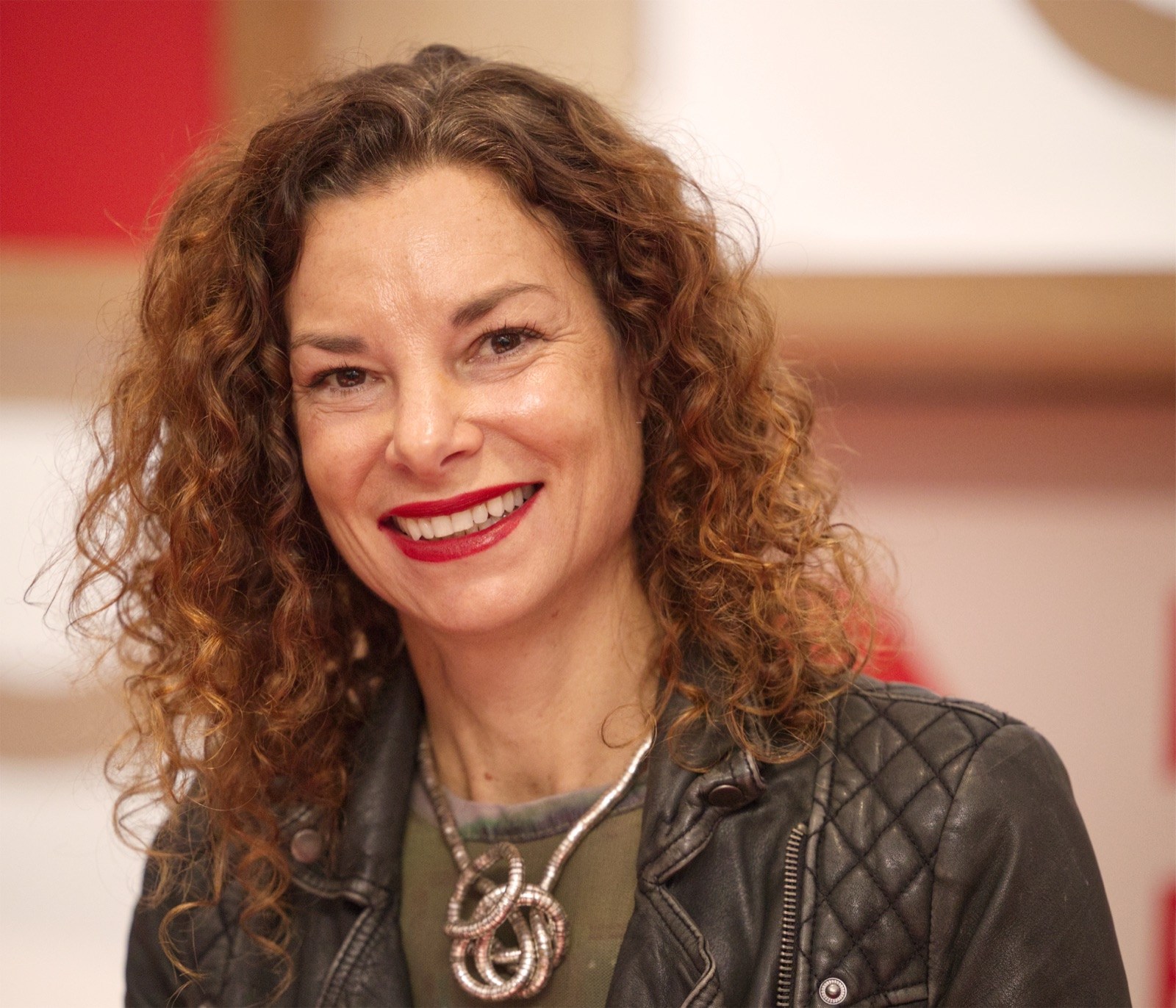
Gaia Vince
Gaia Vince is the author of the book 'Nomad Century,' in which Gaia Vince envisions worst-case scenarios of a world with dangerously rising temperatures.
Episode Summary
What happens in a world where mankind has failed to implement the urgent changes needed to tackle climate change, and temperatures rise above the pre-industrial average? What will our world look like? One Decision asks Gaia Vince, author of the book "Nomad Century," in which she envisions worst-case scenarios of a world with dangerous rising temperatures. Sir Richard Dearlove discusses Henry Kissinger's foreign policy legacy and the New York Times report claiming the Israeli military obtained a document called "Jericho Wall," which detailed the blueprints of the October 7th attack and was initially dismissed as aspirational by Israeli officials.
Listen & Subscribe
- Watch on YouTube
- Listen on Apple Podcasts
- Listen on Spotify
Transcript
INTRODUCTION
Mcfarlane: You're listening to One Decision, a podcast that looks at the choices made that shape our world. I'm your host, Julia McFarlane.
Dearlove: And I'm Richard Dearlove, former chief of British intelligence, otherwise known as MI6.
Mcfarlane: Today, we are looking at important decisions that are coming our way, but could impact all of our lives for decades to come. We're looking both to the short and medium term, but also deep into our future and a world where all of humanity could be forced to abandon most of our earth's surface, apart from areas north of the 45th parallel, which is basically the tip of Northern France upwards, the Nordics, Russia, and Canada. A pretty apocalyptic, pretty dreadful scenario that is the potential worst case hypothetical to befall us in say a hundred years, unless urgent action is taken now. We'll get to that shortly. And I'm sure you're going to love hearing from our guest on that topic. But first of all, some news updates to look at. Richard, we are only a week into December, but there's already been quite a lot that has happened. The ceasefire between Israel and Hamas, the brass tacks really, we understand for why it all came apart is because both sides essentially failed to agree on a roadmap to releasing more hostages after Hamas and other groups had almost run out of women and children to give back to Israel. They are not happy about giving adult males and former or serving IDF soldiers back to Israel the way they were happy to give women and children back. It's also pretty clear that Netanyahu has come under quite a lot of pressure from his very right wing government to restart the war with Gaza as soon as possible. Richard, what I really wanted to ask you about was this incredible reporting last week that Israel knew Hamas' attack plan for October 7 more than a year ago. This was an incredible scoop from the New York Times that claimed that the Israeli military and their intelligence agencies had this document called Jericho Wall, which detailed the blueprints of the October 7 attack with huge detail, much of which we actually saw carried out on that day. But at the time, Israeli officials dismissed it as aspirational.
Dearlove: Well, it's a good question, and it's a necessary question to ask. And, of course, there will be some sort of massive inquiry to take all these issues to pieces and reassess what actually happened. But it's interesting because I think you can draw a parallel straight away, and the parallel I would draw is 9/11. And, you know, the 9/11 commission after the event looked at the preceding evidence. And, of course, there was a lot of evidence there which had been assessed and evaluated, but, you know, no judgment had been made and the risk hadn't been properly identified. I think what we're up against here with the Israelis and with this press leak is that maybe there's something actually pretty substantive, more so than pre 9/11, that points in the direction of what happened. And of course someone sat down, looked at it at the senior level, and they wouldn't have looked at it in isolation. And I'm not making any excuses for them. I'm just saying it's very difficult now when you get to the situation where an analyst has to make a call, a call which in particular probably has a massive impact on resources and how you deploy your resources. And it looks as though in this instance, if the report is correct, that they made absolutely the wrong call.
Mcfarlane: Yeah. I mean, I know so much of this is retrospective, but what's so devastating about this is the reporters from the New York Times, they asked officials, they asked Israeli officials in hindsight about what happens if this intelligence had been acted upon. And their sources told them, they privately conceded that had the military taken these warnings seriously and redirected reinforcements to the south near the Gaza border, Israel could have blunted the attacks or possibly even prevented them. I mean, I just can't imagine being the relative of someone who's caught up in the attacks around Southern Israel reading a line like that.
Dearlove: Well, if the conclusion of the inquiry is as you're saying, you know, heads will roll. I mean, there's no question. And I don't think, you know, Israel is not a particularly forgiving society because it puts so much emphasis on the national security and survival of the state, given that it's surrounded by hostile neighbors. These questions are actually crucial and central. And, I mean, interestingly, right back near to October 7, I caught an interview with Efraim Halevy. Efraim didn't say very much, and he wasn't obviously going to say very much, the former head of Mossad in his interview. But he did say almost immediately, it looks to me as though there's been a serious failure of intelligence. And, you know, the leak of the material now coming out points definitely in that direction.
Mcfarlane: There's this one part of the New York Times article, and if it's not depicted soon by Hollywood, I mean, it's the script line straight out of Homeland. You can just see Carrie Mathison doing something like this. Apparently a veteran analyst with Unit 8200, perhaps it's called Unit 8200, I'm not sure, 8200, Israel's signals intelligence agency. This woman warned her superiors that Hamas had conducted an intense day long training exercise that appeared very similar to what was outlined in this blueprint, in this document, which detailed what the Hamas attack would have been made up of. But a colonel in the Gaza division brushed off her concerns according to emails, which the New York Times have seen. And the analyst said, I totally refute that the scenario is imaginary. The Hamas training exercise, she said, fully matched the content of that document. It is a plan designed to start a war, she writes these emails. It's not just a raid on a village. I mean, just extraordinary, Richard.
Dearlove: Yeah. No. That is. I mean, what we're talking here is about, you know, that sort of the military equivalent of GCHQ or NSA. So it's the intercept part of the IDF, which is a very sophisticated, very formidable outfit with huge capability. And but, of course, if you're looking at intercept, the whole question is how you interpret it, because you're not talking to a human source who can give you their opinion. You have got to take what you see. I'm actually quite surprised by this because I would have thought that the events of the October 7 to have been successful would have been preceded by massively disciplined radio silence, you see what I mean. And so there would have been no intercept evidence of what Hamas were planning, but if this report is correct, it's clear that there was intercept evidence. And that's even more damning in a way.
Mcfarlane: Yeah, I mean, people at a senior level in the intelligence assessment side didn't think that Hamas had the capability or not just the capability or the sort of drive to do what they did. Richard, there was also a huge news story, which was the death of an incredibly important, incredibly divisive person who has dominated foreign policy for decades, and that was one Henry Kissinger. You had a personal relationship with Kissinger. Tell us just a bit about what his death meant to you and how you think he left his mark.
Dearlove: Well, I was deeply moved when I was listening to the radio, heard that Henry had died. He was someone whom I enormously admired. I didn't necessarily agree with him. But he was a formidable intellect. I think he was the most impressive and intelligent foreign policy guru that I have ever had anything to do with. I got to know him whilst I was the head of MI6. And we actually became, I would like to say, quite close friends. And I saw a lot of him, particularly after I retired, we kept in touch.
Mcfarlane: Clearly, he was this incredible analytical mind. It's extraordinary how he remained compos mentis even at the age of 100. I mean, I read his book on AI, this book that he edited with other academics, which was published only a couple of years ago. But you talk about his divisive legacy, particularly with students who I expected many would have wanted to have him burned at the stake. I mean, his critics regard him as a war criminal and a warmonger. I mean, you knew him personally. I'm so interested because of course he enacted huge moves. He was the most powerful secretary of state after the Second World War, but he's also someone who a lot of people argue has the blood of hundreds of thousands of people on his hands. I mean, did you get the impression that he was someone who did feel that he had had a hand in an insane level of collateral damage, huge deaths that could have been avoided? Was he religious? Was he someone who you think was haunted by that or do you think, no, he felt he was always in the right? He was a pragmatist.
Dearlove: He was very much brought up in the German intellectual tradition. I think he regarded his role as, let's say, directing the fate of nation states. I mean he was a true statesman and I think he did have a clear sense of moral judgment in my view, and I think he was troubled by, you know, those issues. But on the other hand, he had in his own, as it were, judgment of international relations, which was the side of the angels and which was not.
Mcfarlane: The ends justify the means, you mean, according to him?
Dearlove: Well, he was a huge pragmatist, and he didn't believe that, let's say, foreign policy should be driven by considerations of human rights. He believed very much in the primacy of the nation state and the interests of the nation state, the security of the nation state, the security of the citizens of the nation state. So you know he came out of a tradition which was very different from some of the influences now that attempt to drive our foreign policy. And he said the aftermath analysis of any decision is always so difficult, controversial. And I mean, in a way, that's just what we've been talking about with the events of October 7. In a way that they have to be judged in the context of what happened when it happened, not the aftermath. And of course now, the aftermath becomes politically more important in many instances than the event itself. And I think that's what we're witnessing with Israel and Gaza.
INTERVIEW: GAIA VINCE
Mcfarlane: Well, that leads us very nicely onto our topic for this week. And it's all about decisions that need to happen today to hopefully stave off what could be cataclysmic consequences for all of us for decades to come. What happens in a world where mankind has failed to implement the urgent changes that are needed to tackle climate change and the horrific rising temperatures above the pre-industrial average? What will our world look like? Will all the major metropolises on the coast be empty? We're talking today to Gaia Vince, the author of an extraordinary book, Nomad Century. She envisions some of the potential worst case scenarios for what happens when global temperatures climb to two, three, or even four degrees above pre-industrial levels. We think it's a particularly timely conversation to be had, not just because of the recent COP28 that was held in the Gulf, but because the summit president, Sultan Al Jaber, a former oil chief himself, has been facing accusations that he is in denial over climate science following a stream of controversial remarks. Gaia Vince, in her book, has also detailed some ideas that she has about what we can do to stave off those crises and how we can shape society for the better. Gaia, I found your book so interesting. Above all, I thought it was absolutely fascinating, but it is of course, and so many people have said this, it is of course an incredibly important read as well. And just for our listeners, essentially the biggest message. Well, I think there's two really, but it's clear that the first is most of us on this planet will be climate migrants and some already are without realizing it. And there's a part of your book where you say, when you cannot get wildfire insurance for your house, when it becomes too expensive to repair your home after yet another flood, when you realize you're spending months of the year inside your house with the air conditioning on because it's just too hot to get outside, businesses and shops boarded up and most of the houses are empty because the place you live is no longer viable, then you may find yourself migrating somewhere else, somewhere you can build a viable life for your family. I think there are quite a lot of people in the United States, for example, who are facing that very challenge right now. And then the other, I think, key message that you really drive home is not only how beneficial migration is both to host nations and the migrants themselves, but that it's really been quite a central part of human behavior and human history. And the current situation we have with our political borders is really quite a modern invention. And I think at the start of your book, you have this very vivid sort of map that puts it into pretty stark terms and shows how much of the planet will be inhospitable in a planet that has reached the threshold of three or four degrees. And to just describe this to our listeners, it's pretty much everything south of, I believe it's the 45th parallel, which is basically the very, very top states of America. Most of France is out of it. You have the Baltic nations and the Nordic nations, and then Siberia, everything below that latitude, it involves a scenario where people will have to leave.
Vince: Well, they're going to experience these much higher temperatures. They're going to experience other climate shocks, drought, harvest failures, extreme storms, floods, flash floods, fire, all of these things that make it very difficult for people to stay. Now, whether or not they will have to move depends on various things, you know, how well these places can adapt. So, I mean, if you take Mumbai, that's a city of 22 million people. Now Mumbai in 2060 is going to be, you know, pretty unbearable to live in. I mean, at the moment, places like Dubai, like Qatar are also pretty unlivable. Right. People do live there, but they are wealthy. They live in a sort of hermetically climate, artificial climate. They live in shopping malls, air conditioned shopping malls, everything they need, food, water, energy, everything is brought in to the city. And that's fine for a very small population that's wealthy and lives in this very adapted environment, but 22 million people, you know, you can't have that many people living like that. You know, 9 million of those people live in slums, in these little concrete boxes with corrugated metal roofs. And the temperature in those slums is already six to 10 degrees above the rest of Mumbai. Right. So this is a real problem. They're also affected by, you know, they're on the ocean. They're affected by storm surges and floods and all the sanitation problems that comes with that. You know, you can't simply adapt these slums by rolling out lots of air con units. I mean, they already have power outages just from the air con they have in the main city. So, you know, not everybody will have to move from Mumbai. There will be, I'm sure a population that stays there in air conditioning and has everything brought to them and that will continue. But this vast population, which is growing by the way, daily, because people are coming to Mumbai because they can't, you know, they're migrating there because they cannot live in rural areas. There's either too much drought that's killed all their agriculture or it's too hot outside to do laboring work. So, you know, we have to come up with a solution. And at the moment it's a real problem because not only we are not talking about the reality of the climate change scenario that we face, we're also not talking about the fact that, you know, there are places that cannot adapt to this. There are populations that can't adapt to this very changed climate. They will have to move. And we need to sort of discuss how we're going to manage that. You know, climate change is a threat multiplier. So it's often not just the one thing that pushes people to migrate. It will be a combination of things. It will be also poverty, perhaps conflict, other injustices, you know, harvest failures, food prices, all of these things push people to migrate. And, you know, we see it in Puerto Rico. We see it from South America up into North America. We see it across Asia laterally, and Africa. And it's happening, you know, I have family in Australia. There's a lot of climate displacement happening just in the last couple of years because of extreme events and it's going to keep happening and it is inevitable. It will increase. But yes, you're right. So population is increasing. It will be at least 9 billion, possibly nine and a half billion. And then in the 2060s, it's likely to peak and then come back down. So we're going to see this upheaval this century. We're going to see so much change and we have to accommodate that in the cities that we build and where we build them and how much we invest in infrastructure and access to healthcare and the types of materials we use, where we need the energy, where we need to produce the food and how and what, and all of those things.
Mcfarlane: You describe it as a threat multiplier a few times in your book, which I think is really accurate and important way of framing it, as you say. And absolutely the Russian attacks on infrastructure in Ukraine are a really good example of that kind of threat multiplying force. But what's interesting is that your book in many ways isn't just about climate change. It also looks at other inevitable challenges like demographic change, overpopulation, aging population, and how migration really can be a key to solve a lot of that. And you did give a lot of examples of how the continental US will change in the years to come and how some of those issues that we're dealing with are already manifesting. As you say, you said that the US stands to lose half its maize crop, including most of the current day corn belt at one point, which I thought was astonishing. But fast forward a few decades and you predict what you describe as a Rust Belt renaissance, as part of global shifts northward, part of a pattern of newly established settlements away from the intolerable temperatures in the Southern latitudes. I'm dying to hear more about that. I think that's fascinating.
Vince: Well, firstly, when we do get these models looking at agricultural production under various scenarios, they are quite stark for the US and it doesn't just affect the US of course, if the US loses that much of its corn that changes food prices globally. I mean, it really has got huge repercussions. The US is a massive exporter of food. You know, we've seen what happens again, drawing that parallel with Ukraine, you know, Ukraine is also a really important bread basket for the world and that's driven food prices and driven starvation from Yemen to Mali. It's really, really significant. What we're seeing at the moment is the precursor to that huge movement back into the kind of Rust Belt states. I mean, there are large parts of the US that, I mean, they're living on borrowed time. You take places like Phoenix, Arizona, which is, you know, I mean, it's named after a bird that flew out of a fire and really, that's what the city is. It shouldn't exist. It only exists because it's basically stealing water from elsewhere and that water is fast drying up. So that's kind of a more obvious place, but there are also, you know, large parts of California and the east coast of Florida, where you can see how the Mississippi Delta is just going to eat away the land. It's going to be unlivable. We're already seeing people having some sorts of managed relocations around those areas because they've disappeared. The land that they lived on has disappeared. And they're going to move further north to cooler temperatures, also further up, you know, at higher altitude where it's going to become more habitable. And so we're going to see a lot of these Great Lakes cities revived and Canada, you know, people are going to be moving to Canada. Canada has got this enormous amount of land. I don't want to give the impression that these places are going to be panacea. You know, they really are everywhere on earth is going to be hit by climate change, but places further north in the more northerly latitudes, first of all, the impacts will be lesser. So they won't be as extreme as at the tropics. And secondly, a lot of these places have better financial stability. They have better institutions, good governance. And so they're better able to adapt to the increases in temperature, but they will also, some of them actually benefit from climate change. We're already seeing that in parts of Scandinavia where they're getting increased growing seasons for crops, they're getting the winter chill. Those very, very cold temperatures in winter are reduced. So they don't need to heat as much. They don't need to use as much energy.
Mcfarlane: Sweden, I think you said has a net 25% increase in its GDP out of climate change and the same loss in India and Indonesia and other countries have the opposite.
Vince: Yeah. So there is this built in injustice, of course, in, you know, who's historically most to blame for the climate change that we're experiencing now and who's getting the worst impacts and who's actually benefiting from that. And I don't make this moral argument very often in the book. I do kind of stick to the sort of pragmatism of people are going to move from the South, from the global South to the global North, whether we like it or not. It is actually economically beneficial for us because we are facing this huge demographic crisis where in much of the North, we're just not having enough babies to support our aging populations. And the only way we can make that up is through immigration. And it's actually a really big problem. We're facing labor shortages everywhere from farm laborers to hospitality, to there's not enough dentists, there's not enough truck drivers. I mean, really we need more immigration and economists everywhere are calling for that. However populist the governments are, it is a necessity. But there is also this moral argument that, you know, those of us who live in safer parts of the world who are experiencing lesser effects and in some ways benefiting from them, you know, should help out those who are experiencing these worst effects and who are the poorest. You know, we've all moved. We've moved for job, for opportunities, for love, for curiosity, you know, to get away from our parents. Like we all move and it's completely normal and it doesn't make anyone a bad person. And I think we understand that and people who live in cities and are immersed in a much more multicultural, ethnically diverse population, they do at some quite deep level understand that we are kind of all the same and we're all muddling along and we're all trying to, we all create the city that we're in. You know, there is no stasis of nationhood. Everything changes. It changes all the time. And you can hark back to the great 1950s or the great 1970s or whatever it is for your generation that was so great. But you know, London, New York, Boston, Mumbai, none of these cities in 2022 is the same as in 1952. And it won't be the same in 2072. Of course not. Everything changes, but we are part of that change and we can form that change. We create the nation and we create the city that we live in. The city is us, you know, it is who is there and you don't lose anything. You don't lose anything by the addition of other cultures, other people who don't look like you, who don't dress like you or eat like you or worship the same God. You know, you don't lose anything with that. Your culture and your language and the things that you value are still there. What's happened is you have an addition of other cultures and people, and that creates a richness of culture. It creates more choice as long as whatever you speak, whatever you eat, whatever you choose and value is chosen and valued by others in your community, it will still exist. And this enrichment that happens leads to fusions, and that is innovation. That is human innovation in all of its beauty. That's what leads to the latest COVID vaccination. That's what leads to, you know, chicken tikka masala or whatever, you know, it's a fusion of different cultures trying different things and bringing that richness.
Mcfarlane: And cities are the better for it. That's very true. You make the argument very powerful in your book and you go on to counter another argument against a lot of immigration, which is the scarcity of resources. And that's often something that you hear people give reasons for why they are against taking in large numbers of people from outside their borders. Particularly in this country, it's things like the NHS, it's things like house prices, which we have far more demand than there is supply and all those sorts of things. And you dedicate a few chapters to some of the major challenges that the human race will face in the coming decades. And a big part of that is water. A lot of it is minerals, particularly minerals needed to power electricity. And as we shift to more renewable energies that require those precious earths, which are needed from all over the world, you talk about cities building huge underwater reservoirs and all the different ways in which our urban living is going to change. And it is largely going to be one where we transition almost exclusively to an urban species, I think you say in your book. And you do mention this idea of mega cities. And of course, we already have mega cities. We have mega regions such as Hong Kong, Shenzhen, Guangzhou in China, where more than 100 million people will live in a seemingly endless city. There are going to be more of these popping up around the world, most likely above that 45th parallel, that latitude that we discussed earlier. I wanted to ask you, where would these mega cities do you think be located? Would any big cities currently above that latitude threshold, would any of them currently be able to withstand the three to four degrees scenario in the next century in order to evolve into mega cities? Or would they have to be built from scratch in New Zealand or the Nordics, Canada, Siberia? I mean, are we all going to end up speaking Russian?
Vince: Certainly cities that already exist will need to be expanded. This century, everything needs to change because of climate change. So cities will have to adapt wherever they are located. They're going to have to adapt. Let's take Edinburgh, for example, Scotland. Nice location. Edinburgh, Scotland is still rebounding from the last ice age. So sea level rise is not a problem for Edinburgh. It's going to have increasingly good temperatures actually. It's going to be slightly warmer. Edinburgh is a small city. It will have to adapt. It will need to increase its air conditioning. All of its buildings will have to generate energy rather than simply absorb energy. The materials used will be different. It will be denser. It will be bigger. It will have to have, you know, of course, a 100% decarbonized transport system. At the moment, Edinburgh's transport system is pretty dire. So that would be brilliant. These cities will have to change. They will completely take Churchill, Manitoba. That's a really small little location at the moment, in Canada on the Hudson Bay, but the Hudson Bay is going to completely change. You know, that's going to be a really important shipping channel. The Arctic is going to be the big growth area of the coming decades. Churchill is located ideally in that place. So it already has transport links down through Canada to the United States that will only improve and new city will have to be built there. So in some places, new cities will have to be built in other places, cities will need to be expanded. They will need to be much denser. We can't have that sort of suburban sprawl that's so popular in the US at the moment. That's very, very inefficient in terms of land use, in terms of energy and materials. They will be denser cities, very walkable cities, green sustainable cities. They could be really great if they're designed well. Some of my favorite places on earth, existing cities are those sorts of very dense four to six story neighborhoods where everything is walkable, where you can get your clothes re-hemmed at the tailor. You can also do your grocery shopping. You can also go to work. You can do everything within a few minutes walk. There aren't these sort of segregated industrial areas or commercial areas or residential areas. Everything is together and they're the most efficient. And that was the city plan until the twentieth century actually, of course, because everything had to be walkable. We didn't have the motor car until recently. So, you know, that will come back, but it will be a much cleaner city, you know, because we won't all be breathing in these revolting exhaust fumes that are so life limiting. So yeah, I mean, it is going to be a huge upheaval.
Mcfarlane: You mentioned just now that the Arctic is going to be the big growth area in the next few decades. And you do mention it a few times in your book, and that's actually something that I was very interested in. And I would have loved to have heard more is what happens when Canada, Greenland and Russia, these huge land masses at the top of what you often describe as sort of perhaps depending on how bad things get will be sort of the last bastions of the human race, depending on how serious the situation gets. Yes, of course, people will still live all over the world. But if we see this huge migratory movement northward, as you say, what is the position that they will be in? Will they all of a sudden be the three most important nations on the planet? Is this going to be a huge opportunity for them? Is it no longer going to be the great Thucydides trap that we're all obsessed with here in the world of geopolitics between the US and China? It's going to be all about Russia, Canada and Greenland calling the shots because they have something that a lot of the human planet will need, which is hospitable land.
Vince: Yeah, hospitable land and also agricultural land because they will be able to, both Canada and Russia will be able to expand their agriculture and they're already really important agricultural states. Greenland as well is now already doing some of its own agriculture. At the moment, it's vegetables, but crops are not far off. And yes, I do think that they also have access to water. They have some of the most important things for the next centuries. What neither has is many people. And that's a problem that Canada is already addressing. It's planning to treble its population in the coming decades. It has a very active immigration policy. Russia is one of the fastest depopulating states in the world at the moment. It has cities that cannot function because there are so few people. And this is before they sent off, you know, large numbers of men to their deaths. They're already facing a huge demographic crisis. And, you know, however xenophobic they are, they actually know this. They've changed the immigration barriers, of course, for the former USSR, but they've expanded that beyond the former USSR now. And they're trying to get people everywhere from China onwards to move to Russia. So many things are up in the air. Land is really important. It can be hard, you know, when you're embroiled in a certain regime and a certain time to look ahead at a different, you know, I mean, Putin's what is in his seventies. He's not going to be around for many more, you know, more than a decade I'd have thought. There will be regime change. We don't know what that will look like, but in terms of the climate pressures that we will all face, there is going to be some extreme change across Russia and Siberia for sure over the coming decades. You know, China's experiencing horrific droughts, heat waves, which have massively impacted food production this year, also electrical production, because a lot of it's either hydro or you need certain temperatures for a lot of these things to work. And it's one of the fastest, if not the fastest at deploying renewable energy supplies. It's doing it as fast as it can. It's doing a very quick uptake of electric vehicles as well. They are trying to adapt, but ultimately there are large parts of China, which are going to be massively impacted by climate change. There's kind of no way around this. They will not be able to adapt these large places to such extreme change.
ANALYSIS WITH SIR RICHARD DEARLOVE
Mcfarlane: Richard, what did you make of Gaia's book?
Dearlove: Well, I think it's an extreme interpretation of the problem.
Mcfarlane: Yes. It's not one you buy into, is it?
Dearlove: I don't buy into this extremist view. I'm certainly not a climate denier. But I think this sort of rather messianic view, it raises for me so many questions and so many concerns. And I suppose the key issue is how much time have we got before things really difficult and bad happen. And I mean, the other question that is always in the back of my mind is, you know, are these changes totally anthropomorphic? Because if you look at, you know, the huge variations in the global climate over tens of thousands of years for which we now have much evidence, some of these things have happened before. Okay. It may look at the moment as though it's driven by mankind and probably driven by overpopulation. And I think one of the aspects of climate change which seems to me never discussed, which is absolutely crucial, is the size of the global population. And the two are seldom related.
Mcfarlane: Do you not think we have a duty to make ourselves aware of the worst case scenarios and know what could happen if we do absolutely nothing. And I think it's a cogent question to be asking now. I mean, COP28 opened last week and the first thing that hit the headlines was this investigation by the BBC that claimed that the Emiratis, the UAE who are hosting COP this year, somewhat ironically or non-ironically as they would say, they have apparently, the BBC alleged, been using the summit as a means to strike up oil contracts and fossil fuel contracts, reports that they've denied pretty strongly. But I mean, it does seem that there's a lot of people around the world who are not hugely in a hurry to radically change our lifestyles and cut out fossil fuels in the way that pretty much most academics and scientists broadly agree that we have to if we are to protect our ozone layer and stop the climate catastrophe from happening.
Dearlove: Yeah. Okay. But this is such a complex and actually controversial issue. And a lot of the, let's say, attention has been grabbed by the environmental movement. But I think one has to look carefully at some of the basics. And one of the basics is what percentage of world energy production is based on renewables. And I'm sure that you're aware that the figure is relatively tiny. I mean, it's like 12%. And it hasn't changed very much since renewables were introduced. And the fact is, you know, we have created a way of life which is dependent on energy rich fuels. And this is a sort of basic law of thermodynamics. And the energy rich fuels are carbon based. Okay, coal, we all know, carries serious problems, gas carries less serious problems, and then nuclear has its own particular problems of storage of waste fuels. I mean, to what extent will the population accept the lights going out, accept a totally different lifestyle if suddenly our energy supplies are switched off in order not to produce carbon. That's really the issue we are facing. It's how you manage the transition. And I think at the moment there's an awful lot of misguided thinking about the management of the transition. We all want a zero carbon world. I think there is only one route whereby we're going to get to that, which is gas instead of oil, plus nuclear, plus some renewables. I mean, I was beginning to see in the COP meetings some good outcomes. And the first decision that was taken was this, you know, compensation money for poorer countries. And I mean, in a way, it's an irony. If you go to the Middle East, you hold this meeting in the Middle East, the first decision that comes out, you know, is money. And, you know, there's plenty of money in the Middle East, and it's probably appropriate to the destination. But, you know, it's ironical, as you've already said, that the COP meeting is being held by a country which is a massive producer of carbon fuels and whose total lifestyle and economy rests on their production. But in twenty years' time, the world is still going to require significant quantities of oil. And the idea that, you know, one of these COP meetings is going to suddenly declare that we will stop oil production in twenty, thirty, forty years, for me, is something that I just cannot get my head around. But we have to, as it were, develop our alternative sources of energy. And maybe technology will help us to accelerate that transition. But at the moment, there's no way that we can meet these short term objectives.
Mcfarlane: That's it for this week's episode of One Decision. We drop new episodes every Thursday. Like and subscribe so you never miss an episode. Drop us a line. Tell us your thoughts. What decisions have impacted you and where you live? You can write to us. Our email is 1decision@1decisionpodcast.com. From me and the team, thank you for listening, and see you next time.