Episode Info
- Season22
- Episode1
Hosted by Christina Ruffini and Sir Richard Dearlove
Guest
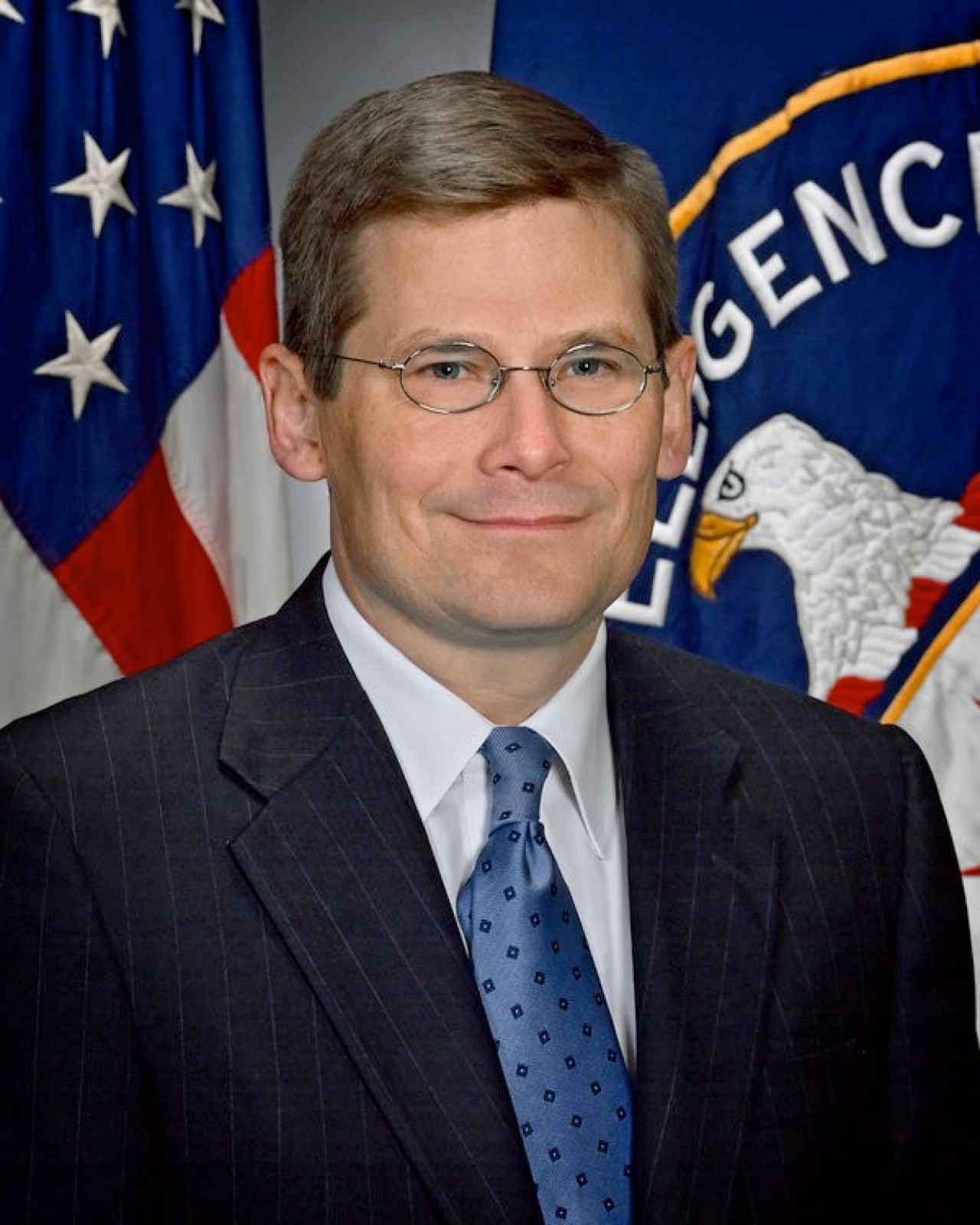
Michael Morell
Michael Morell is a former Acting Director of the CIA warning that international terrorism is coming back.
Episode Summary
International terrorism is coming back—that’s the stark warning from former Acting Director of the CIA Michael Morell. Following the January 6th insurrection in Washington, the United States government agencies said that far-right groups posed the greatest threat to national security—an assessment Morell says ought to be revisited in the light of the radicalizing nature of the war in Gaza. Morell sits down with One Decision’s resident spymaster, the former head of MI6, Sir Richard Dearlove and discusses the famed Abbottabad raid where Osama Bin Laden had been hiding, and the rapidly evolving espionage threat from China.
Listen & Subscribe
- Watch on YouTube
- Listen on Apple Podcasts
- Listen on Spotify
Transcript
COLD OPEN
Morell: At the end of our meeting with President Obama, he gave us two very direct orders, and that was unusual for him, that wasn't his style. He said, Leon, Michael, find out what the hell is going on inside that compound, number one. And number two, don't tell anybody else.
INTRODUCTION
Mcfarlane: You're listening to One Decision. I'm your host, Julia McFarlane.
Dearlove: And I'm Richard Dearlove, former chief of British intelligence,
Mcfarlane: otherwise known as MI6. And the voice you heard at the top of this episode is Michael Morell, the former acting director of the CIA, telling us about his extraordinary journey to tracking down Osama bin Laden and the role that intelligence played in pinpointing his location. We obviously have a keen interest in this podcast in how intelligence and data is used by governments for national security. We're particularly interested in how the rapidly advancing tech of our age is revolutionizing intelligence gathering and what it means for us all. Michael Morell was deputy director of the CIA from 2010 to 2013, rising to acting director during that time, and he was central to the Abbottabad raid that killed Bin Laden. Since leaving government service, Mike now shares a lot of his perspective on his Intelligence Matters podcast, but we wanted to have him join us and compare notes with our own resident spymaster, Richard Dearlove. Mike, thank you so much for coming on the show.
Morell: It's my honor to be here. Thank you for asking.
Dearlove: Mike, great to see you.
Morell: Great to see you, Richard.
INTERVIEW
Mcfarlane: Mike, I just wanted to start off by asking you about your time at the CIA. I wanted to just ask you because you were one of the leaders behind the search for Osama bin Laden and you were very involved in the deliberations that led to the raid that killed him back in 2011. Can you tell us a bit about what that was like? How the CIA managed to track down his location and how they did it without tipping either him off or the Pakistanis off?
Morell: You know, the first thing I'd say is that CIA never stopped looking when we lost him at Tora Bora in December 2001. There's some politics around the idea that we had stopped looking, and it took Barack Obama in his first month in office to pull Leon Panetta aside and tell him to find Bin Laden. That's politics. The truth is we never stopped looking. We followed hundreds of leads, and we followed those leads until, you know, there wasn't anything left to look at with that particular lead. The lead that ultimately led to him was a lead that started in 2002. It was a detainee in the detention of a North African country who mentioned this guy named Abu Ahmed and talked about him as being close to Bin Laden and KSM and Khalid Sheikh Mohammed, the mastermind of 9/11, just being close to both of them and as a possible courier for them. And it literally took eight and a half years or so to figure out who Abu Ahmed was, to find out his nationality, to find out how he communicated, and then to find him on a particular place in the planet at a particular point in time. So, you know, a long effort that was done alongside, you know, many, many other leads. I have three distinct memories of all of that, and one of them is not the day itself, it's not May 1. But the three distinct memories are, first of all, in August 2010, Director Panetta and I would have a three times a week meeting with our counterterrorism center late in the afternoon that would probably go for, you know, two hours. And occasionally, occasionally, the head of that counterterrorism center at the end of that meeting would say, you know, can we go small? Meaning, you know, let's get rid of most of the people in the room because we have something sensitive to tell you. Well, on this particular day in August 2010, he said at the end of the meeting, he said, I need to see both of you alone. And so we went back into Director Panetta's office and he said, We found a guy named Abu Ahmed al-Kuwaiti. And we had no idea. Director Panetta and I had no idea who that was. And so he told us the whole backstory, started with, you know, in 2002, the same way that I started with you all, and brought us up to date and said, We found him, and showed us satellite imagery of this facility in Abbottabad, Pakistan. And you know, the satellite imagery showed a compound that was highly suspicious, you know, a compound with 12 to 18 foot walls topped with barbed wire, a compound that was three times, four times larger than any other compound in the neighborhood, a compound that was sectioned off so it was difficult to move from one part to another, a house with very few windows, a house with a 3rd floor balcony that had a privacy wall. And I remember Director Panetta asking, you know, who would have a privacy wall and a balcony? Isn't the whole point to see out, right? And nobody said it at that meeting, but given who Abu Ahmed was and given his role in being a facilitator and communicator for Bin Laden prior to 9/11 and then the same for Khalid Sheikh Mohammed after 9/11, right? Everybody was thinking, you know, could Bin Laden be there? And I remember the hair on the back of my neck standing up. So I remember that meeting, you know, with crystal clarity. And then the second thing I remember with crystal clarity is the first time we briefed President Obama, which is in September 2010, and was in the Situation Room in the White House. We walked him through all of the physical aspects of the compound, and we walked him through some things that we had learned since that day in August when Director Panetta and I were first briefed. And, you know, what we learned in those thirty days or so was no phone, no internet, burn their trash. They don't put out their trash for pickup like everybody else in the neighborhood. The kids in the compound don't go to school like all the other kids in the neighborhood. Abu Ahmed and his brother bought the place in 2005 for several million dollars with no means of support, they didn't have jobs. So we had learned all of this stuff, right, which added to the suspicion. And at the end of our meeting with President Obama, he gave us two very direct orders and that was unusual for him, that wasn't his style. But he gave us two very direct orders. He said, Leon, Michael, find out what the hell is going on inside that compound, number one. And number two, don't tell anybody else. Don't tell the Secretary of State, don't tell the Secretary of Defense, don't tell the Chairman of the Joint Chiefs, don't tell the Director of the FBI, do not tell anybody else, this is in this small group only. This was the best kept secret of my entire career. And then the third meeting that I remember with crystal clarity was two weeks after the raid, President Obama, knowing that I was with President Bush on 9/11, sent me to Dallas to brief President Bush on the whole operation. On the intelligence story and on the military story, I took with me the lead analyst, and I took with me the chief of operations for JSOC, the Joint Special Operations Command. And we spent two and a half hours with the president, he wanted to know every detail. You know, at the end he said, he and his wife were gonna go to the movies that night. He said, this is better than any movie I could ever possibly see, so we're staying home. So those are my three points of memory from that experience.
Dearlove: Mike, I bowed out of this in 2004, as you probably recall, but I do remember the frustration when we lost him in Tora Bora, because I think we got, you know, literally within yards of capturing Bin Laden in Tora Bora. Well, that's my belief. And I had to go and see Robin Cook, who was foreign secretary, because we were very close at one point and say to Robin, look, you know, if we catch him, what are we gonna do? And Robin Cook was a man of significant strong moral code. I must say I admired him enormously, although our politics were not the same, but I liked him. He was a great guy. And he was courageous as well. And I think his only words to me were, Well, if you capture him, I think it's better he comes out of Afghanistan lashed dead over the back of a donkey.
Morell: Yeah, I mean, that was our view too, right? And luckily, because there was concern that he might have a suicide vest on, right, unless he had his arms, you know, high in the air with great clarity, they were going to shoot him, you know, rather than take him prisoner because of the danger involved. So those two things kind of lined up, but much better that he was dead than captured alive. But it took a long time after 2004,
Dearlove: but congratulations for your persistence.
Morell: Yeah, you know, one of the things that would often happen, Richard, is that people would say to us, you know, mostly in Congress, people would say to us, Well, why haven't you caught Bin Laden yet? And it was a frustrating question. You know, you'll remember Richard, one of our counterterrorism officers I can't use his name here because he was undercover, still is in retirement, but he ran our counterterrorism center for a very long time. And one time on the hill, he was in a meeting and somebody said, Why haven't you gotten Bin Laden? And he said, Because he is hiding.
Dearlove: I think I know who that is.
Morell: I guess you do. You know, and the way I would answer that question is that, guys, it took the FBI seventeen years to catch the Unabomber. It took the FBI six years to catch the Atlanta Olympic bomber. And those people were hiding on the FBI's turf. They were hiding in the United States. So give me a break here. This is not easy.
Mcfarlane: Nothing like a bit of intra competition there, Mike.
Dearlove: The question I've always, you know, is which Pakistani generals knew he was in Abbottabad? Because there must have been several of them who knew.
Morell: Yeah, so it's an interesting question. You know, we had when the president first asked us for what we call finish options, right? When the president made a decision that, you know, I'm going to go do this, how do I want to do it? Originally there were five options. The first two involved the Pakistanis. The first one was simply tell the Pakistanis we think he's there, and let them go do it. The second one was what we called compel Pakistan, which is we go to them and we say, we know where he is, he's in Pakistan, we're going to go get him tonight, why don't you come with us? You know, and you can have as much of the glory as we have. And those came off the table so fast as options, right? Literally no longer than a five minute discussion in the sit room, those were gone. Just because of the concern about either the Pakistanis knowing or the concern of it leaking, right, out of Pakistan. There was pretty persuasive intelligence in the aftermath, Richard, that suggested that the Pakistanis didn't know as a country or ISI didn't know as an institution.
Dearlove: But I always thought, how could it have been possible for the ISI contingent in Abbottabad, right, not to wonder what was going on inside that compound?
Morell: Yeah, yeah.
Dearlove: Well, Abbottabad is the equivalent of Aldershot in the UK. I mean, it's where half the military leadership lives. I just can't believe that he didn't have one or two Pakistani military protectors, not necessarily in the ISI.
Morell: Yeah, I always thought that there was somebody in the Abbottabad ISI detachment or the Abbottabad police who were extremists themselves and were being paid off or what have you.
Mcfarlane: That's really, really interesting. Thank you so much for sharing that with us, Mike. I ask because obviously back then, I mean, 2011 wasn't really that long ago, but it was almost an entire age of intelligence and tech capabilities away from today and carrying out that raid today will have been so different from your time, even if it wasn't that long ago. You did a podcast recently with a former CIA colleague on open source information and collecting intelligence in a digital age. It was a fascinating conversation. You mentioned the importance of having physical informants in the Bin Laden case. You talk about satellites, satellite imagery to narrow down Bin Laden's location. Obviously having physical agents collect information in the old fashioned way is obviously nice to have, but is it as important as it once was in a time when so much is available online?
Morell: Yes, the answer is a very strong yes. And I'm sure Richard would agree with me.
Dearlove: Absolutely agree with you, Mike.
Morell: You know, I do talk a lot about open source, but I tried during the conversation to say, you know, while there's huge opportunity with open source, there is still a significant requirement for exquisite human, I'd say. Not just intelligence, but exquisite human. You know, there's a big difference between understanding the capabilities of your adversary, which technical intelligence does extraordinarily well, and the intentions of your adversary, which technical intelligence has a really hard time getting at, right? To be inside the inner circle, which is where we were with Al Qaeda post 9/11, not pre-9/11, but post-9/11 requires human, I don't know any other way to get it.
Dearlove: I just want to endorse what Mike's saying because I guess I'm of a generation when we believe pretty fundamentally in human. I mean, human obviously now is massively supplemented by data analysis and all the other techniques that one can bring to bear. But at the core of this, it's still a human issue, I think. And the intentions explanation that Mike gives, I emphasize and underline with him 100%.
Morell: You know, I've talked to a number of former Israeli colleagues who are no longer in the intelligence business about the intelligence story with regard to October 7, and I hear pretty much the same thing, which is that they did have reporting that made its way to the highest levels of the Israeli government, by the way, about Hamas' growing capabilities. They had zero intelligence about Hamas' intentions. And when you don't and that's what you get from human, right? And when you don't have that analyst, of which I was one, right, analysts are left to then speculate about intentions. And in Israel's case, they speculated that Hamas wanted not to rock the boat, right? Hamas cared about the governance of Gaza and they wanted to keep the economy of Gaza going and they didn't want to put that at risk, right? So the analysts, right, didn't have hard concrete information about intentions. And I think it's a great example of what Richard and I are talking about.
Mcfarlane: And why do you think that was? And this is something I've always wondered, particularly with the Israeli Palestinian conflict. Do the Israelis struggle to recruit inside Hamas? Or is it that they just overly rely on signals intelligence and intercepts and any kind of bugs and any way they can listen in on conversations? Or do they actually, do they have difficulty penetrating Hamas cells in order to detect things like a plan coming into place?
Morell: Yeah, I'd say two things and then let Richard comment because he knows this as much, if not better than I do. You know, one is you do tend to over rely on technical intelligence. It's easier to get, I mean, it doesn't put human beings at risk in general. And so there is a tendency, in my experience, to over rely. Two is, any time you don't have a physical presence, you know, on the ground somewhere, so you know, no Israeli embassy, right, in Gaza City, no place for Mossad to operate out of, right? So it's much more difficult. You know, Al Qaeda moved to the tribal areas of Pakistan in the summer of 2003. When they first left Afghanistan, they went to the settled areas of Pakistan. And working with the Pakistanis, you know, we started rounding them up. And they were put at risk, and so they left those settled areas and they went to the tribal areas. And it took us quite a long time to figure out how to collect intelligence there. It took us a couple years, two, three years to figure that out, right? And during that time when they were there and we weren't collecting intelligence the way we needed to, they were rebuilding their capabilities to the point where they conducted the attacks in London in 2005, right? So, that absence of intelligence for a two year period there allowed them to conduct a major attack overseas. So I think part of it is overreliance and part of it is when you're not actually on the ground physically as an intelligence service, it gets much tougher to collect. Not impossible, but much tougher.
Dearlove: I mean, once again, I think Mike and I are gonna be in agreement. I've mentioned this before in a previous podcast, but in this context, it's really important to mention it again. After I'd retired, and after that very unsuccessful initial conflict between Hezbollah and the Israelis, I think in 2006 when the Israeli IDF came off very very badly, I was invited to a symposium by the Israeli Security Institute. I mean it was quite intimidating because it was a very powerful Israeli audience. They actually asked me to lecture them on HUMINT because there had been a massive failure in having a clear view of, of at that stage of, of Hezbollah and what Hezbollah were doing. So I'm a little unnerved by October 7 because it seems, you know, a similar thing has happened again. And I think what happened is that, you know, they built this very sophisticated electronic wall, data wall. They relied on technical intelligence, but, you know, they clearly didn't have that, that degree of human penetration. And, of course, it's very difficult to achieve that. As you say, if you haven't got people on the ground, if you're not actually close to the collection point and involved and, of course, there was almost a cordon sanitaire between Gaza and Israel, and, and nothing Israeli apart from technical surveillance on the Gaza side of the border.
CHINA AND EMERGING TECH THREATS
Mcfarlane: Mike, you spent a lot of time when you were at the CIA. You were focusing on East Asia, and we are very interested in the intelligence and security challenge posed by China on this podcast. We've had a lot of fierce debates in this country about the safety and security of Huawei, TikTok, 5G, semiconductors, ChatGPT, all these kinds of things. One of Richard's friends, Charlie Parton has been on recently flagging the looming vulnerability of these things called internet cellular modules, which are these highly sophisticated pieces of tech that can wirelessly relay information, pretty extraordinary things. One of these was recently found inside a British government car, which caused quite a lot of alarm here. We've spent an increasing number of years raising concerns about how tech is increasing our vulnerabilities. I'm curious as to your thoughts about how and when these vulnerabilities will come home to roost in terms of, or how will we ever know how we are being surveilled and exploited? How will these vulnerabilities pose a danger to us? And I'm asking this question primarily with China in my mind, but of course these are vulnerabilities that can be exploited by any hostile actors, not just China.
Morell: So I think that it's not a question of when, because I think it's already happening. I would put it into two buckets. One is I think the Chinese are very effective at using cutting edge technology to collect intelligence. Right? You described one way they're doing that already in this British government car. If they're doing it, you know, with the British government, they're doing it in a lot of other places too. The second thing I'd say is that they're also extraordinarily effective at using cutting edge technology to make it more difficult for us to collect intelligence. So they're very effective at using it for counterintelligence. And I think they've grown in their capability in this area significantly since I left government.
Mcfarlane: Can you give us some examples? Maybe ones that aren't
Morell: I don't know any that aren't classified in my mind. You know, and I don't want to give them any ideas. So I don't know if I can. I just think that as I look at the technologies, and as I know what the technologies are capable of doing, I find it impossible to believe that they're not using it for intelligence purposes or for counterintelligence purposes. And that view gets reinforced occasionally when I hear anecdotes. And the anecdote that you just shared, right, about the car is a perfect example of that. The other thing I'd say, which I think is super important, given the conversation we've already had, is as on the cutting edge, I think, of using cutting edge technologies for intelligence purposes, they're also being extraordinarily aggressive on the human front. And they have evolved significantly in how they conduct human operations, right? Twenty years ago, twenty five years ago, it was simply talking to a Chinese who happened to be studying at MIT or Stanford, right, talking to them about what they saw, what they learned, that was the intelligence business, that was the human business. Now it is the way that, you know, the US, the British, the Russians collect human, right? You actually spot a person who has the information you need, you assess them, you develop them for recruitment, you recruit them and then you run them. One of the things I think is really, that's really interesting is to look at a list of the Americans who have been convicted, indicted and convicted of espionage over the last fifty years. And if you look at the beginning of those fifty years, you'll see Soviet Union, Soviet Union, Soviet Union on the list, Russia, Russia, Russia, a little bit of China starts mixing in. The last five years, six years, seven years, it's all China. It's all China. And so while they're using the tech, they're also learning how to do human in a much more sophisticated way than they ever did before.
Dearlove: One of my sort of theories about Soviet intelligence collection, which I think is sort of proven historically, is that whereas the Russians were extremely good and sophisticated at collection, their ability within the machinery of government to analyze, use and make policy from the collection was sometimes highly faulty. I mean, so that this linkage between intelligence collection and then the way that intelligence was used, and I think you can document no one's written a book about this, but someone should write a book about the Soviet Union or Russia and the poorness of their use of the brilliant intelligence that they collected. And not, not in all instances, but in many, many instances. My impression is that the Chinese machine is better organized and better geared. So as you mentioned, its collection has become more sophisticated. And, you know, they've adopted the sort of classic methods of the established intelligence organizations globally. And they're doing that pretty well. But I have the impression that they're better geared to feeding this material into their machine and then actually using it for good decision making. But I don't know whether you agree with that analysis. Maybe I'm making too much of a leap of intuition, as it were.
Morell: Yeah, so it's a great question. First of all, I agree with you 100% on the Soviet Union. I think the information that reached senior levels there was, I think it was highly politicized, Richard. I don't think they took advantage of the information they actually had. I think KGB seniors and then FSB and SVR seniors, post Soviet Union, I think they were telling the leadership what they thought the leadership wanted to hear. My intuition on China is the same as yours, but I don't know. And I wonder how confident Xi is in the information that he gets from his intelligence services, you know, from MSS and 2PLA, 3PLA, particularly in the aftermath of Ukraine, and what was clearly, you know, not great FSB intelligence provided to Putin, you know, prior to the war. I wonder how Xi thinks about the very question you're asking. But my intuition is the same as yours, but I'm not as confident as I am about the Soviet Union.
TAIWAN AND INFLUENCE OPERATIONS
Mcfarlane: I think the way Xi is parsing how the Russian invasion has gone down and how that relates to Taiwan is something that is on a lot of people's minds. And we saw, of course, very recently the Taiwanese chose their next leader and they went for the pro independence candidate that Beijing warned was essentially a vote for war. Of course they see Lai Ching-te as a very dangerous separatist. You had a really interesting conversation on your podcast. I think your guest for this was Frederick Kagan, he was talking about the ways in which Xi might move in on Taiwan. And he said there were basically three ways in which the Chinese have sort of operations with regards to Taiwan. The first is via influence. So they're trying to win hearts and minds in Taiwan. The second I think was coercion and that was the sort of the intimidatory, the drills, the patrols, the satellite launches. And then the third one, I think was compulsion or essentially if it were to take Taiwan by force, by an all out military invasion. And your guest said that we sometimes pay too much attention to the second option, the drills, the escalatory tactics, the intimidation, and we don't pay enough attention to the first, the information ops, the attempts to influence through hearts and minds and propaganda. What are your thoughts on how the Chinese, they place huge importance on soft power, on information warfare, on propaganda. They've built a billion dollar Chinese Hollywood film industry, which attempts to replicate some of Hollywood's soft power around the world. Is this an area in which do you think the West is lacking and is on the back foot?
Morell: So it's a really interesting question, particularly with regards to Taiwan. If the Chinese and I think they are if the Chinese are putting a lot of emphasis on influence operations to try to change minds in Taiwan, they're not doing a very good job of it. Right? The outcome of this election tells you that. And I think that the coercion option and the influence option cut against each other, right? Because the military exercises have directly the opposite impact in Taiwan of what you would want the influence operations to be, right? So, and I think in this election, I think the Chinese military exercises for the last year, ever since Speaker Pelosi went to Taiwan, you know, and there's been a much higher norm with regard to military exercises, you know, kind of frighteningly so. I think that hurt the Chinese message in Taiwan. So these two things cut against each other. My strong view is that, you know, unless he has to, based on Taiwan declaring independence, or the US changing its one China policy, unless he has to take military action, he doesn't want to. It's a last resort for him, because he knows the costs associated with doing it even successfully. And then the risks associated with it doing unsuccessfully to him and the Communist Party are huge. So I think it's a last resort. And I think his strategy is really the coercion strategy. I think his strategy is to build such a massive military capability across the Straits from Taiwan that it leaves the Taiwanese and the Americans, right, no place to go except to somehow accommodate China's desire to bring Taiwan back into the fold. I think that's what the strategy is. And, you know, it may be a winning strategy at the end of the day. I'm not sure that Taiwan would fight. I'm not sure the US would fight. I think that's Xi's strategy, and I think the influence, you know, is part of that. But I think the military exercises, the building the military capability is a much more important part of the strategy.
Mcfarlane: I think that's interesting. And the other side of that, I think, you particularly when you say that you're not convinced perhaps that the US would fight, obviously the other side of the coin with influence ops is also the way the Chinese and of course the Russians do this an awful lot. The way they promote division within the United States itself, a lot of misinformation, a lot of disinformation, and a lot of poisoning of the national debate. I guess the way in which information is weaponized increasingly these days, is that something that the West, and when I say the West, I mean largely America, but obviously we're pretty susceptible to it too here in this country. Have we wizened up to that threat to the homegrown division that can be sown by hostile states?
Morell: No, I think we have not. And it's a really good question. You know, we woke up to this right in 2016 when the Russians were doing exactly what you just described. But we really didn't understand the breadth and depth of it until 2017, 2018. We didn't really understand the significance of it at the time. And, you know, in 2016, the Chinese weren't doing anything like that. And now they are. The Chinese are becoming, you know, day by day, you know, much more aggressive on the influence front. And I don't think it's fully appreciated publicly in the United States, and in, you know, the open policy discussions. It's not appreciated, it's not appreciated by the public. So I think that has to happen and needs to happen, but has not happened yet.
Dearlove: Mike, can I just follow up with a question which, in a way, is linked, but it may be a little bit indiscreet? On Sunday, I gave an interview to Sky News, which got quite widely syndicated and broadcast. And the last question was about, you know, security threats to the national security of the United Kingdom. And, obviously, I focus primarily on the war in Ukraine, and on China. And, you know, one being more immediate and the other being longer term and probably the more serious, i.e. the one from China. But then I said, look, there is also a political threat, which is particularly tricky for the United Kingdom, and the political threat is the reelection of Trump. Because if Trump were to take an inconsiderate decision on the future of the Atlantic alliance, you know, that drives a horse and cart through our national security policy, which is based really on our alliance with the United States and the US nuclear umbrella. I mean, I'm, I'm not gonna ask you specifically, you know, about Trump, but, I mean, is there an awareness in the States around this issue and, as it were, the seriousness with which it might be viewed on the side of the Atlantic?
Morell: When I talk to groups, the question inevitably comes, you know, what keeps you up at night? What are you most worried about? And, you know, I got that same question when I was at CIA, and I would go out and do events at colleges and universities, and, you know, sometimes public events, and I thought that question would always come. And when I was a serving officer, I felt I had to answer it with a national security answer. So I would say terrorists with nuclear weapons, right? But when I get asked it today, I give a similar answer, Richard, to what you gave to Sky News. You know, what I say is, the thing that really keeps me up at night is American politics. And it's less the individual in terms of President Trump, and it's more the populism in the United States that has created him. And that populism is dangerous for a lot of reasons. You know, one of the most important from our perspective is it undermines the willingness of the United States to do what it needs to do internationally. You know, you see the debates here about aid to Ukraine, for example. You know, there shouldn't be, there should not be a debate here about that. You know, it should be a no brainer in terms of giving the Ukrainians whatever they need to defend themselves and then to take back the territory the Russians have taken. And yet there's a debate that is gonna be a dominant debate probably in the presidential election campaign here. So, until the United States can fix its politics, until politicians can come together and start compromising again and make decisions that move the American economy forward and American society forward, we're not going to be able to play the role in the world that we need to play. And the world is going to be a more dangerous place as a result of that. So I couldn't agree with you more.
GAZA, TERRORISM AND THE MIDDLE EAST
Mcfarlane: Mike, I'd like to ask you a question off the back of that. I mean, we started this conversation talking about Osama bin Laden and obviously the threat that he posed to the West and the US, not just in a very physical sense in the way he was instrumental in attacks against America, but also his very survival was kind of iconic for terror groups worldwide. And every day that he survived was another day that he was winning and the US security apparatus was losing. Given that Afghanistan fell to the Taliban back in 2021, we now have an absolute power vacuum in this country that has previously provided a safe haven to terror groups and global organizations that posed a threat to the West. And now what we're seeing with regards to the war between Israel and the Palestinians, we've seen, I think it's fair to say, a real undermining in the Western moral imperative here. We've got Biden continuing to arm Israel despite accusing them of indiscriminate bombing, using dumb bombs and imprecise munitions, and yet insisting that Israel is behaving in a measured manner. It's something that is alienating a lot of American allies overseas. We've had Richard's contemporaries here in the UK warning that every day this war continues, more terrorists are being created because of the scale of the bombardment. It's radicalizing to such a degree. I mean, it wasn't that long ago that Bin Laden's letter to America was being read by Gen Z on TikTok. People in America were saying, Hey, Bin Laden had a point. I mean, obviously I don't agree with that, but this war is very damaging. Are you worried that we may once again see the kind of events that were recruitment fodder to these terror groups who claim to use America's own actions to radicalize more jihadists to once again attack the West?
Morell: Absolutely, 100%. You know, I have two deep concerns about Gaza and terrorism. The first is, you know, I wouldn't be surprised if we woke up tomorrow and there was a large terrorist attack against a US facility somewhere in the world, or an Israeli facility somewhere in the world, or a Jewish facility somewhere in the world. You know, think a large truck bomb against a US Embassy or an Israeli embassy. And that undoubtedly would have the hand of Hezbollah or Iran behind it, but in a way that's difficult to, you know, conclude directly that it was them. Wouldn't be surprised by that at all in response to what's going on in Gaza. And then to your second point, there is no doubt that there's going to be a whole new generation of jihadists created by what's going on in Gaza. Dave Petraeus, you know, who was director of CIA for a year, and who was the commander of all international forces in Iraq during the surge in Iraq, told me once that they had a sign that said, Is the operation that you are about ready to conduct going to take more extremists off the battlefield than it will put on the battlefield through additional radicalization? I was talking to David recently, I interviewed him recently for a public event, and he gave the example of, you know, what the Israelis should have done with Al Shifa Hospital was move everybody out in a very safe way, deal with the terrorists who were there and underneath in the tunnels, and then bring the doctors and nurses back and actually bring in the best international healthcare you could possibly bring in. That's the way he was thinking about it from his Iraq experience. And obviously the Israelis didn't do that. And yeah, so it leads me, you know, to that second concern about creating exactly what we don't want to create.
Mcfarlane: I mean, I think it was interesting that shortly after January 6, the insurrection at the Capitol, security chiefs saying, actually on both sides of the pond, both British intelligence and American intelligence chiefs, said that post 9/11, the threat from far right radical groups posed a greater threat to national security than the threat from Islamist terror groups. I mean, do you think that assessment is still valid?
Morell: No, I think you have to update that assessment now. I think when the Director of the FBI, you know, went to Congress and said that, he was absolutely right. But now I think you need to update that. I think the next year, two years, five years is gonna be, you know, a world in which international terrorism is back to a high priority. I'm, you know, afraid of saying that, but I, I think it's right.
Dearlove: I mean, one of the aspects of Gaza that I find, well, not surprising, but it is shocking, is the extent to which, you know, the crisis is being avoided by other Arab neighbors and powers. So the Egyptians keep their border closed. The Jordanians speak a lot but don't get involved. The Syrians are absolutely silent. I mean, the Palestinians, to an extent, have been abandoned beyond, let's say, expressions of sympathy. You could say crocodile tears. But it puts them in a very, very tough position. I mean, it's an extraordinary phenomenon of the Middle East. It really is.
Morell: I think, you know, a lot's happened in the Middle East in the last forty years of my career in government and now ten years outside of government. But this may well end up being, you know, one of the most important inflection points in the history of the Middle East.
Mcfarlane: It's a remarkable moment. That's it for this week's episode of One Decision. We drop new episodes every Thursday. Like and subscribe so you never miss an episode. Drop us a line. Tell us your thoughts. What decisions have impacted you and where you live? You can write to us. Our email is 1decision@1decisionpodcast.com. From me and the team, thank you for listening, and see you next time.