Episode Info
- Season13
- Episode4
Hosted by Christina Ruffini and Sir Richard Dearlove
Guest
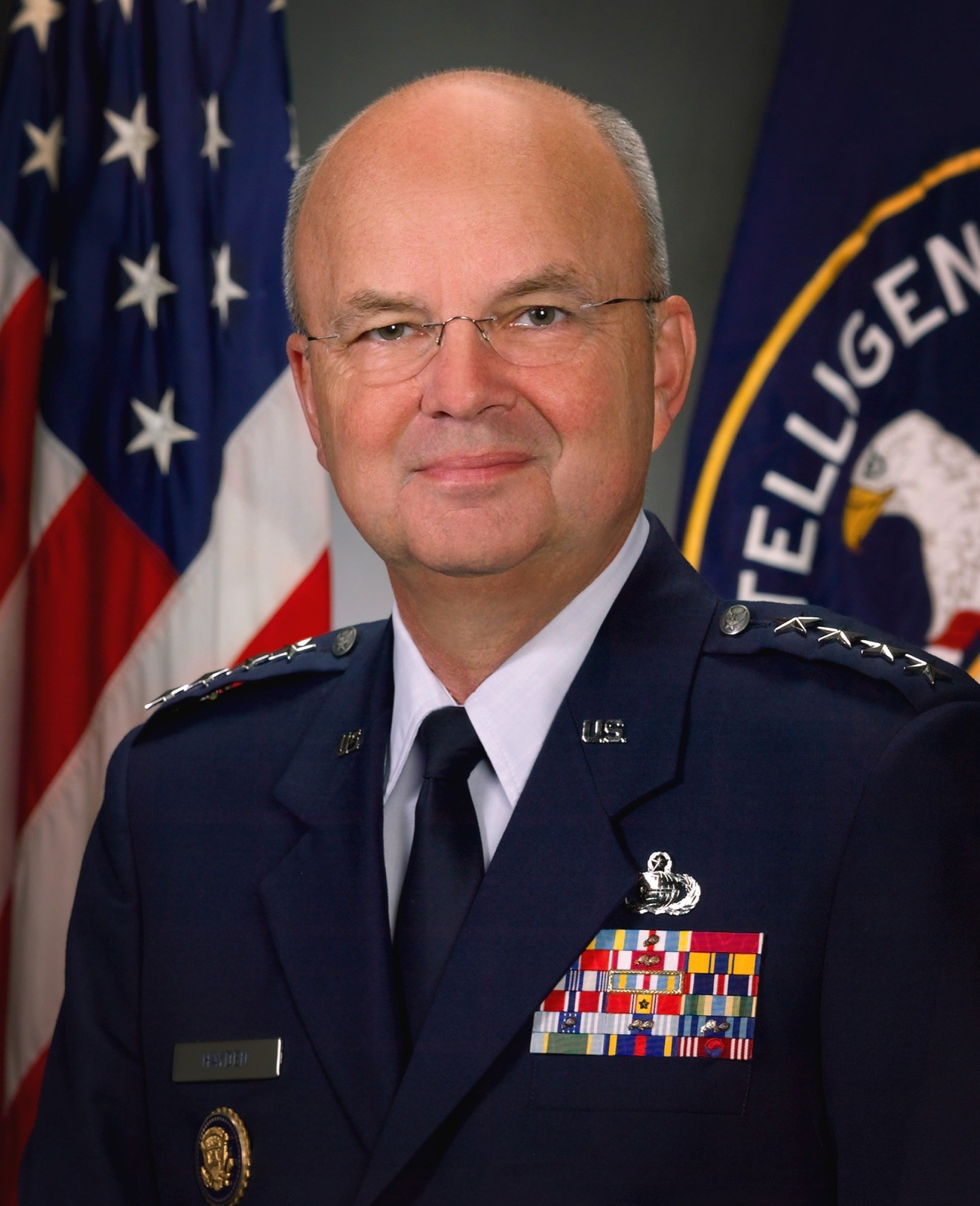
General Michael Hayden
General Michael Hayden is a former Director of the Central Intelligence Agency and National Security Agency sharing an unvarnished view of risks posed by Xi Jinping's ambitions and lessons from the War on Terror.
Episode Summary
Seldom do you get this level of access. The former Director of the Central Intelligence Agency General Michael Hayden sits down with One Decision. In one of his rare recent interviews, he shares an unvarnished view of the risks posed by Xi Jinping's ambitions and the lessons we should have learned from the War on Terror. In a remarkable exchange, he speaks with co-host and former MI6 Chief Sir Richard Dearlove about how intelligence gathering has changed and how it should work to better address emerging threats. They cover decisions made and ongoing in Europe, the Middle East, India, and Russia. Hayden, who also led the National Security Agency, lets us in on his conversations with the current Director of the CIA William J. Burns, and where he thinks the world is headed.
Listen & Subscribe
- Watch on YouTube
- Listen on Apple Podcasts
- Listen on Spotify
Transcript
INTRODUCTION
Mcfarlane: You are listening to One Decision, the show that looks at the biggest choices affecting our lives, making impact beyond borders. I'm your host, Julia McFarlane. And along with my co-host, Sir Richard Dearlove, the former chief of MI6, we've been reflecting on the big choices facing Western foreign policy at a time of heightened anxiety over the rising threat posed by two old foes, Russia and China. General Michael Hayden is a retired four-star general. He's a former director of the National Security Agency, the NSA, and he's former director of the CIA. He left frontline intelligence in 2009, and while the security map has changed somewhat since his time in public office, so too has his opinion on what constitutes our greatest challenge today. In the interest of transparency, we feel it's important to mention that General Hayden suffered a stroke a few years ago. Thankfully, he's now well and is as on the ball as ever, which you'll definitely see if you look him up on Twitter. Take it from us, he's probably the sassiest ex-director of the CIA you'll find, and he's worth following for his clapbacks as well as his commentary on the day-to-day news. However, you may notice on our podcast today that his speech might be a bit delayed from time to time. The conversation was both informative and candid, and Hayden has an important perspective, one shared by many other leaders in national security, that despite today's headlines being dominated by Russia, it is China that will be our number one challenge for the next one hundred years. So why does China pose such a threat to America and its allies? Why do these spy chiefs fear the challenge from the East even at a time when Putin is threatening nuclear escalation right on Europe's doorstep? General Mike is also, it turns out, an old friend of my colleague, Richard Dearlove. It's been a while since these two spy chiefs last saw each other, but they do go way back.
Dearlove: Yes. We do indeed. We go back quite a way.
Mcfarlane: Right. So, General Hayden, you were director of the NSA. I think when you crossed paths with Richard at the time that Richard was head of MI6 here in the UK.
Hayden: That's exactly correct. And then I went back to CIA. And then we saw each other after you had retired, I think, Mike.
Dearlove: Yes, indeed. We were back in England for three or four days.
Hayden: Correct. Yeah. You came and lectured in Cambridge, I remember.
Dearlove: Yep. Excellent.
Mcfarlane: Well, it's interesting thinking back to that time in the late two thousands, the naughties as I think some people refer to it, because back then, we were in a totally different sort of era of national security. And I wanted to start off our conversation today by asking you about the broad national security map as it were, because it has changed quite a bit since you, General Hayden, you were in frontline defense. I mean, the Internet has been a massive part of that shift, and different hostile actors are using that in different ways against it. You were director of the National Security Agency, the NSA, from 1999 to 2005. And this was, of course, sort of spanning the national security era that was dominated by the September 11 bombings and how that incident fundamentally shifted US and Western priorities from dealing with coming out of the Cold War to evolving into fighting insurgencies abroad and tackling domestic threats and terror cells with links to Al Qaeda and the Taliban, but also a fair amount of threats from domestic extremists, including white supremacists. We're now finding ourselves perhaps entering in another epoch in the world of national and international security, that of information warfare and the threat from Russia and China. Since you were the director of the CIA from 2006 to 2009, you were only the second director, I believe, in that newly created agency as it was at the time. How much do you think it has had to change from when you were in charge to what the security picture looks like now? I mean, particularly since so much of the threat is now online and everywhere in a sense, and not so much out there in the field, far away in certain locations that could be targeted, domestic and foreign. I mean, in today's world, millions of people can be targeted and affected by cyber hacks and threats that emanate from the Internet all at once.
INTERVIEW
Hayden: I was CIA and NSA for about ten years. And what we had was Al Qaeda and then Al Qaeda and then Al Qaeda. And that's about it. It's very different now. Al Qaeda is a problem, but not the most basic problem at all. So I talked to the CIA director about two years ago. And I said, I, you know, you have to get something about China. Okay? It's China. So before he went to Congress, he called me and said, So what do you think? And I'm talking and again, China, China.
Dearlove: It's fascinating what Mike's saying and of course, it's a very accurate reflection of how people felt and how they considered the threat. But I think I remember after my retirement giving a lecture at one of the big think tanks in London and saying I was extremely worried about the loss of focus and loss of expertise on China and on Russia, because the Al Qaeda ISIS focus had been so strong for such a long period of time. And the one aspect of, let's say, counterterrorism is it takes an awful lot of people to achieve what you would want to do, and people get sucked off other tasks. But I'm sure Mike would agree with that.
Hayden: That's exactly correct. For CIA and NSA, we did most of the time Al Qaeda, Al Qaeda, Al Qaeda.
Mcfarlane: Right. I mean, what Mike is talking about, Richard, is something that a lot of people know. I mean, for the first ten years of the new millennium, it was all about Al Qaeda, and it was about the reaction against September 11. And, you know, the Russia desk at MI6 was a bit of a backwater really until the 2009 poisoning of Alexander Litvinenko.
Dearlove: Well, obviously, I can't comment in detail because I wasn't in the service then. But what I would say is that the decision to focus so heavily on terrorism really was inevitably driven by political considerations, because the terrorist attacks have such a catastrophic impact and such a high media profile. But, I mean, I argued after I retired that despite the seriousness of the Al Qaeda issue, it wasn't a systemic threat to our national security. What I mean by that, that Al Qaeda wasn't gonna, as it were, overthrow the government or engage us in a hot war. But at the same time, in the background, you had these much more profound, longer term organized threats, well, from China in particular, who were looking at the West, you know, as maybe their main competitor, but I would say moving from competitor to enemy, if you get my drift. And then of course, even above that, we had a Russian regime, which was becoming more and more hostile, as illustrated by the, you know, assassination of Litvinenko, the poisoning of Skripal, the invasion of Crimea back in 2014. So I mean, it was clear that we were going to have to switch significant resources back. I mean, if one's not in office, one could see obviously that this was going to put the terrorist issue back into, as it were, a proportionate situation. And I'm sure Mike would have felt the same way.
Hayden: One example, okay? In my last year at CIA, there was a problem in Georgia and Hadley called me and said, what's going on? I'll get back to you. And I walked in from my, in my office and said, get me the people in Georgia. And I'm thinking, we have people in Georgia, don't we?
Mcfarlane: Did anyone pick up the phone in Georgia?
Hayden: Actually, they did.
Mcfarlane: Okay. So you did have some people there. That's good to know. That's good to know. General Hayden, Richard says we have begun to sort of retune our priorities when it comes to the Russian threat. And it's interesting that you spoke to the current serving director of the CIA recently to talk to him about the threat of China. Now the question I have for you is last year, the NATO summit, their joint declaration at the end of the summit in the summer in Madrid last year, they identified the Russian Federation as, quote, the most significant and direct threat to allies' security and to peace and stability in the Euro-Atlantic area. Now the last time that there was a significant revamp of NATO's defense strategic priorities, China was the number one priority for the NATO allies. That was a few years before this summit declaration. So Putin's war last year, which he began last year, has definitely been a game changer. Why did it take Putin launching an invasion into Ukraine? Another one, as Richard rightly identifies, Putin actually invaded Ukraine back in 2014. Why did it take Putin launching another invasion into Ukraine for the West to wake up to the Russian threat? You know, why wasn't hacking and interfering in the 2020 election or annexing Crimea enough? And do you think it's right that Russia is the number one direct threat to security and peace?
Hayden: Yeah. It's very interesting. I would say no. I would still say China. But number two is what's going on in Moscow. But they're very different, you know? And frankly, the Chinese are more important for us and for them as well. What's happening now in Ukraine is it was awful. Why did they do that? Putin wanted to do it. I think he made a very bad mistake. But he did it, and now we have to deal with it.
Dearlove: I agree fundamentally. I mean, although one's perception from a European country might be rather different, and of course, Ukraine is a threat specifically in a way to European security, I agree that China is the larger problem. I would summarize it by saying that China is a rising power with great ambition and with great economic strength. The reason that Russia, I think, has invaded Ukraine is that it's a declining power. And it's lost, as it were, its empire. It's lost its confidence, and it's losing its identity. And, you know, one is on its way down, and the war is a result of a downward trend, and yet China is very much on an upward trend. So I think Mike's analysis is spot on.
Mcfarlane: Interesting. His last ditch attempt to stop Ukraine siding with the West, particularly with Zelensky. Richard, you've said on this podcast many, many times before that Russia is behaving in the way that it is because it is a failing imperial state in decline. What we are seeing now is likely its final flailing thrashes in the midst of this decline. And we had just a few months ago last year, the MI5 director, Ken McCallum, and the FBI director, Chris Wray, they had that extraordinary joint press conference where they warned of the growing threat posed by the Chinese Communist Party to both the UK and the US. I mean, do you agree with these assessments that while we are sort of distracted by all these headlines of this kinetic threat from Russia, it is China that poses a medium to long term security threat against us? But I want to just ask you, what does that exactly entail? What is the threat from China? What are we afraid that they will do to us exactly? Because a lot of the people here in this country seeing their energy bills quadruple, seeing the headlines of a war in Europe and missiles hitting buildings in Kyiv, a city on the European backyard. And I think many normal people outside of the world of intelligence and geopolitics will be confused at the intelligence world, at MI5 and the FBI being primarily focused on China.
Dearlove: Well, if you look carefully at the documents from the twentieth party congress, you will see that China advocates behind the sort of false pretense of peaceful coexistence world domination by 2049. And there is no question that the strategy of China is not just to dominate its region, but it is to be the global superpower with a set of values as expressed by Xi Jinping's government or, let's say, the leadership of the Chinese Communist Party, which is in total opposition to the values of Western democracy. So I don't think there's anything unusual or extraordinary about the warnings issued by the director of the FBI or the director general of the security service. In practice, they have a huge problem on their hands because the Chinese are becoming much bolder in, as it were, contesting the West in many, many strategic areas. And I think one of the areas which is most threatening, and this is why you hear it from the FBI and the security service, MI5, is that, you know, they are trying to benefit massively by stealing Western intellectual property, by, as it were, trying to shortcut their own economic development, by ripping off Western technology, Western companies, and using that, you know, to leap forward economically. And the threat, I think, at the moment is what I would describe as subtle. It is something that the professional national security officials have to interpret for the general public. We're not yet fighting a war with China, but China is adopting a very, very aggressive stance internationally. And it's as best illustrated perhaps, but we needn't go into detail, by what's happened in Australia and the way, bearing in mind that Australia is one of China's leading economic partners, but at the same time, China's behavior towards Australia has been extremely aggressive politically, and to an extent now economically. I mean, China wants the world to be the way it wants it to be. The idea that it believes in peaceful coexistence, which maybe has characterized some of their activity in the past, is for the birds. I mean, they've abandoned that. They've taken the gloves off. And, you know, we have a very competitive and direct relationship. However, what we also have to consider is that the West's economies generally are intertwined with China economically. The problem is to find a modus vivendi with the Chinese which works for both sides, isn't based on Chinese hostility. I don't know. I mean, I'm sure Mike's got plenty to add to that.
Hayden: No, that's exactly correct. And so this problem here will be for the next one hundred years. And maybe it'll be okay. But I'm afraid maybe not. And that would be a real problem for China, the United States, and England as well.
Mcfarlane: In today's environment, you have, very importantly, corporate espionage, business espionage, IP theft, and sort of economic warfare with China. That is hugely problematic. But what is also happening is this larger looming conflict in the horizon, which is essentially China rising and challenging Western hegemony. And what that essentially means is a competing vision of democracy, the rule of law, how we live. And I think what a lot of national security chiefs and former national security chiefs like the both of you, what you are all warning about is that the real threat from China is that it will export the way it rules to other countries through that influence if it were to overtake the US as a superpower. And we see what the Chinese are doing with their incredibly expansive surveillance system that it's currently inflicting on its own citizens. I saw a video recently on Chinese social media today of people having to take face scans in order to check into their work and do their jobs and get paid. And so I guess this is why it is an on the horizon sort of difficult to grasp threat for a lot of people who are living by the day to day. I mean, do you think the idea that China, if it does one day in the future replace the US as the number one superpower, do you think there really is a threat that it will mold the world in its own image, or will a lot of countries who are democratic, who enjoy civil freedoms, do you think that will prevail?
Hayden: That's a problem for me and for you as well because I think that will be the answer to that. How about India? India should be for the West. But no, for example, talking about Ukraine, India, no, I want oil. I just want oil. And so in ten, twenty, thirty years, I think it'll be a real problem for the West.
Mcfarlane: I do wanna look at India because I think the Indian position is very interesting. But Richard, just on that question about do you think China will be able to export its vision of how it rules over its citizens to other countries, even if it were to sort of overtake the US as a superpower? Do you really think we will all end up living under the same sort of governmental regimes as Chinese citizens are now? Or do you think that populations enjoying freedoms and civil liberties, do you think that will be a bulwark against the exportation of the Chinese Communist Party model of governance?
Dearlove: Well, I think that if China achieves a superpower status and then exercises its influence more broadly, obviously it would represent a threat, to an extent, to the way we live. And their ability through their economic power, if achieved, to interfere in the affairs of other nations, I think, would be very significant. And, you know, you see an example internally in China where many of the new Chinese entrepreneurs, I'm thinking of somebody like Jack Ma, has been crushed by the power of the state. And, okay, Jack Ma is now allegedly living in Tokyo, but he's lost control in terms of his shareholdings and ownership of the ant part of his business. I don't think it's yet happened to Alibaba. But I mean, I think that's indicative of, you know, the Chinese leadership are not prepared to tolerate any challenge to their power. And I think that will go beyond their borders if we do not make it clear that Chinese power can be curtailed and restrained internationally. I think we're in a difficult situation. But someone I know who knows China very, very well said, when we first started building an economic relationship with China, we all thought this was win-win. I mean, to advantage to both sides. This particular person said to me, the Chinese only understand one thing. We win, you lose. And I think we see that now in China's behavior internationally, particularly with Xi Jinping who is bidding to be the Chinese emperor in Communist Party disguise for life. So it's worrying, very worrying. But Mike said something important that, you know, this is a hundred year contest, and it may turn out all right. And of course, the ideal would be if we can find a way to live and work with China, but that requires, I think at the moment, a significant shift in attitude on the Chinese side of the equation.
Hayden: Exactly correct. When I was done for CIA and NSA, I worked for the Chamber of Commerce, and I talked a lot about what's going on. And you can see that it was changing before ten, twenty years ago. Oh, China. Yeah, we can go to China. But now in American business, they're saying, not at all. Not at all. You know, it's a problem now. But we're worried about China.
Mcfarlane: Well, there's certainly an increase in anxieties felt by American businesses when it comes to doing business with China. But there is huge mutual trade between the US and China. And many experts have said that that may be a reason why the Chinese have not wholeheartedly supported Putin in his war against Ukraine because of all of that mutual trade that it has with Europe, with the US. Do you think that building on that is perhaps a better way to work towards that sort of win-win model and try and ease China out of its zero sum game mentality?
Hayden: We have to do something for intelligence, and so we'll do that. But also, let's talk about the economy as well. We could do both. You know what I mean?
Mcfarlane: Yeah. What you mean, like, spying on the Chinese but also doing business with them at the same time? They do the same to us, I'm sure.
Hayden: Absolutely.
Mcfarlane: Well, that's a very difficult dance to dance, isn't it?
Dearlove: Well, not for you, Richard and me. Julia, that's the way the world has gone round. But I think in the case of China, it's particularly important and particularly challenging. We need a relationship with China, but at the same time we need to understand what the Chinese leadership are thinking, and how they view their relationship with the West, and whether they're prepared, as it were, to have a positive attitude. But I think there is some evidence, if you look at the relationship between Russia and China now, that the Chinese do not want to, as it were, have too warm a handshake with Putin. There is a definite reluctance on the part of the Chinese about getting sucked into supporting him on Ukraine. I mean, they occasionally make semi-supportive comments, but it's certainly not in any sense wholehearted.
Mcfarlane: Right. And there were certainly plenty of smiles and handshakes between Biden and Xi in Indonesia last year. And you say this is the way the world works. You shake someone's hands, but you're spying on them at the same time. But it is a difficult dance to do, is it not? I mean, we saw recently the Canadians getting on the wrong side of the Chinese, you know, and there was that sort of detaining of citizens from both sides and ending up into a bit of hostage diplomacy. You know, they miscalculate on both sides. That was a sort of miscalculation of how to toe the line in that sense. So if you do get into bed with a country who you essentially still see as hostile, you are playing with fire, are you not?
Hayden: But that's our business. You know?
Mcfarlane: I guess so. I guess it is two retired spymasters will be saying.
Hayden: To control the fire.
Mcfarlane: That's right. Rather the two of you than me. I'll certainly say that. I want to ask about India because India is an interesting country that is, in many ways, a friend of the West, but has a foot inside the door with both the Russians and the Chinese. And India has faced a lot of pressure from Western countries over its relationship with Russia. It's remained pretty steadfast to Moscow. Modi has so far refused to condemn the war in Ukraine. He hasn't joined Western sanctions against Russia. They've abstained in votes in the UN against them. The Indians have continued to buy Russian oil. On a visit to Moscow last year, the Indian foreign minister said that they prioritized the relationship with their Cold War ally, Russia, and they announced that they were boosting economic ties. Now India's military depends a lot on fighter jets, tanks, and other hardware, which is manufactured by Russia. So it can't really afford to boycott the Russians the way that a lot of Western countries have. There's also the situation with China. The Indian-Chinese rivalry is high up on their agenda. Both countries, at the moment, they've amassed their armies on their disputed border in the Himalayan region. And so there is that issue that the Indians have to think about. They can't afford to distance themselves from their main military hardware supplier at the time that they are facing up with the Chinese on their mutual border. What do you make of India's position when it comes to Russia, Mike? Do the Indians need to, at some point, choose whether they are friends of America or friends of Moscow?
Hayden: I wouldn't say that, but I think so. Okay? Sooner or later. So I think India has to make a choice. For example, the next fighter may be from the West, not in Russia. We do a lot of exercising with India, so that's a good thing. But we want to do more and more.
Mcfarlane: Richard, India, for a long time, has tried to embody this strategic ambiguity, this non-alignment principle by putting lots of eggs in lots of different baskets rather than choosing to fall on one side of the fence. I mean, what do you think is going to happen to the Russia-India relationship going forward if the Ukraine war continues as it currently is? I mean, we saw Modi publicly rebuking Putin last year, he said this is not an era for war, and he's quite pointedly called for an end to the conflict. And at that Shanghai Cooperation Organization Summit last year, he pointed out that the world is going through a number of challenges such as food security and energy shortages as a result of this war. And then most interestingly, I believe there was this joint summit between Modi and Putin. It happens every year. Last year, Putin went to Delhi, and this year, Modi was supposed to go to Moscow, and that was never scheduled. It wasn't quite canceled, but it just never really happened. And that's an event that happens annually. So, I mean, what do you think is the near-ish future of the Russia-India partnership, and how much do you think the Ukraine war is really going to test it to its limits?
Dearlove: Well, I'm optimistic about India's strategic shift towards the West. But it's something inevitably that is happening gradually. If you look at sort of post-colonial India, you have to remember that India defined itself internationally by being the leader of the non-aligned movement or one of the leaders of the non-aligned movement. And it developed a close relationship with Russia on whom it was dependent for a lot of its armament supplies, bearing in mind that that was in the context of its conflicts with Pakistan. And the Soviet Union and then Russia were very happy to supply the Indian military with very significant amounts of hardware. But under the Bush administration, the second Bush administration, one saw already a strategic shift in India's, as it were, attitude to its relationship with the United States. And I think one of the big achievements of that Bush administration was to embark on a different sort of relationship with India. And I mean, for reasons that I think are historically pretty obvious, and bearing in mind that, you know, we now have a very nationalistic government led by Modi in India, the Indians are not about to sort of jump into bed with the West, but let's face it, they have already shifted a significant difference. And the big problem for India, apart from Pakistan, is China. And they are going to be, in my view, a key part of the Western alliance that will seek to contain China. So if you think of a ring of powerful countries, you've got Japan, and you already see a big shift in Japan's defense policy. You've got Australia building a significant military capability and intelligence capability, which has been quite small in the past. And you can obviously add India to that equation. Well, those are the members of the Quad. But I mean, India now, you know, wants it on its own terms, not exactly on our terms. Therefore, on some issues, it will be equivocal. But in fact, I'm very confident that India over time will become a good ally. And I mean, do remember that, you know, India's great trump card is it is a functioning democracy. It's the world's biggest democracy, a complex one. And okay, there may be many injustices that we see that operate internally in India, but ultimately, I'm confident that India will be in the right place on these issues.
Mcfarlane: What do you make of General Hayden's suggestion that the US starts supplying India with F-35s and F-16s? Do you think that's something that the West should do, should try and make a bid to replace Russia as the main military supplier to the Indians?
Dearlove: Yeah. Definitely. And it's gonna happen. I mean, it will happen inevitably because I don't think India will want to continue buying Russian kit. I mean, quite apart from the fact that what the US has on offer is superior.
Mcfarlane: I was gonna say it's very unfashionable to be riding around in Soviet tanks these days, isn't it?
Hayden: Yeah. Exactly.
Mcfarlane: General Hayden, I wanna ask you about America's relationships with some of its other traditional allies, in particular, its Gulf allies. Now last year, Richard and I spoke to Bob Gates, the former secretary of defense, and like you, a former CIA director. And he quite strongly criticized the Biden administration for not investing enough into its partnerships in the Middle East. He said things like belittling the crown prince of Saudi Arabia, refusing to take his phone calls, not calling the UAE when they had rocket attacks from Houthi rebels in nearby Yemen. Recently, the Biden administration, they suspended sales of jets to the UAE. All of these things have really soured relations with countries in an area where the US was a highly prized and very important ally. And then we saw that rather embarrassing situation last year where President Biden went hand in cap to the Saudis to beg them not to cut OPEC production last summer in the middle of the Ukraine war, and that's exactly what the Saudis did. The Saudis drove that decision in OPEC to cut production after President Biden made that very public plea to them not to do that. So would you say that the Biden administration has really dropped the ball on their partnerships in the Gulf? Or are they right to reprioritize their other partnerships? I mean, is the Middle East region justifiably less of a strategic priority in these days?
Hayden: Yes, indeed. Things are a bit different now. For example, we have oil in the United States, lots of oil. When I was at CIA and NSA, I went many times to Saudi Arabia and the Gulf States, and they're very important. But I'm a little bit concerned about the crown prince. He did some things that are really very bad. And let's just say, I'm worried about that.
Mcfarlane: When you were director of the CIA, that was during a decade where the West was involved in military operations in the Middle East. There was the war in Iraq, also the war in Afghanistan. I mean, were the Saudis useful allies to have? Because you talk about the fact that, you know, the Americans don't need Saudi Arabia because they now have a lot of domestic oil. But what about other aspects of the Saudi relationship? Because we were always told that they were unsavory partners, but they were necessary because of things like counterterrorism and all of that.
Hayden: Mohammed bin Nayef, he was a wonderful man, and I worked with him in Saudi Arabia, and he was a wonderful partner with me. And now he was crown prince. And now what's happening to him?
Mcfarlane: He was MBS's uncle, wasn't he? And then he was shunted to the side and MBS was... Of course, the Saudi coup, I remember.
Hayden: And I liked him a lot because when I talked with him, he was a good man. But now the crown prince, not a good man at all.
Dearlove: Well, I absolutely agree with Mike's analysis that the Saudis in particular, but the Middle East has shifted in American foreign policy priorities. I mean, I think what we have to understand, the time that Mike and I were in office, the Middle East was very much at the center of US foreign policy considerations for all sorts of reasons, partly energy and partly counterterrorism and partly the massive instability in the Middle East and the military interventions there. Historically, if you look at that, I think it's the only time, the only period in US history, where the Middle East has been central to US foreign policy. And we're back in some respects into more normal times, where it's descended in US priorities. It's still important, it's still massively important, but it's not central, as we've already discussed. China's central, Russia's a massive preoccupation. And the US has become a larger energy producer than the Middle East.
Mcfarlane: So in that case, can the US and by extension, I suppose, the West, can the US afford to row back on its priorities when it comes to the Middle East and cede that space, cede that sphere of influence to the Chinese? Because we saw Xi Jinping, he was in Riyadh for a few days late last year in December, he attended a bunch of summits in a very highly publicized diplomatic blitz. And it was interesting because you had Mike Pompeo, who's also another former CIA director. He was also secretary of state. He said that China was stepping into the Gulf because of bad American policy. He saw it as US foreign policy failing, that it was sort of ceding territory to China, and it was creating this vacuum that Xi Jinping was very clearly last month trying to exploit. I mean, nearly 20% of China's total imported oil comes from Saudi Arabia alone. And you know, unlike the US, China needs oil producers like Saudi Arabia. So, you know, can we afford to lose this sphere of influence entirely to the Chinese? And if we do, what does that mean?
Dearlove: Basically, if you leave too much of a void, the Chinese are obviously gonna step into it. And it's strategically important to the Chinese because of the availability of energy. But I think what one also has to accept and realize is that we still have a strategic interest, but at the same time, it has to be seen in the perspective of other things that are happening. And I mean, people have forgotten this, but the Chinese at one point made a bid to have close relations with Israel, which I think is now well understood and well known. For a brief period of time, the Chinese were very interested in Israel, and Israel were very interested in China. But that didn't really go anywhere. I think that, I mean, what you're seeing, you know, is a pragmatic reaction, on the part of Middle Eastern leaders to the Chinese to an opportunity. I mean, my advice is we need to keep a careful eye on it and make sure that the Middle East rulers realize where their strong interests lie. And I think they still lie in a closer relationship with the US than with a closer relationship with China.
Hayden: That's what I think as well. That's very important.
Mcfarlane: Well, I mean, Mike, you raise the issue of MBS, who is a very difficult character to deal with. And given that the House of Saud has ruled Saudi Arabia for the best part of a hundred years, and most of those leaders have lasted until their very, very old age, the fact that MBS is still very young means that you could have this problematic character ruling Saudi Arabia for decades yet to come. So does that weigh at all in your calculations that the Saudis are perhaps not really an ally worth investing in for the US anymore?
Hayden: No. We can do business with them. Okay? But it's not like fifteen or twenty years ago. That's completely different.
Dearlove: One of the other things you have to remember at the moment is because of the Ukraine war and high energy prices, the Saudi regime and the Gulf States are having economically an unexpected bonanza. They've got a lot of extra money and they are, as it were, throwing their weight about because they have a lot of extra money. But I think you have to also realize that underneath that extravagance, there is real concern on their part that the future low carbon, zero carbon world spells very difficult prospects for the Middle East in medium to longer term. So I think we're experiencing, let's say, a last, as it were, burst of when it could endure for quite some time of Middle Eastern power, because they're making so much money out of the international energy market, but it's not going to last indefinitely.
Mcfarlane: General Hayden, thank you so much for joining us. Thank you again. It was great to have such a wide ranging, expansive conversation with you. I forgot to mention at the top, I really, really enjoy your tweets. You're one of the sassiest former CIA directors on Twitter, and I really enjoy your sass on Twitter. Thank you.
Hayden: Thank you again.
Mcfarlane: Mike, it's great to see you.
ANALYSIS WITH SIR RICHARD DEARLOVE
Mcfarlane: Richard, that was such an interesting conversation with General Mike Hayden. And one of the things I was really struck by was he was really quite candid about certain things, one of which was a very clear sort of disappointment and frustration when it came to India. And his suggestion that perhaps if the West were to replace Russia as its main military supplier in terms of its hardware for its army, maybe that may be a better way of influencing India. But I'm not sure how the Indians feel about that because it's not just the fact that they have a lot of mutual trade with the Russians, not just arms and hardware, but also oil. It's also the fact that they deliberately like having this non-alignment, this strategic ambiguity, this sort of not putting all their eggs in one basket. And sort of blackmailing the Indians through trade, I feel like is not something that will prove a very winning strategy for the West. What do you think about that?
Dearlove: Yeah. I think what Mike was really saying, there'll come a point where the Indians need to choose and, you know, to make a strategic decision about who their principal partners are going to be in the future. And I was a little bit surprised that Mike was a little pessimistic about the relationship with India. I mean, I would take a more optimistic view and say that ultimately the issue of China for India will push India into the arms of the West more profoundly than it is at the moment. But you're quite right at the moment, Modi's style is to play both ends against the middle, and as it were, to try to have the best of both worlds. And, of course, I think there's quite a lot of emotion wrapped up in their relationship with what was the Soviet Union and what is now Russia. I mean, I remember extremely well when I was on post behind the Iron Curtain in Prague, the way that the Indians sort of advertised the warmth of their relationship at the time with the Warsaw Pact countries, and a country like Czechoslovakia was quite surprising. But I mean, I always felt that it was only skin deep, and that ultimately and culturally that India would, as it were, return in due course to the Western camp. And I think that process we're watching now take place naturally, but we would like it to go faster and the Indians will go at their own speed.
Mcfarlane: Right. I mean but at the same time, we've seen you know, part of the reason that the Indians don't like committing to any one partnership is because I think there is this kind of skepticism or this acknowledgement that priorities can change. And of course, I feel like a lot of countries were blindsided by President Trump and a lot of the foreign policy U-turns and strategic priorities that he changed during his time as president. But also, if you look at the Indian-Russian relationship going back to the Soviet Union, they supported India militarily during the Sino-Indian war back in the sixties. But then during the Cuban missile crisis, that all changed. And there was that incident where the Russians stalled delivery of MiGs and things that the Indians needed in their war against China. And by doing that, the Indians saw that as a huge betrayal, and they've never forgotten it. And so while they do have this kind of friendship with the Russians, they still have in the back of their minds that even our friends can turn against us. And that is why we have to spread our eggs around in multiple baskets. And so particularly at a time where we see the US going through a lot of stormy waters, we can see so much division in the US. I mean, it's not exactly a steadfast partner for a lot of countries around the world because we are increasingly in an age where it sort of depends who's in the White House.
Dearlove: Yeah. To an extent. And I mean, don't forget that actually Trump was very popular in India. It was one of the countries, you know, where he had a very high rating, probably because of the line he took on China. I mean, I agree with all the restraints and the conditions that you're putting on it, but ultimately there is one issue for India which is crucial. Well, there are two issues which are crucial. One is Pakistan, and bear in mind that Pakistan's main backer is China, and the other is China, and China's attempts to achieve a strategic position in the Indian nation, you know, with it building facilities in Sri Lanka and in Burma or Myanmar. I think that the strategic imperative over time, without any question, is a closer relationship between India and the West. And I'm pretty sure in my own mind that the Indians already understand that. And although they will still call the shots in the way that they want to, the underlying rationale for a closer relationship with the West is already clear cut.
Mcfarlane: I think it's very interesting what General Hayden said that in a recent meeting with the current director of the CIA, he said, you know, America's strategic priorities are China, China, and China. And I think that there is a disconnect, I feel, and perhaps the media is partly to blame because of this, because the way the media works is that we journalists, we're like cats distracted by torch lights on a wall. We always go for the big shiny thing. And particularly when there is a war in Europe, it's very easy for a lot of effort and time to be allocated to the threat from Russia first. Whereas the threat from China is a bit more nebulous, it's a bit more long term, it's a much harder beat to cover because it's much more difficult to get access to stories and sources in China than it is to other parts of the world, particularly in Russia where there is movement on the ground. There is an actual war going on that's in many ways a lot easier to cover than this shadow war going on between the US and China. Do you think the media has a role to play in conveying the long term strategic threat from China? Or do you think that the people whose decisions matter, the intelligence chiefs, the politicians, do you think they have their eyes on the ball, even if the public from time to time might be saying, you know, why do they keep banging on about China when it's the Russians who are blowing things up in a European city?
Dearlove: It's difficult because as you rightly say, you know, a major war in Europe is a massive preoccupation. But at the same time, I think it's important that people should be educated about the problem that China presents. And the media, the serious media, I think has a very, very important role to play. And I've certainly considered with colleagues and academic friends how we might get the media generally to write in a more informative fashion about China. And I think that that's a process which actually is already developing. There's a lot more coverage about China strategically than there used to be. In a way, I think the situation is much, much better than it was a couple of years back. And partly, of course, one of the triggers for that is COVID, because COVID and China are so intimately connected, whether it's the causes of the pandemic, but in particular, the sort of economic impact of the pandemic globally, and the economic impact of the pandemic specifically in China. So I think we are, as it were, winning that battle, and the press is writing in a much, much more informative way about China than it used to. But it is still a somewhat scholarly and esoteric issue in terms of profound understanding of what's going on. I'll just give a brief example. Trying to interpret the results of the twentieth party congress is really difficult. And it's a job for sinologists because of the complexities of the Chinese system and understanding how it works. But we're getting there. And a podcast like this helps, I hope, enormously as well.
Mcfarlane: I completely agree with you on that. I mean, China can be a very esoteric patch. It's certainly not somewhere where you can parachute journalists in. It is a complex country that requires a lot of careful thought and study and analysis. But you're right. I mean, COVID has really changed the game. And also, don't forget, there was that boat that got stuck in the Suez Canal that sort of made it very, very clear. That and the Evergrande crisis and all the economic stories coming out of China have also helped to show, actually, we really need to be paying attention to what's going on in that country. I tell you whose coverage I find really excellent is Nikkei Asia. I've recently subscribed to them, and their China coverage, I am really impressed by. And Nikkei, of course, they're owners of the FT, but I'm finding their reportage really, really good. That's it for this week's episode of One Decision. Our thanks to General Mike Hayden for joining us from Washington DC. If you enjoyed this podcast, why not subscribe to us so you never miss an episode? We drop new shows every Thursday. From me and the team, thank you so much for listening, and we hope that you'll join us for next time.