Episode Info
- Season17
- Episode4
Hosted by Christina Ruffini and Sir Richard Dearlove
Guest
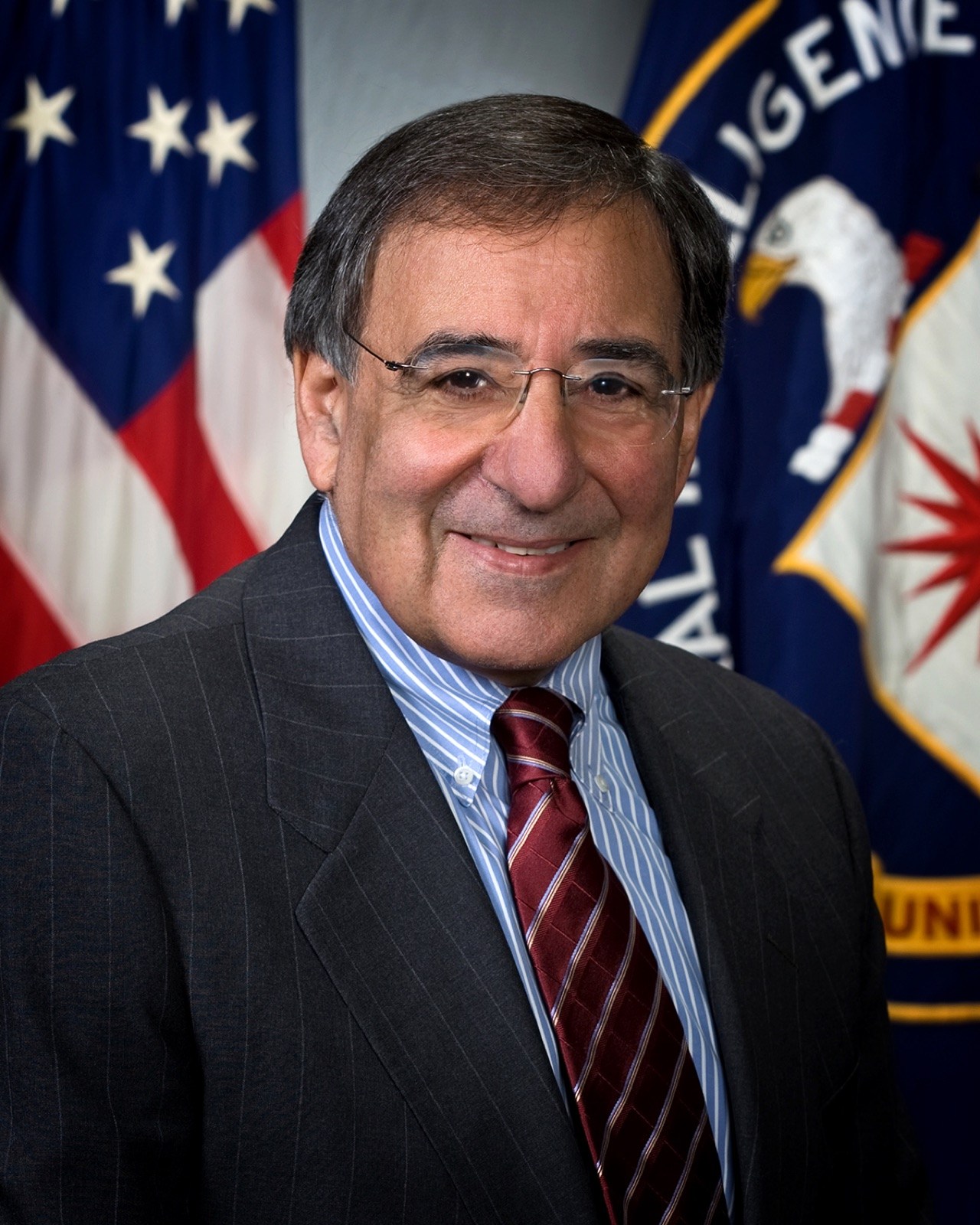
Leon Panetta
Leon Panetta is a former CIA Director and United States Defense Secretary who also served as White House Chief of Staff and a senior member of the US House of Representatives.
Episode Summary
Brett Bruen, who was President Barack Obama’s Director of Global Engagement, co-hosts this week's episode on the NATO Summit with Former Chief of MI6 Sir Richard Dearlove. They speak with Leon Panetta, who led the CIA and was United States Defense Secretary, along with having served as White House Chief of Staff and a senior member of the US House of Representatives. They discuss what has to be accomplished at this week's meeting with NATO leaders in Vilinus, Lithuania and how they will deal with the most pressing security issues, support for Ukraine, along with its potential entry into the alliance. Panetta details NATO’s role in a post-war Ukraine—from rebuilding the country to the challenges of how the world handles Moscow after the conflict.
Listen & Subscribe
- Watch on YouTube
- Listen on Apple Podcasts
- Listen on Spotify
Transcript
COLD OPEN
Panetta: He's playing the long game and hopes that it'll break our will, but the reality is he is in no position now having just gone through a coup and not handled it very well. He's in no position to try to push anybody around.
INTRODUCTION
Bruen: This is One Decision, the podcast that looks at individual choices that have an international impact. I'm Brett Bruen, sitting in the host chair this week alongside Sir Richard Dearlove, former head of MI6. We have a conversation coming your way with the former US secretary of defense, Leon Panetta. He's a man who's held numerous powerful positions in Washington from director of the CIA to White House chief of staff under President Bill Clinton. He was a congressman from California and chairman of the powerful House Budget Committee. But this week, we are looking at the NATO alliance as it heads into Vilnius, Lithuania for its annual gathering. Last year, you'll recall, we went to Madrid, Spain, and the alliance was just months into the war in Ukraine starting to form its strategies and support for Kyiv. Now a year on, the alliance faces a number of tough questions, and we put them to Secretary Panetta.
INTERVIEW
Panetta: You have to begin with stressing again the unity of United States and our NATO allies in support of Ukraine, particularly in light of what happened with Putin and also in light of the fact that the Ukrainians are initiating their offensive against the Russians. I think it is particularly important that The United States and NATO reaffirm their strong support for Ukraine in this war. Secondly, I think it's really important to consider what is needed by Ukraine in order to make sure that this offensive is successful. And although a lot of weapons have been provided, a lot of ammo has been provided, I think the reality is now with an offensive that is confronting a Russian force that had had a lot of time to dig in plus plant mines, there's probably gonna be a need for a lot of weapon systems that can confront that kind of dug in situation. So I'm hoping that there is a willingness to provide whatever weapons are necessary in order to make sure that they continue the initiative. And lastly, I think it's important for them to discuss what kind of commitment do we wanna make to Ukraine, assuming that we're able to achieve some kind of resolution to the war. What kind of commitment are we going to make that makes clear that we're gonna continue to provide security to the Ukraine, whether that's NATO membership or whether it's a commitment by NATO countries to make sure we provide that security. I do think that some kind of commitment has to be made here that makes clear to Russia and to others that we are going to continue to provide security protection for the Ukraine.
Bruen: Having been at last year's NATO Summit in Madrid, one of the things that stood out to me from conversations that we were having with different delegations is that, yes, everybody was stepping up in somewhat of a potluck sort of fashion, bringing different dishes to support the defense of Ukraine. It seems from the outside, and you're better placed to speak to what's happening internally, that there wasn't a whole lot of coordination or collaboration when it came to articulating what is Ukraine's success look like and what are the actual arms it will require to get there, which is part of the reason perhaps that we have seen this laundry list of supplies or maybe a checklist as they go through the Javelins and then onto the HIMARS and then onto Bradleys and now F-16s. Are we really in a potluck sort of situation for the defense of Ukraine?
Panetta: Well, you know, it's a little bit of both. I mean, the reality is, NATO has always operated that way. After all, you're dealing with 50 sovereign countries. They all have their own thing. They all have their own view of what they can or can't do. I mean, that's kind of been the history of NATO. You know, even though NATO is a strong alliance, even though they've engaged in efforts to provide security, the reality is that these countries are also concerned about their own countries and what they can and can't provide and what they can and can't do when it comes to security. So that's just something you have to adjust to and understand. It's part of the game in dealing with NATO. I think that despite the fact that every country is gonna do what they can do, there is a larger strategy that identifies what are the big picture items that have to be provided in order to make sure that we're meeting their needs. That's a reality. I think it's been working pretty effectively, frankly. It's not as fast as I would like it to be as a former defense secretary. I think we ought to be providing this on a much more rapid scale. But, nevertheless, they are getting the weapons they need. They're getting the training they need to work these weapons. And frankly, I've been impressed by the courage and bravery of the Ukrainian soldiers who are really putting up one hell of a fight.
Dearlove: Going back to NATO and the future of Ukraine, I mean, if you had asked me before the war broke out, I would have said something along the lines, look, Ukraine's a hinge between the East and the West. You know, for it to join NATO is far too provocative for Russia. It can have a relationship, but it could never be a NATO member. I recently was in Ukraine with a small group. We had a very high level sort of national security type visit. And without quoting who actually said it to me, but you can probably have a pretty fair idea, he said, look, you can't afford in the future not to have Ukraine in NATO. We will have the largest battle hardened military in Europe. And if we were left out, you're faced with the prospect of Israel sitting between the East and the West in Europe. And that is a situation from the security point of view that Europe cannot afford. And I came away with a completely different view. And I think I agree, really, with the tenor of that statement. So I'm interested to know how you have seen this sort of argument evolve about eventual Ukrainian membership. I mean, we all know about Article Five, and if you're at a territorial dispute, you can't join. But on the other hand, what sort of actual messages do you think we could deliver on this issue to the Ukrainians at the Vilnius summit?
Panetta: Well, Sir Richard, you and I have learned, sometimes the hard way, that things change. Yeah. That, you know, what you assume to be the case at one point in time can change due to circumstances. And while I think there was some concern about using the NATO membership early on in the war because I think there was probably some hope that would be a friction point with Russia and might inhibit the chances of trying to negotiate with Russia some kind of resolution. That's over. We've passed that point a long time ago, and the reality is that Ukrainians have put up a hell of a fight. They stopped their invasion. They've gone after the Russians. The Russian force has been very depleted, and you can't ignore that. You can't ignore that. And if eventually we are able to resolve this war with some kind of negotiated settlement or, you know, if in fact, Ukraine is successful at pushing the Russians out, which is not beyond comprehension, then I think they damn well deserve.
Dearlove: I absolutely agree with you. I think that's pretty much put your finger in. They will deserve NATO membership. And what does it look like, Secretary Panetta?
Bruen: You've been involved in several postwar environments, whether it was Kosovo, whether, obviously, if we could call the situation in Iraq such and that reconstruction. How ought we be thinking now about what Ukraine is going to need from a rebuilding standpoint? I know one of the things serving on a provincial reconstruction team outside of Tikrit in Iraq that I felt back in 2008, 2009 was that not enough planning had gone into what it was gonna take to win the peace. What is winning the peace in Ukraine look like?
Panetta: I think the lesson from both Iraq and Afghanistan is that you can't just assume that the security of that country is protected even though we invested a great deal in trying to make sure that the Iraqi military was able to do counterterrorism as well as their intelligence capabilities. And the same thing, frankly, was true in Afghanistan. But we never really stood back and said, what the hell is the strategy here? What do we need to do in order to make sure that this lasts and doesn't fall apart? And that's a very important lesson to bring to Ukraine, which is don't do something stupid after, you know, everything we've done to try to give them what they've needed in order to be successful in this war. Don't just sit back and assume that everything's gonna be okay. I think we need to continue to be involved. I think we need to continue to provide the support they need. I think we need to continue to help them with rebuilding. It's gonna be a hell of a lot of rebuilding that needs to take place. You know the mentality here. If in fact they arrive at some kind of negotiated settlement, everybody is gonna say, hey, that's terrific. We've done our job, and everybody goes back to doing what they did before. We can't afford to do that. We can't afford to do that. Not only because, you know, assuming Putin is still in power and Russia's still there, even though they may have taken a hell of a hit as a result of this war, they still remain a threat. And if it isn't Putin and somebody else, they'll still be a threat. So I think it's really important for NATO to have that conversation about what are our responsibilities in a postwar Ukraine.
Bruen: Secretary Panetta, if I could touch on one of the aspects of this conflict, which actually has a thread stretching across the Sahara deep into Africa, and that is the Wagner Group. And obviously, the events of the last couple weeks have underlined the very nefarious relationship, if I could put it that way, that exists between certain African governments and what ostensibly was not an official Russian government entity, though we have now seen some acknowledgments in the last couple of weeks of its relationship and potentially, you know, its integration even into the Russian military. What does that mean for countries that, like Mali, the Central African Republic, that are so dependent on a security relationship with this entity? And is The US doing enough to protect security, stability, human rights in those places?
Panetta: Look. I think the simple answer is no. I think The United States ought to be doing more in terms of providing the counterterrorism capabilities that we need in order to deal with terrorists. And we sure as hell can't stand back and allow a bunch of mercenaries and vigilantes to play that role. And frankly, that's what's happened. Look, Putin to some extent, I mean, Sir Richard knows, the best way to understand Putin is to understand that he's former KGB. And that's the way the KGB operates. They basically pay off people to do their dirty work. And that's what he established here, was this Wagner Group, headed by Prigozhin. He empowered them. He gave them money. I mean, Prigozhin became a billionaire, basically feeding off this guy. He then deploys them to Africa. He deploys them to Asia and Ukraine. They committed all kinds of atrocities in that process. And then, you know, when Prigozhin steps out of his role and starts criticizing Putin, starts criticizing the Russian military, Putin doesn't pay a lot of attention or at least pretends he's not paying attention, and that just fed problems that much more. And then when he tried to bring them into the Russian military, Prigozhin conducted a coup. In some ways, this is a monster that Putin developed for his own uses that came back to bite him in the rear end, and he's paying the price for that. And so the responsibility to be able to bring some degree of stability to countries like Mali or Libya, you know, we've got a lot of failed states in The Middle East, but that responsibility shouldn't rest in the hands of mercenaries or Russia. What it should rest on, frankly, are international allies who are willing to come together and provide the support necessary in order to make sure the terrorists don't prevail. That's the key. And, you know, I know we built a strong alliance with NATO. I think, frankly, what we need to do is to build a strong alliance in The Middle East to deal with these kinds of situations and North Africa. You know, I think we can work with the moderate Arab countries. We can work with Israel. We have a common enemy, not only in terrorists, but in Iran. I think, you know, building a strong security alliance in that part of the world would go a long way towards trying ultimately to achieve better stability.
Dearlove: Clearly, there is some sort of fracture within these organizations, within probably the Russian intelligence and security community, which I personally feel undermines quite seriously Putin's position, and I'm not making any wild predictions about what's going to happen next. We don't know. But on the other hand, I think that we've moved through a series of events which must, as it were, persuade us that whatever's going on in the Kremlin, the situation must be very, very brittle indeed.
Panetta: Oh, yeah. And, you know, to have an autocrat like Putin label these people as traitors, which is what they are, and then not act to go after them, make sure that they, you know, that they're brought to justice in some way, but instead he's given them an out to either wind up in Belarus or go back to Russia or continue to fight in Ukraine. I can't believe he doesn't understand that people are looking at that and they see weakness. Because if Putin lets Prigozhin continue, believe me, we haven't seen the end of things. This thing's gonna continue.
Bruen: This has got to create one whole lot of risk for Putin as military oligarchs, others are sitting around wondering whether this might be the moment to strike. You've advised presidents. You've sat in that White House Situation Room with its chairs that you almost sink into in those weighty moments. What are you worried most about now?
Panetta: I think the best way to take advantage of the situation is to do everything we can to ensure that Ukraine is successful on the battlefield. The more we can have Ukraine put pressure on Russia, pushing their forces back, the more leverage Ukraine will have either ultimately in getting rid of Russia or Putin or ultimately forcing them to negotiations. I mean, that should be our singular objective right now, which is how the hell do we get to a point where we successfully end this war? And the only way you can do that is through force. Putin only understands one thing, which is force. He'll continue to double down. He'll continue to try to raise hell. He's playing the long game in hopes that it'll break our will. But the reality is he is in no position now having just gone through a coup and not handled it very well. He's in no position to try to push anybody around. And so it is an opportunity. You know, some people don't like to say that, but that's the name of the game. It's an opportunity now to be able to ultimately make sure that Ukraine and our support in Ukraine pays off by achieving a successful end to this war with Putin. Because if we do that and Putin ultimately has to admit that this effort in Ukraine has failed, it will add to his woes back in Russia. It certainly isn't gonna help. And so this is a very unique opportunity, and I hope we don't miss the boat.
Dearlove: I agree entirely, Secretary Panetta, with your analysis on that specific point. But while there are various ancillaries which, let's say, concern me, I mean, The United States and The UK have been extraordinary in their determination to support and supply both morally and actually the Ukrainians. Poland's been great. The smaller Baltic Republics have been great, but the two key continental players, France and Germany, have not really stepped up to the plate in the same way. I mean, you had Scholz making this extraordinary statement about increasing German defense expenditure and getting their NATO contribution up above 2% of GDP. And, you know, you had similarly France announcing at least significant expansion in the defense budget. But it seems to me that they fall short on implementation. But I mean, certainly in terms of my experience professionally, it would seem to me that, not The UK, but The US has the ability to push both Germany and France to a more active participation. And I'm interested in that sort of European dimension.
Panetta: I am pleased that The United States and Britain and the other key countries have presented a unified front with regards to support for Ukraine. Even though some of them have varied in the level of support, I think the reality is that the world sees that The United States and NATO are unified. Look, Germany always has their finger in the air and so does France. But I think if you put your finger in the air right now, you better be on the right side because I think the reality is that Putin is falling apart, and so is Russia. And Xi and China, I'll tell you one thing. I think Xi and China right now is learning the lessons from what happened in the Ukraine and learning the lessons of what happened to Putin with this coup. And the last damn thing that he's gonna do is do something that results in the same thing happening to him in China. That's not gonna happen. And so I think if countries kinda stand back and look at the situation right now, it's pretty clear that it's a hell of a better bet right now in terms of your own security to be part of the NATO alliance.
Dearlove: I think it's clear that Putin made the assumption that he could take over Kyiv with a type of Chekist coup and not, as it were, do it with a full blown military invasion. And only after the event did he realize that he'd been suckered by the Ukrainians. And I think there was a lot of deception interestingly practiced by the Ukrainians. They knew Russian methodology too well, and the attempts that the Ukrainians made to buy off all the local government officials backfired very, very badly. What somewhat now worries me, okay, we have the problem of postwar Ukraine, but we're also going to have the problem of postwar Russia. And you and I know very well, you know, it has a formidable nuclear strategic capability, the rocket forces are intact and undamaged, it has a super sophisticated underwater warfare capability, its Spetsnaz special forces are performant. So, I mean, even after this, assuming Ukraine win, and I'm pretty convinced that they will come out on the upper side rather than the downside, we're going to have a wounded, dangerous player in the international system. And I'm not really sure yet how one would conceive of coping with this issue.
Panetta: I hate to say it, but, you know, at least Putin has exercised some responsibility in the way he's handled, you know, his nuclear arms even though he's threatened to use them in Ukraine, which I don't believe he would. But the fact is he brought a certain degree of stability with regards to a nuclear armed Russia. The one thing I know for a fact is that if Putin is brought down for whatever reason, that it's going to be a right wing individual that takes his place. Whether it's, you know, or whether it's one of his inner circle that he has now.
Dearlove: I think My choice would be Patrushev, the former head of the FSB.
Panetta: Yeah. I think the bet is pretty good that it's gonna be another hardliner who's gonna take control. And he might be somebody who doesn't understand that bigger picture about what a nuclear attack could mean, not only for your own country, but for the world, and maybe a little more reckless about handling power. So I worry that, you know, if we are successful in undermining Putin, that whoever replaces Putin may not be better, may be worse.
Bruen: What do we need to be thinking about? What do we need to be doing precisely to that point? I think, obviously, a couple of weeks ago when there were Wagner forces moving on Moscow, a lot of trepidation. I know in conversations I was having with foreign policy defense experts, my gosh, if he gets his hands on the nuclear weapons. And it felt as though, and I'm not a nuclear expert, that we were underprepared for the circumstance in which a mercenary force is seizing control of one, several, a whole stockpile of nuclear weapons. And what does a deterrent look like in that situation?
Panetta: One thing we spend a lot of time at the CIA doing is trying to figure out different scenarios about what will happen. And frankly, we did the same thing at the defense department, which is that you constantly look at planning for different scenarios and what could happen. And I would say that part of the responsibility of NATO ought to be to look at different scenarios and how they'll play out. I mean, one scenario is if Putin's able to survive all of this, how the hell do we deal with Putin in that situation where he's been weakened? I don't know the answer to that, but I think we need to talk about how we would deal with Putin if he's able to survive. Secondly, if he doesn't survive and it's likely that we get a hardliner, how the hell are we gonna deal with that situation? Not only in dealing with that individual, but also how do we make sure we're providing security so that we're prepared to deal with any potential threat that might emerge from a change in Russia. And thirdly, I think it's important to kind of look at what's the kind of world that we want? You know, if we had a Russia that was part of NATO, if we had a Russia that was willing to engage financially and in trade, and be an international partner, how could we try to work towards that kind of Russia? And at the same time, now you're, you know, if you're dealing with a different situation in Russia, you might have to deal differently with Xi in China who's gonna try to figure out, wait a minute. You know, right now, Xi figures he's the most powerful autocrat in the world right now. Even though he's got this relationship with Russia, there's no question that he's in the primary position. If Russia were to develop its economy and develop its financial situation in the future, Russia might very well compete with China in terms of that role that Xi kind of has been very protective about. So how do we deal with that? So I don't have any answers, but I really do think that NATO ought to start thinking about what happens next.
Bruen: We are sitting here a year from now preparing for the next NATO summit. Look into the crystal ball of all of the experience that I mentioned you have accumulated over so many decades working on all sides of foreign policy and politics. What's your best prediction?
Panetta: In a year, Ukraine will be in one of two positions. They will have gained additional territory in Ukraine. They will clearly have shown that their country is more secure. And I think they will, in the process, have shown that Russia simply, whether it's now or later, will not succeed in this effort. I think a better scenario would be that the war is resolved. They were able to negotiate some kind of solution that basically makes clear that Russia has not succeeded and that in a year, Ukraine will be focused on rebuilding their own country and dealing with all of the tragedy that's occurred during this terrible war. I think one of those two scenarios is good news for the world. Unless somebody makes a terrible mistake here and does something rash or does something that is unexpected, and that's always a possibility. I really do think that we're headed on the right track. We're on the right track. And I think everybody ought to make damn sure that we stay on that track.
Bruen: Well, an optimistic tone from someone with so much experience is encouraging. I found in all my years in Washington, the opposite is often the case. So Secretary Leon Panetta, very grateful for your time.
Dearlove: I have but a very, very brief question. Which was the more enjoyable job, head of CIA or secretary for defense?
Panetta: I gotta tell you, there's something about the CIA that makes it very unique. As you know, MI6 has the same kind of reputation, but there's a professionalism and a dedication to country that is, it really is encouraging to be a part of that team. It's really encouraging to be part of that team. And I think you probably agree. Found the same thing.
Dearlove: Great answer. Although I didn't do the second job. I just did the one.
Bruen: Okay. It's been wonderful talking to you, Secretary Panetta.
Panetta: It's been good to see you, Richard and Brett. Good to be with you.
Bruen: That's all for this week's edition of One Decision. Make sure you follow us wherever you get your podcast, and also join us on social media to continue the conversation. Drop us a note. 1decision@1decisionpodcast.com. We'll see you next week.