Episode Info
- Season22
- Episode5
Hosted by Christina Ruffini and Sir Richard Dearlove
Guest
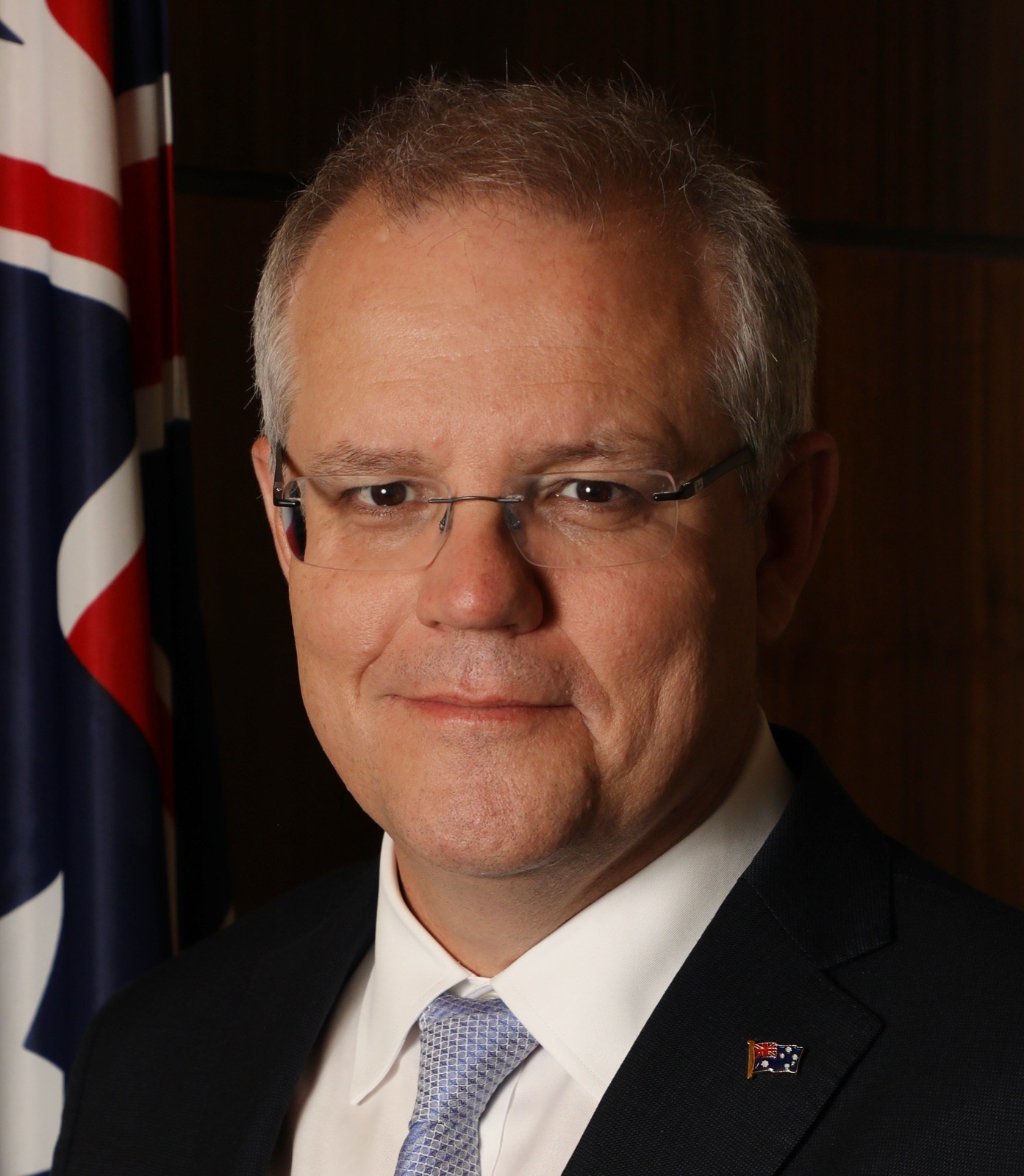
Scott Morrison
Scott Morrison is the former Australian Prime Minister who overlapped with two American presidents, navigated Australia's response through a global pandemic, and brokered one of the most consequential security agreements that Australia has signed in years.
Episode Summary
Former Australian Prime Minister Scott Morrison overlapped with two American presidents, navigated his nation's response through a global pandemic, and brokered one of the most consequential security agreements that Australia has signed in years. Morrison sits down with One Decision's resident spymaster Sir Richard Dearlove and guest host and journalist Liz Landers to discuss the AUKUS nuclear-powered submarine alliance with the United States and the United Kingdom more broadly and how the trilateral pact will counter Indo-Pacific threats. Morrison, who had a good working relationship with Donald Trump and Joe Biden, weighs in on the upcoming domestic elections in America and shares his observations about the United States' China policy as it has transitioned from former President Trump's presidency to the Biden administration. Sir Richard also presses him on COVID origins, an issue that earned Morrison the wrath of Beijing in 2020.
Listen & Subscribe
- Watch on YouTube
- Listen on Apple Podcasts
- Listen on Spotify
Transcript
INTRODUCTION
Announcer: You're listening to One Decision, the podcast that looks at the choices that shape our lives.
Landers: I'm today's guest host, journalist, and correspondent Liz Landers.
Dearlove: And I'm Richard Dearlove, former chief of British intelligence, otherwise known as MI6.
Announcer: Each week, we explore some of the biggest choices and issues that have global impact. We hear from the key players and influencers making, informing, and shaping the decisions that impact us all. Scott Morrison served as the thirtieth prime minister of Australia from 2018 until 2022. He is currently a member of parliament from New South Wales, a role he was first elected to in 2007, but recently announced that he would be stepping down from politics at the end of this month. We started by asking him about AUKUS, the trilateral security agreement between the United States, the United Kingdom, and Australia that delivers nuclear powered submarines to his country.
INTERVIEW
Morrison: It's one of the biggest achievements of his tenure. It was the product of the challenges that we faced. It was a product of the security environment in the Indo-Pacific. It was a product of the, you know, the strong alliances and partnerships that Australia has with our most trusted of all partners in the United States and the United Kingdom. It reenergized, I think, that trilateral partnership. And I think one of the key things that led to that was the fact that the UK left the EU and therefore had much greater sort of sovereignty and independence in its activity in this space. Of course, still a member of NATO, as is the United States, but I think that provided an opportunity for a range of new initiatives with the UK. It wasn't just that one, I also concluded a free trade agreement, the first one with the UK, with Boris Johnson. So and, you know, of course there are personalities too, which I think contributed. Boris and I are good friends, and we'd been working over the course of the final year of the Trump administration with the defense system and then took that on again with the new administration under President Biden. But the key point was this, and that was China's position in the Indo-Pacific, the PRC's position, had moved from what several decades, if not three decades, it perceived to be a quite benign one, but clearly that wasn't the case, and Australia was subjected to some pretty serious coercion. And our defense strategy has always been built on alliances and partnerships and networks and like-mindedness, and that's what we built heavily when I was Prime Minister, and the AUKUS partnership delivered on one of the key capabilities we would need in Australia's own interest, that was nuclear powered submarines, not nuclear armed I should stress, but also the ability for Australia to be a much better contributor and participant in the activities of allied and partners and like-minded interests in the region to provide stability. And whether one, a country in the Indo-Pacific is considered to be they don't like to pick sides, by the way. They prefer not to. Most countries, if not all countries, particularly in South East Asia, prefer that there was no strategic competition, but there is. And so I think what we're able to do through AUKUS, not just pillar one on the submarines, but secondly, when it came to the defense technology future that we're creating together, which we'll be able to strike that competitive advantage, we'll in fact maintain it and build it, Well, that will just generate stability. That's the key thing. Yep, and of course the French didn't like it, but that was inevitable. I mean, it was a $90,000,000,000 contract. There's no way of canceling a $90,000,000,000 contract easily where everybody leaves happy.
Landers: You mentioned some of the naval advantages with those nuclear powered submarines. I have seen that the US is aiming to get those to Australia by 2030. They may get there as soon as 2027. Tell us about that timeline and why that matters, especially with what's going on in the South China Sea with China potentially encroaching on Taiwan's sovereignty.
Morrison: Well, AUKUS on the submarine program seeks to deliver in the nearer term, but most fundamentally focused on the longer term. I mean, we want to do there is have our own capability that we're adding, but in the meantime, being able to not just get access to Virginia class submarines, which the arrangement provides for, But on top of that, US and UK boats into the region and for them to be able to be here for extended periods of times and active in theatre and working closely together with Australian crews and having more Australians on US and UK boats being able to develop their expertise. That is the very near term. It's not a small undertaking for a country of Australia's size to develop a nuclear submarine fleet as we are endeavouring. It's our equivalent of our moonshot, really. So it's going to require everything we've got to make this happen. And to do that you need the best partners in the world. Why in the South China Sea? Well, we've seen that going on going back to the Biden administration. I mean, China just constantly just kept pushing out the limits of their exertion and coercion within particularly the South China Sea. They turned island atolls into what are now stationary aircraft carriers, all the while maintaining that these were peaceful installations, which was, you know, clearly nonsense. And their ambitions in the region, which had been rejected by all the international authorities, by the way, It doesn't stop them making them. And it was only last year they were asserting things all the way down into Indonesia, for goodness' sake. So their views about where their borders end they seek to continue to define, not by the processes of order. And so for that to happen, and with their massive militarization, there needs to be a credible and effective deterrent.
Dearlove: Australia has been almost groundbreaking in the way that it's taken a tough line with China on strategic issues, but at the same time you have a trading partnership with China which is fundamental to your own economy and you know pretty important to the Chinese as well. I really admire Australia for the way it's picked its way through this really complex relationship. I mean what advice have you got for other nations? Because on the one hand they're challenging China, but on the other you recognize that they're an essential economic partner. And I think in a way you're creating a path which globally for other nations is going to be important.
Morrison: Well, look, thank you for that and I hope that's the case. When you engage in these things you do it for your own national interests, but if that is an encouragement to others who are like-minded then great. And you're right to summarize the interests that we had to balance. Yes, China is Australia's biggest trading partner, but trade is based on mutual benefit, not unilateral benefit. And China benefits from our trade, particularly in the resources sector. The overwhelming majority of that trade is resources, And that's increasingly true in areas like lithium and rare earths and these sorts of things as well. And when they engaged in economic coercion, they didn't go anywhere near the types of products, surfaces and things that were very important to their economy. So you've got to be, a, you've got to be confident in your own position. And we were confident. We were confident in our economy and our people and what we offered in the trading relationship and that this was unique and was valued and should be valued. Secondly, you've got to know who you are and what you're about and you can't kid yourself. I mean, in all of good intention, at the same time, the idea that China was going to liberalize and democratize because it got rich proved to be one of the worst international relations assumptions that we've seen. You have to go back a pretty long way. Now, most people were thinking that in the West. That's not a criticism, it's just what happened. And I think there was this sort of hope that the opening up, bringing them into the WTO, all of this, globalization of the economy, which did lift, you know, tens of millions of people out of poverty, which is a great humanitarian result, but at the same time, you know, it didn't lead to the liberalizing and democratizing. I mean, Tiananmen Square early on was a good indicator that that wasn't going to happen, but we ignored that and pressed on anyway. So, you know, you've got to be conscious of what your economic interests are, but ultimately your sovereign and national interests and your security interests must prevail. And I think we're seeing that now as, particularly in the US, people have woken up to the risk of investing in China. Now this isn't a geostrategic position which has been sort of swallowed, handed out to them by national security experts. They're just pricing risk in their investments. Private equity funds are doing that. And I think for a long time in the West, Australia as much as the US and anywhere else, we just thought, oh, you can make a ton of money there and there's no downside. Well, they could shut you down in the afternoon. They can arrest your people. You cannot get visas. You can't get your money out. It is a high risk political environment for a Western investor to be engaged. Now I think in the Indo-Pacific we get that, and I think particularly in the US there's been a massive sort of, I think, enlightenment to this view. I don't think that's the case in Europe and the UK. I think UK is more advanced in this view, and I think AUKUS was a great opportunity, as I saw it, to sort of bring the UK into Indo-Pacific thinking. And I think we've seen a rather patchy view out of the EU because they're wrestling with the same thing. They can see themselves selling a lot of cars in China. They can see themselves getting access to a lot of things that China does. And sometimes I think, I mean, it was President Macron who sometime later tried to walk this back, but as he came back from Beijing he talked about Taiwan being a long way away from Europe. Well, there is not a corner of the globe that would be unaffected by Taiwan falling through coercion or violent means to the PRC.
Landers: Mr Prime Minister, you were just talking about some of the financial stability within China right now. A judge in Hong Kong just ordered the liquidation of the Chinese development behemoth Evergrande. They owe $300,000,000,000, and they have been unable to offer a restructuring plan. So that judge finally kind of threw down the gauntlet and said, we have to figure something out here. Do you think that that signals some sort of economic downturn that could be coming to China? How do you view that?
Morrison: It's a massive economy with enormous critical mass, but I think the Evergrande issue highlights the vulnerability on what all that is based. It has been a producer economy. It has been a trading economy. It has been one where there's been a lot of activity built in the property sector, particularly the residential property sector, and the leveraging on that is opaque for a start. So it's hard to know as an investor just how quick things are. I mean, I never used to believe, frankly, the data we got on the Chinese economy when I was treasurer very significantly. I remember having a chat with President Trump once and he certainly had his views about what the Chinese data was saying, or rather wasn't saying. And that said, the property sector, you link that to the leveraging of local government bodies, their financing mechanism, which, you know, approaches a Ponzi scheme when it comes to their infrastructure development, which depends on the land sales, which goes back to the property side again, and this can be a very dangerous cycle that they could find themselves in. You know, this is a country that's going into population decline. It's a country that's had its challenges with corruption and all those sorts of things. Most developing countries do. So the invincibility of the PRC economy, the Chinese economy, I'm not convinced of. And the only thing I'd add to that was supply chain issues in China. We saw that during COVID and how supply chain was basically threatened, and I was very familiar with that as well as were some European countries. It highlighted how much was progressing through that area, no more than in the area particularly of new energy economy, you know, battery production, electric vehicles, even sophisticated technology that goes into advanced weaponry and all these sorts of things, the critical minerals and resources that go into that. And I think that's moving the global economy to start to, I wouldn't say bifurcate, but I would certainly say de-risk its PRC exposure.
Dearlove: I was having supper last week with Alexander Downer, who you know well.
Morrison: I know Alexander well. He's a good friend.
Dearlove: And Alexander and I agreed that perhaps at the moment we're at peak China and that you know we've assumed it would be an endlessly rising graph and that maybe we're at the point where we should revise our ideas and this is the peak and that there are so many negatives when you look at China's prospects. I mean would you sort of in any extent agree with that analysis?
Morrison: I think all the risks you highlight are right, and Alexander is right about that as well. History will judge whether this is the peak of the curve or there's still a bit more to go, but I think what's more important are the things that are driving that conclusion because they're very real. They are very real. And the thing about that when you put it in a sort of a geopolitical context is that, the Chinese military build up is heavily dependent on their economic performance. But the rise of China is now a different story, and it's the different story that I think people need to understand to help make any number of decisions, from who your like-minded partners is, who you're doing trade with, how you're managing your supply chain, particularly for sophisticated technology and weaponry. All of this becomes absolutely vital. There has been just an assumption about the absence of risk with China, which has proved to be absolutely flawed.
Landers: You have the unique perspective of having overlapped with both the Trump and the Biden administrations and them as presidents.
Morrison: Quite a ride.
Landers: I'm sure you have many stories. I'd love to hear more of them as we keep talking. But when it comes to US policy towards China, Biden has maintained some of the tariffs that Trump implemented, and then he's added more restrictions on semiconductors and manufacturing equipment. How do you view American policy towards China right now? And honestly, if you'd be willing to compare and contrast the Trump and Biden policies, maybe there's more comparison than contrast there.
Morrison: I think there is more comparison than contrast. I'm a great admirer of what they have both done in this space. I mean, if you go back and it all began, I think, when my very good friend Mike Pence got up at the Hudson Institute, I think round about October 2018 or thereabouts, I think it was, and gave that first speech, which did not mince its words about what was happening. And he followed that up down in Papua New Guinea in the region at a meeting he and I were at together. And that was the policy of the Trump administration, and the two of them together, Mike and together with the president, you know, they were phenomenal. And you had people like Mike Pompeo as well. And this was a very committed administration to really challenging all of those assumptions about China. Now there were many reasons for that. I mean, the Trump administration was highly motivated by the trade deficit. But I think what began possibly more in that space ended up becoming more enlightened around the geostrategic issues in the Indo-Pacific. And we, of course, in Australia and our relationship with the US played a very big role in that, as did the late Shinzo Abe, who was also a good friend, and we miss him terribly. His leadership in the region, it's hard to compare with anyone of the figures of that time. And so maybe it's a bit sort of Hollywood to call it an awakening, but it really was, and I find it sort of hard to believe that anyone other than President Trump could have been as assertive, could have been as definitive, to sort of disrupt what had been thirty years of thinking which had taken us down a dangerous path. Now, that having been done and the disruption undertaken, I think definitely the Biden administration has followed through. And, you know, there were differences in tone, that's fairly obvious, but I think in substance and intent, I didn't detect a great difference. I mean, President Trump's approach was certainly more strident, but frankly needed to be at that time, as it did need to be with Mike Pompeo and Mike Pence and everyone else in the administration. I mean, you had to sort of break the model of what they're all operating on, then it became a bipartisan issue in the United States. And that's a big deal. But I think in substance, as a partner of the United States and as a prime minister that dealt with two presidents, I enjoyed good relationships with both of them, and I found their commitment both to the alliance and to the strategic issues in the Indo-Pacific, you know, fantastic.
Landers: The Washington Post has recently reported about future plans that Donald Trump may have for US-China relations should he be reelected. According to their reporting, Trump has floated a flat 60% tariff on all Chinese imports, and he has also publicly endorsed downgrading China's trade status. How could such moves affect global trade?
Morrison: Well, President Trump used to have a great saying when he would say, well, we'll just see what happens. I can't, I'm not gonna, I'm not gonna do it, the impersonation, there are plenty of people who can do it way better than me. I think that is the honest answer to that question with a lot of things that are happening in the United States right now. It's an election year and let's just see how all these things play out. I think there are a lot of ideas that are being put around. I think what sits behind that intent, you know, I would argue, was the same as what you saw behind the CHIPS Act, which I think was extraordinary and brilliant. And there should be more of it. I mean, I'm sure President Trump is still very, you know, committed to this issue of the trade balance with China. Because here in Australia we have a trade surplus with China. So, you know, I was always very conscious of the fact that the economic relationship that the US was dealing with, particularly Donald, was different than what I was dealing with. And so I accept as an Australian looking at what happened to the United States from globalization over that thirty year period, worked out pretty well for us down here. Our exports and resources to, you know, large countries like China, but many others, Japan before it, you know, that was great for our economy. But what had happened in America? I mean it basically eroded a very significant part of the US industrial base and that included the defense industrial base. Now that is a risk to our interests as an ally and partner as much to anyone else, so I think there are very important strategic reasons why the reestablishment and equipping of the US industrial base is incredibly important. And so those motives, I think, sit behind both positions and I think are entirely valid. And what does it mean for global trade? Well, it just means that, you know, the thirty years of globalization that we had post the end of the Cold War, you know, we all need to wake up. The world doesn't work that way. It wasn't the end of history. It was a new history. And it was a bit of a naive history over that last thirty years about everybody acting in good faith and peace, harmony and happiness. No, states were still nation states. Order tracts and dictators and terrorists and others sorting the threat and peace and security around the world. You know, same actors just sitting in different chairs in many respects in different places. And so the world can be a very dangerous place and it's important that the freedom loving economies and democracies of the world don't yield their advantages and security in the name of, you know, what can be a bit of a naive dream.
Landers: So you're not worried about what he has floated, basically, is what I'm hearing from you?
Morrison: No, not from what I've seen so far. I know what's the reason I say that, Liz, is because I think I know what's behind it. And what's behind it I think is actually not just frankly in the US interests, I think it's Australia's too in many respects. That said, the CPTPP, of which China is not a member, and I would never support them being a member, same position Japan had, you know, I'd support Taiwan being a member tomorrow afternoon. But I think the one area of frustration is that for the position of like-minded in our part of the world to be stronger, we need the US more engaged from an investment and trade point of view. With Indonesia, with Malaysia, with Singapore, with Vietnam, with many of these countries in the region. They don't want to just have one partner in China. But we can't get crook at them when they do economically partner with China because they're not getting a better offer sometimes. They would much prefer, I know, to be choosing both, dealing with both, frankly playing off each other, both of them all the time to get a better deal for themselves. Nothing wrong with that. But I think it's really important to get the US more involved economically, at least like-minded if not neutral if you like, economies and countries in our region to lift I think, the economic sort of level of deterrent. That's a strange way of putting it, but you know, if those countries know, you know, welcome US investment and are dealing with US countries, well, US companies I should say, well, they're going to be less inclined to be vulnerable to coercion.
Dearlove: This is the Congress of Vienna repeating itself at a global scale, i.e. the balancing of the interests of nation states.
Morrison: I think that's true, but there is a condition on it. You know, we now have an international rules based order that sort of can manage that at the same time,
Dearlove: or at least when it's not being dysfunctional. But, you know, it's like Churchill said, worse system you could ever come up with, except for all the others. Before we finish, Prime Minister, I wanted you to comment really more on the issue of the outbreak of COVID. I think maybe I was the first person publicly in the UK to give an interview on the basis of an analysis of the RNA of the virus by scientists saying this was definitely the result of gain of function experimentation in a laboratory, that it wasn't a zoonotic creation. I think the only place that my comments resonated at the time was in Australia, but I got accused of conspiracy theory everywhere else. I now feel almost totally vindicated. You can't prove the case, but I think that the majority of serious scientists agree that it probably was a lab escapee. I mean, I'd just be interested, obviously, given my personal involvement in this issue, it was voluntary, should say, in your comments as to how you've seen this. Because, I mean, let's face it, this was the most disruptive social and economic event since World War Two.
Morrison: Yeah, it was. You know, what happened in China unleashed calamity in all forms on the world, delivering death, destruction and poverty. And they've never accounted for it. And the thing that set them off most against me is I had the audacity to suggest that perhaps the World Health Organization should be able to investigate and find out how this happened, not for the purposes of labelling blame, but the worry of regardless of what the initial source was, whether it be zoonotic, whether it be in a wildlife wet market, whether it came out of workers coming out of some dark cave in China somewhere, we didn't know certainly know at the time, and we certainly had no intelligence that was definitive regarding any lab leaks or anything like that. That's not to say it's not true, it's just saying there was nothing there at the time when I was Prime Minister that said that. On top of that, if it was a lab leak, well, the rate risk of that was important to know as well. I've never believed it was deliberate ever, and I don't think the scientists you're referring to also believed it deliberate. No, agree. Conspiracy stuff up, usually a stuff up. And I think that is the far more likely sort of scenario now, I think, because of the nature of, you know, the analysis that has been done on the virus itself and some rather unusual characteristics of it. I'm not a virologist or anything like this or a biologist, I couldn't say that one way or the other, but I think there's a lot of credibility to that. What I was concerned about we live in the Indo-Pacific and South East Asia is just to our north. There are wildlife wet markets all over the place. This could happen tomorrow. And from a world health point of view, I thought it was really important that we understood this started to sort of work together to get a better handle on the risk. And all the Chinese leadership consumes politics, and so they just started sledging us and attacking us and coercing us and carrying on. So I stand by everything I said on all of that, And I think the origins of that virus clearly came out of the PRC and there's never been any accountability for it from the PRC leadership and in quite the opposite to it. And when you think of the death and devastation it caused, it's just hard to it's just hard to get your head around it. And the apologists that I saw trying to shield the PRC from their accountability around that I found just as appalling, frankly.
Dearlove: Don't tell me. I agree with you on But, you know, it just highlights how PRC operates.
Morrison: And, you know, people wonder why I wanted to get nuclear powered submarines. Well, just look at how these characters operate. We can hope to coexist in a peaceful way, but we can't get over the fact that there is a fundamental and, I would argue, irreconcilable set of worldviews between us and like-minded partners and the Communist Party dictatorship and autocracy in China. And the arc of autocracy, as I called it when I was Prime Minister, which is the phrase that sort of caught on, that links now into Iran and into Russia and North Korea. And while that's an alignment of convenience, I think, rather than true values and friendship, you know, autocrats stick together and they protect each other in their own interests, if not directly, you know, involved in collaborating on specific initiatives. But this is the big battle we face now, you know, autocracy and freedom. And I'm for freedom.
Landers: And add Iran to the equation.
Morrison: Yeah, I did. I think I did. Yeah.
Landers: Mr Prime Minister, I know that I think our audience would be interested in hearing from you about a recent visit that you had to Taiwan a few months ago in October. I know you met with the Taiwanese president then. Since there have been these elections that just occurred, what does the election of the Democratic Progressive Party's Lai Ching-te mean for geopolitics and potentially for stability in the region?
Morrison: I think it proves once again that China's bullying and coercion is unpersuasive in Taiwan, as unpersuasive as it has been here, as unpersuasive as this sort of wolf warrior diplomacy tactics, it's unpersuasive. I think this is PRC's great blind spot. They believe their own publicity. And I think this leads them into terrible, both strategic and tactical error. I think that's the message out of that election, that they want their democracy. I mean, of the most frankly racist lines I've heard is that somehow Chinese people don't like democracy. What an absurd idea. And I think in Taiwan, although there's obviously indigenous Taiwanese people and other cultures that are there, I mean democracy has no particular adherence to any culture or any people or ethnicity. This is a notion. So I think it shows the stridency of Taiwan and their preparedness to stand up. When I was there I highlighted the importance of them lifting their own defense spending and capabilities and ensuring that that was tied in with a sort of a picture of the challenges in the region that was integrated with what, how, you know, they're looking at it at INDOPACOM over there in Honolulu and here and in Japan and other places. I think that's really important. They have to have the right capabilities to play the role that they need to play in any defensive situation. What worries me in the Taiwan Straits is not the imminent likelihood of an invasion. I think that would be catastrophic in so many ways, it would make COVID look like a sneeze. So I think China understands that too by the way. I mean the world would not be the same if that happened and it would not be the same for the PRC either. So that could be very dangerous for them. So it's clearly not their preferred way of handling What worries is that the PRC will use the same tactics of coercion, economic coercion, and try to tie the patience of both the Taiwanese people and frankly the West. That we would hear more often, oh, Taiwan's a long way away, like President Macron said. That's very dangerous, very, very dangerous to world peace because it's an invitation for the PRC to realize their ambitions, if not by violent means, but by, you know, economic coercion and basically just trying to take the place by other means.
Landers: We have huge elections in the United States. There are people within this country and outside of the United States who are sounding the alarm bells on the importance of the democratic election and whether we will have more democratic elections depending on who is elected president. Do you think that American democracy is in danger if former president Trump is reelected here in the US?
Morrison: No. And it has nothing to do with President Trump. It has to do with the American democracy, which I'm a great believer in, and it has prevailed. I remember when January 6 occurred, I was being attacked here in Australia by my political opponent, now Prime Minister, saying that I should get on the phone to Donald and tell him to do X, Y and Z, which I found humorous and ridiculous, that Australian Prime Minister would, a, involve themselves in domestic political affairs in the United States or otherwise that such overtures would even be received. But the point is this, I said at the time, the America's a great democracy and I think Americans value their democracy. And if President Trump is reelected, well, that's the answer. The American democracy has made a choice. It's not for Australians or Brits or, you know, Europeans or others to say who should be the president of the United States. It's not our business, it's your business. And your democracy is great and your democracy will make its own choice. And if that's the choice that your democracy makes, then I think it's important that everyone respect that choice. And that's why I believe it's not under threat, because ultimately the people who will decide whether that happens or not are the voters. And that's how it should be.
Landers: Well, Mr Prime Minister, thank you very much for joining us.
Dearlove: Great talking to you, Prime Minister.
Morrison: Liz, thank you for that. Thank you, Sir Richard. Give my best to Alexander I'll see soon before I do.
ANALYSIS WITH SIR RICHARD DEARLOVE
Landers: The former prime minister was incredibly chatty. I think we got a lot of interesting analysis and insight from him about a range of issues. What stuck out to you, Sir Richard?
Dearlove: Well, I think I like the Australian political manner. It's very direct, very informative, very ready to speak his mind. But I mean what you get from Scott Morrison, which is refreshing, is a pretty unvarnished free market view of the world. And he's very blunt. I would imagine as a prime minister he wasn't particularly diplomatic, but he wouldn't expect to be. And you know he has a tendency to instate it as it is. No question the significant achievement strategically from his premiership is the AUKUS agreement. That's a big deal. It's a huge legacy in terms of national security for Australia, And actually, was quite a brave and difficult decision to take because having signed a deal with the French government to build diesel submarines and then change your mind to build nuclear submarines, which makes much more sense, should say, is a huge strategic shift. And I mean I remember the issue of the submarine contract very well, it was going on for a long period beforehand, and I think there was a certain amount of surprise when Australia agreed a deal with the French, because a lot of us thought that this wasn't really the direction Australia should be going in. So he leaves a legacy behind which will be hugely influential, and I think his views on relations with China too you almost have a similar situation to the United States where Trump's Chinese policy influences Biden's Chinese policy. But I thought it was a fascinating conversation and I liked his bluntness and I liked his openness.
Landers: Yeah, I have to say I've spoken to a number of different ministers and leaders in the United States and few are that candid. And it is interesting to hear him talk about his own country's relationships with China and with the Indo-Pacific region, but also his evaluation too, I think, of the US's approach now and how he seems to like or at least respect both Biden and Trump, which I found interesting because I think they're quite different political leaders. There's I think not all world leaders have had as much success dealing with both Trump and Biden as it seems like he may have.
Dearlove: There's a trick question, which relates to Australia, which is which country, I'm giving you the answer now, has since World War Two has been involved with the United States in every conflict the United States has entered. It's Australia, it isn't the United Kingdom. And I think what one needs to understand is that the relationship between the US and Australia is so important. I mean it's important geopolitically to the United States because of where Australia is and the more so now because of the rise of China. But it's also vital to the Australian economy. If you go to Australia I think what's striking about Australia in some respects, only in some respects, is there is a sort of similarity to the United States. I mean it's partly the size of the country, the distance, the style of the country towns. I mean I always felt going to Australia there's a sort of resonance now in the twenty first century of the significance of their relationship with the United States. Whereas if you go to New Zealand, for example, you don't see any of that at all and people seem to put the two countries together. So I think it's quite natural in talking to an important ex Australian prime minister to feel that resonance in what he's actually talking about in terms of Australia's vital interests. I mean obviously politically it's clear he's closer to Trump, but there's no way that an Australian Prime Minister is going to be as it were in any respect critical of a Democrat president. And obviously, you know, Biden's Chinese policy was very much consecutive to Trump's, so that suited Australian interests extremely well.
Announcer: That's it for this week's episode of One Decision. We drop new episodes every Thursday. Like and subscribe so you never miss an episode. Drop us a line. Tell us your thoughts. What decisions have impacted you and where you live? You can write to us. Our email is 1decision@1decisionpodcast.com. From me and the team, thank you for listening, and see you next time.