Hosted by Christina Ruffini and Sir Richard Dearlove
Guest
Episode Summary
The fallout from the Jeffrey Epstein files has reached the highest levels of the United Kingdom Parliament. Tensions continue to rise as Iran attempts to run out the clock on American forces. Russia–Ukraine peace talks appear to be stalling yet again.
Former MI6 chief Sir Richard Dearlove and Sabrina Singh dive into the ongoing turmoil facing UK Prime Minister Keir Starmer. Sir Richard details calls for the PM’s resignation, as documents in the Epstein files reveal that Starmer’s former U.S. ambassador pick, Peter Mandelson, allegedly distributed classified intelligence with Epstein back in 2008.
Sabrina gets into Jared Kushner and Steve Witkoff’s approach to engaging with Iran. Sir Richard explains Iran’s strategy for running out the clock on the United States, and why past nuclear negotiations remain influential for both sides.
Ukraine does not appear willing to surrender the Donbas region to Russia. Sir Richard and Sabrina analyze the war’s impact on the strained Russian economy. As casualties on both sides continue to mount, Russians are fleeing the country at rates not seen in decades to escape the conflict and conscription.
Listen & Subscribe
- Watch on YouTube
- Listen on Apple Podcasts
- Listen on Spotify
Transcript
INTRODUCTION
Singh: Hello, and welcome to One Decision. I'm your guest cohost Sabrina Singh, former deputy Pentagon press secretary, and I'm joined by One Decision host, Sir Richard Dearlove. Hi, Sir Richard.
Dearlove: Hi, Sabrina. Yep. I'm in Aspen today, so I'm not on my home ground.
Singh: That's okay. For today's In Brief, we're looking at the latest developments with tensions between the US and Iran, stalling ceasefire talks between Russia and Ukraine. And, Sir Richard, it's certainly been a busy week. As you know, one of the biggest stories, in the US is the fallout of the Jeffrey Epstein files, and I know that's taken over headlines in the UK. So give us your sense of how that is playing out overseas right now.
Dearlove: Well, it's been massive in the UK, and it completely dominated the news cycle. And the issue, of course, is the prime minister's decision to have appointed Peter Mandelson, British ambassador to the United States. And, of course, he got sacked for that job several months ago when it became evident that he hadn't really been open about the closeness of his relationship with Epstein. But I think what has absolutely appalled everybody in the news cycle is the emails which indicated that back in 2008 when Peter Mandelson was business secretary and effectively deputy prime minister to Gordon Brown, therefore, a very sensitive position in government, Mandelson was sharing highly confidential economic information with Epstein throughout that period. And, of course, he's now subject to a criminal investigation. And this has sort of escalated the whole issue. And the first casualty politically is the prime minister's closest adviser, a man called Morgan McSweeney, who was responsible pretty much for their strategy in the British general election, which Labour won by a landslide. And then, of course, there's a huge question mark over Starmer's survivability as prime minister. So the reverberations, quite apart from the disgrace of the prince, well, former prince Andrew, I should say, Andrew Windsor Mountbatten, has suffered. So it's really, I described it in an article I wrote for one of the national newspapers as the swinging of a political wrecking ball.
Singh: You know, certainly here in the US, the Jeffrey Epstein files continue to be that wrecking ball. I mean, now you're seeing more hearings. You're seeing the demand from both sides of the aisle actually for more of the redactions to be pulled back. You know, you mentioned Keir Starmer, the prime minister, and I'm curious what you think where his future lies and if you think this could potentially bring, you know, his administration down and him being at the very top of this as well.
Dearlove: Well, the way the system works in the UK is that it would bring him down, but not necessarily his administration. This government has a huge parliamentary majority, which is not absolutely threatened. So the question really is the confidence that the British Labour Party has in Starmer as the prime minister. And there are plenty of precedents in British politics for the prime minister being changed during an administration. The problem though for Labour is that there are no really clear front runners in the party for the leadership. I think the general view is we have local elections coming up in May, but the likelihood is on current polling that the Labour Council representatives are gonna get politically massacred, and there will be a big swing to the right. And the party due to benefit hugely is Reform, which, of course, is a new political party to the right of conservatives in the UK. If that were to happen, and it looks pretty sure that it will, I think a lot of people think that's the time when Starmer would be forced out of office and there would be a replacement.
US–IRAN NEGOTIATIONS
Singh: The midterms for the US elections there in November, I think the Epstein files are going to be part of probably an election strategy as well for more accountability and transparency and certainly in the UK. But, you know, you bring up an incredible point here is that there's so much news happening from last week to this week. And one of the things that I wanted to turn to is the US conversations and talks with Iran that happened at the end of last week. We saw Jared Kushner and Steve Witkoff fly to Oman to engage in conversations with the Iranians about what it could look like to potentially have some type of nuclear deal. And I'm curious how it is this is being portrayed in the UK and your thoughts on this, Sir Richard, and whether you think a deal is actually achievable right now or if the Iranians are just sort of running down the clock with this administration as much as they can.
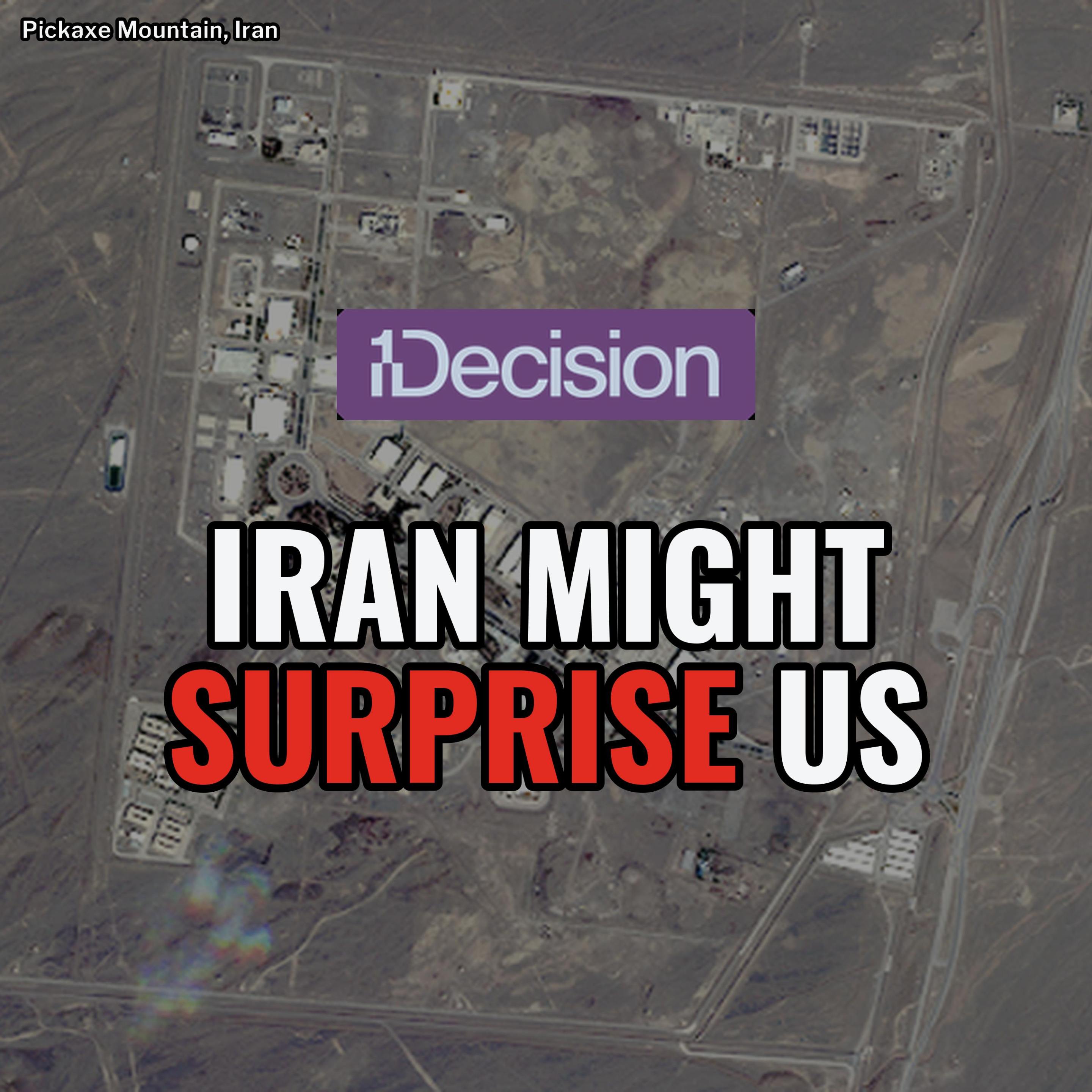
Dearlove: Iranian strategy will be definitely to run down the clock because you can't keep the battle group at sea indefinitely. So they will be hoping that they can negotiate for long enough so that the military threat which has been deployed, which is very significant, sort of dissipates. However, I'm of the view that these negotiations are probably not gonna go anywhere fast. The Iranians are master negotiators. Anybody who's familiar with the JCPOA, the original agreement which was designed to control the Iranian nuclear program, will know how, you know, they negotiate. I mean, okay. Eventually, there was a deal, but it took months to get to that point. Now the crucial issue now, as far as I see it, is that the Americans are insisting that the negotiations cover not only the nuclear, they also cover Iranian support for its proxies in the region, what we call the axis of resistance. So, for example, the continued support for Shia militia in Iraq, but also the Iranian missile program. Now at the moment, the Iranians are saying themselves, it's only the nuclear that they're prepared to negotiate. But, frankly, unless this Iranian regime is pushed back, particularly on those two other areas, I don't think that the US are gonna accept any deal. The sultan, or the new sultan, I used to know the previous one extremely well and was one of his advisers. The new sultan is playing this intermediate role. Because, I mean, in Oman, you only have to look at the map. You see what a sensitive position it is because it sits on the other side of the Straits of Hormuz. And I think that there is a quite high likelihood of this situation escalating because we've already had a couple of military incidents in the Straits of Hormuz where IRGC naval vessels have been deployed. On one occasion, it looked as though they were deployed to attack an American registered ship, the tanker. But it was stopped because an American destroyer turned up and intervened. And then, of course, you've got the shooting down of a drone. So there's a lot of opportunity for this to trigger a crisis more quickly. But frankly, I think that Trump will get very frustrated with the Iranians who are just gonna try to run out the clock, using your football terminology.
Singh: That phrase or use of terminology comes at a good time as we're just coming off the Super Bowl. I think you raise a good point on the JCPOA. I mean, part of the reason why we're back at the negotiating table with the Iranians is because the Trump administration during the first term pulled the United States out of that agreement, which allowed Iran to, you know, continue its enrichment program. You know, I always try and make that point of, like, there is a real world situation here where we wouldn't be in this situation of negotiating with Iran.
Dearlove: I think the JCPOA, actually, I mean, in my book, I didn't like the agreement. And the reason I didn't like it is because once the Iranians thought they had this deal, they thought it allowed them to do what the hell they liked, excuse my language, across the Middle East. And it was in that period that they built up the axis of resistance with Hamas, Hezbollah, and the Houthis. Because they sort of felt that they had been let off the hook because they'd made a deal on the nuclear side. I do sort of, you know, question some of Trump's foreign policy decisions, but I actually supported his breaking of the JCPOA, and I certainly supported his attack on the Iranian nuclear development areas. You know, we're in a really extraordinary phase with Iran because I think that the regime is in a pretty fragile state. There's no obvious successor to the supreme leader. He's getting on a bit. He must be massively on the defensive since the IRGC, the Praetorian Guard, killed up what, what do we think? Up to 30,000 of their own population during this recent uprising. So Iran is not in a strong negotiating position.
Singh: Point well taken. You know, the Iranian proxy groups in the region certainly gained strength both financially and militarily with support from Iran. And when I was in the Biden administration and right after the attacks, the October seventh attack, you know, those proxy groups in Iraq and Syria started attacking our bases almost on a daily basis. And they were very strong. And, you know, and we did have casualties as a result of some of those attacks. I do think, though, and you made this point, that Iran seems to be at its weakest it's ever been. And that's probably because of the joint strikes that the US and Israel launched during that twelve day war of targeting Iran's nuclear facilities, I mean, particularly the United States leaning Operation Midnight Hammer. That, I think, does put Iran in a different space, but I do agree with you. They are master negotiators. And certainly, Sir Richard, you know that better than anyone. So it does remain to be seen what kind of deal comes of these talks. Speaking of talks, Steve Witkoff is a very busy man, so is Jared Kushner. They are also trying to negotiate some type of peace deal between Ukraine and Russia. And it, to me, it seems like even though the US and this administration continues to say that there's progress, it does seem like those talks continue to stall out. Russia, of course, is pushing for control of the Donbas. And, of course, Ukraine does not wanna give up its sovereign territory. So I'm curious where you think these conversations go. And if, you know, the reporting stands that, you know, Trump wants a peace deal by June. Do you think that's possible?
RUSSIA AND UKRAINE
Dearlove: Personally, I don't. And the reason I don't is because there is no inclination on the part of the Ukrainians to surrender any territory. That is a pretty solid position. There is this clear attempt by the Russians to, let's say, persuade the Ukrainian population by attacking the infrastructure for energy. Maybe, you know, that they desperately need a peace deal, but it doesn't seem to be having that effect. I think it's well known historically, you've got the parallel of the Blitz in World War Two in London when London was bombed heavily by Nazi Germany. It didn't, as it were, intimidate or change the political attitude. It may, in fact, have the reverse effect. And I think you're probably seeing that in Ukraine as well. The Russians actually are not in such a strong position as Putin likes to present. And then there are growing reports of the huge problems that are emerging with the Russian economy. I think there are two things that have happened there which are significant. One is the trade deal with India, where India have stopped buying Russian oil. Also, the EU and Europe generally, including the UK, are taking a much tougher line on the shadow fleet of tankers. And I think the other thing is that the Russian population, I'm not suggesting they're becoming dissident, but they're really, really beginning to suffer from the effects of the conflict in terms of, let's say, inflation, the cost of living going up. So there's an awful lot happening which doesn't really favor Putin's position at the moment.
Singh: You mentioned the casualty rates. Of course, Russia does not report their death totals. It's been reported from different groups that Russian troop deaths are close to, you know, three hundred and twenty five thousand since the invasion in February 2022. I'm just curious. It does seem like Russia is able to amass forces and recruit from within Russia and, of course, with the assistance of North Korea as well. But how long do you think Putin can actually keep up that war machine of recruitment to, you know, when does his own country, his own population say enough?
Dearlove: Well, I think it's dangerous to make a prediction because we all know that the Russian population is extremely long suffering. And, you know, there are many historical examples of that. However, the reason that he has sustained recruitment at a high level without having any move towards mobilization is largely financial because the money paid to soldiers' families joining up and the compensation paid for soldiers that are killed or maimed, life changing in the peripheral areas of Russia. But the other thing I read recently, which I think is fascinating, is you've got the biggest exodus from Russia of the population. This is largely Russian population, not the minority ethnic groups in Russia, since the Russian revolution.
Singh: I think Putin, similar to the Iranians, have a, not to borrow a football analogy again, but I think they all see this as a moment to just continue to run down the clock. And particularly Putin, I mean, is someone who is an adept, skilled negotiator who I think knows how to pull the levers of this administration. I think for Putin also, yeah, he doesn't see a reason to negotiate right now.
Dearlove: Putin must realize that winter's running out too.
Singh: Right, right. Yes. And I think he does. Well, there's certainly a lot of news to continue to watch for this week. But thank you for the conversation, Sir Richard.
Dearlove: Yeah. Thanks, Sabrina.
Singh: Join us on Thursday for another exciting conversation on world events that goes beyond the headlines. For more conversations with leading decision makers and thinkers, check out onedecision.com and our YouTube page, where you'll find additional commentaries, conversations, and explainers. I'm Sabrina Singh, and thank you for listening.