Episode Info
- Season27
- Episode9
Hosted by Christina Ruffini and Sir Richard Dearlove
Guests
Jan Lipavsky
Jan Lipavsky is the Czech Republic's Foreign Minister discussing Russia's military threat in Eastern Europe and international support for Ukraine.
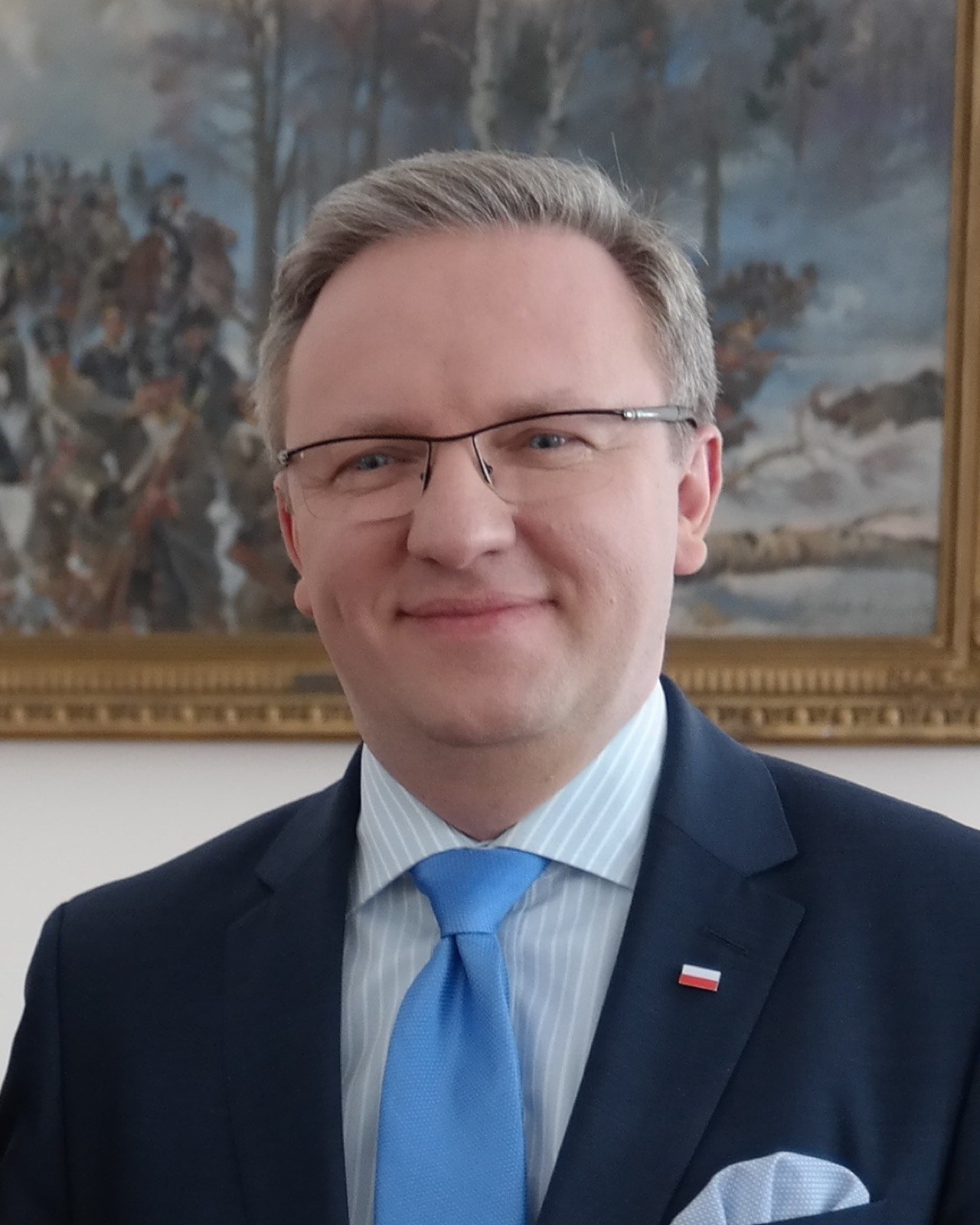
Krzysztof Szczerski
Krzysztof Szczerski is Poland's Ambassador to the United Nations discussing Russia's military threat in Eastern Europe and international support for Ukraine.
Episode Summary
In this bonus episode, One Decision's Christina Ruffini sits down with the Czech Republic's Foreign Minister, Jan Lipavsky, and Poland's Ambassador to the United Nations, Krzysztof Szczerski, in New York City during the United Nations General Assembly. They discuss Russia's military threat in Eastern Europe, the strain of illegal migration, international support for Ukraine, and the role of multilateralism in a changing world.
Listen & Subscribe
- Watch on YouTube
- Listen on Apple Podcasts
- Listen on Spotify
Transcript
INTRODUCTION
Raffini: I'm Christina Raffini for One Decision. The UN General Assembly wrapped up last Friday and of course One Decision was on the ground and all over New York City to witness the conversations, developments, and tensions among world leaders. In today's bonus episode, we catch up with Polish representative to the UN, Krzysztof Staroski.
Staroski: Actually, I was in the room of Munich Security Conference. This is like a like a like a movie scene, you know, and because we are sitting there discussing the Ukraine. And then we all just looked at our phones and we we realized that the war started.
Raffini: And the Czech Republic's foreign minister Jan Lipavsky.
Lipavsky: I understand that the Ukraine needs to have the best position at the negotiation table. First and foremost, not to be on the table but sitting behind the table.
Raffini: We asked if there's any possibility for a resolution for the war in Ukraine, how migration is straining the capability of the EU, and the importance of multilateralism in a changing world. First, let's give a listen to Poland's representative on the role the United Nations is playing in global crises. Do you think that bodies like the UN, bodies like NATO have gotten a second breath of life recently with these conflicts, or do you think they're failing to adapt to what countries need?
INTERVIEW: KRZYSZTOF STAROSKI, POLISH REPRESENTATIVE TO THE UN
Staroski: Well, lots of discussion about that. Some actually see it as a failure of the multilateralism. Of course, this is a failure of the preventive diplomacy. As a world, we did not prevent these conflicts to raise. So that means there is a failure in a sense. But the other way, it is international community actually who has got only tools to respond to this situation. And you know, the United Nations is all made by the member states. So ultimately, whatever we do here is just what we as an international community wants it to be done. So it's not that we got not the magic tool, we've got not the stick that can actually turn the things on a way that we would like it to be. It's the willing of the member states of the international community really to respond in a way that is able to and consensual in a sense.
Raffini: Why do you think multilateral organizations, EU, NATO, the UN, failed to prevent Russia's invasion into Ukraine latest time? Do you think it goes back to Crimea and not doing enough then? Do you think it goes to a lack of will from the United States?
Staroski: Well, seeing it from the Polish point of view, I would say they should have been listened to us more. It's like a Game of Thrones. We keep on saying the winter is coming since the Georgian invasion. That's already been an exact example of what is the new imperial politics of Russia being conducted. So sometimes you see that probably some of our friends and our partners just wished the world to be different and just wanted really that saying that okay, are probably, you are too sensitive, we are still cooperating with Russia, Russia is a partner, we can go along with the Russian Putin's policy. But we have to keep on saying it won't work. Unfortunately, it's us who are right in that sense. So one is actually wishful thinking, is one aspect of that. Secondly is just the question of leadership. I believe there is, we really need the days of today, we really need strong leaders. And I think it's not exactly the moment in the history of the, especially of the Western community, of our part of the world to have a really strong personality, strong leaders that can actually respond up to scale of the challenges that we are facing. I mean, we have to ask ourselves as a society, as a nation, do we really want to be engaged in a conflict? Sometimes it's also up to us, no? In elections, whatever we do, we come to the elections and what kind of public debate we are conducting in our respective societies. Is it really like we want to build up the strength or we just want to kind of get along?
Raffini: So when you say we need stronger leadership, do we need more authoritarian leadership?
Staroski: No, democracies are stronger than the authoritarian regimes because the regimes hangs on one person. That's the biggest weakness. In the democracy you've got this collective strength of the society, but you have to conduct it, you have to exercise it. You have to guide it. So like you see in Poland, there is no debate over this huge expansion of our military budget. We as a Polish society, as Polish nation, we see the war by our own eyes. We see the influx of refugees, see the consequences of that. Then the society decided yes, we want to build up the strength of our state. So this is the question now, I believe that when the democracies are capable of building up their own resilience, but just have to acknowledge the need for that. So just look at Poland in these different aspects. From one side, we've been named the solidarity superpower because of the way that we responded to the refugees going into Poland. But on the other side we want to be also military, but still we want to be strong enough just to prevent, just to say to any country that would like to even think of invading us, just stop even think of that. We are the NATO member and we are strong enough just to make your invasion useless.
Raffini: And by countries who might think of invading you, would that be Russia?
Staroski: Russia is the only country in Europe nowadays that wants to move the borders by force.
Raffini: Forever there had been this, it was after the fall of communism, was this McDonald's theory, right? No country that had a McDonald's in it had ever invaded another country with a McDonald's in it. There was this argument that globalization and economic forces would save us all from invasion. And that actually went out the window when, as you were talking about earlier, when Russia invaded Georgia. What don't a lot of Western European nations and Americans understand about the reasoning behind Russia's move in Ukraine? What don't they get about Russia and the threat from Russia that you feel like you do because you live much closer to it?
Staroski: The truth is that, yeah, and you remember the Fukuyama's book on the end of history, no? We all thought that maybe, you know, with the end of the Cold War, that's the rivalry just gone, and then the new world is flat, and the new world is like globalization was unified. So of course that's not the case. We have to understand the mentality of the Russian empire. This is a pure imperialism. This simply to subordinate the nations, the countries. They feel like being not equal to them, being somehow on a different footage than they are and this is a pure classical, pure imperial world.
Raffini: Do you think he's still a rational actor? Do you think he's a sane person?
Staroski: No, he is a rational actor. Don't be misguided by all these narratives that he's a crazy guy. He he is doing what he wants to do, he wants to actually restore the position of of the Moscow vis a vis Washington. Because remember that the aggression on Ukraine started with the ultimatum that was actually proposed and sent to Washington of a new, original architecture of security in Europe. In the end of the day, he wants Washington to come to the table and sit with him and decide about the fate of the other nations. The tools he's using to to achieve that is bloody war criminal tools. The most important is that when you see the the voting here, the voting pattern here in in the UN, 140 plus countries actually voted for the resolution that named this acts of Russia as an aggression, not the special military operation, not to somehow defending the rights of the Russian speaking minority in Ukraine, no. We named it as an aggression and it was quite a majority of the members. That means people may be too late, but start understanding, the government start understanding what is the nature of this Russian policy.
Raffini: What is the fear level now for the population? How real is that fear? Is that something people are still thinking about every day or has that lessened, mitigated a little bit?
Staroski: It's mitigated a lot. We survived these first years as a country. Actually, we turned ourselves to be the lifeline to Ukraine. We turned our position from being kind of influenced by the instability to be just the opposite, to be the pillar of the stability. So I think now the perception is different. Actually I was in the room of Munich Security Conference. This is like a movie scene, you know, because we were sitting there discussing the Ukraine and then the Russian ambassador just called by on his phone. He left the room.
Raffini: So he just like took a call and left?
Staroski: Yes, left the room and then we all just looked at our phones and we realized that the war started.
Raffini: Wait, that's incredible, really?
Staroski: Yeah, so he came back to the room. He's already got these LTTs, now the lines to take about the the legitimate concerns of the Russians, especially operations.
Raffini: So he came back in with something he was supposed to say to you all.
Staroski: So the world changed on our eyes while sitting in Security Council chamber.
Raffini: But did you think they would invade? It sounds like you did believe the intelligence.
Staroski: Yeah, we did believe it. US intelligence was right.
Raffini: So there's this new debate over whether the US and NATO should loosen the reins on some of these weapons that they've been giving to Ukraine and allow them to use them in theater in Russian territory or point them at Russian territory. So basically, if a nuclear power is giving weapons to someone that are used in Russia, whether or not those weapons are nuclear or not, the new policy is that Russia is allowed to use their nukes. Do we think he's bluffing or do we think he means it?
Staroski: First of all, you have to understand that apart from the actually kinetic war, there is a psychological war and disinformation, this is a part of this warfare that Russia is using, because now if they really want to change their doctrine, they would just change it internally, not announce it. They want us to know it. And then secondly, you have to understand that the defense is never escalatory. It's only aggression that escalates. So if you defend yourself better than it's not escalatory of the war. So it's only aggression that can escalate. Unfortunately Russia is escalating this aggression by attacking the civilian infrastructure, but just completely disrespecting humanitarian law, by attacking the civilians. They are not just the casualties, they are the targets for the Russian aggressors and especially also the energy infrastructure of Ukraine that is severely hit before the winter. And you have to understand, of course, the ultimate goal of us all is to reach the peace. Of course, we all would like to see the peaceful Ukraine and the peaceful region, especially for us as a neighbor of actually both of Ukraine and Russia, because you have to understand that we got the borders with both of the countries, with aggressor and the victims. So of course we are the first ones to see the peace restored. But then we know from what's going on that the path to peace leads through effective defense of Ukraine.
Raffini: You mentioned that you've increased military spending a lot and you're arming up your borders, especially I know you guys are putting more resources towards your northern border, which is Belarus. Do you consider Belarus essentially an extension of Moscow at this point?
Staroski: No, Belarus is a part of this aggression, both in rhetorics and not directly in sending troops, but of course giving the territory up to the operation. And of course then you have to understand that on the Polish Belarusian border there is another side of this conflict which is this forced migration pressure on the Polish border and this is the whole operation done by the Belarusian authorities. They're taking migrants who are coming to Europe, actually flying migrants from all over the world to Belarus, are paying for that, which is just robbing them by their own money.
Raffini: I mean it's basically government trafficking, yeah.
Staroski: Trafficking or the governmental trafficking of the people. Sending to the EU border which is actually in this case is the Polish border and then just push, push, push. Belarus is a safe haven so if they actually have found themselves, if they are real refugees and find themselves on the side of Belarus, they should be staying there, whatever they came for. And if they really want to enter the EU, they can apply for all these procedures that are legal.
Raffini: Everyone agrees this war needs to end, but it doesn't seem like anyone is in a position to make that happen. If given an ideal set of circumstances, how could this war end?
Staroski: You know, there is three pillars, so to say. First is international law. So the basics is there, which is the national territorial integrity and the state sovereignty. That's the basic, two basic rules. So this is one pillar. The second is the will of the Ukrainians themselves. Ultimately it will be them who decide what kind of peace they could agree with. And thirdly is the support of the international community and the kind of international consensus. And the biggest challenge we have now is to somehow harmonize those three pillars. To get these three into one piece of utterly difficult nowadays.
Raffini: That's no small task, yeah.
Staroski: But there is no peace without any of the three. So why it is difficult now, to harmonize it, that's the biggest challenge. But there cannot be peace without the territorial integrity and sovereignty of the state. There will be no peace without the consent of Ukrainian nation because they are the victims. And there will be no peace without the international agreement over that. So how to navigate between those three? Now this is the challenge for the next Nobel Peace Prize.
Raffini: Mister Ambassador, thank you so much for taking time to be with us.
Staroski: Thank you so much. Thank you for having me.
INTERVIEW: JAN LIPAVSKY, CZECH FOREIGN MINISTER
Raffini: Thanks to the Polish representative to the UN, Krzysztof Staroski. I also had a chance to sit down with Jan Lipavsky, the Czech Republic's foreign minister, a country also feeling the impacts of the conflict in Ukraine, including increased concerns about migration. It's UNGA. The big topics on everyone's mind were obviously the war in Ukraine and also the conflict in the Middle East. But I do wanna talk to you about Ukraine because your president, Petr Pavel, said, quote, that's gotten a little bit of of pickup where he said, you know, Kyiv needs to accept some territory could remain under Russian control, at least temporarily, in order to get to a peace process. Is that, do you think, the realistic thing that no one else is saying out loud, or do you think that's just one way to possibly solve things?
Lipavsky: So discussion about Ukrainian peace and the end of the Russian war against Ukraine can be started from multiple points. I understand the president's statement, but position of my government, which is responsible for foreign affairs, is that we need to stick to certain principles. Those principles are that we need to protect the charter of UN, which prohibits the war of aggression, which gives you clear that the states have sovereignty and territorial integrity. And, of course, we don't know how and when the peaceful solution will be found, but we know that we need to make everything for Europe to be secure. And that's my first and foremost imperative in the whole situation, not to have a bad peace. Zelensky will be removed and you have a peace. That's not the peace I want, that the Russian army will be standing much closer to the borders of Czechia and that there will be a huge wave of refugees all over Europe and the Russian empire will be filled with the Ukrainian industry, Ukrainian people and all the resources, access to Black Sea in a new way. So that's not the peace I envisage. I want security and I want peace. I want both. Yes, there are different kind of scenarios, which may lead also to what president Pavel said, that the Ukraine will agree like a sovereign country to referendum, and then things may change. But I haven't heard from Zelensky that he wants that. Otherwise, I heard from Zelensky that he want to protect his country, his people. He want to protect democracy, that he want to become a full part of Western civilization society. We promised him to do so. And I think it will be a great mistake if we dictated to Zelensky from West that he should leave some territory. Happened in the history once. It was 1938. It was Munich Agreement. It was my country which was thrown out of the club, and territory was given to Adolf Hitler, and it didn't stop anything.
Raffini: It is hard to see. Russia doesn't seem to have any appetite of stopping. Ukrainians are fighting like hell, but at some point, it does seem like they don't have much to bring to the negotiating table other than ceding some sort of territory, which, of course, the Ukrainians have said, we're gonna fight for every square inch of our territory. Do you see Zelensky moving on that at all at any point?
Lipavsky: I don't see, honestly, but I understand that the Ukraine needs to have the best position at the negotiation table. First and foremost, not to be on the table, but sitting behind the table, not to be object, but be subject of negotiation, and then to have the best possible position. We hear all the time the same thing from Zelensky. He is not saying anything new. We need to be strong, ergo, please give us weapons. They are producing their own, but they need more. He needs to have good security guarantees because we want to stop the Russian imperialistic aggression. We don't want to solve one war in Ukraine. Look what the Russian propaganda is saying. We will go to Baltic countries. We will go to Belarus. You know, Belarus is ours. Let's bombard Poland. Where this gonna stop? It has to stop in Ukraine. So Zelensky is right. We need to be the place where it stopped, but we need to be strong enough. So he asked for security guarantees, and I absolutely agree that future NATO membership is the way how.
Raffini: Do you think the US and NATO have put too many restrictions on what Ukrainians can do with the weapons, and do you think they should release those and allow them to be used in theater or pointed at Russia?
Lipavsky: As a Czech minister of foreign affairs, my country do not post any restrictions on weapons which are delivered from Czechia to Ukraine. But there is a big buzz. Our weapons are not the most sophisticated weapons, which includes a lot of sensitive technologies, which we delivered half a million rounds of ammunition. Everything is going by plan, and I'm very happy for that. And Ukraine is happy, and the battlefield is seeing a change. But those rounds fly 40 kilometers. There's no discussion about any kind of restrictions. So I wish that Ukraine would have all the weapons in the quality and amount which needs to protect itself. But we can see a lot of drone attacks made by Ukrainians deep in Russian territory, sometimes doing quite a big damage. Of course, it's much better if the rocket is not leaving ammunition depot, if the plane which then shoots the rocket on the Ukraine cities is not even leaving the airfield. It's much better. So I would advise to be seeking for such a solution that the Ukraine will be able to stop those attacks as soon as possible for the lowest possible cost.
Raffini: Russia has now changed and announced that they've changed the threshold by which they say they're justified to use nuclear weapons. Do you think that Putin is bluffing?
Lipavsky: There is one player which is not bluffing on this discussion, and that's NATO. NATO has a doctrine, which is designed for case of adversary usage of nuclear weapon. Putin knows that very well. And I think the Moscow leadership is informed about such a doctrine, and that's what protects also Czechia as a NATO member. The nature of Moscow current regime is basically that there are mafia guys, and the mafia guys need to make a big crumble, you know, be seen, be shown, threatened, bully, and the nuclear threats and nuclear language is a part of that. We have seen so many red lines being crossed in the last three years. So many red lines from the Russian regime. What was the reaction of Russian regime to the invasion of Kursk? They don't even call it a war. It's a situation. Nuclear language, we have to be very sensitive about that. We have to study it very carefully, and we have to send one clear message to Moscow that NATO has its own doctrine and that they should think of that.
Raffini: You, like in a lot of other countries in Europe, are struggling with immigration, and we in the US are struggling with it as well. How do you solve it? What needs to be done? Does there need to be a more global solution rather than leaving it to countries to handle on their own?
Lipavsky: In the case of the EU, we need to make common decisions because we have one Schengen area which we want to protect. So you can travel freely from Czechia to Germany. Currently, there are some border controls, but maybe they won't even stop you. Before the Schengen, which is one of the founding, one of the key part of the EU, it was not possible. There would be border, like traveling from the US to Canada, for example. We need to make common steps. There will need to be more discussion. For example, as the EU, if we are providing a lot of development and humanitarian aid to certain countries, but the same very countries not want to cooperate on, for example, taking back people who are illegally in the EU. We need to interconnect this kind of policies and that's what I call geopolitics. And that's the reason why I use such a strong language because we totally forget about this necessity of interconnection, that giving someone money means also that you might want something for it.
Raffini: Because you're also getting a fair amount of Russians coming to your country, right? And there's this new idea that Russians can only get Czech citizenship if they give up their Russian passport?
Lipavsky: This is not prohibiting the asylum. This is the proposal, the law is just saying that during the war, they would not be able to get the citizenship unless they leave the Russian citizenship. And it's necessary to protect the security of my country. We have accepted half a million more refugees from Ukraine, so this is also very important to understand.
Raffini: Most people I spoke to when I said I was going to do this interview still called your country the Czech Republic. But the US finally officially changed the name, I think, 2022, 2023. What should people be calling your country? And why is there disparity? Why are some Czechia people versus the Czech? What is the difference and what should we be saying?
Lipavsky: It's very easy. You have Bundesrepublik Deutschland and Germany. It's the same way. It's just short name.
Raffini: Is it offensive to say Czech Republic?
Lipavsky: No. No, Ukraine is a specific one because they don't have a longer name, but it's a short name. And the official name, which is written in stone in constitution, is the Czech Republic. And the short name is Czechia. So it's up to the benevolence of the speaker and it's how much officially do we want to speak.
Raffini: Well, we enjoyed speaking with you officially and unofficially. Thank you for taking the time today, sir.
Lipavsky: Thank you very much. Thank you.
Raffini: That wraps up One Decision's coverage of UNGA. Thanks so much for listening. And be sure to check out all of our reporting at onedecision.com to unlock exclusive content, get timely updates on crucial global events, and be part of meaningful dialogues with thought leaders. Join us on onedecision.com. I'm Christina Raffini. Thanks for listening.