Episode Info
- Season15
- Episode5
Hosted by Christina Ruffini and Sir Richard Dearlove
Guest
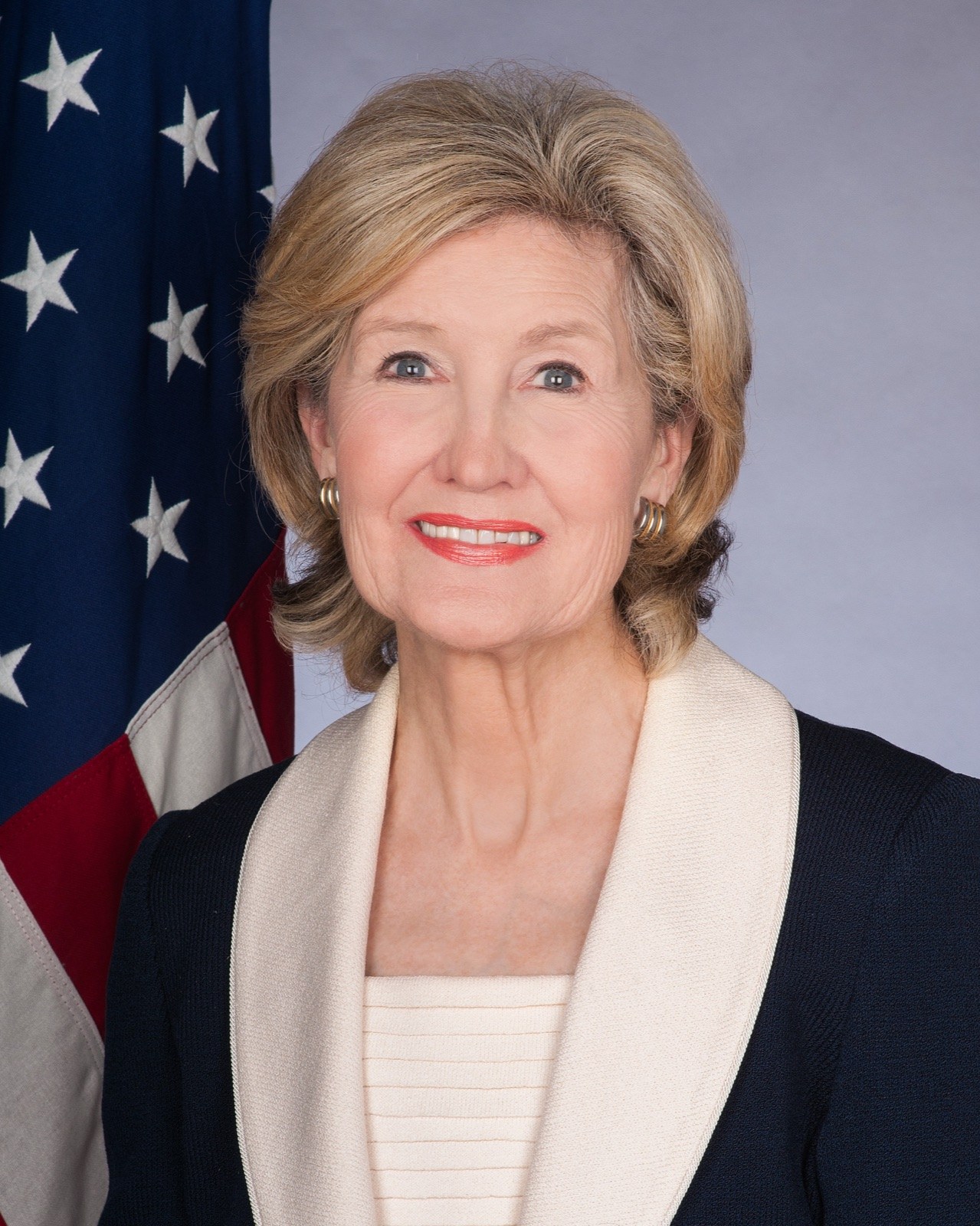
Kay Bailey Hutchison
Kay Bailey Hutchison is Trump's NATO Ambassador discussing NATO's dramatic transformation and whether the US or Europe deserves credit for its muscular evolution.
Episode Summary
If Donald Trump were to return to office in 2025 he would find that NATO, the target of so many of his scathing comments, is now more closely resembling the kind of alliance the former President said he wanted. It is more muscular, fed by bigger budgets paid for by its constituent European parts. And as NATO changes, Japan and Germany have shifted away from their postwar military restraint in the face of a raging war in Europe and the growing threat from China. One Decision sits down with Trump’s NATO Ambassador Kay Bailey Hutchison for her view on its dramatic transformation, if she thinks the US or Europe deserves the credit and how a divisive 2024 presidential election could affect Europe’s security.
Listen & Subscribe
- Watch on YouTube
- Listen on Apple Podcasts
- Listen on Spotify
Transcript
INTRODUCTION
Mcfarlane: You're listening to One Decision, the podcast that looks at the choices made that shape our world. I'm your host, Julia McFarlane. What would an incoming Republican administration in 2024 mean for the future of American partnerships around the world, and in particular, NATO. The group of 31 member states will soon be marking its seventy fifth year. Its annual gathering will be taking place this summer in Vilnius, Lithuania, on the bloc's eastern front, in a country that just over thirty years ago was occupied by the Soviet Union. The summit will be dominated by the war raging in Ukraine and the threat posed by both Russia and its key ally, China. When Donald Trump was president of the United States, he spoke scathingly about the NATO alliance. NEWS CLIP [0:47] Germany is totally controlled by Russia because they were getting from 60 to 70% of their energy from Russia and a new pipeline. And you tell me if that's appropriate because I think it's not.
Mcfarlane: America, he argued, was paying too much for European security given how many member states were not coughing up their fair share. The West needed to reset relations with its old foe, Russia, not bulk up its military defenses in a way that would antagonize the Kremlin. Some of his talking points took hold. In 2019, French president Macron famously declared NATO was becoming brain dead. NEWS CLIP [1:23] The questions I ask are open questions that we have not resolved. Peace in Europe, post the INF treaty, the relationship with Russia, the subject with Turkey.
Mcfarlane: Who is the enemy? Fast forward to today and Vladimir Putin's reinvasion of Ukraine launched last February may have been the equivalent of a defibrillator to a NATO on life support. Member states are now investing in their security. Germany has radically shifted the tone of its defense policy, and even Brexit Britain has put supporting Ukraine and European security at the heart of its foreign policy. Who would have thought NATO is now resembling more the kind of organization that Trump and some of his fellow Republicans have said they always wanted? But is it enough? When Trump appointed Kay Bailey Hutchison as his ambassador to NATO, she had served as Republican senator for Texas for twenty years. She was the first female senator in the state's history. It was then her job to work with her fellow ambassadors in Europe, something that was made challenging at times when the president would make controversial remarks, at one point, even threatening to pull the US out of NATO altogether. So is the postwar alliance, the bedrock of Atlantic security, safe under a possible return of a Republican in the White House? And if asked by her old boss to return to her old job, would she agree? She joined me and my cohost, Sir Richard Dearlove, the former chief of MI6, to chew it all over.
INTERVIEW
Mcfarlane: Ambassador Hutchison, thank you so much for joining us today. It's a pleasure to be talking to you from your home in the great state of Texas. It's a really interesting time to be speaking to you. Ambassador, you were a Republican senator for twenty years, and we are beginning to see the start of the 2024 elections play out in public. And foreign policy, defense policy, and the US's relationship with NATO and support for Ukraine is playing quite a big role in some of the arguments that are starting to play out ahead of those elections. And so I wanted to ask you, first of all, what is the view of the Republican establishment? We've obviously seen president Trump and governor Ron DeSantis playing up to the more isolationist, MAGA type crowd who argue that Ukraine is not our fight. Are they wrong?
Hutchison: I think it is definitely wrong not to understand the importance of what is happening with Russia's invasion of Ukraine and how it affects America. I think it also applies to Europe and even Asia as well. But on this point, I think Ron DeSantis was making a political play for the primary with President Trump. I think Ron DeSantis is smarter than that, and he's had military experience. And so I don't think he could possibly not see the bigger picture here. And I think the Republican establishment absolutely 100% is in support of our sticking with Ukraine, seeing it through, and working with them to repel this dreadful tragedy that is happening to people who are fighting for their own country. They're dying. And we are supporting them because we are democracies, and we are trying to protect our way of life and government, our freedoms. And it all stacks, one on top of another. I think there are a few dissonant voices on either ends of the political spectrum, the far left and the far right. The far left think we shouldn't be spending more on defense, and the far right thinks this is somehow not in America's interest. So I am very much in the majority of leadership that does believe it is in America's interest. It is in Europe, our Allies' interest. It is in Canada, our Allies' interest. And it is in Asia, the Allies that we have in Asia. So I think while you always get the coverage of the loud voices, the loud voices are not in this case in any way the majority.
Mcfarlane: Right, you mentioned those loud voices, and very often loud voices do have an outsized representation in the media. They make good stories. It's one of the issues with how politics tends to be covered. How should the argument then be made? How should Republican leaders sway the opinions of those people who think that Ukraine is not a priority for the United States, who don't see the bigger picture as you described it? Because the closer we inch towards the next election, it's going to be very, very hard for Republican candidates and then a nominee to appear like they are singing from the same hymn sheet as the Democratic incumbent president.
Hutchison: Yes. I think that we always need to continue to reinforce why we are spending so much of our effort and our treasure to take this fight to people, for people who are trying to protect their country, their sovereign nation, their democracy, from a neighbor that is forcefully trying to take it over. It is much more than just Ukraine that we should be talking about from the American standpoint, when you're trying to convince people who don't see that big picture, which is certainly there. And that is that if you look at why Russia and China are now beginning to look like they are getting closer and closer, and you see other autocratic regimes such as Iran and North Korea also stepping up and becoming more loud and having a bigger role. All of this is based on the autocratic view that America is losing its will, that America is losing its strength, that we are not a force that they have to contend with when they do things that they already wanted to do long before this. Putin didn't just invade Ukraine because our administration looked weak in Afghanistan. That was part of the timing, I think. But it was not the real cause for his invading Ukraine. I mean, he had already done it in 2014. America and UK and our allies protested and then walked away. He did it in Georgia in 2009. And we did the same thing. So now with the added exit from Afghanistan, which was led by America and was a huge mistake in my opinion, I think the autocrats said, well, maybe this is our time to do what we were going to do anyway. And so Russia starts on their mission to recreate the Mother Russia in their image. And Xi has made no secret of his designs on Taiwan. And so he saw the same thing. So now Russia and China have a common goal, which is to start weakening America, weaken their alliances, weaken their resolve, work with what they think is a weakening commitment, and they're testing us. And I think we need to do mostly what we're doing, maybe not enough, but yet to show that this is a very important strategy for the US and our allies, both Europe, as well as Asian allies, that do see saber rattling from China, who have seen it, and who know that the only allies they're going to have against China would be America, NATO, Canada as well. And so I think it is all in all of our security interests that we keep making the case to those who would say this is not a big deal for America. We need to show it is a big deal to America. And it's a big deal for our security, just as it is England and UK, all of UK and Europe, and our Asia partners that are democracies as well.
Mcfarlane: Former president Trump, he said last year that if he was still president of the United States, Putin wouldn't have invaded Ukraine in the way that he did last February. What did you think of that statement? Do you think he was accurate to say that? And, you know, given that he quite publicly trashed the military alliance, was that difficult for you when you were serving as ambassador to NATO? What was the response from your colleagues in Europe when the president of the United States was making those kinds of comments about essentially the military alliance that guarantees European security?
Hutchison: Well, of course, I got many calls, many conversations while I was a US ambassador to NATO. But I could say two things. Number one, every president with whom I served in my twenty years in the United States Senate and my time at NATO, every president has said to Europe, you need to do more for your security, and we will be there, but we can't do it all. They have said it in nicer ways, and certainly more diplomatic ways. There's no question about that. But that has been the view of the people who are very supportive of NATO, and who want us to be a strong alliance. And secondly, I could always point to our policies. Our Congress is 100% supportive of NATO, bipartisan, and so were our Secretaries of State and Defense, with whom I served throughout the Trump administration. Rex Tillerson and Mike Pompeo, General Mattis and Secretary Esper, all four of those, the Secretaries of State and Defense, were very pro NATO, understood the importance of NATO. And so I never had one problem at NATO with any of my colleagues. I got along with all of them. I respect them very much. They were terrific. But we always kept the common goal, and every ally knew that it was the unity that we provided by having a unanimous consent that made us so strong.
Mcfarlane: I take the point that your cabinet secretaries that you served with were all largely pro NATO. I mean, when you have your commander in chief publicly suggesting something that would essentially destroy NATO, which is the withdrawal of the United States. I mean, how would you characterize president Trump's handling of Russia during his tenure? Did it strike you as a little bit odd?
Hutchison: Well, you know, so much of what President Trump did was different. It was very different diplomatically. You know, it's interesting. It's a very diplomatic way of phrasing it. Usually politicians say all the right things and have their underlings do the dirty work. In this case, the president did the dirty work, and the underlings were trying to come in and, you know, shovel behind him, and, you know, try to ease the pain. So, it was different. It was a different approach, but it did project strength. And so, I think if I were looking at how to handle Russia, I think letting Vladimir Putin and President Xi know that we're not going to cater to them or be weak in their threats. And certainly, is, I think, a follow through on peace through strength.
Dearlove: Ambassador, can I just follow-up on one aspect of this, which I think is really perhaps even key to the future of NATO? I think one of the things that Trump, in my view, achieved was to sort of call out Germany for massively underspending on defense. So let's say 1.3, 1.4% of their GDP. And, of course, the immediate impact of Ukraine on the Scholz administration in Germany has been for Scholz to stand up and say, right, we're gonna raise spending above 2%. And he even gave a figure, I think, of a €100,000,000,000 over the next five years. And I mean, I think in a way that's such a change in the prospects for NATO. But what we now see in Germany is a reluctance for Scholz's rather complex administration, given, you know, it's based on sort of an alliance and compromise with other political groups, that he's having huge problems about implementing that policy. But on the other hand, I guess we must be optimistic that this is going to change. I mean, my feeling is that if Germany did ramp up its spending like that, the whole prospect for NATO in the medium term looks very, very different. I mean, how do you view that situation now?
Hutchison: Well, I think that my experience with Germany, and I had not realized this before, but I did not realize how pacifist that country is. And they are still in the aftermath of World War II. And it's just a hard transition for Germany. I thought Chancellor Scholz was great in the immediate aftermath of the invasion. When he finally denounced the Nord Stream two, which we had urged Angela Merkel to do for years. He did that. And then secondly, he did come in and commit to the 2%. But really, what has to happen is the Germans have to embrace their military. They have to train them. They don't really train for offense. They train for defense. They need to be trained for offense to be a valuable partner. And they do need to provide arms that work that are state of the art. And it was proven time and again, that their equipment was not even in working order. Germany is always very generous with their funds. They were a framework nation in Afghanistan, but they needed to step up in security leadership. Now, what you're saying is true. Two things are true. One is the chancellor is backtracking a bit, and moving slowly. And secondly, I think you have to understand that they are in one of those coalition governments, which means you can't do everything your way. You have a lot of compromises to get where you need to be. So here's what I think. I think that we have to keep urging Germany. It's going to be slower than we would like, but we need them. We need them to be more effective in their training. We need for them to be more willing to serve in the military. We need them to understand how military can be for the good. I mean, having a strong military is the deterrent. It's not going to war, it's keeping us from going to war. So I think we have to keep working in Germany. And I think we have to be somewhat patient, because we need them to produce for the strength of our alliance.
Mcfarlane: Ambassador, do you think it's odd that the Germans have taken such a long time to start looking again at their defense policy and how they handle their military. There are, of course, long standing historical reasons for Germany's pacifism, obviously. Ramstein is the largest American community outside of the United States. It is such a huge base, and its presence in Germany is kind of at odds with how the Germans have not until recently prioritized their own defense. Do you think maybe there is a bit of complacency there given that there is such a large US presence on their soil. Do you think maybe that's part of of it, or do you think the war in Ukraine will provide enough momentum that needs pushing and needs continuation for them to start having a rethink in their defense?
Hutchison: Well, I think we all would have liked for Germany to step up earlier. And I think that part of the reason is these coalition governments, there was never the strong movement. Although when the invasion happened last year, the German people were even ahead of the chancellor in being pro helping Ukraine. And I think one of the underlying things that needs to happen is that, in the elections for the Bundestag, there needs to be a campaign on creating the military and giving it the power to do what it needs to do for a deterrent effect. And that is not the case now in Germany. Their laws allow the Bundestag to basically even approve every mission, which is not the case in most of our countries. Once you give your military the power to be a strong national defense, to produce a strong national defense, you let them have a freedom of movement. But that's not the case in the German laws. So I think that you have to, if you're going to have a strong national defense, you have to create the capability for the military to be trained and lead in that effort.
Dearlove: Can we draw a parallel here as well? Because you mentioned, in relation to the Ukraine war the importance of Asia. And of course, when Xi Jinping visited Putin, simultaneously, the Japanese premier visited Kyiv. And I mean, I think I'm fascinated by what you're saying about German pacifism. I mean, in a way, we're watching a fundamental change also in Japan in terms of its foreign policy, its massive expenditure now on defense. It seems to me that the Japanese are more at home with this sort of cultural shift or political shift, even social shift, than the Germans. I mean, how would you sort of judge the Japanese position? Because we're talking about a very interesting historical parallel post World War II, as both of these countries have to change their attitude towards defense spending and, let's say international engagement.
Hutchison: Richard, I am so glad that you brought that up because it was symbolic. And what's happening in Japan is very, very quick. And it shows great resolve. And I hand it to President Kishida for doing the bold things that he's doing. They are building a defense now. They have been in much the same position as Germany until very, very recently. I mean, it was even part of the agreements that were made after the war. But now they are stepping up, and they're stepping up strong. And Kishida had only been president for maybe a week in the last summit, but NATO, one of the things that I think you need to take note about is NATO is now reaching out to Asia Pacific partners and bringing them in in a way that we've never seen before. And inviting the four heads of state of Australia, New Zealand, Japan, and South Korea to the summit last year was very unusual. I mean, it never had happened. But NATO is doing that because NATO is preparing for the bigger picture, just like America is, and how we have watched what China has been doing. We've watched the buildup of the Chinese military. We've watched the buildup of the leverage China is using, economic leverage, to really try to coerce by force their trading partners to do their bidding. And all of that has come to the fore, starting in 2019, when NATO joined with America from our intelligence, and the Five Eyes, on what was happening with China. And I think what they did to Australia was just significant in opening the European eyes. And I think that now NATO is trying to build, and I think these countries like Japan, and South Korea, and South Korea changed their presidents in the election as well, because the previous South Korean administration was not pro NATO, it was not pro America. It was very decidedly pro rapprochement with North Korea. And that was an issue in their elections, and the pro NATO Western candidate won. So it was very significant that we had the Asia Pacific partners in NATO. And I think Japan is doing, they're now building a defense. They're building a military. They're building out. They will do it in a very strong way. I have no doubt because I think the leadership of Japan has seen this coming. They have seen the menacing of China on the coasts of Japan, where Chinese ships, that are labeled commercial or manned with military, military navy, and they are pressing on the coastlines. So I think that you're bringing that up, that Kishida was in Kyiv is so important. And I think it's something that we should recognize as part of our NATO strategy and our defense coalition of NATO with the Asia Pacific partners as a strengthening of our resolve and our capacity.
Mcfarlane: Ambassador, the NATO summit declaration that was issued last year in Madrid, it listed China as one of its strategic parties for the very first time. Do you think looking down the line and responding to new terrain, do you think that NATO should start to consider expanding beyond the North Atlantic?
Hutchison: NATO has 40 partners that have contributed and been in our missions in Afghanistan. So I think what we are going to do through NATO is be a convener of like minded. Some of the Middle Eastern countries are not democracies, so I'm not going to say democracies, but I do want a like minded people who want their freedom and want their way of life to continue with a security umbrella. I think NATO will rise as the convener of those partners who want to contribute and want to be part of NATO. And that means we're going to have more meetings, more exercises, more interoperable equipment, more training together. And it's going to take a bigger effort to coordinate all of this, and I think NATO is in the position to do it.
Mcfarlane: But as a convener of meetings, sort of, if that's how it remains, it's sort of suggesting there is a two tier system of NATO where the European member states along with the US enjoy the mutual defense guarantee. Do you think that the collective membership of NATO should expand outside of the greater Europe North Atlantic area? Because down the line, if NATO continues to start citing China as an increasing strategic priority
Hutchison: It could be that it evolves with allies that are capable and willing to make the pledge of when one of us is attacked, we're all attacked, the Article Five. That is a commitment, and that's a very tough commitment. So first of all, you would have to have that as something that would be sought. I think we will strengthen a lot more in the partnerships with this umbrella. And then I think that it will take a lot of talking and a lot of thinking about how we do that in the best way. Because I can't think of a stronger partner, for instance, than Australia. And I would invite them in in a heartbeat, because they would keep their commitments. They are great allies, they are contributors, they're in our missions, and they work with us in so many ways. So I think there would have to be a lot of discussion about just what the role of the partners is and whether there is enough of the joint training, the joint efforts. And if some of the partners want more and feel as you have suggested, that they're not full partners, then I think there has to be a two way dialogue. And there has to be a lot of dialogue in NATO about taking in non North Atlantic partners to make it a NATO Pacific alliance, which I think could be possible. And it could even be something that is done in a Pacific Partners group, where we are allied together in two groups. I don't know. I mean, there are a lot of options. There's a lot of people who could contribute to that. And I think we just have to see how things would go forward.
Dearlove: Ambassador, a key question about the future. Do you think Ukraine, after the war should become a NATO member? I mean, we'll end up if there's a, let's say, Ukrainian victory or Ukraine comes out on top, Ukraine are going to have the most battle hardened experienced military in Europe, after this extraordinary conflict and the courage and practicality and inspiration that they've shown in, you know, fighting against the odds. And I mean, I hitherto have been opposed to the idea of Ukraine actually joining NATO, and, you know, I've argued that it should be a sort of arm's length ally. But maybe now the conflict has gone so far that the logic is that Ukraine should become a NATO member.
Hutchison: Richard, I think that is a very good question. And I, like you, have not thought about Ukraine as a NATO ally. You know, Putin making this argument that that's been part of his concern is just absurd. And they weren't on the cusp of joining NATO, but they were building their defenses and they were building their democracy and especially with their anti corruption activities. I mean, that was Zelensky's whole campaign for election anyone was the anti corruption theme. So now that Ukraine has, as you have said, shown the most incredible courage and spirit in the face of daunting odds. And the fact that we did, UK did, we did, and Russia did agree that we would protect the borders of Ukraine when they gave up their nuclear arms. And look where they are. They would have reason to say, we deserve to be in NATO, because we relied on you all before. And one of the three that signed on to protect our borders is now invading our country, killing our people, trying to indoctrinate our children, and destroying our country. So right now, if we have an agreement that Ukraine's signed on to, and there is a peace as it were, there's of course going to be a huge effort by all of us for rebuilding of Ukraine. There's no question about that. And I would put them in NATO. I'd vote for it. That's my personal view, and I think they deserve it. I think we need to help them rebuild. Certainly, in the ashes of all of this, we want them to have the resilient democracy that NATO requires. But I think they've shown that they would be a positive producer for NATO. And I think if this is one of the pillars of a peace agreement, I personally would be for it. I don't know how that would resonate in any kind of a negotiation for peace, and I think we're way far away from that right now. But as of now, I would lean in that direction.
Mcfarlane: Ambassador, Jens Stoltenberg announced that he was going to be stepping down as head of NATO. Who would you lend your vote to for a new secretary general of NATO? Sanna Marin, outgoing Finnish Prime Minister, is gonna be free soon? That's a suggestion.
Hutchison: Yeah. Well, I don't want to select someone to support. I want to say first of all that Jens Stoltenberg has been a fabulous NATO Secretary General. He has produced a unified alliance. He has seen so many changes and gave up his wonderful next position in his home country of Norway in order to stay through this Russian invasion. And he has done a job that I don't think anyone else could have done.
Mcfarlane: And so I'm sorry to see him go. But he is going out. You must have an idea in your head of who might be good. I mean, in this country, there are hopes that Ben Wallace, the current defense secretary, might have a shot. You know, it's clear that Boris Johnson would certainly fancy himself as head of NATO. And if he ends up being suspended from parliament, he may also have a lot more free time on his hands. But are there any candidates that you have in mind who you think would do a good job?
Hutchison: I just would not want to put someone out there at all. I think that we have to really rely on the countries that are there, and making sure that the North Atlantic is represented in a way that can keep the leadership that we have. The military leadership is provided with the whole team, but it is led by America. And so I would hope it would be someone who does value the leadership of America in defense. But other than that, then I think you have to go to the individuals.
Mcfarlane: I just wanted to ask you, ambassador, if there were a second president Trump administration, if he asked you to serve, would you serve under him? Would you say yes?
Hutchison: You know, I don't think there's going to be a Trump or a Biden administration. That's where I'm gonna go out on a limb. I think the next generation is coming up, and I think that that would be good for all of us that we have the next group. And I think we on the Republican side, which I'm definitely a Republican, I think we've got a great bench. I think we have wonderful potential presidential candidates, and they are experienced. And so I think we're gonna have good choices. And on the Democratic side, I just think president Biden will eventually see that it is time for the next generation to come forward. And though I served with President Biden, I respect him. I think all of us are ready for the generational change.
Mcfarlane: Ambassador, I'm so glad you said that because in our editorial meeting today, I was the only one who thought that there was not going to be another Trump administration. So I'm glad that I have you backing me on that expectation. Ambassador, it's been such a pleasure talking to you today. It was really fascinating for me to read into your really long and varied career and was so fascinated to learn of how you smuggled yourself into Sarajevo in the nineties in an undercover C-130 that was disguised as a Red Cross delivery of peas, 2,000 pounds of peas sent to American soldiers. What a career that you've had and continue to have, and so grateful to have your time with us today. And thank you so much for talking with us. That's it for this week's episode of One Decision. We drop new episodes every Thursday. Like and subscribe so you never miss an episode. Drop us a line. Tell us your thoughts. What decisions have impacted you and where you live? You can write to us. Our email is 1decision@1decisionpodcast.com. From me and the team, thank you for listening and see you next time.