Episode Info
- Season7
- Episode2
Hosted by Christina Ruffini and Sir Richard Dearlove
Guest
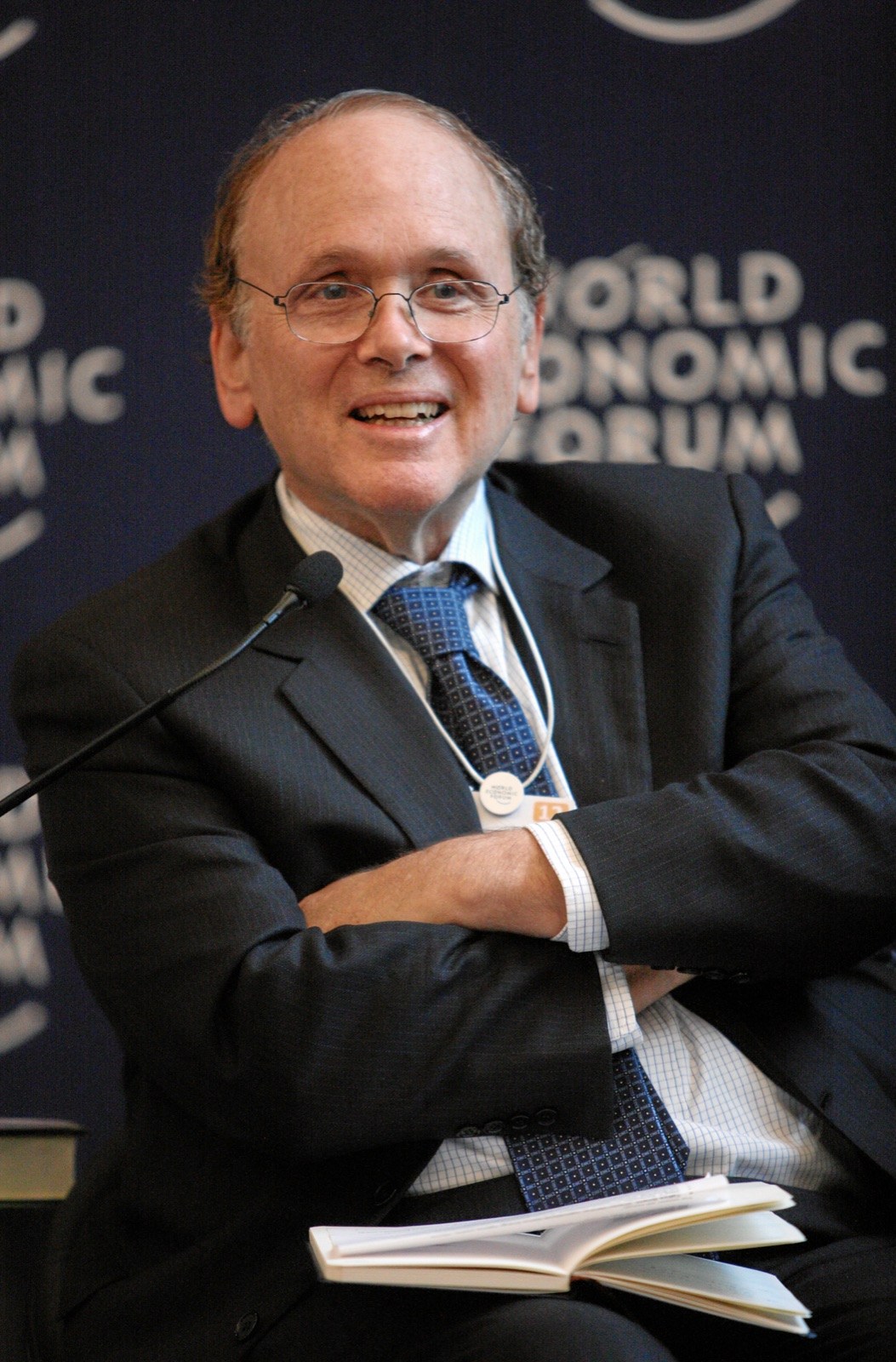
Daniel Yergin
Daniel Yergin is a world-renowned author and expert on energy security and hard power.
Episode Summary
World-renowned author and expert Daniel Yergin joins Sir Richard Dearlove and Julia Macfarlane to discuss who holds the most cards when it comes to energy security and hard power. In the 70s, the west controlled the biggest stocks of fuel - now the majority comes from developing nations. As the Russia-Ukraine crisis exacerbates an already painful fuel crisis in Europe, One Decision examines how the big players use their resources as weapons of influence.
Listen & Subscribe
- Watch on YouTube
- Listen on Apple Podcasts
- Listen on Spotify
Transcript
INTRODUCTION
Mcfarlane: Welcome back to One Decision, the podcast where we talk to those at the heart of global decision making, the leaders, advisers, and experts shaping policy in our ever changing world. Today we're looking at a growing issue that is spreading beyond borders, one that is causing pain and hardship to families, businesses, and in some cases bringing entire nations to their knees. The spiraling cost of fuel and the power wielded by those who control its supply. Exacerbated by the COVID pandemic, the return of demand has sparked a global energy crisis that has put a conflict between two nations, Russia and Ukraine, into sharp focus for pretty much every other nation on earth, watching how it's playing out and how it will affect them. Despite growing efforts to combat climate change and swear off fossil fuels, it seems actually that oil still rules the world. Or does it? We've got a fascinating discussion today to tackle exactly that. What is at stake and who is really in control? Welcome to our guest today. First of all, I have my regular co host, Sir Richard Dearlove with me today. Sir Richard, how are you?
Dearlove: I'm very well. Nice to be with you again, Julia. Great to be with you as always.
Mcfarlane: I'm absolutely delighted to be welcoming Daniel Yergin to One Decision. Daniel is the vice chairman of S&P Global. He's also author of The New Map, Energy, Climate, and the Clash of Nations. Daniel, first, I want to set the stage for the current landscape that has a lot to do with the change in resources in the last couple of decades. And I wanna start with the Seven Sisters. The Seven Sisters were the seven major oil companies, which controlled 85% of the world's oil reserves. They were Anglo-Iranian, now BP, Royal Dutch Shell, which was the UK and the Netherlands. We had SoCal, which is now Chevron, Gulf Oil, Texaco, both now Chevron, Standard Oil of New Jersey, and Standard Oil of New York, now Exxon. We now have decades later, the new Seven Sisters of oil, are Saudi Aramco, Gazprom of Russia, CNPC of China, NIOC of Iran, PDVSA of Venezuela, Petrobras of Brazil, and Petronas of Malaysia. Now these new Seven Sisters own around one-third of oil and gas production and one-third of oil reserves. The old Seven Sisters, they've now shrunk to four companies after the consolidation in the '90s. They only hold around 10%. So the International Energy Agency calculates that 90% of new energy supplies will come from developing countries in the next forty years. I'm gonna start with a horrifically vague question, Daniel, which is how is that going to affect the geopolitical map?
INTERVIEW
Yergin: Well, thank you. And I'm very glad to be on with both of you today. Let me say I revised The New Map in 2021, and it still has its big focus on Russia, Ukraine, natural gas in Europe, and the questions of the disruption that is now unfolding in world energy. It's quite a change from the old Seven Sisters and, you know, as you say, the new majors, and it is the national oil companies. I don't know if you included ADNOC in that list, the Abu Dhabi company, but these are most of the world's resources are indeed controlled not by the major oil companies whose signage you see in the forecourt or the petrol or gas station, but by those national oil companies. And so that's where a lot of the power has switched. And key question today is whether particularly in the Middle East, where the growth is gonna come, who's gonna add capacity in a world oil market that even before the war in Ukraine was very tight. And it's really at this point, two companies, Saudi Aramco and ADNOC are really key to the future supply. Plus there's one other super major in there that you didn't mention, which is US shale, which has also had the shale revolution in the United States has had a major geopolitical impact.
Mcfarlane: Right. I really wanna talk to you about shale because it's been a total game changer for the US. I mean, it went from being the biggest importer of energy to one of the biggest exporters. And I believe it's certainly the biggest exporter of gas. And that growth has allowed the US to flex its muscles diplomatically without the need to rely on others for energy security. And we're now seeing in Europe what happens when you do not have that luxury. The US shale revolution has helped the European market to diversify so that now the US and Russian gas directly compete to supply to the huge EU market. But I wanted to ask, given the current crisis in Ukraine and the need to put a punitive stranglehold on the Putin regime's behavior, why doesn't the US simply replace Russia as the source of LNG?
Yergin: First of all, that is happening to some degree. In The New Map, I have a story. I didn't use the first person, but it was a story when Vladimir Putin and Chancellor Merkel were on the podium together at the St. Petersburg International Economic Forum and 3,000 people. And I was given the opportunity to ask the first question. And I started to ask Putin about the perennial question about diversifying his economy so it's not so dependent upon oil and gas. But I mentioned the word shale and he interrupted me and started shouting at me and said, shale is barbaric. It has to be stopped. It's awful. And I realized that the reason he didn't like shale was exactly for the reason, Julia, that you've just pointed to, because US gas would compete with Russian gas in Europe. And for the reason you said that the change in the position of the United States would give it a flexibility that it didn't have when it was importing 60% of its oil. And I think today we see that this is very important geopolitical asset for the United States, but it's also today a very important geopolitical asset for Europe. Without US exports of LNG along with LNG from elsewhere, Europe would have a much more difficult situation standing up in the current situation that we're seeing. But there are limits. There are limits in the capacity to import LNG. Germany is finally getting around to building terminals to accept it. And there's only so much LNG in the world this year, as you say, the US will become the largest exporter. It's happened in six years from starting at zero. But it's still Russia is depending on how you count Europe, what you say is in Europe is between 30 and 35% of Europe's gas. And so there's obviously much consideration now to putting a ban on the import of Russian energy into Europe because of course, Russia's making a lot of money from it. But particularly with gas, that's the least flexibility in the system just because there isn't a lot of other gas elsewhere to replace that Russian gas. But we're gonna hear a lot in the next several weeks about Russian gas coming into Europe and what to what degree it's cut back either by the Europeans or it's cut back by one Vladimir Putin who wants to still try and use energy as a weapon.
Mcfarlane: Richard, I wanted to ask, you have often referred to Russia as a failing sort of declining power. And at the moment it is oil and gas rich for now. But as Daniel points out, they have not diversified their economy and they're hugely reliant on the exploitation of their resources. And given what we're seeing in Ukraine, Putin is clearly running out of time, both with regards to sort of fixing the problem of what his legacy is going to be, and he's wanting to add the conquering of Ukraine to his legacy. It's fairly clear to see that he's going to struggle to realize that ambition. But how is this going to affect Russia's prosperity going forward? Russia is on borrowed time, is it not? Given that it's so reliant on fossil fuels that the whole world is trying to step away from?
Dearlove: Yeah well I think it's true to say that you could classify Russia as having a totally commodity dependent economy. And it has no alternative options at the moment. It desperately lacks foreign investment. It's not able, as it were, to build an economy to replace its current dependence on the production of gas and oil. And it's only in the sort of relatively good financial situation it's been in because of, I mean I was going to say Merkel's energy policy, but the rest of the EU largely went along with Merkel and were willing to make their own economies to an extent dependent on the supplies of Russian gas, which is just an extraordinary development. And as it were it's given Putin the opportunity to roll the, I mean in a way for him this is the last roll of the dice in my view and he's got his calculations probably badly wrong. And I think that you know one can look at Russia as a declining imperial power struggling with its future identity, it doesn't mean it's going to go off the map because there will be alternative markets to Europe for it, and those markets will be in Asia largely, maybe to an extent some elsewhere. But the situation you know where he's built this sort of grip on European economies, which was crazy in the opinion of some of us, I mean I've always believed that this was totally misguided policy by Germany. I mean fortunately if you take here in the UK we consume, you know, our gas less than I think sort of 4% of our gas consumption is Russian and easily switched off, we have alternative sources. And of course, you know, I absolutely agree with what Daniel's saying about shale. I mean this has transformed the prospects for the world economy, and in a way it's transformed geopolitics because over time the Middle East moves out of the center of US foreign policy where it's been for the last fifteen to twenty years, and you know it liberates to an extent it will liberate over time the US from dependence on these rather flaky and difficult governments that, as it were, predict what happens politically in the Middle East. I mean I think that the genius of Daniel's analysis of this, which you know I'm fascinated by, is that at the moment energy security and energy policy is geopolitics. It is the primary driver. So these questions are absolutely central, you know, to future international security.
Yergin: Well, if I can come in there, Richard, in just a couple of points you made. I was in a conversation recently with a moderate Democrat US Senator, and he was saying, we have to rightsize US policy towards the Middle East. And of course, he wouldn't have been saying that were it not for shale. So I think that underscores your point. And Russia, as you say, in some ways is a deformed economy, but it has been an energy superpower. But I think it stays as an energy superpower are ending exactly because the Europeans 180 degree change are saying, we don't regard Russia as a reliable supplier. We don't see energy as part of an overall economic political stability relationship. We see it as unwanted supplies, and Russia's an unwanted supplier. And so Russia, as you say, will find other markets. India is buying Russian oil and certainly China will and other countries. But I think Russia goes from being an energy superpower to a reduced energy power. It'll still be a major producer, but it just won't have that clout that it had when before Putin knocked everything over. You mentioned miscalculations. He miscalculated the effectiveness of his own army. He miscalculated the resistance of the Ukrainians. He miscalculated the willpower of the United States. And he miscalculated assuming that the Europeans were so dependent upon his energy that they would just sort of kind of say protest and this would be Crimea too. But it obviously hasn't turned out that way. Only thing to note is he is making more money from energy right now because prices are so high. And I think his gambit here is to assume that the economic pressures on Europe would be so great that the consensus will break. And that's what's really gonna be tested over the next couple of months as Europe backs away from Russian energy.
Mcfarlane: Right, so both of you hinted at something that I really wanna get both of your opinions on. That is, Russia has alternative energy markets that it can turn to if it suffers a boycott from the West. And so what I wanted to ask was, can Russia really replace all of its Western markets with China and Asia? And secondly, what are we likely to see in the decades ahead as we see a lot of these relationships start to reorient and realign themselves. If we start to have a big energy supplier like Russia and China consolidating their ties and India may be joining the mix, are we going to see a situation where we have energy and diplomatic relations that buttress the Western order? And then we have a similar framework for the rest. Is it going to be like the West versus the rest? And does that kind of new duality, potential new duality, would that affect world peace as it were? Given that a lot of trade relationships can prevent a lot of conflict.
Yergin: Yes, I think a fair amount, Russia will turn more towards India and China's markets. Russia will become increasingly an economic dependency of China. I don't think it's gonna be smooth because if you have sanctions that affect shipping and so forth. So I don't think it will be able to shift all of it by any means. But it does point to something in the language you used is very similar to the subtitle of my wife's last book, which was called Putin's World, Russia Against the West and with the Rest. And if we look at the lineup here, your question really does point to, what kind of divided world are we headed into? And I think that's, you know, I'll turn the floor over to Richard now to follow up on that.
Dearlove: Well it's a massive question as you rightly say. But I think one should accept one fundamental point, that global security is going to rely, if one's looking for what will replace Pax Americana, it's going to rely on some sort of deal between China and the United States. And we're only in the foothills, as it were, of this relationship, and as it now plays out, as the relative power of previous players like Russia begins to sink into the second or third rank even. So I think looking ahead, I'm not a sort of total pessimist about the China US relationship. I think it's quite possible that both of these are trading nations, that they will reach over time an accommodation. But I'm not saying this is going to happen instantly or quickly, and okay, Russia becomes a supplier. And I mean, there will be a division because there's a division of ideology, but there isn't that division of the sort of technocratic world. I mean during the Cold War the separation was almost total, but we have to see now, we have a global economy even in periods of strain where the intertwining of the US and the Chinese economy, and for that matter aspects of the European economy, is already very complex and they're not going to be separated. So I mean the key question is will China, as it were, learn a lesson from Russia's appalling behavior over Ukraine? Will it become a more responsible global player, or will it push it in the direction of saying, God, we might now get away with invading Taiwan? But I mean I think the Chinese are probably saying to themselves, my god, if we did invade Taiwan we're going to be a pariah just like Russia's going to be because the US has this phenomenal power still to isolate a country like Russia with the support of other nations in its position within the global economy. So this is a highly complex question. And I mean the other thing you want to bear in mind about India, and India okay is equivocal about its relations with Russia. It is the largest democracy in the world and underneath the surface there has been a very close relationship between India and the United States because of the threat of the rising China. So you can't sort of push India onto the Chinese side of the equation, it just doesn't work. And of course you know initiatives like AUKUS, this new defense agreement between Australia, the UK and the US, India's hugely supportive of that and they're going to be hugely supportive of that. So you know there complexities here that yet have to play out. And I mean the other thing, here we are talking about Russia as a pariah, and of course it is, but supposing there's a regime change in Russia. So I don't think one should sit here and just assume that we are facing these rather inevitable steps and divisions. And I think why I like Daniel's book so much is that there's consideration in it of so many of the variables, and you know the variables now in the international situation are suddenly very, very complex. And I think it's difficult to draw the new map. I mean he's outlined the factors that will create the new map, but how you draw the new map, that's a challenge.
Yergin: I think it is, as Richard said, and I'm listening to his words, it's right. It's the elements of the new map, but the new map is still being determined. We should note that Russia, I mean, Joe Biden says Russia is a pariah, but it's not a pariah in a lot of the world when you look at where the votes were in the UN to condemn it. So, and it goes back to what you said about, I think Julia said about the rest. But the China question, and I think Richard, obviously that's the great geopolitical question of the twenty first century. But it was really striking to look at the change in language over five years between both China and the United States. Now both talking about strategic rivals, great power, hegemony, unilateralism. And it just struck me and I wrote in the paperback this appendix called The Four Ghosts Who Haunt the China Sea, because it does have a kind of pre World War I flavor to it, where you have a high degree of economic integration, but for ideological reasons, for breakdowns in communications, you end up with a war. Six weeks before the first world war began, the British fleet made a friendship visit to the German ports. Six weeks later they were at war and that kind of role of accident and contingency. So how the benefits of that integration, which is so great, offset the strategic rivalry. And I think that you made a point, what you're suggesting, the Chinese are gonna study these sanctions really carefully and draw their conclusions about it in terms of what they do for the future. May even set up a special institute to study these sanctions.
Mcfarlane: Dan, you completely took the words out of my mouth because I was, Richard, gonna push back on you slightly about what you said about China maybe being put off invading Taiwan because of the force of the US and its power and sort of gathering the world behind it and ostracizing Russia. And I was thinking just as you said, Daniel, what about that vote on implementing sanctions on Russia? Because the countries around the world and the way in which they voted, I think was so clear that you are seeing sort of an increasing divide of the West and Western countries versus everyone else. And on that list, it looked huge because it had individual nation states in Europe backing the US. But if you take the EU on its own, the US actually did not take most of the world with it in implementing sanctions against Russia. And I think Daniel, what you just said about this move toward Axis, that's a far more sort of eloquent way to describe what I was sort of getting at with my previous question, which is, what happens when we see big multilateral alliances falling down this division of either the US led world order versus the rest of the world. And there is something that concerns me about the sanctions on Russia and the way in which the Chinese have responded to it. And there's a quote in your book, Daniel, from the Obama treasury secretary who says, the more we condition the use of the dollar and our financial system on adherence to US foreign policy, the more risk of migration to other currencies and other financial systems in the medium term grows. Such outcomes would not be in the best interests of the US. Now, Daniel, you originally quoted this in reference to the sanctions imposed on Russia after the Crimea crisis. And of course, Putin has just gone right ahead and tried to invade the whole of Ukraine. So we're seeing, you know, China working on a financial system underpinned by the renminbi. We're seeing Russia trying to insist that its current energy policies be fulfilled in rubles and a lot of countries resisting that. What are the long term prospects for countries like Russia and China trying to work outside the US dollar payment system? Is it viable or are we going to start seeing a rival global financial system to challenge the US hegemony that the Chinese and the Russians are so obsessed with not dismantling, but bypassing?
Yergin: Well, I think you've described it. I mean, before the war, they were already pushing to create alternative payment systems because of course there is, what was it? The French president said the inordinate privilege of the US dollar that financial transactions pass through New York, which is part of what Richard called the Pax Americana. So you just see, the Chinese and the Russians have a strong interest in trying to act in other currencies. Can you have the RMB being a non convertible currency, but still have it be a reserve currency? Does it go back to the dollar anyway indirectly? But you see the signs where the Saudis talking about pricing some of their oil to China in Chinese currency. So I think coming out of this, it will be one of the things that Chinese, Russians and others will look at, which is how do you accelerate a divorce from a dollar denominated international financial system? Because that's where the power of sanctions ultimately come from.
Mcfarlane: Well, I mean, one sort of question that all of this leads on to me is we keep talking about China rising and China displacing the US as the world's superpower. And the financial system is one way which sort of heralds this change. For now the US is on top. Is it certain that China will overtake the US? Is that really written into stone?
Dearlove: Of course it isn't written into stone. And I think that, you know, this is one of the tropes of the current international climate. And you know if you want me to make predictions, which I'd like to do rashly, there's no way that China is going to overtake the United States internationally. I mean look, the one favor that Putin has done us is to demonstrate that you do not want a country like Russia as your closest friend, if you see what I mean. And in a way that almost applies to China too. It's going to make a lot of countries that are sitting on the fence very, very wary. And you know what's happening in Ukraine is going to endorse the American brand. Actually it's going to endorse it politically, it's going to endorse it sort of socially, intellectually, and I mean I think that it's also going to endorse it economically and monetarily as well, and that there's no way that the renminbi is going to yet threaten the dollar in the US financial system. We're miles away from that. And the one thing that the United States economy has in spades, and it's quite remarkable, is this ability to generate new wealth. And I'm afraid that what we are learning is that totalitarian autocracies, however clever they are, and China is very clever, do not have this built in ability to create wealth and to generate wealth through society with the rapidity of the American model. I mean, I accept that China has achieved remarkable things economically, but it started from a very low base, and internally it's been very successful. Internationally one has to ask a lot of questions. I mean if you just take Belt and Road policy, it's beginning to hit a brick wall in all sorts of places, and a lot of China's economic partners are now wondering how wise they were to get themselves so deeply involved with China economically. The other thing I think that one should accept is that we take China's economic rise for granted. We think we're looking at a sort of general upward graph, with variations in the speed of growth and its ability to increase its GDP, but China is not politically stable, and I think we should assume that it will face political crises, massive political crises, through its history as we look forward. It's not going to escape them just because Xi Jinping is an all powerful leader at the moment. And I mean the fact is that what's happening in Russia will cause a political crisis in Russia at some point in time. It's difficult to predict when. So I'm not a pessimist when I look at the sort of US position globally because I would argue that the US has many built in advantages which its main competitors do not enjoy or do not enjoy on a scale of anything like the US economy or the US political system.
Mcfarlane: Right, I mean I think one of the problems we're dealing with is we're all sort of pretty clear in the understanding that we need to cut back on fossil fuels. But in the meantime, we are hopelessly reliant on them, which is where so many of these problems come out. And so on that, I just want to ask about the current oil instability that is sparking such an acute looming cost of living crisis in a lot of countries in the world, especially here in the UK, but quite a lot of others too. And, Dan, I wanted to ask Saudi Arabia, ostensibly a strong ally to the West. They've consistently refused to direct OPEC to boost oil production despite huge pressure from oil consumers like the US, Japan, and India to try and cool the market. What have been Saudi's reasons for doing this? And is it exacerbating an already strained relationship that it has with the West?
Yergin: Well, I think that at this point, there are only two countries that have what are called spare capacity to add oil, is Saudi Arabia and the United Arab Emirates. And I think the Saudis, you know, they're still conditioned by the price collapse of two years ago when prices just two years ago, prices were below zero. And so they wanna maintain what they see as their stable framework, which is by the way, a partnership with Russia in this thing called OPEC plus. And so they've been reluctant. If suddenly the Saudis and the UAE open the taps, then you'd have almost no spare capacity left. And that would make oil markets very nervous as well. I would say the use of the strategic petroleum reserves has been a very wise thing to do here to kind of buffer the situation. But, and I'll turn this over to Richard. There are clearly larger geopolitical issues between the US and Saudi Arabia. It's not the same relationship it was. There's still a deep relationship, but it's not the same relationship that it was. And at the very top level, there's a lack of connection. And so the Saudis have stuck to this OPEC plus agreement at least so far, which is just to bring back 400,000 barrels if they can, the producers every month into the system. But I think as this goes on, all international relations are gonna be under pressure. Richard talked before about the relationship of India, Japan, Australia and the United States, but India also getting much of its military equipment from Russia. And I think we're gonna see these arrangements in the Middle East under pressure as well. But I think I'd like to turn over on the geopolitical side to Richard.
Dearlove: Well, on Saudi. I mean the Saudis have one geopolitical lever that they can pull, and they're very sort of scheming about the way that they do it, that's over the amount of oil that they lift and sell, and what effect that has on the global price and the global energy market. And at the moment, as Daniel's indicated, there's a poor personal relationship, and personal relationships are really important in Saudi society between this administration and the Saudi leadership. And of course the other thing the Saudis are deeply fed up about is Iran, and the fact that Biden has not continued to follow Trump's policy over Iran. And if they've got a lever that they want to push back and make sure that there isn't a reconfirmation of the JCPOA, one of the ways that they can do it is by not agreeing with the United States over oil production, and maybe that they can squeeze a guarantee and a change in that issue, and it's much more important to the Saudis at the moment than probably anything else. So you know, you get into some really complex and difficult calculations. I mean I would also say at the moment that Salman, I'm talking about the young Salman, not the king, the crown prince, I mean he's a very arrogant, opinionated, and self confident individual, and you know he's probably relishing his moment of being able to say no to the United States even if it's only a sort of three quarter no. But I mean I think that realistically the Saudis actually when it comes down to it are going to end up wherever they are at the moment, they're going to end up closer to the American position globally than they are to anybody else's. And I mean I don't see the Saudis fundamentally changing their political stance. I mean just going back to that issue of growth, and I agree totally with Daniel that growth is a good thing, but in a way it's growth plus distribution. It's where the growth goes, and of course the great need for growth is not in the first rank of nations, it's in the developing world, and the ability to sort of trickle down the benefits of growth into those countries. And the other thing I think is really important on growth, you know we've got an appalling record of Malthusian prediction on population growth. All the models that have been used have at one time or another broken down. So it may well be that the key to the climate crisis is decline in the world population. And bear in mind, last year in Russia the population unbelievably went down by nearly a million. China has got the most aging population of any major country because of the one child policy, and its continued population growth is by no means guaranteed, probably it's going to reverse. And the question is, in other parts of the world where there's fast growth, are they going to be counterbalanced by slowing growth in places like Europe where one child family is voluntarily now very common? So it's very unfashionable to talk about population growth in relation to climate change, but it ought to be central to the discussion and the argument. Unfortunately it's politically incorrect to link the two, and I think that's one of the big failings of the climate change debate.
Yergin: Anyway, to go back I just got to jump in on one thing because I mean, Richard made a number of really important points. One other thing, some things happen in the world that people don't pay much attention to. And both Saudi Arabia and the UAE have been subjected to regular missile and drone attacks by the Houthis with Iranian support from Yemen. And my understanding here in Washington, what I hear is they're very annoyed, annoyed isn't quite the right word, upset that the US has not taken it very seriously in their view in terms of helping them deal with that situation. And so, when missiles fall on you, it has an impact. And so that's one other element in here that complicates that picture and that, what did you call it, Richard, at three quarters?
Mcfarlane: Yeah. Daniel, you spoke in your book about the G2, which is the relationship between the US and China, which is worth around 40% of world GDP and half of its defense spending. Is the G2 big enough? Is it important enough to override the mutual distrust rivalry and competition between them? And what do you make of the Thucydides trap?
Yergin: Well, Thucydides trap is something I talk about in The New Map that comes from Professor Graham Allison about what happens when you have an established power and a rising power. How often do they end in conflict? How often do they find an accommodation? And, even Xi Jinping has picked up and has actually talked about the Thucydides trap. I think that's the crucial geopolitical question for the twenty first century. And these are two different kinds of political systems. China has changed in the last decade from what China was like before. And the distrust on the US side is much greater. I think there's on both sides actually what you've had is an accumulation of mistrust, even as the economies are so intertwined. I mean, Americans discovered that the medicines they were taking during COVID were manufactured in China. They had no idea that was happening. So I think managing this is gonna be hard particularly when you have the domestic constituencies in both countries strongly suspicious and antagonistic to each other. And my worry is that accidents happen, something happens and that things spiral. And that's why I focused on the South China Sea. It could be over Taiwan but already you've had US and Chinese naval ships coming close to collision. So I think accident prevention is actually gonna be a very important part of the stability of this relationship.
Mcfarlane: Right, and the last question that I wanna ask, one of the things I really, really appreciated about your book is you start talking about how oil has shaped the world and its relationships. And then you go on to what will be the oil of the future and what happens when we move beyond oil and gas. And you use the term auto tech to cover electric cars and mobility services such as Uber and scooters and other vehicles and self driving cars. So tell us more about auto tech and where you see it going in the future and how it's gonna change the balance of power in the world?
Yergin: Well, I think first of all, China is really committed to electric cars, not only because of pollution and climate, but also because they see they're too late to be a player in terms of internal combustion cars, normal cars people have that they put petrol or gasoline into. And so they see this as a way to leapfrog into the world. But it was just a way to say, the automobile industry, I described it was a lunch in Los Angeles in 2003, where the idea was presented to Elon Musk of electric cars. And here we are two decades later and every automobile maker says we're going electric in 2030 or 2035. But it is the ride hailing. At our conference in Houston, we had the CEO of one of the very largest automobile companies. And I think I took away from him that their greatest concern is drivers. Will people wanna own cars in ten or fifteen years? Or will people just, particularly if they're autonomous vehicles, will the automobile fleet really be vast fleets that are owned by companies and you just use it when you need it. And as opposed to everybody when they reach a certain level of income wants a car. And that would be a major change and that would have a huge impact on employment, on the position of different countries. So that's why it's just so fascinating to see these changes and the automobile industry going through its biggest change in structure really since Henry Ford rolled that first Model T off the production line at the beginning of the twentieth century.
Mcfarlane: And who do you think is gonna reap the benefit of those changes?
Yergin: Well, here we get into question, will it be China? Because electric cars, I think everybody is scrambling. I live in Washington and I'm amazed by the number of Teslas that I see on the street now. And of course, governments are really gonna promote them. And maybe that's gonna be one further consequence of high petrol prices, people buying electric cars. But I think let's put it this way. I think the game is on and everybody's trying to figure out how to play it, how to assure their supply chains, how to assure that they can make batteries, that they can deal, have the raw materials. So, you know, I think we're in the first quarter of the match.
Mcfarlane: We've got three minutes left, Richard, just on that, the game is on, who's gonna win that game?
Dearlove: Well I think you know the new auto tech world is well advanced, it's on its way, and it's going to happen. And if you fly over most American cities, excluding the ancient American cities if you see what I mean on the East Coast, they are largely designed around automobiles with petrol engines or diesel engines, and it's going to be a fundamental, social, political, technological, it's going to affect every aspect of life. And of course you probably won't need drivers, and you won't need many mechanics either because you know the moving parts in an electric car are very very few in comparison with a combustion engine. So it's a huge social change and definitely coming, and the question is, you know, quite how long will it take? I think the timeframe as been advertised here in the UK is too condensed, it's going to happen over a longer timeframe, but it's gonna happen.
Yergin: It's electrification of the world. And as Richard speaking, I'm thinking that the corner, I guess you call it a petrol station, we call it gasoline station, they won't have a role.
Dearlove: The world is going to continue to change. And if you go to any small American town, the gas station is where everything else is, you know, if you need to go shopping when the other shops are closed.
Mcfarlane: Wonderful, I think we finished that with one minute to spare. Richard, Daniel, thank you so much, that was a fascinating conversation.
Yergin: Thank you for a great conversation, thank you for reaching out. Oh, best. Cheers.
Mcfarlane: That's it for this episode of One Decision. I'm Julia McFarlane. Don't forget to subscribe so you never miss an episode. And get in touch. What decisions have impacted your lives and your part of the world? We would love to hear from you. You can find us on Twitter. Our handle is at one decision pod, and we're on Facebook at one decision podcast. See you next time.