Episode Info
- Season18
- Episode2
Hosted by Christina Ruffini and Sir Richard Dearlove
Guest
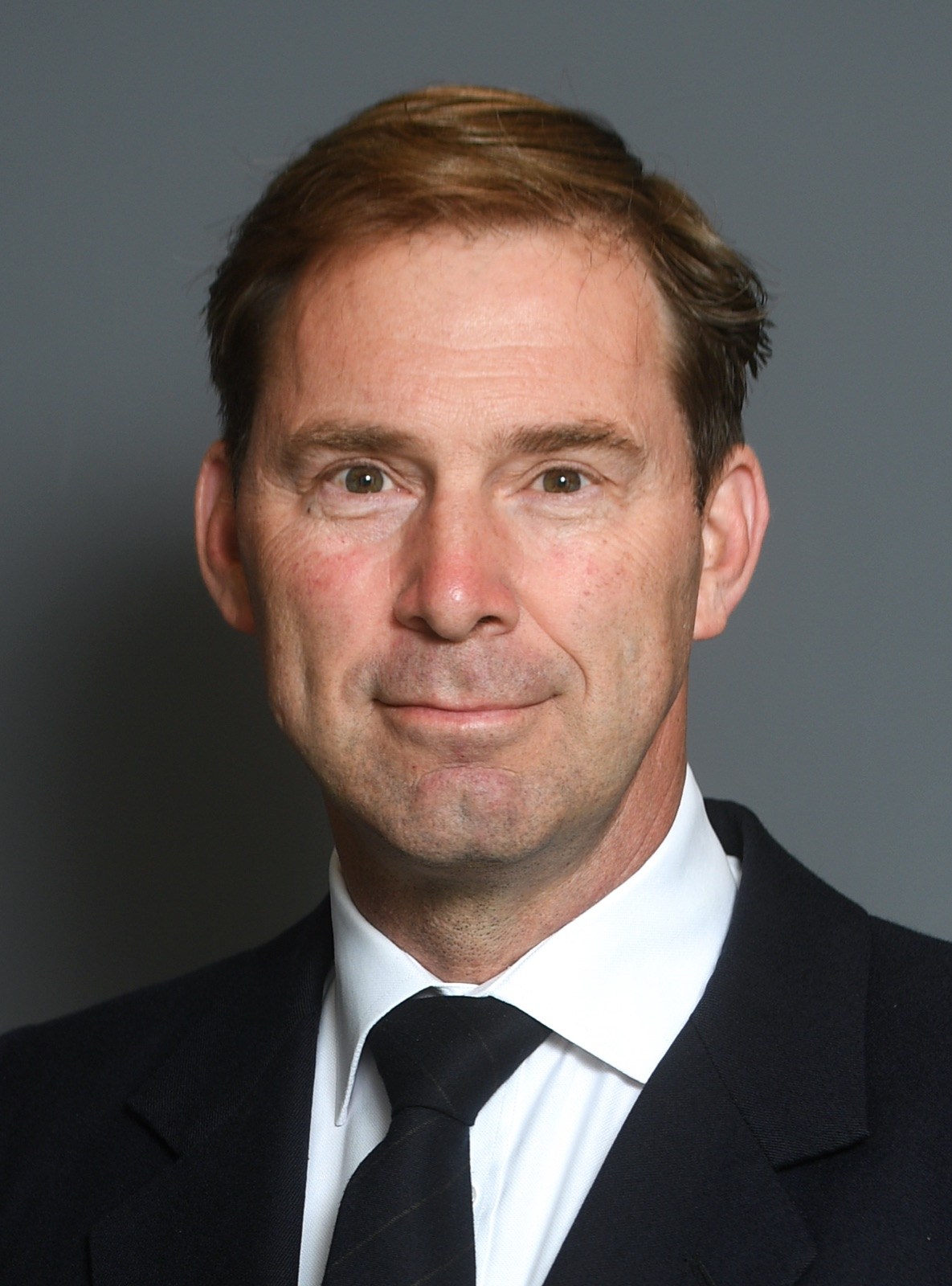
Tobias Ellwood
Tobias Ellwood is a British Conservative Party politician who serves as the Chair of the House of Commons Defence Select Committee and recently visited Kabul to assess conditions.
Episode Summary
Afghanistan is on the verge of a collapse with the majority of the 40 million Afghans there living in poverty ruled over by the Taliban—hardline militants imposing the strictest interpretations of Sharia law. One Decision’s Julia Macfarlane and Sir Richard Dearlove sit down with British Conservative Party politician Tobias Ellwood who serves as the Chair of the House of Commons Defence Select Committee to discuss his recent trip to Kabul. Ellwood details the dismal conditions he saw on the ground and that Afghanistan, despite the Taliban, needs our help and is advocating for global reengagement and the reopening of the British Embassy.
Listen & Subscribe
- Watch on YouTube
- Listen on Apple Podcasts
- Listen on Spotify
Transcript
INTRODUCTION
Mcfarlane: You're listening to One Decision, the podcast that looks at the choices made that shape our lives. I'm your host, Julia McFarlane. Every Thursday, along with my co-host, Sir Richard Dearlove, the former chief of Britain's Secret Intelligence Service, we explore some of the biggest choices and issues facing our world, talking to the players and influencers, making, informing, and shaping these decisions. Tobias Ellwood is a prominent lawmaker in the UK for the ruling Conservative Party. In 2002, his brother was killed in the Al Qaeda linked Balinese bombings. Tobias, a former soldier, is now currently chairing the Defense Select Committee. Ellwood was at the center of a storm recently following a recent trip to Afghanistan, where he faced a backlash after uploading a video from the streets of Kabul, seemingly complimenting the Taliban for what he perceived as a hugely improved security situation. He retracted his comments and apologized for what he said was a badly phrased but well intended message that Afghanistan, despite the Taliban, needs our help, and that current UK policy to criticize from afar, the embassy remaining closed, rather than directly engaging on the ground, was not helping the people of the stricken country. Now we wanted to sit down with Tobias Ellwood to talk about this, not to relitigate his comments, which he has already said he now regrets, but because in the media storm that ensued, some pretty important issues and questions that he raised got drowned out. Afghanistan is on the verge of collapse. 40,000,000 Afghans still live there. The majority, according to the UN, in abject poverty, ruled over by hardline militants imposing the strictest interpretations of Sharia law. If Afghanistan under the Taliban continues to be treated as a pariah state, could it lead to the kind of conditions where terror groups use it as a safe haven from which to stage attacks against the West again. Tobias Ellwood argues that engagement, not endorsement, is now needed. Let's get right to the conversation.
INTERVIEW
Ellwood: I was pleased to get back to Afghanistan. I'm really sorry that some of my poor communications overshadowed the wider messaging that this is a country that feels very much as if the West has given up on it. It's the sacrifices that we lost, over four fifty lost, and what's happening with women and children there as well, the restrictions and so forth. Big questions for the West. This country's got about two years before it implodes, seriously implodes, and that's gonna cause some real challenges from a terrorism perspective, incubating there again, a vassal state, mass migration, and to take people, I think from what I saw to explain, particularly, it's such a raw subject, and there's an absolutist approach as well. Do you dare entertain the idea that you engage with an organization such as the Taliban that has such a ruthless interpretation of Sharia law? It got the spotlight, not for the right reasons that I wanted to, and these are lessons learned. But, you know, you either recognize and learn from what you've done or you are beaten up by it and you don't ever go there again. And, it's not in my inclination to duck away from difficult questions. And the reasons why I went to Ukraine, in fact, was about uncovering some of the difficult decisions, some of the big challenges, and prompting Britain to play out perhaps a greater role than it's currently doing, or we're getting back there, but perhaps as we've departed from over the last five to ten years.
Mcfarlane: You have withdrawn what you said, and as you said, regretted how you phrased things, you've made that clear, and I don't necessarily want to go into that, but I bring it up because you raised an important issue, which was what you saw on that recent trip to Afghanistan and things that you saw, things that you observed that led you to decide to issue that public call for reengagement with the Taliban, despite a lot of the problems that still exist. As you mentioned, the ongoing oppression of women and girls, the myriad human rights abuses. So given that we are a couple years out of the withdrawal, what exactly did you observe that made you feel that the time is now right for a more pragmatic approach to Kabul? I mean, you said just now there's two years before it implodes. Why why two years?
Ellwood: Yeah. I mean, those familiar with the previous regime will know that, Ashraf Ghani's government was supported. 75% of it, of his budget came from the international community. That has now disappeared. The Taliban know that they can't keep a country such as Afghanistan going, can't look after the 40,000,000 people. Right now, half of all children under the age of 11 are getting no education whatsoever. No education because the schools don't exist. The Taliban don't have the money to pay for those schools. So this is the tough, very, very tough question we have to ask ourselves. If children are getting no education or half of them are getting no education whatsoever, they become very easy to prey upon to then become extremists, to move them into a very, very dark place. And I fully appreciate, I really do this absolutist approach that the Taliban are just so abhorrent that we should have no truck with them. My brother was killed by an organization linked to Al Qaeda, and that's what took me to visit the country many, many times over the last decade or so, and I wanted to learn what we were doing there to help those people who absolutely do feel abandoned, there's no doubt about it, but this is a weird silence that you have now where security is very different and the many people who have witnessed war for three or four decades, I mean since the 1970s, they've not seen a relative peace like this. And that's the really tough question. I doubt it. What I tried to do was to lift a lid on things too quickly. I tried to ask questions which perhaps people aren't ready to, or still angry about, about what happened, and I fully appreciate that. You learn lessons in politics.
Mcfarlane: What steps exactly do you think we should take? You did mention in that video, we don't have our British embassy open yet. How exactly should we reengage economically, diplomatically? Give us specifics about what you think we should do.
Ellwood: So there are some countries that have reopened their embassies. The EU has got their embassy functioning. The United Nations compound and the head of UNAMA is operating there as well. And wants the international community to engage. Engage doesn't mean to recognize, it's very different here. But what you need to do is appreciate that there is a population here, a country here that the Taliban is not gonna be able to support. The economy will collapse, terrorism will return, mass migration will take place in my view, unless there is some form of international engagement to support the people. Now, clearly that has to be done and perhaps it is conditional, I think it should be on vast improvements to human rights, to the conditions for women to work, to girls to be educated and so forth. But if you finger wag from afar, if you cut the Afghan aid budget as we've done from 300 to £140,000,000, that shows we have abandoned the country, and that's not gonna influence anybody in Afghanistan. I don't doubt that these are very, very tough questions. I was simply saying by opening the embassy up, then they can have the conversations, learn more about what's going on, and put the issues to the Taliban. How does a female go to a doctor if you're saying doctors can't work? And clearly that is a dilemma the Taliban need to recognize that they're going to have to have female doctors. They're getting at work and then you start to unpick the fact that there is massive differences in views within the Taliban itself between the hardliners and those that recognize that a lot of this just simply does not make sense. You cannot have, you know, half the population not working when there is a requirement to do so simply because of the female way of life.
Dearlove: But Tobias, who actually has any purchase with the Taliban? In my experience, the people who might have acted as intermediaries, obviously the Pakistanis have been important, but they seem to, as it were, play the game as a strategic game designed to, you know, promote Pashtun Pakistani interests. If you look at the Emirates, you know, where the Taliban parked themselves during negotiations, I mean none of these people in the end have really been able to deliver very much indeed, and that's what I find alarming. I mean the Taliban seem to be impervious to any outside engagement, and even if you do make progress with them, very often then, you know, there's a deception. I mean, I was very intrigued by what you said about drugs production, but I mean the fact is that the Taliban at other times have used drugs production to indebt farmers and, as it were, to gain money on the international market. And at the same time, they're allowing hunting parties in from The Middle East to go in large scale transport aircraft, land on country strips, go off hunting rare types of deer and things like that. And then allegedly, some of them are flying out with cargoes of drugs as well. And I mean, none of this has stopped. It's it's really very catastrophic.
Ellwood: The country is full of paradoxes such as that, but certainly because there is no war, so this isn't a credit to the Taliban, it's simply a credit to the fact that there is an absence of war, so security is different. Opium production is down. That is due to the Taliban making it very clear that they've illegalized this partly because I understand the figure I was given, if it's true or not, I don't know, but one sixth of the adult population is suffering from addiction and they have no capability. This is the way the NGOs come in to be able to support those people who are absolutely addicted to all sorts of opiates and things like that. And then corruption is very, very different as well because that actually defined Ashraf Ghani's government as it did Karzai as well. Everybody was on the take. And the whole centralization of a Western answer solution being imposed from Kabul. This is to fully unappreciate how Afghanistan has run and functioned going back to Dost Mohammad's time, you know, hundreds of years ago. So what's happened is that there's been an opportunity for the real Afghan people to start, you know, the Afghan farmers and so forth to move on to other crops that then now have a market that they can actually sell because people feel safe to be able to carry their goods, their produce to different parts of the country. Now the big questions therefore from the West is why, you know, why wouldn't we be able to do the same thing? So and it's simply because the security is so much different.
Mcfarlane: I think it's right that you raise the issue of corruption. There have been a lot of reports that corruption has fallen since the takeover of the country by the Taliban. The exchange rate has stabilized. Inflation is under control. And part of this, I've read, is due to this very, very tough stance that the Taliban have taken, the threat of Sharia law punishments, including hand amputation, which is unsurprisingly doing a great job in deterring customs officials from taking bribes. The World Bank said recently that the proportion of businesses that bribe customs officials is down from 62% to 8%, which is quite extraordinary. I mean, stamping out corruption does make it easier for the international community, for charities, and businesses to engage in a country. But when you're dealing with strict Sharia law governance, that presents a whole other host of problems, does it not? I mean, the Taliban, they've also banned music and musical instruments. They made a bonfire of instruments in Herat just a week ago. There is, of course, you know, the closing down of all the hair and beauty salons in the country. You've already raised the fact that half the population, women and girls, have been locked out of the economy. How do you convince NGOs and charities, insurance companies to do business in Afghanistan when you're dealing with this kind of ideological hardliners that impose all of these other restrictions on everyday life?
Ellwood: And that is the channel I don't have any answers, any direct answers. I'm simply saying it shouldn't be me. I'm the only member of parliament that has gone. No minister has gone there. There's no to better understand because unless you do engage, you're not going to be able to leverage any influence from afar, particularly as I say, you actually cut your budgets, your support budgets for Afghanistan and what we're seeing today as well with some of the refugees, some of the Afghan refugees now being made homeless here in The UK, it clearly is a very raw subject, and that is something that I didn't make clear in my initial communications. What I saw was, because I tend to look at things more strategically, is to what are the dangers of us not doing anything at all? And they are huge. They are absolutely immense. In the same way where I'm sure we'll turn to Ukraine, what are the dangers of us absenting ourselves with this or signing some form of a deal or even just turning a blind eye to this. You're right, nowhere in the world is anybody interpreting Sharia law as we see it there. And again, you need to learn more and understand the tensions between the old hierarchy, the Haqqani group within the Taliban itself, and then the younger moderates who actually recognize, like I mentioned with the example of doctors, you need female doctors because only female doctors can deal with female patients. Now what happens is that people are given licenses everywhere where I went from the airports to the markets everywhere and the shops and so forth, women get licenses to work. And that's if you like the quiet way that they're getting around the political messaging which goes across the world that women can't do all these things. I don't dispute and stand with absolutely that we should challenge. The question is how best do you challenge? How best do you affect change? Saudi Arabia is another great example of how do we get a country that also did not treat women well and they themselves went on the journey. It's now they've still got a long way to go, make it really, really clear as has Doha, Qatar. A lot of what's going on in Qatar has been exposed because of the World Cup. The question is as to whether how effective you can be and whether you're doing this from afar or whether you can do it by quiet engagement and opening the embassy. That was my simple call to action. Please open the embassy because actually that's what Britain does. We have a history of leaning forward, stepping forward perhaps when others hesitate to try and understand the situations with more detail rather than just a sort of generality and then back away saying, we're not gonna do anything with because you are so awful. I don't take away from the ruthlessness of the Taliban, and I did not make that clear the first time I went there.
Mcfarlane: I appreciate that. I'm really interested in what you said about how there is sort of dissenting opinion within Taliban, and whether you think that there may be a power struggle down the line if fissures continue. I mean, the supreme leader, Mullah Akhundzada, I probably butchered that pronunciation, he is a massive hardliner. I read that he recruited one of his own sons to be a suicide bomber. What are the chances that Afghanistan would liberalize is not the right word, but may soften some of its stances under such an ideological hardliner, or do you think he has to really be replaced in order for the country to improve in some of these areas?
Ellwood: And these are the exact questions that should be better understood by opening up our embassy, by better engaging and appreciating the whole construct of complex construct of the Taliban. And I simply cannot give you a clear answer. What I can tell you in the series of meetings that I had with the Taliban, and I was pretty brutal with my own questions, what are you doing about women? What are you doing about terrorism? They conceded that there are many people that are upset just being members of the Taliban because when they were told that they were going to advance towards Kabul they were gonna be able to martyr themselves. That's what their promise was. Yes, you'll be able to go have your fast track to paradise and go to heaven. But no, they've been denied that because the West collapsed so quickly and then suddenly they're left here on this planet unable to fulfill their dream. So many of them now, and this is the concern for many of the Taliban, they are now joining ISIS-K. They're joining a more extreme grouping who are better funded to some degree, and therefore causing, as I say, more problems, which then prompts the Supreme Leader and others to come out with ever more ruthless interpretation of Sharia law. So it is complicated, there's no doubt about it. As I say, the bigger picture is the Taliban were never a government in waiting. They were never able to sort of take over a far more complicated country than it was when they first were running things prior to 2001.
ANALYSIS WITH SIR RICHARD DEARLOVE
Mcfarlane: Richard, I think Tobias raises a really important part of this, which is, and he said earlier, part of the stability is because unlike previous civilian governments in Afghanistan, the Taliban haven't had to deal with fighting an insurgency. However, there is that concern that members of the Taliban could splinter away and join ISIS-K, and it's apparently happened already in a few occasions. They consider ISIS-K to be their main rival. They're working on stamping them out. Interestingly, the Taliban don't seem to be doing anything to try to constrain Al Qaeda, although they, at any rate, seem to be at a pretty low ebb globally at the moment. But would you say that, for example, the recent blast in Pakistan is a sign that terror is returning to the region under the Taliban's influence? I mean, the New York Times described that story as the latest sign of the deteriorating security situation in Pakistan where some militant groups have become more active over the last two years since finding a haven in Afghanistan under the Taliban administration.
Dearlove: Well, I mean, Tobias has already indicated, this is a really complex question. And I think to generalize maybe from okay, one very serious bomb attack in Pakistan and let's say it's symptomatic of this or that development, this is a pretty dangerous path to go down. You can't extrapolate from incidents in my experience. And I think the security situation has improved in Pakistan overall over a long period of time, and the Pakistani military have been more effective at isolating and, you know, defeating some of these extremist groups. But, you know, the problem hasn't gone away. And I think the other thing that we, you know, we find it so difficult to get our head around in the West is the sort of tribal elements which operate within these religious groups and the tribal rivalries. So I think it's dangerous to generalize. The situation has improved in Pakistan. Maybe there is some evidence that it's going backwards again. And of course, you know, the Taliban, even the Pakistani intelligence service, which traditionally has had this link with bits of the Taliban, you know, do not control it. These are not black and white movements. They have all sorts of nuances. But I personally don't believe that you're going to see a fundamental change within Afghanistan at the moment because the Taliban always has been a sort of aggregation of regional groups that have their regional interests. And as Tobias has already indicated, they had no preparation, no experience, and no sort of competence to become the government of a state that had modernized massively over the last twenty years. And I mean that's really part of the problem. I mean you have a medieval religious movement which is based on local loyalties and dominant local figures trying to run a complex country. I mean, it's a recipe for complete disaster, and that's the disaster we're experiencing. I agree with Tobias in one way. I mean, his basic thesis that we should try to engage, that being isolated and detached isn't doing anybody any good. We need to understand what's happening. And if we can reopen the embassy on the ground, so much the better. I mean, I've always believed that the better option is to talk to one's enemies if possible and to find, you know, a way forward rather than having to fight them. And there's a sort of basic logic and common sense about that.
THE WITHDRAWAL
Mcfarlane: Tobias, on the withdrawal, in 2021, you wrote in an op-ed for The Guardian, a mere two and a half thousand US troops with allied support enabled Afghan forces to hold the line and to contain the conflict. Yes, it was messy. Certainly no blueprint on how to successfully nation build. But by staying, we offered assurance and advanced stability and defended our values. The folly of our withdrawal and ceding Afghanistan to the very insurgency we went into defeat has not only unleashed another dark chapter in this troubled nation's modern history, but also is confirmation of just how weak the West has become in shaping our world for the better. A pretty searing indictment on the decision to withdraw. It was a decision that President Biden made not to keep a small contingent there, going against the advice of his military generals at the time. Do you blame President Biden for the mess Afghanistan is in today? Obviously, it was his predecessor, President Trump, who signed those agreements with the Taliban in Doha a few years ago, but he could have kept a small contingent in the country as you said. How much blame do you ascribe to his actions?
Ellwood: To him personally, I mean, don't forget President Biden then endorsed the very same policy. I think it's a reflection of the West, which was my final comments that you read out of just how weak the West has become, how risk averse we've become in standing up to defend what's important to us, to understand the world around us, to help shape the world as a force for good. It became politically expedient for President Trump to announce to the American electorate, we're withdrawing. Troops are coming home. That wins votes. Rather than going the more complicated route, which would be explaining why we needed perhaps to lean in and better understand Afghanistan. I would, as I hinted in that bit you read out, the modeling of what we did to rebuild and stabilize was flawed. I touched on it before. A centralized model, not understanding the indigenous capabilities, the cultural setup, the tribal networks themselves to be able to empower local communities to stand up and thrive. And we didn't appreciate that at all. And what's so sad is that we've been in this country a few times over the last couple of decades. I went to the cemetery in the center of Kabul, really moving, to go in and see the graves, you know, of those fallen from previous campaigns, but also on the wall there, more than 450 names of British armed forces personnel killed in that effort to try and stabilize a country.
Mcfarlane: But President Biden, how much blame do you think he shares in all of this?
Ellwood: Well, again, he then endorsed because the electoral processes are what how you win elections now to explain the bigger picture, the longer term consequences, the reason why you need to lean into these things, don't win votes. I mean, go back. Look at the map of the world, the way we've where we've jumped into and then jumped out of. Iraq, Syria, Yemen, Libya, Somalia, you know, all Libya, Afghanistan, all these places the West has wandered into, found it a bit difficult, then somehow, Mali is the latest one, and Sudan is probably the best example. That's a living example of where things are starting to go pear shaped, where we don't really have an action plan to support, but we're no longer collectively willing to lean in and do the right thing. And the consequence of that is it's been noticed by our adversaries and our competitors.
Mcfarlane: But President Biden could have chosen to keep that small contingent, as you said. Do you think that there is a burden of responsibility on him for how this has all ended up, on him personally for the decision that he made not to keep a small group of troops there?
Ellwood: Yeah. I think the Western approach, the Western, you know, political thinking here didn't appreciate this picture. In fairness to President Biden, he's been very skeptical about this from the very start. He challenged Obama about this, but like I said, it's the troops alone would not have solved it. The Taliban would have eventually got the upper hand unless the approach, unless we'd understood localism that the Taliban appreciated because that's how Afghanistan runs. It's not run from Kabul. It's run from outer Kandahar. It's run from around Herat. It's run from Mazar-i-Sharif. It's run from Jalalabad and so forth. It's run from these little caucuses and groups and so forth, these fiefdoms, and that's how it operates. And indeed most countries generate that way. Our country developed it, you know, the original kingdoms that we had in The United Kingdom. It takes a long time for a country to mature until the center is strong enough to be able to then have full power and a relationship with all the local communities.
Dearlove: Tobias is absolutely correct on this issue of the regional groupings in Afghanistan and the local groupings. I mean, I think it's a terrible shame that if you go back to our original post 9/11 intervention Afghanistan, I thought the best idea that we had, which could have been followed, was this provincial reconstruction teams that would have been put in locally with local leaders and worked closely with local leaders rather than going for a Western centralized option. And it's a great shame that that original idea, I don't know, I retired in 2004, and it was the main policy initiative for Afghanistan that we would work locally and put teams into each province and work with the local leaders, whatever their complexion would have been, and I think we would have had a much better chance of not, as it were, solving the problems of Afghanistan, but helping the Afghans manage their own affairs much, much better.
THE WEST AND THE DEFENSE BUDGET
Mcfarlane: Well, Richard, there's something I'd like to talk to both of you about this because Tobias went on actually in that same op-ed, and he said something that I know you'll be very, very interested in and have lots of opinions in. He went on to say, the West's period of dominance under the Pax Americana is revealed to be the shortest of all those great powers that bestrode the world. President Xi's China is waiting patiently. Tobias, you were very down in the dumps from the sounds of it when you were writing this article. And this was, of course, a year before Putin launched that reinvasion into Ukraine. And everything that has happened since the rejuvenation of NATO and the really interesting prioritization of European security that has been demonstrated by the British government. Surprise, surprise. Has your faith been restored a little in the time that has elapsed since, or do you still feel the way you did when you were describing this ebbing of Pax Americana, this period of Western influence coming to an end?
Ellwood: I still feel I'm knocking my head against a brick wall. I don't think the penny has fully dropped. There's a better appreciation that our world has entered a very bumpy chapter, that we've entered a darker period where the real focus of power is shifting phenomenally. But what are we gonna do about it? The integrated review refresh recognizes that China is a growing force, but our defense budget stays stuck on a peacetime 2.2%. You know, we've got cuts to our air force, cuts to our navy, cuts to our army as well at the very time that we're placing ever greater demands on them, you know, not least in NATO, but elsewhere across the world. This really is a 1930s feel to the world. We've got international institutions unable to hold errant nations to account. The United Nations is paralyzed. We've got countries weaponizing. We've got shift in power bases. We've got new alliances forming as well. And ironically, we've got the biggest different to 1930s, the biggest military alliance, most potent alliance ever formed, NATO, actually essentially benched if you like with a fire in Ukraine, but they're not willing to sort of push it out. And the difference with the 1930s and today, just to add this, is of course climate change offers its own dimensions. And then technology itself is really changing the battlefield, the character of war itself. We've entered a really dangerous period. Britain normally leans in more so than other countries, as I've said, but we can't do that on a peacetime defense. We need to be moving to 2.5, 3%. But we're too hesitant. We're too risk averse. We get spooked by some of the rhetoric that we're hearing from both Beijing and indeed from Moscow.
Mcfarlane: Richard, I think Tobias raises a lot of really important issues with the defense budget, and actually it was quite memorable. Was it last year when Tobias you were very, very upset in a liaison committee hearing over cuts to the armed forces at a time of war when it was announced that there was, I think, £24,000,000,000 being invested into the armed forces over four years. And Tobias claimed that that didn't even touch the sides. It went straight to renewing our nuclear deterrent. And you were pretty apoplectic about that. Richard, The UK hollowing out its military at a time when we're shipping an awful lot of hardware off to Ukraine, are we leaving ourselves vulnerable?
Dearlove: Of course, we are, and I'm in the same boat as Tobias. Maybe there are nuances between us, but look, what Tobias is saying is spot on. We need to have a much larger defense budget in The UK. I would say actually we should be spending above 3%. We need to rethink our strategic position and you know, we need to work hard on relationships with our allies as well. We can't do this on our own. We can make a contribution to do it on our own. I mean global Britain, in my view, if you accept this concept, it should have a larger navy. The war in Ukraine shows us that we need boots and armor on the ground. We need an air force which is increasing in size and capability. We need to be investing in the special relationship with The United States. We need to be taking a lead position in NATO. We need to think about how we deal with France and Germany who are reluctant in terms of well, the French have done something recently to improve their defense budget. The Germans have spoken a lot about increasing their defense expenditure but aren't doing anything. And this is as important as the National Health Service. The problem is it doesn't win votes and somehow our political classes Tobias has the good fortune to be part of that and has some influence. You know, I just shout from the sidelines, need to get real. We have a big problem on our hands. That's expressed at the moment by the behavior of Russia in terms of European security. But behind Russia, we actually have a bigger problem, which is our relationship with the Chinese. And I begin to see some very sensible articles being written in the national press about the seriousness of the Chinese threat and China's capability, you know, having invested an awful lot in technology and you know, we've had this benign attitude towards them and we've allowed them to get a footing in our economy, which we're now beginning to question because of the dangers inherent in that. The parallel with the 1930s is perhaps a good one. We've got to rethink this and we need, you know, if you want to live in a peaceful world, prepare for war.
UKRAINE
Mcfarlane: Tobias, you were recently on the ground in Ukraine with Richard a few months ago, I wanted to just put to you some comments from our guest last week who is Senator Sheldon Whitehouse. And he sort of intimated to us that people in the know in The US, in Ukraine, had sort of hinted to him that what is being described as a sort of a stalling in the current counter offensive, the Ukrainian counter offensive against Russia, was more of a strategic one than any kind of failure of pushing forward on their part, that they're being quite strategic. They are poking holes, looking for gaps in the Russian defense.
Whitehouse: I think there's a very plausible theory that the Ukrainians have a strategy right now to test the zero line in multiple places, to stress the Russian forces along multiple areas along the zero line. Then if that's the theory of what they're doing, then it's not really appropriate to criticize them for having a stalled offensive. This is part of the offensive planning, the testing, rattling the Russians' cages, making them run their people all around. When they do respond, using cluster munitions to weaken the troops at the front lines.
Mcfarlane: I just wanted to get your thoughts on that assessment, if that rings true to you, and what you make of the situation on the ground from what you've heard so far.
Ellwood: Yeah. I mean, I know Sheldon Whitehouse well, many of them the Munich Security Conference. I remember comparing notes on this. There is this, I think, perhaps Hollywood movie view of this that I may be spurred on from the Gulf War, if you remember, you know, modern version of a blitzkrieg using superior weapons, and you're able to blast through enemy defenses, and it's all over pretty quickly. You know, this war is very, very different indeed, and it's we're dealing with a long battle line, a contact line for which, as you were describing, the Ukrainians have been probing, looking for weaknesses, working out where to go. Now the obvious place to attack was not far from the South of Dnieper River near the nuclear power stations in the South because then you could then break the Russian forces into two because the Sea of Azov sits behind them. The flooding of the Dnieper Dam prevented that from happening. We need to be patient. We need to recognize that this may be three or four phases to this. In the same way the D-Day landings didn't provide a sudden end to the Second World War, but there was Operation Market Garden that was going across the Rhine, there was Berlin as well. I mean, it was obviously a much larger event, but likewise with this, with the equipment that they've got, having to learn how to use the upgraded NATO standards as well, this will take some time. And the question is, and Mr. Putin knows this, as to whether he can drag this out to be a frozen conflict. That's what he's actually hoping to see. He was hoping that Ukraine cannot win a long war. Now actually what's happened with Prigozhin and the Wagner Group and so forth is actually there's time pressure on Putin as well. But ultimately I hope that we can show that sense of patience and commitment to the Ukrainians because the bigger picture here is so important to recognize. If Russia is able to somehow gain a frozen conflict they will simply allow the space, the time to regroup, rearm and do it all again in a couple years' time. And that has to be the underlying message to the Americans in recognizing that an unstable Europe will have wider economic consequences across the globe and also focus our minds in the West in NATO countries on this side of the Atlantic to say all the more reason why we have to stand up to Russia. Otherwise, as I say, they will return to type. This is what Russia has done over the last numbers of centuries. It's a bit like that game of risk. If you've got the green space there, it's a big area to defend. The best way to defend is to attack, and Putin wants to advance his influence over the Slavic areas of Europe to return, rekindle that sense of influence over the Warsaw Pact areas. That's what we need to recognize and therefore remain committed to the Ukrainian mission.
Mcfarlane: Tobias, thank you so much. I thought that was really, really fascinating.
Dearlove: Let me just say, in conclusion, Tobias, I thought it was a courageous thing to do to go to Afghanistan and essentially the right thing to do.
Mcfarlane: That's it for this week's episode of One Decision. We drop new episodes every Thursday. Like and subscribe so you never miss an episode. Drop us a line. Tell us your thoughts. What decisions have impacted you and where you live? You can write to us. Our email is 1decision@1decisionpodcast.com. From me and the team, thank you for listening, and see you next time.