Episode Info
- Season9
- Episode5
Hosted by Christina Ruffini and Sir Richard Dearlove
Guest
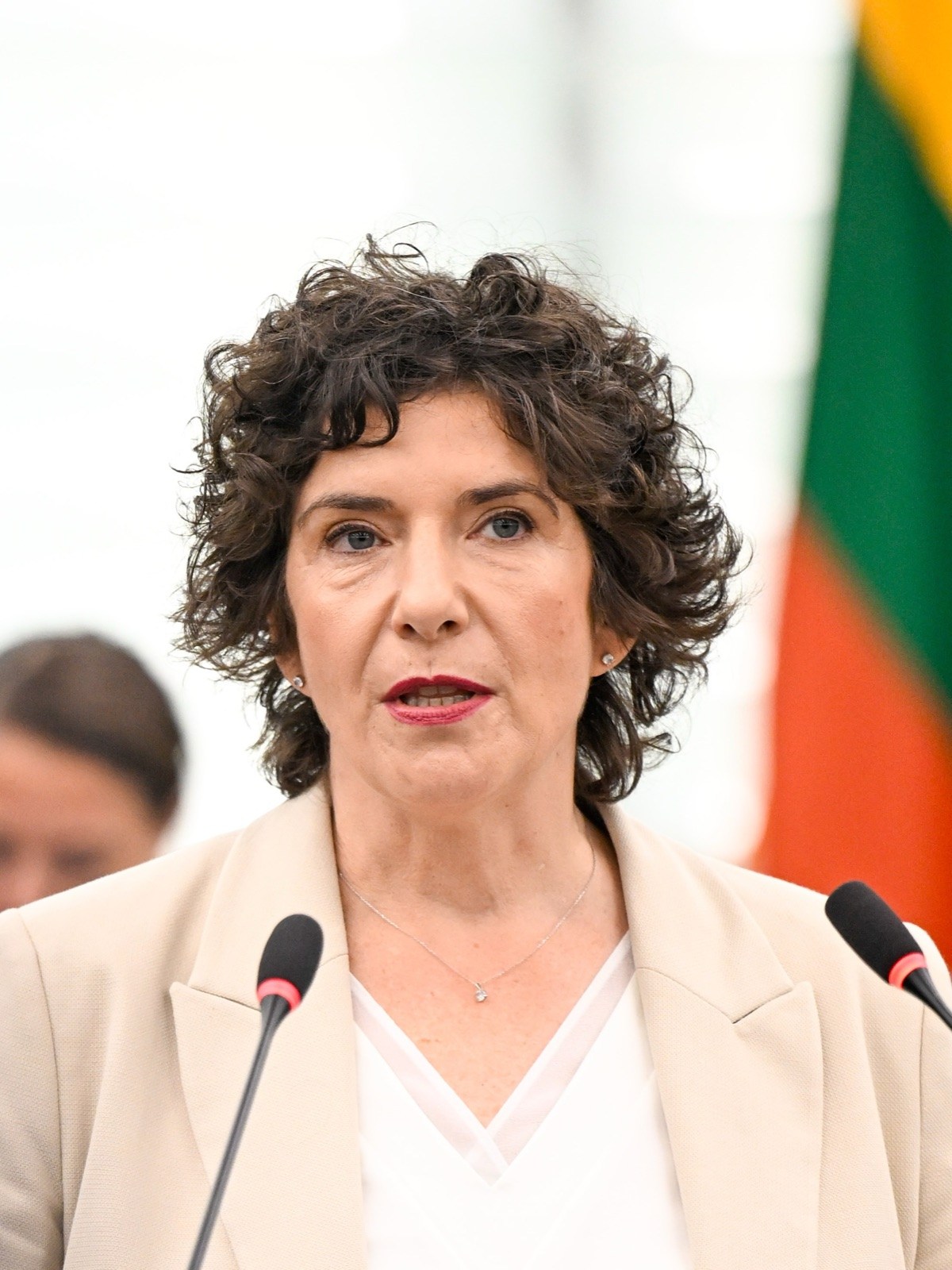
Klara Dobrev
Klara Dobrev is a Hungarian left-wing politician and MEP challenging Viktor Orban in response to Hungary's outlier position on Ukraine support.
Episode Summary
Amid a wave of European support for Ukraine, Hungary has emerged an outlier; refusing to send weapons to Kyiv or cut off Russian oil supply. Newly re-elected Prime Minister Viktor Orban has openly spoken of his admiration for Russia’s President Putin, and described himself as the leader of “an illiberal democracy.” So does that leave Budapest more closely aligned with Brussels or Moscow? Guest co-host Helena Humphrey sits down with Klara Dobrev, a Hungarian left-wing politician and MEP, to talk about her recent decision to put her hat in the ring, and challenge Orban himself. Meanwhile One Decision's Sir Richard Dearlove, former head of Britain's Mi6, shares his insight on Orban's true motives, who his real friends are among the looming potential energy crisis, and predicts the future of Britain's leadership.
Listen & Subscribe
- Watch on YouTube
- Listen on Apple Podcasts
- Listen on Spotify
Transcript
INTRODUCTION
Humphrey: Welcome back to One Decision. I'm Helena Humphrey, your guest co-host for this episode. Today, we're heading to Hungary, with the EU nation swimming against a tide of unity which has swept much of the bloc since Russia's invasion of Ukraine. Prime Minister Viktor Orbán appears to be riding high after his re-election for a fourth term in April, in a run-off which observers have called free but not fair. And emboldened he's putting that power to use, refusing to send weapons to Ukraine or cut off Russian oil and gas, saying his country is just too dependent. But is that dependence also a dance designed to court the favor of President Putin himself? The Hungarian Prime Minister hasn't been shy about taking pages from Putin's political playbook, changing laws to remain in power, stacking the courts with his allies and quashing a free and independent media. And he's ramping up the rhetoric as well. Delivering a speech in Romania last month, Orbán said he didn't want Hungary to, in his words, become mixed race, prompting one of his long-time aides to quit, citing Nazi terminology. For Budapest, there is a risk. Brussels has taken note of democratic backslides, starting a process that could cut off the cash altogether if it fails to fight corruption. But is Orbán on another quest altogether? A new bid to find allies outside of the European Union, exporting his self-proclaimed 'illiberal democracy' further afield? This week, he takes to the stage at the annual Conservative Political Action Conference in Dallas, where he'll deliver a keynote address. So where does all of this leave Hungarians, those opposing Orbán's policies, and even strongman leaders around the world that he might be seeking to inspire? I sat down with Klára Dobrev, who ranks high on that list of the opposition. She's a Hungarian left-wing politician, a member of the European Parliament, and until January, its vice president. And she also decided she was willing to try and go head to head with Orbán himself, winning the first round of the opposition's primaries. Welcome Klára Dobrev, thanks so much for being with us, for taking the time to speak to us today. Thank you for the invitation.
Dobrev: It was a pleasure.
INTERVIEW
Humphrey: I want to start with the news that's got everybody talking right now, internationally. Hungary managing to successfully argue its way out of an embargo on Russian oil imports, saying it can't do without that Russian oil. What does this tell us about your country's place in the world today? Is it closer to the European Union or Russia?
Dobrev: I think what the Orbán government is doing now is it makes a lot of harm, not only to Europe, not only for the world peace, but it makes harm to Hungarian average people as well. And I'm sad to say that Hungary and the Orbán government is the only government who has taken very, very strong steps and investments in order to be even more Russian dependent in the last twelve years than independent. So Putin and Orbán have a very tight, very strong relationship and Orbán is still not going to let it go, even if it would be an interest of the Hungarian people. Orbán had built up a very special relationship to Putin. Unfortunately, I don't know yet, and I really hope that in the next few months or years we will know what is this special relationship about. Because really, as a politician, I cannot tell you any rational, economic rational, or any political rationale behind his decisions of weakening the common EU position. Hungary did become the needed opt out from the agreement. Hungary did become the needed money in order to transfer the economy towards energy independence. I think he doesn't want to break up with Putin, and we have to know why.
Humphrey: Is he scared? Where does this special relationship go then? If you say it's not in the economic interest of Hungary, why is Orbán trying to apparently placate Vladimir Putin?
Dobrev: Unfortunately, I don't know the exact answer. I can tell you only what we have seen in the last twelve years. All countries around Europe were making investments in order to be independent from the Russian energy sources and we were financed, actually those investments were financed by the European Union, so it was even very easy to do. Whether it's renovation programs in order to save energy, whether it's wind energy, solar, any kind of renewable energy. And Orbán did not use any of these funds in order to limit this independence. On the other hand, he, for example, decided to have a nuclear power plant, even if it's debated whether we need it or not, but without any competition, without any public discussion, he gave it to the Russians. All those investments and public procurements went to the oligarchs, the best friend of Orbán, Mr. Mészáros, who is actually originally a plumber, but in the last ten years he became the richest man in Hungary for ten years out of nowhere, supporting very much the politics of Viktor Orbán. So definitely you could see this kind of ties. On the other hand, Orbán is an illiberal politician, as he calls himself. But what we have seen is that when a politician decides that he doesn't want to lose the power and becomes an illiberal or a dictator, let's call it.
Humphrey: Are you directly calling Prime Minister Orbán a dictator there?
Dobrev: Yes. Definitely. You have to see that there is no freedom of media in Hungary. Every single step where you go to the jurisdiction, prosecution office, police, education, healthcare, everything is occupied. I mean, we call it dictatorship. We don't have to play or find out new words for it.
Humphrey: Let me ask you something else. Let me turn this around then, because Europe right now is on the brink potentially of an energy crisis. Potentially this winter, there is the real possibility that Europe could see gas cut-offs. And if instead we see a scenario where Hungary manages to stay relatively warm amid all of this, having managed to keep Russian energy supply. Is there then the possibility that Prime Minister Orbán will be buoyed by this in the perception of the Hungarian population that they'll say, this is the man who stood firm and we still have power. Look at the rest of the EU.
Dobrev: Look, I am a member of the European Parliament from the Hungarian opposition, and I really see in the last two months how many efforts have the European institutions and the European governments done in order to secure the energy supply of Europe for the next year, to fill up the gas reserves, to ensure new ways and diversify the energy flow with LNG terminals, to make investments much quicker in renewable energy and so on. So what I can tell you now is that it seems that Europe is safe for the next winter. I'm definitely sure that to go along with the rest of Europe is not only on long term, but on short term, a much better policy than joining the Russian Empire. We have been there. It was not good there.
Humphrey: Would you say that the EU is relatively safe? The situation is such domestically there in Hungary right now. We've seen Prime Minister Orbán declare a wartime state of emergency. We've seen the central bank raising the interest rate. Orbán himself is calling on multinationals to hand over extra profits, citing that ongoing economic crisis, which he says is caused by the war in Ukraine. Is that correct?
Dobrev: Which is not correct at all. Orbán is leading a very bad economic policy in the last twelve years. And before the election, he has given out tremendous amount of money for winning the election, but what is worse, that the Hungarian economy is very much dependent on the European funds.
Humphrey: So he spent public funds on his election?
Dobrev: Yes, a lot. Billions of dollars. Public funds, public institutions, public money. But what makes his biggest problem is that the Hungarian economy is very much dependent for the European development money, which is a huge amount with recovery facility and with the normal cohesion policy. And Europe is fed up at that moment. European taxpayers are fed up that their money is stolen in Hungary. Because of the Hungarian corruption, Hungary is not getting the European funds.
Humphrey: So you mentioned the rule of law there. Something I do want to touch on, as somebody who's often in Brussels yourself, when he was re-elected, what was the political chatter? What did other EU leaders say to you about the fact that Prime Minister Viktor Orbán had managed to secure another term? What was the sense?
Dobrev: You know, in a democracy, and I definitely can tell it for the American democracy as well, but in European democracies as well, if a leader is elected for the fourth time with two-thirds majority, then it's a clear evidence that there is no democracy in this country. Kim Jong-un, Putin, Erdoğan and Lukashenko in Belarus are elected with two-thirds majority four or five times. This even gives Orbán less legitimacy. We have a long list, and while he is using public services from healthcare to the education in order to campaign for them, he's using, for example, the COVID certificate database where people are receiving their shots and they register themselves, and suddenly they started to receive emails, phone calls and messages from Viktor Orbán before the election, so he's using everything.
Humphrey: I guess this leads me to the question then. If there is the possibility of Hungary leaving the European Union, who are Hungary's friends? Or even who are Hungary's friends these days? Because, you know, we seem to see Russia's war in Ukraine driving a wedge, you already mentioned that, between Orbán and regional governments that he sought to unite. We're talking about the Czech Republic, Poland, Slovakia. Who on the world stage then is left in Hungary's corner?
Dobrev: I mean, you can really see in his movements that he's always trying to ease the way for Putin. That's what he was doing in the last twelve years before the war even. There were several times vetoing the European decisions in order to please Putin or even to please sometimes China. He made a lot of investments in Hungary, which were economically absolutely irrational, like a nuclear plant from Russian money, Russian loan, Russian technique, just in order to have his this business have hefty ties. He even allowed Russian enterprises like the so-called investment bank, which we call just the spy bank, to have an extra territory and special immunity in Hungary within the European Union. And we really don't know who is going there, who is listening, who is writing and who is reading and what. And it seems this is the so-called International Investment Bank, Russian International Investment Bank, and the Hungarian jurisdiction has no power over it. Everything what is happening now with my country is not in the interest of the country, not in the interest of Hungarian people. It's simply a power game by Orbán.
Humphrey: On the subject of freedom of the press, according to Reporters Without Borders, the Hungarian state is the only EU member suspected of having arbitrarily monitored journalists using the Pegasus software. Can you speak to these claims? You know, what does Hungary need to do to guarantee press freedom?
Dobrev: Well, there's a long list. And this was just the last, you know, small drop in the glass that Hungarian independent journalists were surveyed by the Hungarian Secret Service. But Orbán started off with his oligarchs to buy out all the independent media and transform them to a propaganda media. In this public media, oppositional journalists cannot appear at all. I have never been asked to be even for a short interview in the public media.
Humphrey: I want to ask about you as part of the opposition and the broader opposition. Have you faced intimidation?
Dobrev: Intimidation, physically intimidation, we face usually when we have public programs. So, when I go in the rally, for example, somewhere and we invite our supporters, then in the majority of the cases they are organized groups who are shouting or trying to make a distraction, even once one of them took out a weapon, but thanks God nothing happened. So they are trying to push that there is unrest when we are there somewhere. Where do these groups come from? Are they paid by Fidesz. Yes, all of them. Second of all, all public politicians, we go through a very character assassination. And of course, everywhere personal intimidation is part of the campaigns. I don't have to tell you in the United States that this is part of it. But this kind of systematic assassinations, character assassinations, these are absolutely ridiculous. I have started at least, not only me but the other opposition politicians, but I myself, around 45 or 60 different cases when there was a lie about myself, about my family in the public media or in the Fidesz media, and at the end, I won all of them. But Fidesz didn't have to pay.
Humphrey: Klára, you said something though that nevertheless was quite disturbing, and you said that at one rally there was an incident where there was someone there with a weapon. Tell us more about that situation. What was the weapon and did you believe at that time and do you believe that your life could be at risk through your job?
Dobrev: I was on the stage, so I couldn't even see, just the police when they came in. It was one of the supporters of Fidesz who pulled out a gun, which at the end occurred to be a so-called gas, I think gas can, so where you can make injuries, but he's using all his tools for it and not talking about our politics, but talking about us as traitors, as the ones who are not working in the interest of Hungarian people or Hungary.
Humphrey: So, I want to ask you then, personally, are there conversations that you have at home with your husband where you say, if this climate deteriorates, is there a moment when we leave this or we leave even Hungary? Have you ever had that conversation?
Dobrev: No, no, never. And no way that I'm going to have it. I have five children. No way that I'm going to let Orbán to make a country out of my homeland where those children cannot live in peace with millions of others. I'm very passionate, I'm very devoted, and what I can tell you, I'll never give up.
Humphrey: Talking about the direction that Hungary is going in, let's touch on CPAC then, which is something very relevant to the United States, because the American Conservative Union decided to hold one of its Conservative Political Action Conference gatherings in Hungary in May. It hosted Donald Trump and also the controversial Hungarian media figure Zsolt Bayer, who has made openly racist comments. Do you know how this gathering came about? Do you know whether there are financial ties with CPAC there?
Dobrev: I don't know. We can hear, but it's interesting. Be so very sad that sometimes Orbán is financing from Hungarian public money a lot of radical right movements, not only in America. For example, what came out openly that he has financed the campaign of Le Pen against President Macron. Because that's all, you ask who are his friends? These are his friends. No one else is left. The far right in Germany, the AfD, the CPAC in the United States, Le Pen in France. But what I would love to say to those Republicans who might believe that Orbán is doing well, just look how Hungarian democracy looks like. Do you think really that for the United States that's the way that Orbán's best friends and family members became for ten years the richest man in the country, that Orbán is killing the free media, that Orbán is occupying the prosecution, that Orbán is killing all kinds of civil organizations. This is the example. And I'm definitely sure that the majority of American Republicans would say, no, this is definitely not the way and not the example.
Humphrey: They might not like that example, but they might not look at the picture in Hungary. All they might see is a strongman leader who, as you say, has now got his fourth term in power and say, you know what, he must be doing something right. And that brings me to the question, you know, is there the risk that Orbán's re-election actually means that Trump has the potential to come back into office?
Dobrev: Well, I think when you say that Orbán is doing something right when he won the election for the fourth time, then I'm not saying ethically. No. No. If someone is saying yes, then I have to tell her or him that, well, the price is democracy. Even if someone would like his nationalistic, homophobic, racist slogans, should never forget that you can build a policy like Orbán only in a dictatorship. Do you want your home country to become a dictatorship or not? That's the question that every Republican has to raise.
Humphrey: Well, talking about you personally, you were set to go toe to toe with Orbán winning in the first round of primaries as a candidate and then beaten by conservative candidate Márki-Zay. You were also the former First Lady of Hungary and your husband as Prime Minister resigned in 2009 in the wake of an economic crisis after admitting that he'd lied during an election campaign, not disclosing the real state of the Hungarian economy. You are separate people, which I want to stress, but voters don't always see it that way. Do you think that that's impacted your campaign?
Dobrev: Well, I joined politics in 2019 leading the list for the European parliamentary election. So this was the decisive moment whether I can be an independent political actor or not. I'm an independent political actor, although we are in the same party and with very common goals and very common vision about the Hungarian future. So definitely it has an effect. I am who I am with all my family and with all my knowledge. But I strongly believe that what I'm suggesting to Hungary, which is a strong social democrat program, I am a strong social democrat. So, it might affect, but I'm still fighting.
Humphrey: Well, you are who you are. Also stating the obvious, of course, you are a woman. How long till Hungary has a woman prime minister?
Dobrev: Well, I hope not so long. But you have to know that part of this whole philosophy or ideology what Orbán put together is actually very close, of course, to the ideology of the far right all over the world, even in America. There's a very macho, very male orientated political atmosphere in Hungary, where female politicians are quite often humiliated even in the parliament. We have one of the lowest representation of women within the European Union in the Hungarian parliament.
Humphrey: You also come from a prominent communist family. This is something that Fidesz alludes to a lot, a grandfather who helped suppress Hungary's 1956 uprising against the Soviet Union. Your mother was also very high up in the party as Deputy Minister of Trade. But do you ever feel that it's a biography that isn't necessarily appealing to many Hungarians who are demanding change and not just the exchange of one powerful family to another?
Dobrev: Yes, this is something that I have to deal with. And I have told a lot of times that, especially because of my family background, especially because of my grandfather's role in the communist era, I have to be even more sensitive towards any step which is against democracy. And what I see now is that Orbán is doing the same thing what the communists have done in Hungary. The same thing, one party is occupying everything. One party is changing the Hungarian constitution. Everything what happens in Hungary is in order to keep one party in power. And I feel obliged, even because of my family background, even more to fight against anything like that can happen in Hungary again, and against a system which is copying the communist leaders of Hungary.
Humphrey: If I can ask you to look into the crystal ball once again, President Biden's described the world as being in a battle between democracy and autocracy. So, where does this end then for Hungarians? What do you think it would take to turn the tides? Do you think there's the risk that Hungary could see social unrest?
Dobrev: Well, the situation in Hungary is very tragic, and it's not only about the politics that we have talked about, European Union ties, but Hungarian people are having less and less possibility to live a normal life. Social injustice is rising in Hungary. And so it had a very sad consequence that in the last ten years, thanks to Orbán's politics, almost 800,000 Hungarians went abroad to work. We lost almost one third of this population, which is the basics and the core for Hungary. And I really think that the only chance to remain in the European Union, only chance to remain a democratic country or to gain back our democracy, and the only chance to have a normal country and not a part of the Russian empire is if we defeat Orbán.
Humphrey: Do you think Putin could make moves on Hungarian soil, that he could achieve some of his aims in Ukraine and then thinking about rolling tanks further westwards?
Dobrev: I have to tell you, I lost already the capability to read Putin's mind because I think that the steps he was doing are simply irrational, and I think it's even more dangerous. Putin himself expressed that he wants NATO to go back to the '98 borders, which means even Hungary's NATO membership is questioned in this aspect. And I really think that there should be a point where a democratic community of the world shows that this is it and no further. The same way as I'm always telling, do not make an equivalence between Hungarian people and the Hungarian government. You should not make equivalence between Russian people and Putin's government. And I think it's an obligation not simply to protect and to help Ukraine to fight Russia, but to give the possibility to the Russian people as well, to express their own wish. And I'm definitely sure that 99% of them doesn't want a war.
Humphrey: That's a very important point to make, though. Intimidation and people not being able to vocalize what they really want or what they really believe if they are worried that there'll be a personal risk to them and their families. You speak about Russia, Moscow, what Russians actually want in terms of the invasion of Ukraine and many people not wanting that at all. But that brings me to the question, are there Hungarians who don't want Orbán, who want to stand up to him, but are worried that they will be targeted if they do so? Are you seeing evidence of that? Do you believe that could happen?
Dobrev: A lot. That's when I talk about dictatorship. I can tell you hundreds of examples that teachers are afraid to talk about their experience in the school because they know that they can be fired. That teachers are obliged to teach from certain books. That even during the COVID, I think we were the only country in the world where all doctors and nurses were forbidden to talk to the public what happens in the hospitals. And they were punished if they talked to people. Immediately when you vocalize that you are from the opposition, then the tax authority is coming after you. As a politician, I have to bear it, but a teacher, a doctor, a nurse, she or he doesn't have to bear it. Even in their small circumstances, in the circle where they live, in their city, in village. But we are facing, like with Pegasus, illegal supervision of telephones, telephone lines, of different communication lines. A lot of colleagues around the politicians and mainly journalists and civil organizations were spied on. You don't have to imprison them. You don't have to kill them like Putin does because we have the possibility to go away. But if everyone goes away, then the country has no future.
Humphrey: Well, Klára Dobrev, so interesting to talk to you. Thank you for taking the time. I really appreciate it. Thank you.
ANALYSIS WITH SIR RICHARD DEARLOVE
Humphrey: A voice of the Hungarian opposition there describing a teetering democracy, ties between Viktor Orbán and Vladimir Putin, which could run deeper than previously thought, and a climate in which journalists face espionage. Time to bring in my co-host now, the former head of MI6, Sir Richard Dearlove. Sir Richard, great to see you again. How have you been?
Dearlove: I'm very well indeed.
Humphrey: Brilliant to hear. And there's always been plenty happening in the meantime, of course. So lots for us to talk about as ever. It never seems to really calm down, does it?
Dearlove: Too much going on. It's really a dynamic and complicated world with so many events, a lot of them rather troubling as well.
Humphrey: Yeah, a good way to put it. So, Sir Richard, I want to start by picking up on my interview with Klára Dobrev, because when I spoke to her, she painted a picture of Viktor Orbán with ever tightening ties to Vladimir Putin, which of course we can see for ourselves as observers. But her question was: Why grow closer to Russia when you can and when Hungary is a part of Europe? Of course, I'm pointing out the obvious here to say that there's the gas issue. But what do you think, Sir Richard, Orbán's motive is here? Does he admire Putin or fear him? And to put it very simply, is he looking to emulate or placate?
Dearlove: It's a big question with many dimensions. There's no question that Orbán's been very close to Putin previously. But if you wish, I think he now finds himself in a very difficult position. Because on the one hand, the invasion of Ukraine can hardly be approved by the Hungarian government, and he has to distance himself from that aggressive action. But at the same time, if you take a country like Hungary, and this applies to a number of the central European countries, they have a huge energy problem as a result of the cutting off of Russian gas to European supplies. So, I think that Orbán's not gonna suddenly turn around and say, look, I got this wrong. He is trying to sort of play both ends against the middle and trying to keep most of his options open. And I do find him a hugely confusing political figure. I'm always fascinated by Orbán because I met him originally during his period early on when he was prime minister, his first prime ministership. I mean, this is going back to the early 2000s. I spent a couple of hours with him when I was on an official visit to Hungary as a guest of the Hungarian government. And at that point in time, of course, he seemed like a very reasonable, new, interesting politician with lots of new ideas. But, of course, the way he's evolved politically in Hungary is confusing, fascinating, interesting. What was clear from spending time with him was, well, he was an extremely thoughtful, intelligent person. This isn't some crazy guy. You can make all sorts of comments about someone like Trump. I wouldn't draw the comparison in a way. Orbán's clearly been a very clever and manipulative politician and has known how to exploit the whole issue of Hungarian identity. And I think that you can't sort of look at the political issue in Hungary without thinking hard about Hungary's national identity and its rather peculiar place in recent European political history, going back, of course, to the Hungarian revolution in 1956. And it's really anomalous now that you should be looking at a country which had this truly difficult relationship with the Soviet Union as Czechoslovakia did when it was invaded in 1968. And the same thing had happened to Hungary in '56. And yet, you know, now you've got a Hungarian leader who looks sympathetically towards Russia, where you think it would be the one country which most Hungarians would resent because of the role that it's played in recent Hungarian history.
Humphrey: We used to say when the US sneezes, the UK catches a cold, right? So I'm interested in the direction of political influence that we're seeing right now, because as you know, we've got Viktor Orbán heading to CPAC in Texas. And I wonder to what extent does it perhaps now feel, and perhaps unusually, that the Americas, and I'm saying the Americas here because I'm talking about Trump, I'm talking about Bolsonaro, are essentially looking to Europe for inspiration.
Dearlove: Well, I think what we're seeing is what I would describe as a reassertion of the identity of the nation state. So what we have accepted, let's say, as Pax Americana is no longer the determining characteristic. And you see very clearly, if you look at the Trump phenomenon, where you have a very sort of selfish national identity and perspective projected by the United States. But we have to remember that this isn't new in US politics. I mean, the isolationism that is represented by some aspects of the Trump foreign policy, by some aspects of, as it were, the political right wing in the United States has been there as a strong theme in American politics right since the nineteenth century. And, of course, we're coming up now to the midterm elections in the United States, and it looks as though the Republicans will do much, much better than the Democrats, possibly win control of Congress. And, of course, that's going to put Biden in a very, very difficult position and put Trump in a potentially powerful position running into the next presidential election. But I think where we're heading internationally, we're going back towards a balance of power system. And I'm talking historically now about the period after the Congress of Vienna in the nineteenth century, where you are gonna have awkward alliances of nation states driving the international political system in a way which is quite different from the postwar consensus after World War II.
Humphrey: And you wonder to what extent, you know, people are trying to set up those partnerships already. I'll point to an example, because in Romania, a matter of weeks ago, you'll remember that speech by Viktor Orbán when his rhetoric dialed up, I would say a notch, but it was quite significant actually, speaking out against what he called mixed nations. There was international condemnation after that. And after that, I spoke to one professor at Princeton who has studied his speeches for a really long time. And she pointed to his upcoming CPAC appearance. And she told me that essentially she thought Orbán used what she called dog whistle language to speak to Trump's base, basically trying to bet on a Trump return to the White House in 2024. And this was Orbán kind of setting up that courting of Trump, trying to find an ally there ahead of it. Would you agree with that idea?
Dearlove: Well, I would certainly agree with, yeah, I think that's an interesting and valid interpretation. I think what's so striking about someone like Orbán, and I think this is relevant to the question you're asking, is the extent to which his politics are ideological. I mean, he clearly, okay, he may violate many of the basic principles of democracy, and there's no question that, you know, the elections in Hungary are not fair and open in the sense that we would expect or understand in a democracy. But on the other hand, Orbán's approach to his own political identity and political future is extremely thoughtful in terms of working out an ideological base, which has an appeal not only in Hungary but beyond Hungary. So I think he is searching for common ground. And then you've got, you know, these weird ideologues like Steve Bannon who are providing some of the sort of ideological argument and justification for this type of political behavior. And it's disconcerting. But going back to Orbán and his comments focused on Trump and Trump's possible candidature for the next presidential election. I wonder whether he's called that right. I mean, my impression from just spending a month in the United States, a bit less than that, is that Trump's unlikely to be the Republican candidate. But, you know, it's very hard to call that at the moment. But he is such a divisive figure that I think that there are enough sensible Republicans at the end of the day to say no. But, you know, that's still some distance off.
Humphrey: Well, what about when we talk about this direction of influence then, other Republicans who might actually want to take a leaf out of Fidesz's book, for example, if you take a look at what's been achieved in Hungary, when it comes to Orbán, very often perhaps not doing something illegal, but making something legal in order to do it, stacking the courts, for example. Is this a Hungarian model actually, which could be very convenient for export, for any other Republican candidate in the race for 2024? And just to come back to your other point about ideology, I wonder to what extent do you believe that Orbán necessarily believes the ideological base that he's actually creating, or is it also a marriage of convenience? It gives him something quite easy to say, to go against the European Union and say, look, the EU is against us. They are cracking down on our way of life. They're trying to cut off funding because of our values with regards to LGBTQ laws, for example, our views on migration, on what constitutes a country with a national identity. Does he believe that? Or is it something that he can put forward as a talking point to try and explain to the Hungarians why the European Union's having a hard time with him right now?
Dearlove: Well, I'm not sure that Orbán's model is exportable in quite the way that you're suggesting. I think it's applicable in Hungary and there are lots of reasons, both recent history and recent events which, as it were, mean that Orbán, despite the sort of autocracy and control, does also have a measure of popular support. And I think European immigration or immigration into Europe has quite a lot to do with that, and also as we've discussed, sort of energy vulnerabilities. I think when you look at the States and you've mooted the possibility that the way that he behaves may influence some Republicans, I don't think I agree with that.
Humphrey: I want to talk though about Trump and Orbán when it comes to, I guess they have something in common when it comes to Russia, a policy of being weaker with Russia. And I wondered what we're seeing in Hungary, does it also embolden Russia watching this to pursue things such as further disruption of democratic processes? You know, I know of course that the Russians are very busy with the war in Ukraine, but I also think of Christopher Wray, the FBI director, and he said, I'm pretty confident that the Russians can walk and chew gum. You know, should we expect to see Russian efforts to impact the midterms in terms of meddling, for example, interference?
Dearlove: Well, this whole issue of Russian intervention using social media in the electoral process in the West, whether it was the Brexit vote in the UK or whether it was the last presidential elections, I mean I think the tendency to do this is pretty deep in the Russian DNA, if you see what I mean, their political DNA. Did it make much of a difference? In my view, no. I'm not so sure that's the case when one gets much closer to Russia, geopolitically closer to Russia. So that their ability, let's say, to muck around with the political system in the Baltic Republics, which are much smaller, weaker countries with big Russian minorities, then it's a different issue.
Humphrey: Well, I guess whether you kind of assess that these attempts to disrupt democratic processes have had an impact or not, it's still something that continues to happen out of Russia. The UK has also logged disruption coming from Russia and talking about the UK, of course, Sir Richard, I can't let you go without asking about the runoff that we're seeing in the Conservative Party in the UK right now. Former Chancellor Rishi Sunak, current Foreign Minister Liz Truss going head to head. Who do you think will prevail as the next British prime minister? I've got to ask you.
Dearlove: Well, I'll make a confident prediction that it's gonna be Liz Truss. And I think that the reason is this is a vote of the party membership, not of MPs. Were it an election in the last stages of two candidates by Conservative MPs, I think Rishi Sunak would win. But that's not what we're looking at. We're looking at 180,000 Conservative Party members who, to an extent, are anti-establishment, and I don't mean anti-establishment in a radical sense, I mean they are sort of disruptive politically, and the mood in the party at the moment is strongly to the right. They feel that the sort of issues that surround Brexit, the new opportunities have not been properly exploited. They are worried by the sort of post-pandemic austerity. You know there are many, many reasons which play to Liz Truss' strength. I mean, in a way, I think she's a very surprising person to have emerged. I think her strength as a future prime minister will largely depend on the team of people that are put in place around her. I think she will be able to assemble a much, much stronger team than Rishi Sunak.
Humphrey: Alright. Sir Richard, for today, we're gonna have to leave it there. But as ever, thank you for taking the time. Always a pleasure to pick your brain, to hear your thoughts. Thank you so much.
Dearlove: Helena, wonderful talking to you and some very probing and interesting questions.
Humphrey: That's it for this edition of One Decision. There's a new episode every Thursday, so remember to subscribe so you never miss an episode.