Episode Info
- Season17
- Episode5
Hosted by Christina Ruffini and Sir Richard Dearlove
Guest
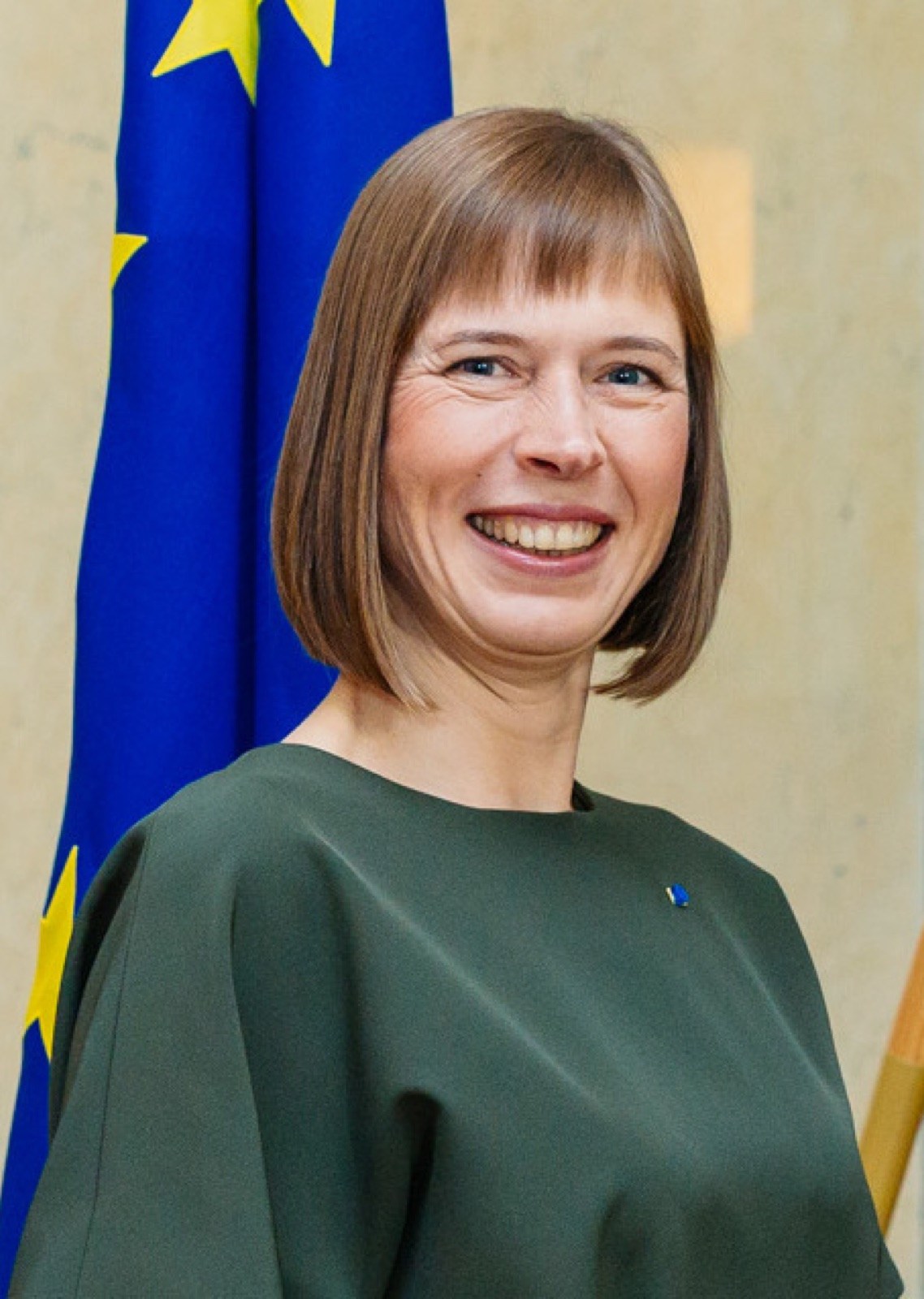
Kersti Kaljulaid
Kersti Kaljulaid is Estonia's former president who served from 2016-2021 as the first female president of the Baltic high-tech nation that shares a border with Russia.
Episode Summary
After multiple extensions, NATO Secretary General Jens Stoltenberg is set to retire at the end of his term in October, but speculation continues over who will head the world's most powerful alliance. Among the contenders is Estonia’s Kersti Kaljulaid who served from 2016-2021 as the first female president of the Baltic high-tech nation that shares a border with Russia. A leader from NATO's eastern flank could send a strong message to Putin about the direction of travel for European security priorities. One Decision's Julia Macfarlane sat down with President Kaljulaid to talk about her recent trip to Kyiv and meetings with senior government officials about how Europe can continue to support the war effort. They also discussed plans for the Baltic states to decouple from the Russian power grid and reports she's being considered to become NATO’s first female chief.
Listen & Subscribe
- Watch on YouTube
- Listen on Apple Podcasts
- Listen on Spotify
Transcript
INTRODUCTION
Mcfarlane: You're listening to One Decision, the podcast that looks at the choices made that shape our world. I'm your host, Julia McFarlane. The NATO secretary general, Jens Stoltenberg, was due to retire in September this year. However, his retirement plans have had to be put on ice for now. In the absence of a leading candidate to replace him, he's been persuaded to stay on for another year. The stakes are high for the alliance given the war against Russia that's raging in Ukraine. Speaking in Vilnius, president Biden reiterated Western resolve against the path that Moscow has taken.
Biden: When Putin and his crave and lust for land and power unleashes brutal war in Ukraine, he was betting NATO would break apart. He was betting NATO would break. He thought our unity would shatter at the first testing. He thought democratic leaders would be weak, but he thought wrong.
Mcfarlane: There's speculation that many NATO members want to see a strong European ex-leader in the top job, maybe even NATO's first female chief. One of the names being floated is the former Estonian president, Kersti Kaljulaid. Having led the high-tech Baltic nation that shares a border with Russia, Kaljulaid, who was in office between 2016 and 2021, knows exactly what it's like to try and garner European action on standing up to the threat from the East. And she is keeping busy, having just returned from a trip to Ukraine where she chaired the Yalta European Strategy Group, meeting with Zelensky's chief of staff and his defense minister to discuss how the war effort was going and how Europe and NATO could assist. I sat down with the former president to talk about how the recent NATO summit in Vilnius went down and what she made of the speculation that she might be in line for NATO's top job. But first, I asked her how her trip to Kyiv went and if she could give us any updates on the Ukrainian counter-offensive.
INTERVIEW
Kaljulaid: Well, actually, this was one of the pleas from Ukrainian top brass, also for us, that while talking to Western media to tell people that our expectations need to be managed. But I mean, it is not kind of a fairy tale where you have new tanks, have new equipment, and then you will very quickly end this nightmare, which of course, every Ukrainian would wish. But let's be honest about it. It has taken some time for the Western side to get our act together to start providing Ukraine. And, of course, that is why we hear repeated pleas for airplanes, for more long range equipment, that could actually protect better the people who are working with these minefields. Of course, there is always this solution that tanks are also pretty good things. Instead of giving 40 tanks, if you give 400 tanks and give it tomorrow, not tank a day, then of course this would be better for Ukrainians. So if anybody anywhere in the world has anything in spare, then I think it should all be shipped to Ukraine. One problematic area definitely is that ammunition and getting the volumes of production of ammunition up in Europe. And I would really sincerely ask those governments who have resources and who have serious military industry to come out of this kind of egg and chicken game where producers are not producing because there are no government contracts and governments are saying just start producing, the contracts will follow. Of course, I also think that markets should not be shy in these conditions. And it seems they are, considerably risk adverse, knowing what the conditions are. Who goes into production definitely can sell these things really quickly at any given time in the next decade, I'm afraid. But somehow we are stuck there. So I really hope that this kind of industry development will pick up in the autumn. Because right now we haven't seen really the volumes growing. We are basically still at the producing for training levels, which is bad, I believe.
Mcfarlane: I'm so pleased you brought that up, because that's something that we've discussed on our podcast quite recently. We spoke to a colleague of ours who works for a defense journal, who talked to us exactly what you mentioned about how arms producers are hesitant, reluctant to ramp up production in order to meet the growing demand from Ukraine without government promises that that demand will continue to be there after the war to ensure that they don't make losses on that upscaling of their production. We spoke to Admiral John Kirby last week, who said that the Biden administration is now in talks with the arms industry, arms manufacturers about ramping up production. Can you tell us about what is happening in Europe with regards to that? Are there talks in Estonia with arms manufacturers? Or is this something that NATO has to take the lead on and NATO member states to start bringing that conversation to their own domestic producers and their neighbors as well?
Kaljulaid: Well, all this, of course, this discussion is going on. Estonia by itself is pretty small, and we do not have a considerable military industry. But if we also have to replenish our stocks, and we know that all European countries need to replenish their stocks. In addition, freshly in Vilnius, it was now agreed that we not only raise our defense spending to 2%, but urgently raise it to 2%. Of course, one might laugh and the industry might not feel secure enough simply because of this pledge, because we've heard this pledge for a long time. But I believe that everybody now in Europe realizes that unless we predict rapid regime change in Russia, which nobody is predicting, then for a long foreseeable period now, this production will be needed. We are back to the times which remind us of the Cold War era times. So there is absolutely no doubt that these ammunitions, these tanks, these cannons, they will be needed, and not only by Ukrainian army, but also by the Western armies. Because if you are ramping up your defense spending, also thinking of German pledge, for example, European Union also has made a common pledge to produce ammunition for Ukraine. My question really is, what do you really need to do for industry to consider market conditions favorable? It is very hard to see. Unless they're really waiting for extremely concrete contracts and they are not producing anything just without a contract, which I would say is, well, impossible risk of adverseness by then.
Mcfarlane: I mean, I would understand producers not willing to ramp up production before contracts are signed. I know you have a background in business that I don't. But I can imagine that that risk averse strategy is one that's really quite plausible for businesses, particularly when you have arms manufacturers when R&D and production costs as much as it does. But what are the other issues? Because it can't just be all down to the arms industry not wanting to manufacture more weapons. What else can you see that may be one of the factors as to why this kind of shift in European defense attitude is not manifesting as fast as one might have thought, given that there is war in Europe once again. Are there domestic considerations? You were president for a number of years. Is it anti-war sentiment amongst domestic populations? Is it a refusal to accept that we are now reentering a more hot Cold War period than perhaps the last Cold War? Is it perhaps that there are more ties to Russia really than many Europeans would like to admit?
Kaljulaid: Well, I do not believe that European policymaking is any more influenced by important politicians joining ranks with Russian business, which might have been the case sometimes before this aggression. Right now, I am quite sure that this is not the case anymore. But indeed, myself, I am an economist who believes in markets. And if markets are telling me that they do not go into production, that shows they do not yet believe that there is long term demand for them. So the other way of looking at the problem is that the politicians really are not preparing themselves to really and seriously ramp up their defense capabilities, despite all the decisions at NATO, despite all the NATO's defense plans, which indeed resemble something which we had during the Cold War. So this is the other way of looking at it, that we have to keep convincing politicians in Western Europe that there is absolutely no other way than to actually build stronger armies to make sure that Russia, as it now is, does not miscalculate. And also I feel more is at stake than Europe. I believe every totalitarian regime globally is watching. Is the free world at all capable of sticking to its democratic systems and nevertheless defending itself? Because of course people never want war. That is why democracies do not start wars. Only autocracies start wars because they do not have to ask for public opinions. But on the other hand, if we look, our public opinions are supportive of Ukraine. And, of course, gradually, the understanding proves that this situation is not negotiable because if Ukraine ends the war, there is no more Ukraine. If Russia ends the war, then everything is over. It is so simple. And the free world just has to defend itself also in Ukraine. Maybe it takes more time to come to this conclusion, which is very sad because Ukrainians measure time in lost lives, not hours and weeks. So it is sad, but indeed, it may be also that the political positions have not been clear enough and markets are right at this given moment. I don't know, really. Nobody knows, I guess.
Mcfarlane: You talk about the need to convince politicians to recognize the moment we're in right now, our defense priorities. Kurt Volker, who was the American envoy to Ukraine, he wrote recently after the Vilnius summit. He wrote in the Financial Times that NATO members do not seem to have grasped what Moscow's invasion means for European security. He goes on to say if Putin is not defeated in Ukraine, it will get worse in his quest to rebuild the empire. He would next turn his gaze to Estonia, Latvia, Lithuania, and even Finland, all EU and NATO member states, which were formerly part of the Russian Empire and which the alliance is obliged to protect. On the question of politics, why is it do you think that perhaps as Kurt Volker claims, some European NATO members have not grasped what Moscow's invasion means for European security? And obviously, he goes on to outline, and we often outline, Baltic states and even Finland and Sweden is also joining shortly. No one ever accuses the Baltic states of underestimating the threat from Russia. But as you point out, you're not safe if you don't share a border, and very correctly pointing out the incident in Salisbury in England. What is the reason for this? Why are some European nations still not even meeting the minimum defense spend of 2% for their defense budget? In this country, we are in the midst of a rapidly escalating economic crisis. And in spite of that, the UK is still making a big deal of the war in Ukraine and taking European security very seriously. But it's not the same in other countries in Europe. What are the things when you talk to your colleagues, other political leaders in Europe, and you say we need to spend more, we need to convince arms companies to ramp up production, we need to send 400 tanks to Ukraine instead of 40. What are the reasons that you hear? What is the pushback that you get to suggestions such as that?
Kaljulaid: Well, first and foremost, of course, I do not very often speak unless I'm moderating some conference to politicians in office now. I mostly speak to those who have left office or sometimes in couloir, of course, who are in office. And it seems to be just a certain level of inertia, just a certain level of feeling like, we have to, at one stage, come to a negotiating table. It cannot be only military solution. We cannot isolate Russia. And if you ask the question, why cannot we isolate Russia? North Korea is perfectly isolated. Why not Russia? What's different, for example? Then you do not get an answer. But the problem, of course, is that we are used to trading with Russia. And there is no other way out than to keep talking, keep talking and keep talking. By the way, all of our economies are in downturn. Estonia has lost also, year on year, I believe, 10% of our industrial output, not because only there is war, but there is also because there is less attention on the green turn. Also, there have been talks about energy subsidies by bigger member states, and our budget will never be able to subsidize our industry the way Germany can, for example. It's a huge problem. My question is, is there even a European Common Market, if there is a large scale, across the board, German energy subsidy? I don't know. But these issues are influencing us here as well. Yet, we realize that, of course, you have many problems. Also, you talk to Ukrainians, they are trying to negotiate with the EU, they are trying to fight corruption, they are trying to win the war. Similarly, every other country has to keep the economy running, find energy sources which are not linked to Russia, keep their economy going, and then help Ukraine to win the war. But the problem is, you cannot say that we did all the other elements, but we failed to help Ukraine to win the war, so we managed 80%. You have to manage this thing first and foremost. And then with the rest, we have to adapt. And indeed, if it is economic suffering, then it is relatively small price to pay. And I hear from you that at least UK people are really getting it. But if I look at opinion polls, French people are getting it. And let's face it, French was behind Ukrainian bid to join NATO as well. So it's not only the polls in the UK. There are other important players.
Mcfarlane: I can tell you there is a lot of pain going on in the UK if it makes you feel any better. I think it's important for our listeners to know that given what you're saying, particularly about energy security, that the Baltic states are set to decouple from the Russian power grid. I believe now the date is early 2025. Now, Lithuania has called for an earlier exit, but actually it is the Estonians and your prime minister who has argued that actually coming out and decoupling from the Russian power grid earlier would not be acceptable to Estonia because it would bear the brunt of the cost of any earlier move. How is that debate in Estonia shaping up? Because Estonia is obviously, I think it's fair to say, quite hawkish when it comes to the security threat from Russia and the need for NATO to beef up its eastern flank. That's been your position, I think, ever since the fall of the Iron Curtain. But with regards to practically, in a practical sense, decoupling yourselves from Russia, how is it difficult for you to do that? What are the alternatives to, for example, decoupling yourself in terms of energy security from Russia? Is the infrastructure there to allow you to do it without painful cost to your economy?
Kaljulaid: Well, first and foremost, I know it's difficult to understand for an average listener, but we are not buying electricity from Russia. Neither Estonians, nor Latvians, nor Lithuanians, not Finnish. There was before, once upon a time before the aggression, Lithuania had one line by which they bought and Finns were buying electricity from Russia. Estonia did and didn't. There were moments when it did and moments when it didn't. Now nobody is buying electricity, but what we are, we are part of the frequency holding area of Russia which means that the guaranteed system frequency is for Russian energy grid and the Baltic energy grid. Now the decision is that we will close down our frequency holding connections to Russia, and we will be joining the UCTE or Central European Frequency Holding Energy System. Right now there is a trading cable towards that, which means that we can sell energy from one area to another area, but there are converters in between, so that actually we are not part of the same frequency system. Now we will cut off ourselves from Russian grid and then we will become part of the bigger grid. It is indeed true that we could of course leave, let's imagine Russia just throws us out from its frequency area. We are far enough advanced in our decoupling process that we will be able to run the system, even the Baltic states alone, for a while. Baltic electricity grid is bigger than Irish system, for example. So, you can run it. But the costs to keeping these systems going are higher. This is true. So, if we have a roadmap by which we have planned to leave Russian grid and join the Central European grid, then if you do it quicker, it's simply indeed more expensive. And this is why Estonia and Latvia are asking, do we need to ourselves force the process? I said, we are ready in urgency to decouple if there is need tomorrow. But if there is no such need, then we feel we should stick to the plan. Of course, if finally there is an urgency, Russia starts playing around itself with the grid, which I'm sure it doesn't because it really likes Estonians and Lithuanians arguing about this thing, then we'd rather stick to the plan. And this is coming from me, from former manager of one of Estonia's cogeneration power plants rather than a politician. This is a technical situation. And of course, political argument is always slightly different based on where one is. But maybe this explanation helps to understand where Estonia is on this matter.
Mcfarlane: Thank you so much for explaining fully. I did understand it was a question of perhaps phasing yourselves out of the infrastructure supporting your energy needs, and it takes time to connect to the European grid. But it is interesting to hear you say that apart from the optics of it, it actually is not quite an issue of national security for the Estonians. Is that right?
Kaljulaid: No. It's expensive. And once more, we are not using Russian electricity. It's just the frequency system.
Mcfarlane: That's really interesting. Thank you so much for explaining that. Let's turn around to how Vilnius went down and your thoughts of it now we're a week out and everyone's had some time to sort of think about the symbolism of it. Obviously, the Ukrainians did not get the golden goose that they really wanted. There was that tweet from Volodymyr Zelenskyy ahead of the issuing of that communique where he seemed to really criticize the moves that NATO was about to make, calling it unprecedented and absurd, about the fact that there wasn't a time frame given to the Ukrainians for when membership would actually happen. And he said uncertainty is weakness. Now, the language of that NATO communique, it was clearly so painstakingly articulated. It was really, really interesting given how sort of bland the language is. There's clearly unease in the alliance about when to admit Ukraine, given that it is currently in the middle of a war against Russia. And there's not likely to be any agreement on accession even during a ceasefire or an indefinite ceasefire with Russia, given how Putin reinvaded Ukraine in 2022 as part of a war that had been simmering and frozen in some technical sense since 2014. Do you think president Zelensky was being unrealistic about his expectations, perhaps even unreasonable?
Kaljulaid: Well, I don't know what president Zelenskyy was thinking, and I also don't know what his information was at that time. But since spring, there have been many discussions in every security conference, Prague, Bratislava, Tallinn, and everybody has been admitting that not only all political strategists, but also all linguists fluent in English, French and German are looking for ways to draft something which will remove any ambiguity from NATO's willingness to have Ukraine as a member, at the same time keeping all ambiguity strategically for the conditions. Because if you give the conditions, then Russia will do everything to frustrate Ukraine in trying to achieve these conditions. And I believe this is how we need to read what happened in Vilnius. There is no ambiguity about Ukraine's future NATO membership, but we don't want to tell what are the conditions or give the conditions even because we know then Russia will do everything to frustrate these objectives. And that is how we need to read it. Of course, if you read it with goodwill, then you come out with something like I said. If you read it differently or line to line, you may say, where's the difference between 2008? But exactly, the difference is, at that time, some Allies were dragged to inviting, perhaps inviting Georgia, Ukraine to join NATO. This time, this is not the question, there is no ambiguity. At one point Ukraine becomes NATO member. And of course, to soften the blow or strengthen the game, G7 did a really good job, I would say. And when I was in Kyiv and we spoke with Vice Prime Minister Olha Stefanishyna, also we spoke with Minister of Defense, Mr Reznikov, then they all quite calmly admitted that the outcome maybe is not what Ukrainian people were dreaming, but also it did not fall short of what could be expected, knowing exactly what the aim and objective had been. So I believe it is not just making good face at the bad game. I believe it is sincere.
Mcfarlane: So this is something we can move on, as diplomats always say. Does it mean, do you think, that Ukraine will not be a member of NATO until the war is over? And obviously, what everyone has been saying in response to that is, well, Putin is going to do everything he can to make this war last a really long time. And critics of the resolution have said that that wording has basically signaled to Putin that he shouldn't enter into negotiations. He continues as he is now and has a long grinding conflict that goes on and on and on in order to frustrate the process.
Kaljulaid: Frankly, Putin cannot have a long grinding conflict if West gives Ukraine military superiority and allows Ukraine to liberate its territory. And that is the way out. And this is the way of breaking this knot which we have all tied ourselves in because of Russia. And this is what we should do. We should do what is right and not try to predict or think what the other side is thinking. We should simply do what is right, and the right thing is to support Ukraine to liberate its territory 100%. And then the war will be over. And, of course, there has to be some kind of an agreement at the end of all this, but it has to be for Ukrainians to decide when and how they start talking.
Mcfarlane: I hear you loud and clear. NATO helps Ukraine to defeat Russia and win the war. Ukraine then ascends to NATO. What could possibly go wrong with that plan?
Kaljulaid: Everything. If we are self-congratulatory, very satisfied with everything, how united we are, everything can go wrong. And I am still looking at this macro picture of military industry, again being something I can see higher in our GDP table. So everything can go wrong until these conditions are met. So we need to keep working.
Mcfarlane: I appreciate that. Well, what I was going to go on to say was, do you think actually, although I was being a little tongue in cheek with how I was phrasing that, has the mood shifted now given where we are sort of seventeen, eighteen months on from the 24 February 2022, when at the outset of this reinvasion, a lot of European countries, the French, the Germans, others were worried about escalation, about provoking Putin too much. Do you think now that given that NATO is united in admitting Ukraine in the future, it will be a member of NATO, it's a matter of when and not if, has the mood shifted somewhat? And we have seen now that Ukrainian pilots are now being trained. We are having more conversations about giving the Ukrainians air superiority over the Russians. The French are now sending long range SCALP cruise missiles, something they didn't wanna do before because they didn't want to give too much to Ukraine for fear of worrying Putin. Has that kind of mindset changed? The fear of helping Ukraine too much? Do you think that is starting to crumble now?
Kaljulaid: Well, as I said, we are still only giving Ukraine enough to have slight advantage in this conflict. Indeed, the discussion about what can we do, but not escalate is still present. And of course, my role and many other people's role then is to remind us that we cannot anyway predict whether Putin chooses what he considers escalation or not escalation. We cannot say in a rational way, well, this is doable, this is not doable, this would be escalation. And I believe that we are getting through this kind of phase where people really think that somehow we must be slow in our uptick of support, because otherwise the other side might consider it escalation. That guy can consider escalation when and where he wishes, so the only way we need to act is indeed to do things right, and not to think too much about those risks. But of course, we have to be prepared that there will be indeed threats. There might be real movements which would seem to indicate things could get even worse. Because when Russia really feels that they are starting to lose, then there are basically a few ways out of that. The first way out for the regime is somehow present the fresh face. And I do not want to go into details of how that might happen. But one day we might wake up in the situation where the regime has not changed, but the leader has changed and then everybody wants West very much to believe that look now this is the totally new Russia, like in 1991. For a while indeed there was a new Russia, but Russia was never forced to process like Germany was after the Second World War. What did it do? You read German school books, you had the crimes of Nazi regime in them. In Russia, gradually we shifted into the situation where Stalinist period was almost glorified. And this was West's fault. Our cooperation with Russia was not conditional, it should have been conditional. And if we wake up with a new leader, we should indeed verify and measure whether the regime really is changing or it is just a try to present us with a fresh face. This is one way how this all can end up. The other way is indeed that Putin remains in power and he has to sound more and more menacing in order to somehow restore West from supporting Ukraine even further as Ukraine is advancing. And then indeed we have to hold our nerve and be strong in this kind of situation because the only language Putin seems to understand is the language of being sure and certain in yourself. Everything else is considered weakness on our side. So I don't believe that it's only that Ukrainians have no other way out than to fight for their independence and their territorial integrity. But also the collective West has no other way out than to stick together. And we see now that this cooperation is indeed strengthening. And this means all free world sticking together, trying to show and hopefully winning this battle between free world democracies and autocratic strongholds. So, this is where we are, like it or not, pretending we are not there doesn't help us out of this situation.
Mcfarlane: I appreciate that. You've been asked a few times about something you said in an interview a while ago, which was, let us admit that Europe cannot move faster than Germany and France. If that's the case, things don't look very good for Ukraine, which needs help yesterday. There were lots of big hopes that Olaf Scholz's big announcement in March last year declaring a total reset of German defense policy, that huge fund that he announced. There were a lot of hopes that that was gonna have a galvanizing impact, but it's ended up more than a year on from that now being a bit of a damp squib. You traveled to Kyiv with the president of the Munich Security Conference and former government official Wolfgang Ischinger. Talk to us about Germany, sixteen months, seventeen months, however long we are, more than a year after the reinvasion of Ukraine last year, and Germany's position today.
Kaljulaid: Maybe this discussion merits a disclaimer that I am also a member of the advisory board of Munich Security Conference itself.
Mcfarlane: Oh, good to know.
Kaljulaid: So I do think that actually, indeed, without Zeitenwende declaration, Europe would have stalled in its support and progress. And it has been extremely important. And also, many of us have been overlooking, but actually, German army is the only army which, according to the plans, will look in five years' time totally different than it was looking when the conflict started. We have not noticed this, but this is also ongoing. So there are things ongoing. Also, Rheinmetall is talking with Ukrainians of setting up production, for example. So by no means you could say that when there was an empty statement, it wasn't. But of course, just from stating something, things don't start happening. In a big country, processes need to move. Of course, we urge everybody to be quicker with their processes, etc. But you cannot say that German leadership has been lacking from this situation. Also, I would say European leadership has been very much present, French leadership. And so probably what we have seen is West moving at lightning speed, which seems painfully slow for Ukrainians because they have the aggression ongoing. And this is also a paradox which you cannot get out from. But I think we should sometimes give also recognition to what big European economies have been doing. And also, the European South, Italians, the Portuguese, the Spanish, who might consider themselves really removed from the situation, but they aren't. And they are really working also very strongly to achieve the common objectives. So they at least have understood that not having a border with Russia, like UK, it doesn't matter too much, if we are facing such a period.
Mcfarlane: Russia this week, they terminated the implementation of the Black Sea initiative, which was this UN brokered deal to export Ukrainian grain across the Black Sea. And the Russians did this because they complained that Western sanctions were holding up a parallel deal to allow for payments, insurance and shipping for Russian agricultural exports. The withdrawal of this deal, of this Black Sea Agreement means that potentially tens of millions of tonnes of food exports around the world are impacted. And this is of course, at a time of heightened food insecurity and climate change. The White House responded to this saying that the US was working with allies to enable that both Russian and Ukrainian grain reach the rest of the world, and working that sanctions don't target Russian food or fertilizers. Are the Russians just weaponizing food insecurity by pulling out of this deal? Do you think they have a legitimate issue with the sanctions targeting fertilizing companies? Or is this just another way that Putin can tighten the screws, do you think?
Kaljulaid: I think it suits him in so many ways. First, frustrating Erdogan, who was the broker of this deal and who now let Mariupol battalion leaders go, for example. This is very nice objective and very nice motive for him to frustrate this. Second, of course, with all the work that Ukraine itself is doing with Latin America, and other countries globally, then also public opinion there is slightly shifting also in Ukrainian favor. Of course, famine is something which you can threaten them and try to keep them on your side, etcetera, etcetera. But I think, again, we need to indeed find alternative ways for Ukraine to export and indeed independent actors can try to negotiate further with Russia and make sure that we will have grain exports restarting. After all, Russia does not also want to be seen as someone who makes sure that there is famine in other countries. It cannot work for its objective long term. But throwing up a tantrum definitely helps them right now.
Mcfarlane: Well, he's hosting a summit of African leaders in a week's time, I understand. It's odd timing for him to want to pull on the brakes on this deal, given this summit that he's hosting. It's very interesting.
Kaljulaid: I'm sure African leaders will try to convince him that this still needs to be reopened and maybe he can then show his generosity. It's totally unpredictable what we would think.
Mcfarlane: Yeah, that's interesting. Kersti, can I ask you about Russian influence in Estonia? The Estonians, they recently expelled more than a dozen Russian embassy staffers. The Kremlin responded by kicking your ambassador out of Russia. That was their first ambassadorial expulsion in the year since they launched that reinvasion of Ukraine. Your Baltic neighbors showed solidarity by expelling Russian diplomats from their embassies as well. What is the Russian influence threat in Estonia? We talked last year to the former prime minister, Taavi Rõivas, who told us that Estonia is very well vaccinated against Russian influence, as he put it, given your history and given the Soviet occupation of your country. But how does Russia try to mess with you these days, essentially?
Kaljulaid: Well, first, not only expelled diplomats, but also long term stay-in permits have been removed for some Russian citizens who have been making propaganda for aggression in this country. Not very many, but few. But overall, you know, I go quite often and talk also to our Russian community, I believe that you have to approach this situation with understanding and a certain level of tenderness. Because there are young people who have grown up in a free world and who have had no reason particularly not to be proud of their Russian origin. And now it all has been taken away from them. They realize that their country, where their parents or grandparents came from, is doing horrible things. And sometimes they are facing at home the situation where their grandparents are refusing to see what is going on, what this aggression means. And they're really deeply torn. And it's sometimes painful to see people. So you cannot put all Russians, or even all Russian speakers because saying Russians is wrong. There are Ukrainians, Belarusians, Armenians, Azerbaijanis. These are people who moved here in the Soviet time. You cannot put them anyway in a single basket.
Mcfarlane: I think that's really important to point out. There has been a debate in this country about what the correct response is to Russian arts and culture. Russian performers, Russian artists, Russian athletes, Russian businesses. There are people in this country who are boycotting Russian concerts and Russian musicians and things like that. There are people who are arguing, no, no, no, that's wrong. What are your thoughts on that? And is Europe losing this argument in some ways by putting all Russians in one box, you say?
Kaljulaid: As I said, I think we have to make distinction between those Russian speaking people who have Estonian citizenship, 2,000,000 in Germany, there must be some in UK, who have been here long term, settled here, and who have absolutely no kind of close links to Russia. They've not gained from there during this aggression. For those who have now come during this aggression, and even those who are escaping the draft, some of them actually, or quite many of them actually want this war to be won by aggressors, just not by their hands. So you have to make distinction between these two populations. I can only speak for the Russian speaking people in my country who have been living here a long time, and I feel their pain. On the other hand, I do believe that we cannot say that Russian sportsmen, Russian culture, that we continue with them business as usual, while their country is acting this way. Here I am of totally different mind. Like it or not, but we cannot continue cooperation as it was. And I can understand that the simple man on the bus thinks differently of Russian culture and Russians in general. But I always say, probably it wasn't so easy to be German in Europe in 1949 or American in Japan in 1947. This is how history works. Your country was doing something to other people, and normal people associate you with your country.
Mcfarlane: Right. But is it different if you are a Russian who is outspoken in support of Vladimir Putin, in support of the war against Ukraine, in support of the Russian propaganda and all the stuff about denazifying Ukraine and all that stuff?
Kaljulaid: Yeah, of course, there are those who are dissidents who had to escape from Russia who have been outspoken against Putin's regime. And I believe that is a different approach to those people who have been either silent or supported. Silent, I would consider support, frankly speaking. So it is all very convoluted. And there is no single way of saying that is Russia and Russian culture and Russians, how we treat them. I think you have to separate.
Mcfarlane: I mean, in terms of the boycotting of Russians, Russian businesses, Russian cultural figures who are supportive of Putin in the war against Ukraine.
Kaljulaid: Of course, we do need to boycott them.
Mcfarlane: Got it. Got it. Thank you. Now poor old Jens Stoltenberg, who was probably ready for retirement, but has been prevented from doing so, and has been sort of pushed into serving another year as secretary general of NATO. There's not a lot of clarity over who may take his place. I don't think it's any state secret that your name has been floated among possible contenders on who may be the next NATO secretary general. Is it a job you would like to have?
Kaljulaid: I think this is the decision which NATO members have to calmly contemplate and come to a conclusion. And I'm pretty sure that you do not find a Prime Minister, ex-Prime Minister, President, ex-President among NATO members who will not serve. So this question is not even worth asking. But it is extremely important that the Member States come together and find a solution. Meanwhile, of course, Jens has been such a sure pair of hands that we all appreciate how selflessly he has kept NATO together, endlessly negotiating, treating the smallest member states truly so that we have felt equal. And I really am among those who greatly admire Jens, so I believe somebody who is able to show the same capabilities and character of selflessness should be chosen. If I am one of those, I doubt, frankly, I'm pretty too straightforward, I would say.
Mcfarlane: Well, that's a very diplomatic answer. But you point out, obviously, this is an incredibly difficult time for NATO. We've spoken about the challenges that NATO is experiencing, keeping member states together as the bloc grows. That's only going to be harder to do. You've spoken about the need to convince Europeans in Europe about their defense policy, about maintaining unity. The next Secretary General of NATO is going to have an incredibly difficult job on their hands. And what do you think the priorities should be? And what would your arguments be for, say, having a NATO Secretary General who is, let's say, a woman, let's say, comes from the Eastern flank of NATO?
Kaljulaid: Well, since I never believed women work differently than men, then obviously I cannot go into this discussion, men or women. But what I can say is that the next Secretary General, well, it's all about implementation, implementation and implementation. When we look a few years back, when after Crimean occupation, NATO cobbled together its few resources and put up the EFP and TFP. This was a move of genius, considering there was such a lack of resources, to kind of send a clear signal out that 20 NATO member states are represented at the Eastern Flank, don't play games. So now we are moving to the phase where we have really good defense plans. Defense plans alone don't work. You have to designate the forces, the equipment for that. You have the equipment ready in the region. You have to exercise together. This is the only way how you can show to your adversary that you really mean business. And this all falls to next secretary general, because all the pledges are there. But somehow, we have to make these things happen. And, of course, the new secretary general will play a huge role in diplomatically reminding those who are lagging behind that they are lagging behind, and it's not going to be an easy job.
Mcfarlane: How to make things happen. That's really it. The job of NATO Secretary General is kind of an ambassadorial role, is it not? It's a diplomatic role. NATO cannot make any sort of unilateral decisions. It can only work with its member states in order to get them to agree to do stuff through NATO. If you would humor me, if you were asked to serve as the next NATO Secretary General, I won't ask you what would be the first thing that you would do, because that's not necessarily the nature of the job for the reasons I've just mentioned. But what would be your number one priority? What would be the number one sort of item on the checklist that you would want to achieve and work towards on day one?
Kaljulaid: I believe that whoever finally will be selected for this job, in the process of negotiating for the role with the Member States, will already have a roadmap with each and every Member State on how to now get to this implementation of the promises and the decisions. And no one will take that role unless they know that they have such a roadmap. This is why this preparatory period is extremely important, where the ambassadors, where the capitals are negotiating, talking, choosing. And this way, whoever lands in the job, they would know what the roadmap is for them actually very well.
Mcfarlane: Very, very mysterious answer. I'm not going to get anywhere with you on that question, I can see. It's been such a fascinating discussion. It's always a pleasure to hear from Estonia. So thank you so much for your time.
Kaljulaid: Thank you, and thank you for taking interest. And indeed, let's keep helping Ukrainians as quickly as we can because every day saved is 100 lives saved, probably.
Mcfarlane: That's it for this week's episode of One Decision. We drop new episodes every Thursday. Like and subscribe so you never miss an episode. Drop us a line. Tell us your thoughts. What decisions have impacted you and where you live? You can write to us. Our email is 1decision@1decisionpodcast.com. From me and the team, thank you for listening, and see you next time.