Episode Info
- Season23
- Episode5
Hosted by Christina Ruffini and Sir Richard Dearlove
Guest
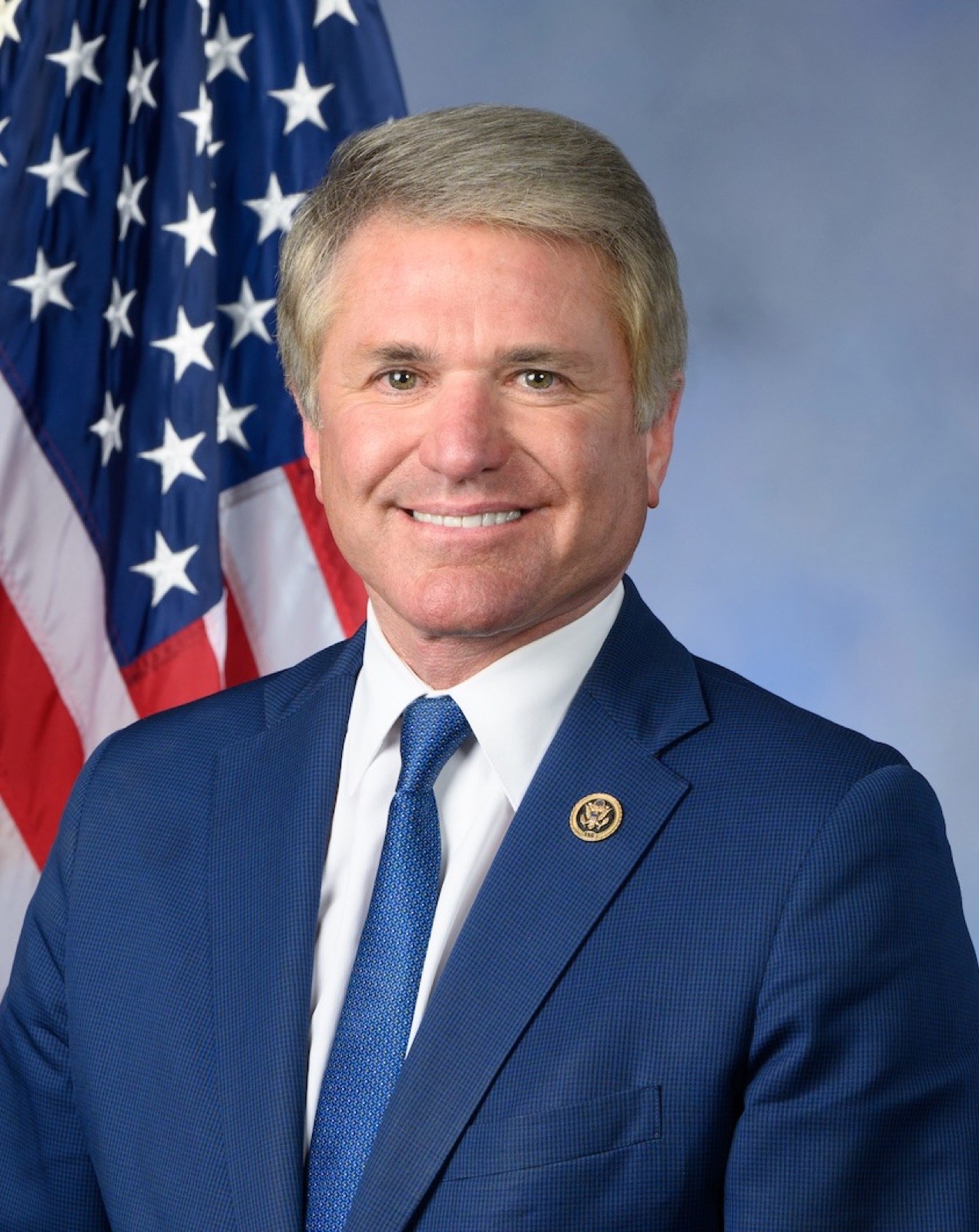
Michael McCaul
Michael McCaul is a Republican Congressman from Texas and chairman of the House Foreign Affairs Committee, overseeing the State Department and shaping United States foreign policy.
Episode Summary
Republican Congressman Michael McCaul of Texas serves as the chairman of the powerful House Foreign Affairs Committee, which oversees the State Department and shapes the United States foreign policy. Guest host and correspondent Christina Ruffini sat down with McCaul for a wide-ranging interview about the stalled $60 billion aid package for Ukraine, Middle East security, and whether Prime Minister Benjamin Netanyahu's handling of the war in Gaza could damage Israel's standing on the global stage. McCaul discusses his work leading the oversight investigation into the Biden administration's chaotic withdrawal from Kabul and says that U.S. foreign policy has been "abysmal," starting with the fall of Afghanistan in 2021. Plus, One Decision's resident spymaster, former MI6 Chief Sir Richard Dearlove, discusses the current state of intelligence-sharing with Russia after the deadly mass shooting in Moscow and whether the Kremlin failed to heed the West's warning of a terrorist attack.
Listen & Subscribe
- Watch on YouTube
- Listen on Apple Podcasts
- Listen on Spotify
Transcript
INTRODUCTION
Raffini: You're listening to One Decision, the podcast that looks at the choices that shape our lives. I'm today's guest host, journalist, and correspondent,
Dearlove: Christina Raffini. And I'm Richard Dearlove, former chief of British intelligence, otherwise known as MI6.
Raffini: Each week, we explore some of the biggest choices and issues that have global impact. We hear from the key players and influencers making, informing, and shaping the decisions that affect all of us. So this week, we spoke with Congressman Mike McCaul, who's the chair of the House Foreign Relations Committee, and we talked about a bunch of different topics, Afghanistan, Ukraine funding, and Israel. But first, Richard, I wanted to get your thoughts on the latest international news, which, of course, this horrible attack at a concert hall in Moscow. And the first thing I wanted to ask you about is these reports that the US knew about this and did in fact warn the Kremlin that this was a threat in the offing. What is your response to that, and why didn't the Kremlin take more action?
Dearlove: Well, it's a tricky area. I think one has to understand that, you know, there are relationships which technically are liaison relationships, but they're heavily loaded with undertones between intelligence services like the SVR, the FSB, CIA, my former service, and the Russians. And I think, certainly in the West, we feel when you have a terrorist warning, you have a moral obligation. Whatever the state of the relationship, you really do have a moral obligation. There's a duty to warn, yeah, which, you know, we all recognize. And I think the Russians on their side would recognize it too when you're dealing with terrorist organizations. But the problem is that there are points in time, you know, when the bilateral relationship is really, I would say distended, tricky, loaded with all sorts of other issues. And it's quite clear, I mean, given what's been published, that the Americans did warn the Russians the likelihood of an attack, and they even went as far as to publicize this and warn their own nationals not to attend, you know, public meetings or concerts in particular. I mean this coincided with the Russian election and Putin, not entirely to my surprise, you know, rubbished the information and said this was just an American windup. Well, of course, it wasn't an American windup. I mean, thinking back to my own time, and this is a long time ago, I don't want to go into detail, I can't go into detail, but, you know, when we passed material to the Russians, it was usually problematic because even when relations were relatively good, because of, you know, the mutual suspicion on both sides, one, you know, was worried about the interpretation that would be put on it. I mean, clearly, in this case, if you take a straightforward view after the event, you know, feel desperately sad for the Russian people and their families that suffered a really horrific terrorist attack, the worst that's possible. But on the other hand, it clearly got politicized. The liaison exchange that preceded the attack was politicized. And I think it puts Putin actually in a very difficult position because Putin as a leader has always presented himself as a strong man. I mean, came to power originally on the back of those Chechen attacks in Moscow in 2002, 2000, Beslan.
Raffini: This is what you're talking about?
Dearlove: Well, this is pre-Beslan. There were some, the attacks on apartment blocks in Moscow. And in fact, you know, he was something of an unknown. I wouldn't say he was a nonentity, but he was popularized on the basis of being the man, you know, who would pursue the terrorists who were causing chaos in Moscow. And then, you know, after the event, there were subsequent attacks. There was the Beslan attack. So, I mean, there were a series of these horrible events. So this is a very tricky area. I mean, passing intelligence, discussing intelligence with a country where you have such a difficult relationship is always going to be loaded.
Raffini: Logistically, at this point, with relations how they are, how would that message even get passed? Is that something you would send through a deconfliction channel? Is that something you would have an ambassador attempt to deliver?
Dearlove: No. No. Wouldn't. Even at the worst of times, there are contacts between the intelligence community. They have means. I don't want to go into detail as to how it's done, but the communications don't actually break down. And I mean, in a way, you don't just talk to your friends. I mean, the strange thing is in intelligence services, you talk to your friends, you talk to your frenemies, you talk to your enemies. And channels of communication usually are not broken off even in states of extreme tension. They might not be used very much, but there are very reliable means and ways of conveying these messages. And I think it's absolutely clear in this case because I don't think the Americans would have publicized it in the way that they had done, and I admire them for doing so. And of course, a massive miscalculation on Putin's. We don't actually know how the FSB reacted to the liaison information that they were given. I mean, maybe they took it seriously, but didn't manage to stop the attack. I don't know.
Raffini: That's true. That's not something they would want to publicize, obviously. What is your take on whether or not Putin has successfully sold this effort to try to, in a very tangential manner, tie this attack back to Ukraine by saying these individuals they've arrested who showed up in court looking all kinds of beat up were attempting to flee to Ukraine. That is a horse that's not running.
Dearlove: Even domestically, even in Russia? Domestically, I don't think the Russians. Look, they had to admit because the evidence is overwhelming that this is ISIS-K. You know, there are strong reasons why ISIS should attack a Russian target. You know, it runs from Afghanistan to Chechnya to Syria. Russia's always been a target. Hang on. ISIS-K attacked the Russian embassy in Kabul a few weeks back. I mean, they tried to bomb the embassy in Kabul. So that's not surprising. Look. In the current situation, the people around Putin are going to say to him, you know, make an attribution towards Ukraine. But they haven't come up with any evidence. I think most Russians would think, well, you know, this is rubbish. But let's face it. The Ukrainians, even in the state of war, are not gonna do that.
Raffini: I wonder if you're mentioning Putin coming to power as this strong man type character, and it kind of reminds me a little bit of what's happening in Israel with Netanyahu, where you have these leaders who are in power because they guarantee that they are the security president, candidate, what have you, and they guarantee that they can keep people safe. And when they fail to do that, we see even their most hardened supporters start to fall away from them. Do you think this talk on this concert hall will have any impact on Putin's popularity, or do you think it'll just be something that's pushed along in the daily political strife?
Dearlove: So I think it's very damaging to Putin in one sense, but obviously in another sense, the group around him will try to exploit it in order to impose more control, more autocracy, you know, more sort of sinister interventions in the lives of people who are anti-regime.
Raffini: Well, and on that cheerful note, let's take a listen to our interview with Congressman McCaul because the first thing I asked him off the top was how he rated US foreign policy, good, medium, or other. Let's take a listen.
INTERVIEW WITH CONGRESSMAN MIKE MCCAUL
Mccaul: I'm not saying this in a partisan way. It's been abysmal. And it all started with the fall of Afghanistan projecting weakness, not strength. That was followed by Putin's invasion of Ukraine just months afterwards. I think there's a direct cause of
Raffini: You think that was a knock-on effect?
Mccaul: A 100%. I would even go back to Nord Stream Two. The pipeline that I sanctioned, president waived those sanctions, allowing Russia to put the pipeline into Europe, make them dependent on Russian energy. Putin saw that as weak. Then when he looks at Afghanistan, you know, the surrender to the Taliban, and he knows this is my time. This is my moment. And then that's when we saw the movement. And we warned the world it was gonna happen, and nobody believed us. But prior to that, he met with Chairman Xi in Beijing at the Olympics and this unholy alliance that they have formed talking about his intentions, and Chairman Xi said, I will support you.
Raffini: But those are executive branch foreign policy decisions. I'm wondering what you think about now looking at Congress, whether the delay in aid for Ukraine could potentially have the same effect, you know, making our allies think of us as less reliable and diminishing the US position in the world.
Mccaul: Yeah. I've been on record talking about how important this is, how urgent it is, particularly in Ukraine. They are losing on the front lines now. The Ukrainians are. They don't have the ammunition, you know, necessary. But, you know, I really tied all these threats together, and that's the way I had envisioned it. And that is, you know, the threat to Europe from Putin, the threat to the Pacific from Chairman Xi, and he's focused on Taiwan very intensely. And then the Ayatollah rearing his ugly head in the Middle East with his proxies in invading Israel. And so, and they're all tied together because they're all allies of each other. You can't say you don't like Communist China, but you think Putin's a cool guy. They're in bed together, and so is the Ayatollah and so is Kim Jong-un.
Raffini: I'm wondering if you also think this diminished capacity for influence of the US is coming to bear at all in the US efforts to influence Israel.
Mccaul: Yeah. There's a lot of tension between the US and Israel. I think the Democrat party's base has a lot of tension with Israel right now. And, you know, I go back to my dad's war, World War Two. If you look at history, you know, Neville Chamberlain and Hitler. Right? Peace in our time. Hitler says it's not worth the paper it's written on.
Raffini: So when you were now in Poland and the refugees are coming in from
Mccaul: Yeah. We were there really, really soon after the invasion.
Raffini: We were just talking about it. We were right after, an hour from the border.
Mccaul: And what did they say? This is 1939. What happened in 1939? We were projecting weakness. When you do that, there's no deterrence, and it invites aggression and conflict and war. We are on the cusp of possibly a World War Three. And it's not just the Pacific and Europe. It also would have the Middle East involved.
Raffini: But it's also not just an issue with Democrats or with this administration because, I mean, you have members of your own party who are very against Ukraine aid to the point where Marjorie Taylor Greene tweeted that if Ukraine funding goes through, it'll activate the motion to oust Speaker Johnson. You know, to me, it's reminiscent of the 1930s as well.
Mccaul: Within the Republican Party, there was isolationist wing. And it was after World War One, and I get that because that was a very bloody war, and the Americans were like, let Europe fight its own wars. But, you know, we learned the lesson. You can't hide and retreat from leadership. We are the leader of the free world. Ronald Reagan understood this, and he was, you know, first president I got to vote for. I hate to see my party going back to this isolationism that Reagan actually was very much outspoken against. He thought we had a responsibility to lead the free world, and we couldn't shrink from that responsibility.
Raffini: Does that embarrass you that that's becoming a strain in your party, especially since you deal with so many foreign leaders?
Mccaul: I try to understand it as much as I can. You know, I grew up in the Cold War, not to date myself, but, you know, Russia was not exactly our friend. I don't know what some of these younger people think about Russia and Putin or have some affinity towards him. He's a brutal dictator. He's a war criminal in my judgment. But, you know, I think the fact is they look at the forever wars of Iraq and Afghanistan that were clearly mismanaged. You know, as Washington talked about foreign entanglements, don't think we need to be the world's peacekeeper. However, the Ukraine situation is very, very different. Why is it different? I think it's certainly our national security interest because of the threat to NATO. If we abandon our allies like we did in Afghanistan and surrender to Putin like we did to the Taliban, he will take Ukraine. They'll go into Moldova, then Georgia. They'll threaten the Baltics. Then you're looking Lithuania, Estonia. And then you're looking at Article Five. And what I'm trying to do is when I would go to Ukraine, they say we're fighting for you against the Russians, so you don't have to be here. And I don't want us to be involved there.
Raffini: So you wouldn't support boots on the ground in Ukraine?
Mccaul: No. And that's why I support giving them the weapons they need to win. This administration has slow-walked it so much. I mean, Jake Sullivan wrings his hands about, first, it was Javelins and Stingers, and it was, you know, planes and then HIMARs. And now it's ATACMS. That's a longer range artillery that can blow up the bridge between Russia and Crimea. It would kill the Russian supply line and be a huge world victory for Ukraine, but they won't deliver them.
Raffini: Do you think it was a mistake not to give those larger weapons to the Ukrainians immediately upfront? Do you think it would have made a difference?
Mccaul: Colin Powell is right on this one. You're either all in or you're out. And we were doing it half, and I can think of a word to say, but I won't, but halfway. Put it that way.
Raffini: We're not FCC here. You can say whatever you want.
Mccaul: That's not how you win. You don't go in with one hand tied behind your back. You don't go in halfway. You're either all in or you're out. And so that's been part of the problem, I think, with my conference is they don't wanna put good money in after bad from their perspective. They see it's been mismanaged by this administration. But I argue that if we surrender to Putin and Ukraine, is America gonna be stronger or weaker?
Raffini: Is the worldview of the United States of America, what's it gonna be? It's gonna be that we are weak. When it comes to foreign policy, I wanna shift a little bit to Israel. I'm wondering a little bit on that same thread. You think the way Israel has responded to this terrorist attack is benefiting Israel's stance on the global stage in the long run? Do you think in the long term, the way Netanyahu is handling this conflict will benefit Israel or will damage it on the global stage?
Mccaul: Yeah. And I was there two weeks after October 7 with Netanyahu. He showed me the Hamas videos, and they're horrific. It's a very emotional issue for them. I've never seen Netanyahu, such a strong man, in tears. And he said, I want you to show this video to your colleagues because I want them to know what happened, and I don't want them to forget. So I fully support his efforts to eradicate Hamas. They're certainly the top leadership, high value targets. But then you're gonna start talking about governance post-Gaza. I'm planning to travel to Saudi Arabia to talk to the Saudis about the security agreement. There would be a huge breakthrough in Middle East, you know, politics and war. Imagine if Israel and the United States could enter into a security agreement with Saudi Arabia. Well, it was on track to possibly happen before all this went through. My theory, and I think the Israelis, is that they saw that happening, and Iran, who's behind all this, decided to strike. And they did. And it has diverted now the attention. I wouldn't say it's derailed the process because we're still talking to them.
Raffini: But I think, you know, if there's any positives, the more violent the response is, I mean, the more brutal the response is from the Israelis, don't you think the harder it's going to make it for Gulf allies, for the Saudis, for these other nations to salvage those Abraham Accords because the domestic populations are just furious? And the same way the Israelis feel about that video from October is the same way their populations feel about these videos coming out of Gaza.
Mccaul: Yeah. And that's the delicate balance. I would argue they get this done as fast as they can. Right now, you're in Ramadan. So that's on the holy season, and they wanna ceasefire. They're negotiating a hostage deal. I hope they can also negotiate the humanitarian aid getting in. Now we had a huge problem with UNRWA. You know, UNRWA was providing employees that invaded Israel, 10% are Hamas. We have Catholic Relief Services. We've got World Food Program in there. But we have to provide a way to have that going securely to help these people who are starving. And I agree with that.
Raffini: And also think some of the unnecessary provocation in these settlements in the West Bank, the Israeli government announced a new parcel for settlements, and what your opinion is on
Mccaul: I just think they ought to be focused on the ball. And the ball right now is Gaza, and it's eradicating the leadership of Hamas. I think this takes their eye off the ball, and it diverts attention, and it also causes some provocation.
Raffini: Is it antagonistic? Is it deliberately antagonistic?
Mccaul: I think they want to have the best hand at the table when the time comes to negotiate. Now one thing the Saudis told me is that they want a resolution to the Palestinian problem in return for the security agreement. Right. Now remember the whole thing, like, you know, Israel's first created as a state. The problem was the Arab world did not accept that. They would never accept that they had the right to exist. And finally, Egypt and Jordan came along, but that's why the Saudi thing would be such a breakthrough because the rest of the Arab world would follow this and the Muslim world.
Raffini: It's Egypt, Jordan, and Sudan. Right? Because I was on the first flight with Pompeo when we flew from Tel Aviv to Sudan to get that agreement, although that government is having its own issues. What do you think about the line of thought that Netanyahu benefits from dragging out the war? Because polls, which are, you know, reliable or not, are saying he's unpopular, and he probably will not last through the post-election after the war. But the longer the war goes on, the more he can stay in office, and he benefits from dragging this out.
Mccaul: Well, that's always been his platform as national security, and he's a wartime president. But this peace agreement, I mean, the longer it drags out, the more it does jeopardize his peace agreement. And I think he would want to be remembered as the peacemaker.
Raffini: You think he would value his legacy over, you know, not getting indicted perhaps when he gets out of this?
Mccaul: Mean, look. There's gonna be a 9/11-style investigation. Can't get into all the details, but there's a lot of intelligence and evidence that there were warnings, and that's gonna come out. He's a survivor. He's very strong. And I think he's gotta be able to hold his war cabinet together, though, and I don't know if that's gonna happen.
Raffini: Do you think the US has been effective in trying to influence Israel's action in this conflict? Do you think Jake Sullivan, Antony Blinken, President Biden are having any impact on either getting the Israelis to hold back or getting them to the table for a peace settlement?
Mccaul: Well, mean, they see it, Israelis see it from a very different context. I think it's always better when you're talking with an ally or partner that you do so privately, and you don't go like Chuck Schumer did. Let's topple a democracy, a government. And so that wasn't sending the right message. I think that causes tension. But I think you can quietly, with our allies, work with them. Now they'll tell you, look. We're on track here, and, you know, we're gonna go into Rafah eventually, probably after Ramadan. And that's gonna be the final phase of the operation. And then, you know, Christina, then we get into the post-Gaza conflict world, and then what do we do?
Raffini: But there really is no plan for that yet.
Mccaul: Well, that's where the discussions with the Saudis are coming into play. I don't have a lot of hope if the Arab world is not involved in that and don't provide the provisional governance for the Palestinians, they're the only ones that can do that. Israel can't do that, and the United States can't do that.
Raffini: No. And Arafat and others have said, you know, they don't wanna ride in there on a US tank or a European tank. You know? It needs to come from the people. They don't wanna be a figurehead. And Israel's made it clear, we're not gonna govern Gaza. You know? And but neither is Hamas. Who do you think is in charge of foreign policy in this administration? Is it NSC? Is it the State Department?
Mccaul: I think in large part, it is, you know, Blinken to some extent, but I think Jake Sullivan really has a presence here, and they think very much alike. I'll give you some examples of this. So Blinken is actually more hawkish than you would think. When he would ask you, what do you think about putting MiGs into, you know, Ukraine? I'm like, yeah. You should. When it came to delivering the weapons, he was way ahead of the game on this. And, you know, finally, Sullivan decided to do it, but they've been very overly worried. You know? Oh, it's too provocative or let's wring our hands. And really, Sullivan and the president are sort of like-minded where Blinken's a little more aggressive, I think.
Raffini: Does this administration, in your opinion, suffer from indecision paralysis?
Mccaul: Yes. Paralysis by analysis. I'm an attorney. I was a federal prosecutor, but I like thinking I make decisions. But, you know, attorneys can overanalyze things, and then you're paralyzed.
Raffini: And what is the impact of that on foreign policy that you've seen either in Ukraine or Israel or even China?
Mccaul: You want to do the right thing correctly in a smart way, but you also have to be decisive, and you have to act. And if all you're doing is you're paralyzed because you overthink or you let's have a meeting that we've had five times before, and you know that story. And then you get nothing done. And by the way, like in Afghanistan, you know, wringing your hands, they didn't have a plan. I mean, the law requires they have a plan for evacuation. The reason it went so badly is that they didn't even have a plan.
AFGHANISTAN
Raffini: Let's talk about Afghanistan. You've been holding hearings into this. You've been talking to officials. Do you feel like you're the only person who still cares about this and is still trying to figure out why this happened and make sure it doesn't happen again?
Mccaul: I tell you, this hearing with General Milley and McKenzie got a lot of attention, but it is because I'm trying to remind people about Afghanistan. It breaks my heart the women that were left behind who are now living under, you know, the slavery of Sharia law, the Afghan partners we left behind who were being executed, and Americans. And that didn't have to happen. If done the right way, that didn't have to happen. So we have to have lessons learned so that, god forbid, we ever end up in this situation again, it will be run more smoothly. There's a lot of chaos on the ground. And the worst example of that is the Abbey Gate bombing. You know, they killed 13 service members, dozens of wounded, and 170 Afghans were killed.
Raffini: I know I sent people to that gate that day. They were okay, I think, but we were all sending people to that gate trying to get folks out. I mean, I was working with your staff and the State Department, and one thing I will say about that is people, there was no partisanship or even reporter or staffer, you know, distinctions. Everyone was trying to get people out. And from our perspective, we just couldn't. There didn't seem to be a system. There didn't seem to be an order. No one could tell us what would get you in past the gate. Have you seen any kind of admittance of wrongdoing or someone take responsibility for what happened to satisfy you at any point? I mean, I know you spoke to generals last week, but they mostly pointed fingers at the State Department.
Mccaul: They do. But you know where we found it was in the after-action review report that Ambassador Smith wrote it in the notes that I had to move for contempt proceeding to obtain these notes. In those notes are employees saying this. Why do you think there's a dissent cable of, like, 23 State Department employees? It was a cry for help. That's like an emergency cable that goes to the secretary. Very extraordinary measure.
Raffini: Right. The channel that's set up, there's the official cables. And then if you disagree with US policy, that's set up specifically so people feel safe to voice a dissenting opinion.
Mccaul: Because they had an ambassador, Wilson, at the time who said, we're not gonna leave. We're gonna maintain the embassy and the flags continue to fly. Meanwhile, it defied everything going on the ground. They saw the fall of Kabul. They saw Ghani flying out, surrendering to his country. You know, the intelligence community warned about this, the Department of Defense, and then the employees. And can you imagine being in the embassy?
Raffini: Like, we have to get out of here. Well, I can because I was texting with them, and we were also trying to get our people out because, you know, media and other US citizens, the reason you have to notify someone when you, you know, they have to post a public notice when they evacuate an embassy is because that's an indication it's not safe for Americans. So a lot of people, including news organizations, made the decision to stay because the embassy still open.
Mccaul: And it was just, even at the time, the briefings I would get from the DOD and the IC were very grim. And I remember walking out thinking, oh my god. This is gonna happen fast. State Department very rosy. Remember the statements come from the White House? Oh, it won't be like Vietnam. Not gonna be like Saigon. I'm pretty sure I asked that question. Orderly transition, you know, peaceful transition of power. And I think they actually drank the Kool-Aid to some extent and thought that they could normalize relations with the Taliban and keep our embassy operational. And we saw that that was not possible.
Raffini: So what do you wanna see happen out of all these investigations? What is your ultimate goal here?
Mccaul: Well, there are a couple of things. We wanna get the commanding officers on the ground to testify about what was happening during Abbey Gate. Now the testimony of Sergeant Tyler Vargas-Andrews, who was a sniper who saw the suicide bomber according to his testimony. It fit the description on the be-on-the-lookout, forwards this information to his commanding officer who I talked to and was not given permission to engage the suicide bomber. We wanna know what the commanding officers were doing on the ground. That has generated a CENTCOM, you know, Central Command investigation and a report that has just been completed, and now the family members are being briefed on this in Tampa down at CENTCOM. After that, they're gonna produce that document to us. And I think it will answer a lot of these questions. But, you know, at the end of the day, we have to change the policy. I mean, the State Department cannot be derelict in its responsibilities to what their responsibility is is a plan of evacuation that they then turn over to the Department of Defense to execute the plan. But the DOD is telling me, like Milley and McKenzie, we didn't have a plan to execute. And if you don't have a plan, you fail. If you fail to plan, you plan to fail, and they failed.
Raffini: Is there a bright spot that you see in US foreign policy? Is there anything you see that brings you any sort of joy as he cackles maniacally in the chair across from you?
Mccaul: Well, I mean, yeah, the world is on fire, and most of it's happened during my tenure as chairman. I don't think there's any cause and effect.
Raffini: I was gonna say, wait a minute. Should we talk about that? Dig into that a little bit? I mean, I blame you on the administration.
Mccaul: But when you got, you know, the biggest threat to the Pacific and Europe since my dad's war, World War Two, it's very serious. What could be very positive would be this breakthrough with the Saudis. Okay. And that is something I'm gonna be very focused on because we always talk about peace in the Middle East. And I go in eyes wide open, very pragmatic about it, realistic, but it's real. And I've, you know, I've had high-level discussions with the Saudis. They're keenly interested in this. And I think we need to keep their interest and keep that moving forward in the right direction. The other thing that's exciting was I passed out of my committee yesterday this international conservation bill. I had 10 billionaires come to me and say, we want to put in a bunch of money for a program to be run by the US government with a government match. So I negotiated with them. They wanted two government, one private. I said, no. No. One government, two private. And we did. And this will go towards conservation of wildlife in Africa from, like, China. They kill the rhinos for their horns, and they do a lot of other bad things and the fish. You know, maritime, China raids the seas. And then finally, the rainforests that are really the lungs of the planet. We will be able to invest a lot of money, most of it through private philanthropy, to save the lungs of the planet and the rainforest.
Raffini: And that's a pretty cool story. So there's still some good to be done.
Mccaul: There is. I'm an eternal optimist even though I'm surrounded by fires.
Raffini: I would say, it reminds me of the little GIF of the guy with the coffee mug and all the flames. So when you look at that, you know, your instinct is to just say, forget it. I'm just gonna go back into my house. Right?
Mccaul: Your instinct is fix it. Fix it. Fix it. What's the solution to these problems? Problems are made to be solved. Right?
ANALYSIS WITH SIR RICHARD DEARLOVE
Raffini: So that was Congressman Mike McCaul from Texas. Really wide-ranging interview. You know, he's really on top of all these foreign policy issues, again, because he chairs the House Foreign Affairs Committee. But, Sir Richard, I'm wondering what initially is your takeaway, what stood out the most from all those different topics that we discussed.
Dearlove: Well, think I'll comment first and say nostalgia for a Republican who understands foreign policy. Look. Someone of my generation depends on the Republican Party to have a realistic view of foreign policy issues. One has this sort of view and tradition of, you know, gurus in the Republican Party who really understand things like national security, NATO policy, leadership from America on key international issues, and listening to Michael McCaul was really, well, reassuring. But I wish that the view he expressed was currently the firm view. I mean, for someone like me who spent a lot of my life working with the United States or in the United States and lots of relationships with different people, I'm well aware that there are two sides to the coin. There's the sort of isolationist side, which asserts itself politically from time to time in American life. And then there is the side that McCaul expresses. And obviously, I'm very sympathetic to what McCaul expresses, and I'm rather allergic to the isolationist aspect. I mean, that's my overall observation of what he had to say. He spoke an enormous amount of good sense, and I hope that people like him will have a profound influence over, you know, the Republican caucus both in the Senate and in Congress. But at the moment I'm rather worried that that is not the case in Congress in particular, where you have a lot of congressmen trying to, well, Republican congressmen, obviously, trying to endear themselves to the possibility that Trump might become the president.
Raffini: Well, I'm wondering if you agree with his current assessment of US foreign policy under the Biden administration and that it's kind of a mess.
Dearlove: Yeah, I think that actually if you go right back to Obama's administration, there has been a lack of cohesion and logic about aspects of the Democratic administration, Democratic party's grasp of foreign policy. There are points which are good and there are points which are excellent but there are other points that sort of to me don't make sense. And it's that lack of cohesion, lack of unity in the way that they've approached these problems, which I think is rather worrying. I think it was more noticeable ironically under Obama, who maybe history will see as a successful domestic president, but I certainly wouldn't see him as a successful foreign policy president. I mean, he prides himself on his knowledge of foreign affairs. I mean, I have actually met him at an Aspen conference at which I was a primary speaker, and he was a primary speaker. This was a long time ago when he was a congressman or senator. Anyway, he was prominent at this conference which took place in Aspen. And I had the opportunity to talk to him quite a lot. And what struck me about him was he didn't listen. He was always on transmit.
Raffini: That's interesting.
Dearlove: And he really was almost completely indifferent to what anybody said to him. So I think he has certain idée fixe.
Raffini: I can only comment from a reporter's standpoint, but I know my last interaction with him that really blew up was I had been covering the war for a couple months. I was on the front lines, and then I went to NATO where he was giving a press conference, and I asked him this question about sanctions. And I said, because for months and months and months, his officials had been saying, We're not pulling the trigger on sanctions because they're the arrow in our quiver, we want to hold that over Putin. This had been the line. And I said to him, You know, sanctions didn't deter, so what makes you think anything you do here will have an impact on Vladimir Putin? And he said, well, we didn't say sanctions weren't gonna deter. We don't know what you're talking about. Sanctions don't deter. And then, of course, that got picked up because that's the complete opposite of what his administration had said. I do notice from a reporter standpoint, he does sometimes get his back up a little bit when you try to question his policies or move him on ideals like that. And I wonder if it's the same case in the sit room. I think he thinks he's super, you know, knowledgeable, super experienced.
Dearlove: I mean in a way Blinken is his saving grace because I mean Blinken is reasonably sensible. Well, he's sensible, I mean to be fair, and Blinken, you know, is thoughtful, gets his statements right. But it must be a complete nightmare in the Biden administration. Look, I mean, if you've been involved, you know, for as long as I have been watching sort of foreign policy and dealing, I mean, you know, when I was in office, you know, I dealt with these people face to face, I saw a lot of them. And generally speaking, you know, you could depend on the United States leadership to be very firm. You know, I've dealt with Condoleezza, Steve Hadley, the president, you know, George W. Look, I mean, these are all people who really had a grip on the issues. And you could have a really thorough discussion with them. And that discussion made sense. I don't think, I'm sorry to say this, but I think I could have that discussion with Blinken. But the president, well, it's problematic. I mean, we're not way off course. And on the key issues, he's actually got things right. I think it's just, as it were, management of the key issues, where if you pose questions like the one you pose, which are quite complex and quite challenging, then you run into choppy waters. And you'd be fine if you were talking to Blinken.
Raffini: And I have, and, you know, it hasn't been the same issue. I'm wondering if part of the problem, if you think, is the whiplash from these kind of slower moving, more thought-dominated Democratic administrations to the Trump administration, where everything was shot from the hip, a tweet a minute could completely change US foreign policy, our allies didn't know where they stood, his own cabinet didn't know where they stood, back to this slower moving, you know, I'm wondering if that inconsistency in overall foreign policy and the fear from allies and enemies alike that it could change again every four years is doing damage to America's credibility and influence abroad.
Dearlove: I think that's a great observation, and I think you're exactly right. And I think, you know, part of the problem is the sort of fear that you're going to get, you know, an impulsive administration which takes irrational decisions. It throws darts at the dartboard. Some of them do hit the bullseye and some of them are the correct policy, but others are so far off course that they create massive anxiety. And you know anybody who's lived and worked in foreign policy and geopolitics knows the nuances of statements by senior leaders internationally. Every word, every nuance, every expression is interpreted. And I mean, the problem, you know, with Trump is you go to the other extreme. But, you know, Trump got certain things right. We have to admit that. He got, you know, NATO membership contributions right. He got change of policy on China right.
Raffini: Ironically, the China policy has really not changed much from this administration. The rhetoric has changed, but the policies are fairly consistent.
Dearlove: Well, it hasn't. And I think that that is actually very constructive for the West as a whole. I mean, if you ask me what the bigger problem is, the bigger problem in the medium to long term is China. It isn't Russia. I mean, Russia, you know, is a declining polity and serious problem. And I mean, you know, what we're seeing in Russia's case is a massive attack of, you know, post-imperial anxiety and, you know, loss of confidence, loss of identity, you know, the separation of Ukraine from old Russia is a huge loss for them. I mean, it's understandable what's happened if you look at it from that point of view. I mean, it may be unacceptable, but you can see why things have gone so haywire.
Raffini: Well, one of the things we were asking him is whether or not he thought he was going to be able to convince extremists in his own party, caucus, to support Ukraine funding. How catastrophic do you think it will be if the US can't get that passed, if the funding to Ukraine stops or even has a significant hiatus?
Dearlove: Well, it's serious for Ukraine, and it's gonna make life incredibly difficult for the Ukrainians. But there is a plus side. What is happening is it's making the Europeans get their act together in a way that they wouldn't have done if American money was continuing to flow to Ukraine. So there is a positive result that comes from Trump's, as it were, blocking of this 60,000,000. And actually, I'm beginning to take a positive view of that because it's forcing the Europeans who've been appallingly bad at coordination. I mean, the UK is in a good position. I mean, actually, Germany is the second largest supplier to Ukraine and, you know, will continue to up its game, I think. So, I mean, if the three major European countries that, you know, focus on European defense, which is the UK, Germany, and France, can get their act together, then as long as the Ukrainians can hold on, if you look into 2025 and 2026, this is a war that we do not have to lose, if you see what I mean. It's a really big deal. And I'm an optimist, and I'm very worried about what Trump is saying and doing. But then there is another aspect to Trump, which we all have to accept and understand, is he's totally unpredictable. He told Nigel Farage last week in an interview that, you know, if NATO members were gonna pay up, and they're all paying up. So if he becomes president in November, by the time he becomes president, there won't be a NATO member who's under 2% of GDP for defense expenditure. So I mean, the sort of attack on NATO no longer becomes relevant. And then, you know, quite a few NATO countries are gonna be at 3% or higher. And so the situation is completely different from when he came to power in his first term. And, you know, you just don't know what Trump's gonna do. We're running out of time. But I think there are some basic issues which are so important to the security of the West that America cannot step away. Look, I believe deeply in your country and its role internationally. And I'm anxious about it, but I think we'll be okay.
Raffini: That's it for this week's episode of One Decision. We drop new episodes every Thursday, so like and subscribe. That way, you'll never miss an episode. Drop us a line. Tell us your thoughts. What decisions have impacted you where you live? You can write to us. Our email is onedecision@onedecisionpodcast.com. For me and the whole team, thanks for listening, and see you next time.