Episode Info
- Season9
- Episode2
Hosted by Christina Ruffini and Sir Richard Dearlove
Guest
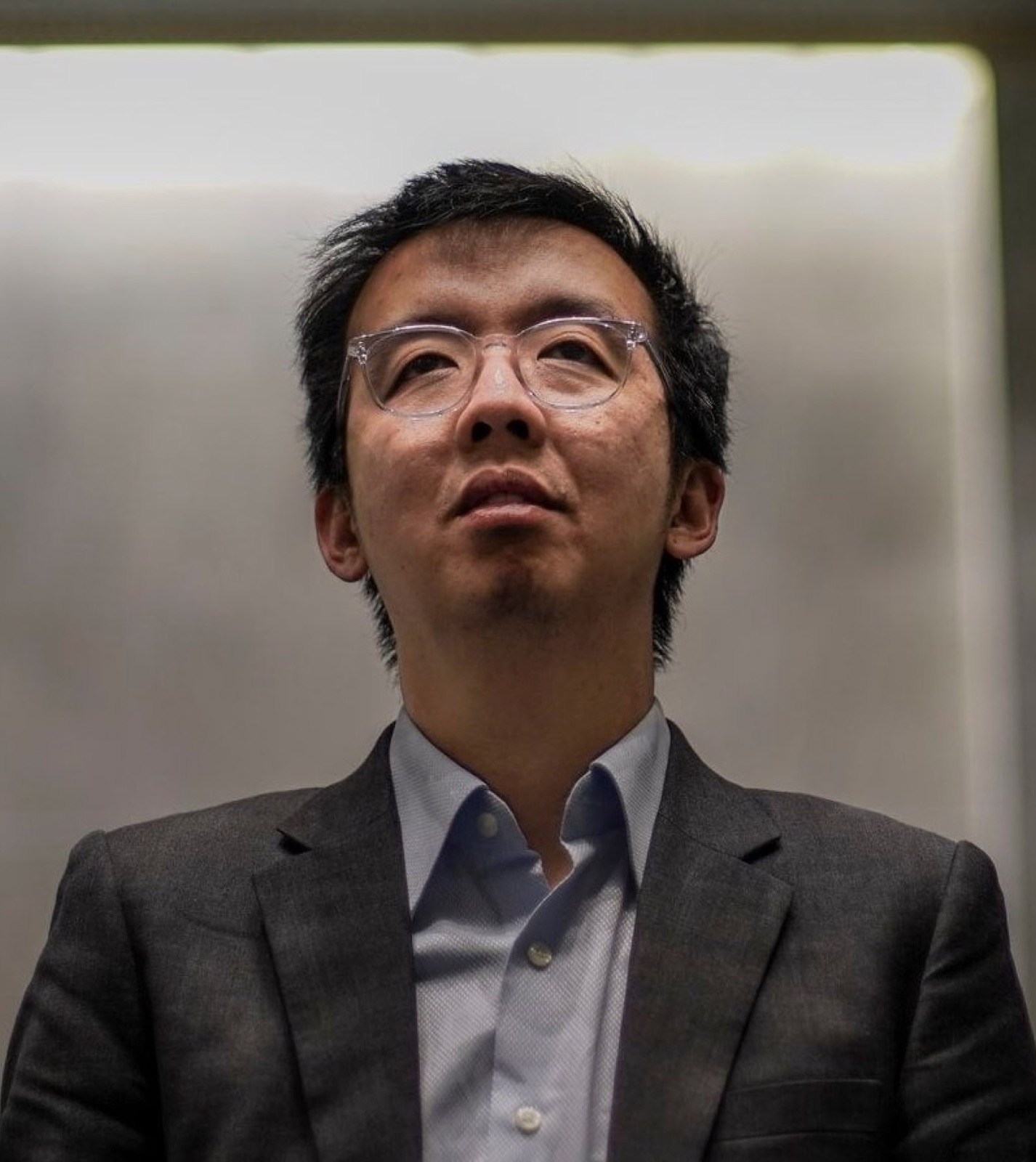
Samuel Chu
Samuel Chu is a Hong Kong-born American activist, founder, and president of Campaign for Hong Kong. Samuel Chu discusses China's National Security Law and its implications for Taiwan's future.
Episode Summary
This month, China has been marking the 25th anniversary of the handover of Hong Kong, from British rule back to China. For many Hong Kongers, this was not a day of celebration - including for Samuel Chu, a Hong-Kong born American activist, founder and President of the non-profit group Campaign for Hong Kong. His father, a retired pastor, was one of the leading figures behind the Occupy Central movement, the pro-democracy mass movement that sparked the Umbrella Revolution in Hong Kong back in 2014. As the first foreigner wanted by China under China's National Security Law, Samuel joins Julia Macfarlane to discuss how China’s actions in Hong Kong may inform Taiwan’s future, while Sir Richard Dearlove reveals new details about the negotiations and his scepticism of China during this time.
Listen & Subscribe
- Watch on YouTube
- Listen on Apple Podcasts
- Listen on Spotify
Transcript
INTRODUCTION
Lockwood: Welcome to One Decision, the podcast that looks at the choices made that have shaped the world. This month, China has been marking the twenty fifth anniversary of the handover of Hong Kong from British rule back to China. It was a ceremony not so much reflecting the island city, but of Chinese nationalism and the power of the Chinese Communist Party. For the occasion, President Xi crossed into Kowloon Bay, leaving the Chinese Mainland for the first time since before the start of the COVID-19 pandemic. However, for many Hong Kongers, it was not a day of celebration. Samuel Chu is a Hong Kong born American activist, founder and president of the nonprofit group Campaign for Hong Kong. His father, a retired pastor, was one of the leading figures behind the Occupy Central movement, the pro democracy mass movement that sparked the umbrella revolution in Hong Kong back in 2014. As the handover anniversary came around, we caught up with Samuel to hear how he had been reflecting on the significance of the date and the twenty five years that have passed.
INTERVIEW: SAMUEL CHU
Chu: So the backstory is that my father was, I was actually there during the first million Hong Kongers March in May 1989. My family was intimately involved with the organizing of the supportive protests in Hong Kong. In fact, my father was one of the founding member and director of the Hong Kong Alliance, which for the past thirty plus years until it disbanded last year, was the group that was responsible for the annual vigil commemorating Tiananmen Square in Victoria Park in Hong Kong. As part of that, my father also actually was the architect and organizer behind the underground railroad that smuggled the students and protesters who escaped from Tiananmen Square on June 4. So he was the one who helped put together the smuggling operation and then connected with Western government to resettle them into France and The US and Britain. And so at the end of 1989, I think it was pretty clear that both from, I think, my family perspective, but also from the British government and other various Western government that they had concern about our family safety, particularly for my dad. And so that was a huge factor in terms of sending me away to The US just in case something did happen to my family. My family, on the other hand, actually stayed in Hong Kong and continued to actually live there. I did go back obviously for summer vacations and other sort of special occasions, but I am the only person in my family who stayed at who came to The US, stay in The US. And little did I know that the last time I traveled there was in December 2019, which turned out to be the very last trip that I made and probably for a long while.
Lockwood: Interesting. I really wanna ask you about 2019 because that was a really, really important year, but I just want to go back a little because I think we should explain to our listeners the reason why you are an activist to this day and the reason you work on pushing for right and the restoration of freedoms on the islands. And before talking to you today, I watched the handover ceremony, which was televised around the world back in July 1997. And it was full of everything you'd sort of expect that had any kind of involvement by the Brits. There was lots of pomp and circumstance, there was a band playing and parades. Chris Patten, who was the last governor of Hong Kong, he was there. Prince Charles was representing the Queen and then you had the newly elected Prime Minister, Tony Blair, he was there with his wife. Also Margaret Thatcher, I saw. Now, she hadn't been in power for a few years, but she had been in charge when Britain made the negotiated settlement with Beijing known as the 1984 Sino British Joint Declaration, which she signed with the then premier of China at the time, Zhao Ziyang. And on the stage, there were these two massive flags side by side, you had the British Union Jack flag being taken down to the tune of God Save the Queen and then you had the flag of the People's Republic Of China being raised slowly up to the Chinese national anthem. Prince Charles looked particularly glum at that part. And I thought it was a curious and hugely symbolic moment, the former world global power with an empire spanning the world now in decline and then the new rising China, the new rising power. Do you remember how you felt watching that?
Chu: There is a saying actually about the '97 handover where in the moment in between the union jack being lowered and the Chinese flag going up. Those ten seconds, some would say, was the only time in history where Hong Kong existed because it was in between Hong Kong being a colonial state and then Hong Kong being this semi autonomous region that now belong to China. And I think the scene that you described, I remember very clearly and vividly, the Prince Charles moment where he talked about Hong Kong is now in the hands of Hong Kongers. And I remember so vividly and poignantly that who was missing on stage were Hong Kongers. Here's two countries and leaders of both governments and all these pomp and circumstances, and they didn't bother to ever actually consider what Hong Kongers themselves wanted. And I think that is at the heart of why this whole why we're where we are today.
Lockwood: Right. And so, would you say that is kind of the moment where things started going wrong for Hong Kong? I mean, the Brits were able to guarantee Hong Kong's rights and civil liberties, and they acted as a bit of a buffer against China's reach and control. And then we saw those freedoms start to erode from that point. But there was also that curious element in the joint declaration, which basically said that Hong Kong would enjoy its freedoms and its civil liberties for a period of fifty years after the handover. And I find that curious because how was it expected to work when that period came to a close? I mean, it would snap back from democracy to autocracy. I mean, were Hong Kongers skeptical about this negotiation that had been arranged without their input, as you say? Was that ever thought of as a good idea? Was it ever going to end well?
Chu: Yeah, so I think just going back to your point that I think that this started all the way back to the beginning of the start of the negotiation in the late '70s and early '80s of when there's beginning rumors of the desire for China to take back and end this lease that Hong Kong was under, that no Hong Kongers were meaningfully involved in the conversation from the start. I remember actually there were moments, I was still living in Hong Kong, I remember news coverage of delegations, a representative of Hong Kong people who try to go and take part and voice the desire and opinions of Hong Kongers during the negotiation and all the way leading up to the signing. In fact, they went to The UK to try to get meetings with Margaret Thatcher and other leaders of the party and Tony Blair I think later on, but they were just basically ignored. I think the people who were involved and part of the negotiation and then later on drafting of the basic law in the city's many constitutions thought of fifty years as being not a runway for Hong Kong to become more like China and then eventually get incorporated. Fifty years was the pathway where China, the Mainland, was gonna become more like Hong Kong and thus become more like the Western world and that's what the fifty years really was a buffer for. Not as a way of saying that, you know, somehow, you know, Hong Kong was gonna give up its autonomy and basic freedom and human rights and freedom of speech, but that China, that the Mainland, the People's Republic Of China was gonna adopt all of those things eventually to become more like Hong Kong at the end of the fifty years.
Lockwood: Yeah. I mean, that's a really good point. I mean, the hindsight is a wonderful thing, but back then we didn't have Xi Jinping, it was Deng Xiaoping, Zhao Ziyang, and it was Margaret Thatcher, it was a totally different time. And Hong Kong has made it less than half of that time period before it has completely lost all of its freedoms, but we'll get to that. I just, one last question before we move on to more present days. What did you want to do for a career before these events took place that changed the course of your life?
Chu: I think I was always taught that from watching my father, who helped advocate for rights as a minister, as a pastor, not just within the walls of the church, but what mattered to them day to day. And I would say that if you ask my father today where his political activism started, what led him to become an organizer at the Tiananmen Square and build that underground railroad and then later on get arrested and convicted for the 2014 umbrella movement, he would actually just say that he just went where the people are and that their day to day life and concern became his priority as a spiritual leader, that it wasn't something that he could ignore.
Lockwood: Interesting. Yeah. And you mentioned the 2014 umbrella movement. And so, I want to talk to you about that. You mentioned, of course, your father, he was central to those protests and they were sparked by the imposition of this new bill on extradition. Where were you when those protests were taking place? And how did you feel? Were you optimistic? Were you worried? Were you thinking there's only one way this can end, but it's important for us to make our views known anyway?
Chu: So, I think that it's helpful to remember that there's people, I think who have seen and watched sort of Hong Kongers, millions of people on the street in Hong Kong over the past five, ten years, are constantly sort of amazed by the mobilizations of Hong Kongers. But that this is in the DNA of Hong Kong that, you know, again, in 1989, a million Hong Kongers showed up in May '89 and supported a Tiananmen Square students. I was there, and that really, I think, is in the DNA of all of us. One, I think it's funny because Hong Kong is a very small place as most of you are aware. A million Hong Kongers marching is actually not really marching. It's more just like standing still for most of the day because you can't really go very far, just standing up. Million people. Yeah. And literally just standing up. But I think that it's important for people to remember that this has been going on regularly in Hong Kong. You know, there were since '89, almost annually, there have been large scale protests. And part of it, I think, is because Hong Kong never enjoyed any other form of public democratic rights. Right? That even now, Hong Kongers really never had the opportunity to fully exercise voting rights. There was no other expression, way for them to speak out other than this large scale way of taking to the streets.
Lockwood: I wanted to ask the protest in 2014, would you describe it as an independence movement? Because I remember at the time, I remember interviewing protesters about what they wanted and referring to it as an independence movement. And a few of them said that this isn't about independence, we don't want independence, we just want the one country, two systems policy to be respected by Beijing, and we want that to be actualized in a way that it really isn't at the moment.
Chu: And I think that that is accurate. When, again, when Benny and my father and Kin started Occupy Central a year before 2014 leading up to the umbrella, the ask was never about independence. It was about what was promised to Hong Kongers in the Basic Law and the Joint Declaration that under one country, two system, that Hong Kongers would get to choose their own leaders. That was the only thing. That's why it was such a remarkable move if you go back to 2014 to think about during the early days and then for three months when people were on the street, there was a remarkable unified agenda on the street. That it wasn't splinter into all kinds of directions, was always about the right of universal suffrage to select their chief executive. And I think that that was what made it so remarkable. Millions of people came into the street and sometimes I look back and think about just how much of that was just about holding those in power to their words. I was there when first day when close to 100 tear gas grenades were fired in September 2014, were for the very first time that tear gas was deployed on Hong Kongers, on Hong Kong soil. I think the crackdown and the aftermath really demonstrated and showed the people of Hong Kong that this was not a government in Hong Kong that represented them, that spoke for them. That kind of breach of trust I think is extremely important to keep in mind when 2019 came around. And in fact, I was there actually at the end of 2018 and the beginning of 2019 because my father and Benny and others were on trial for the role that they played in the 2014 protest. And I vividly remember I was in the courtroom every day that the trial was taking place. When eventually, as we all expected, they were then convicted and then sentenced to prison for organizing peaceful protests. I remember a reporter had asked me, this was in the early days of 2019, what I thought and my feelings about the verdict. And I said that, well, I actually feel very fortunate that my father had a chance to speak publicly and have the trial be aired and the content be shared in real time that I could tweet in the courtroom while it was happening. Because I said if you can imagine if this has taken place in the Mainland, the verdict would have been the same but we would not have had any access to the proceeding and we would not have known and there would not have been representation for my father and others in the defendant dock. And I probably would have never seen my father ever again.
Lockwood: That was the main concern of most of the people that we had spoken to at the time because of course there were so many dissidents and so many pro democracy activists who lived in Hong Kong because until that point, they knew that they were out of the reach of the Beijing authorities and that they would not have access to due process if that had changed. And so, the wave of protests in Hong Kong at that time, huge, huge numbers of people and it went on for months. And it wasn't really until the pandemic that they began to die down, wasn't it? I mean, COVID really sort of snuffed out the protest movement, didn't it?
Chu: Well, I would put it slightly differently. I think that it turns out that COVID was a really helpful partner for authoritarian regimes. Turns out that because yes, in Hong Kong today, and I think partly because the end of the guise of the pandemic and COVID control, the Hong Kong government was able to essentially outlaw, even before the implementation of the national security law, to ban all public gathering. And the first million people's march for the extradition bill happened in June 2019. And then a couple of weekends later, there was 2,000,000 Hong Kongers and that's almost a third of the population in Hong Kong. I think it's hard for people in The US and around the world or anywhere to imagine a third of their population doing anything together at the same time at the same place for any reason.
Lockwood: I imagine Taiwanese watching what has been happening in Hong Kong are extremely nervous and concerned about what lies in store for them. And so, that brings me to the question, how is Taiwan, in your opinion, different from Hong Kong? And from your perspective as a Hong Konger, what is is what happened to your city an inevitable lesson that will eventually have to be learned by Taiwan?
Chu: I think that the people of Taiwan see, as I saw in '89, the closing and the crackdowns and the repression as being part of the future unless they are willing to fight and resist. And I think that we're also in a moment in history now where what has been ongoing and unfolding in Ukraine added another layer of that narrative and that urgency of not ever believing and trusting that authoritarian regime would respect negotiation and historic agreements and treaties globally and that not to be naive about the extent to which dictators will be willing to go to assert their control and authority.
ANALYSIS WITH SIR RICHARD DEARLOVE
Lockwood: Samuel Chu with a warning for Taiwan. My cohost, Sir Richard Dearlove, joins us now for his reflections on Hong Kong twenty five years on. So Richard, I hope you enjoyed that interview with Samuel Chu. I guess I wanna start off firstly, a lot of modern Hong Kong and its fate was written back in 1989. Take me back to the time of the Tiananmen Square protests. Where were you when those were going on? And what do you remember from that?
Dearlove: Oh god. I ran the whole thing incredibly well. No. I was in, well, actually, I was chief of station in Switzerland during Tiananmen. And it was extraordinary because, you know, one was aware that, you know, the Chinese state was on the cusp possibly of losing control, or that's what it looked like from outside. I think it was quite clear that the leadership wouldn't risk a political meltdown, and, you know, they gave the signal for the army to intervene. And, you know, after that, it's history. But, obviously, because the events were so exceptional, one followed it quite closely. And, I mean, what you have to bear in mind as well is that one saw it at the time in the context of, you know, what had happened in Russia and the end of the Cold War. And it looked for a period, you know, as the whole of the communist bloc, both sides of it, were in a precarious situation and close to falling apart. But, of course, the Chinese pretty rapidly did, by being incredibly ruthless, establish, reestablished control.
Lockwood: That's interesting. Do you think part of the government response to those protests was influenced by what was happening in the Soviet Union and the way it sort of gradually was being dismantled?
Dearlove: Well, I think that the Chinese leadership took one look at what happened in Russia and thought, my god, you know, the same thing could happen here if we don't assert our authority. And, of course, you know, China potentially is much more chaotic, I think, and maybe socially less cohesive. And the complete breakdown in China would have been just very extreme in terms of the social and political dislocation. But, I mean, I think the scars of Tiananmen ran very, very deep. And I think, certainly, there was a period of time when, you know, Chinese officialdom because, I mean, in that capacity working in Geneva and the UN, one had lots of interface and contacts with Chinese officials. They were extremely nervous about the whole situation. They didn't wanna talk about it. You know, you could see the anxiety and the concern as to, you know, what would happen, how it affect them, what was happening to their families in China, all those sorts of issues.
Lockwood: And did you try to talk to any of the officials, then they would just refuse to engage?
Dearlove: Well, it was a long time ago, and, yeah, I think one did. I mean, I had various interlocutors in the Chinese mission who I used to see from time to time socially, but they pretty much clammed up quickly. And, you know, you could feel them sort of circling the wagons and being very defensive and then becoming sort of socially unavailable.
Lockwood: That's interesting you mentioned that you had Chinese interlocutors. Were they specific representatives from Chinese intelligence who you would maybe speak to? Or were they diplomats? Or were they security services?
Dearlove: Well, I think we've said, I'm not really, I don't want to go into too much detail. But, I mean, obviously, there were Chinese intelligence.
Lockwood: But we want you go into detail, Richard.
Dearlove: Well, let's put it, I can explain to you how Chinese intelligence operated overseas. I mean, basically, there were two strands. So there's what's called 2PLA. That's the Second People's Liberation Army, which is the intelligence part of the Chinese military. So most of the Chinese attaches, military attaches, and attache staff were 2PLA staff. And what had happened in China was that Deng Xiaoping had favored military intelligence and had, as it were, made 2PLA the primary representatives of the Chinese intelligence arm overseas. The other organization, of course, is and was then the Ministry of State Security, the MSS, which in a way is the larger and more important organization because it also covers all the internal security issues in China.
Lockwood: So would that be the equivalent to MI5?
Dearlove: In part, yes, but it has an intelligence overseas arm as well. So, I mean, the two, but what happened was that Deng Xiaoping favored 2PLA and made them the primary intelligence representatives outside China, but the Ministry of State Security was still there. I mean, what happened was the Ministry of State Security got somewhat pushed out of the embassies as a central intelligence arm and operated mostly under journalistic cover. So at the time, if you met Chinese journalists, I mean, official Chinese journalists, it was possible, probable, that they might be Ministry of State Security officers, MSS officers. And that sort of division was certainly reflected in the community in Beijing. And, actually, post Tiananmen, because of the role that the military played, I would say that 2PLA, the military intelligence people became more dominant, more important, and the MSS people got more marginalized. I mean, I think I'm out of date now. I think what's happened is that the MSS have sort of reestablished themselves with the changes in Chinese leadership since and are the more important overall intelligence organization now. But, I mean, that's a long time ago. The other thing that is relevant to our discussion is that later on, during the negotiations with the Chinese for the joint declaration with relation to Hong Kong, I actually went to negotiate the security aspects of that agreement with the Chinese. And in fact, what that amounted to was the closing down of Hong Kong special branch and making arrangements for the Chinese to take it over after the handover ceremony. And I was the guy who went to Beijing and negotiated that with the minister of state security.
Lockwood: That's so interesting because my next question to you was gonna be, what was Hong Kong to the British intelligence services back then? Was it sort of an outpost to monitor China? Was it a place you spoke to activists? What was the operation there at that time before the handover?
Dearlove: Well, I'm not gonna go into too much detail again, except to say that Hong Kong, you know, was important as an international trading city and a global outpost in Asia. Obviously, it had a huge sort of traffic through, which was both commercial and national. And, you know, it was an important outpost for the Chinese sort of having that foot in the West, and it was an important outpost for the West in having a foot in China, if you see what I mean. So, I mean, Hong Kong was, to that extent, important to The UK, but also important to the Americans and to others because of its very unusual status. Yeah. I mean, I'm not revealing any secrets if I say that it was an important window in both directions for China and for the West inevitably. And that situation, of course, after independence, well, sorry, after the handover was likely to change, and of course, it did.
Lockwood: So handing over the special branch in Hong Kong, what exactly did that involve?
Dearlove: Well, basically, what happened was that, you know, Special Branch was closed down. I mean, and the Chinese officers who worked in Special Branch were largely resettled in the West because it was impossible for them to continue to stay and work for the incoming Chinese government. And, of course, the western officers who were part of Hong Kong Special Branch obviously left as well. But, I mean, the organization was closed, but part of the closure was an agreement that these people should be allowed to leave and were resettled, which at the time did happen. And, you know, I was in Beijing, I can't remember, for about ten days, having a whole series of meetings with officials from the MSS. It was a bizarre and interesting, a unique experience, I think. And, I mean, I got treated as though I were a British government minister. I mean, I was driven around in flashing police convoys. And, I mean, the trouble is that, you know, the Chinese in a situation like that mirror image. So if you're a senior Western intelligence official, they treat you as a sort of super VIP. It was a very peculiar and unusual period of time. And then afterwards, I flew down to Hong Kong, and Chris Patten was still governor, of course, to report to Chris on my discussions and what we had agreed in principle with the Chinese. I mean, we had a very bizarre experience when I was leaving Beijing because we got to the airport, and I was booked on a commercial flight to fly to Hong Kong. When we got to the airport, we were intercepted by the minister of state security and said, we would like, you know, to have a further round of meetings with you in the airport before the plane leaves. And I said, well, fine. Of course, if you want to go over everything again, which they did. So they took us off to a conference room, and I said to them, well, you know, I don't wanna particularly miss my plane. It's gonna be very inconvenient. And they just said, the plane's not leaving without you. So we were then in a meeting which went on for at least three hours, maybe longer.
Dearlove: The plane spent, you know, with all the passengers on board, was sitting for three hours at the gate. And then of course, when I arrived on the plane, you know, all the passengers were absolutely fuming, and they just couldn't...
Lockwood: I was gonna say, was there a round of applause?
Dearlove: It was really awful. Quite embarrassing walking onto it.
Lockwood: If any of our listeners were on a plane in Hong Kong pre 1997 that was held on the tarmac for three hours, it was because the head of MI6 was having meetings with the Chinese, and you can blame him for your delay.
Dearlove: Actually, it was before I became chief. I was the sort of number two when I negotiated that.
Lockwood: The future head of MI6. Yeah. It was extraordinary.
Dearlove: And the other thing that happened during one of the formal meetings with the minister of state security, we were in the sort of official state meeting rooms in what translates in Chinese to the fishing platform, which is, you know, where the whole leadership of the communist party hang out, where their sort of offices are, and where some of their apartments are. Anyway, we were sitting in the parallel anti Macassar chairs next to each other. You know, you don't sit opposite. You sit side by side. You've probably seen the photographs of these negotiations. And there's a whole team of very elegantly dressed Chinese ladies who are obviously chosen for their statuesque appearance, who are there serving you, you know, hot towels and cups of tea and other things. And one of these poor girls, I felt so sorry for her, managed to knock over my tea, which then damn near burnt. And the minister of state security clapped his hands, and the whole team disappeared, were ushered out of the room and replaced by a completely new team.
Dearlove: Of course, it was awful for them because it sort of put me in a rather advantageous position because I had been sort of inconvenienced and offended by this, you know, dreadful action. So it sort of definitely gave me a lift up in the conversation. And I had a guy with me who was a wonderful, I mean, my own interpreter. And he was trying to translate and tell me in Chinese what some of the muttered exchanges were between the Chinese. Embarrassed by the whole incident. God, it was memorable.
Lockwood: I guess the main question of what has happened to Hong Kong is, was China ever going to respect the declaration? Was the joint declaration sort of constructed with the hope that the Hong Kongers would somehow manage to have the tools for their own independence?
Dearlove: I honestly think that the sort of British side felt they had a moral obligation to the Chinese, you know, to the Chinese residents of Hong Kong. I mean, they really did, what went with that, with this huge moral obligation, that what the British had given to the people of Hong Kong should be preserved, which, of course, I think the Chinese are hugely shocked to discover how virulent the inhabitants of Hong Kong were in wanting to sort of hang on to their special identity. Because, I mean, the narrative for the Chinese is very much, you know, we were oppressive colonialists, not democratic liberators.
Lockwood: Yeah. It's interesting because I grew up in Singapore, which in many ways was a sort of little sister to Hong Kong. It was fully independent unlike Hong Kong, but there was the kind of understanding that the shadow of Beijing loomed large over Hong Kong and that it may not stay that way forever. I mean, was it the understanding back then, I'm not gonna ask you to speak on behalf of Chris Patten and other people, but was there a sort of sense that you guys were handing Hong Kong over to the Chinese and it wasn't going to be a happy ending?
Dearlove: Well, the answer to that is I'm not sure. I mean, I have talked with Chris about it occasionally. And I think those people who had some understanding of China and the Chinese leadership were pretty worried about, you know, the extent to which the Chinese would respect the agreement. But as I said, I just don't think any of them expected it to fall apart with quite the speed that it did and in the spectacular way that it did. And I mean, I don't think any of us really expected the Hong Kong people themselves to put up, you know, such a sort of demonstration of dissatisfaction with the government of Beijing. But, I mean, certainly, I've been to Hong Kong, you know, I went to Hong Kong quite a bit after the joint declaration, really before these problems started. I mean, my last visit was probably in, like, 2010, 2011. And I was going to Hong Kong most years. And, actually, I gave a couple of talks at Hong Kong University. And I do remember very well talking to a lawyer who had, for years, worked in Beijing, I think. Anyway, one of the major Chinese cities, but no, he was in Shanghai. He had offices in Shanghai and offices in Hong Kong. And he said to me, Richard, one thing you must understand fundamentally about the Chinese attitude to the West is the Chinese do not understand and do not accept win win. They only understand we win, you lose. And he predicted then that the joint declaration would fall apart. And I remember going to a meeting, which was organized by Hong Kong University with some very influential and wealthy Hong Kong Chinese businessmen. And, I mean, I remember having a conversation with them, and this is maybe 2009, 2010, expressing concern about the Chinese attitude and the fact that the joint declaration looked fragile even then. Of course, they would, you know, they would protest and say, oh, no. No. You, Richard, you've got it wrong. But, I mean, clearly, I hadn't got it wrong. I think we saw early on the signs that things were gonna go badly. And, of course, now you've got this massive exodus.
Lockwood: Yeah. A huge, huge brain drain from Hong Kong. And that time that you were there, back then, you know, I guess we didn't see Xi Jinping coming. Who knows who could have been the next leader of the Chinese Communist Party, maybe could have taken Beijing in a slightly different position than Xi. The other thing that we never saw coming was COVID. And, of course, when the most recent round of protests in 2019 started, triggered by this extradition treaty bill, which a lot of Hong Kongers feared was going to be used by Beijing in order to claw back dissidents who had sheltered in Hong Kong. Those protests were strong and they were huge, and it was like 2014 all over again. And what really sort of snuffed that movement was COVID-19 and the pandemic, and the Hong Kong police after the security law was implemented under the guise of COVID-19 basically made protests pretty much impossible. And so it could have been so different in Hong Kong potentially.
Dearlove: Yeah. Well, it just shows you the power of an autocratic state to, you know, reverse social process and, you know, the Chinese attitude to eradication of SARS-CoV-2 has been, you know, quite extreme. And, of course, it has been used, I think, politically as an element of control in Hong Kong as well. And, certainly, talking to people who have experienced this firsthand, it's been gruesome. I mean, I think that the people of Hong Kong, particularly the young people and like Samuel Chu, who you interviewed, god, they were courageous. Because to sort of stand up to the weight of Chinese authority like that requires, you know, massive sacrifice. I mean, it's been ghastly. I mean, I certainly wouldn't go to Hong Kong now.
Lockwood: Why?
Dearlove: Well, I would just say, well, the Chinese would, because of who I am in my past, would take a sort of probably excessive interest in my presence there.
Lockwood: I know, but that's something that's always been, I've always been curious about with you because your career is public knowledge. How does that impact you in traveling to different places? Can you go to Beijing? Can you go to Moscow? Are there any places you can't go? What happens when you do go?
Dearlove: Well, I think the situation is that it would be sensible for me to ask advice of the government before I go to, as it were, countries that would fall into the category of controversial. I think, ultimately, I'd be a free agent and could make the decision, but I would probably be asked very, very clearly and strongly not to go. I mean, the problem for someone like me is that very often, a country with whom one is having a tough problem, if you turn up in that country, they might try to use you as a sort of unofficial back channel. Although, you've got nothing to do with officialdom, and all that does for the government in The UK is complicate the situation. I won't go into detail, but...
Lockwood: They don't understand retirement in China or Moscow, do they? Once a spy, always a spy.
Dearlove: Well, not the same way. And, I mean, through third parties, actually. I'm not going to give you, I have been invited to go back to China. I wouldn't say quite frequently but on several occasions with very sort of, you know, tempting invitations coming through third parties saying, you know, we so much would like you to come back.
Lockwood: And why have you not gone?
Dearlove: Well, because I think the official advice to me was we would prefer it if you didn't go. It's hard to stop me, but I don't want to be seen as someone who, and, of course, I've been very outspoken on a number of Chinese issues.
Lockwood: I know you have. You've been very outspoken, which is why I ask why not, because is it, do you choose not to go because the British government rather you didn't, or would you worry that they might, you know, lock you up in a room and put a torch in your face and ask you some uncomfortable questions? I mean.
Dearlove: Well, I don't think we're quite at that stage with the Chinese. I think they would be quite careful about how they treated you. I think they wouldn't act sort of in an extreme form. But, you know, they'd be pretty fed up with me, you know, because I was so outspoken on things like Huawei. I've been very outspoken on the pandemic. These are all issues which are of crucial importance to them, in terms of their international reputation and how they're regarded, you know, globally. And, you know, here am I shouting from the sidelines saying, you know, to understand China properly, you have to look very critically at their behavior in a number of areas. And their behavior in a number of areas has been pretty appalling. And we, on our side, you know, have been naive. You know, don't forget that our own government was incredibly naive in the way that it regarded China.
Lockwood: And do you think Hong Kong is going to be a complete extension of the Chinese Mainland? And do you think it's there already?
Dearlove: Yeah. Definitely. It's already there, largely. I mean, what's left of what the British created is skin deep. I mean, it's disappearing. It's going. And, I mean, what's extraordinary is the rate at which whole families, except maybe the elderly, because it's too late for them to move, are piling out of Hong Kong and coming, well, going to Australia, going to The United States, and coming to The United Kingdom.
Lockwood: That's it for this week's One Decision. Thanks for joining us. Don't forget to subscribe so you never have to miss an episode. From me and the team, thanks for listening, and see you next time.