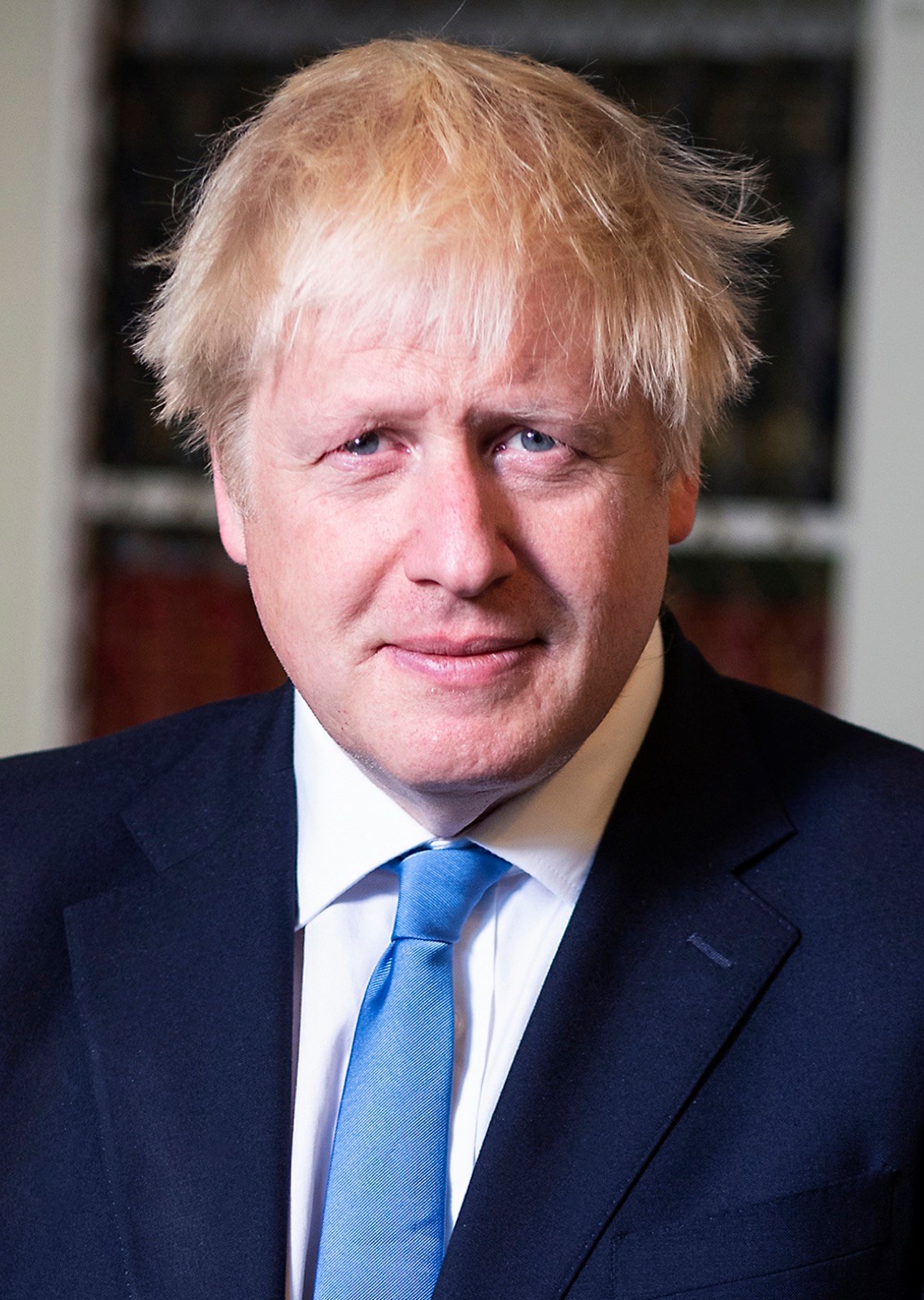
Episode Info
- Season17
- Episode3
Hosted by Christina Ruffini and Sir Richard Dearlove
Guest
Boris Johnson
Boris Johnson is a former British Prime Minister who discusses the state of the Ukraine war, opinions on Wagner group leader Yevgeny Prigozhin's failed mutiny, and conversations with former President Donald Trump about supporting Ukraine.
Episode Summary
Former British Prime Minister, Boris Johnson sits down with One Decision’s Julia Macfarlane and former head of MI6, Sir Richard Dearlove for his first ever podcast interview. Johnson discusses the state of the Ukraine war— his thoughts on Wagner group leader Yevgeny Prigozhin's failed mutiny and details from his recent conversation with former President Donald Trump about supporting Ukraine in defeating Russia. He also talks about his post-Brexit frustrations, if he would change how he handled the pandemic, and what's the one decision he regrets during his time in office.
Listen & Subscribe
- Watch on YouTube
- Listen on Apple Podcasts
- Listen on Spotify
Transcript
INTRODUCTION
Mcfarlane: You're listening to One Decision, the podcast that looks at the choices made that shape our world. I'm your host, Julia McFarlane, and I'm joined by my cohost, Sir Richard Dearlove, the former chief of Britain's MI6. The former British prime minister Boris Johnson's decision to back Ukraine and back Ukraine all the way was one of the most defining aspects of his three years in office. But as popular as he has been in Kyiv, he is a far more controversial character back home in the United Kingdom. We sat down with the former prime minister, the Brexiteer in chief, a man who nearly lost a raging battle against a serious infection of COVID, and we asked him about the choices he made in foreign policy. One of the first things I wanted to ask you was you were recently overseas in the United States. Am I right in thinking that you saw mister Trump while you were there?
INTERVIEW
Johnson: Yes. That's absolutely correct. And, look, one of my reasons for going to United States is because, clearly, American politics is getting into that pre election period of ferment, and I'm very concerned just to get over the message that whatever, you know, you people may be hearing, whatever people may be thinking, the war in Ukraine is immensely important, and Ukrainian victory is essential. And it's the only way out. And I just think it's very important if you have a chance to talk to people like Donald Trump just to get that over because I know in my heart the Ukrainians are gonna win. I know they deserve to win, I know that America has played a crucial role in making sure that is the right outcome. I think it's important to remind somebody like Donald Trump, you know, he actually played an important role.
Dearlove: Is he a threat to their victory there?
Johnson: Well, Richard, don't forget who sent the first Javelins. It was Donald Trump. And, you know, it was also Donald Trump who withheld military aid to Ukraine. Who sent the first Javelins? Before we sent the NLAWs, actually enabling us in the UK in a way to make that vital contribution. You know, it was a very free flowing, energetic conversation, the kind you'd expect. And what I found actually with the Republican Party in the United States is that they, of course, they're anxious about the expense, and that's the role of of congress.
Mcfarlane: Sure. But is his position more nuanced than it has been in public? Support for the Ukrainians. Is he more nuanced than he has been in public?
Johnson: I think you're gonna find — look. I'm — you have to get him on this show. I'm not gonna — he should — he should speak for himself. He's a — he can answer for himself. But my view is that whatever happens in the race for the White House next year, I think that America will be steadfast. And I think that the big geopolitical reasons for continued American support for Ukraine will be overwhelming for whoever's there.
Dearlove: But even DeSantis has really made Ukrainians anxious by saying this is a territorial dispute.
Johnson: Well, look. And, of course, there is an element in the Republican Party in the grassroots that kind of, you know, isolationist, but it was ever thus. How long did it take before the great republic of the United States of America came to support us in the Second World War? Two years. Right? And it wasn't until America was directly attacked at Pearl Harbor that things changed. So, actually, I think you could argue what Joe Biden has done has been outstanding. I mean, the commitment in dollars, the commitment in materiel, in kit, in weapons, equipment, amazing. Now it's all coming too slowly. We all need to speed up. The lesson we're learning in Ukraine is that we're kind of always having the argument about the thing we should have done six months ago. I mean, we talked about tanks six months before we ended up doing it. We're now talking about the fast jets, the F-16s. We're training — you know, I think that it's inevitable that we'll be giving the Ukrainians air cover as well, and that's the right thing to do. And I just — I think that — so the reason I'm optimistic about the United States is that I think that the potential gains for the world are so enormous, and the gains for American leadership are so enormous.
Mcfarlane: Talk to us about that phone call with Vladimir Putin where he threatened you with a missile attack. I mean, you didn't speak out about that at the time. How come you only revealed that recently?
Johnson: Sort of creepily playful is what he was. He was just sort of — it's always in his interests in this conversation to try to reframe what he's done, which was a barbaric invasion of an innocent neighbor, as a confrontation between a nuclear armed NATO and a nuclear armed Russia. And so in that conversation, he was trying to switch the focus to UK Russia nuclear standoff. It's nothing to do with that.
Dearlove: He threatened you. At least he tried to intimidate you.
Johnson: No. No. He was trying to draw everybody down the rabbit hole of the nuclear argument. Because I think it's very important that we don't get sucked into that logic. This is not about a standoff between nuclear armed entities, Russia, NATO, let alone UK and Russia. This is very simple. It's about a Russian invasion of an independent country and the brutality that they are enacting against the Ukrainians. And it's about us helping the Ukrainians to defend themselves with conventional weaponry, which is morally unimpeachable. What we're doing is morally unimpeachable, completely the right thing. And, of course, you know, he's like the fat boy in Dickens. He wants to make your flesh creep. He wants to spook everybody with talk of nuclear weapons. And so everybody runs around and says, oh, nuclear weapon.
Dearlove: You never met him when you went to Moscow as foreign secretary, did you? Did you only meet with Lavrov?
Johnson: No. I had a very kind of intimidate — well, so with Lavrov, we had a very long lunch where he put me in front of a fire. He put my back to this roaring fire. It was already infinitely hot in this room, and it was like a sort of sauna. It was like he was testing my resolve and then plied us with more and more vodka. You must have had this, Richard.
Dearlove: I've had it.
Johnson: What is the name for the Russian system of trying to talk to your guests with hot fire behind them and vodka in front of them? I'm not sure it has a name. Anyway, that's what he did with me. So Putin — I think any long conversation I had with Putin apart from on the phone was one time in Berlin.
Dearlove: But can you believe when Putin came to power? I mean, I was with Tony Blair when we first met him in Moscow thinking that this guy, maybe we could do business with him.
Johnson: We started with an open mind.
Dearlove: Well, it must have been after 9/11.
Johnson: Yeah. Right way back at the beginning. Because if you think back to the mid nineties and you think back to, you know, there was a period when Bill Clinton in, I think, '96 makes that famous speech when he says, isn't it time that we reached out to Russia? We tried very hard. And take Russia into our institutions. Have associate membership of the EU. Why not bring them in to the EU? Russia is a great European country and civilization. We've gotta look back at that era and say someone got it wrong, and I think it might have been us. You know, we really muffed it with Russia. There was a moment when I think things could have gone differently, and that's so long gone now.
Dearlove: Well, I became something of a message carrier between the Russians and Washington going backwards and forwards in that period. And Condi Rice actually said to me at one point, well, Richard — because they complained about the way that they were being treated. And her reply was, well, they have a GDP which is smaller than Denmark. Why should we treat them as equals? But, clearly, there was an opportunity when we could have treated them differently.
Johnson: I tend to agree with you. I think there was. And I think that what happened was that they then got progressively more disillusioned, and they thought that we were basically against them. And then I think what really happened was that after the Iraq disaster, we lost our mojo. Right? After Iraq, we thought we stuffed up. We got rid of Saddam. We didn't have a plan. Then Russia got more and more assertive. And so in 2013, Assad gets away with the chemical weapons thing. Then 2014, Putin does the invasion of Crimea. So that's almost ten years ago now. Ever since then, we've lost our kind of willingness to stand up to Russia. So what I'm trying to say is Ukraine is now the turning point. This is the climacteric. We either show that we mean it about democracy and freedom or we don't.
Mcfarlane: But we are now reacting to the invasion. Back when you were prime minister, when there was all of that coverage of the buildup of troops on the border, what was the — you know, I'm not asking for exactly what was the intelligence picture back then. How worried were you?
Johnson: Well, it's very interesting because the intelligence was unbelievably grim. And the opinion of the defense intelligence people who are brilliant, I mean, absolutely brilliant people, as Richard will know, but they said that Kyiv was gonna be taken in a week or less. And so the discussions we were having were not about helping Zelenskyy to win and arming — they were about what we could do after the fall of Kyiv to help the resistance. I'm having a long conversation about, you know, when the Ukrainians have melted into the maquis, as it were, when they're forming their resistance, what is the UK gonna do?
Mcfarlane: When it was, like, oh, 100,000 troops gathering on the border. There are field hospitals being set up. What was going on was we were already pricing in a Ukrainian defeat.
Johnson: Well, okay. So that was the advice from — you asked what the advice was from the security services. What we were also doing from the summer of 2021 onwards was trying to get them kit. And if you remember, Putin's essay comes out in July, I think. Do you remember his crazy sort of 5,000 word Nostradamus style?
Mcfarlane: On the Nostradamus page. Wikipedia.
Johnson: Gone wrong kind of meditation on the meaning of — it's total bollocks, the whole thing. But, you know, we read that, and we thought this is something very, very spooky and alarming now happening. And so Ben Wallace comes to me and says, we've gotta help these people. And he was very brave and very right very early on, Ben. And we started a campaign from the late summer to get them NLAWs, to get them what weaponry we could. And that was what they wanted. And I gotta tell you, and this is no secret, it was not easy to get that through Whitehall because of the escalation issue. And everybody said, oh, no. Prime Minister. Very, very interesting idea to send the Ukrainians' shoulder launched anti tank missiles. Many of them are very interesting, but the trouble is that will simply provoke Putin. It will provoke Putin to do x y z, and it will be escalatory.
Mcfarlane: So you're saying Whitehall is to blame for us not —
Johnson: No. No. No. I'm saying there was a hesitation about doing anything that would lead to, quote, unquote, escalation. And that has been a feature of our handling of the conflict throughout, and I think it's been totally misplaced. The only person who really fears escalation is Putin. And so while this was going on in the back end of '21 and while the buildup was happening, I was constantly writing at the bottom of submissions two or three times. Come on. We gotta do this. And finally, we got them the kit in, I think, January '22. It turned up basically in the nick of time, those NLAWs. And together with the Javelins, I think they really did make a difference. I think if you look at what happened in that battle for the suburbs of Kyiv, I think the anti tank weaponry was very important.
Dearlove: Okay. What about Prigozhin now? Where do you feel that we are left after the extraordinary partial mutiny, which, you know, I mean, clearly panicked in terms of his announcement on television. I mean, it was quite extraordinary.
Johnson: Overreached, didn't he? Yeah. Incredibly. I'd love to hear what you think, Richard. But my view is that Putin has inevitably been made to look weaker, less authoritative. Prigozhin, if he was anything, was meant to be the mailed fist, the rottweiler, the licensed bashi-bazouk of Putin, wasn't he? You know, he was his janissary, his mercenary weapon, and he clearly proved not to be controllable. And I think it's the shock of seeing the great tyrant actually unable to control one of his most important pieces on the chessboard, that has spooked a lot of people around the world who've been inclined to give Putin too much of the benefit of the doubt. Whether in the short term it will make any real difference to the Ukrainians' ability to smash through in the south of the country and kick the Russians out of the land bridge? I'm not sure. But it's certainly been bad for Putin. It's been bad for Russian morale, and therefore, for Ukraine. I mean, that's probably about the most I can say about it.
Dearlove: You had a question on Brexit, didn't you? You know, because I'm an ideological Brexiteer for reasons that we could discuss separately outside the meeting. But I'm really disappointed as to where the government have got us to now, and I just feel that the failure to grasp the opportunities that Brexit provided, or the slowness —
Johnson: Well, a lot of us — I would like you to reflect. A lot of us feel a great sense of frustration and a great sense that we should be doing more and faster. But let me just give you this. Okay? Before you panic. Number one. Have you been vaccinated against COVID? Of course. Well, there you go. Which country had the fastest vaccine rollout anywhere in Europe? Let me answer the question. It was the United Kingdom. Why? We could have done that still in the EU. Not true. It's not true because we were out of the vaccine procurement program, the EU's vaccine procurement program, and we were out of the EMA. So we actually had a two month head start. And if you look at the figures, by, I think, March 2021, we had vaccinated about forty five percent of our population compared to ten percent of the EU. And that made a material difference to our economic prospects, to our ability to come out of the pandemic fast. Number two, we've just talked a lot about Ukraine, and it's been the single most important foreign policy choice that the UK government had to face for a long time, how to handle the invasion by Vladimir Putin. I really put it to you. If we had been in the EU during those crucial months that you've just described, Julia, that period from the autumn leading up to the final invasion on February 24, 2022, it would have been a priority to stick to the Normandy format, to the Minsk process, which since 2014 have been controlled exclusively by France and Germany. You know the format? France, Germany, Ukraine, Russia. They're the people in the EU foreign policy, to which we were committed by treaty to support, that have responsibility for handling Ukraine. I really don't think the UK would have been in a position to do things as differently and as dynamically as we did. Number three, the deal with the Australians and the Americans — I'm just talking about AUKUS. There's no way we could have done that within the EU. Because under our duty of sincere cooperation with our friends and partners, I'm afraid we would have been obliged to tell the French that we were party to this. The Australians being a primary critic of European defense policy. I know that it's frustrating to see how slow it all is. But it's a process, not an event, and it will continue to reap dividends. And, you know, things like genomic editing — well, there's a crazy European Court of Justice ruling against doing it. Well, we're going ahead and doing it anyway. There's stuff like all this AI stuff. You've got some European countries like the Italians who are saying they actually want to ban it. And you've got, you know, all these AI gurus saying it's the end of the world. I think it's all nonsense, by the way. It's total rubbish. AI is a very useful tool, and that's it. But the commission will, you know, as it always does, produce a directive that somehow tries to find a middle way between the member states, and we'll do something different and better. So whether it's financial services, bioscience, you will find the UK increasingly doing stuff differently, and it will be to the advantage of this country. And, yeah, I agree with Richard. In an ideal world, after we came out, we would have done something big and different, like taking down our corporation tax to Irish levels or something, just to show this was Brexit Britain. This was new. We're gonna have a completely different approach. And we still will. I mean, the great thing about Brexit is that it gives us back our democratic freedom, and it gives us back our ability to decide what we're gonna do. And, you know, some governments will get things right. Some governments will get things wrong. But in the end, we will start to do things. I think we already are doing a lot of things.
Mcfarlane: So you're not too worried about the remainer pushback that we will —
Johnson: Of course, I am. But I think — I don't believe it is going to be reversed. I really don't. I think that the struggle to reverse it will be very, very great now. And, you know, we signed things like the CPTPP, which are pretty much a reverse. If we do a free trade deal, which we should, with the United States, that should be our biggest priority. If you do a free trade deal with the United States and the CPTPP, it starts to become very, very difficult.
ANALYSIS WITH SIR RICHARD DEARLOVE
Mcfarlane: Richard, I thought that was a really, really interesting conversation with Boris Johnson. He is obviously very proud of the fact that he's been very vindicated with the stance that he's taken on Ukraine. He has been one of President Zelenskyy's most bullish defenders, one of the loudest voices pushing for arming Ukraine for the West to step up its response to the Russian reinvasion that took place last February. It was interesting because he'd just come back from the United States, and interesting that he managed to get some face time with President Donald Trump, who has a bit on his hands with the investigations and the hot water that he's in over the classified document scandal that he's currently embroiled in. He didn't quite say that he managed to get the message across to Trump about Ukraine, but it sounds like they discussed it. And he seemed to hint that he was confident that no matter which administration was coming in in 2024, that the Ukrainians could still count on American support.
Dearlove: Yeah. Well, that's a crucial issue. And, of course, the Ukrainians are incredibly nervous about a Trump reelection given what Trump said publicly, and also the sort of comments that DeSantis has made, should he be the Republican candidate. So on two counts, they certainly have their concerns. The condition that Boris expressed on behalf of the Republicans was the cost of supporting Ukraine. He didn't sort of deviate from the principle of supporting Ukraine. So he was quite bullish and optimistic. But then again, I think you have to remember that Boris does see the world through an optimistic angle. But I was quite encouraged by what he said. I mean, it was clear he had had a straight conversation with Trump about it. And he did remind us that Trump had stepped up to the block early in supporting Ukraine with the Javelin anti tank weapons. And his track record in supporting Zelenskyy was also pretty impressive, although obviously Boris wins the prize. I think it's important to remember, and I encountered this when I was in Kyiv, Boris is regarded as an absolute hero by the Ukrainians. And in some respects, I'm quite surprised he hasn't become a sort of roving ambassador for them, because I think that possibility at one time was open. Maybe the Ukrainians were worried he might be just a bit too charismatic for them and a bit too difficult to control.
Mcfarlane: Well, I wonder if it's because he's probably more popular with the Ukrainian government than he is with the British government right now.
Dearlove: Yeah. Well, I think that's absolutely true. I think he's seen as a charismatic leader by the Ukrainians. And I think it's interesting what he said about the reluctance of Whitehall to lend military support to the Ukrainians in the early stages when there was a buildup, you know, to the invasion. And he clearly told us that there were lots of Whitehall officials putting the brake on because they feared escalation, and their argument as he expressed it to us was that it would make the situation worse. It would provoke Putin.
Mcfarlane: Yeah. I mean, we did press him to say, you know, was he blaming Whitehall for hampering military aid to Ukraine? And he said, no. Whitehall did not stop Britain arming Ukraine. And what was interesting was he thinks that the NLAWs and the Javelins that were sent to Kyiv ahead of the February 24, they played a vital role of ensuring that Kyiv did not actually fall. And I thought it was very interesting when we got him to say that in the months before the invasion, the intelligence picture that he got from the British security services was kind of painting the picture of what the UK's position should be when Kyiv falls within a week or whatever it was, and how can the UK support what would have been an opposition insurgency against the kind of Yanukovych style pro Russian new administration installed in Kyiv?
Dearlove: Yeah. Well, I think it's quite clear that pretty much everybody assumed that the Russians would drive down the road to Kyiv in a relatively short period of time and that the resistance would be minimal. I think it's clear from what Boris said that the US UK prediction of the invasion was correct, although I think we now know that some of the European services didn't think the Russians would invade, they would do everything except invade. But I think what the Americans and the British didn't predict was the effectiveness of Ukrainian resistance. That was a huge surprise to everybody, including Boris. And as he said, the submissions he was seeing about Ukraine all related to the aftermath of a successful Russian invasion. And of course, there would have been a massive Ukrainian insurgency, but it would have been after the event, and by then the government would have been deposed and you would have had a new government. So I mean it's pretty incredible what happened. And I think he credited Ben Wallace and himself. And that's exactly how Whitehall would work. I mean, if the ministers insist on a policy, they can disregard the advice of civil servants, and clearly the mainline advice from civil servants was don't do it. Wallace and Boris themselves obviously insisted that it was the right thing. And let's face it, that was a correct call. So good for them.
Mcfarlane: Yeah. I mean, I think it's also really interesting. We're more than a year now since that invasion was launched and we've learned all kinds of things about the Russian leadership and about the Russian military that we did not know before. Things that we didn't see in, for example, you know, the conflict in Syria where the Russians had air superiority over Syrian rebels who were essentially, you know, it was like shooting ducks in a barrel. The Russian air force was not challenged. We have seen now that the Russian army is divided, is fractious, is discombobulated, has low morale. Logistics has been a disaster. Planning has been a disaster. The Russian leadership and elite squabbling amongst themselves. And, of course, this projection of power, this impression of absolute control and authority that Vladimir Putin has been projecting for the last two decades. We have seen now with the recent mutiny, led by Prigozhin, how fragile that impression really has been. And we are seeing things moving on the battlefield. We have seen how exposed both Putin and his army really are. And part of that impression of strength, I think, was very interesting. Boris Johnson telling us that story of when he was foreign secretary and when he went to Moscow, what the Russians did was they got him to sit with his back to a blazing fire, burning him slowly. And all the kind of mind games and mental tricks that the Russians play on you in order to get inside your head and make it seem like they are the scary ones in power, and actually, it's all for show.
Dearlove: Yeah. Well, that's very much Russian methodology.
Mcfarlane: Did you ever get the same treatment, Richard?
Dearlove: Not quite. I think they were a little more careful with me. But on the other hand, there is this sort of feeling in Moscow of the sort of isolation of foreigners. If you go to the Tretyakov Museum, which is this wonderful museum of Russian art, one of the themes in Russian painting, which comes out clearly from the Tretyakov, and this is relevant, is suspicion of foreigners. Because, you know, for long periods of Russian history, there was a sort of exclusion of foreign influence, except that which was very specifically controlled in the court of the tsar. But I mean, it's a strange place when you go there. And to go there at the end of the Cold War, when not many people had been there in the capacity that I was there, you did feel that something special was happening, but they did make you feel that, you know, here was Russian and Soviet power in your face, and you were largely irrelevant to the way it thought about itself in the world. But anyway, the extraordinary thing about Ukraine is this super powerful army that we all thought Russia had has been shown to be riven with weakness, and it's not the world's second military power after the United States. It certainly slipped down the league table. And the aftershocks and the effects of that mutiny continue to remain to be seen.
Mcfarlane: I think the overwhelming consensus is that it has weakened Putin, at least symbolically. But we are getting news that the Ukrainians are moving closer towards Bakhmut. There are concerns about the status of the Zaporizhzhia nuclear plant. The Ukrainians recently have hit out against the analysis that this counter offensive of theirs is taking longer than perhaps the West would like. And when you were in Ukraine, you received quite a strong message from Kyiv, which was that, you know, the counter offensive, this military tactics, this is war, this is strategy. It doesn't fit into a nice Western narrative of it being quick and simple. There are many different sides to it. I mean, do you think we are starting to get to the end of Western patience for this? I mean, how much pressure is there really on the Ukrainians to gain ground?
Dearlove: Well, recently, I think in the last few weeks, I've noticed the reduction in, let's say, media pressure. And I think there's a greater understanding now that the counter offensive isn't just going to be a single punch, that it's a series of developments over a period of time. And I think what people have to understand is that the Russians have had time, a) to learn military lessons, b) to build significant defensive lines, and c) to coordinate their defense across minefields, artillery emplacements, use of air power. So there are all sorts of reasons why the Russian line is not going to be easy to break. And I think the briefings that we had from the Ukrainians, they had already understood that the Russians would not be a pushover. And they're certainly not a pushover or going to be a pushover at the moment. But all I would say is that if the Ukrainians are successful, once they've knocked out some of the infrastructure, and the supply lines and the depots, if they are successful in breaking through the Russian defenses in one or two places, the fact that the Russians are attached to static defensive lines will, I think, militarily be a Russian disadvantage. And you only have to think about the Germans in World War One going around the French Maginot Line, which was built after the Franco Prussian War, to understand what static defense makes for vulnerabilities. And I don't think the Russians are probably very good at coordinating all arms mobile defense, which will probably become necessary. And it's only when we reach that point that the Ukrainians will show, I think, their advantage, their tactical advantage anyway.
Mcfarlane: As much as Boris Johnson may be the hero of Kyiv and of Ukrainians who are very, very fond of him and grateful to him for championing their cause so much over the last year and a bit, he remains, at least in the UK, a very controversial, very divisive person. He has his supporters and he also has his detractors. But obviously, he's someone who is trying to balance out his legacy with being a champion of Ukraine and getting the big cause right when it comes to locking the UK down under difficult circumstances and supporting Ukraine when some other traditional UK partners were a little more reticent about being so quick to send lethal aid, tanks and jets to Ukraine. He remains in the UK trying to change the narrative of how his premiership came to an end, riven by a series of domestic scandals over members of his administration, including himself taking part in parties during lockdown, allegations of sexual assault by members of his government, and how he handled a lobbying scandal, which was one of his colleagues, an MP called Owen Paterson. He would much rather be remembered as the cheerleader and the hero of Kyiv and the hero of lockdown.
Dearlove: Yeah. I think he still remains a pretty extraordinary figure. And I think, you know, what you have to recall is he damn near died of COVID. And I think that was a very important event, which he doesn't talk about, but he was in intensive care for several days. And there were real concerns about him. You know, as a prime minister, he pretty much had the wheels taken out from under his government by the pandemic, which was the most disruptive social event certainly since World War II and, you know, none of us could have imagined that we'd be living in a free country where we were locked down in the manner that occurred. And then on top of that, he has an energy crisis, the invasion of Ukraine, a major war in Europe. And of course, then on top of all of that, this extraordinary lack of self discipline in terms of his personal behavior. And if you put all that together as a package, you have something which is really volatile and extraordinary.
Mcfarlane: There's a lot that's happened in his short time in power.
Dearlove: I think it's completely unprecedented. I don't think there's been a period of prime ministerial office where so much has happened. You know, his character gives everything that's happened another dimension, which for British politics is very surprising and very odd. And I would say almost unique, but he remains a charismatic figure in great popular demand. Of course, he's no longer on the political scene, but my prediction is at some point he will attempt a political comeback and then we will see really what he's done, how he's behaved, what he's achieved. I think it's almost impossible at the moment to judge his legacy.
Mcfarlane: That's it for this week's episode of One Decision. We drop new episodes every Thursday. Like and subscribe so you never miss an episode. Drop us a line. Tell us your thoughts. What decisions have impacted you and where you live? You can write to us. Our email is 1decision@1decisionpodcast.com. From me and the team, thank you for listening, and see you next time.