Episode Info
- Season16
Hosted by Christina Ruffini and Sir Richard Dearlove
Guest
Professor George Gao
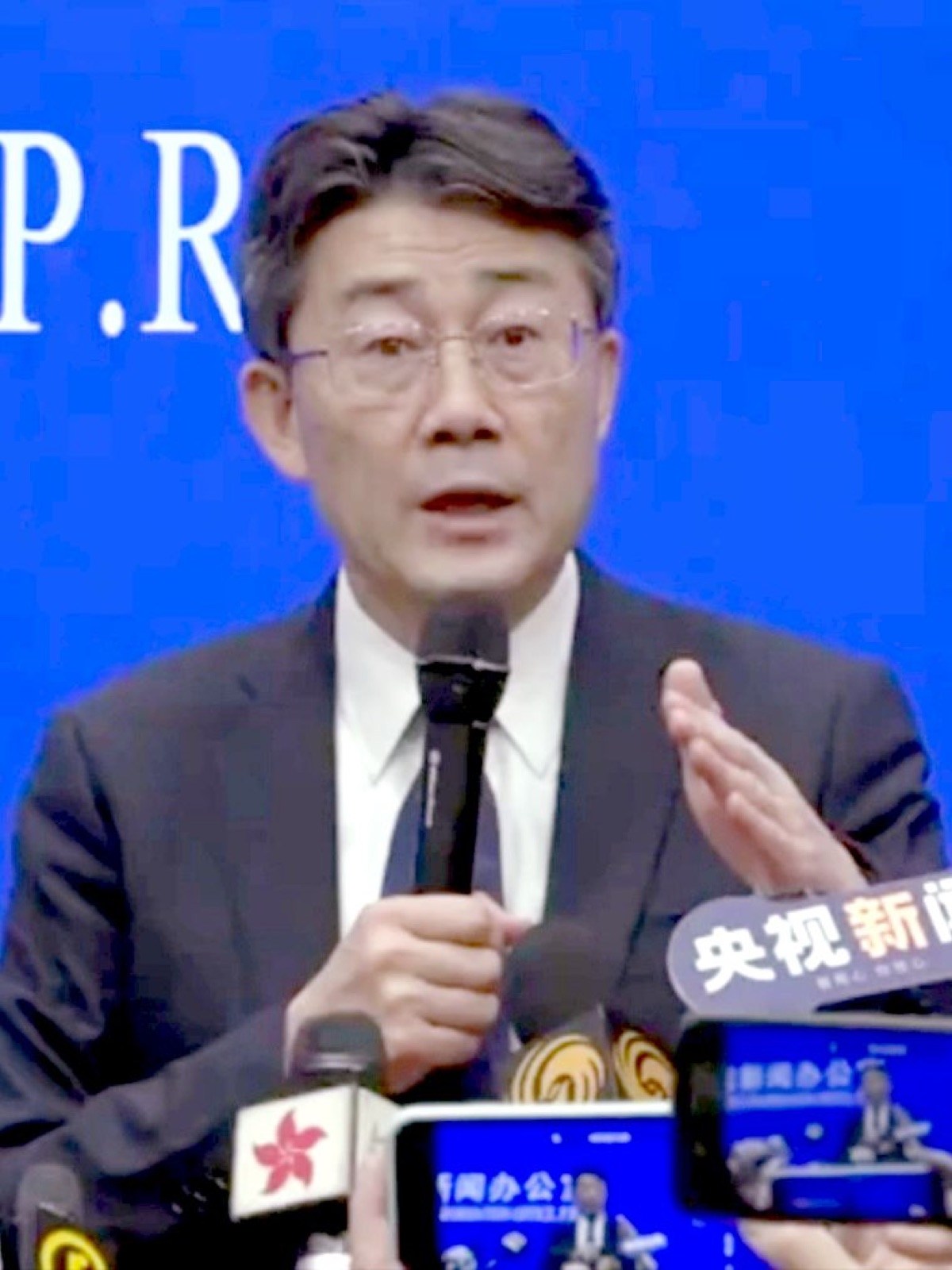
Professor George Gao is a former head of China's Centre for Disease Control who told the BBC that no theory for the origins of COVID-19 should be ruled out, including the possibility it came from the Wuhan Institute of Virology.
Episode Summary
Professor George Gao, the former head of China's Centre for Disease Control (CDC) recently told the BBC that no theory for the origins of the COVID-19 pandemic should be ruled out including whether or not it came from a lab, after years of extremely insistent public denials from the Chinese leadership. Gao added that China investigated whether the virus may have originated from the Wuhan Institute of Virology and admitted that he hadn't actually seen the results of the investigation, but heard that the Institute had been cleared. One Decision's Julia Macfarlane speaks with co-host and former MI6 Chief Sir Richard Dearlove about why China is speaking about the origins of the virus now, why he thinks it has zoonotic origins, and why he concluded there's a strong probability it was leaked from the Wuhan lab.
Listen & Subscribe
- Watch on YouTube
- Listen on Apple Podcasts
- Listen on Spotify
Transcript
INTRODUCTION
Mcfarlane: You're listening to One More Decision, a short update from the team that brings you One Decision, the podcast that looks at the big choices made that shape our world. I'm your host, Julia McFarlane, journalist and broadcaster, and along with my cohost, Sir Richard Dearlove, the former chief of Britain's secret intelligence services, we examine how the big geopolitical decisions of the day are made, who they impact, and what may happen as a result. We drop our full episodes every Thursday. But today, we wanted to take a brief look at some of the news that's been making headlines this week. Richard, some very interesting developments on the hunt for the cause of the pandemic. Professor George Gao, he was the former head of the Chinese Center for Disease Control. He has been in the news recently because he told a BBC Radio Four podcast that no theory for the origin of the COVID-19 pandemic should be ruled out, including whether or not it came from a lab. Now, the words he used, he said, we really don't know where the virus came from. The question is still open. The other thing he said that was really interesting was that China apparently investigated whether COVID-19 may have originated from a Wuhan laboratory. Now as far as I understand it, this is the first time that a senior Chinese official has actually said or revealed that Beijing took the, quote, lab leak theory seriously. After years of publicly denying it, of extremely insistent public denials from the Chinese leadership. Gao said that the Wuhan Institute of Virology, this is the center that everyone has been talking about, that's at the center of this, what's known as this lab leak theory. He said that this institute was checked by Chinese experts in the field for the coronavirus that sparked the pandemic. And while he admitted that he hadn't actually seen the results of the investigation himself, he said that he had heard the institute had been given the all clear. This is very interesting. And I'm curious as to what your thoughts are because you, at the time, around in summer 2021, I believe, you spoke out publicly about the lab leak theory. You seem to think that it was something that you subscribed to, that it was, I believe you said at the time that you thought it was an engineered escapee from that very same institute, the Wuhan Institute of Virology. And it was really interesting because it was at a time when all the scientists, even here in the UK, were saying that they did not subscribe to the lab leak theory. So what did you make of this interview?
ANALYSIS WITH SIR RICHARD DEARLOVE
Dearlove: George Gao is a very Anglophone Chinese academic and very distinguished, and he's actually a research student of Professor John Bell at Oxford and therefore has close links with John Bell, who is very balanced in his commentary on the origins of SARS-CoV-2, that's the title of the virus. I think that Gao actually was a clever way for the Chinese to look more reasonable. My interpretation of what he said is that he hasn't taken things very much further forward, because he said, well, we shouldn't close our minds off, but on the other hand, there was an investigation which cleared the lab leak theory. So I'm pretty skeptical. I don't think anyone like Gao, given his prominence, I think he's got some senior research position in China, would step out of line with the party on such an important issue for the Chinese. I mean, what surprises me about this issue all the way along is that no one is prepared to sit down and actually talk about the biochemical analysis of the virus itself. And, you know, there is material available if you know where to look for it, but everybody's refused to publish it for reasons that I still can't quite get my head around. And what I would say is that if you analyze the RNA of the virus, the chances of it being zoonotic are very, very, very small indeed.
Mcfarlane: But by that, you mean that zoonotic meaning that it came from an animal.
Dearlove: Yeah. It's because right. It's got some very, very — as opposed to an engineered virus. It's got inserts in the RNA, which can occur naturally. But if you talk to, as it were, open-minded virologists or open-minded biochemists, they will say, well, it's really weird. And there's a particular characteristic of the SARS-CoV-2 virus, which makes it highly infectious to humans. This is called the spike protein. And I based my derived analysis — I'm not a scientific expert, but I've read a lot about this — on what looks like, you know, the scientific strong probability that it came out of a lab. And, of course, there is a further dimension to this, which is highly embarrassing for the Americans and complicated, is that the gain of function experiments that were being conducted in the Wuhan lab were being financed from America because they'd been banned by Obama. So it isn't entirely, you know, a Chinese story. It's an international story about virus research. And there is still a reluctance to publish the papers which, on the one hand, show the scientific research trail that leads probably to the SARS-CoV-2 virus, because experiments were originally on the record. Some of the records have now been withdrawn from the Wuhan website, so you can't look it up anymore. But I think the people that looked at it early on worked this out. So it's a very peculiar and clouded story, and it's been made almost impossible to research forensically and get a definite answer because of the way that the Chinese manipulated what was the available information right at the beginning of the outbreak.
Mcfarlane: So given your previous career, you war-gamed this kind of thing back in the day. You war-gamed the possibility of biological weapons, of chemical weapons, of this sort of thing being released into the wild with the sole intention of being used as a weapon. What do you think of that theory? Do you think that it could have been a biological weapon or was it a virus that was engineered in the Wuhan Institute just for study and was not created for nefarious purposes even if it accidentally escaped from that institute?
Dearlove: It's definitely the second. Well, definitely my view is it's the second of those. It was, let's say, legitimate experimentation, but dangerous experimentation on viruses. And probably the means of escape is that it infected one of the people in the lab working on the gain of function experiments and the individual, you know, comes out of the laboratory, infects someone in his household, someone in the street, because bearing in mind the SARS-CoV-2 virus has this fantastically powerful ability, you know, to spread and infect and replicate itself in other living organisms. So it's absolutely, I think, in my mind, pretty clear what happened. I think what is surprising and what is shocking to me, now that there are a very, very large number of people and reputable scientists who would accept my theory, which I originally expounded on the basis of talking to other virologists in May 2020, is that at the beginning of the outbreak, the very beginning of the outbreak, the key figures in the UK and the US, the two people I would name are Fauci and Farrar, who was head of the Wellcome Foundation, both were immediately suspicious that this was an outbreak caused by an escapee from the Wuhan lab. But they closed ranks and accepted the Chinese narrative and did everything in their power to suppress speculation that it was a lab escapee. And we've still not had a satisfactory explanation as to why this group of scientists deliberately set about supporting the Chinese narrative to the extent of encouraging an academic from the West Coast of the United States, Andersen, to publish an article saying, of course, this was a zoonotic occurrence. So why do you think that is? I just have not ever seen a satisfactory explanation and I do hope that it's part of the British COVID inquiry that the origins of the virus are looked at and looked at properly and thoroughly without, as it were, the scientific community having control over what is published and put in the public domain and what isn't. Because I'm aware of articles which have already been clearly researched, which, as it were, put the case that I'm stating, but can you get them published in a leading scientific journal? For example, Nature, which is the leading scientific journal in the UK, prides itself on transparency, absolutely refuses to publish this. And if it weren't published, has to be published elsewhere. Everyone has to get a very fair idea of why the probability is that this was a lab escapee. I would even say the strong probability. And I mean, I've heard reputable scientists say the chances of it being actually zoonotic given its characteristics are about 10,000 to one, or what I should say one to 10,000. I think that the people I've been talking to about this — well, I'll name the primary expert, who I admire enormously, a Norwegian virologist called Birger Sørensen. I mean, Birger in a way is somewhat a controversial figure because he's not an enthusiast for the mRNA vaccines. He uses a different technology for his own vaccine company. But putting that aside, I think now my view is pretty much mainline amongst many, many reputable scientists. I mean, the most outspoken proponent in the UK of what I'm saying has been Matt Ridley. And he has been very knowledgeable. So he is very knowledgeable and gives a pretty clear picture and a more informed scientific picture because he is more informed than I am of what I'm trying to explain in this podcast. But I think it's really important that people listening to this podcast have an open mind about this and realize that the weight of evidence now in the scientific community is that it probably — but we can't say it more strongly than that — was a lab escapee and a result of gain of function experiments on the SARS-CoV — well, they created this, this was SARS-CoV-2 virus. But what is also interesting is that there is a research trail in terms of published articles and registered viruses and research material that goes way back to 2018 or even earlier, 2017. I think much further back than that even, which has now been documented and I think should see the light of day in a publication.
Mcfarlane: I just quickly want to ask you, why do you think there has been maybe a change from the Chinese that they are more willing to discuss this kind of thing, that, you know, senior officials like Professor Gao is talking about the fact that there has been an investigation into the Wuhan Institute of Virology, when it wasn't that long ago when — do you remember Australian Scott Morrison, the prime minister, he incurred the wrath of Beijing for merely saying that there had to be an investigation into where the pandemic came from. And do you remember that he said that? He called publicly for an investigation into the origins of the virus, and he caused an absolute storm with the Chinese. They absolutely went mental at him. They were threatening to break off all of their trade. Why do you think the Chinese now are perhaps more comfortable about discussing this?
Dearlove: Well, it's not that they're more comfortable. They've pretty much lost the international argument. It's what's happened. And, you know, their position, their previous position is pretty much untenable. So I think that they're adjusting it and, you know, being clever people, they're doing it cleverly by using someone who's very reasonable and balanced like Gao to say what he's saying. So I think it's a retreat from their original insistence. But on the other hand, do I think they're going to give significant ground in admitting, you know, what they know probably happened? No, I don't think we'll see that change at all. So I think you'll get this more balanced statement from Gao. I cannot believe that someone like Gao can make that without official approval given his importance in Chinese scientific research.
Mcfarlane: That's it from this world update from the One Decision podcast. If you enjoyed this little conversation, why not check out our channel for our main offerings, which drop every Thursday? Just search One Decision wherever you find your podcasts. From me and the team, thank you for listening, and see you next time.