Hosted by Christina Ruffini and Sir Richard Dearlove
Guest
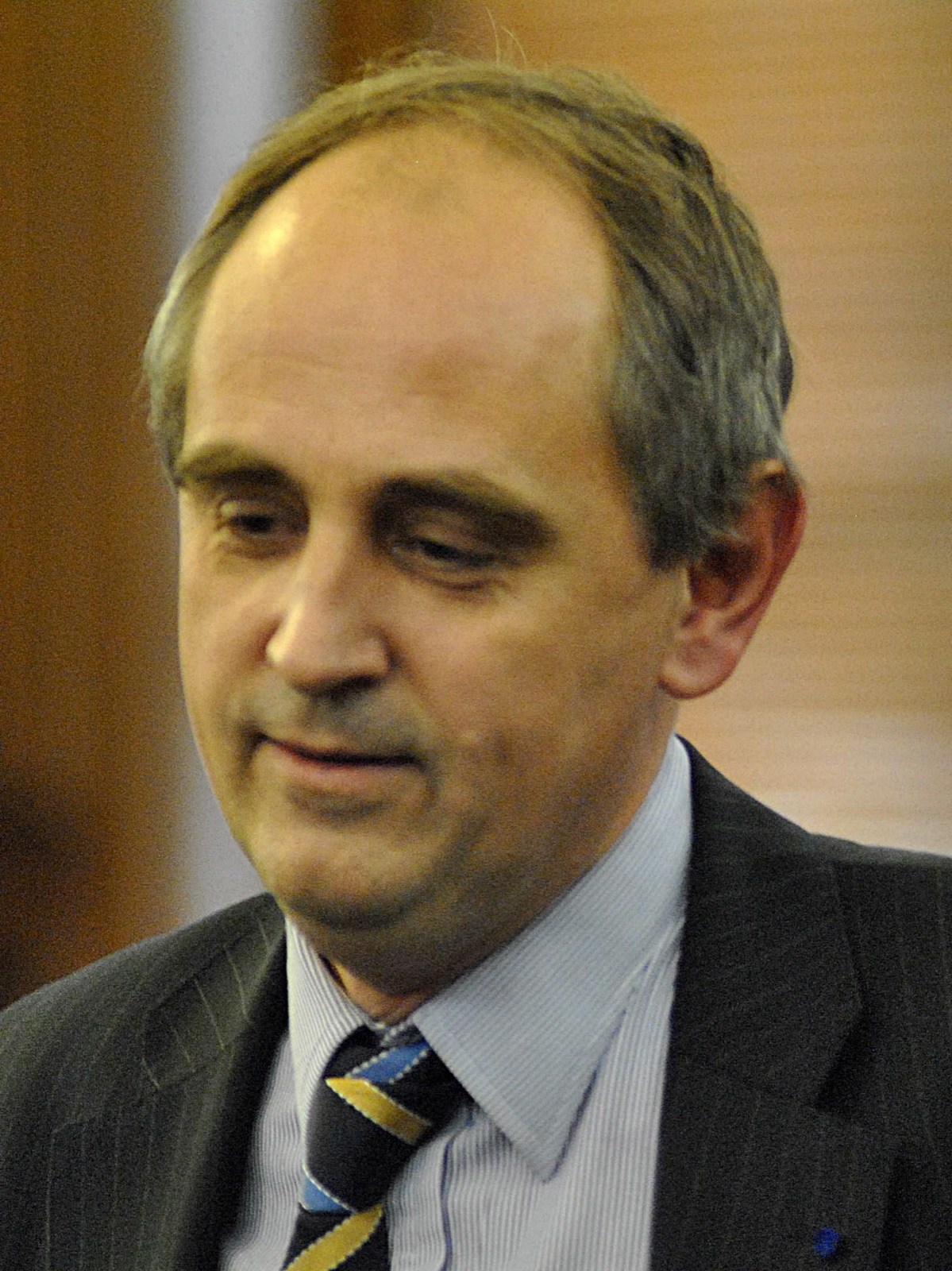
Edward Lucas
Edward Lucas is a well-informed journalist on Kremlinology and Putin's inner circle discussing the assassination of Darya Dugina and its implications for the war in Ukraine.
Episode Summary
Darya Dugina, daughter of close Putin ally and Russian ultra-nationalist Alexander Dugin, was driving her father's car, when it exploded. Russia's FSB security services quickly claimed to have identified the assassin. But western governments have pushed back against this narrative, with some officials like Tom Tugendhat, a British member of Parliament, suggesting that Putin may have targeted Dugin over recent criticisms made against the Kremlin. One Decision hosts Julia Macfarlane and former MI6 Chief Sir Richard Dearlove sit with Edward Lucas, one of the most well-informed journalists on Kremlinology and the shadow politics of Putin's inner circle, to discuss who may be behind the assassination and what it means for war in Ukraine.
Listen & Subscribe
- Watch on YouTube
- Listen on Apple Podcasts
- Listen on Spotify
Transcript
INTRODUCTION
Lockwood: You're listening to a special edition of One Decision. Alexander Dugin is known as a Russian political ideologue known for having fascist views. On Saturday August 20, he was leaving an event with his daughter Daria, a prominent journalist and fervent supporter of the invasion of Ukraine. Daria reportedly left in her father's car while he made a last minute change in plans and left in another vehicle. Authorities in Moscow say shortly after, a planted device detonated in her father's car, killing Daria on the spot. Vladimir Putin led condolences to the family and posthumously awarded Daria with one of Russia's highest honors. One day after the attack, the FSB said that a Ukrainian citizen was behind the assassination, a woman who arrived in Russia a month ago with her 12 year old daughter, and rented a room in the same building where Dugina lived, authorities say, to learn her routine. Questions on questions abound after this curious incident. How did the FSB find the alleged perpetrator so quickly? How did they have such extensive surveillance on this Ukrainian woman? And why would she bring her young daughter on a contract killing? Was the notorious firebrand Alexander Dugin really not the target? And why would the Ukrainians, everything they have endured so far, target the daughter of someone not involved in the Russian government? We decided to call up Edward Lucas, the former Economist bureau chief in Russia and one of the most well informed journalists on Kremlinology and the shadowy politics of Putin's inner circle.
INTERVIEW
Lucas: Well, the entire event is absolutely shrouded in mystery, and it reminds me of a Russian proverb which says, We don't have any facts, any theories. The first question really is, was Miss Dugina the target of the assassination attempt? And it's quite possible it was actually aimed at her father. The second question is motive. Was this done because someone disagreed with her views and wanted to send a message of a kind of ideological kind or was it designed for some other purpose possibly to stir up public panic to send a message to the Moscow elites that nobody is safe, part of some internal power struggle? And then there's the third question about who was the perpetrator and the FSB, which has seemingly failed to solve many high profile killings in recent years including my friend Boris Nemtsov and my former colleague Anna Politkovskaya was amazingly quick to nail this on a Ukrainian who very conveniently had left her military ID behind in Moscow, apparently had been tracked by the FSB during the previous days and weeks and was then able to escape to Estonia with her child after waiting for a day, which, if true, casts some doubt on the FSB's reputation for ruthless efficiency. So as I say, I think it's all completely unclear, but no doubt we will find out more in the days and weeks ahead. Whether it's true or not will be another matter.
Lockwood: What the FSB say is a result of their investigation. It weaves a very, very curious tale. And this woman who was apparently renting an apartment in the same building as Daria Dugina for a month, preparing for this attack. And to have the sort of the operational dexterity to have correctly, you know, targeted the right car, given the fact that she drove her father's car, which her father was supposed to be driving as they left for this event, but there was a last minute change in plan. I mean, Richard, is this something that, you know, sounds like the SBU, that sounds like the Ukrainian special forces? I mean, what do you make of the Kremlin's version of this assassination?
Dearlove: Well, like Ed, I think the answer to that is we're not sure yet. I personally would be surprised if this was the SBU, but, you know, it's impossible to draw a conclusion. What I would say, and I think we have to remember this, is that, you know, assassination is a feature of Russian political life. And you can go back to the nineteenth century. You can go back to the Decembrists. You can go back to Rasputin. You can go back to Trotsky. You can go back to the many assassinations that have occurred and Ed has mentioned two very recent and very new ones. I mean, if you're a high profile political activist in Russia and in any way, you're sort of mixed up with the Kremlin either as a close ally or as a competitor, then, you know, clearly, life is at risk. And I think this killing fits into that pattern. I'm deeply suspicious of the FSB coming out with a clear suspect within twenty four hours when, you know, in so many other cases, they failed to come up with an answer. So I think we just have to wait and see how this unfolds. What intrigues me is whether it's perhaps evidence of a power struggle or some sort of palace internecine strife within the Kremlin. I think that's what's really interesting. I mean, that's a speculative observation, but it just may have more significance than we realize.
Lockwood: I mean, that's exactly right. And Edward, you've spent most of your career sort of divining the leaves of Kremlinology, and trying to work out what exactly is happening behind that curtain. I mean, lots of people have speculated that this assassination of the daughter of one of Putin's closest allies, a man who many say is credited with shaping Putin's ideological worldview. Many people have speculated that that is indicative of of the Kremlin fracturing over this hugely divisive war. If that's true, to what end?
Lucas: Well, I'd be cautious about that actually. First of all, it's easy to overstate Dugin's importance. I wouldn't say he's a political philosopher. That's Richard's got deep connections with Cambridge where they know what a political philosopher is. And I don't think that Dugin would get a job at any Western university. I might call him a crank or maybe at most a political theorist, but to call him a philosopher, I think is overstating his academic credentials. I think it's also easy to overstate his closeness to Putin. He launched the idea of Eurasianism, which was a sort of semi defunct ideology dating back originally to the nineteenth century and then popular at a time in the Soviet Union. And he sort of relaunched Eurasianism and the idea that geography is destiny. And Putin certainly has sometimes used that, but to call him Putin's brain, as some people do, I think, is unfair. So I think that Dugin is both a political actor, but also a piece on the chessboard. And this assassination attempt whether of his daughter or of him is, I agree with Sir Richard, someone inside the Moscow power structure sending a message to someone else inside the Moscow power structure. Now it could be the prelude for repression saying none of us are safe. The Ukrainian fascists can shoot us all and blow us up. We have to be a lot tougher. The idea of it being an echo of the Kirov murder, which prompted Stalin's great terror or the Reichstag fire, which prompted Hitler's ferocious crackdown. That's a possibility. I mean, it could be tidying up on the far right. It could be that Putin is worried that the far right is being too critical of him. So although we think Putin's a fascist dictator, there are people in Russia who think he's not nearly tough enough, and this could be a message to them. Watch it. So there's plenty of theories here, but I wouldn't say it's a sign of the sort of inner core of the Kremlin fracturing. I don't think that would be the right interpretation.
Lockwood: So I then have to ask you. This has brought back memories of the Ryazan apartment bombings that were linked to Vladimir Putin. You know, is this too conspiratorial, or is this absolutely within the bounds of Putin and the people he's involved in to do something like this?
Lucas: It's absolutely true that Russia has a long history of what might be called political stunts, where you do something that is actually designed to confuse people and push them in the opposite direction. And there's extremely strong evidence that the apartment block bombings in the autumn of 1999, the time when I was the Moscow bureau chief of The Economist, were carried out not by Chechen terrorists as the authorities claimed, but by people sponsored by the authorities or perhaps even part of the part structures in order to create an atmosphere of public panic in which Putin could then talk very tough, launch the war in Chechnya, and rise from being a political zero as he'd been when he came in to being a political hero as he was by the end of the year and then eventually president of Russia. Now the evidence of Ryazan, which you mentioned, is very strong because the people planting the explosives were caught due to the vigilance of local inhabitants and then turned out to be FSB officers. And no one's ever really explained why FSB officers would be hiding sacks of powerful explosive hexogen in the basement of an apartment block. And the idea of this was some kind of training exercise, I think, is risible. So there's plenty of evidence, but we don't know. We've never had the absolute proof of it. But I think that it's clear that Putin and his gang are quite willing to kill people who get in their way, that would apply to people who are normally on their side as well as to opponents or indeed innocent civilians as happened in the case of the apartment block bombings. That is fascinating and so difficult to get to the bottom of these things to know for absolute certainty.
Lockwood: Richard, I just wanna get your reaction to news that has just come out that Putin has signed a decree, could see nearly 140,000 service personnel added to Russia's armed forces in the coming months. And this, of course, is coming in the middle of a big recruitment drive around Russia. They are trying desperately to get more soldiers to sign up to the army to counterbalance the heavy losses that they are seeing in Ukraine.
Dearlove: Yeah. Well, I think this you know, we've discussed this before. I mean, Putin at the moment needs a mobilization of some sort, but can't afford to announce one publicly. So he's got to look at alternative means of replacing, you know, the holes and the very substantial holes in the ranks of the Russian military, which have, as it were, appeared during the campaign. I think the other thing it's worth saying about Dugin is, and I agree with Ed's sort of assessment of who he is and where to place him. He had actually recently criticized Putin for not conducting the war in Ukraine ruthlessly enough. I.e., wanted Putin to escalate and had even, I think, advocated the use of tactical nuclear weapons. You could, in certain circumstances, even claim that Dugin was a Putin critic and that there are more extreme nationalists on the right who think Putin should go the whole measure and declare total war to finish Ukraine off. So one has to think about that aspect. But, I mean, you mentioned the issue of recruitment. I mean, I wasn't aware of this announcement, but it doesn't surprise me at all because the Russians have massive problems with staffing their military units, and things have gone, as we all know, very badly. And we don't know quite the number of casualties, but personally I'm of a view that the upper figures, which run into forty thousand plus of deaths and, as it were, injuries that take people out of the line, probably the more accurate figure, and it could even be higher than that.
Lockwood: Edward, my last question to you then is, if it is likely that perhaps Daria Dugina was a political pawn, used for some kind of pretext for Putin or for people on Putin's side as a reason to ramp up the war in Ukraine, a reason to justify mass mobilization. Let's just take that hypothesis. What does that tell you about Putin's position really and Russia's position with the war in Ukraine? Is that a sign that they're getting desperate? Is that a sign that they are really worried about the fact that they have not yet been able to clinch victory that they had originally thought would come to them in three days?
Lucas: I think that life is cheap in Moscow and it just got a bit cheaper. And anyone who's involved in the Kremlin's ideological or propaganda apparatus and indeed their immediate families will think, well, this just happened to Dugin or rather to his daughter, both of them. Could it happen to me? So their fingers will be running nervously around collars on that front. I think that the broader point is that the war in Ukraine is not the contained special military operation that Putin was advertising. It's neither contained in terms of Russia's activities outside Ukraine. We've seen the attempt to blow up an arms dump in Bulgaria, which is attracting scrutiny. We're seeing all sorts of special operations and mischief happening across Europe, which people are getting very cross about. But it's also not contained in the sense of the blowback against Russia. And so the Russians are finding that the Ukrainians can strike deep behind Russian lines and indeed inside not just Crimea, which Russia thinks is Russia, but in Belgorod, which everyone thinks is Russia, things are blowing up. And so I think that the Kremlin's ability to control the situation is weakening. Things are happening which they didn't predict and can't cope with. And that raises the temperature a bit. And in a raised temperature, more things like this can be expected. As Richard said earlier, Russia has a tradition of political assassination. However innocent or not Miss Dugina was, I fear she won't be the last. And from the Ukrainian point of view, I think this is rather to be welcomed in that no one in the previously very fractured Ukrainian political scene, no one's bumping anyone else off. They're all united behind President Zelenskyy, putting their differences aside and trying to defend the country and win the war, and that's a very sharp contrast with Russia.
Dearlove: Look. The Russians are intelligent. The leadership group, the people around the leadership group are actually well informed. They know they have a massive problem on their hands. Ukraine, you know, whatever is said publicly by the Russian leadership is going badly. And although they have had some success in taking some land in the East, you know, the whole military involvement there has been something of a fiasco. So I think we just have to sit and watch and wait and see what the political consequences are of this inside Russia, which over time are sure to play out. The Russians are not stupid. They're not ignorant. They know amongst themselves, and they must be talking about it, they have a massive problem.
Lockwood: My final question to you is now as we are moving into the winter phase of this war, because, of course, earlier in the spring, there were all these conversations about Ukrainian mud and how the Russians really needed to ramp up their mud offensive if they were to get ahead of that logistical difficulty and gain traction on that. Where do you think we're gonna find ourselves now we are entering the winter? Do things look better for the Ukrainians or for Putin?
Lucas: Well, I hesitate to say things look better because Ukraine has paid such a horrible price. And I think in the West, we still don't quite realize what it's like to have 12,000,000 people, which is nearly a third of the population moved from their homes. That would be like having 20,000,000 people moving their homes in Britain. Tens of thousands of people dead, hundreds of thousands of people with terrible physical and mental traumas. This is a it's with a cloud that size, I'm hesitant to say there's a silver lining. And it's also, I think, a point that maybe Richard made that if we'd given one tenth or one hundredth of the help we give to Ukraine now before the war, I think Putin would have been deterred, and this wouldn't have happened. Just imagine if they'd had those long range artillery and other things that we're now showering them with. So I don't want to take any great cheer, but I do think there's a real chance now of Russian military decay and disintegration. The logistics are really rubbish, dreadfully overstretched, and these long range Ukrainian strikes have made the supply lines even longer. And all the things, not just ammunition, but seals and lubricants and spare parts and all the things you need for the big machines that are essential part of modern warfare are in short supply. So the military rot on the Russian side is going to be severe. The problem for the Ukrainians is I don't think they can concentrate their forces in sufficient numbers to do a really big counter attack. So they continue to make small progress and to hope for the best but I think that we're probably going to see several more months of what we've got at the moment before things change and then the real question of course is Western willpower, are we willing to carry on supporting Ukraine? If we are, I think they've got a good chance of winning in the long run albeit at horrible cost. If we aren't willing to keep supporting them, then they're going to be in a very difficult position.
Lockwood: That's all for this episode of One Decision. We drop new episodes every Thursday. Don't forget to subscribe so you never have to miss an episode. From me and the team, thanks for listening, and see you next time.