Episode Info
- Season12
Hosted by Christina Ruffini and Sir Richard Dearlove
Guests
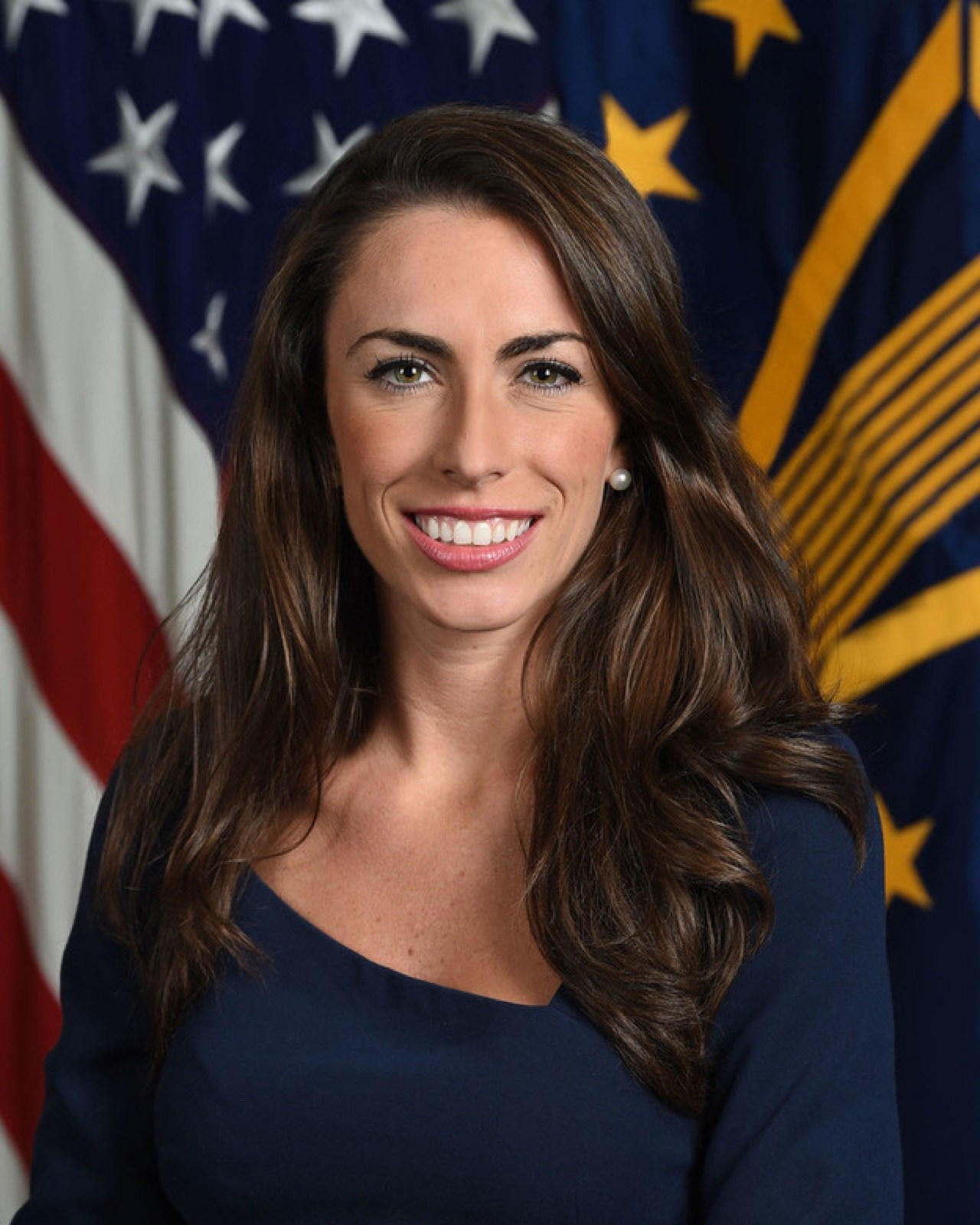
Alyssa Farrah Griffin
Alyssa Farrah Griffin is President Donald Trump's former Communications Director offering analysis on recent US midterm elections and the challenging roads ahead for both parties.
Johanna Maska
Johanna Maska is a veteran of President Obama's Director of Press Advance offering analysis on recent US midterm elections and international implications.
Episode Summary
The United States' last legislative elections surprised many political onlookers in the country. Unlike long-standing precedent, where the president's party usually suffers severe losses during these midterm elections, the Democrats actually held control of the Senate and narrowly lost the House of Representatives. We bring together President Donald Trump's former Communications Director Alyssa Farrah Griffin together with Johanna Maska, a veteran of President Obama's Director of Press Advance. They offer a special post-mortem on the gains, losses, and the challenging roads that lie ahead for both parties over the next two years. These prominent pundits for their parties provide unvarnished and at times unexpected analysis of who may stand for the presidency in 2024, along with the international implications of these historic elections.
Listen & Subscribe
- Watch on YouTube
- Listen on Apple Podcasts
- Listen on Spotify
Transcript
INTRODUCTION
Bruin: This is One Decision from Washington DC. I'm your guest host, Brett Bruen. American voters went to the poll last month in one of the most significant legislative elections in our country's history. The results were not what most observers had expected. The grand old party of former president Donald Trump did not retake both houses of congress. They got one. Even in the house of representatives, their majority will be quite thin and challenging to manage. Across state level races, Republicans lost governors and secretary of state races that they were expected to pick up. Many of those pushing the election denialism propaganda and conspiracy theories of the make America great movement went down to defeat. Yet, things get much more difficult from here for President Joseph R Biden Junior and his Democratic colleagues on Capitol Hill. They are facing two years of intensive investigations into everything from the chaotic withdrawal from Kabul to personal business dealings of the commander in chief's own son, Hunter Biden. Joining us on this special bonus edition is the former White House director of communications for President Trump and current co-host of the popular American daytime show on ABC, The View, Alyssa Farah Griffin. We get a Democratic perspective from a veteran of President Obama's first campaign and director of press advance in his White House, Johanna Maestas. Alyssa, Johanna, thank you both for joining us on One Decision. We're now a few weeks out from those American midterm elections. Maybe Alyssa, I could turn to you first. What is the assessment within the Republican Party of how it went? I know it's hard to speak of either party in monolithic terms, but you certainly had some time to take stock of what took place. What are your main takeaways?
THE MIDTERM RESULTS
Griffin: Well, I think many of us were very surprised by the outcome of the midterms. I was in the camp of believing a lot of the polling we were seeing and also just the historic trends that made many people think we're gonna see a red wave. You know, usually when you have, the state of the economy where it is, high gas prices, inflation, and then just frankly based on the congressional house map, we expected it Republicans expected to pick up far more seats than we did. So, it was really a fascinating cycle because the common wisdom got it so wrong. And one of my takeaways from it was this election, in some regards, was a referendum on extremism, particularly extremism on the right. So, nearly across the board, election deniers lost seats. They lost Senate races. They lost House races. They lost Governors races. And, I think that you saw a decent amount of split ticket voting as well, particularly in some of the swing states like in Pennsylvania, where, undoubtedly you saw people turn out and vote for the Democratic gubernatorial candidate, but then you saw a much closer margin between the two Senate candidates. So, some people who may have not just been voting down ballot based on their party. So, I think that if I the lesson if I were advising, you know, political leaders is this was a pro governance election. It was the American public saying, We're sick of the noise. We're sick of the hyperpolarization and the inability to get things done in Washington. We want to send adults to run things. Now that doesn't mean that the makeup looks like a bunch of adults. We've still got some very fringe characters on the right, but it's a very, very slim majority that Kevin McCarthy or whoever the presumptive speaker will be is going to be dealing with.
Bruin: So if I could follow-up on that, and if indeed this was an election that rejected extremism, what are the signs that you are seeing within the Republican Party of concrete steps that are encouraging that perhaps they are distancing themselves from some of the more extreme elements of Trumpism?
Griffin: Well, my fear is this. I I guess I should say I wish I was seeing more evidence that my party learned the lesson from this election. So, the RNC is currently doing a postmortem, looking at, you know, what went wrong, why we didn't get the gains we were expected to get. But a lot of the folks that they have advising it, they have Blake Masters advising it. They have Kellyanne Conway advising it. And, you know, no disrespect to either parties, but Blake Masters lost by 11 points. Kellyanne Conway is very much from the Trump wing of the party, which I think in many ways this was a bit of a referendum on. So, I worry that they're not bringing in new blood, more, you know, generational representation. I mean, we saw young voters go for Democrats in a huge way. And they're not we're not waking up and facing, like, why are people just not wanting to vote for our party? What is it about the brand that has been damaged so much that people are holding their breath and, at times, frankly, voting against their own itch their own interests? Because a lot of the polling that we saw in exit polling was people trusted the Republicans more on the economy and were worried about the state of the economy, but then still went for Democrats because they were clearly more worried about something like the extremism, the election denying it and the chipping away at democracy.
Bruin: So turning to you, Johanna, who spent time both on the campaign trail with candidate Obama and later president Obama. What are your takeaways from this election? Both if I could on the Democratic side, but also do you agree with Alyssa?
Maestas: So first and foremost, Alyssa, I'm so thrilled to be talking with you about this because I think both of us come from we've worked in White Houses. We want a new generation of leadership. I thought that it was very reassuring on election night that character mattered. We all knew that based on the 2020 census, which was conducted during a pandemic and changed the map pretty substantially in terms of representation that the Democrats were going to have a really hard time holding the House. And so the Democrats did end up losing the House to the Republicans. So to some degree, voters now have a check and balance on power. But what I'm interested in seeing is what are the Republicans going to do with that check and balance? And, you know, I think Kevin McCarthy, during the campaign trail, he was on the campaign trail with the likes of Marjorie Taylor Greene, who is not only just an extremist, she's a QAnon supporter. She's kind of got a really questionable candidacy in terms of a conservative religious perspective because here's a woman who has, you know, she's going through a divorce proceeding because she's had multiple affairs that are out there. But Kevin McCarthy was on the campaign trail with Marjorie Taylor Greene, and she is kind of one of those extreme Republicans. I haven't seen the Republicans distance themselves in terms of House leadership. So what I'm trying to figure out in terms of the Republicans taking on the House, I am thrilled in terms of the Democrats. The Democrats are actually changing our leadership pretty substantially. I mean, Nancy Pelosi has been our leader for a very long time. And she is someone that's kind of a generational Democrat, I mean her family was part of the Democratic apparatus and we're going to now Hakeem Jeffries which is a new fresh face, someone who's more self made, someone who's really like Brooklyn nice, but also has tried to make progress. So I'm thrilled about our leadership kind of tracking towards more of that central. I mean, he's another person who's gotten in fights with some of the more, I guess, dogmatic Democrats who won't negotiate on anything. For example, AOC tried to primary him with a candidate. He held strong and said he's a pragmatic progressive, and he won. So for our side, I think that the Democrats are going to come to the table. I want to see them come to the table and try to make progress for the American people. But I am very curious what the Republicans are gonna do with their leadership in the House to come to the table and try to you know, see what they can do given this election said govern Don't do all of these, you know, crazy things just govern But will they actually do that or is he going to have to because of his slim majority really listen to Marjorie Taylor Greene and those folks more than traditional and, average Republican voters?
WILL BIDEN RUN AGAIN?
Bruin: So, Johanna, you're saying that we're seeing new leaders, a new generation of Democrats are emerging, but we still have quite a different situation in the White House. Will Joe Biden run for another term?
Maestas: So yesterday at an event, he said he was not sure. Look I worked with President Biden I had respect for him in the sense that he He's been kind of a statesman and I was hopeful that in coming back in power He would be a transition president bring us back from Donald Trump and figure out what our future is. I Think that he took the Thanksgiving holiday with his family now having turned 80 years old to figure out what he's doing. I think there are a lot of people from the Obama generation that are saying, we need new leadership and a big robust primary for us on the Democratic side will actually strengthen us because we haven't had a robust primary in the sense of being able to secure all of the voter data that we need to really make sure that our Democratic base is strong. So I'm not sure that he's gonna run. I think he's gonna make the decision before April. We know President Trump is already gonna run, and I would like to see us have a different generation of leadership in the presidential field as well. If he does run, no one will challenge him. No one of substance will challenge him. And that's just because the Democrats are trying to stay more in line, I would say, than the Republican Party right now.
Bruin: And I want to come back to that. But Alyssa does the job of whoever ends up becoming, and we can dive into some of those personalities, the Republican standard bearer. Is it more difficult if Joe Biden's name isn't on the ballot?
Griffin: Well, depends. I think by and large, the American public does not want a Trump versus Biden rematch. So kinda like party agnostic, people want fresh blood. They want different candidates. My fear I think Johanna is right. There may be a chance that Biden does not run. And I want to give credit to Speaker Pelosi. It takes tremendous leadership to know when to pass the baton and to set up the next generation of leaders to be in a position to lead. And I have to wonder if Biden takes that to heart, because what he was so heavily folks around him that I talked to were relying on to kind of make them want to run again was polling that showed him head to head beating Trump. But that same New York Times Siena poll that about four months ago said he beats Trump head to head now has Trump slightly edging him out. And then you have the wild card of a weakened Trump after the midterms, you know, a less than stellar launch that may mean it's not a Donald Trump you're running against. It may be someone like a Ron DeSantis or someone that the White House hasn't prepared in the same way for. So I think there's a lot of open questions there. I'm still, unfortunately, bullish that Trump's gonna be my party's nominee because I think he takes up all the oxygen in the room. But I think there's some calculations that Biden has to make, and, it's very different running against a popular governor of Florida than it is someone like a Donald Trump who just alienates so many moderate voters.
THE REPUBLICAN FIELD FOR 2024
Bruin: So let's look a little bit into the other possible Republican candidates. And quite frankly, it was a little bit surprising how quickly Mike Pompeo, Nikki Haley and others who may throw their hat into the ring started distancing themselves from Trump after election day.
Griffin: Well, I mean, for someone from my vantage point, so just so for your listeners, I was Trump's final White House communications director, but I resigned after the election of 2020, and I've been very outspoken since January 6. And so from my vantage point, it's just bizarre that it required Republicans to lose under Trump twice and to have him incite an insurrection and incite a violent mob to storm the Capitol. That wasn't enough. But losing the Senate, that's that's kind of the final line that he crossed for some. So, even though some of these people are my friends and people I think highly of and hope will jump in, put me in the camp of cautiously optimistic that many will actually take Trump on directly, because we've seen this movie before. That said, I think the potential field is starting to shake up. I think my former boss, Mike Pence, is definitely running. I think Mike Pompeo's definitely considering and exploring running. Nikki Haley is now saying that she hasn't ruled it out, even with Trump in the race. And I think Tim Scott is somebody to keep an eye on. I know Ron DeSantis is kind of the flavor of the moment, and he has a good case to market. But the caution I give with DeSantis is, I say good case in that Florida was the only state that had a good day for Republicans on the midterms. They got, you know, record Hispanic turnout. He did well in Miami Dade, a traditionally, you know, blue county. He's not stress tested for a national stage in the way that I think people think that he is. I knew DeSantis a bit when he was in the House. He lacks kind of like the retail politics style that some of these other characters actually are much stronger at. And I think Tim Scott is someone to keep an eye on. And I say that because I think if you're challenging Trump, you don't beat him by being brasher, harsher, angrier. You do it by kind of angling, you know, positioning toward people's better angels and saying we need to be aspirational as a party.
GOVERNING IN A DIVIDED GOVERNMENT
Bruin: So, Johanna, how does president Biden govern in the next two years, knowing that Democrats are going to have to contend with a Republican house and in some scenarios, a Republican house that may be increasingly beholden to some of its most colorful characters that you were mentioning before. Marjorie Taylor Greene, one of the most extreme members of the Republican caucus, a congresswoman from Georgia. Is it even possible for him to get legislation through? And obviously, he's also gonna be facing a whole slew of investigations.
Maestas: I am cautiously optimistic that if anyone can get legislation through the Senate and the House, even in divided government, it is President Biden who has been in that legislative body in the Senate for so long and did manage historic legislation even when you know this notion that the Democrats have complete control is kind of not entirely true because we have people who caucus with the Democrats the Senate is not 50 Democrats, it's 48 Democrats. So you know I am cautiously optimistic that just because one party controls the House. It doesn't mean that we can't do anything. I'd like to see government work now, when President Obama when we were in office and a Republican house, came in I remember Alyssa we thought we could get them to compromise with us if we opened up to the press one of our, you know Republican house meetings that we were gonna go meet with the Republican caucus and we're gonna open it up and we're gonna say, you know, you guys won't negotiate with us on anything and shockingly We did not get anyone to the table. I really hope that they use better tactics and You know do more of the traditional horse trading That they need to do to get certain Republicans to come to the table on certain issues. I also, you know, I think it's indicative that president Biden has already opened up the White House to have the leaders come to the table. We'll see what happens. I think Kevin McCarthy undoubtedly ends up the speaker. But I'm curious, Alyssa, You know, Nancy Pelosi used that speakership to go to Taiwan. She used that speakership to show America's leadership on the global stage. The Republicans, What will they do with that speakership because you do have the ability to take CODELs you have the ability to really set policies in a different way And so I think the Republicans are going to want to stand up the differences that the Republicans have from the Democrats and especially on things like The Middle East?
Griffin: That's a great question. I wanted to kinda just broadening it out real quick on the House Republican dynamics because they're kind of fascinating right now. So, obviously, Kevin McCarthy won the closed door conference vote to be speaker, but he does not currently have 218 votes on the house floor. He's got four, you know, I would call them the rightmost flank members holding out saying they won't support him. This sets up an interesting dynamic. And I was working on Capitol Hill in 2015 when with the Freedom Caucus then, it was a very different Freedom Caucus than now, when we first blocked Kevin McCarthy from getting the speakership. And this is they're using a play from that playbook. But the interesting thing is there's not a consensus, let's say conservative candidate. So say they had someone like a Jim Banks that, you know, the votes were gonna go behind if it wasn't Kevin McCarthy. But that's not happening. For one, Jim Banks looks like he's gonna run for Senate. So what it actually could end up happening is if McCarthy needs to, he may try to cut some deals with some Democrats to make some commitments early on to flip some votes over. Now that would be somewhat unprecedented, but I do think from a governing perspective, would be much smarter. And we know he wants the speakership, and I don't see those, like, four rock solid noes, Matt Gaetz and others flipping and coming around. So that's what I'm keeping my eyes on. But to Johanna's point, I think that there may be an, because of that dynamic and the very, very slim majority, Kevin McCarthy is going to need Democrats to pass anything. And some of that is the, like, keeping the lights on, government funding, CRs debt ceiling kind of, things that need to go through, but also other important things like the National Defense Authorization Act. He is going to definitely need some Democratic votes. So like now is the time to start the horse trading. But on the foreign policy side, well, and the broader branding, yes, the Republican House is gonna be extremely focused on oversight. Now, I think Congress has a very legitimate role in oversight. Some of it, I think, is smart and it makes sense. Chairman McCaul's been working on an investigation into the Afghanistan withdrawal for many, many months, and just what went wrong, what could have been handled better, why war wasn't set up to help refugees and interpreters and translators. That deserves to be looked into and scrutinized and done in a nonpartisan manner, by the way. But then you've got other things like investigating Hunter Biden, who's already under DOJ investigation. That serves no purpose to the American taxpayer who just wants to put food on their table. That's already happening. So, there's gonna be some things which I think are red meat to the base, but then there'll be some work that just frankly has to get done. One thing I'm very happy about with the results is I think because it wasn't some Republican sweep of the far right MTG Marjorie Taylor Greene types, I think that Ukraine, like aid to Ukraine is going to be less of a challenge than I'd originally anticipated because it will get bipartisan support.
FOREIGN POLICY AND THE SENATE
Bruin: So Johanna, speaking of foreign policy implications, the fact that the Democrats did hold on to the Senate is actually quite important From an international standpoint, it means that they're gonna be able to continue to deploy ambassadors to approve treaties and also can issue things such as a sense of the senate, nonbinding resolutions that in moments of foreign crisis can be quite valuable for expressing a strong point of view. So what does it look like in terms of a foreign policy agenda for president Biden holding on to the Senate now with Majority Leader Chuck Schumer of New York returning to his post.
Maestas: So I think that we have to be cautious again because the Senate, we do have power. But even this last Senate has not approved every nomination that President Biden has made for ambassador for example, Eric Garcetti who's the mayor of Los Angeles wanted to be ambassador to India is still supposedly hang on to that hope and couldn't get through the Senate. I don't think he's going to get through the Senate with potentially just one more Democrat he's likely going to have to be withdrawn and they're going to have to put forth a candidate that can get Republican votes or at least get all the Democrats votes or the two people who caucus with us. So yes, holding the Senate is enormous also for the Supreme Court. It's very important to the Democrats. And I think that, you know, the balance of power is just so thin in the Senate and you have so many senators who are committed to bipartisanship like Joe Manchin that I think you're going to continue to see a Senate that's operating in a bipartisan way, which is actually important to Alyssa's point. I think if Kevin McCarthy wants to get anything done and have anything to show for his speakership, he should try to track towards that more middle ground effect. I'm curious because he is a California Republican, and the tendency is to be moderate. Will he be? Or is Trump because he's already announced for president and he does have so much oxygen? Regardless of you know anything he has a lot of oxygen will that end up actually derailing any potential he has to be more moderate?
TRUMP UNDER STRESS
Bruin: So before I get to predictions for 2024, I'd like to come back to what Johanna was just saying, because, well, President Trump did announce his candidacy as you alluded to, and it didn't go quite as well as some of his supporters had hoped. And we have seen the emergence of these strong potential challengers. Alyssa, you worked for President Trump. How does he manage under stress in situations where like this, he's potentially at risk of losing his position as the most powerful person in his party. How has he dealt with those kind of situations in the past? And what do you expect will come out of this question.
Griffin: Yeah, it's without a doubt in Republican circles, folks I've talked to felt like his announcement fell flat. It didn't have a forward looking agenda. It was a lot of rehashing. It almost felt like, you know, a low energy greatest hits kind of speech, you know, with some, just frankly conspiracy theories thrown into it. But what he's doing is he's trying to cling to the power structures that are around benefit him. So, obviously, the race for RNC chair is important. Ronna McDaniel wants another shot at it. I always liked Ronna. I enjoyed any time I dealt with her and actually behind the scenes found her to be a very reasonable voice to the former president. But at this point, she's helmed the RNC when we've consistently lost. It's clearly time for new leadership. A major criticism of the party, by the way, has been that it continued to pay the former president's legal bills, at a time when that money could be going to get out the vote efforts, voter recruitment, you know, trying to reach out to new constituencies. And so he's trying to kind of keep loyalists loyal to him. He's frankly doing it to some degree with Kevin McCarthy right now. He said he supports Kevin McCarthy for speaker, but those of us who you don't even have to know Donald Trump to know he'll flip on a dime if Kevin McCarthy isn't deeply loyal to him until the floor vote in January, if he says anything critical of him. There's a reason that Elise Stefanik put out a statement endorsing former president Trump for president again, because she wants her leadership seat, and probably is auditioning to be his vice president. So I think he's trying to control what he thinks he can control, but then the flip side of it that's a little scarier, and I talked to the New York Times about this, Peter Baker has a piece on it. When Trump feels isolated and like he's losing momentum and power and steam, he often turns to sort of the worst of those among him. He tries to cater a bit more to the more extreme elements of the party. And I think that was shown by his meeting with Kanye West and with this fringe character Nick Fuentes. Why he's meeting with those people? You know what? Because it rallies up a dark part of the base that my party used to reject and say, we don't want your votes. And instead, he's embracing them because he knows that he has a power over them and that they've grown in power and size. And frankly, candidates might need them going forward to win.
PREDICTIONS FOR 2024
Bruin: The map for 2024, especially in the Senate, looks a bit challenging for Democrats, Johanna. Obviously, they're also going to face headwinds when they're attempting to take back control of the House of Representatives. And then we have holding on to the presidency. Let me try to pin you down on who you think will be the Democratic nominee for 2024. And what will their and their party's outcome be in those elections?
Maestas: If President Biden does not run again, I think, like I said, you're going to see a very healthy and robust field of Democrats get in. Obviously, Vice President Harris will get in, but she will not have the same Al Gore type effect. I think there are plenty of Democrats, including, one of her former colleagues, Democratic governor Gavin Newsom of California, who would jump in to challenge her. I think you're gonna see other people kind of of the Obama generation like Ro Khanna, who's been a house member who represents a tech district, but has also written about regulating tech. I think you'll see him jump in. I think you'll see some potential of like our commerce secretary, Gina Raimondo, was a popular governor. She could jump in. Pete Buttigieg, is transportation secretary, has already been a candidate. He will likely get in again. Gretchen Whitmer is another one who just won, pretty overwhelmingly in Michigan, given that Michigan is a pretty divided state. And you're going to see some more of those states that are more moderate some of those leaders try to get into it. And I do think that in the end you could have some of our new candidates that Biden has even stood up like Wes Moore who just won as the Democratic governor of Maryland. And though he's new in a position of government, I will say we've seen some of those new voices get a lot of steam. I mean, I was part of one new voice of Barack Obama and get in the primary process. The other thing that's going to be different for Democrats this time around is we're changing our primary process we've always had Iowa has always been the first state. And there's signs that Iowa will not hold that first caucus potentially. So, all of this is going to shake out and look, a lot can change in two years. But, you know, I think the important thing to take away from this election for the world is that America is still stable and solid. Our elections worked. We did not have violence. We are getting to a point in which we are trying to govern. And I am very hopeful and optimistic that we have a lot of potential in the future to solve problems.
Bruin: So Alyssa, a slightly different version of that question for you. Will Donald Trump win the Republican nomination for president in 2024? And if he does, do the Republicans go down to defeat? And a slightly separate question, Kevin McCarthy, he's got a very challenging next two years in blocking the Biden agenda at every turn. Is that gonna result in more Republican seats in the house and the senate? Or does it just risk creating an image of a party that is still beholden to the former president?
Griffin: That's a great question. By the way, I just wanna mention Gina Raimondo, secretary of commerce, is one of the most impressive leaders to me. I think she identifies as an independent, but that's somebody if in a world where we would ever have a true moderate get a nomination for either party, she would have my vote. But, unfortunately, our primary system does not really work in that direction. But, I preface this by saying it's always too soon to say, but my instinct is that Trump will be the nominee. I've just I've seen this movie enough times to see, first and foremost, the hold that he has on his base and the way that the Republican primaries work, the base is what matters in nominating a candidate. So even though it often means we're not putting up our best general election candidates, we've set up this system that's essentially rigged against our own interests. Now, there's not a non zero chance he could be president again. I think that he's alienated so many people, and I think he's significantly less strong than he was before January 6, before these most recent midterms. So I don't see, like, a likely scenario in which he could win, but I think that it's going to take an act of God and some kind of a miracle to have a Republican beat him out in a primary, just candidly. But to Johanna's point, because I want to be hopeful and I actually am, The voters are smart. The voters are sophisticated. They did a check on the way things were going this midterm cycle. And I've said before, I wanted sane Republicans to win, and I wanted crazy Republicans to lose. And that's almost, you know, by and large what happened. The voters see what's happening, and they don't want the noise. They don't want the embarrassment. They don't want to, you know, have The US's standing around the globe be diminished because we're so divisive and torn within ourselves. So I think they're ultimately the check on the direction that my party may be going. And I think that, the ultimate open question in who's gonna get the Republican nomination is going to be the Biden factor because who you're running against matters as much as the candidate we put up. I would plead with any of my party to try to encourage people to run against Trump, take him on head first because we are going to lose a generation of voters if we run him again.
Bruin: Well, offers a pretty bleak picture for the Republican Party losing another presidential election. And this is going to be my very last question, Alyssa. If you could offer the party one recommendation for beating Trump, what would it be?
Griffin: One thing I want to add though, in 2024, there's quite a few seats up in the Senate. And I actually think that Republicans will stand to pick up some seats in that cycle. And for what it's worth, think split government is generally a good thing. So there are places my party will make gains. You know, we've got some strong governors as well. I worry about nationally the party. I worry about the brand of who the presidential nominee and candidate is going to be. And, I mean, the advice is you have to have dropped Trump yesterday. We can't do more of this. You know, as you and I are talking, we're doing it on the backdrop of white supremacists meeting with the former president, vehemently anti Semitic and bigoted people being given an audience with the former commander in chief. That affects how The US Is perceived. That affects how we see one another as individuals. And it just needs to be rejected hook, line, and sinker once and for all. Rip off the band aid. The quicker you do it, the better. I say quick. It's been seven years of Trump, but it's time to just rip off the Trump band aid.
Bruin: Well, we shall see over the next two years what indeed does happen in American politics, a complicated state of affairs. Johanna Maestas, former director of press events for president Barack Obama, and Alyssa Farah Griffin, former director of communications in the Trump White House. Thank you both so much for joining us on One Decision. I'm guest host Brett Bruen. If you've enjoyed this conversation, please do subscribe on your favorite podcast platform. Follow us on social media. Share your thoughts. We look forward to seeing you next time right here on One Decision.